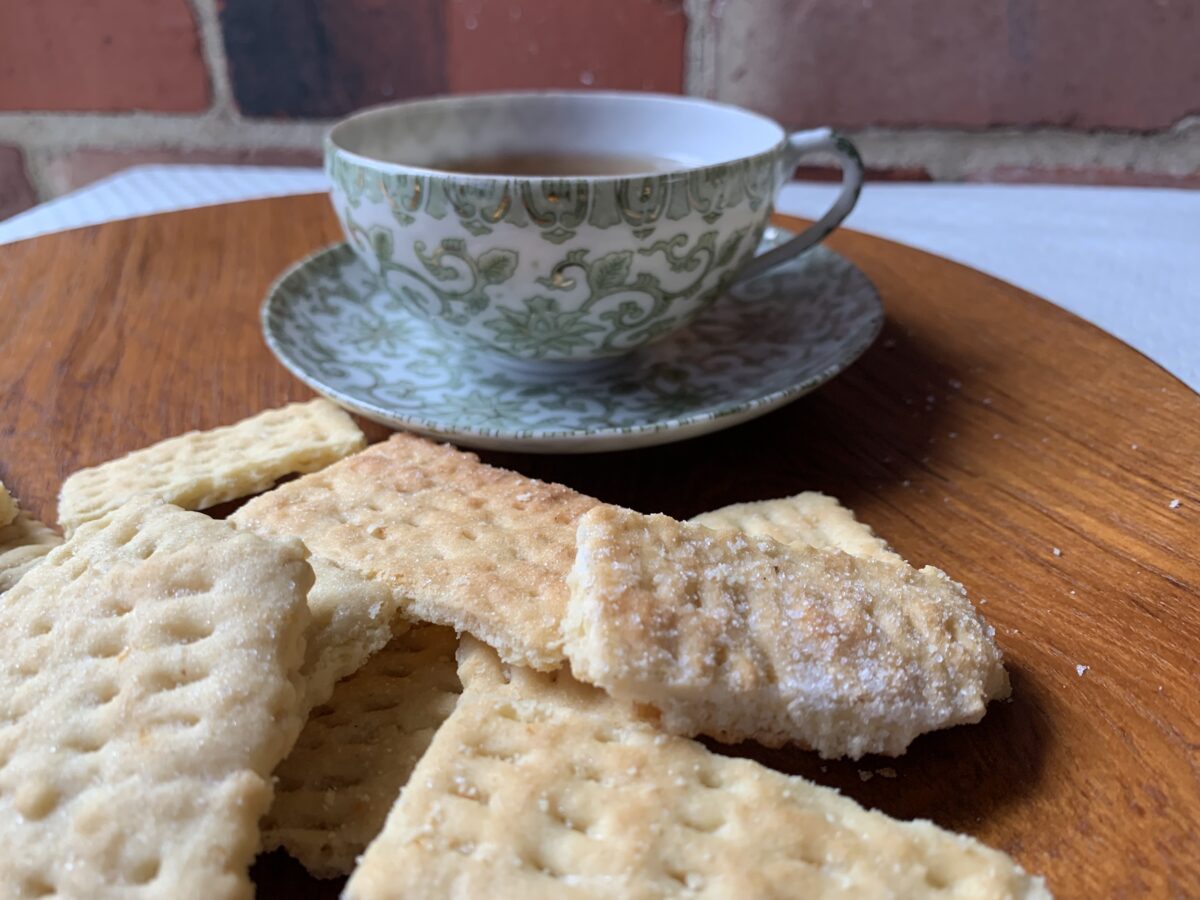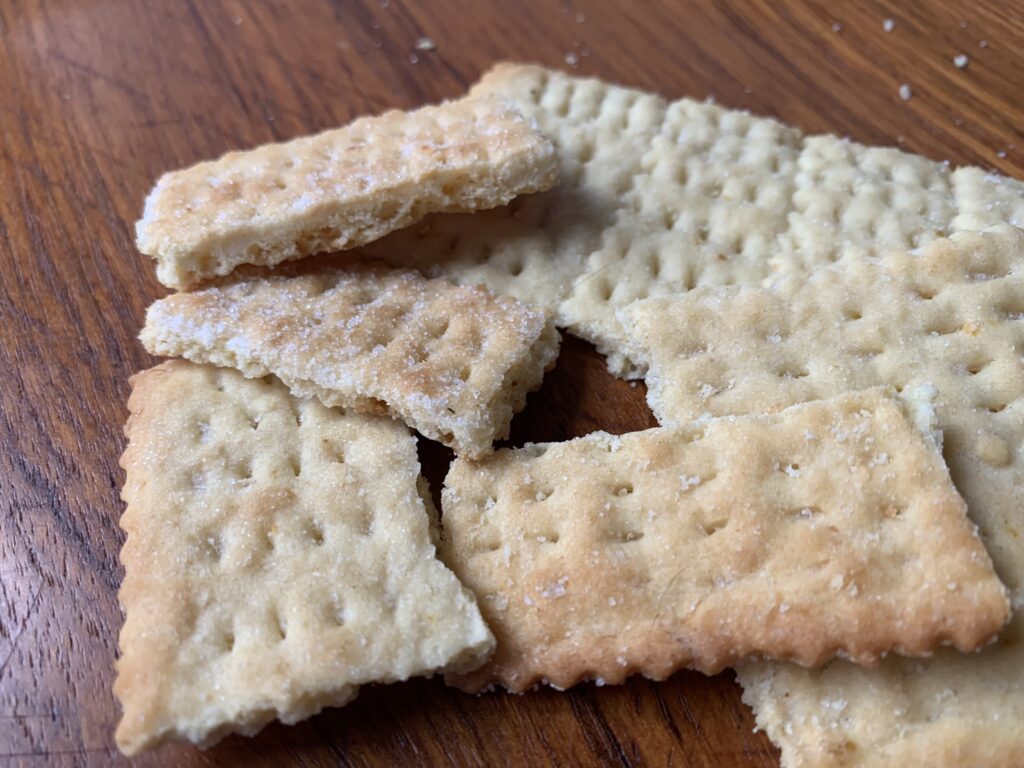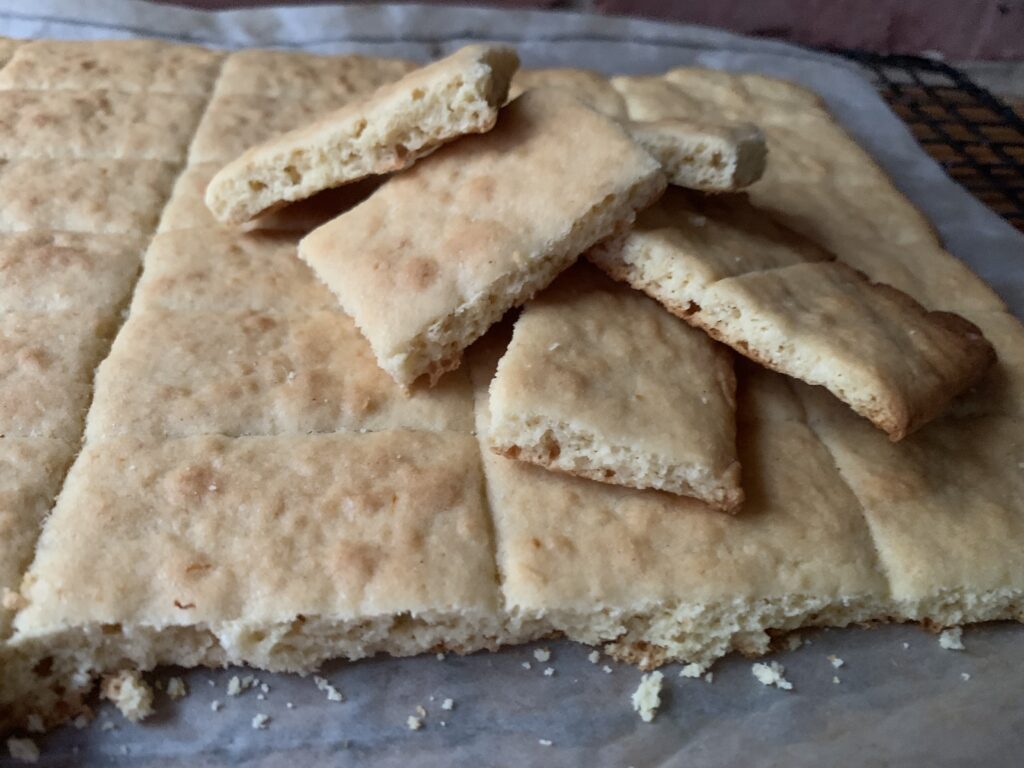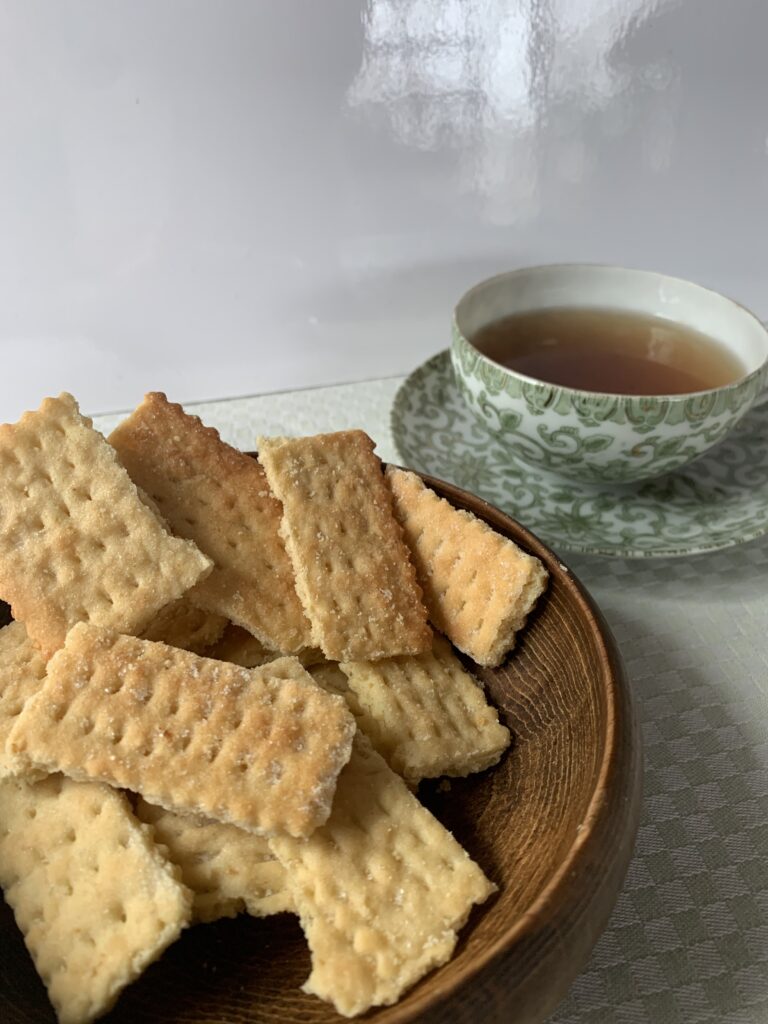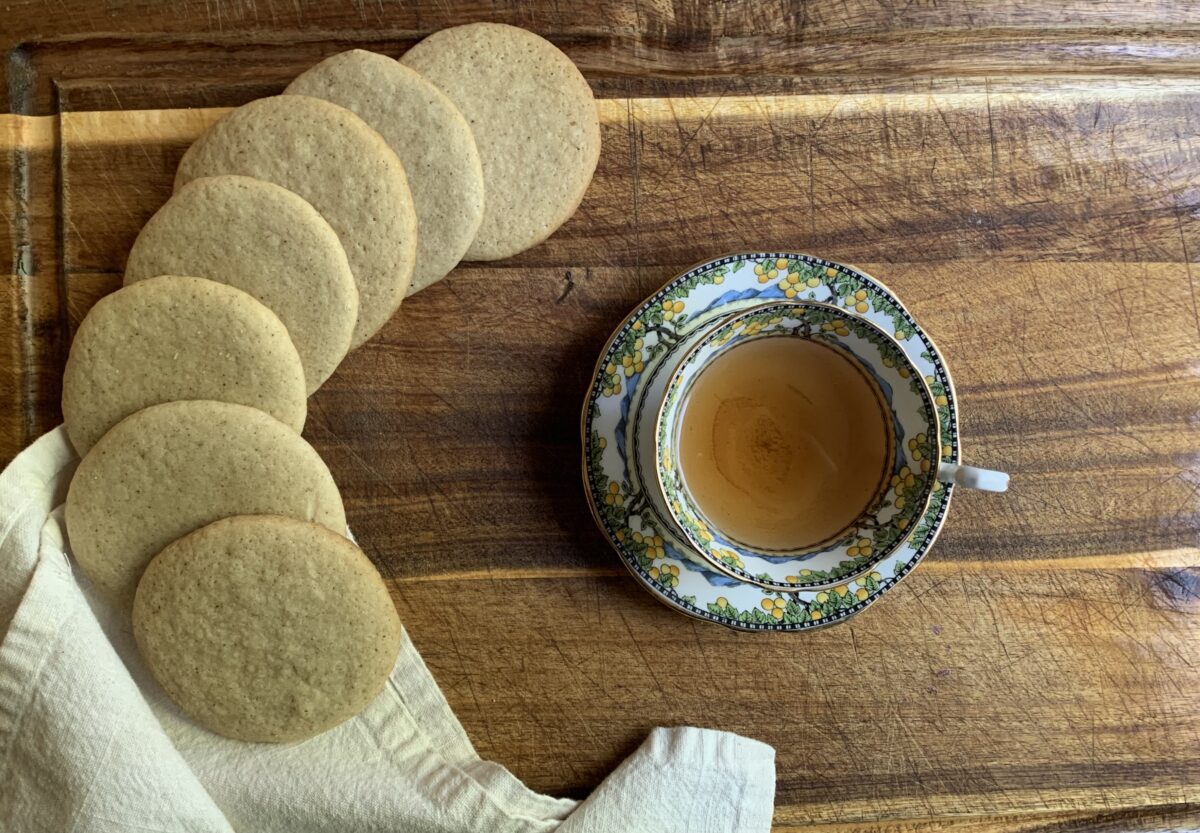
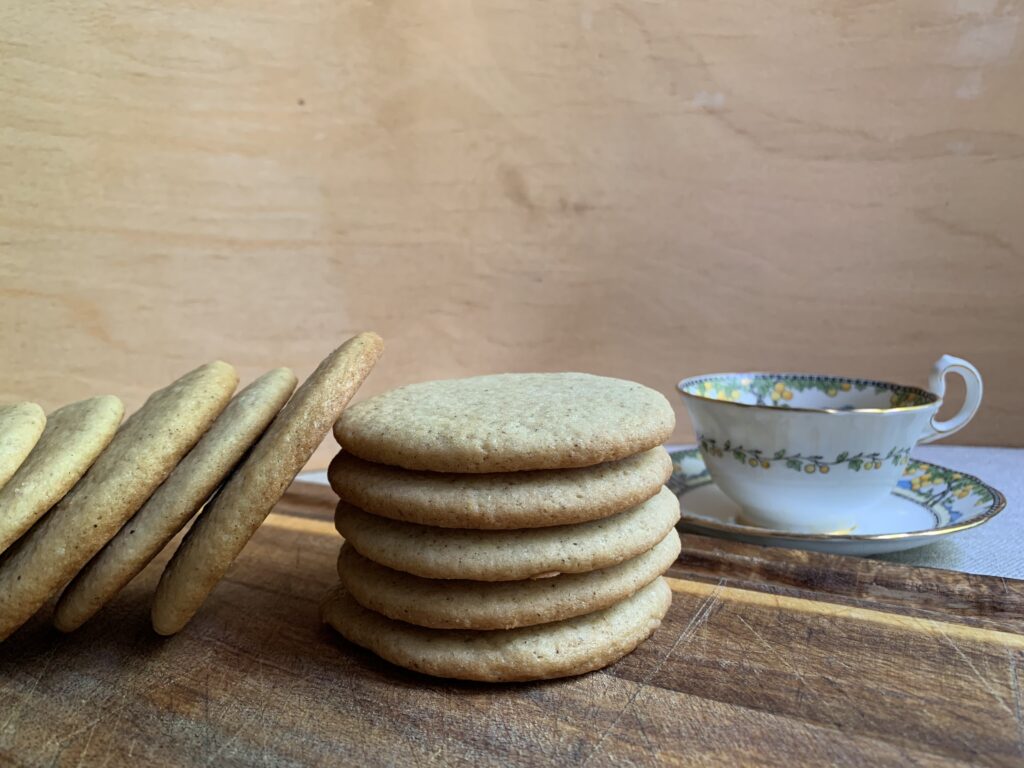
SOUTHERN TEA CAKES, The Most Genteel Of Cookies

The great cookie of the antebellum south

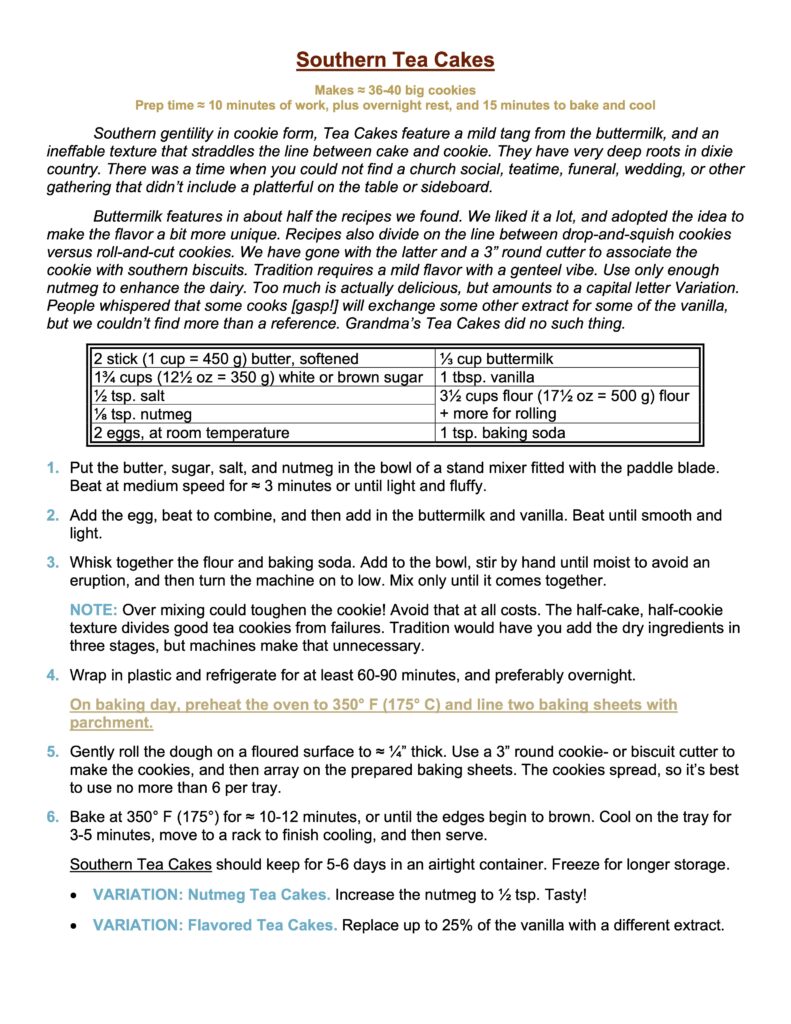
Kate and I recently put out a call to food writers and bloggers around the country for information about any cookie tied to the soul of their city or region. This was the first cookie we heard about, courtesy of Mr. Stacey Little of Southernbite.com. And a worthy cookie it proved to be!

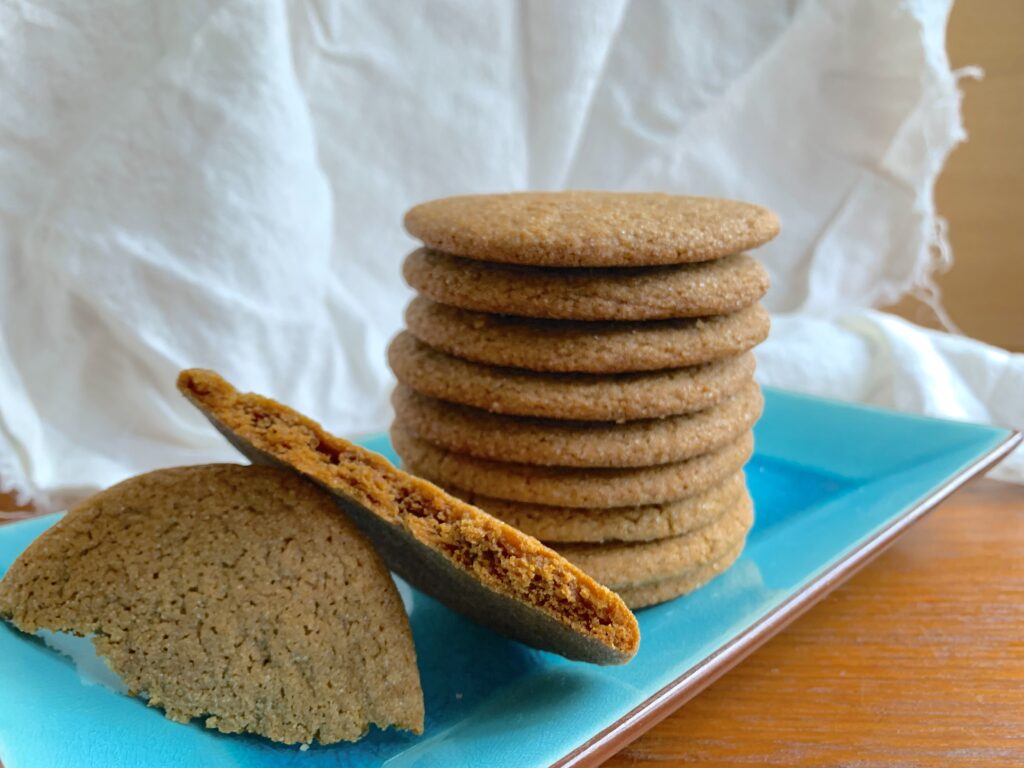
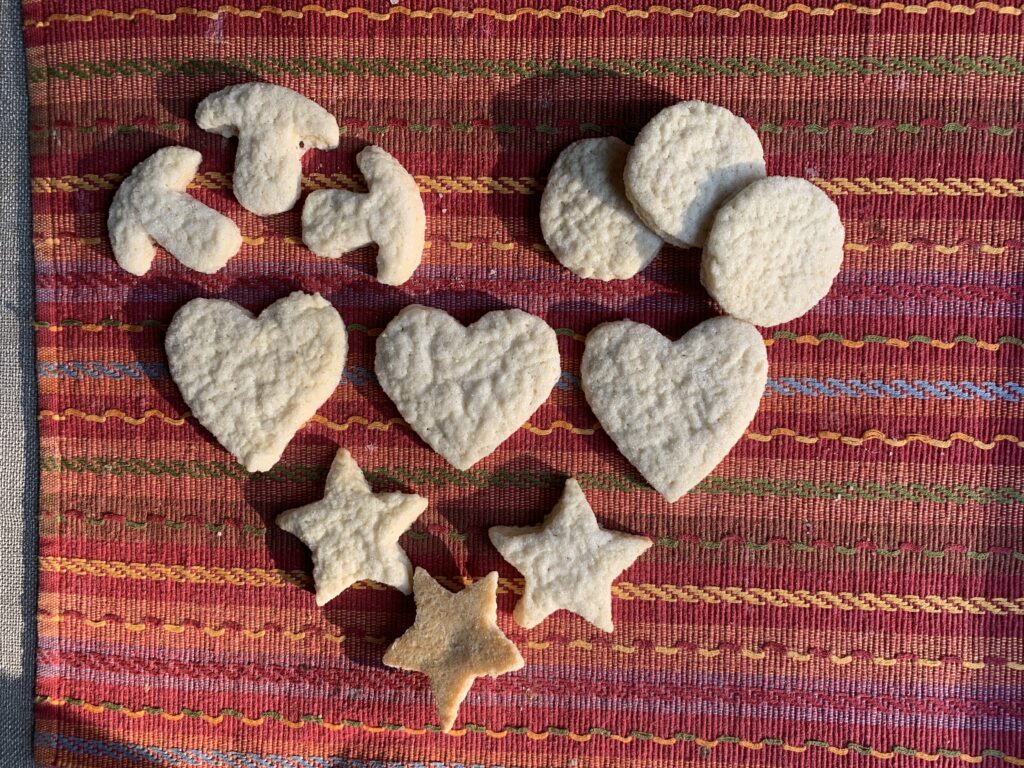
The Tea Cakes tradition goes back to the antebellum south, entrenched so deeply that even today it can be hard to find a church social, teatime, or other gathering that lacks some plates for guests to enjoy. The flavor matches up to that history. Kate and I agreed on “genteel” as the right adjective to describe how these feel when you eat them. They’re at the heart of that tradition called genteel Southern hospitality.

I am a northerner and Kate an immigrant, so neither of us had ever heard of or experienced this cookie. That sent me to Dr. Internet for second-hand experience to start the process.
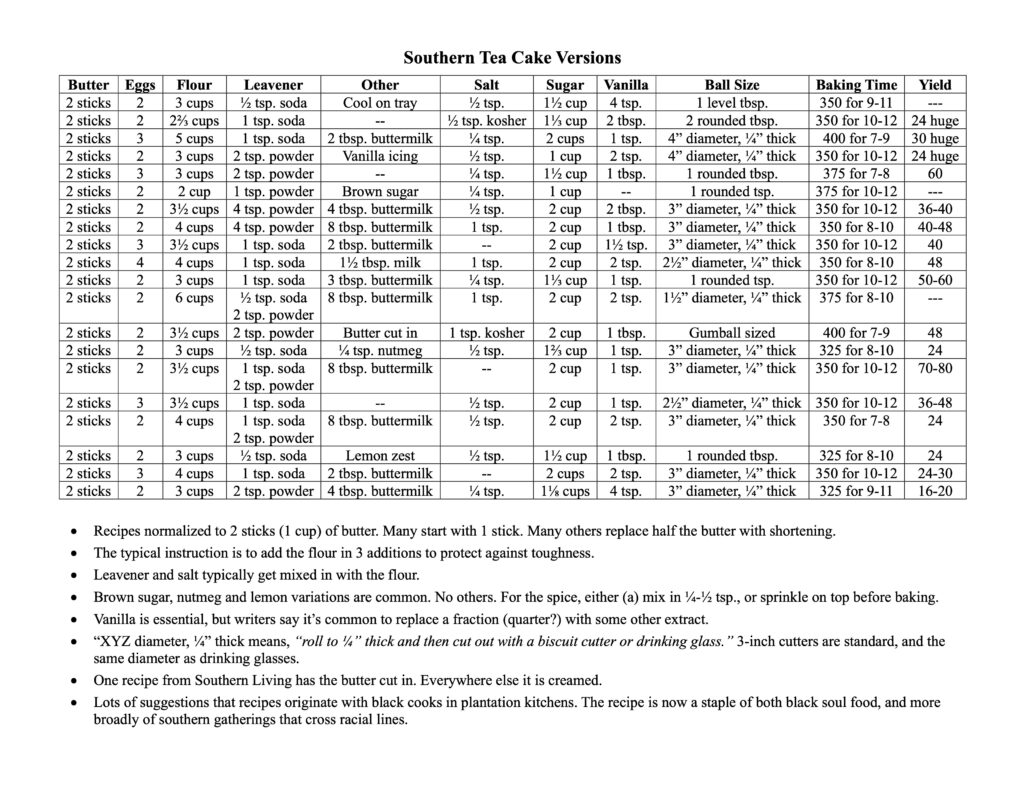
Recipes abound, with virtually every one describing their version as “just like Grandma’s.” As in 90-95%. Anyone who hasn’t done such research may not appreciate how amazing that consistency is. I found 20 recipes to start with, all of them written independently by people striving to be different while caring enough to honor their heritage as well as they could. What does it take for 20 different people to end up focused on that single image of Grandma proudly presenting the treat she’d learned from her own? It shows how deep the cultural roots really are.

Me being me, I compiled a table of ingredients normalized to two sticks of butter. Then I stepped back to look for an underlying formula.
Choices to Make: Roll or Cut

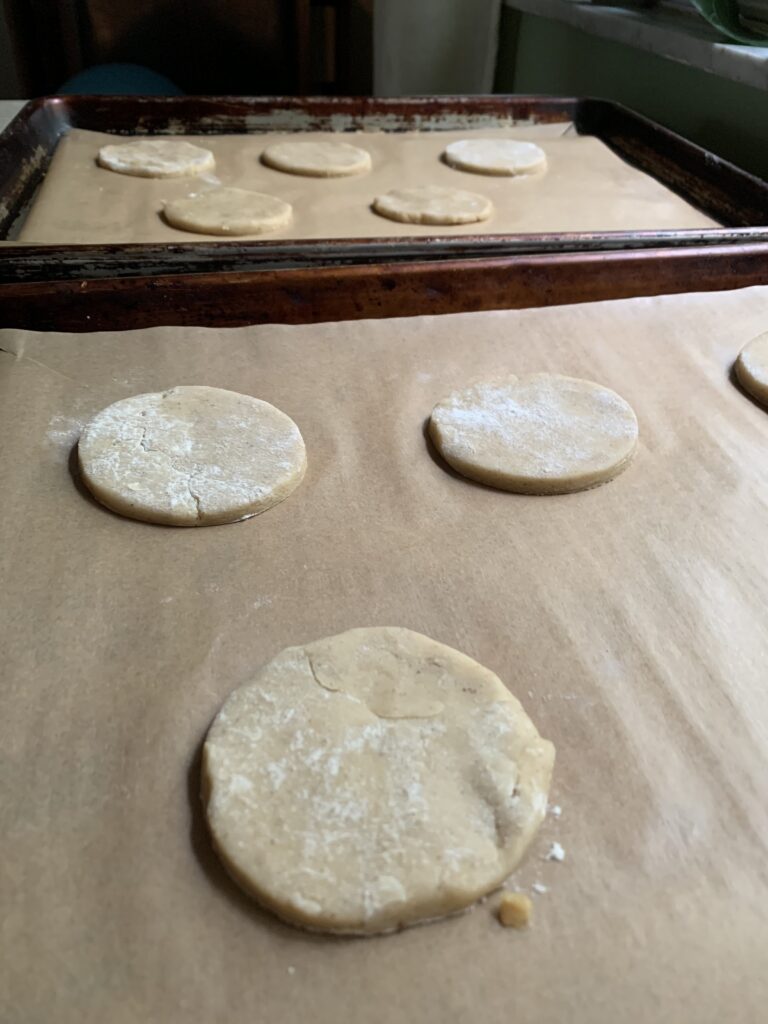
A few patterns leapt right off the page. First, the writers split more or less evenly on whether to do a drop cookie or a cut out. We chose the roll-and-cut method for our initial version, driven by two reasons. First, most of the recipes call for extra large cookies, as do the array of photos that popped up in my search. Cookies of that size either spread uncontrollably – which conflicted with the possibility of cutting the dough out – or else need some help to stay under control. Second, the idea of large, buttery dough in the American South immediately sent my imagination spinning toward the famous tradition of southern biscuits. How much more “heritage” could you get? And wouldn’t a cookie version of biscuits make sense?

I couldn’t say yes or no either way, but it was a good place to start.

Then I went back to fill in details. Did you know that typical drinking glasses have a diameter of 3″, which not coincidentally pairs exactly to a standard biscuit cutter? Many of the roll-and-cut writers said to use “a round cutter or drinking glass” for the job. The same instruction appears in biscuit recipes. Fair enough. That would be our starting point.

NOTE: Testing proved that I agonized far too much over this choice. Tea Cake dough will ball-and-squish just as well as it rolls-and-cuts. That’s what I did with the leftover scraps, and we found it hard to distinguish the two outside of size and regularity.
Choices to Make: Buttermilk?

Second question: Many writers add in buttermilk. It’s a readily available ingredient, if one we don’t keep in the house as a staple. Was it worth a trip to the market? You bet it was! Remember that analogy to southern biscuits? Southern buttermilk biscuits? This was a gimme. Besides, some buttermilk tang would help to distinguish this recipe from all the other butter cookies we’ve researched over the years.

It proved to be the right choice. That flavor really does matter.

Catching the Vibe: Variations That Really Aren’t

Everyone agrees that Southern Tea Cakes are, first and foremost, all about the texture. They’re supposed to straddle the line between cake and cookie. The universal instruction to bake until the edges start to brown supports that. It shows there’s also a required contrast between the cookie rim and center. So that was a mandatory target. But what about the flavor?

How many variations are there? Buttermilk, which I’d already decided to try. Then there’s lemon; brown sugar instead of white; nutmeg (but no other spices); and… Wait a second! Those aren’t true variations!

You can make faux buttermilk by mixing lemon into whole milk or half-and-half, often with a fleeting hint of nutmeg. (Nutmeg and dairy love each other, as shown by classic examples such as béchamel sauce). For that matter, many dairy-centric baking recipes also use brown sugar, because a very gentle molasses flavor helps to enhance the base flavor. These recipes weren’t showing different targets. They were just different methods to home in on the same target: a cookie with a profound taste of old fashioned, intensely flavored, aged or mildly fermented butter.

Suddenly it all made perfect sense. And the simple fact that everything aims to the same goal shows yet again how much the culture cares about getting this particular cookie right. We tested all of those tricks and came to the following conclusions:

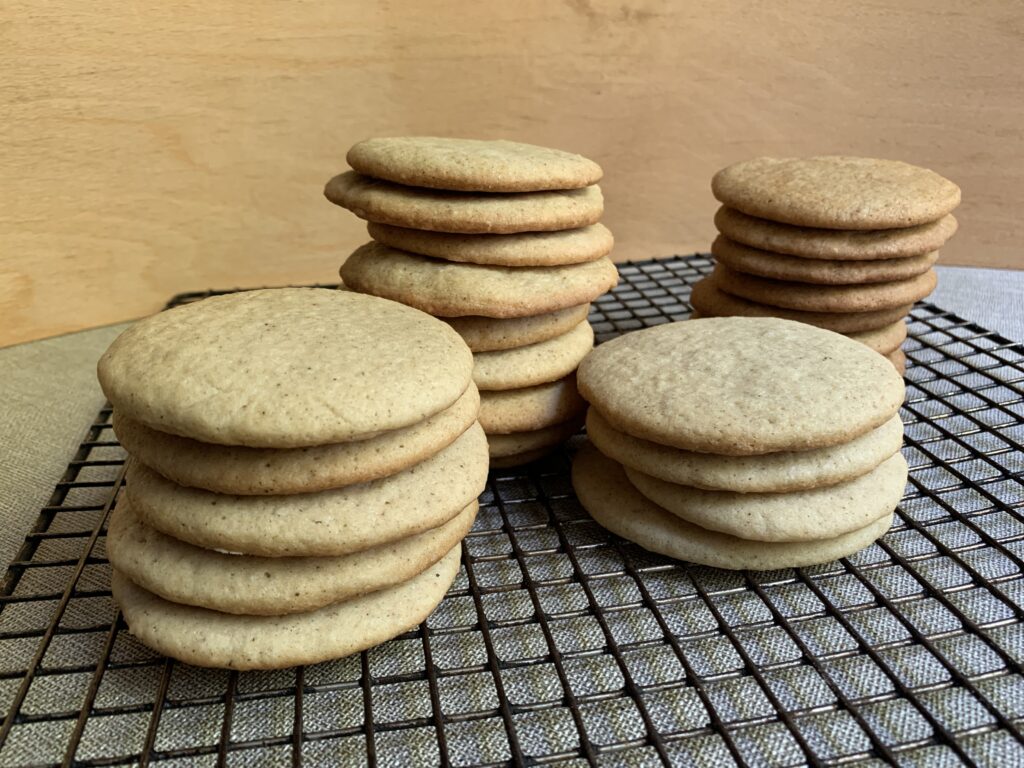
  • Buttermilk: Oh my, yes. It helps in endless ways, and makes the cookie different. We settled on ⅓ cup, right in between the ¼ cup of many examples, and the ½ cup of many more. Modify at will, making up for the extra (or missing) liquid by adjusting the amount of flour.
  • Brown Sugar: An extremely subtle difference in flavor. Someone who cared could argue us into liking it better. Someone who cared the other way could argue us back.
  • Lemon Zest: Disappointing if you use enough to taste it, because it comes across as a failure from both directions. You could convert this to a proper lemon cookie by using 2-3 lemons worth of zest with a sharp glaze made from the juice. Anything short of that left us feeling cheated, until the level drops down low enough to satisfy the anchovy rule: anchovies make food taste better until you can taste them. Then they work in reverse.
  • Nutmeg: See the anchovy rule yet again. A barely discernible hint – no more than ⅛ teaspoon – kicks the whole thing up. Any more than that yields a nutmeg cookie. Really good nutmeg cookies, yes; but a different product when all is said and done. We’ve included the larger amount as a true variation worth trying on its own merits.
  • Other Extract: Do as you like. We prefer to stay true to the original target and intent.
Lemon Molasses
Nutmeg Plain

Vanilla Is Mandatory

Go back and look at that table. Every recipe – 100 % – includes an extremely generous amount of vanilla. We settled on three teaspoons of extract (a/k/a one tablespoon), but this is a case where your taste matters more. Try the recipe as written, take notes, and then adapt it as you wish. Or not.

Roll With Flour, Which Can Be Plain All Purpose

Liquid buttermilk makes this a sticky dough. Like biscuits yet again! Rolling the cookies out on a floured board solved the problem. Just don’t work it over and over, because that could make the cookies tough. Remember: good Tea Cakes have that on-the-line texture, and bad Tea Cakes got too tough.

DIGRESSION: We worried needlessly about whether the texture challenge would require a different flour. It’s a big deal for buttermilk biscuits. Would it matter for Tea Cakes too? I hit the e-books again and found that some people actually tested this. The answer is “No, the flour doesn’t make a difference.” We can also tell you that our cookies came out with the perfect texture using King Arthur all-purpose flour; a brand notorious for its high protein content.

Testing The Cookie: We Have a Winner!

So… I baked the cookies in four batches to cover all the variations. They had a nice flavor. They weren’t just another butter cookie. The texture fit all those descriptions. So they were capital-g Good. But were they capital-r Right?
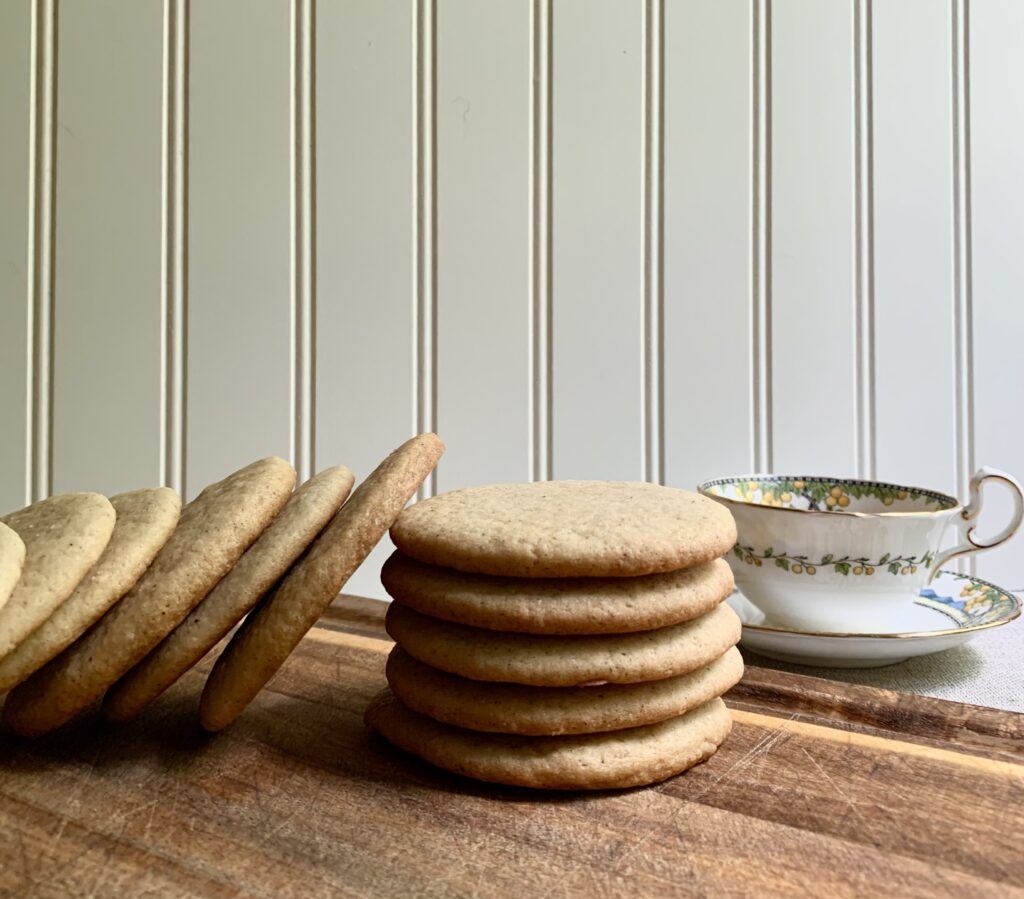
I took a tin of samples and headed for a soul food restaurant on the North Side. Those owners would know for sure!

Closed. And not just for the day. Grr.

But I wasn’t going to give up! I stopped a pair of local street people on my way back to the car, and asked if they could direct me to some other local spot where I could find someone who grew up in the south. “Somewhere like Alabama, Louisiana, Georgia, Tennessee, or the like.”

Instant suspicion! “Why do you want to know?”

After all these years I’ve got that answer down to an art form. You wouldn’t believe how many people think I’m peddling hash brownies or the like. Free cookies = ulterior motives. So I come prepared with both evidence and explanations. Show book; explain that I’m the author; explain about research; explain about the cookie; show the recipe; and then explain that “I can tell if it’s good. That’s easy. But I need native testers to tell me if I’ve got it Right.”

They reacted the same as everyone else, with that head cocked, ‘I guess that makes sense’ look. The one in heavy dreadlocks mumbled something. His friend translated. “He wants you to know that he’s from Alabama.”

I looked at the man and asked, “Do you know Tea Cakes? The cookie? That’s what I’m working on.”

His eyes lit up before he turned to look at the street. He mumbled something to acknowledge a small experience or two.

“Would you mind tasting one of these, and telling me if I’ve got it Right?”

He took the cookie, gave it a good nibble, and got a bit misty eyed. Then he turned his back. Nibble. Grab with both hands instead of one. Nibble more. Munch. Followed by munch, munch, and more munch, grabbing up crumbs until the cookie was gone. Then he gave me a thumbs-up, still turned away.

“That means you got it right,” his friend said.

“Do you want one? Take your pick. There’s another for him too if he’d like.” Another turned-away thumbs up. Then they vanished up an alley to who knows where or what, heads together and talking.

But I still had some cookies to dispose of. Kate would not approve if I returned to the house with dietary sin still in hand. Besides, one tester – however enthusiastic – is still just one.

We’d been standing outside the local public library, so why not? I made my way in, found the young man at the desk, and went through the story again. “Did anyone here grow up in the south? Somewhere like Alabama, Louisiana, Georgia, Tennessee?”

“No, I’m afraid not. I grew up in North Carolina, and that’s as close as you’re going to get.”

“Oh,” I said. “That’s too bad. But… would you happen to know a cookie called Tea Cakes?” His face lit up.

“Of course I do!”

“Care to test one for me?” Book up; recipe shown; explanation made; etc.

“Sure, I’d love to.” One bite and he came close to misting up too. “Y’know, it’s weird how tasting something from your childhood can bring up so many emotions. I didn’t expect that.”

What could I say except to agree? Cookies have a magic, and that’s a big part.

The last cookie went to his fellow librarian at the end of the counter. She was from somewhere just outside the city. “These are really good! I never heard of them before.”

I left as he began to enthuse about growing up in Tea Cake Land. That’s another part of the magic.
Conclusion

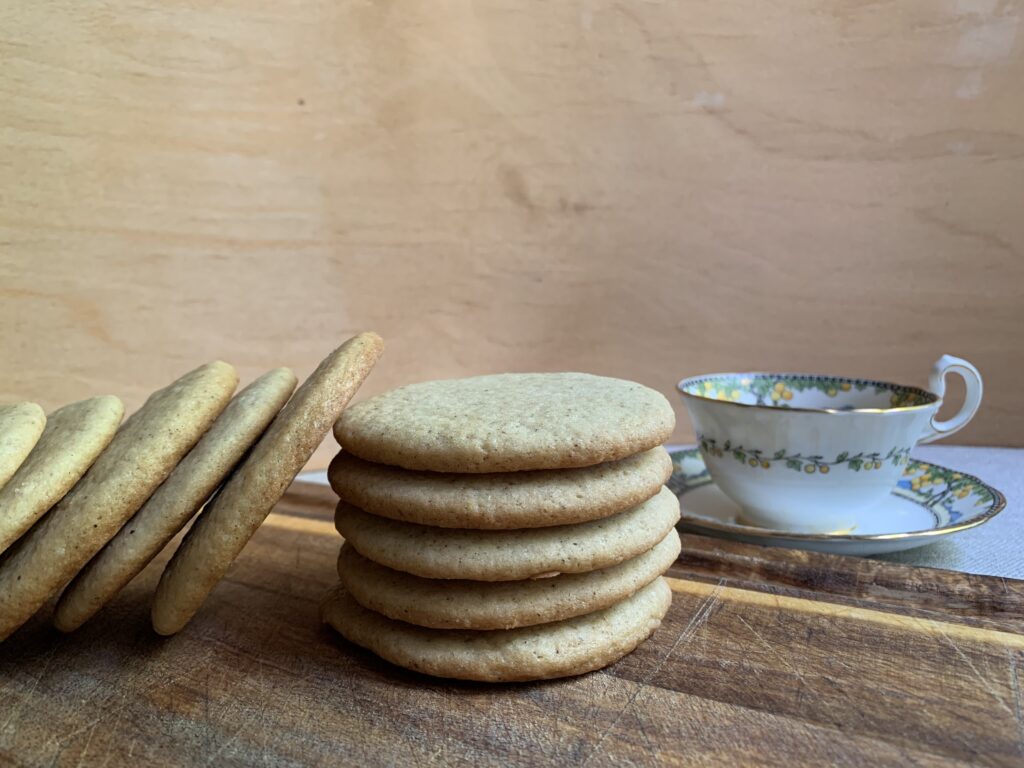
Southern Tea Cakes fit every category of “heritage” you could ever imagine. Right down to embodying a proud part of the culture itself. They really are genteel Southern hospitality incarnate. Homey and a little sweet, with nothing strange except an oddly familiar tang to the dairy flavor, and a remarkable texture right on the line between cake and cookie.

We wholeheartedly approve.

And now I’m off to confirm those findings. Again. I am a loyal husband, after all, and protecting my wife from regret comes with the job. If that means I must throw myself on the fork, so be it.

Enjoy!

NOTE FROM KATE: I agree that Southern Tea Cakes came as a happy surprise. They are pleasantly soft on the day of baking, but harden a bit on the second day. I expressed my mild disappointment with the lemon zest ones, so we talked it over. Yes, it’s there for butter support. No, this is not meant to be a lemon cookie. We have plenty of lemon cookie recipes, and this one isn’t one of them. Scott pretty much said what needed to be said. As for his valiant defense of my waistline, all I can say is, there are risks that come with being around cookies – especially when photographing them. Even though I enjoy some as part of the creative process, it really helps to get them out of the house!
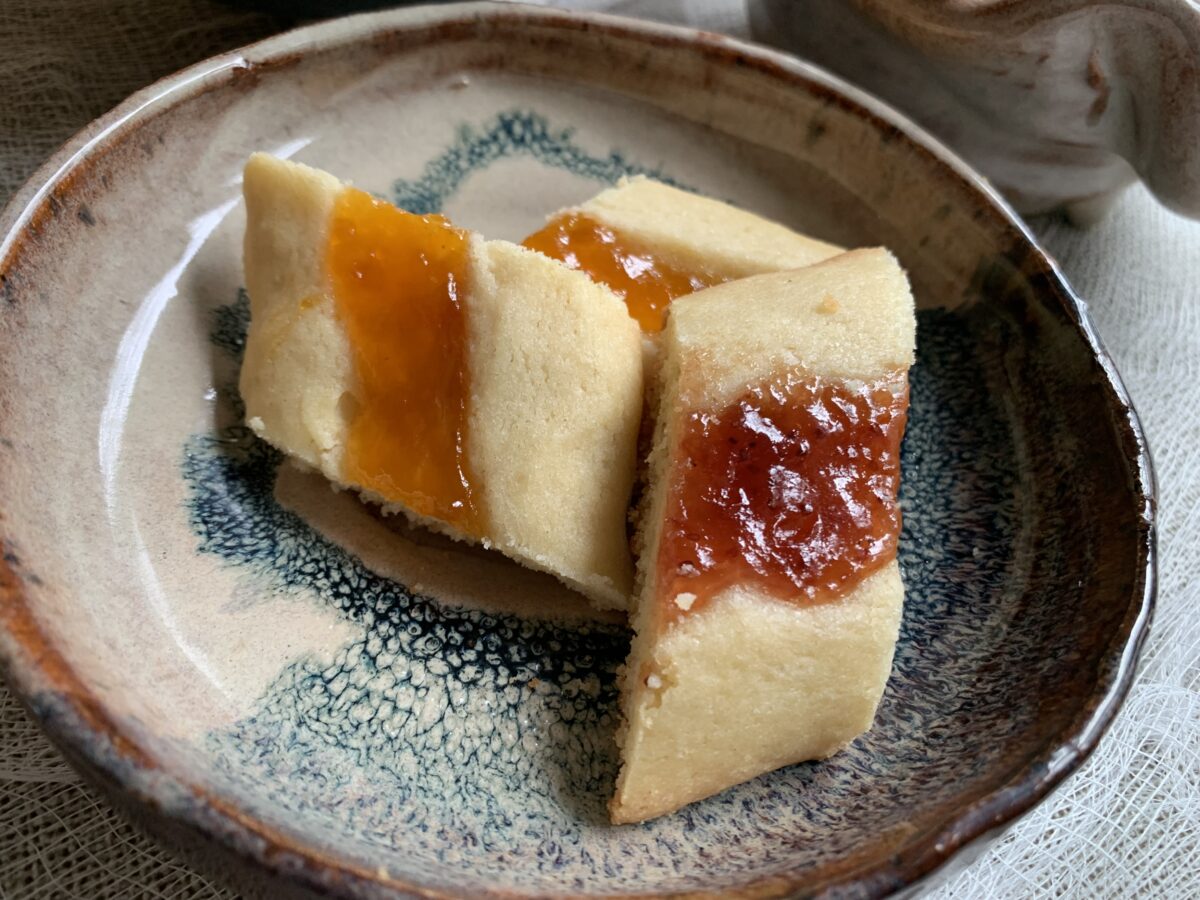
SCANDINAVIAN JAM SNIPS (“MARMELADSNITTAR”), A Class One Addictive Substance

An utterly delicious cookie from Scandinavia suitable for bakers of all skill levels.

There’s a cookie-baker archetype that goes like this: People are always popping in and out, and every time they do s/he whips up a quick batch of cookies and… And a secondary archetype for the young baker: S/he will get an urge, and vanish into the kitchen on his/her own to whip of a quick batch of…

In America those are almost always Chocolate Chip Cookies. In Australia and New Zealand it’s Anzac Cookies. In Scandinavia it’s these utterly addictive, 30 minute start-to-snarf treats that vary in infinite ways according to the jam in your fridge. I defy any human to see a plate and fail to take one on the way past.

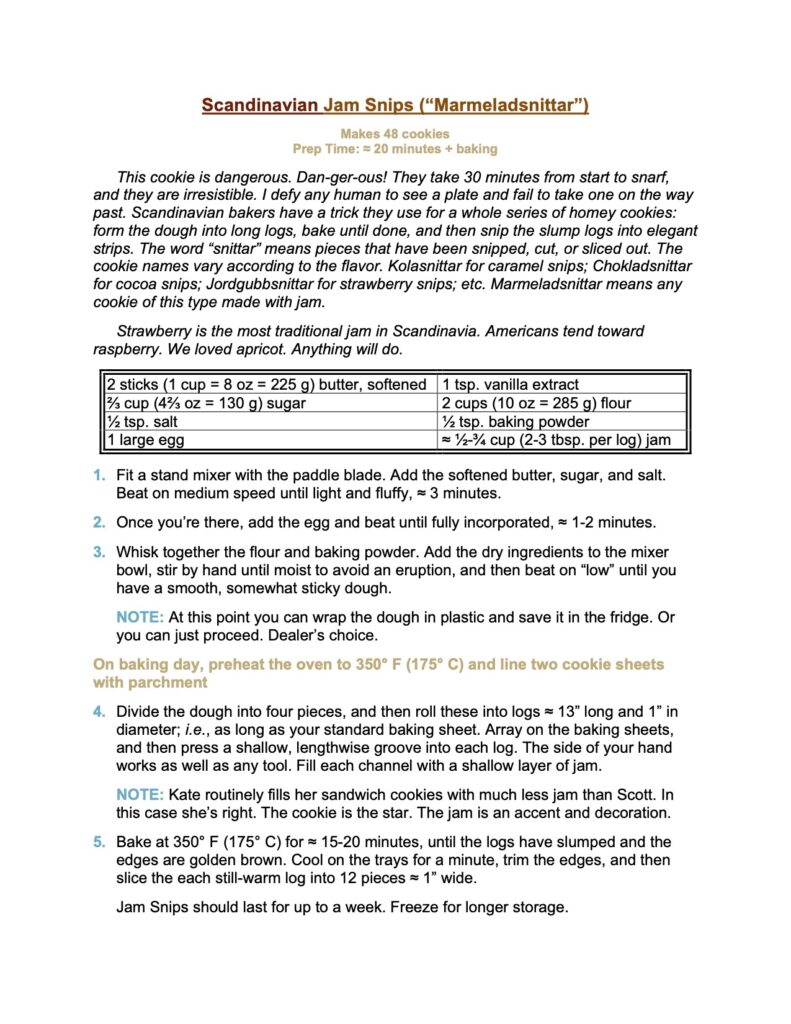
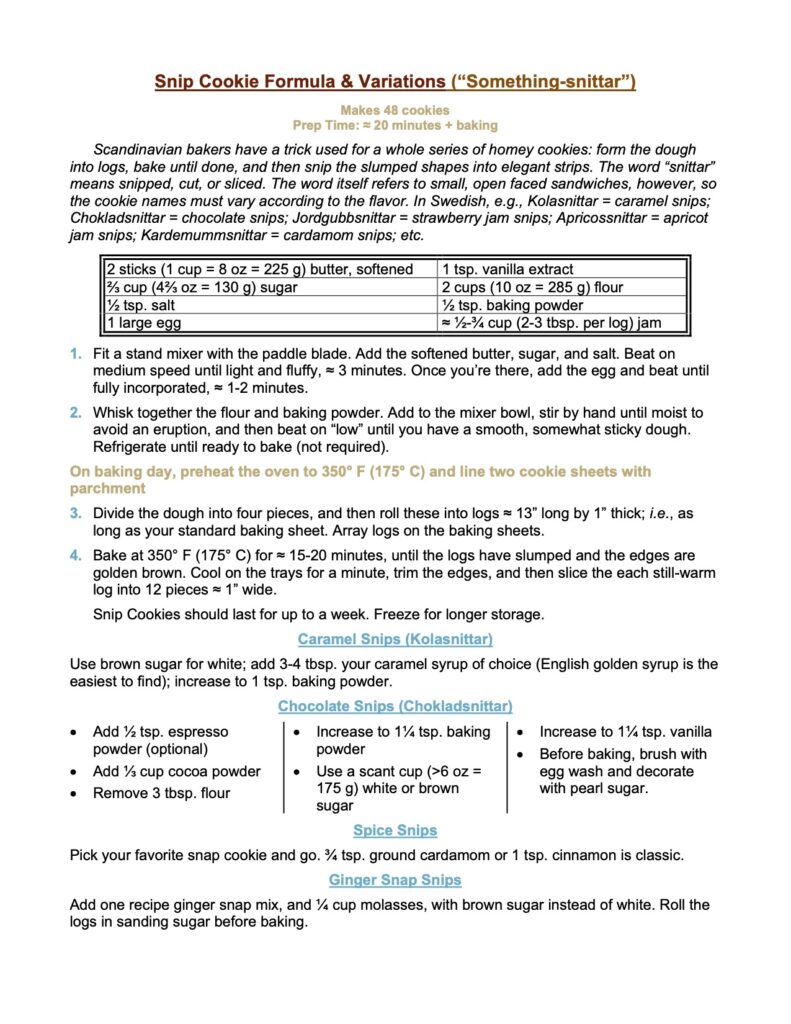
Scandinavian bakers have a trick they use for a whole series of homey cookies: form the dough into long logs, bake until done, and then snip the slump logs into elegant strips. The word “snittar” means pieces that have been snipped, cut, or sliced out. The cookie names vary according to the flavor. Kolasnittar for caramel snips; Chokladsnittar for cocoa snips; Jordgubbsnittar for strawberry snips; Kardemummasnittar for cardamom snips; etc. Marmeladsnittar would mean any cookie of this type made with jam. The online translations almost always use “cuts” or “slices,” but we thought “snips” captured the image best in colloquial English.

Strawberry is the most traditional jam in Scandinavia. Americans tend toward raspberry. We loved apricot. Anything will do. And best of all? Every variation earns its own name! So you can fill a book with “different” recipes simply by changing from one jam to another, or by adding an ingredient to the dough. Or you could in Sweden. We’re stuck with English. Drat.

This is the most basic recipe for all the “snittar” group; a light, vaguely crispy, addictively perfect butter cookie from which you can create all those thousands of variations.

Tricks Of The Trade

There really aren’t any, more’s the shame. I would feel much safer if there were. But here are a few observations to help explain the big picture.

  • Speaking Bakerese, this is a simple creaming method cookie. Cream the butter and sugar, beat in the egg, flavor, and then work in the flour and baking powder.
  • The recipe calls for slightly less flour than roll-and-cut cookies because it’s designed to slump and spread a bit in the oven. Which, of course, makes them taste extra light and buttery.
  • One recipe makes four logs the length of a standard baking tray. It’s hard to divide because of the single egg, but the dough can be wrapped and frozen for another day.
  • Do not press in a deep channel, or your cookies will be so thin in the middle that they’ll break in that spot. You want a nice, lengthwise dent to keep the jam oriented. No more.
  • Don’t use too much jam. Scott usually argues that more jam in cookie is that much more delicious. Kate prefers scarcity. In this case she’s right. The butter cookie is the star, and the jam is an accent.
  • Let the cookies set on the baking tray for a few minutes in order to set up, and then slice while warm. A bench scraper works every bit as well as a knife for this, and maybe better.
  • Diagonal slices look a little more elegant.

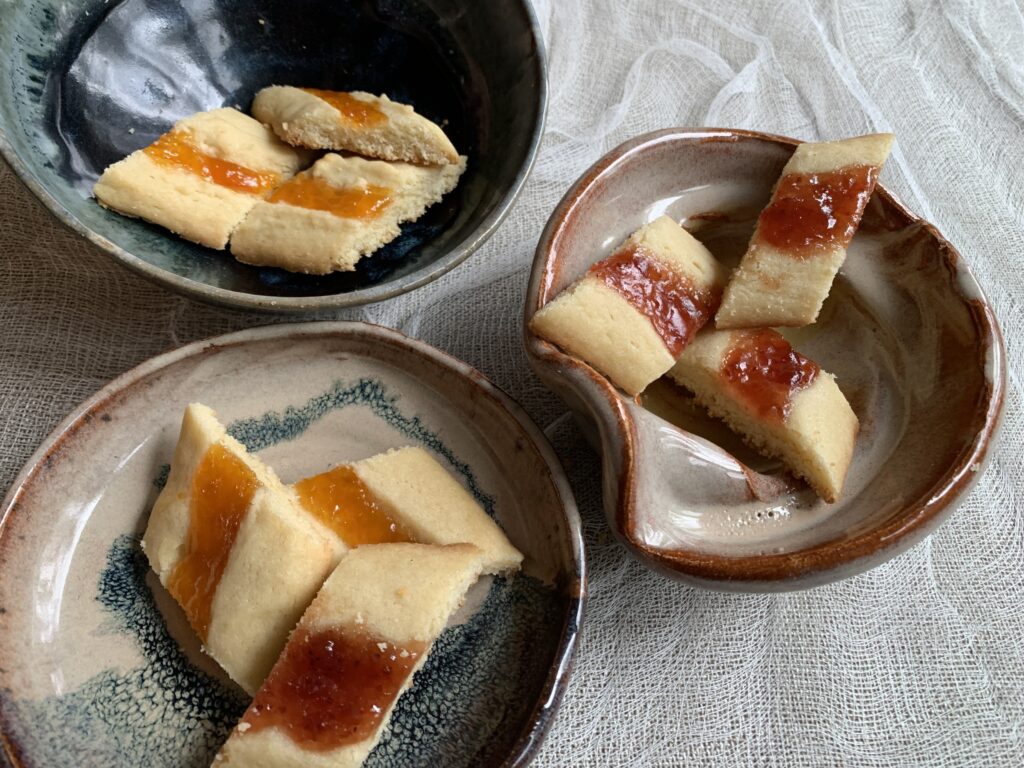
NOTE FROM KATE: regarding the jam amount, I applied the apricot jam using a piping bag, whilst Scott used a spoonfor the strawberry jam. [FROM SCOTT: My apologies. We’ve been watching too many British mysteries] You can see them both in the photo above. Honestly? I like his better. That thin line doesn’t spread as wildly, and makes it look like I tried too hard. Which I did. Go wild!

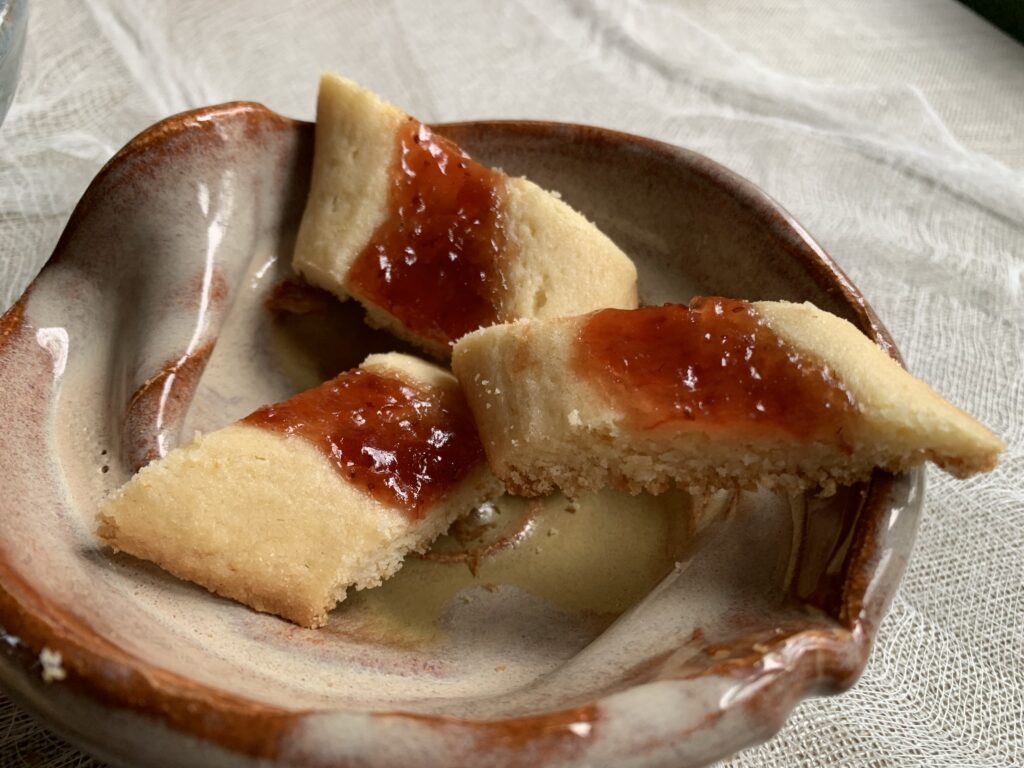
(The bowl below isn’t precision pottery, either. I made it, a beginner’s effort, and I allowed it to slump on the wheel to see what happens. If I can get away with making pottery that has “character,” the same goes for these cookies! ) And now I want to try them with a poppyseed filling. Poor Scott, that’s so not his thing.

Enjoy!

ONE FINAL NOTE: Please don’t blame us for what happens as these cookies migrate from house to hips, and platter to paunch. These are a Class One Addictive Substance! You have been warned!

JOE FROGGERS, Americana From The Age Of Sail

A revolutionary war cookie from coastal Massachusetts.

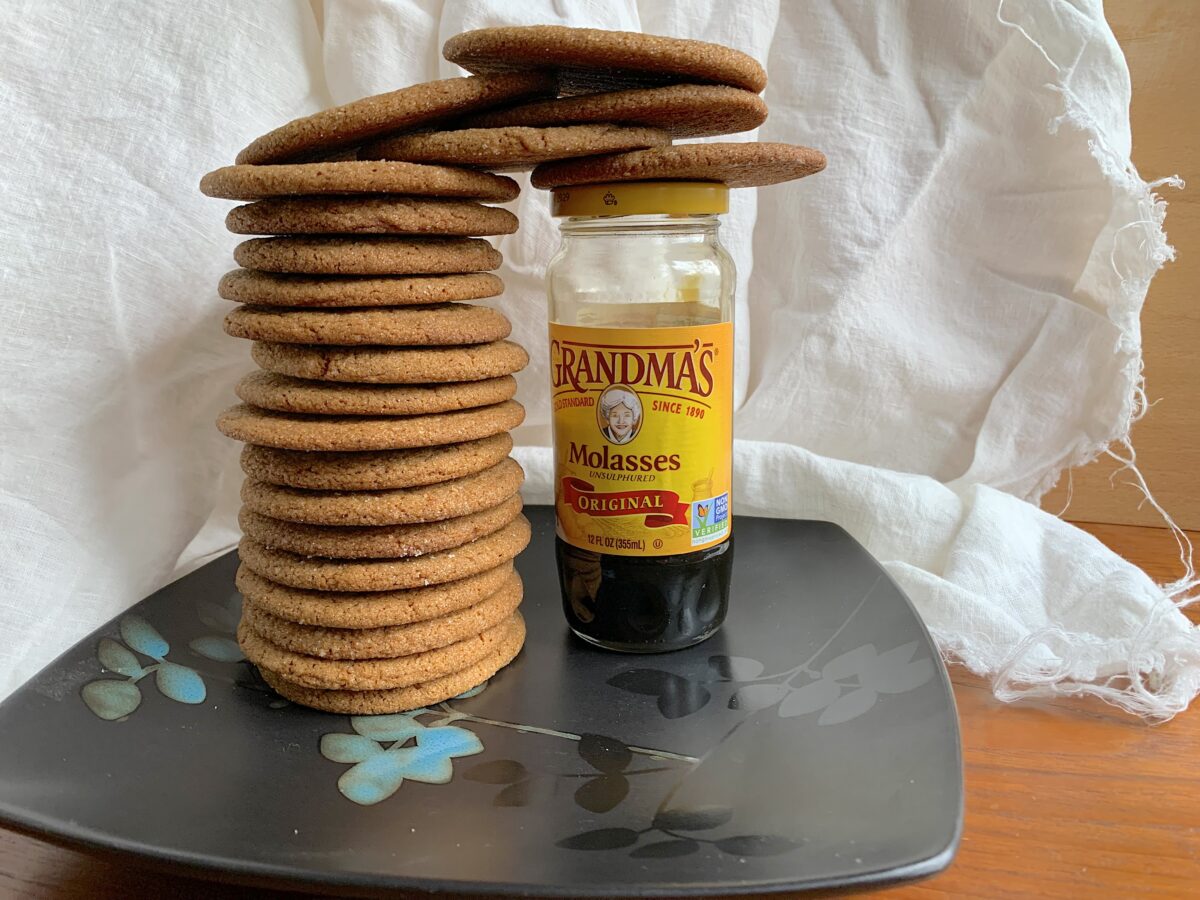
Imagine an arm around your shoulders and friendly voice saying, “Hi. I’m a cookie.” Then add in this quote from one of our tasters: “That’s the biggest, softest, easiest going ginger snap I ever tasted! Or is it gingerbread?” And then triangulate with sailors on a clipper ship singing in the sunlight, “Ho, ho, ho and a bottle of rum!” Somewhere in that intersection you’ll find Joe Froggers, a cookie created right after the Revolutionary War at a Marblehead Island inn outside of Boston, Massachusetts.

The Cookie On Its Own

Joe Froggers are a soft, gently spiced molasses cookie with a nice finish from a tot of dark rum in the dough. The cookies were designed and intended for grownups, but they’re also as kid friendly as a cookie can be. The texture is plush and easy; the flavor simple, familiar, and a bit raisiny from the molasses; and they’re about the width of a small child’s face (4″-6″ across), which guarantees the ‘eyes light up with delight‘ reaction.

The earliest versions were made with lard. Most modern recipes call for shortening. Butter tastes best of all, of course, but you give up a bit in the way of texture. We make them with a 50/50 mix of butter unless there’s a special reason to be historically accurate.

NOTE FROM KATE: I felt a need to be historically accurate, so Scott made the first batch with lard. This beautiful cookie is friendly and cheerful, but I felt like I had to work against the unfamiliar flavor of lard after the third bite. This particular fat’s texture sticks to the mouth a bit more than butter or shortening. Not a familiar sensation. Next time I’d go with half lard and half butter. Despite its undeniable culinary advantages, I don’t particularly like shortening, as it’s an ultra-processed food, but YMMV. I can see this one becoming a family favorite!

That’s about all you need to know. It’s a big old, friendly, arm around your shoulders cookie.

“Joe Froggers?” A Taste Of History

The general outline of the story is well known and documented, with its own page at the Marblehead Museum website. The story goes like this.

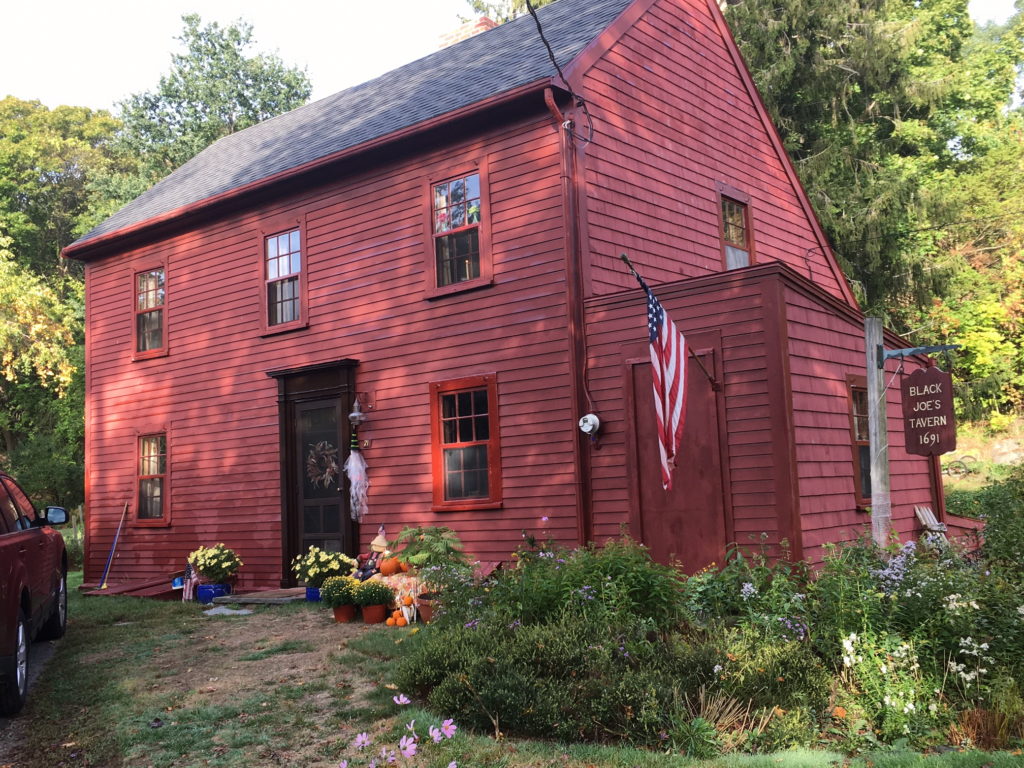
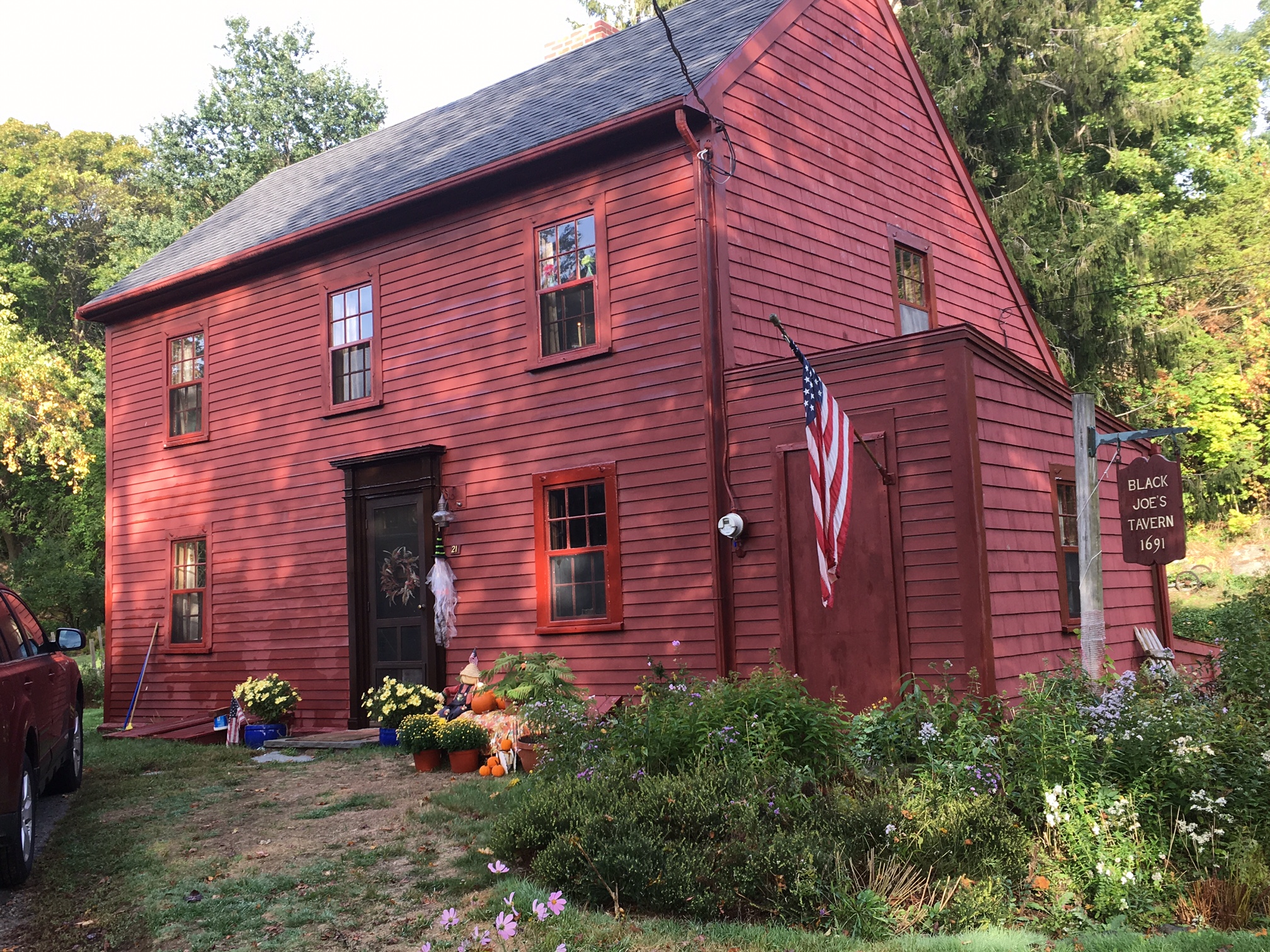
Once upon a time there was a Revolutionary War veteran named Joseph Brown, son of an enslaved, African-American mother and a Wampanoag father. He and his wife Lucretia opened an inn on Marblehead Island after the war, right next to a local frog pond.

Photo, credited to the Smithsonian Institution, found at MarbleheadMuseum.org.

Lucretia invented the cookie, and it became something of a sensation. They’re not only delicious, but they also have enough molasses to keep for a very long time. The revolutionary era Massachusetts economy centered on fishing, trade, and other maritime activities. Marblehead was a major seaport and shipbuilding center, so much so that it’s also known to history as “the birthplace of the American navy.” That fame would only grow as the young nation built its vast fleet of clipper ships.

Joe Froggers (and Hermits) quickly became the treats of choice to send off on long voyages around the Atlantic, and later around the world. Small, tasty, long lasting, and relatively inexpensive because much of the nation’s molasses and rum trade came through Massachusetts ports.

The name itself is more debatable, with every source we’ve found claiming to have the one true answer. It’s certainly related in some way to the pond out back. And the “Joe” part certainly comes from Joe Brown. Others note that Lucretia Brown (“Aunt Creese”) originally made these on a skillet, like extra chewy pancakes, and everyone who’s done such things will know how often the neat, round shapes you’re after come out looking vaguely like a frog. Others argue for the lily pad idea.

Decide as you like. This is me hoppity hop hopping away from all such debates. It’s probably some combination of them all, plus the fact that the name itself is so fun.

Moving on, Brown’s Inn grew into an immensely popular community center for celebrations of all kinds. Joe became the town fiddler, with his own set of local legends. And Lucretia’s breads, buns, cookies, and cakes were the best one could find. The couple eventually grew into local legends in their later years, and then expanded into lore and myth after their deaths, with the details ebbing and flowing with whoever told the tale.

For our purposes the bottom line is this: “Black Joe” and “Aunt Creese” were real people, who owned a real inn, and really were well known and loved across the island of Marblehead, Massachusetts. Lucretia Brown really did invent and popularize the cookie now known as Joe Froggers. Joe Froggers really did become a “thing” both during and after their lives, traveling around the world on the Bay State and American Navy fleets. And they remain a “thing” across eastern Massachusetts even now, in the 2020s.

Many cities around the country have “their” cookie. This is the one belonging to Boston – complete with the inevitable carping about how Boston undeservingly managed to absorb all of maritime New England under its umbrella. You’ll make a friend if you acknowledge that injustice to a native of Marblehood, Lynn, Gloucester, or the other seafaring centers of the era. Just acknowledging their claim will make a difference. And Bostonians won’t care in the slightest. It’s all Greater Boston from their point of view. They’re city folk.

An Aside (Sort Of) – The Great Molasses Flood Of 1919

I spent a few hours walking Pittsburgh’s Strip District in search of enough testers to keep us from devouring dozens of these huge cookies on our own. It was a real danger! We each accounted for at least half a dozen when the other wasn’t looking because they are heartbreakingly moreish. The molasses flood must have come up in conversation close to ten times.

It has no direct connection to Joe Froggers beyond “Massachusetts” and “Molasses,” but it’s one of those fascinating events that everyone’s heard about but never remembers until prompted. And then they remember how much they love the story in a guilty kind of way. 20 people drowned in molasses?! The smell lingering on summer days for decades?! Massive and enduring changes to building codes across the nation? Baking ingredients shutting down a city?! Wow.

This goes to a link from the city website Boston.gov if you want to refresh your memory. Here is a fun Wikipedia link that tells the story better, albeit with less authority.

Notes For Fellow Bakers

  • The rum adds an interesting note you don’t really taste unless you know it’s there. But it does matter. First, because it’s a part of the history, and that’s part of what makes this cookie so fun. But also because the rum rounds out the spices to create a whole that isn’t quite gingerbread, and isn’t quite ginger snap, but something unique within the family.
  • Rum extract should work just fine, though we haven’t tried it. We used Gosling’s Black Seal Bermuda Dark Rum because we also keep around the house just for drinking. Good stuff!
  • The fat makes a difference because you can taste it in the final product. Lard and shortening add something to the texture, however, which is why we recommend a 50/50 mix of butter to other. But it’s truly up to you.
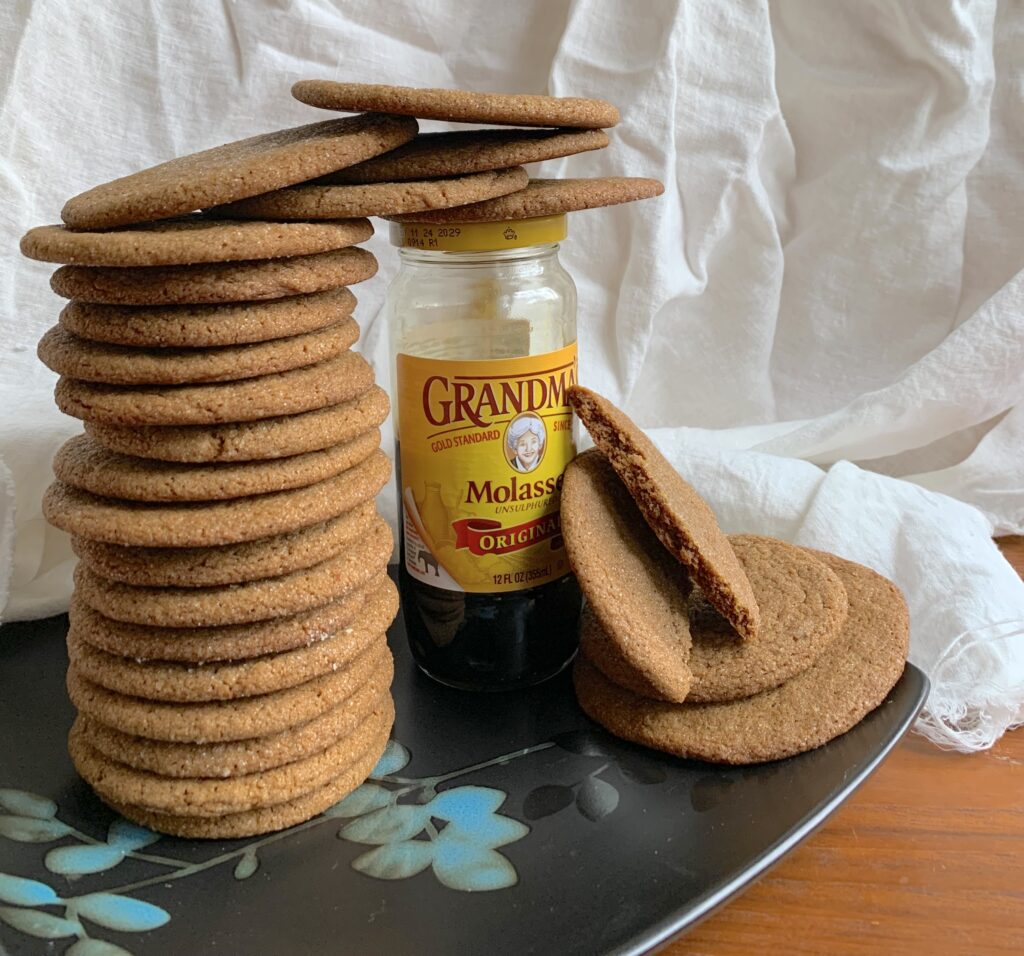
  • Purely by chance, I happened to use up my old jar of molasses while making a test recipe. That jar became the perfect vehicle for combining the (topped off) cup of molasses with the hot water and rum. Put it all in the jar, screw down the lid, and shake until it’s all smooth and liquid.
  • This is a really, really sticky dough that’s just over the line from being a batter AFTER it cools and sets in the fridge. Account for that as you get the dough mixed. You want just enough flour to reach that point. Any more will start to toughen the cookies. Remember: you can always mix in more, but cannot take any out.
  • Some recipes will merely sprinkle the pre-baked balls with sugar, but we ended up rolling them simply to make the sticky dough balls easier to handle. This is why we removed 1-2 tablespoons of sugar (⅓ oz = 10 g) from full 1 cup usually listed for the dough.
  • You want to press the balls down to keep them from rolling, but there’s no need to really squish them. The dough will spread all on its own.
  • Speaking of which, a golf ball sized sphere is really big compared to what you probably make with other recipes. That is the minimum size for true Joe Froggers. They’re supposed to be big enough that children will gape in awe at the wealth. Skimp if you must, but please do it on purpose because regular sized cookies don’t leave the same emotions in their wake. We fit only four cookies per standard baking tray, with six slightly smaller ones on the final tray because that’s what was left in the bowl.
  • Adding the flour and liquid in stages works best. Everything gets smoothly and evenly incorporated. But it isn’t essential unless you’re working by hand.
  • This is a no-eggs recipe. That isn’t a typo. It’s a feature, not a flaw.

Enjoy!

SWEDISH OATMEAL THINS (“HAVREFLARN”), A Year-Round Recipe

A perfect year-round, super fast cookie for all ages and tastes.

It’s funny how the simplest cookies can be the ones that drive you batty. Scott’s been trying to nail down Tuiles for so long that it’s become a family joke. Oatmeal wafers have been another bane. Until now. These aren’t thin enough to call a proper “wafer” – hence the name “thins” – but they are simple, easy to play with, and utterly delicious. A true year-round cookie rather than something fancy for the holidays.

Click here to see the recipe without the discussion

There isn’t a whole lot more to say beyond “make this cookie, and make it often.” Oat Thins are a classic, relatively bulletproof treat from Scandinavia that is more equivalent to an everyday Chocolate Chip Cookie than any of the fancier Christmas treats.

It’s nailed. Enjoy.

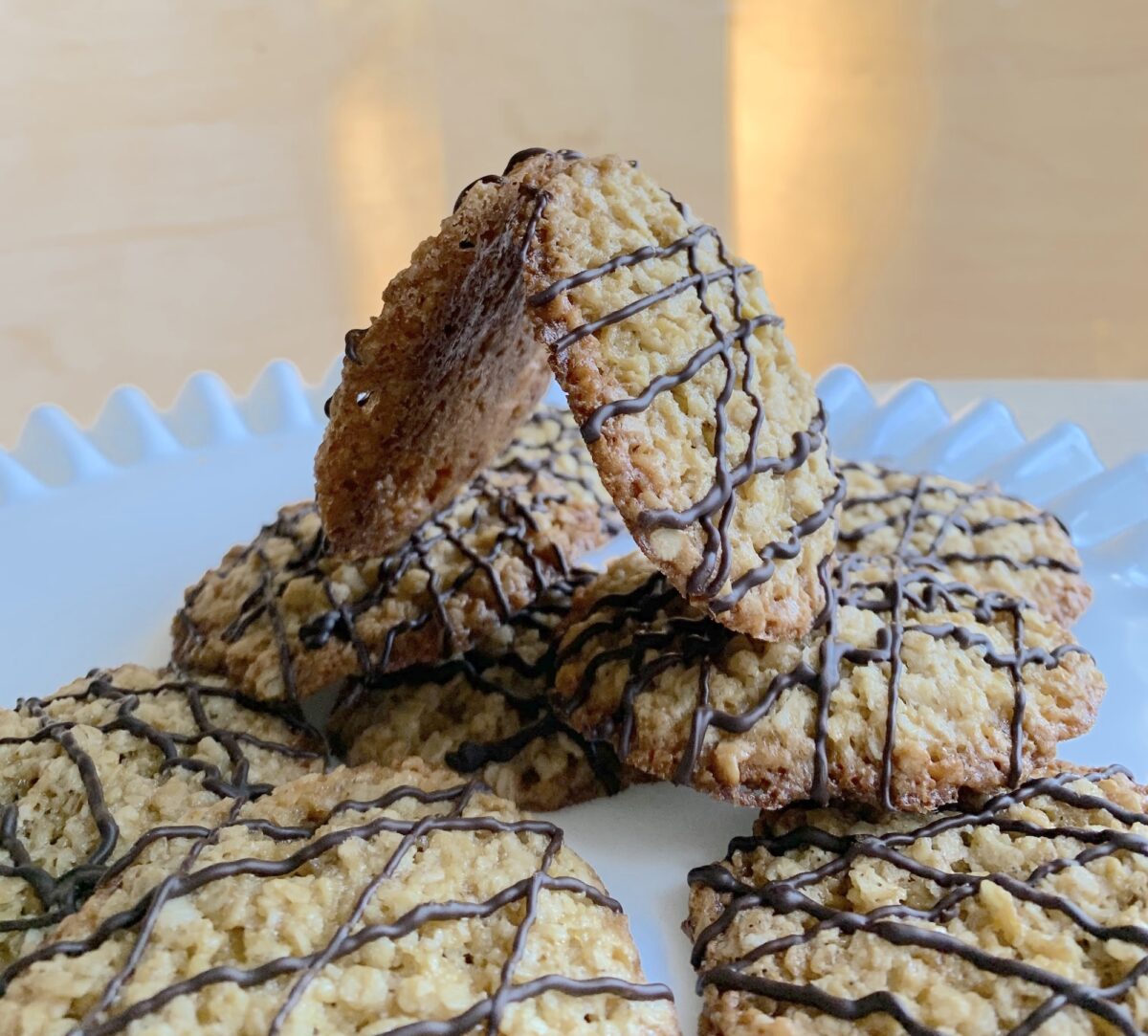
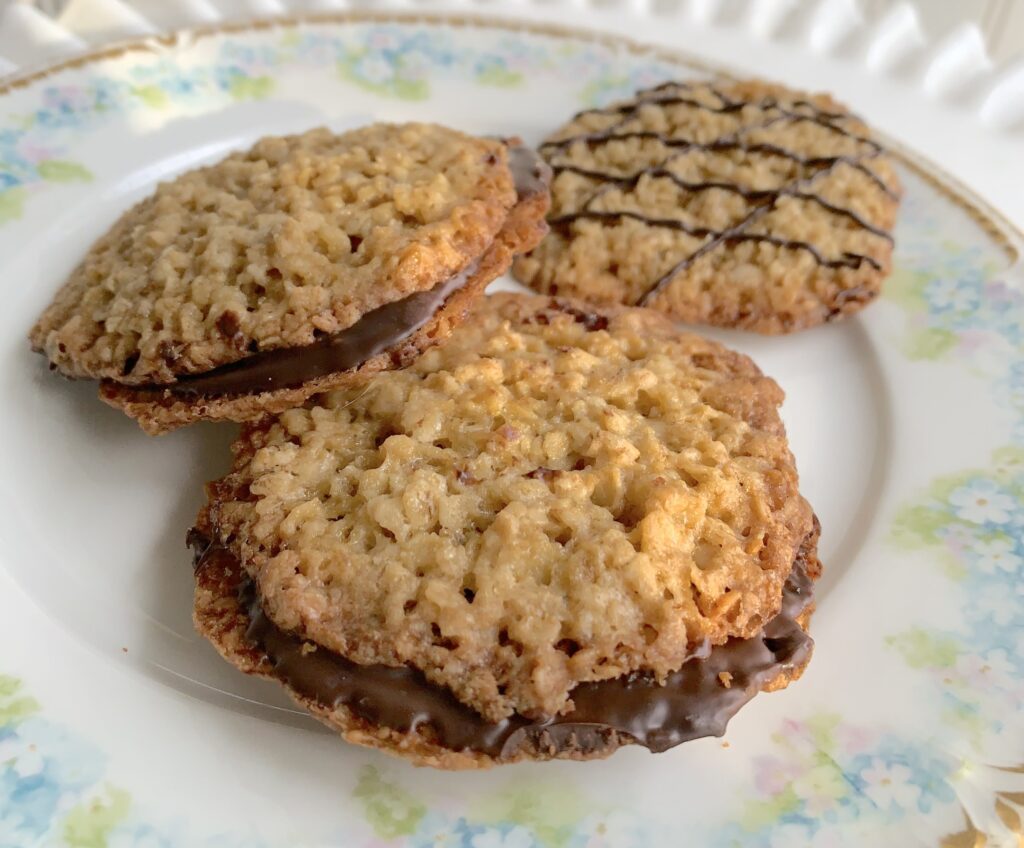
NOTE FROM KATE: I had nothing to do with the baking of this cookie…but I played with the chocolate. The neatest way is to load your melted chocolate into a pastry bag, snip off the tip so you get a thin stream, and make parallel lines across the entire sheet at once. Then stripe them sideways to form the diamonds. To easily make sandwiches, snip the bag opening a little larger, squirt, and squish. As much as I like these with chocolate, I absolutely adore the hit of buttery flavors when these cookies are still slightly warm and pliable!

The most interesting part came when Scott broke the recipe down to put in one of his all-cookie ratio tables. Would you believe that Swedish Oatmeal Thins turn out to be all but identical to our recipe for the deep south’s famous recipe for Benne a/k/a Sesame Wafers? Talk about parallel development!

We’ve now tested the cookies plain, drizzled with chocolate, and sandwiched into a serious, four-bite, chocolate oatmeal sandwich. Every one of those was fantastic. A ten out of ten for good, old fashioned yumminess. The texture is crisp, and stays that way. The flavor has that irresistible caramel/vanilla/oatmeal essence we’ve searched for over the years. And both of those features stay that way over time. What more could you want?

As for ease… wow. This is one of the fastest and simplest cookies we’ve ever come across. No exaggeration: Scott decided to race the clock for our final test batch. He put the oven on to preheat toward 350°, and then hurried to put the dough together and set up the trays.

Ready… set… go. Melt butter; measure out the dry ingredients; stir in the butter; and then stir in the vanilla and egg. Dough done, oven at only 275°. Form balls of dough, array on the trays, and… oven at 337°. The cookies were ready to bake before the oven could finish preheating!

That, my friends, is a cookie that comes together fast. Dump, stir, scoop with a spoon, form into balls, and bake.

Enjoy!

SUSUMELLE, A Honey Cookie From The Toe Of Italy

Honey, orange, cinnamon, and clove in an ancient waybread cookie

After researching a few recipes from the Eastern shores of the Mediterranean, our attention turned toward an interesting Spanish/Portuguese cookie… only to be diverted again by this much loved Italian cookie from Calabria, the “toe” of Italy right across the straits from Sicily. It’s a fun recipe, in part because there really is no single recipe. Nor any two. Nor any three. It’s basically a fill-in-the-blank name for any cookie made with the classic, southern Italian flavor profile of honey, orange, cinnamon, clove, and nutmeg-or-mace, offset by a bitter element, which can be cocoa powder, a bitter chocolate coating, or some molasses in the dough (a “difference” that typically changes the name from Susumelle to Mostaccioli di Napoli).

Can Anyone Define The Term?

Susumelle vary much more than most cookies, ranging from dense and chewy, to light and crispy, and topped with either chocolate or a powdered sugar glaze. But there are a few constants that ought to catch your attention as much as they did ours:

  1. This is an ancient cookie with roots going back well into medieval times, and it seems to have some connection back to the culture of Greece. I don’t think anyone would be surprised if ancient Roman recipes turned up.
  2. The main sweetener is honey, which means they have a very, very long shelf life, and did not require the boost from Age of Exploration sugar crops that caused so many new cookies to be born from the 1500’s on.
  3. Most versions include neither eggs nor fat, which makes them much less tender than other cookies. We’re told that some versions are crunchy enough to use as teething biscuits for babies! [See the safety note at the bottom of this article] But this isn’t a rule. Some recipes do include eggs, and others have oil, though we’ve yet to find any with butter.
  4. Almost every version includes some orange in the dough; zest for sure and often juice, but this can vary off to liqueurs, water, or even wine. Orange and honey! That’s a winning combination every time! Especially when paired with…
  5. A healthy amount of cinnamon, a small touch of clove, and usually an equally small touch of nutmeg or mace. This combination is everywhere in what used to be called the Kingdom of Naples from the 1200’s into the 1800’s. Think “Italy south of Rome and the papal states.”
  6. A bitter counterpart to offset the sweet honey. Cocoa powder is extremely common, and the one used in this recipe. Regions nearer to Naples tend to use molasses instead, with a name change to “Mostaccioli.”
  7. Finally, Susumelle always get coated in something, but that can range from dark chocolate (the most common), to white chocolate, to a powdered sugar glaze, to simple powdered sugar (especially for unleavened versions).

After that you get to the endless variations. And I do mean endless. Hundreds of years of variation yield more differences than consistency. It gets even more confusing as you go back in time! According to this tourist website, back in the old days natives acknowledged three separate categories of Susumelle based on the type of flour: white flour for the wealthy, poverty flours like whole wheat and acorn for the commoners, and “a third called ‘del buon cammino,’ made with good ingredients and destined for priest and friars.”

Does The Name “Susumelle” Provide Any Clues?

Well… not really. First, the word itself means multiple things in modern Italy. If you say “un Susumelle,” you almost can’t be wrong. It means anything that fits the broad category of a dessert made with honey, cinnamon, and clove. If you say “real/proper/etc. Susumelle,” or just “Susumelle” with no adjective, it means either (a) the cookie that Grandma made, with yours and everyone else’s being an abomination, or (b) a commercial version totally unlike Grandma’s but nevertheless real because you can see it in a store.

That same tourist website offers two potential name origins. The first is a combination of the Greek words sesamum (sesame) and mel (honey), which makes more sense than you might think because Calabria is right on the ancient trade routes, and there is are extremely common Levantine and Greek cookie/biscuit recipes with that profile. The other theory also traces to Greek, but is based on the word “susumeda,” meaning food that had gone bad that was given to the poor as charity. It is a Christmas cookie after all…

But that’s not all. Another theory says the name has to do with a local word for ‘una carezz’ (a caress). And I’ve even seen websites and videos claiming the name comes from the often-traditional “S” shape.

Then there’s the eternal category, “all of the above.” When many names work, people love to make puns that can work from multiple directions. And then they love to argue about it even more… but that’s a whole other story.

Does that sound vague, maddening, and designed to make researchers “wrong” no matter what they do? Welcome to my world, friends. Welcome to my world.

Wait A Second… Isn’t This A Waybread?

Frustrated? Me? Heck yeah. But then I realized that this particular kind of frustration rang some bells.

Isn’t exactly the same thing true for Lebkuchen recipes in German-speaking countries? Indeed it is! And for Molasses Gingerbread recipes across Northern Europe? Y’know, that’s true too. Honeycakes/Honey-Gingerbreads in Central and Eastern Europe? A pattern emerges.

And aren’t all those cookies remarkably similar in the big picture, being ancient recipes made with lots of honey, a spice mix, and often a healthy portion of dried fruits and/or nuts? Aha! The penny drops. This is the Southern Italian honey based waybread cookie, with every bit as much variation as its northern cousins.

Time To Treat It As A Master Recipe

After breaking my brain with no less than seven (7!) test versions, I finally realized the problem. I was trying to use one name for at least four different cookies. For our purposes we can break them up into the following variations:

  1. Super hard, use-your-molars crispy examples. These typically have no additions to the basic dough except ground nuts, which only appear on occasion anyway. Molars-hard Susumelle usually include a moderate amount of the ancient leavening agent Hartshorn a/k/a Baker’s Ammonia, and are almost always (a) coated with chocolate, (b) shaped into “S” cookies, or (c) left uncoated for baby to teethe on.
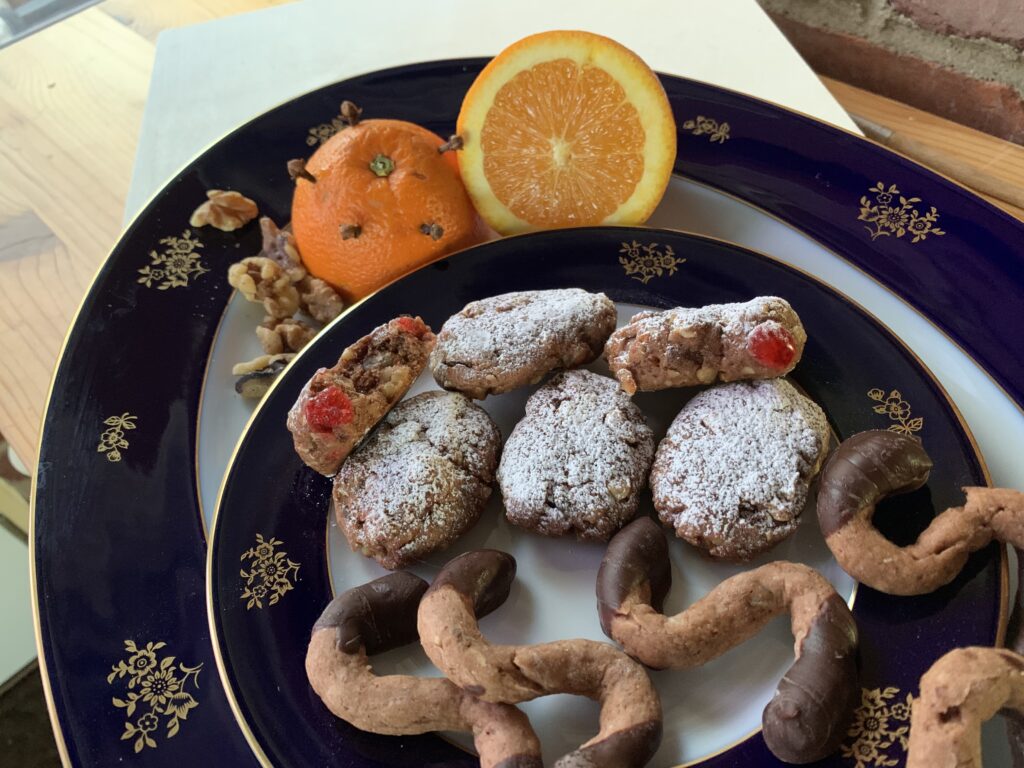
  2. Hard, light, and crispy eating cookies formed into ropes for an “S” shape, or rolled to normal (around ¼”) thickness and then cut. This version has a lot of hartshorn, but baking powder works too because they cook until fully hardened. Nuts are almost required (powdered, chopped, or coarsely chopped), but may be replaced with sesame seed. Light-and-crispy Susumelle always get a chocolate coat, usually dark but also ranging through milk and down to white.
  3. A hard and crispy biscotti version. Take #2 and form it into a single rectangle. Bake for a long time (25 minutes is typical), and then slice into biscotti-shaped pieces. The pieces can be baked a second time, but many don’t bother.
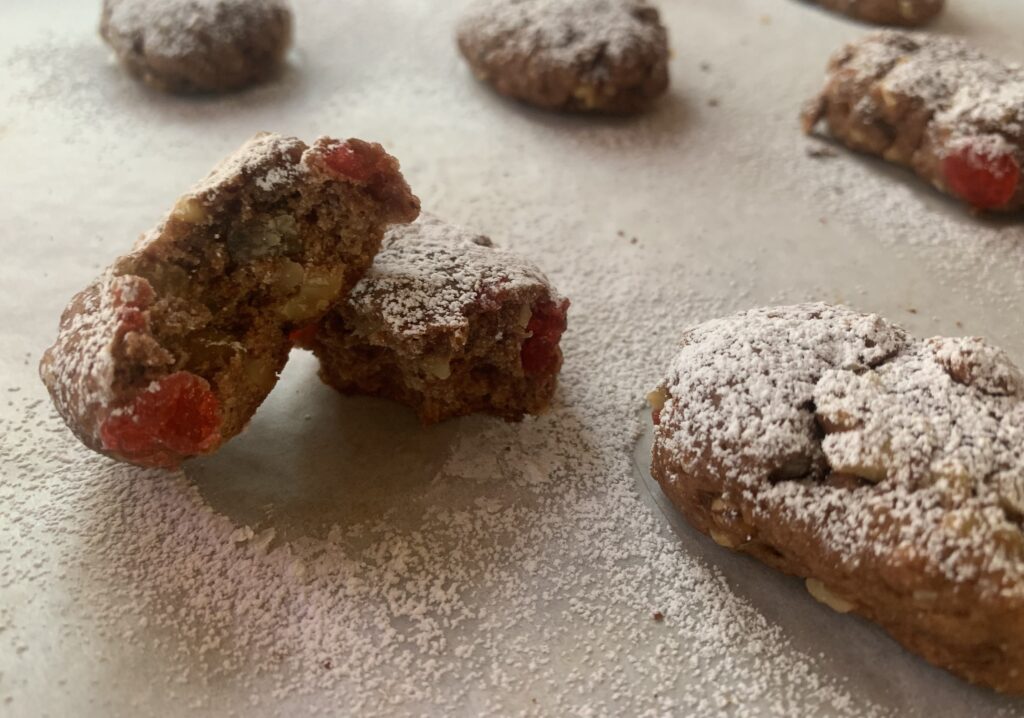
  4. Moderately crispy eating cookies, which can be either hand formed or treated as an extra-thick (around ½”) roll-and-cut. The same as #2 yet again, but with something added to interrupt the texture. That ‘something’ usually includes (a) baking powder rather than hartshorn, supplemented by (b) chopped, candied fruit, (c) chopped, dried fruit, (d) coarsely chopped nuts, and/or (e) eggs or oil added into the dough. This version also requires a coating, but it can vary from any kind of chocolate all the way through any kind of powdered sugar glaze.
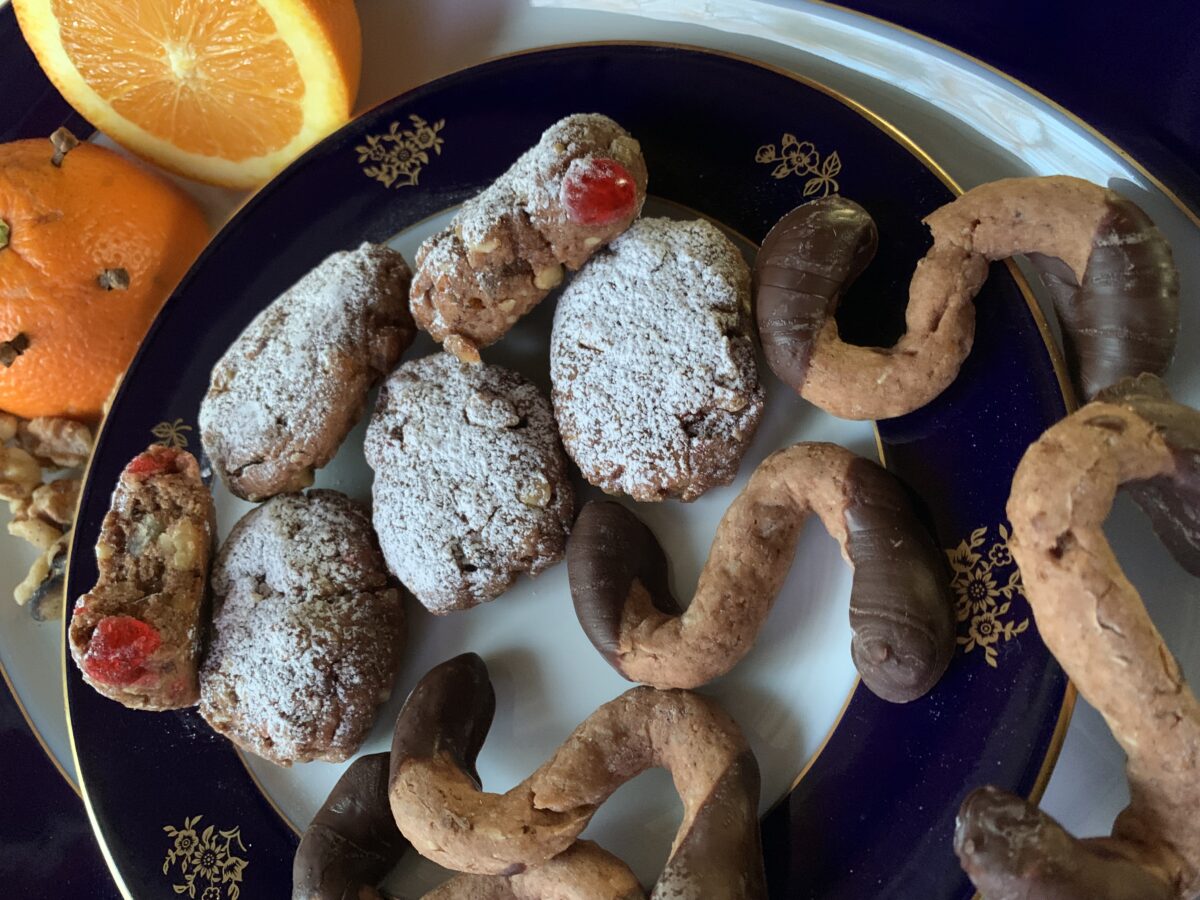
  5. Chewy waybread cookies comparable to Siennese Cavallucci. This version usually has little to no leavening, and is loaded with chopped fruit (candied or dried) and/or nuts. They’re also at least ½” thick, and large enough to be 3-4 bites each. Look for (a) large, roll-and-cut ovals, (b) hand formed egg shapes that settle into ovals inside the oven, or (c) thick ropes formed into an “S” shape. All three shapes are always served with powdered sugar on top.
Option 2 – Light and crispy, with walnuts
Option 5 – Unleavened, with nuts and candied fruit

A Rose By Any Other Name

We published a basic version of a cookie called Mostaccioli in Heritage Cookies of the Old and New World Volume 1. It’s a straightforward combination of chocolate and clove.

The research for this cookie shows that Mostaccioli is actually a broader category than we thought, and amounts to the slightly-more-northern version of Susumelle common in Campania (the shin) and Apulia (the heel) rather than Calabria (the toe) or Sicily (the stone being kicked). You can convert Susumelle to Mostaccioli by reducing the amount of honey, increasing the amount of sugar to compensate, and adding a significant portion of molasses and/or chocolate into the dough as a bitter counter-element. After that it’s the same orange/cinnamon/clove/nutmeg core, with infinite variations. [NOTE FROM SCOTT: I should probably work on a revised version of that recipe…]

Then there’s a third cookie, or more properly a Not Quite A Cookie, called Rame di Napoli; an extra-thick chocolate cake batter with the same basic flavor profile. These get baked in egg-sized mounds, coated in dark chocolate, and sprinkled with chopped pistachios. It’s a specialty of the city itself (Naples), and baked for Italy’s version of Halloween. If you’re interested, the word “rame” means “copper,” and the “cookie” is supposed to resemble an old Neapolitan copper coin. The pistachios represent green oxidation.

NOTE FROM KATE: when Scott develops a recipe, we can generally agree the point at which I can reserve cookies for the photo shoot. This time, the cookies kept arriving. I did enrobe a few of them in chocolate, but I never took photos. Too many variations, and too many baking variables, kept tripping up our decision-making process and every time Scott consulted either blogs or people, more local variations came out of the woodwork!

Now that he has his several varieties sussed out, it’s time to set up a project chart. Variety names, leavening status, textural additions, spice combinations, textures, glazes, shapes. Phylogenetically speaking, it’s as though Sussumelle was a cookie genus, and all these varieties were separate species. I care about the shapes and the glazes more than he does. As our mycologist friends like to insist, species concepts really work better when they are morphologically distinct.

CONCLUSION

Our recipes tend to focus on cookies with a story. Susumelle turned out to be a saga. Batch, after batch, after batch, trying to find the essence beneath all the recipes. We’ve rarely worked on a more frustrating project, until the penny finally dropped and we realized that something close to half a dozen different cookies all go by the same name, with only the main ingredients (honey, cocoa, cinnamon, clove, and nutmeg) as the unifying principle. That may sound mad at first, but only until you realize that much the same holds true for the similarly ancient honey-and-spice waybreads in Central and Northern Europe. Time and popularity equal endless variations.

Which is our personal favorite? Kate can vote for herself, and none are bad, but mine would be the one with no leavening at all, and all those beautiful bits and bobs inside. It’s a Lebkuchen or Honeycake done Southern Style, with a delicious flavor palate unique to these particular regions.

Of course, that opinion might change if we still had teething babies around!

A NOTE ON FEEDING HONEY TO BABIES: The bottom line is this: don’t. Honey harbors a bacteria called “Clostridium” that can on rare occasions cause infant botulism. Bad juju! The risk diminishes as the infant grows, becoming less dangerous around 6 months, safer still after 9 months, and more or less safe after 12; at least according to Doctor Internet. Babies usually start to teeth around 6 months, though some start earlier.

Susumelle recipes cook the honey and the sugar, which you’d think would reduce the risk, but it doesn’t eliminate it. So tradition be damned. Follow your doctor’s advice. The fact that people with no concept of germ theory almost always got away with the risks does not make it the smart thing to do. Do you really want to be the exception?

NOTE FROM KATE: look up the USDA guidelines for killing Clostridium botulinum, compare the temperature and time requirements, and let your comfort level be your guide. Now look up sugar, carb, and oral health guidelines for young children. Seriously dude, teething on hard biscuits is a dentist’s nightmare! The whole idea reminds me of a “teething remedy” my grandmothers used to employ: unripe poppy seeds simmered in sweetened milk, and then used as a soaking liquid for soft bread wrapped in a handkerchief and tied off with string. “It helps the babies slept better,” they both said, “but don’t use it all the time. Poppy makes kids stupid, so it’s a last-resort option.

CENTRAL AMERICAN CORN DONUT COOKIES (“Rosquillas de Maiz”)

A staple cookie from Nicaragua and Honduras that acts like a Central American equivalent to Italian Biscotti.

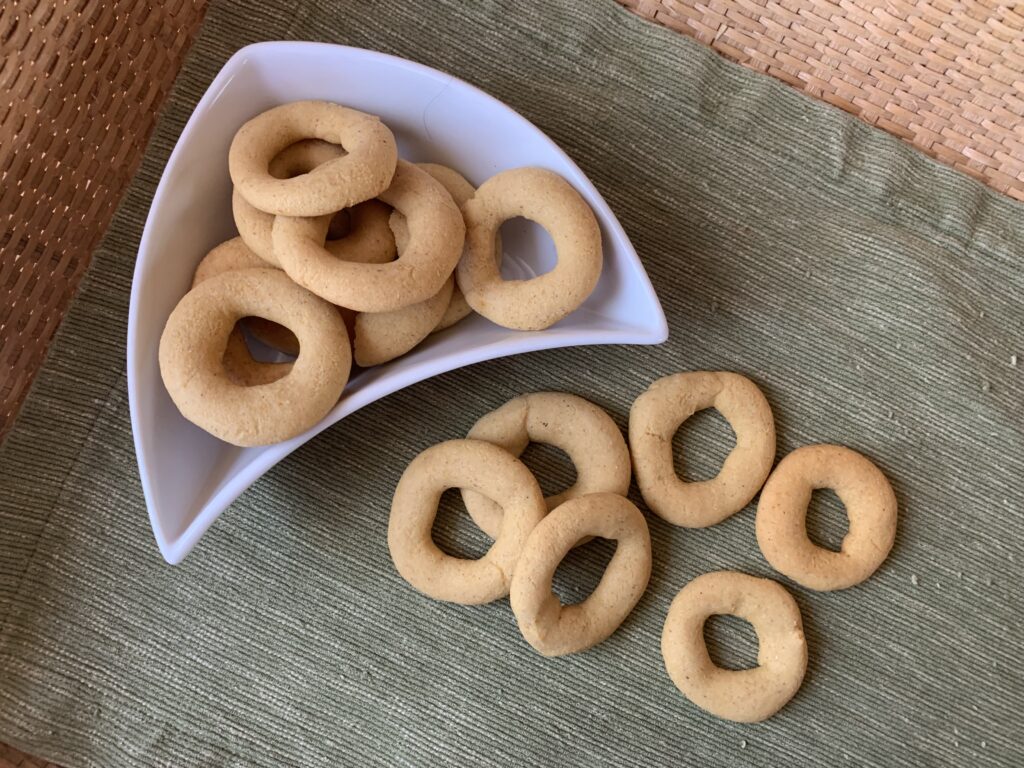
Some countries use more corn than wheat flour as their staff of life, and in those lands you have to expect corn based desserts. Enter Rosquillas de Maiz, a crunchy, mildly sweet cookie meant to accompany a cup of coffee, tea, a drink, or even a fruity dessert soup.

A word to the wise: the word “rosquillas” describes the shape, not the dish, and can include a variety of recipes that can range from our common fried donuts, through ring-shaped breads, tender shortbreads, and in this case, barely-sweet cookies. A native speaker is bound to complain if you use that word alone, just as Norteamericanos would complain if you handed over a bowl of ring shaped breads and called them donuts. Use the adjective, though, and you’re fine. Rosquillas de Maiz means “corn donuts,” and Rosquillas de Nicaragua/Honduras means “donuts from this country.”

NOTE FROM KATE: If this pattern continues, we will never be done testing cookies! What a terrible fate, right? Every time we think our short list got trimmed down to “just a few more,” this happens. Every. Single. Time. However, I have no regrets. This little cookie is easy to make, fun to shape, and expands the repertoire in an entirely unexpected direction! One note of caution: If you toast your corn flour, make sure the flour is cold before you add your leavening agents, especially if you are using hartshorn. (I poured my toasted corn flour into a steel bowl and let it cool in the freezer, for patient I am not.)

An Origin Story For Cookie Sleuths Everywhere

We often get asked “Where do you find all these?!” My best answer is, “They are there waiting to be found if you just take the time to look, and to ask.” This cookie is a case in point.

Kate and I are in the final month of intensive recipe testing before attention turns to getting Volume 2 ready for publication. Sweet Wine Cookies, a ring-shaped treat common from Portugal, Spain, and Italy has been high on our list for some time now. I mean, come on: everybody cooks with wine in their soups and sauces, so it makes total sense that wine growing regions would use their excess wine in baking too. Wine based desserts aren’t exactly rare. Nor are wine based flavors in cakes. Haven’t you come across some version of Champagne Buttercream Frosting for cakes, cupcakes, Macarons, or eclairs? If you haven’t, you’re welcome; that’s good stuff!

I looked around and, sure enough, the wine growing regions in Southern Europe have just such a treat. So I worked up a test recipe, got to where we liked it, and then went searching for native Spaniards to tell me what I needed to tweak. But there I ran into a problem. Our fallback testers include several native Italians (who gave it a big thumbs up), but Spaniards are thin on the ground in Pittsburgh and our Portuguese friend has retired. Thus I wandered into Reyna Foods, a Latin-products grocery store in the Strip District that we have patronized loyally for decades. There’s a lady there who also likes to supply her friends and neighbors with holiday cookies; Latin America was part of the Spanish Empire; and so I hoped that Rosquillas de Vino might have found a sideways path into her repertoire.

No such luck. But there was a lady from Nicaragua in the back who’s reputed to be a fine baker, and her ears perked right up at the word Rosquillas. She doesn’t speak much English, but a coworker agreed to translate my request for feedback.

Her eyes crinkled up in suspicion when I opened the tin of powdered rings. She picked one up with obvious hesitation, gave it a little nibble, and made a face so universal it needs no translation. “No, no, no. No bueno.” It wasn’t quite a blecch! because she didn’t mind the flavor per se, but she was quite firm that these were not the Rosquillas she grew up with. Not even close. Mine were sweet, tender, and had a uniquely wine-tinged aroma. No bueno. Nicaraguan Rosquillas were supposed to barely sweet, very crunchy, and [ahem] untainted.

Then she pulled out her phone, did a quick search, and showed me a photo. Plain, golden rings. “Estas. Estas son Rosquillas.” I scrolled up and saw the title: Rosquillas de Maiz. Wait a second. Maiz? As in “maize?” I.e., corn?

[Pause for translation]. “Of course it is. Rosquillas are made with masa a/k/a corn flour.”

And thus the penny dropped. The basic idea of ring-shaped cookies had indeed traveled the length and breadth of Spain’s former dominion, but not the Spanish recipe. People in the Americas had taken the idea and made it their own.

I looked things up as soon as I got home, and found quite a few examples from Nicaragua and Honduras in particular. It’s a pretty straightforward recipe with a few twists.

Twist #1 – The Basic Formula and Target Result

Research for this cookie quickly ran into a problem: the details were all over the place. Some called for lard (pig fat), some called for tallow (beef fat), some called for butter. Some were leavened, others unleavened. Some had sugar added, some didn’t. Etc. Fortunately, it’s a problem we’ve faced before and we knew what it meant.

This is a peasant recipe enjoyed by the whole society, not a well defined restaurant dish. That means the overarching instruction goes like this: “Use what you have on hand, so long as you keep the basics in place, and achieve the right result.”

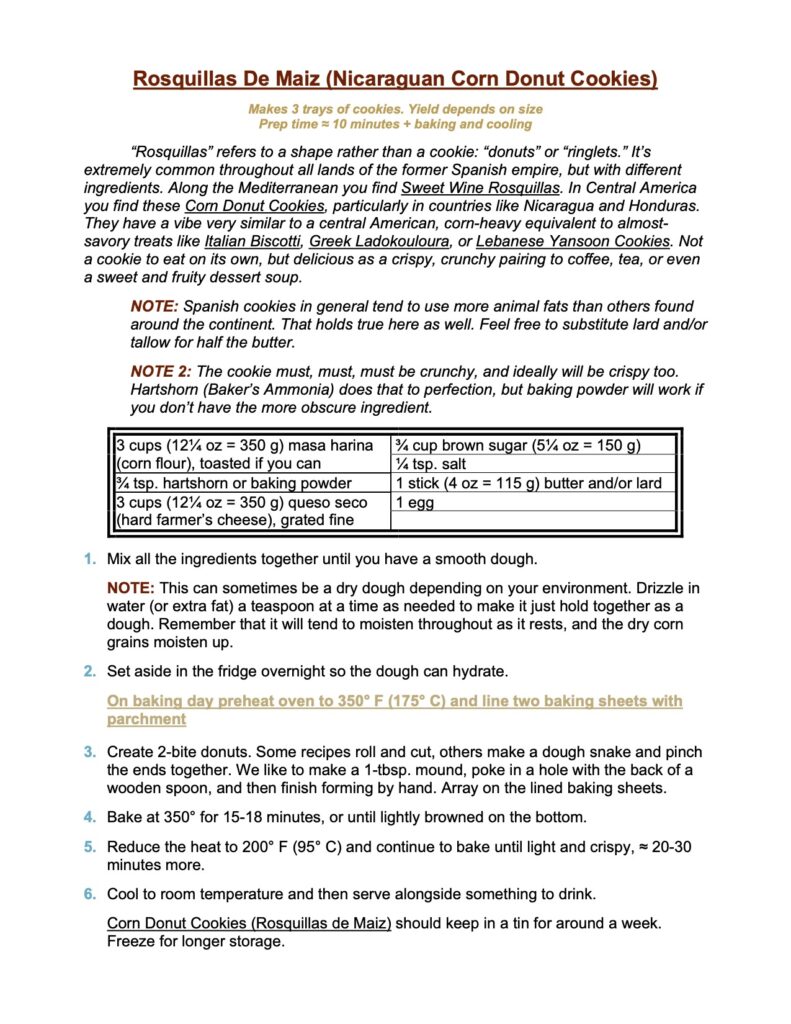
Here are those basics, as measured by weight:

  • 3 parts finely ground cornmeal (masa harina),
  • 3 parts hard, grated farmer’s cheese (queso seco),
  • 1 part fat,
  • an egg to bind it together, and
  • baking time at 350° F (175° C) to get them browned, followed by more baking at 200° F (93° C) to get them completely dry and crunchy.

And here is the target:

  • Nicaraguan Corn Donut Cookies serve the same function as Italian Biscotti: they’re a not-quite-a-cookie intended to accompany coffee, tea, an alcoholic beverage, or a fruity dessert soup. Make that, and you’ve made Rosquillas de Maiz.

Everything after that comes down to refining and perfecting each point.

Baking With Corn Flour And Meal – You May Want To Toast It In A Pan

Central Americans have fresh masa harina on hand, every day and everywhere, waiting to be used. If you’re like us, you probably have a bag of masa tucked away in the back of your pantry, sealed as well as possible to keep out the moths. “Fresh” it is not.

There is an easy solution. Put your somewhat stale corn product into a dry pan over medium heat, and cook it until you can smell the corn flavor rising up. Presto. Ready to go.

That trick may work for fresh masa harina too, but it isn’t in the original recipes. On the other hand, it isn’t all that outside of the recipes either. Spain and its cultural heirs make a series of cookies like Polvorones that are built on a combination of toasted wheat flour and a healthy amount of butter and/or lard. This fits right into that tradition.

The Cheese

Most cultures with a European heritage make a variety of fresh cheeses known by different names around the globe. Quark, tvorog, topfen, etc. They typically come in two basic varieties, wet and hard, and have a mild, creamy flavor. The closest American equivalents would be something like cottage cheese mixed with ricotta, and then drained in cheesecloth until you get the desired texture.

For this recipe you want the driest version of that cheese you can find, grated down to as fine as you can get it. We used tvorog from a local Polish store, drained in a sieve before weighing it out. It’s probably not ideal, but remember that basic instruction up above. It’s peasant food. Use what you have on hand, so long as you keep the basics in place, and achieve the right result.

NOTE: If you only have access to something as wet as cottage cheese, wring it out well before weighing, and then you’ll be fine. The darned cookies get dried at the end of the recipe anyway, and there’s no gluten to develop because they’re made with corn rather than wheat.

The Fat

As noted above, the authentic recipes vary from all butter through all lard, to a mix of butter, lard, and tallow. That isn’t odd for Spanish-heritage cookies. Again, see Polvorones and their U.S. relative Biscochitos. Use what you have on hand. Our favorite was a mix of butter and lard, but it doesn’t really matter from a “heritage” point of view.

This can be a dry dough. Drizzle in water (or extra fat) a teaspoon at a time as needed to make it just hold together as a dough. Remember that it will tend to moisten throughout as it rests, and the dry corn grains moisten up.

The Sugar Content

Authentic recipes varied from no added sugar at all to a small amount (from the perspective of a U.S. sweet tooth). The target is something that will taste like corn in your personal opinion. Season to taste, as they say.

Some recipes also call for obscure (to us) products like loaf sugar. Nicaragua and Honduras are major production centers for sugar cane, and such niceties probably matter to those who live there every bit as much as green peppers versus red peppers do for us, or Apple A versus Apple B. With all due respect, and subject to one exception, it doesn’t matter to you and me. U.S. brown sugar comes from sugar cane, with some of the byproducts (a/k/a molasses) mixed back in. The result should be identical once it dissolves into a cookie dough.

The exception? There is a Rosquillas variation that uses no sugar at all in the dough, but decorates the top of the cookie with sugar shavings from the aforementioned loaf. Consider that an Internet Bonus, because it isn’t in our written recipe. That’s a case where only true loaf sugar will do, because the texture simply can’t be duplicated.

To Salt Or Not To Salt?

That’s simple. Salt. No, it isn’t in the most authentic recipes. But we’ve found that every single baked good we’ve ever tried will taste a little better if you use an invisible pinch or two of salt.

The Leavening Agent

We call for baker’s ammonia if you have it, and there was one recipe I found that incorporated this antique leavening agent. Others use baking powder, with a healthy percentage calling for nothing.

So why did we specify the more obscure one? It comes down to the target. All biscotti are crunchy and dry, but we’ve eaten a lot of them over the years and have come to appreciate the distinction between (i) hard, which is unpleasant until you’re initiated into the cult, (ii) crunchy, which amounts to the introductory level for people not yet beaten into submission; and (iii) crispy, a rarely achieved state of perfection that catches the essence of hard without the dental ramifications of crunchy.

Unleavened Nicaraguan Rosquillas are hard. They’re still okay because we have molars for a reason, and you’re supposed to dip the darned things anyway, but in our opinion one ought to do better. Nicaraguan Rosquillas made with baking powder are crunchy. That’s what a native of the region will expect.

Nicaraguan Rosquillas made with hartshorn a/k/a baker’s ammonia are light and crispy, which made our native tester down at Reyna’s raise an eyebrow with delight. For what it’s worth, I also brought a version made with baking powder only, and that was considered good, but not as good as the lighter and crispier variety.

NOTE: Here’s an Internet-only tip. Hartshorn is a little stronger than baking powder. You may want to increase the amount to a full 1 teaspoon if you use the more common leavening agent.

CONCLUSION

Nicaraguan Corn Donut Cookes (Rosquillas de Maiz) fell into our life by total surprise, and have quickly earned an enduring spot in our hearts. The aren’t a “favorite” per se, because we associate cookies with sweet, tender, dessert-like baked goods such as shortbreads and nut cookies. But that’s taste, not judgment, and these would definitely be in the running if we were making recipes along the lines of Biscotti, Mandelbrot, or even our recent forays into Greek Ladokouloura and Lebanese Yansoon Cookies.

The first two are crunchy, crispy, and nutty-sweet. The next two are crispy and spiced-sweet. Rosquillas de Maiz are crunchy, crispy, and corn-sweet. They fit right in as a peer to the others, and illustrate a special heritage that most of us could stand to know a lot more about.

NOTE FROM KATE: I really enjoy these, and the cheese adds an extra tang. Also, look at the proportions: doesn’t the recipe resemble “Real Food?” The guilt factor is cut by two-thirds at least when you nosh on a barely-sweet, high-protein Rosquillas de Maiz. They are absolutely lovely. Now as you all know, I struggle with fitting into my jeans in this cookie-rich environment. This round little cookie has me all excited, though. Some online recipes cut out all sugar and add a bit of parmesan to the farmer’s cheese. Interesting… I wonder how these would go over as an almost-savory, balanced treat with my afternoon cup of coffee? Try them and decide for yourself!

Enjoy!

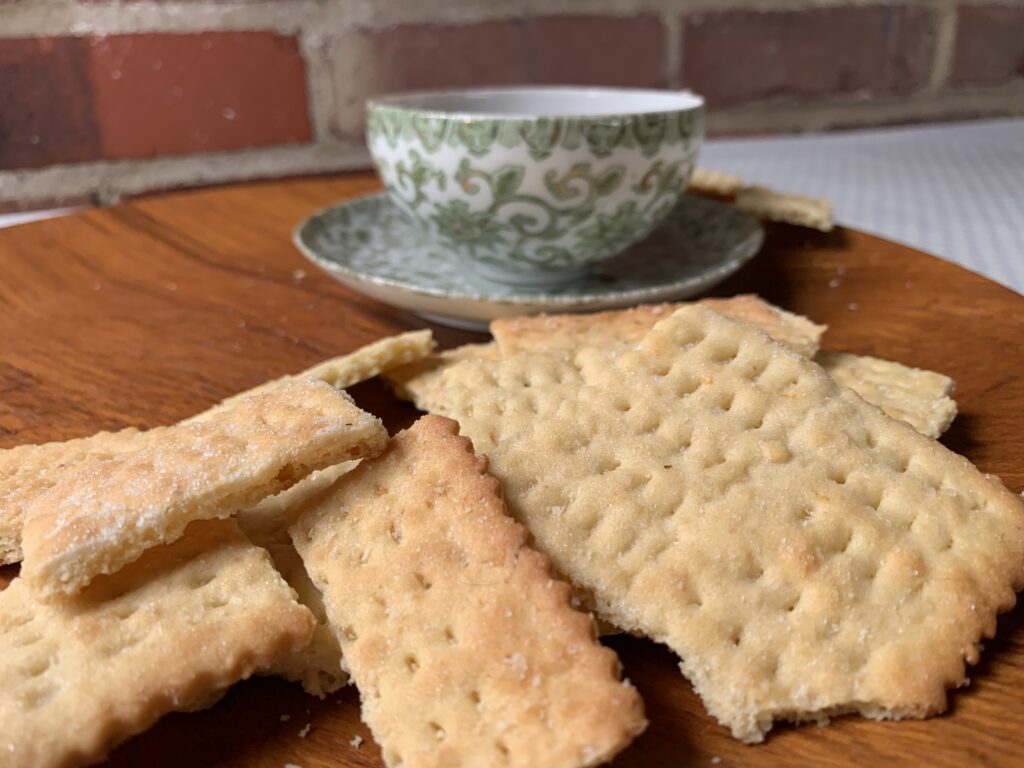
HARTSHORN CRACKERS, A Beautiful and Tasty Illusion Cookie

Appeance? Cracker. Texture? Cracker. Taste? Sugar cookie. Gotcha!

We often discover something new and exciting as we experiment when odd or exotic recipes appear on the radar. We expected no less with this one. “Crackers?” It had to be a European version of those crispy, crunchy Mediterranean tea cookies. Right?

Nope. These taste like a standard sugar cookie, and earned their name by mirroring the appearance and texture of a classic saltine a/k/a soda cracker. They are eminently snackable too. Dangerously so. Each piece is so small that you will find yourself innocently popping five or ten at a sitting, which actually adds up to more than that regular sized sugar cookie you would have been able to resist.

Unique, fascinating, and familiar all at once. How cool is that?

Click here if you only want the recipe without the discussion

Saltines, right? Gotcha!

The Things You Learn When You Do The Math…

The past few months have uncovered several new recipes that rely on baker’s ammonia, including a few that feature a crisp, crackery texture achieved through the use of an antique leavening agent called baker’s ammonia a/k/a hartshorn. See, e.g., Norwegian Pretzel Cookies (Kringla), Greek Olive Oil Cookies (Ladokouloura), and Lebanese Anise (Yansoon) Cookies. So we were kind of excited to try this one, which promised to be a more classic European version.

The Mediterranean recipes both start with oil. The older versions of this recipe start with lard or shortening. Seems like an obvious connection, right? The only unusual thing was the math. All the classic Ammonia a/k/a Hartshorn Cookie recipes ended up with a really odd amount of fat when normalized to a reasonable amount of flour. A bit more than three tablespoons. At the same time, the flour measurements got weird if we tried to normalize things from the fat or sugar point of view.

Version 1.0

I decided to plan out my first test recipe by weight since the numbers weren’t that far off. 100 grams of lard, 100 grams of sugar, and 250 grams of flour. 1 to 1 to 2½, spread over two baking sheets. The result? Extraordinarily thin crackers that tasted like a cookie, but with a very distinct flavor from the fat. They were also a little greasy.

NOTE FROM KATE: They were a fun kind of greasy! Sometimes, using an animal fat you already have saved from a roast can give this kind of a cookie a very interesting character. Flaky tenderness and a hint of other flavors add to the gustatory experience. I like knowing that you’re eating a natural product and not a highly processed shortening. Scott will disparage that from time to time as “virtue points,” but they matter to me.

Fair enough. 250 grams of flour equals 1¾ cups of flour. The next batch would increase the flour to an even two cups. That would take care of the greasiness. The sugar level was about right. But what about that very lard-heavy flavor? What could I do for people who prefer something less distinctive and more common? Shortening, yes… but the flavor wasn’t loud enough to do with a totally neutral fat. So why not clarified butter?

How much butter would I need? Butter is about 16-18% water… Assume that’s been cooked that off, and account for a little more weight from the milk solids… And you end up with…

Son. Of. A. [cough]! You end up with exactly 4 ounces, dead on the nose. And what is 4 ounces? Exactly one standard stick of butter, or and even ½ cup.

And was I wasting effort and cleaning time by assuming the recipe called for two baking sheets? I had carefully rotated the pans midway through because thin dough and high heat are a bad combination. But even so we ended up with one tray browned more on the top, and the other tray more on the bottom. Annoying. And there was an awful lot of room around the dough on each tray, so…

Version 2.0

(A) Clarified butter instead of lard. (B) A little more flour. (C) Roll it all out to fit on a single sheet pan, and see if it’s still thin enough to be a “cracker.” (D) Adjust the cooking time to account for the extra thickness, and having only one pan in the oven.

This is how they come out of the oven. See the uneven break by the bottom right? That’s what happens if you merely cut the lines without giving the wheel/blade a little wiggle to add an extra hint of separation.

This experiment told us (almost) everything we needed to know.

  1. I had the proportions nailed. The dough was easy to make, easy to handle, and just plain worked.
  2. This amount of dough rolls out thin – something on the order of ⅛” when all is said and done – but that’s still a big difference from “roll until you can roll no more.” The final result ended up being just under 3/16“, which definitely gave more of a cookie vibe than a cracker.
  3. The flavor changed radically. Lard notes versus butter notes were extremely clear when we tasted them side by side.
  4. The butter version does indeed taste standard. Just like a sugar cookie. But is there anything easier to vary than a sugar cookie? Tea, chai, cinnamon, other spices, herbs… This is clearly a cookie that bakers can play with to an all but infinite extent.
  5. Those darned lines aren’t always clean enough when the cookie comes out of the oven.
    Thick indeed! These come off as more “cookie” than “cracker.” Note how the lack of docking adds to that.

This cookie was, quite honestly, good enough to publish. But we weren’t done just yet! Could we customize this into a true illusion cookie with a taste that would complement a cookie tray instead of just fitting right in with so many other tastealikes?

Digression: Revisiting The Ratio Of Ingredients

Remember how odd the ingredient list seemed at the start of this project? And how the fat didn’t work out evenly until we figured out that it equaled a 4 oz. stick of butter that’s been clarified? But the overall ratios still didn’t work out to even numbers by weight, as experience taught they should in such an old recipe?

But now, with some extra flour and a more limited amount of fat… Aha! These changes created something very close to a 1:1:3 ratio of fat:sugar:flour. Gotcha!

Version 3.0 (see below) established our preference for a little less in the way of both fat and sugar, and that is what the recipe now says, but we have no doubt how Grandma taught the recipe by that ratio back in the day.

Version 3.0

  • Use the 1:1:3 ratio of ingredients;
  • Add some bacon fat in place of butter (we ended up with 2 tablespoons after I rendered four slices in a pan);
  • Roll out two trays as thin as possible, and only bake one at a time;
  • Dock the dough to make the final product look more like a saltine; and
  • Move some of the sugar from the inside to a sprinkling on top that would mimic the salt on an actual cracker.

The result? Have a look!

[Shakes head]. I don’t know how I missed it, but this is a marvelous illusion cookie. It actually fooled our real life daughter when she stopped in to visit! That docking made a much bigger difference than I ever imagined.

We could taste the bacon, but only because we knew it was there. The bacon also added a healthy hit of extra salt that we both enjoyed – enough to bump the basic salt level in the recipe up from ¼ to ½ teaspoon (though we might revert to the reduced amount if we work with salty bacon fat again). I even enjoyed sprinkling the tops with a little bit of extra salt to enhance the effect. It now appears as an option in the recipe. Here, among friends, I will admit to recommending that option because it makes the cookie taste more distinctive. But that’s taste, not tradition.

IMPORTANT NOTE: We also learned, to our chagrin, that simply marking the lines with a fluted wheel isn’t enough. We lost several “crackers” because they baked together too firmly, and wouldn’t snap along the lines. Even more than we did with the thick cookie (see photo above).

LESSON LEARNED: Don’t just mark those lines; mark them clearly and emphatically, with a little wiggle of the wheel or blade to be on the safe side. You need the pieces to bake together in order to have that crackerish center show, but you also need the separations clean enough to be sure they will break evenly.

The only other adjustments came down to fine tuning the ratio. Hark! Can you hear your great-great Grandma speaking from the beyond? “It’s a simple ratio dear. Three parts flour, to one part sugar, and one part lard. But here’s the secret… They taste even better if you take back a spoonful of the sugar and fat.”

Grandma is great. Grandma is wise. Listen to your great-great Grandma.

Conclusion

This is one of those cookies where we started out thinking “A,” only to discover it was really a “B.” This is not one of those cracker-crisp Mediterranean tea cookies. It’s more like a good, cracker-crisp sugar cookie designed to create a convincing, extremely snackable illusion.

NOTE FROM KATE: Be careful with these – they are quite more-ish! The texture is a lot of fun. You will easily snack on five cookies when you would’ve said a “no, thank you” to a similar cookie in its one-piece form.

Here’s a summary of the lessons learned:

  1. The dough follows a 1:1:3 ratio of fat to sugar to flour, with a spoonful taken back from the first two.
  2. The cookie changes in wonderful ways if you mix and match different fats in place of the clarified butter. We tried them with lard alone, butter alone, and butter mixed with bacon fat. The last was the best, partly because we liked the extra salt.
  3. The illusion part matters, so roll the dough out super thin, take the time to dock them with a fork, and sprinkle on a bit of sugar to fully recreate the saltine look. Sprinkling on some kosher salt will also help the illusion, and has the side effect of making the cookie taste more distinctive.
  4. Maintain an even thickness. Smeared edges cook faster than rolled centers.
  5. Mark the dividing lines emphatically, with a little wiggle of the wheel/blade to add some room. The helps the “crackers” to separate cleanly.
  6. Just don’t separate them too much, because those broken-open sides show off the crackerish interior, which is both pretty and useful for the illusion.
  7. Bake only one tray at a time, and spin the tray just after the estimated halfway point. Two trays won’t cook evenly, and oven hot spots really show.
  8. The bake is done when the top turns cracker-tan brown. Go by that, not the designated baking time.
  9. Hartshorn is mandatory. Baking soda/powder yield a standard cookie texture.

All in all? A very successful experiment, and a cookie we will gladly add to the repertoire. Especially if we want something more on the snackable side than a proper dessert, or there’s someone coming over who’d be fun to fool…

Enjoy!

LADOKOULOURA, Greek Olive Oil Cookies

A crisp sesame-orange tea cookie made with olive oil and baker’s ammonia

Click here if you only want the recipe without the lessons we learned

Our Last Minute Discovery of Hartshorn Cookies

A funny thing happened on the way to Heritage Cookies Volume 1. The closer I got to the deadline, the more must-have cookies showed up to thrust their way into view. Typical, right?

Kate and I recently agreed that Volume 2 will come out sometime in 2024. And sure enough, a whole new set of cookies jumped onto the radar – much loved, irresistible, heritage recipes that rely on hartshorn a/k/a baker’s ammonia because baking powder and baking soda simply can’t duplicate its unique properties.

NOTE FROM KATE: At this rate, we will need to put our project management hats on and simply leave other cookies for later. As in, “There might be a slim pamphlet called Heritage Cookie Crumbs, or something equally silly! It’s true, though. As soon as you think you’re done with a project, new opportunities start to push their way through the door!

Northern Europe offered up two incredible Christmas treats, and two amazing illusion cookies: Swedish Drömmar and Polish Ammoniaczki (a/k/a “Vanilla Puffs”) taste as good as any other holiday cookies you know, but have textures that won’t resemble anything else on your tray. Kringla (Norwegian Pretzel Cookies) and Lemon Ammonia Crackers are simply spectacular. The first tastes like a super-crunchy ladyfinger but looks exactly like a salted pretzel. Go have a look if you don’t believe me. The “crackers” taste more like a standard sugar cookie, but their illusion is so good that a visiting daughter got legitimately fooled. She grabbed a few “saltines” to snack on, and got a surprise I will hold over her head for the next several years.

[NOTE FROM KATE: The same daughter then absconded with a large handful for her drive to see the cousins in Maryland, and to try and fool them in the exact same way. She can deny it all she wants, but we are the ones writing the history here.]

What a trove!

I discovered just as many unique recipes from the Mediterranean nations. There’s Croatian Cvite (Flowers), an illusion cookie we haven’t tested yet. There’s at least a pair of honeycentric biscuits out of Italy. Another from Spain. And then come the most common of them all: crispy, crackery “tea cookies” with powerful flavors offset against enough leavening to keep them airy and light. [NOTE: That’s “Tea,” as in actual tea, or coffee, or maybe something a little stronger.]

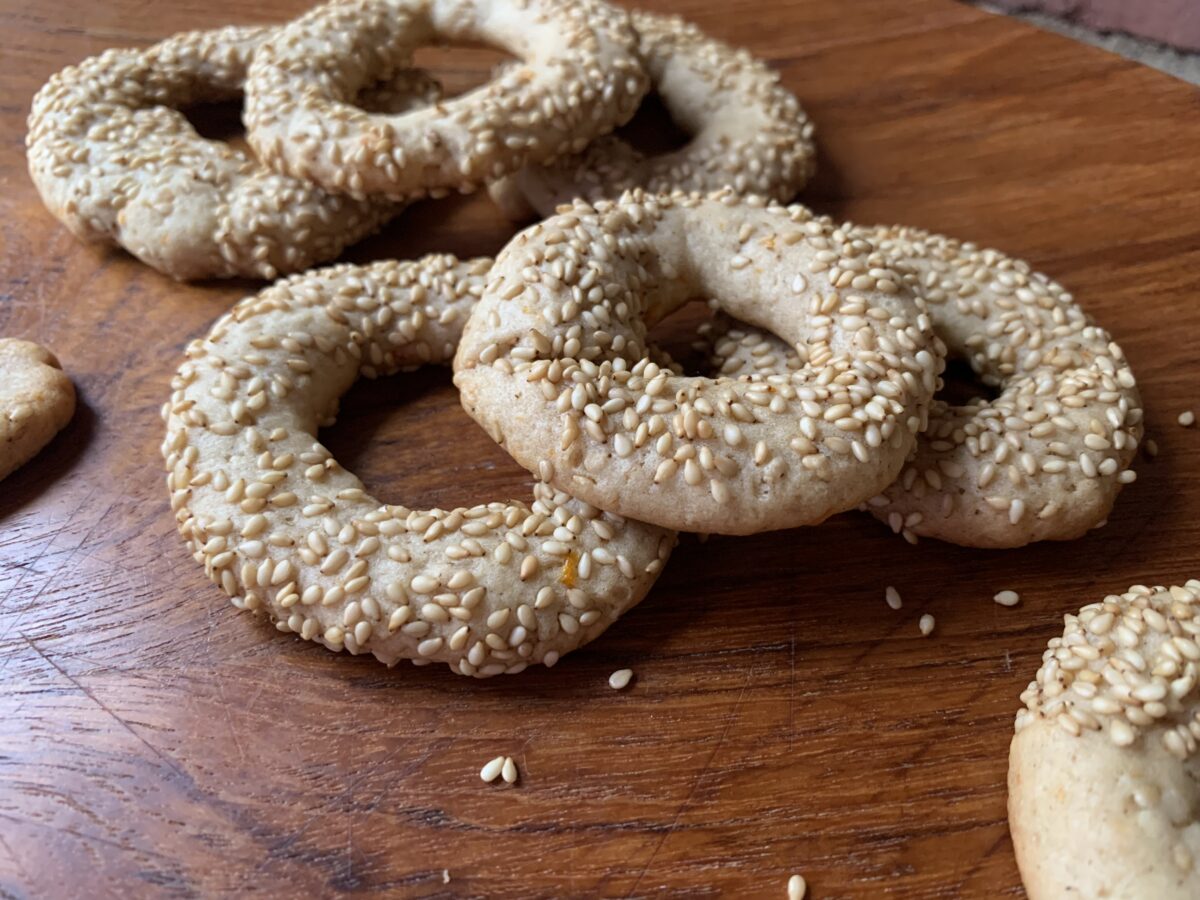
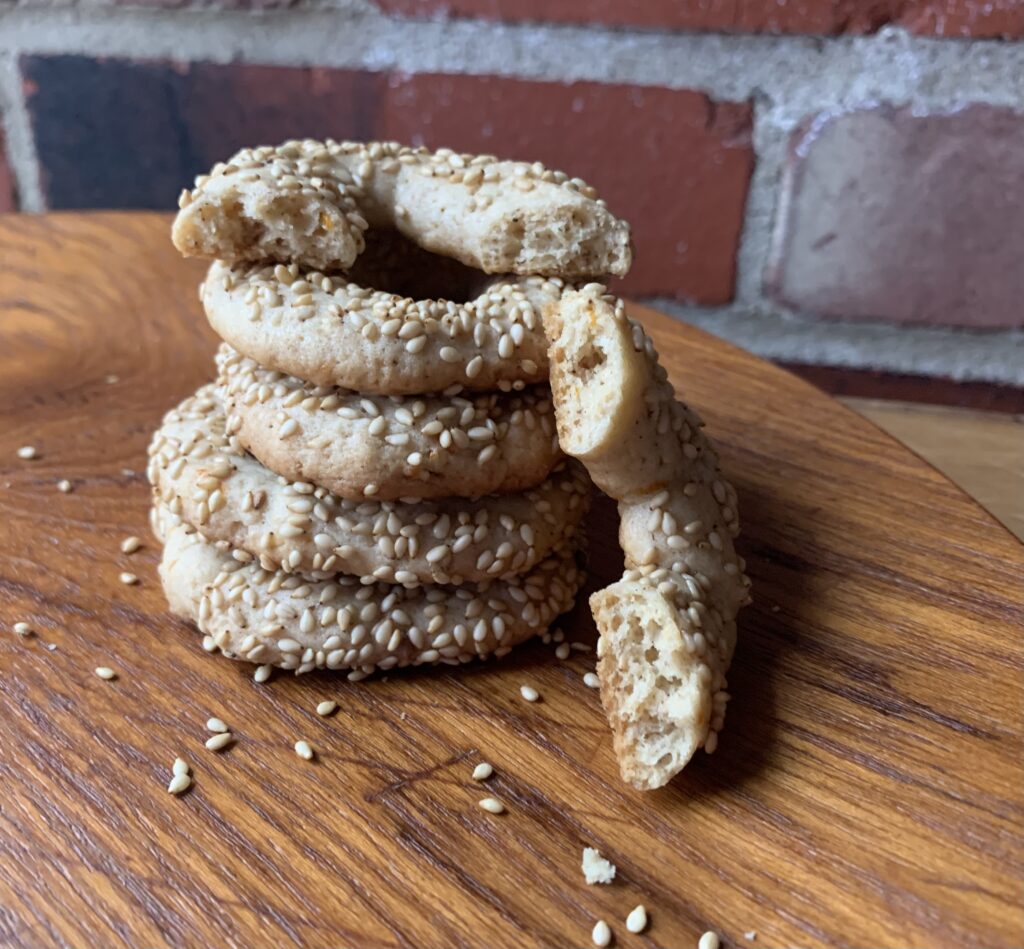
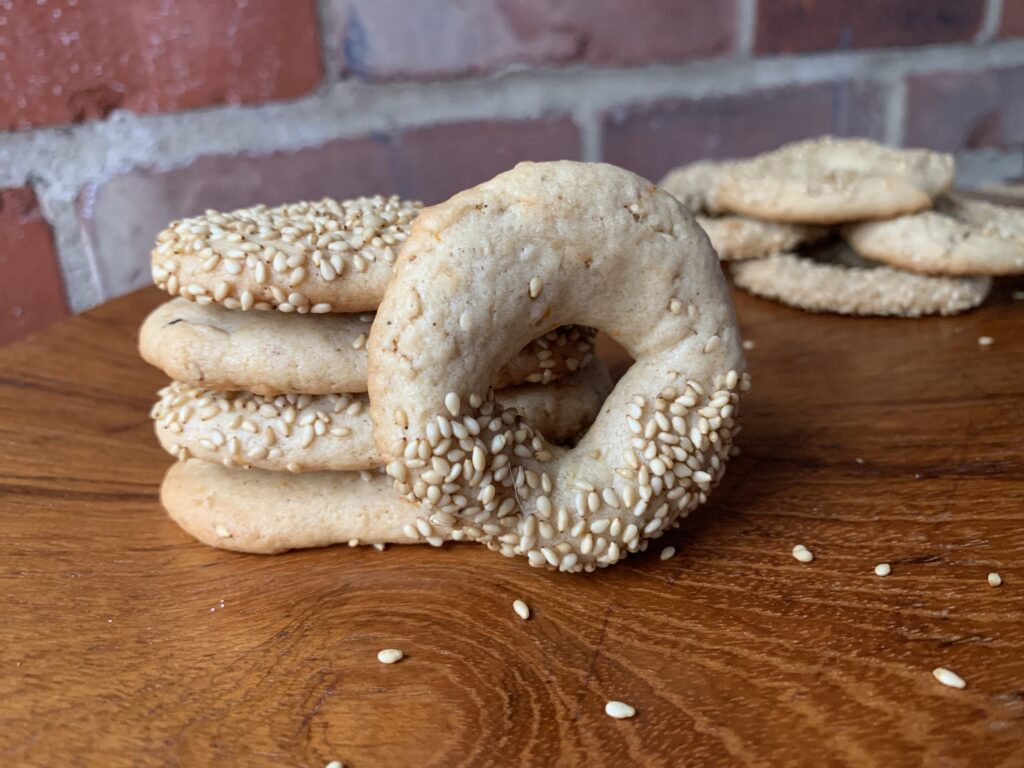
This is the Greek version, known interchangeably as Ladokouloura (“Olive Oil Rings”) and Koulourakia Ladiou (“Sesame Rings”). The names pretty much say it all. The main flavors are good olive oil (adjust the strength to your taste and tolerance), sesame seeds, and a solid hit of orange. Highlights come from delicate amounts of cinnamon and clove. A matching version, Lebanese Anise (Yansoon) Cookies, should be up in the next few weeks.

The rings on the right are the most classic form, but other shapes are almost as common.

NOTE FROM KATE: Back in Czechoslovakia when I was in elementary school, I used to walk instead of taking the bus and I saved my transportation allowance for various treats. Orange-oil scented tea biscuits were one of my favorites. Some of these cookies are the closest home-baked thing I have found to date.

Yes, You Must Use Hartshorn

The essence of these cookies lies in how they feel between your teeth: an extremely light center, a crispy crust, and a crunchy texture that baking soda and -powder simply can’t produce. The modern products make a cookie that tastes the same on your tongue. They’re nice. But you won’t “get it” until you taste them made with baker’s ammonia. The feel between your teeth is night and day.

See that crisp, honeycomb core? That’s from the hartshorn.

Lessons In The Baking

Happily, we know several families of first generation immigrants who have been happy to help us with testing Greek cookies. It took only three bakes to get these nailed.

The first one earned raised eyebrows for the exceptional flavor. People really liked the fresh orange notes compared to commercial versions. It only lacked in the texture department.

For version #2 I increased the amount of hartshorn by 50%, and then decided to gild the lily by rolling them in sesame seeds to imitate the ones we were shown in the market. This batch had the right texture, and they looked amazing, but those extra sesame seeds dominated the flavor.

In batch #3 we kept the same level of hartshorn powder, but decided to decorate with some of the sesame seeds originally used inside the cookie. These were perfect according to all our native testers. Or to give a more accurate quote, “Crunch, crunch, mmmmm. Oh my yes.”

NOTE FROM KATE: I love sesame, just love it! To my surprise, however, I found that rolling the entire cookie in sesame went a bit too far. The seedy texture got in the way of the added flavors. For that reason, I tried dipping only the top part (which worked,) on only half of the top part (which produces an interesting effect in itself. Suit yourself – your sesame level is a matter of preference just as the level of orange and clove.

A Final Note On The Olive Oil

Kate loves the taste of olives. I, emphatically, do not. Thus we decided from the very beginning to split the oil 50/50 between powerful extra virgin oil of the sort used in salad dressings, and “light” olive oil of the sort that’s used in cooking.

That turned out to be a very wise choice because it fell exactly at the median opinion. But – BUT – I need to stress that almost everyone fell outside of this middle ground in one direction or the other. Olive aficionados loved the “little hint” of flavor, but would have preferred a little more. Olive doubters could have done without the “vaguely unpleasant note,” but agreed that it wasn’t strong enough to get in the way.

Which camp do you and yours fall into? As some old Greek dude once said, “To know thyself is the first step on the path to wisdom.” It’s pretty good advice for Ladokouloura as well. Though I cannot recommend following that gentleman’s advice for tea to drink alongside… [NOTE: That’s an inside joke for my fellow philosophy and history buffs. If you get it, you win.]

A PHOTOGRAPHY NOTE FROM KATE: This cookie caused me both humor and frustration. The combination of round cookies and the flat ones that look like rectangular teeth had me seeing faces in too many compositions – and once you start seeing faces, you can’t unsee them! I even tried to go with it and made a bunch of goofy, googly-eyed plates. If eating sentient food bothers you, I suggest you bake either circles or rectangles, but not both!

Conclusion

You simply cannot travel through the Greece or any of its neighbors without running into tray after tray of Ladokouloura. They are as ubiquitous as they are loved, which makes them as genuine a Heritage Cookie as anything else we have ever baked.

This is your puppy if you want a true taste of Athens, Santorini, or any of the lands that consider Greece to be a neighbor.

Enjoy!

KRINGLA, Scandinavian Holiday Pretzel Cookies

Yummy and unique.

Happy New Year to all! This will be a relatively short article because all the tips and tricks were so important they’ve ended up in the recipe itself. Twenty of them! More or less. There isn’t a lot for me to add.

NOTE FROM KATE: This would be an absolutely wicked technical bake if they ever appear in the Great British Baking Show a/k/a Bakeoff! With their even, delightfully puffed-up loops toasted golden and their intriguing crunch, they are well worth the learning curve.

Here’s the bottom line: Kringla look exactly like a salted pretzel and have soft middles right after baking. From Day 2 on, they turn into an extremely light, ultra-crisp, crunchy sugar “cookie” with moderate sweetness and an innocent flavor that no one can dislike.

Yes, Hartshorn Makes A Difference

Kringle sorta-kinda work with baking powder or soda, but they turn into something special when you use baker’s ammonia a/k/a hartshorn instead. The texture changes from (A) absurdly puffy when fresh and a little tough as they age, into (B) puffy with a pleasant, crispy crust when fresh and wonderfully crunchy as they age. See this article for the underlying reasons. We can’t say they aren’t worth making if you use the more common leavening agents. The illusion still works, and there’s nothing wrong with the flavor. But they will definitely be better if you make them with hartshorn.

Shaping Pretzels Is A P.I.T.A. – If You Are Me

Kate had almost no problems, because she’s an artist with a good 3-D imagination. I end up staring at the darned things and trying to remember, “Was it one twist or two? And then the ends go where…?”

It’s all covered in the recipe itself, but aside from native talent (or lack thereof), the shaping hurdles are all pretty basic and built into the nature of the cookie:

  • It’s a very soft and sticky dough. But everything will work out fine if you roll each piece in flour before forming, and work with floured fingers.
  • Move the rolled out “snakes” onto your parchment before turning them into pretzel shapes. They’re so soft that scooping and moving will inevitably distort your work.
  • Use very skinny “snakes” and leave a huge amount of room in the loops – enough that they look sort of scrawny and pathetic before they hit the oven. Kringla expand by at least 400% percent as they bake, meaning each of those little arms will end up being four times (4x) as thick by the time they are done. Rest assured: all that empty space will vanish.
  • Keep the pretzels far apart on the trays for the same reason.

NOTE FROM KATE: If you’ve never made a pretzel, I recommend practicing with a piece of thick twine or shoe string. You will want to make a single shape while using up the entire length of 8- 10″. Try various shapes, and try to join the rope under an existing loop. If you can’t, pinch the dough together so that it’s the same thickness everywhere (Thinner portions will darken too much.) The final product is as solid as the dough is fussy. This dough would be suitable for making hearts, flowers, linear animal shapes, or whatever else you fancy.

The Final Touch Decorations Are Easy, But Have Some Sneaky Hazards

Kringla taste perfectly fine. They are friendly, inoffensive, mildly sweet, and basically pleasant to one and all. For a stronger impression, add more freshly ground nutmeg or cardamom. For an even safer flavor, add some extra lemon zest. Either way, this cookie isn’t really about the flavor. It’s the shape that makes them special. The shape, and the illusion of being a salted pretzel instead of a sweet treat.

NOTE FROM KATE: I could be wrong on this, but I perceive hartshorn-leavened cookies as less flavorful than their baking soda/baking powder equivalents. So far we aren’t sure whether it’s just me, or because the extra puff essentially dilutes the spice level per bite. Adjust spice level as you see fit.

That salted pretzel illusion comes from brushing the pretzels with melted butter and then sprinkling the tops with pearl sugar to imitate the salt. The recipe goes over it all in detail, but that process has two basic challenges to overcome. (A) The dough is so soft that brushing it with melted butter can distort those shapes you just spent so much work on; and (B), the oven temperature is hot enough to melt any loose sugar crystals, which can lead to black caramel tainting the bottom of your cookies.

You can fix both problems by baking the pretzels until they are almost done, pulling them out of the oven to be decorated, and then returning them to the oven to finish. That, alas, is both fussy and time consuming. Thus it makes sense to brush and decorate before baking… which means you need to compensate for those two problems.

There is no concrete, surefire answer. It’s just one of those things you need to know about, and do what you can to prevent. See the recipe for various tips, tricks, and hacks you might want to use.

The Pretzel Bottoms Try To Get Out Of Control

Start with an extremely light dough, rolled very thin, and heavily leavened so it will expand by four or even five times in the oven. Add in a very hot oven to brown the top and provide extra crispness to the crust.

What do you get? A cookie that can easily burn on the bottom before the tops are done, even without factoring in any caramel from melted sugar.

Knowing the problem gets you about 50% of the way toward fixing it. Again, please consult the recipe for our tips, tricks, and hacks to forestall that. But I may as well close this article by listing them here as well, because several are very clever if I do say so myself:

  • You can bake one sheet at a time, on a middle or upper rack of the oven. Oven heat comes from the bottom and collects toward the top, so this will make sure you have consistent air flow while maximizing the heat around your crust rather than on your bottoms. Just remember that one sheet in the oven tends to cook faster than two.
  • You can use the convection setting on your oven to achieve the same effect. Just remember to turn the oven down by 25° F (about 15° C).
  • If you use two pans, remember to rotate them halfway through. Bottom to top, while also spinning them back to front.
  • You can insulate the cookie bottoms by using a silicone mat instead of parchment paper.
  • You can also insulate the bottoms by using a doubled baking tray.

NOTE FROM KATE: We have a convection oven but we seldom turn the fan on because all our Volume 1 recipes started out in a previous one. Keeping a traditional oven setting helps us compare new recipes connected to our older bakes. If you use a convection oven, reduce the temperature by 25°F and keep an eye on your bake time. Every oven is different.

Conclusion

Please don’t let all the nits and notes discourage you from trying this fun and culturally important little cookie. Yes there are hurdles, but they’re more in the nature of “heads up” warnings about pitfalls to be avoided. They aren’t actual barriers, let alone walls, and the rewards are more than worth the effort. Kringla are fun! Just look at them:

Enjoy!

POLISH HARTSHORN COOKIES (“AMONIACZKI”), An Edible Hug

Hartshorn (baker’s ammonia) creates a crisp, sugary crust around a pillowy heart

Click here if you only want the recipe without the discussion

Hartshorn a/k/a baker’s ammonia a/k/a ammonium carbonate a/k/a smelling salts is an old frenemy we recently studied in more detail. This was the chemical leavening agent from antiquity through medieval times and on into the 19th century, when it got replaced in most recipes by baking soda and powder. Why? Because it’s also known as “smelling salts,” and smells so foul that you can’t even nibble on dough samples before they bake. Not that I would ever do such a thing, but rumor has reached my ears… [Ahem]. The smell disappears during baking, but still. Who wants a product like that in their pantry where a spill can make your cat box seem friendly?

NOTE FROM KATE: You will only taste-test this dough once. At which point you will also spit the dough into the sink and reach for a glass of water. Yuck! The baked cookies, though, are as lovely and welcoming as they are versatile. Even better, they hold a basic shape and provide a lily-white canvas for any decorating ambitions.

In today’s age hartshorn has become a specialty leavener. And yet it is still around because it produces a different kind of rise than baking soda/powder; a lighter, crispier, more even texture that’s essential to recipes like Springerle, Swedish Drömmar, fine-featured molded gingerbreads, and texture-first specialties like Hungarian Kvircedli and Ammonia Crackers. Hartshorn has its flaws, but the upside can be spectacular.

Enter this cookie: Polish Ammonia Cookies (“Ciasteczka Amoniaczki”), which I hereby rechristen as Vanilla Puffs to reflect the remarkable effect of their magic ingredient. Plus variations like Peppermint Puffs, Anise Puffs, Lemon Puffs, etc. “Puffs” being the key word because that’s the closest I can come to describing the texture: a shatteringly crisp, sugary crust around an inside so pillowy and puffy that they have a universal appeal. Most cookies will have a few, recalcitrant protesters who just don’t get it. Everybody likes Ammonia Cookies. They may only be your third-favorite on the tray, but I can 100% guarantee they’ll be gone at least as fast as the ones you would choose for yourself.

Try this cookie and you will never again wonder why serious bakers remain willing to put up with hartshorn’s challenges. The cost is worth the payoff.

The Dough is Rough-Puff Pastry (A Flaky Cookie) In Disguise!
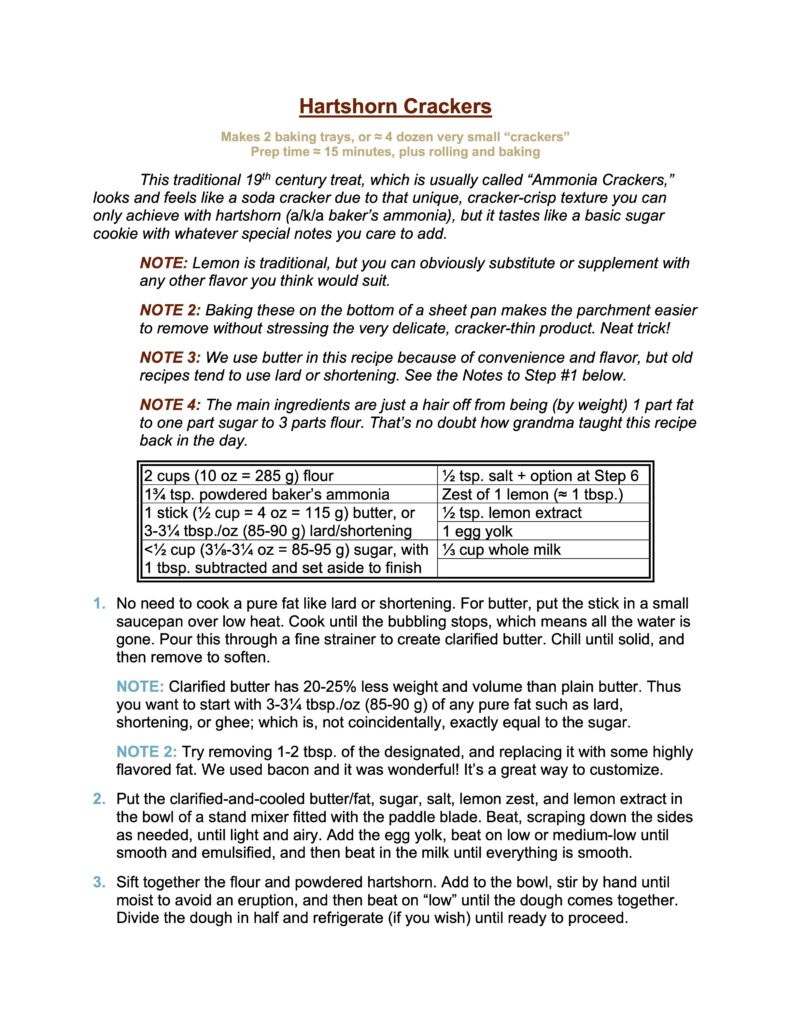
Want a laugh? I went through the whole recipe testing process on these with the niggling feeling that I knew the recipe from somewhere, even though I’ve never made anything like it. The penny dropped around five minutes ago.

The niggling finally got bad enough for me to run back to Volume I for a scan of the ratio tables at the start of each chapter. And sure enough, there it was. The proportions of flour, butter, sour cream, and sugar are an all but perfect match to flaky cookies made from our Faux Puff Pastry recipe (a/k/a “rough puff”). The only real differences are the handling and the addition of a massive amount of hartshorn.

You make rough-puff dough by cutting butter into a combination of flour and a small amount of sugar, in order to achieve the “pebbly” texture of a piecrust with extra-large butter chunks. Then, instead of cutting it finer, as you would for that piecrust, you roll the dough out in a few “envelope turns” before finally rolling-and-cutting your cookie shapes. It’s a minor P.I.T.A., yes, but much easier than the major P.I.T.A. of traditional puff pastry.

This dough? Just cut the butter down to piecrust-texture in a food processor, include a generous amount of hartshorn, and presto! Something that tastes like puff pastry, and has a crispy outside, but has the pillowy interior you can only achieve with baker’s ammonia.

Peppermint trees. See the contrast of crispy crust to center puff?

The Sugar Crust

Stark white from the sugar crust, and just as good as they are pretty

There’s a pretty well established pattern for flaky cookies of all types:

  • Palmiers a/k/a Elephant Ears? Roll out some puff pastry (or other flaky-cookie dough), coat it generously with cinnamon sugar, roll it back into a tube like a jelly roll a/k/a roulade, and then slice-and-bake.
  • Dutch Krakelingen? Cut off strips of that same dough, roll in cinnamon sugar, and then shape them into pretzels before baking.
  • Rugelach? Do the jelly roll thing with a layer inside made from a fruit-and-nut filling, and then coat with cinnamon sugar before baking.
  • Goose Feet a/k/a “Gusine Tlapki”? Roll, sprinkle with spice-sugar (not necessarily cinnamon), and then cut out large circles which you fold into quarters.
  • Kolache? Roll, cut out squares, dab with fruit filling, fold up two corners, and then sprinkle with plain sugar.

Get it? Ammonia Cookies aren’t any different except you (a) can readily flavor the dough, and (b) can roll-and-cut any shape of cookie, and (c) should, not just can, coat the outside in sugar alone. The snowy, extra-crunchy outer crust is part of the experience.

We did test cinnamon sugar in case you’re wondering, and it works perfectly well, but it also standardizes the whole experience. Both Kate and I preferred these with sugar alone.

The Baking and Fumigation Times

The flaky cookies listed above typically bake at 350° F (175° C) for about 15 minutes, give or take according to thickness. Ammonia Cookies work a little better if you cook them at the same temperature for only 12-13 minutes. The shorter baking time helps to preserve that pillowy interior, whereas the flaky cookies want to emphasize their crispness.

The combination of a moist dough and a shorter baking time can cause a problem, however: a residual whiff of ammonia left over in the baked cookies, even after they cool. It usually isn’t all that strong, and it only happens about 75% of the time, but that’s still an issue you need to keep in mind.

The solution couldn’t be easier. Leave the baked cookies out for an hour or two. That should be all it takes for the dissolved ammonia gas to dissipate into the air. If they were really bad? Still simple. Wait a little longer.

Hartshorn giveth, and hartshorn taketh away.

The Cut Outs

Ammonia cookies work with almost any basic shape, but expand too much for anything with features. I tested stars, hearts, circles, a mushroom shape, fluted ovals, snowmen, and a Christmas ornament shape. Everything worked except the ornaments, snowman, and the fluted ovals. Those could still be recognized by someone who knew what they were supposed to be, but they lost the outside details that make them more than just shapes.

Anise hearts and peppermint trees. “High note” flavors show particularly well in this cookie.

Feel Free To Customize!
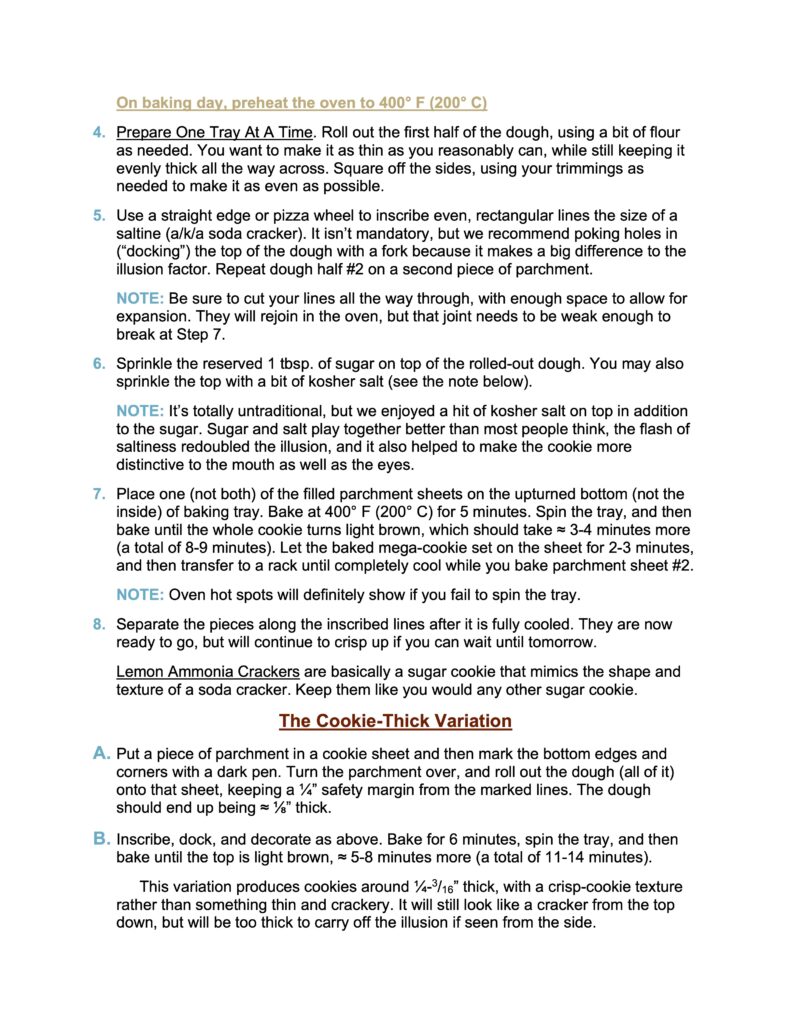
Do some research on cookies made with hartshorn and these basic proportions. You will quickly find several much loved variations. These include:

  • Peppermint Ammonia Cookies (add in peppermint oil), which are very popular in the American Midwest, and generally attributed to German immigrants;
  • Anise Ammonia Cookies (add in anise oil), same thing with what seems to be inspiration as much as tradition;
  • Ginger Ammonia Cookies (add in a generous amount of dried ginger), with some optional extras for those who want to try a popular Slovak variation.

We tested all of the above, and they all worked just as well as the standard vanilla version. I’ve no reason to believe other spices wouldn’t be just as good. These may be my new favorite when it comes to featuring one particular flavor.

FWIW, our 2024 Christmas tray is going to include the Peppermint version because we have nothing else even close to that flavor profile, and I may throw in a few vanilla ones too. Not that a spice version will find any protesters. Hmmm…

Can You Simply Put The Sugar In The Dough?

We tried it, and the answer is “Yes.” The cookie works fine. But we really like the showy, snowy white crust that comes from following the recipe, and it enhances that wonderful contrast between the inside and outside. The most I would actually recommend is the addition of something to show an inside flavor. Perhaps some anise seeds, or some bits of peppermint-green sugar.

Those flavored versions carry a significant odor, but who wants to eat the cookie I just sniffed and then put back on the tray?

Sour Cream? Is That Traditional?

Is it fair to answer that with a “Yes, but…?” Sour cream per se has been around for most of human history. After all, the root definition is nothing more than fermented cream. Some say it traces back to the Mongol hordes that made kumiss from mare’s milk, but I personally find that hard to believe. Not because the Mongols didn’t do just that, and helped to spread the idea. I just doubt that no one in human history came up with such an obvious idea before that. It certainly predates the arrival of Europeans in the new world.

I won’t speculate about the reasons, but research shows that sour cream has always been more common in central and Eastern Europe than over by the Atlantic. This enters into the history with the great migrations of Czechs, Poles, Slovaks, Germans, etc. into the U.S. from the mid 1800’s on. They brought sour cream with them, where it met the rising force of the Industrial Revolution and morphed.

What had been a hand crafted, fairly regional staple became an industrially produced, properly pasteurized dairy product sold in every market across the land. Dips made with sour cream became a capital-T Thing. Baked potatoes began to look naked without it. Mexicans used it every bit as much. And it became a common, if relatively minor ingredient in the baking repertoire of the North American continent. At which point it traveled back to Europe, and began to expand in the old world too.

You will note that we call this a Polish cookie (“amoniaczki”), because that seems to be ground central for where it is enjoyed in Europe, and was such a major part of the immigrant population that filled the American midwest, where this cookie centers in North America. So… did the original European version use sour cream, or was it a case of American ingenuity improving on the original, which then made its way back to Poland along with industrial production?

I cannot answer that. I can only confirm that European variants using eggs instead of sour cream are easy to find; that we tested them; and that sour cream is definitely the way to go. It just works better.

Can I use Baking Powder or Soda For Convenience?

We liked this cookie so much that I felt compelled to test this, and the answer is, “Only if you must.” Texture is major part of this cookie’s appeal. The baking powder ones looked okay, and tasted fine, but they simply weren’t the same. The almost-crispy crust diminished down to a mere sugar-crust, and the exciting fluff-honeycomb interior became a standard, soft one.

Would we make them in a pinch using baking powder or soda? Hmmm. I suppose we might. Particularly if we wanted a softer cookie with a distinctly clear peppermint or anise note. But to be honest, we would only do it as a giveaway cookie because now that we’ve had the real thing, they would be too disappointing for either of us to really enjoy.

Conclusion

This is a fun cookie. Kate got a bit old grin on her face at the first bite, and said “It tastes like a hug!” I had to agree. But it’s not a hug from your Grandma, or spouse, or parent, or child. Nor anyone else you deeply love. Those have too much emotional freight. Ammonia Cookies are a hug from that friend you’re meeting for lunch, or one of your daughter’s little playmates.

Simple, companionable, and yet somehow special at the same time – from both a baker’s perspective, and a human one. And that’s just the vanilla version. The cookie’s flexibility as a base for other and custom creations only makes it that much better.

Enjoy!