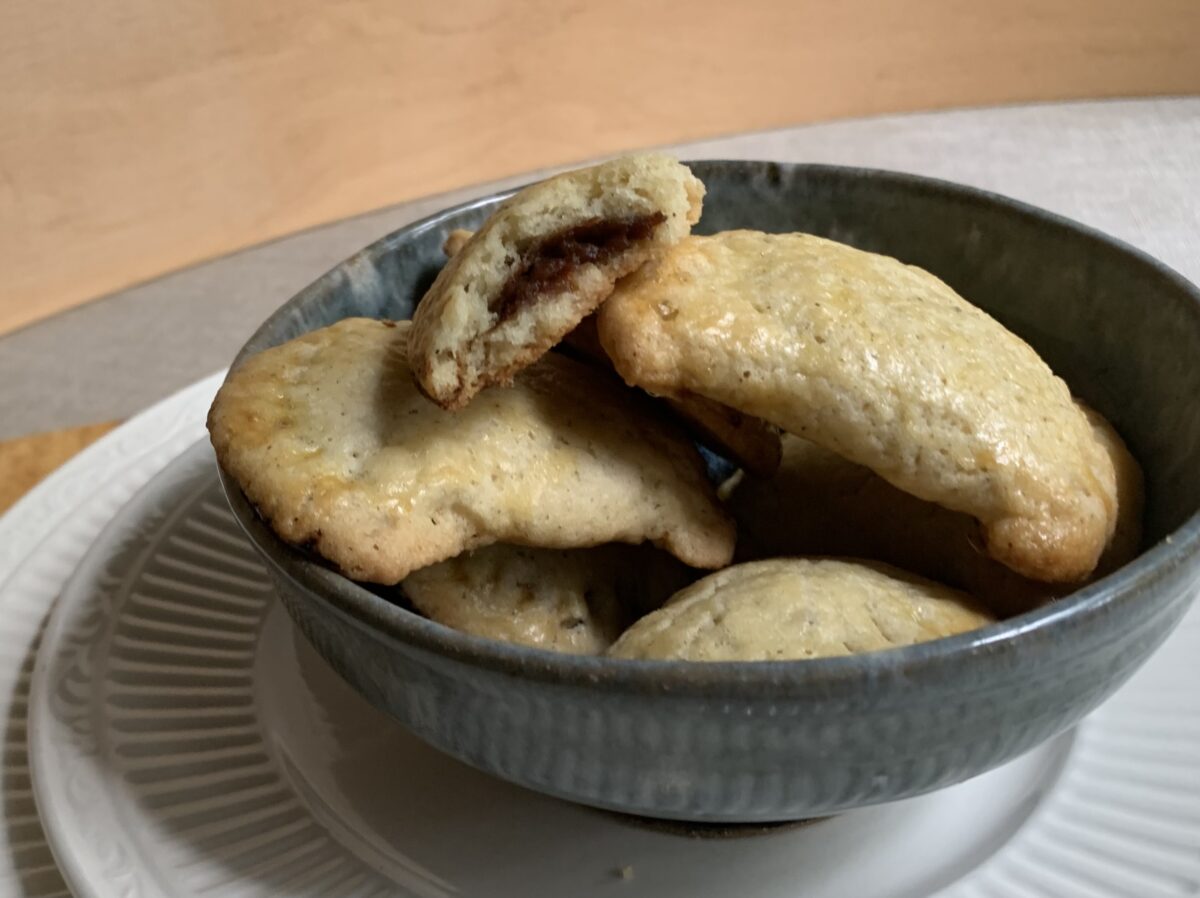
MAPLE SANDWICH COOKIES, Pure Autumnal Goodness

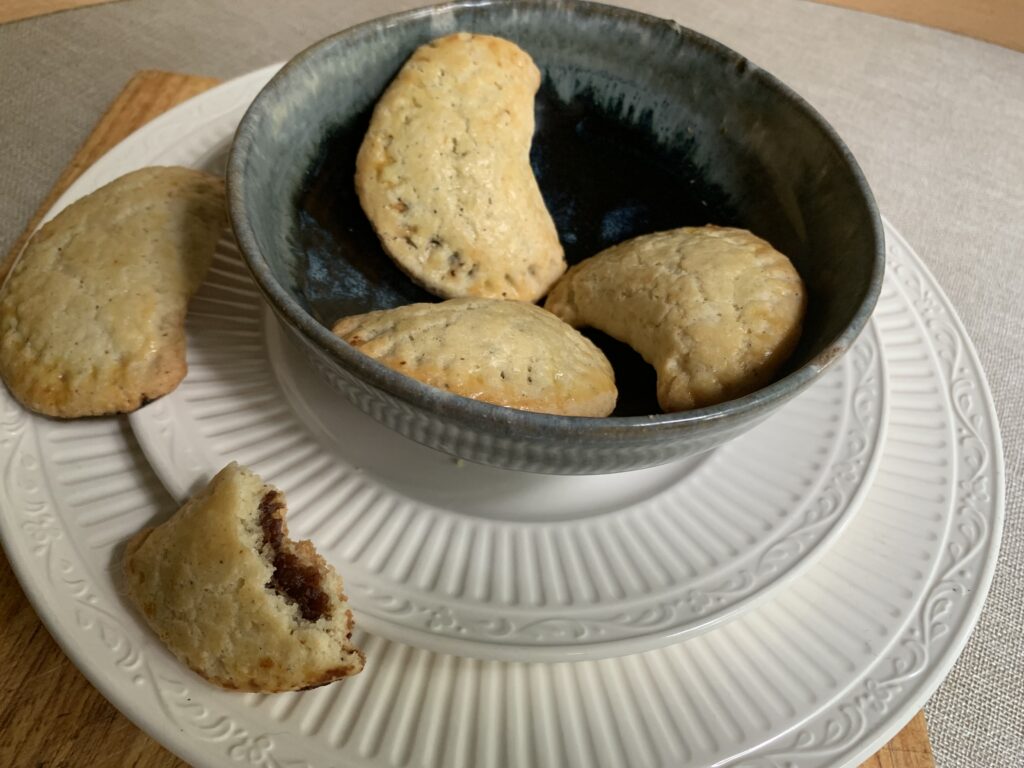
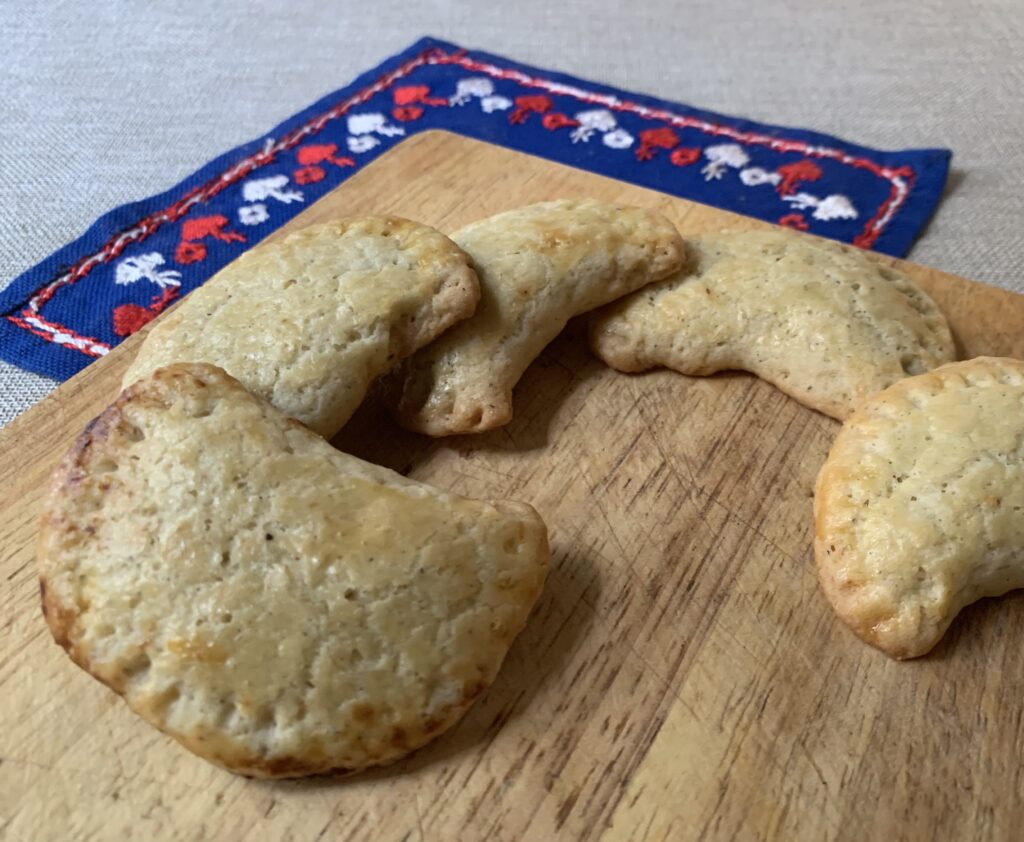
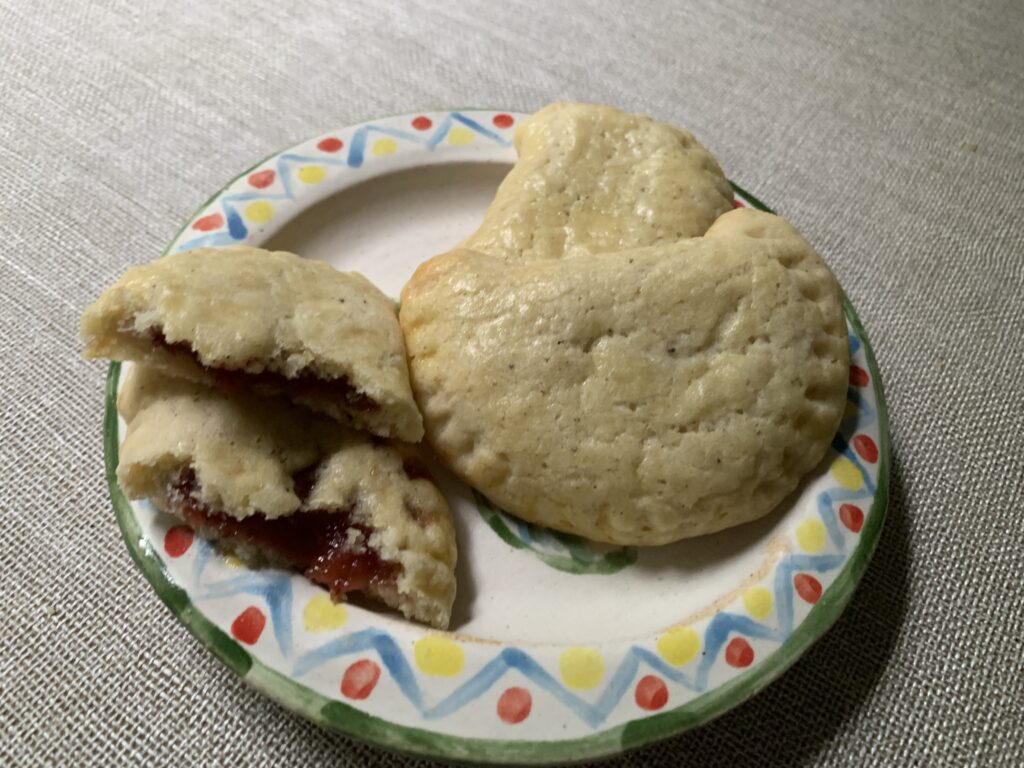
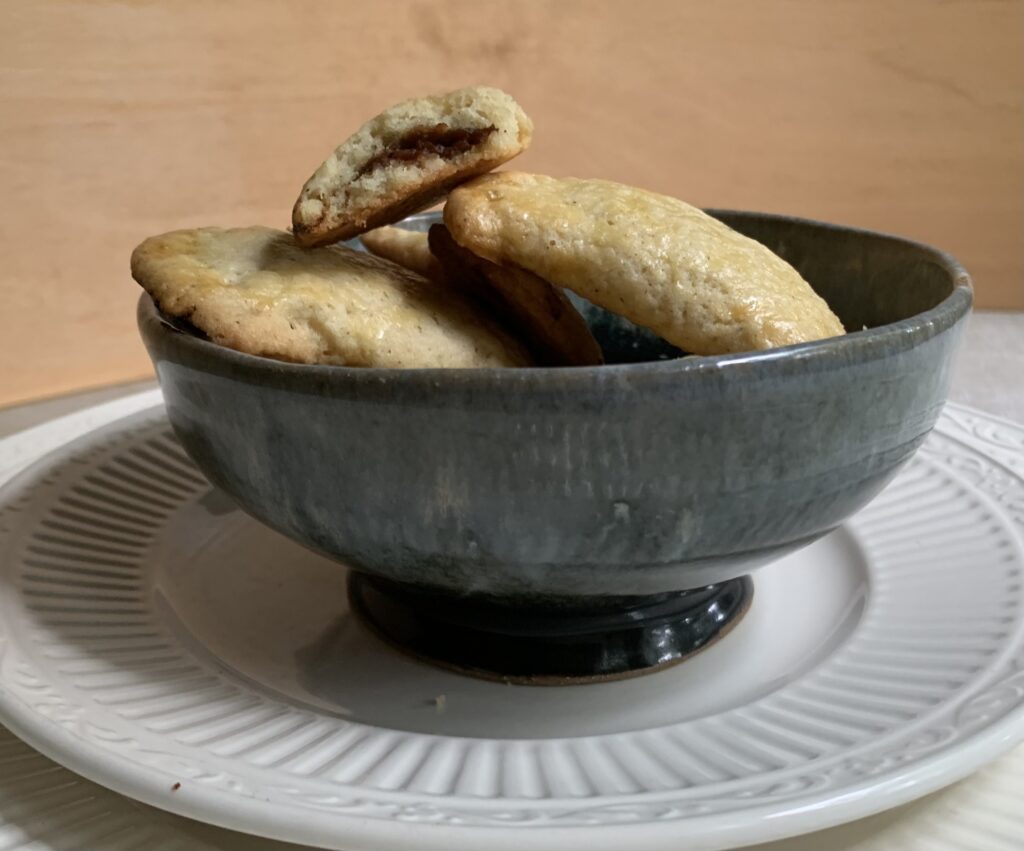
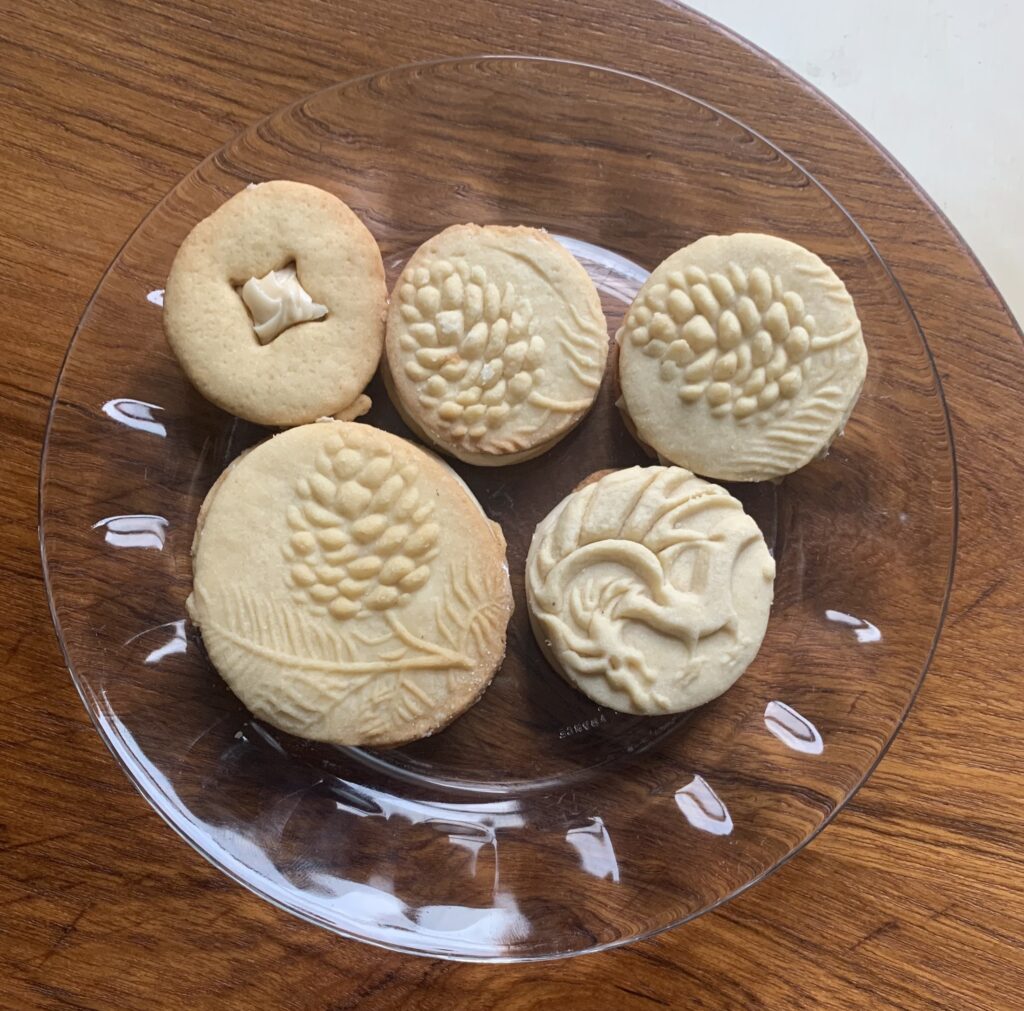
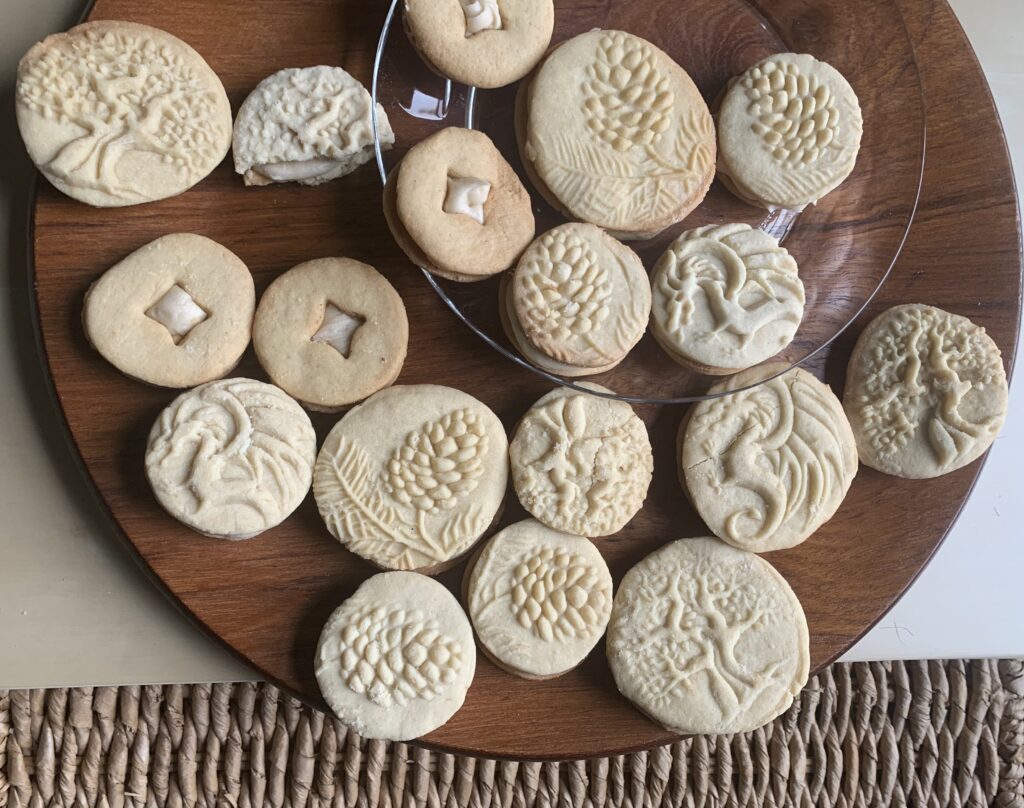
Maple shortbread sandwiched around a not-too-sweet maple buttercream.

Alfajores: the legendary South American cookie of childhood formed from two tender, shortbread wafers that sandwich a rich caramel (dulce de leche) filling. Add a bit of maple flavor to the shortbread part, replace the filling with a rich maple buttercream, and you get a cookie that’s just as good, and almost equally loved across its range in North America.

Exceptionally pretty, and featuring a deep sweetness that hovers right on the line of “children adore it” and “adults can too,” this regional specialty is going to find its way into your repertoire and simply won’t leave once you see the children in your life squealing with glee. Just be aware that no child on the planet can resist snitching a few from a low lying jar, which means you’ll have to carefully be looking in another direct.

Perhaps with a plate of your while sipping nice cup of tee or coffee.

A NOTE FROM KATE: The cookie itself isn’t particularly sweet without the filling, which is a bit too sweet for my personal taste. Now, to be fair, this filling grew on me with every tweak. Still, my European alter-ego would like to point out that you don’t have to use all the sugar in the buttercream recipe.

I do agree that Maple Sandwich Cookies are a lovely addition to the fall repertoire, sans “pumpkin spice,” and make an enticing visual statement for both kids, and kids at heart.

Click here if you only want the recipe without the discussion

A few years back we published a wonderful recipe for easy Maple Drop Cookies. This is the upscale, extra pretty version: tender, maple flavored cookies sandwiched around an intensely maple filling. What could go wrong?

The answer proved to be nothing, though it did take a little bit of fidgeting to get the details just, exactly right.

The Cookie Part

Shortbread cookies a/k/a butter cookies mostly follow a standard set of proportions. Here’s a alphabetical list of examples normalized to the same two sticks of butter in this recipe:

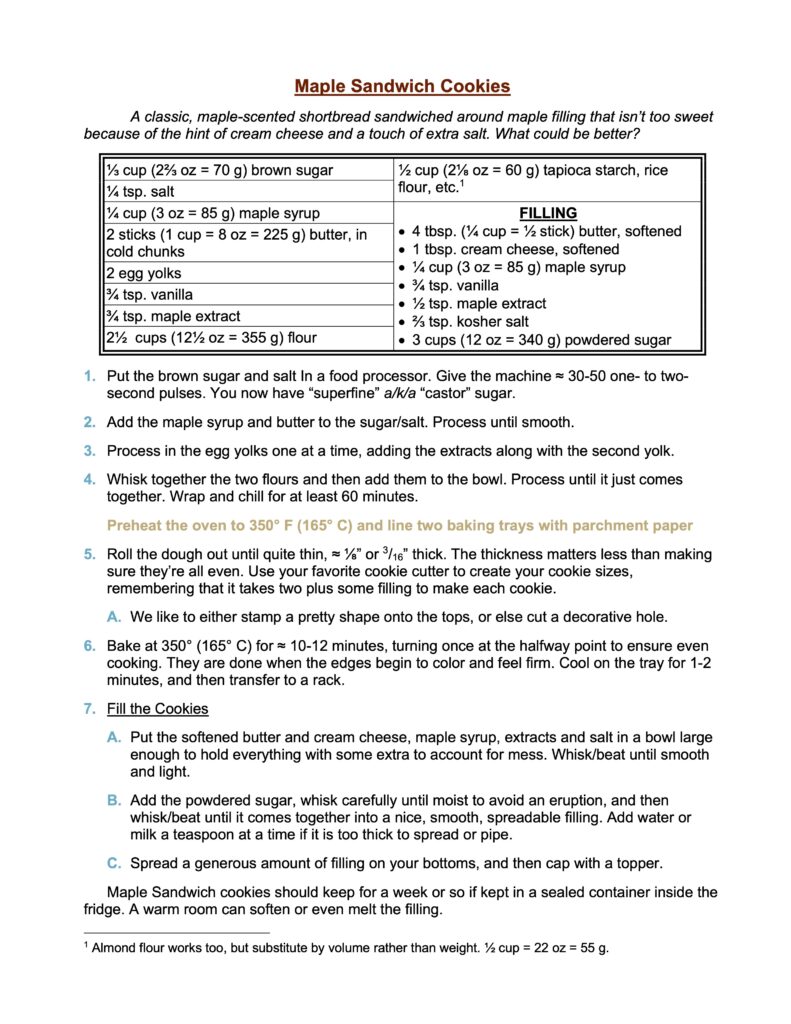
Testing showed that we liked this cookie just a bit more tender than a standard Butter Jelly, but it was a close call. Feel free to substitute the specified mix of flour (2½ cups) and starch (½ cup) for a straight 2¾ cups of flour.

As to thickness, keep them thin if you want to make sandwich cookies and a little more robust if you want to skip the filling. Just remember to increase the baking time too! Thicker cookies need to bake longer, especially with doughs like this with a decent amount of starch. Starches stay pasty on the tongue until the inside gets hot enough to break down. The magic temperatures are about 130° for tapioca, 140° for potato starch, and 145° for cornstarch. We prefer tapioca because you can’t exactly probe your cookies with an instant read thermometer. The lower degradation temperature to provides an extra safety margin against pastiness. Note: We have no trouble finding affordable tapioca starch at any good Asian grocery.

The cookies are done when the edges begin to brown, which also means the bottoms will be what the pros call GBD (Golden Brown & Delicious). Those toasty notes pair exceptionally well with the maple and vanilla flavors inside the cookie itself.

NOTE FROM KATE: The GBD bottoms work just fine for thin-rolled cookies. IMHO, I wouldn’t mind getting the thicker, molded-pattern ones a bit toastier. Giving them an extra minute or two will make sure that all the starch is properly degraded by heat. This is especially important when you place a tray of molded cookies in the fridge. In fact, I think a slight hint of darker, well-toasted edge would play well against the sweet buttercream filling.

NOTE FROM SCOTT: I completely agree. And for those who don’t know, refrigerating molded cookies can help to keep the pictures clear.

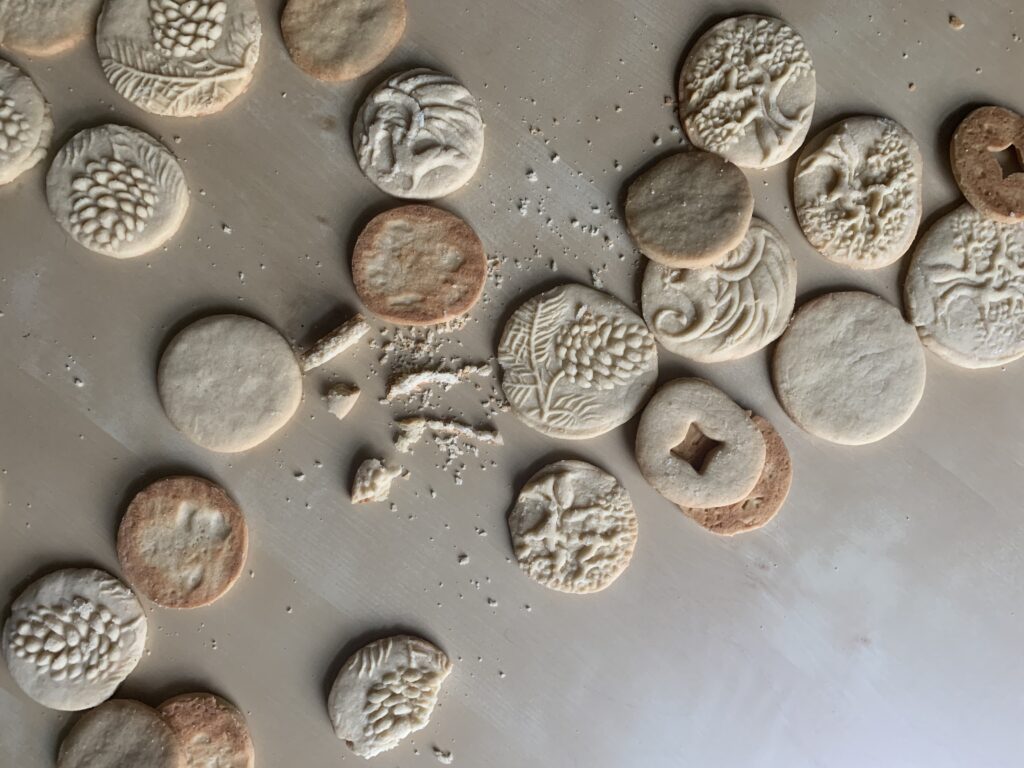
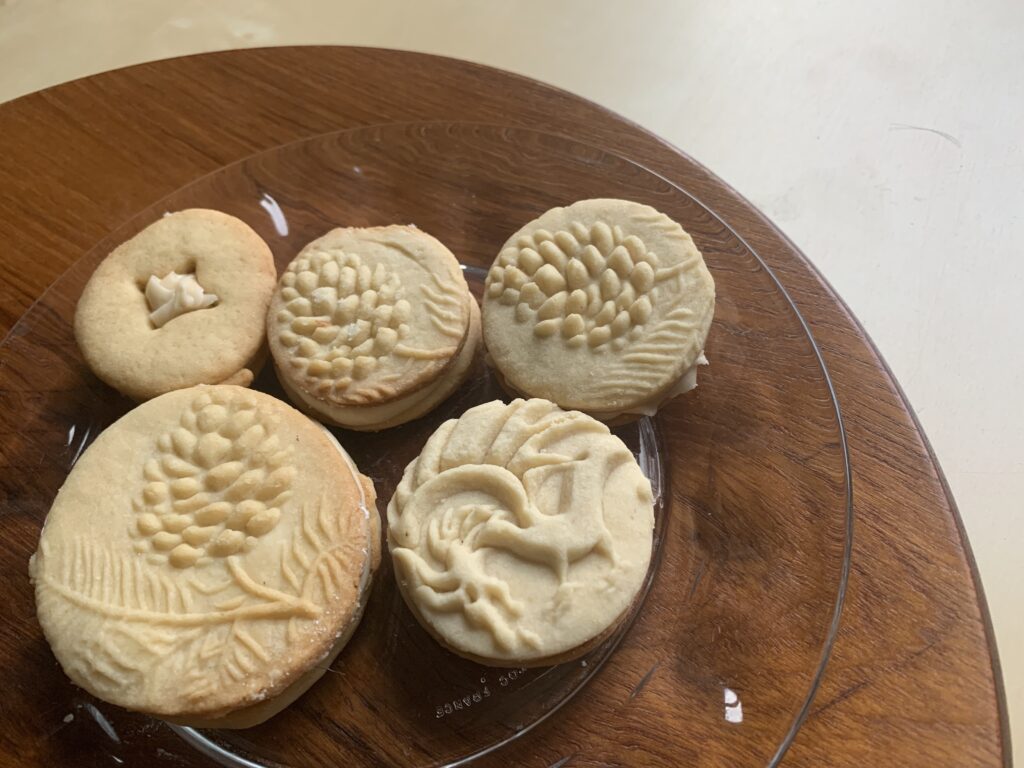
Next up: fancy touches, which turned out to be a lot of fun. This kind of shortbread holds its shape exceptionally well. They’re perfect for really fine cutouts on the sandwich caps, and even for patterns stamped into the dough. Have a look!

FWIW, we had more success stamping the dough first and then cutting it out. It would have been an ideal situation for using a patterned pin if we had one.

NOTE FROM KATE: This cookie holds its stamp well, but it didn’t do as well with very deep, molded cavities. It won’t be as forgiving as gingerbread, so make sure the dough is at a pleasantly cool temperature. You will also want to clean your molds between every stamping (we have a bowl of oil with a toothbrush, a bowl of starch with a powder brush, and a skewer on duty between each stamping.) For this cookie, it worked well to lightly dust the dough as well as the lightly-oiled mold. The type of your mold will also make a difference. Unlike with a hand-carved wooden mold or stamp, a laser-cut mold with sharp-angled features tends to cut all the way through the dough when pressed too hard. Use a gentle hand. In a larger production situation, I would roll the dough directly on the parchment, stamp the shapes, cut the rounds, and then remove the excess for reuse.

The Filling

Our standard buttercream filling uses half a stick of butter to three cups of powdered sugar, with whatever flavors you want added in. It’s dead reliable, thick enough to hold its shape, easy to thin as desired with a bit of milk or other liquid, and the heat characteristics are easy to understand. Butter gets soft at around 65° F (18° C), and so do these fillings.

In this case we started by simply adding in some maple syrup as the liquid. The texture was spot on, but the syrup made the filling a lot too sweet and a little too loose . Solution for the first: reduce the amount of syrup and add in some maple extract. [See Note below] This came close, but still edged over the line into the too-sweet-for-grownups realm.

Have three standard solutions for something that’s a bit too sweet: add salt, add acid, or add something bitter. Salt came first. I upped the amount from a healthy pinch all the way to ¾ tsp. That did the trick for me, but Kate said she could taste it. ⅔ tsp. proved to be the [ahem] sweet spot.

But the filling was still awfully sweet, and toed right up to the children-only line! It needed some extra help. Lemon didn’t seem to fit, so I decided to whisk in a tablespoon of cream cheese. Perfect! The extra mass tightened the filling that essential bit, and the mild acidity was enough to bring the sweetness under control.

TECHNICAL NOTE: Our go-to means of adding bitterness are molasses (also acidic), coffee, and chocolate. The molasses was tempting, but in the end we worried that it would have tried to steal the scene instead of playing a supporting role. [Additional Note: That observation all but demands a comment about molasses being a ham, but three decades of marital wisdom suggests that I might not get away with it. So never mind.]

NOTE FROM KATE: He thought he got away with it. That’s…kind of adorable, and really sweet! Just like these cookies!

Concerning Maple Syrup

“Pancake syrup” is basically corn syrup with coloring and maple extract. I have nothing against that on some philosophical level, but it would substitute for extract rather than syrup in baked goods. All the cookies we make use real maple syrup.

But that doesn’t end the story, because real maple syrup comes in several grades that basically correspond to the time of year it’s tapped out of the tree. Think of it as analogous to the change from veal to beef, or lamb to mutton: the syrup becomes progressively darker and more intense as the season moves on. We would have loved to try some extra-dark syrup in these cookies, with less extract, but simply don’t have access. If you do, please do, and let us know the results.

Note that syrup “grades” don’t really help because it is an industry term. The only law on point comes from the USDA’s Grade A vs. Processing Grade vs. Substandard. You and I never see anything but Grade A according to that definition.

The industry used to divide the color/flavor lines using the same letter grades with different meanings, going from lightest (Grade A) to darkest (Grade C), but that made consumers perceive the darker colors as inferior. As of this writing the industry has adopted color descriptions instead of grades. Vermont’s industry page describes them like this:

  • Golden color with delicate taste
  • Amber color with rich taste
  • Dark color with robust taste [used in this testing]; and
  • Very Dark color with strong taste.

The Canadians follow suit, though they often grade by “colour” instead of “color;” except when marketing to the U.S.

Storage

Unfilled cookies should keep for a solid week in a cookie tin or other airtight container. Freeze for longer storage.

Filled cookies, and unused filling, will start to get soft if kept above 60° F (18° C), which equates to a chilly room. We prefer to use the refrigerator for convenience, but take extra air to have an airtight container lest the filling absorb flavor from some garlicky pasta in the bowl next door.

I believe the filled cookies can also be frozen, but haven’t tested it yet.

CONCLUSION

That’s a lot of detail, but it all adds up to common sense for any experienced baker. The recipe is for a simple, maple flavored shortbread, and an even simpler maple buttercream. Put the two together and you have maple nirvana. There’s a whole lot worse you can find in this world of ours. And very little that tastes a whole lot better.

P.S. We had some filling left over from the photo shoot, and a few Gingerbread cookies from another project. I combined the two on a lark and… Goodness Gracious and My Oh My! This maple filling loves, Loves, LOVES to be paired with spice cookies! It’s so good that I may well sneak some onto this year’s extravaganza tray. Make an extra batch of Ginger Snaps without the sugar crust, combine with the maple filling… Oh yes. This could definitely be a thing.

Enjoy!

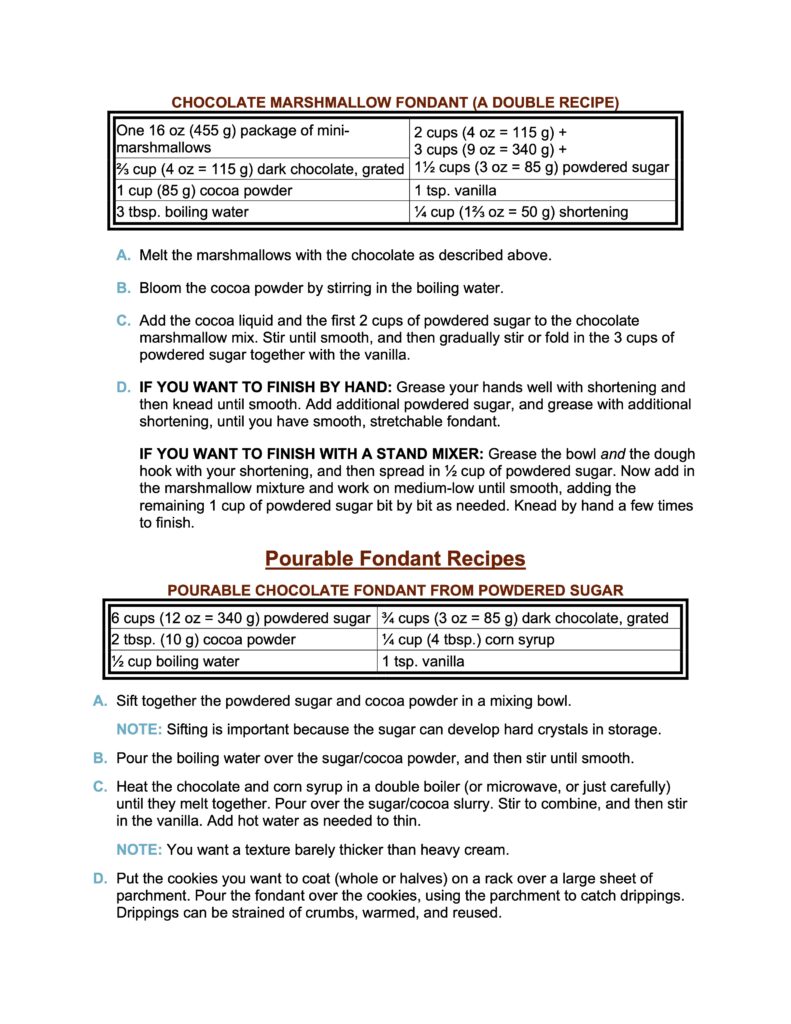
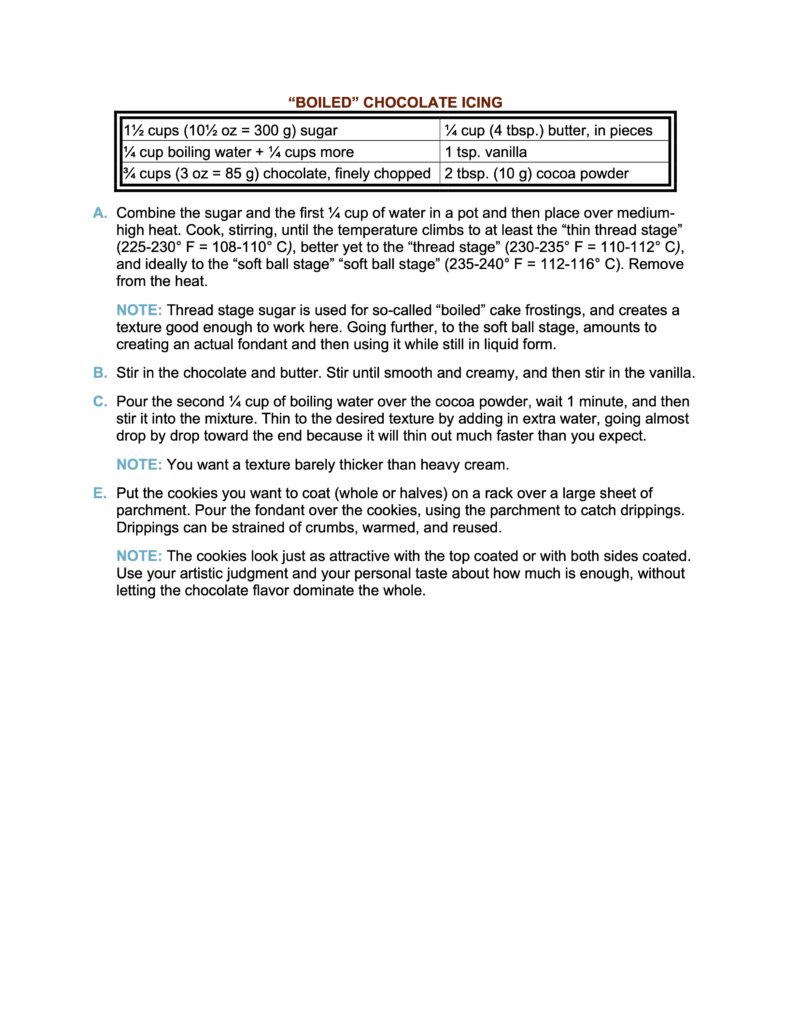
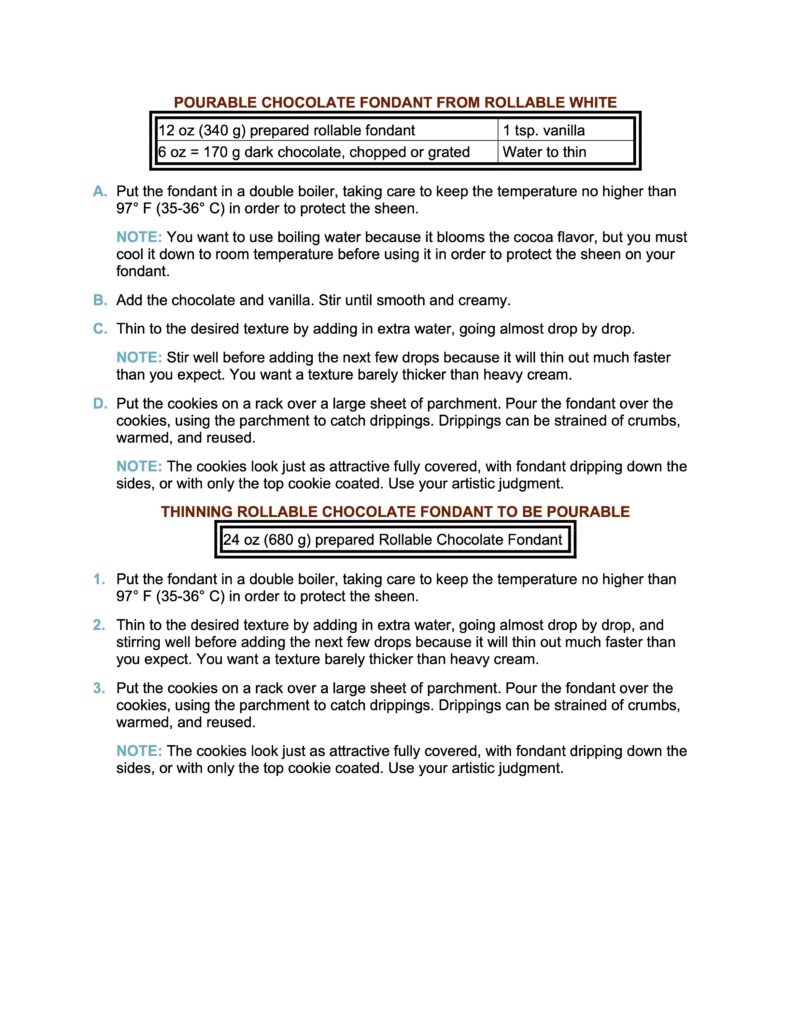
POURABLE FONDANT AND COVERTURE – the ideal cookie coatings

All we’ve learned on how to make cookie coatings with texture, thicker than icing but thinner than frosting, which are also safe for shipping

Up until now we’ve been happy to use either a thin chocolate glaze, a ganache filling/frosting, or a coating made from actual chocolate melted with butter. Ischler Cookies, a chocolate coated sandwich with nutty shortbread and apricot jam, wanted that chocolate/butter coating, but had to dry into something that could be packed in a tin without heroic efforts like cutting out custom sized bits of parchment paper.

We have now (finally!) found two answers to the dilemma. The first is coverture, which is essentially a chocolate coating made with cocoa butter instead of regular butter. This has a higher melting temperature and won’t lead to sticky hands until you get toward body temperatures. Think of chocolate bars and you’ll have it.

The problem with coverture? It’s very hard to find in a store, and impossible to make at home unless you keep cocoa butter in the pantry. Most people don’t.

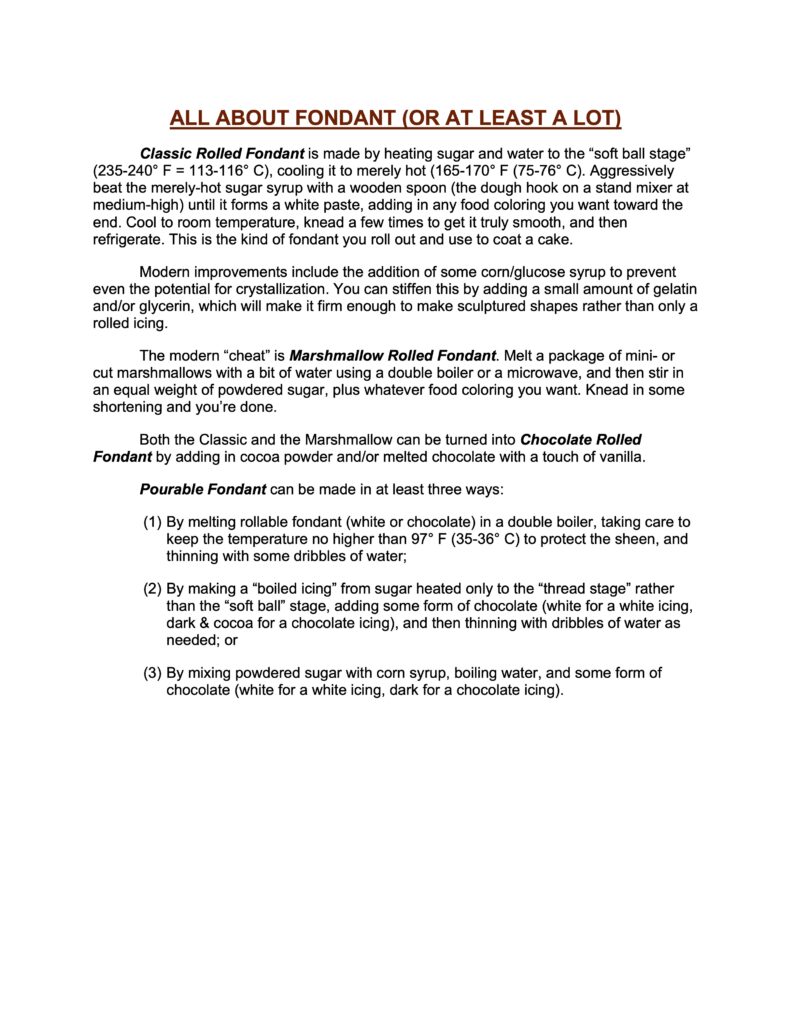
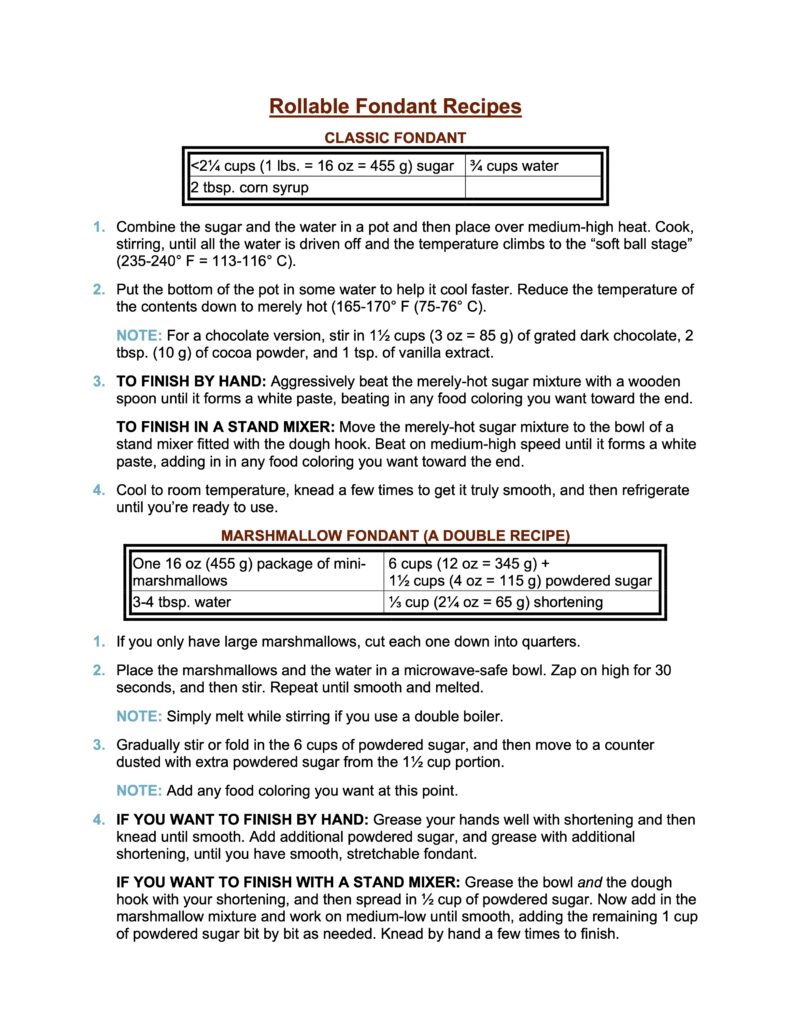
That leaves fondant. You may know this better in the rollable form that people drape over cakes. But did you also know about pourable fondant, the version used for petit fours and the like? It creates an icing that’s almost indistinguishable from coverture from both the visual and textural perspectives. It’s just a good bit sweeter and less chocolaty inside the mouth. An ideal compromise for anyone who wants to stick with standard pantry ingredients.

Heritage Cookies of the Old and New World does include a basic pourable fondant recipe, but we never really dug into the subject to understand how and why it works. Until now. Enjoy!

NOTE FROM KATE: APPLICATION TRICKS. If you have great many cookies and a lot of fondant, by all means use a screen and pour over it, as described above. However, this requires extra sheets, space, and materials. We tested it, and it works. I personally find that dipping a cookie in while holding it yields an excellent result, without having to make coating, and is better suited to the average home kitchen. The only downside is chocolate on your fingers. But I have an answer! To keep having from washing your hands, or fighting the constant temptation to lick your fingers, try using a thin, snug glove! It sure worked for me and my work moved faster. Also, I had absolutely no desire to lick my glove!

P.S. THE HOT WATER TRICK. Our experiments on chocolate coatings led to a wonderful trick:

  • The Problem: Chocolate icings begin to harden as soon as they cool, and it often takes a bit too much time to get all your individual cookies dipped or poured.
  • The Solution: Duh. Keep your icing warm enough to prevent it from cooling too fast. But how?
  • The Method: You have a bowl of molten coating. Fill a slightly larger bowl with hot water, and place your bowl of icing inside. The hot water will keep the icing warm for twice as long, leaving you all the time you need to work.

POPPY SEED FILLING – with a few examples of cookies and other desserts

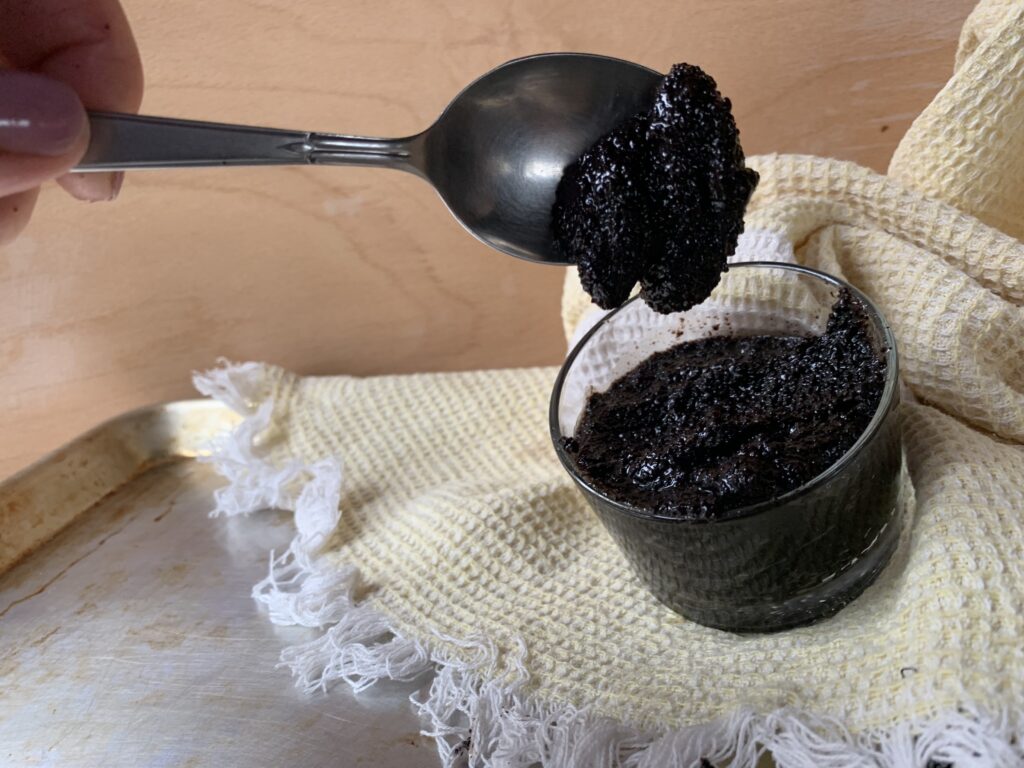
“Caviar!” chorus Kate and Daughter #1. “How nice,” say Scott and Daughter #2.

Part 1 of this extra long article addressed Poppy Seed Drop Cookies and Roll-Outs. This article covers our work on a Heritage Poppy Seed Filling worthy of the name, and a number of other heritage treats that don’t quite make it as “cookies.”

As always, skip to the bottom if you only want the recipe. Or to the middle if you want a couple of great cookie recipes to use as a vehicle.

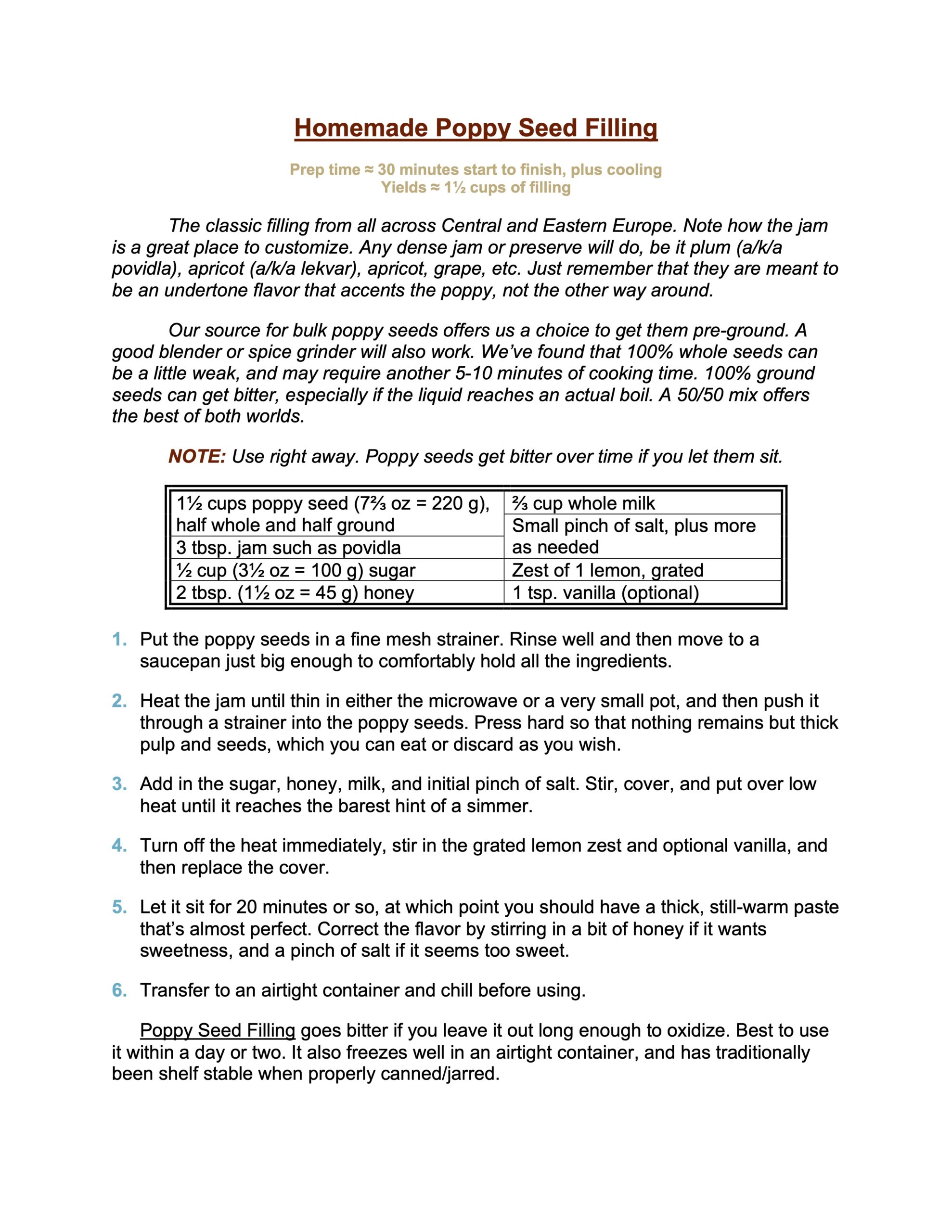
POPPY SEED FILLING

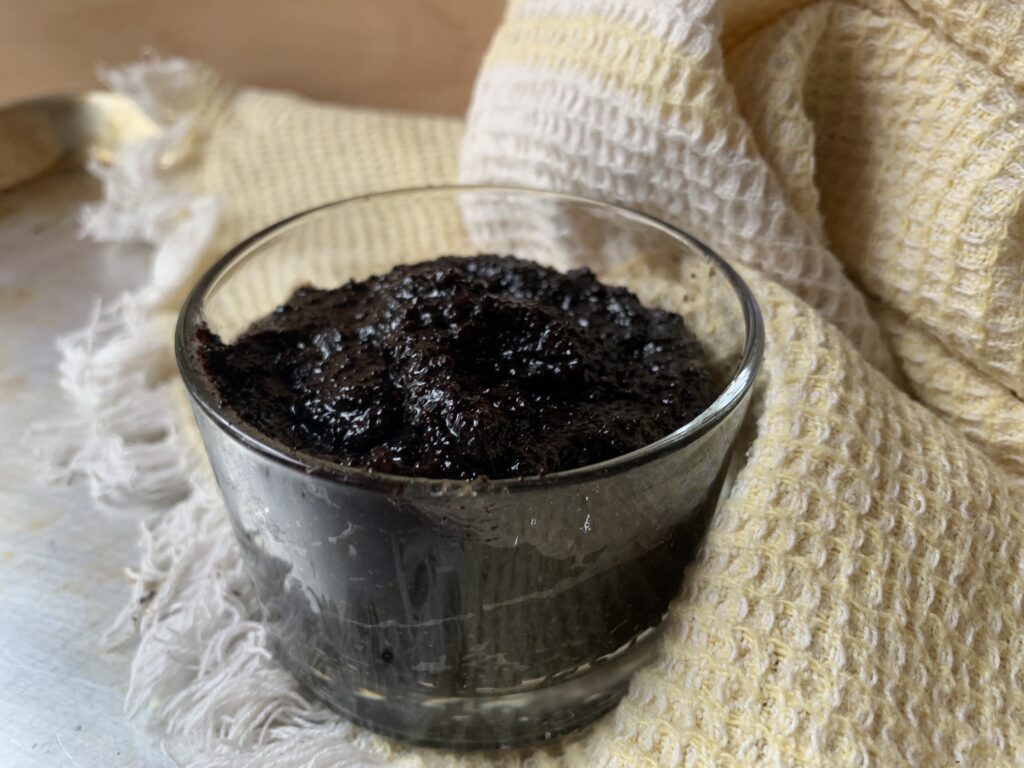
NOTE FROM KATE: We took a while ironing the kinks out of this one because I have some serious opinions about poppy seed. It’s fabulous! In fact, I started eating poppy young. My paternal grandparents had a summer farm house well outside of Prague. The crops grown around it varied every year, depending on what the state farm’s agronomer decided to grow. One year we had peas (which the kids plundered, using the dry peas in spit guns to devastating effect.) The field next to it grew poppies. The frothy sea of white blossoms faded into blue-green marbles, which soon turned into poppy heads. We kids liked to pick them. We would take our poppy heads into the hay loft, pull out our pocket knives, dig out the white seeds in their slightly bitter white sap, and eat it.

When our grandparents found out, they just shook their heads. Grandma Stoy said, “Don’t eat that. It will make you sleepy, and if you eat too much you’ll grow stupid.”

“That’s how opium is made,” Grandpa Stoy said. “And morphine, for surgeries.” We got a whole lecture on the pharmacological importance of poppies. We were also warned not to make opium (addictive, illegal) while Grandma let it slip that she had seen it used to pacify teething babies. “They used to simmer green poppy heads in milk,” she said. “Then they’d wrap soft bread in a linen handkerchief, tie it off, and soak it in the poppy milk. The baby would suck on it, and go to sleep.”

And here you thought I wouldn’t share any heritage information. This is first-hand research!

The drop cookies came together quickly even though I (we’re back to Scott) had to start with some creative baking. This Poppy Seed Filling? Not so much.

You’d think otherwise, because it is incredibly popular and used in inumerable ways. This is the stuff that goes inside Poppy Seed Hamantaschen, Poppy Seed Kolache, Hungarian Poppy Seed Rolls, the swirls inside of Poppy Seed Cakes and Poppy Seed Breads… and on, and on, and on. There should be recipes out there by the dozen. And there are. But in the end it took both experience, failure, and some understanding of the basic chemistry before we could get it capital-R Right.

  • Problem #1: Poppy Seeds have a bitter edge that’s part of their appeal. But old poppy seeds get bitter in an unpleasant way, and the bitter edge becomes a stabbing blade if you go from “ground” to “pulverized.” I now believe this happens because the seeds, like many other seeds and nuts, are full of oil. Let the oil age, and it goes rancid; i.e., becomes unpleasant. Pulverize the seeds too far in a blender, and the increased surface area of the particles gives the oil a greater opportunity to oxidize, turning harsh in the same way you see with extra virgin olive oil.

Solution 1a: Buy your poppy seeds fresh, and store them in the freezer until you’re ready to use them. This goes double for ground poppy seeds, where the oils are no longer protected by the hulls. [NOTE FROM KATE: A week at room temperature is enough to render ground poppy seeds “less than fresh.” Double that and they will turn bitter. Grandma Kandler always ground them fresh right before use. If you buy them ground to order, as we do, I suggest you make your filling right away, label it, and freeze it.]

Solution 1b: Keep the blender problem in mind, and don’t blithely turn it on for a minute or two. There is “not enough,” but there is also “too much.” The baker’s job is to find the perfect compromise. Mixing whole and ground can also help. [See below].

Solution 1c: If poppy seed flavor lies in the oils, then one should be able to extract those oils into either dairy products or alcohol. And you can! Include some cooking/soaking-in-milk time as part of the recipe. This will even out the flavor, prevent it from going rancid anywhere near as fast, and will also hydrate the whole seeds [see below].

Caviar for Kate
  • Problem #2: Many sources argue that whole poppy seeds provide some desirable pop in a filling. On the other hand, they can get annoying very fast when you end up with a mouthful of grit; and they get extra gritty when a little dried out. Turning it around, ground poppy seeds release more flavor and also smooth things out, but can make the filling a little too dense, shorten its shelf life, and remove all the pop instead of just some. [NOTE FROM KATE: YMMV on cooking them whole, and I have been as open-minded about it as I could be. Yes, they do soften over time, but even the 50/50 ground:whole compromise left me irritated about the whole seeds’ texture. Let your preference be your guide.]

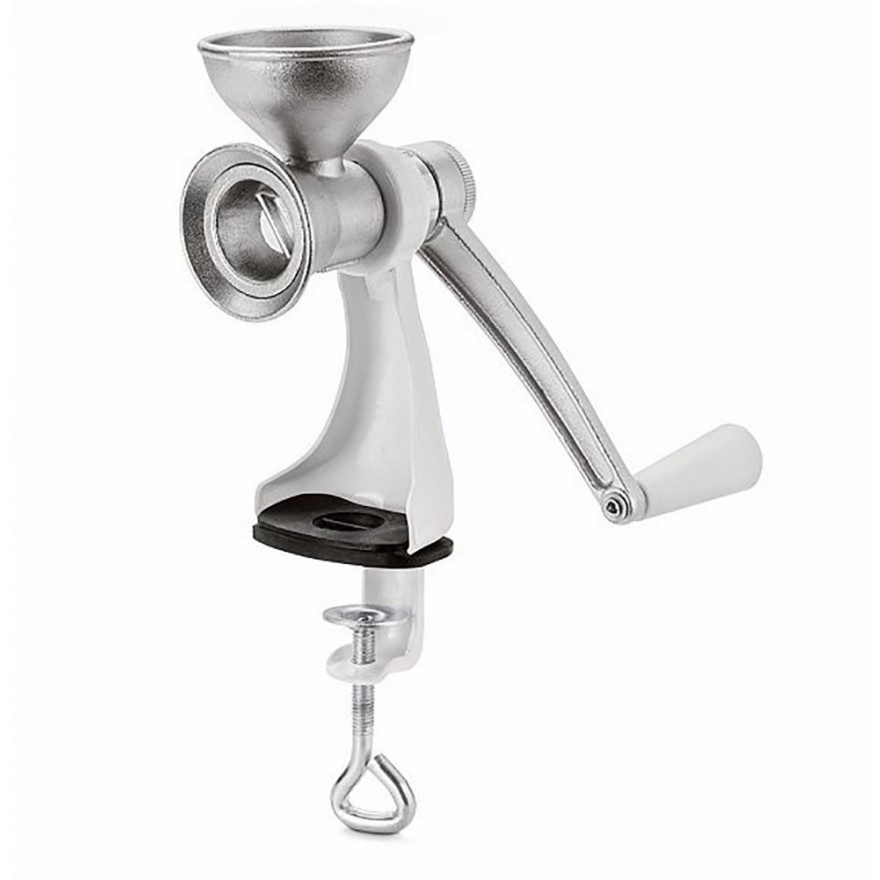
Solution 2a: Start from a mix of ground and whole. Fact is, blenders are not the best tool for grinding poppy seeds. There are actual mills you can buy for just that specialized purpose.

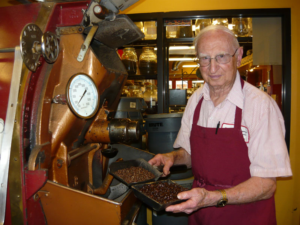
We buy our poppy seeds in bulk from our inestimably awesome local coffee roaster. They have just such a tool, and will grind on site as requested. Thus it takes us exactly zero effort to order two half bags instead of one big one, with the first half ground and the second half whole. Highly recommended.

The founder, Mr. John Prestogeorge. A gentleman through and through.

Solution 2b: In theory, poppy seeds swell as you cook them in a liquid, and eventually will swell enough to burst. Think of rice, or some other grain like quinoa. They do just the same. Cooking a little longer will make them swell that much more. The technical challenge here is not allowing the mixture go above the barest of a simmer for more than a few minutes. Boiling will turn them bitter for sure. And with a mixture as viscous as a poppy seed filling, reaching a boil is almost a foregone conclusion. You could put the whole mix into a sous vide for a few hours, and that might work quite well, but we haven’t tried it.

Solution 2c: If you go through the whole process and the filling still feels gritty, swirl a pat or two of softened butter into the warm filling. It’s just like finishing a sauce. The butter adds mouthfeel way out of proportion to the amount you use.

Caviar for Miranda, the eldest daughter
  • Problem #3: Poppy seeds alone are… meh. They come into their own when mixed with some kind of fruit. This is why you almost always see lemon-poppy goods rather than poppy playing a solo tune.

Solution 3a: Include some concentrated fruit flavor (a/k/a honey, jam, preserves, and the like) as one of the sweeteners. This isn’t some secret trick! At least 90% of the recipes out there will include both honey and some kind of jam. The most common ones are povidla (prune butter/filling) and its apricot equivalent lekvar. [N.B. The names are from different languages, and actually mean the same thing: cooked, jam-like fruit filling used in baked goods. Thus the Czechs have both prune povidla and apricot povidla, just as the Hungarians have both apricot and prune lekvar. I use the one name for a prune version and the other for apricot for the sake of reader clarity despite the fact that I know it is linguistically misleading.] But any good fruit preserve will do if that’s the flavor you want to pair! Strawberry, blueberry, raspberry, grape… they’ll all work well and give you a customized “other” to claim as your own.

[NOTE FROM KATE: If you don’t have a jar of prune butter handy, soak two or three prunes with your liquid of choice. The flavor will spread and even out when you the blend the two into filling.]

Solution 3b: I know, I know. ‘But fruit preserves usually include undesirable seeds and/or lumpy bits of pulp! What do I do about those?’ Simple enough. Heat the “jam” until it’s thin, and then push it through a sieve by pressing down hard with a rubber spatula or spoon. The seeds and irredeemable pulp will be left behind, while the rest will get broken down to the point where it no longer matters.

Solution 3c: And yes, mixing sweeteners even more will only increase the complexity. Our recipe uses plain sugar (to ensure the poppy seeds stay front and center), honey (to round everything out), and also choice-of-jam to transform it from ordinary into special.

Solution 3d: Poppy seeds adore fruits of all kinds, but their One True Love is lemon. Don’t fight it. We add some zest into our filling just because it’s part of what everyone thinks of as “poppy seed flavor.” Vanilla also works but we consider that to be more of an optional extra touch.

“Poppy seeds? How nice. Couldn’t we do something with chocolate?” At least according to Scott and Lee (daughter #2)

Final problem: How do you use this wonderful filling now that it’s made and waiting?

THE LAST AND FINAL NOTE FROM KATE: My feelings run strong about this one! I view whole poppy seeds in my filling much like Scott’s opinion on coconut (remember how he called it “Demon Hair” in our Heritage Cookies Alfajores recipe?) Poppy seed filling should be smooth enough not to feel gritty, and should never leave dark seeds between your teeth. If you’re baking for me, use only ground seeds OR blend it after cooking. Remember that, as a rule of thumb, every 10 degrees Centigrade will double the rate of a chemical reaction. Oxidation of the popp yseed oil is just another chemical reaction. Thus, the bitterness will be directly proportional to the combination of time and temperature in the presence of oxygen. (Since the size of our kitchen excludes the installation of a temperature-controlled, nitrogen-atmosphere reaction kettle, we need to plod on like it was 1899.) ANYHOW, you can use fresh-ground poppy seed and gently simmer it, and freeze it. OR, you can pre-soak whole poppy seeds overnight in warm water, strain, gently simmer them, and then blend it till smooth; but only once it has cooled some. (Remember: every degree you shave off helps to slow down the oxidative process.)

And don’t forget the balance flavors? Yes about lemon zest and juice. And yes about some jam. But dry spices have a place too. Clove is lovely in moderation and, not coincidentally, rounds out the flavor in a way that keeps the bitter notes under control.

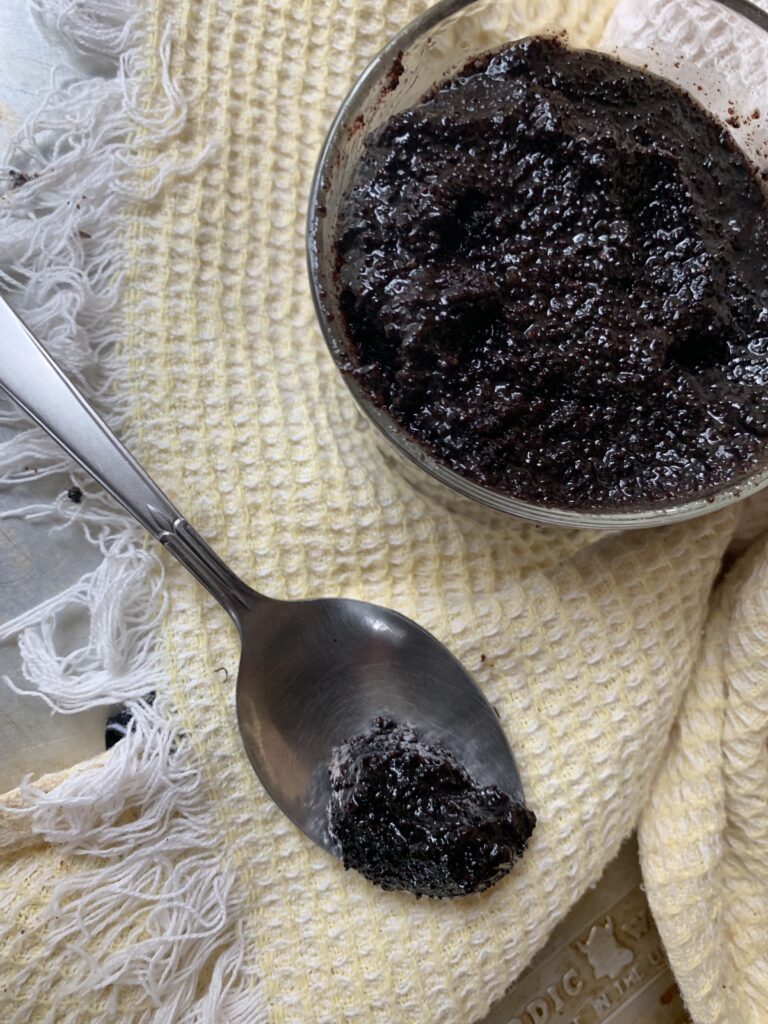
MY FAVORITE QUICK USE: Eat 3 spoonfuls in the morning while waiting for your coffee to brew. [Note From Scott: I support this. See above for Grandma’s wisdom about teething babies. It works just as well for other dispositions. And now I will run…]

FILLED POPPY SEED COOKIES

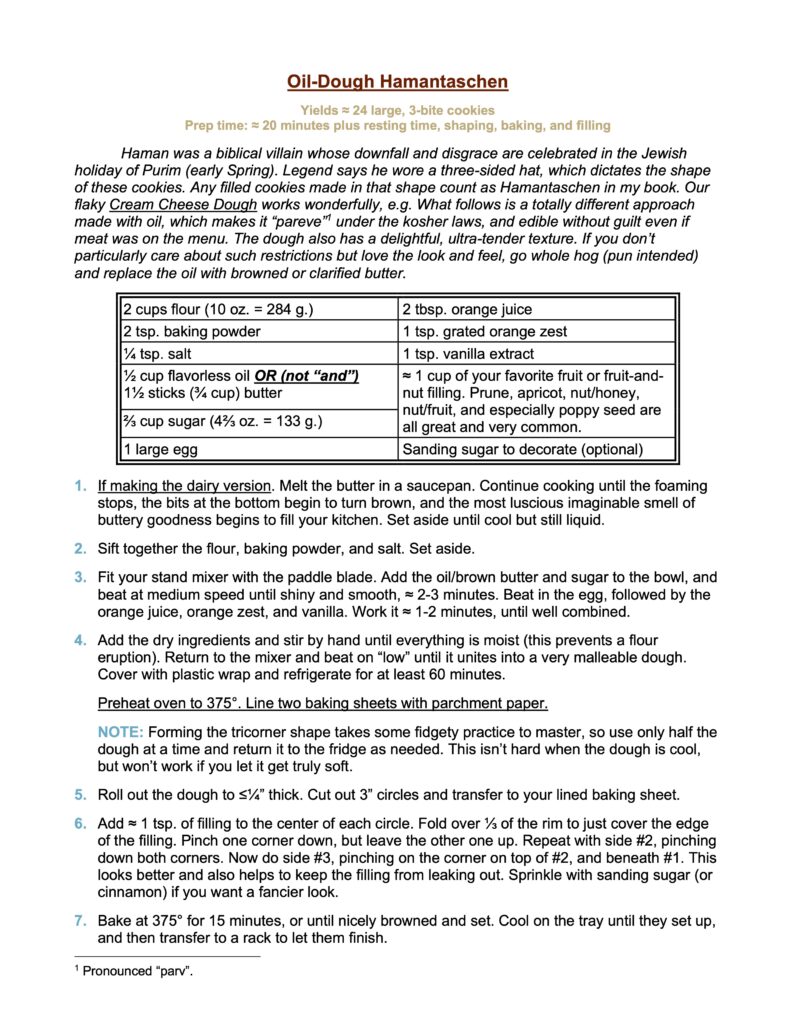
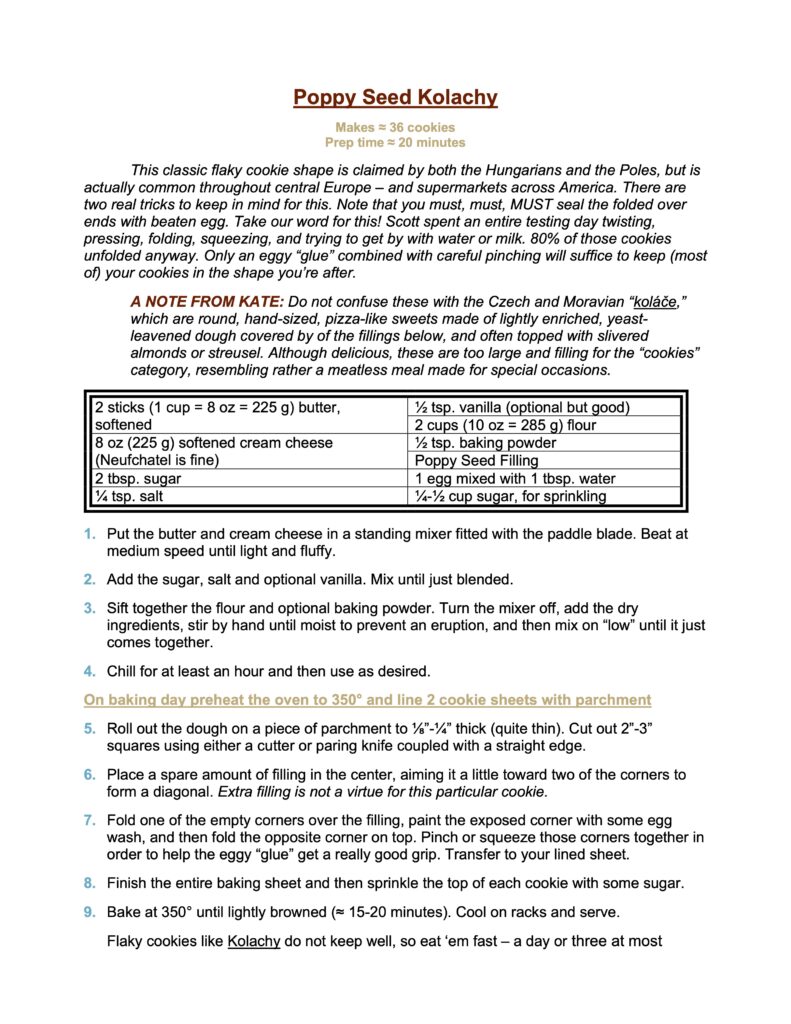
Start with a classic filled cookie from any nation starting with Turkey, Greece, and the Balkan states in the south, on up through Germany, Poland, and Scandinavia in the north. Poppy Seed Filling gets used every bit as often as fruit fillings, nut fillings, and sweet cheese fillings. Here are two examples from our original Heritage Cookies of the Old and new World collection.

Served at every Purim feast, Hamantaschen are even more common than
Queen Esther Cookies. They are actually named for Haman,
the villain of that holiday story.

That’s just two examples. Poppy Seed Filling has as much versatility as anything else in the repertoire.

OTHER POPPY SEED DESSERTS

But that isn’t the end of the story. Poppy-centric desserts abound, and several deserve some special mention. No, they aren’t “cookies,” nor even Not-Quite-A-Cookies. So why talk about them at all? Because the treats I’m about to describe are immensely popular, carry great cultural significance, and often fill the same role as a cookie on many a holiday table. No actual recipes, because that would be a step too far, but honorable and honored mention? Absolutely.

Hungarian Poppy Seed Rolls. These look a bit like jelly rolls or roulades, but those are made by rolling up filling inside a yellow cake or meringue layer. Poppy- and Nut Rolls start with a soft, well sweetened, yeast bread dough. After that it’s just the same. Roll the dough out into a rectangle, let it rise, then spread it all over with a thick layer of Poppy Seed (or Sweet Walnut) Filling, leaving only enough room on the sides to account for the filling that’s bound to squish out. Roll the dough up around the filling very, very gently to make a giant roll, and then bake. When it’s done, cut into slices for both easy eating and to display the spiral pattern on the inside.

Lithuanian Poppy-Bread Holiday Nuggets (“Kūčiukai”). There are websites out there that characterize Kūčiukai and its derivatives, as a “cookie”. It isn’t. Kūčiukai are a straightforward, moderately sweet yeast bread stuffed to the gills with whole and/or ground poppy seeds. Roll the dough out into a thin sausages maybe ½” (1-1½ cm) thick; cut them into ¾” (2 cm) pieces; bake until fully done and even a little crispy; and then serve them in a big bowl for the Christmas feast.

Ancient baltic tradition uses Kūčiukai in several ways, ranging from something like cereal floated in a bowl of sweet poppy seed milk, to croutons in a bowl of thickened fruit soup (the most common name is “Kissel”). And, of course, as the object of snitch-and-snack raids by both the young and the young at heart.

That’s why some people call this a “cookie” to begin with? Consider this:

  • Kūčiukai served in sweet poppy milk or Kissel serve as sweet endings to the feast… just like cookies in the more western nations.
  • Kūčiukai are bait for tiny hands… just like western “cookies.”
  • And Kūčiukai are all but mandatory for the holiday gathering… again, just like the things we’d all describe as “proper” cookies.
  • Plus there is no other category in which you could put Kūčiukai from the pure translation point of view, because other cultures have no equivalent.

So Kūčiukai may not be a “cookie” for our purposes, but they 100% deserve to be mentioned in the same breath.

Poppy Seed Cakes, like the Czech “Makovec”. This is an extremely popular dessert often served on a cookie tray during the holidays, but it’s actually a moderately dense cake cut into 3-bite pieces. Recipes vary from a Yellow Cake base, to a White Cake base, oftentimes a Pound Cake base, and sometimes even an Angel Cake base; but cake it is. Fill that batter with an absurd amount of poppy seeds (whole and/or ground), and you’re pretty much done except for gilding-the-lily touches like a sharp lemon icing.

CONCLUSION

There are two types of people in the world: those who adore poppy seeds, and those who barely give them a second thought. That’s a pretty good average. People all over the world make cookies out of them too. But if you are a true devotee, the filling is where it’s at. This is the recipe that hooks ’em in and keeps ’em coming back.

Enjoy!