BERGER COOKIES, Baltimore’s Worthy Passion

The great cookie of Baltimore

Certain cities around the U.S. have regional cookies that send expats into ecstasies of nostalgia when they come across it again. New York has Black & Whites; our native Pittsburgh has Kauffman Thumbprints; the deep south has Southern Tea Cookies; and Baltimore has this cookie, which was created in 1835 by the immigrant owners of Berger’s Cakes & Cookies.

Regional loyalty commands us to at least make a show of disdaining all things Baltimore, so we need to say this quietly. [*Hushed voice* It’s a darned good cookie.]

NOTE FROM KATE: When I feel like yanking Scott’s chain, I root for the Ravens. He knows that I’m not a hardcore football fan, but he falls for it like Charlie Brown regardless. The Baltimore Ravens are, in fact, a really good team. And these are, against my expectations, really good cookies!
Overview

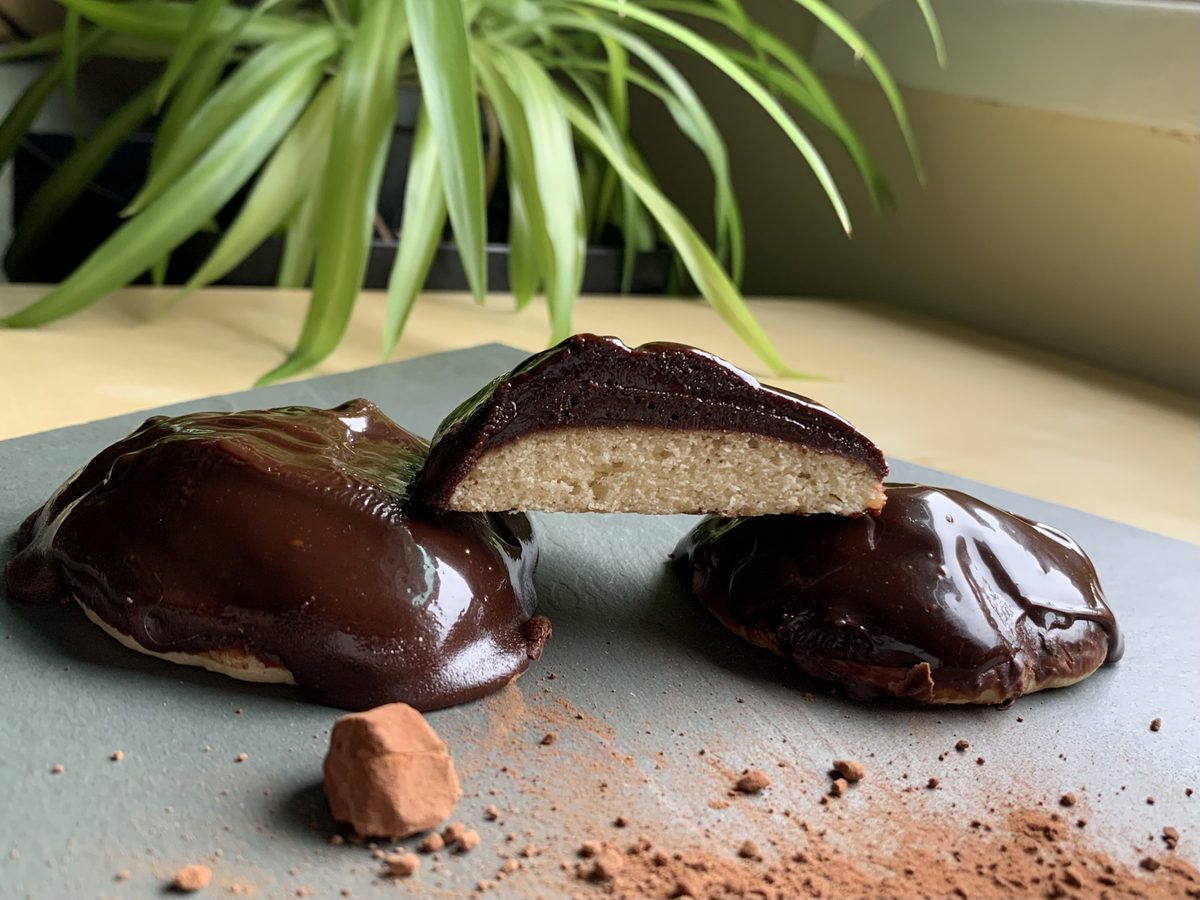
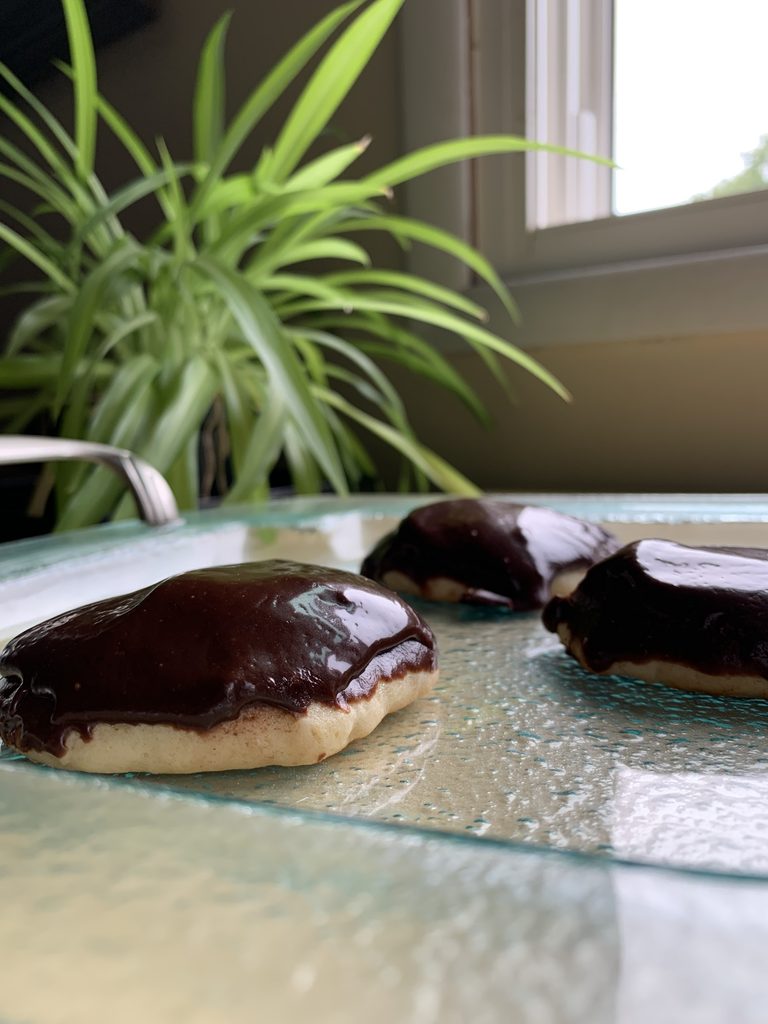
Berger Cookies are easy to describe. Coat a dense, relatively plain, somewhat chewy shortbread with dense, fudgy frosting as deep as the cookie is thick. There you have it! A four-bite treat that sends children of all ages into rapturous sugar highs. Simple, right? It ended up being tougher than it seemed.

Scott compiled an initial test recipe based on a more than a dozen online versions, made it, and… Both of us immediately knew that something wasn’t right. The cookies were good, yes; but only that. They lacked that mysterious extra that could create a 200 year old cult following. We tinkered with a second batch, then a third, and then… Then we called for help from a Baltimore friend. “Could we bother you for a box of the real thing when we meet at next month’s foray?”The whole sorry tale appears down below, but that was the literal aha! moment. “So that’s what these are all about!”

We couldn’t have done it without you Sam!

This Recipe Is Nailed

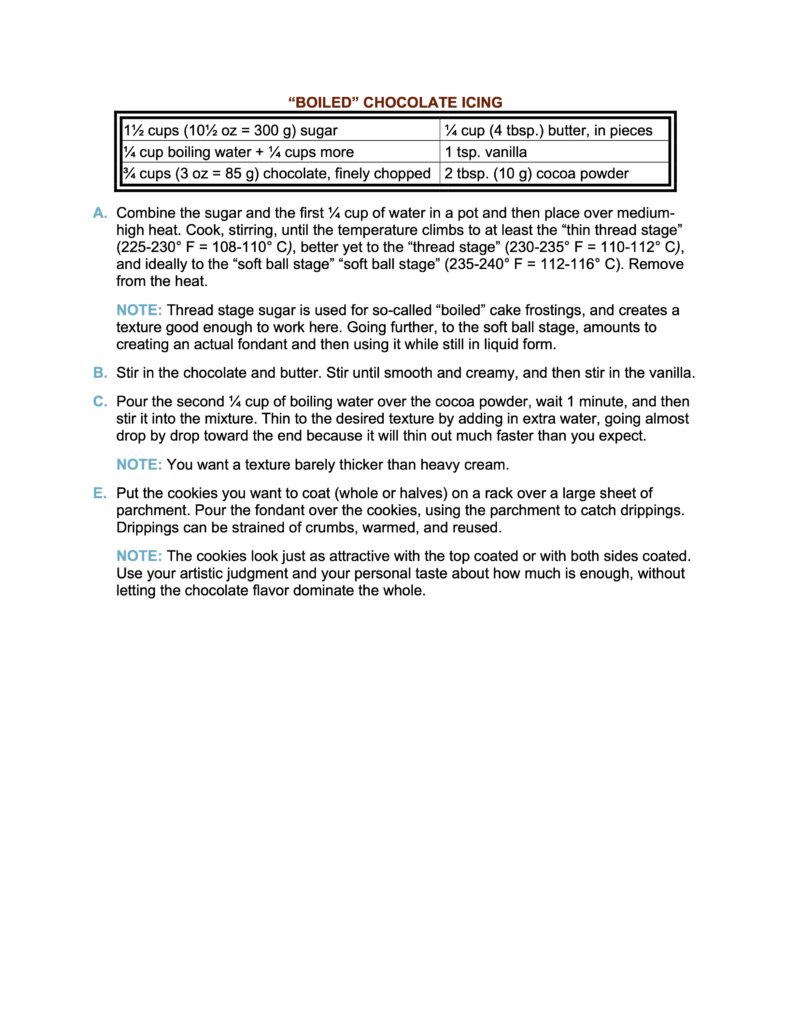
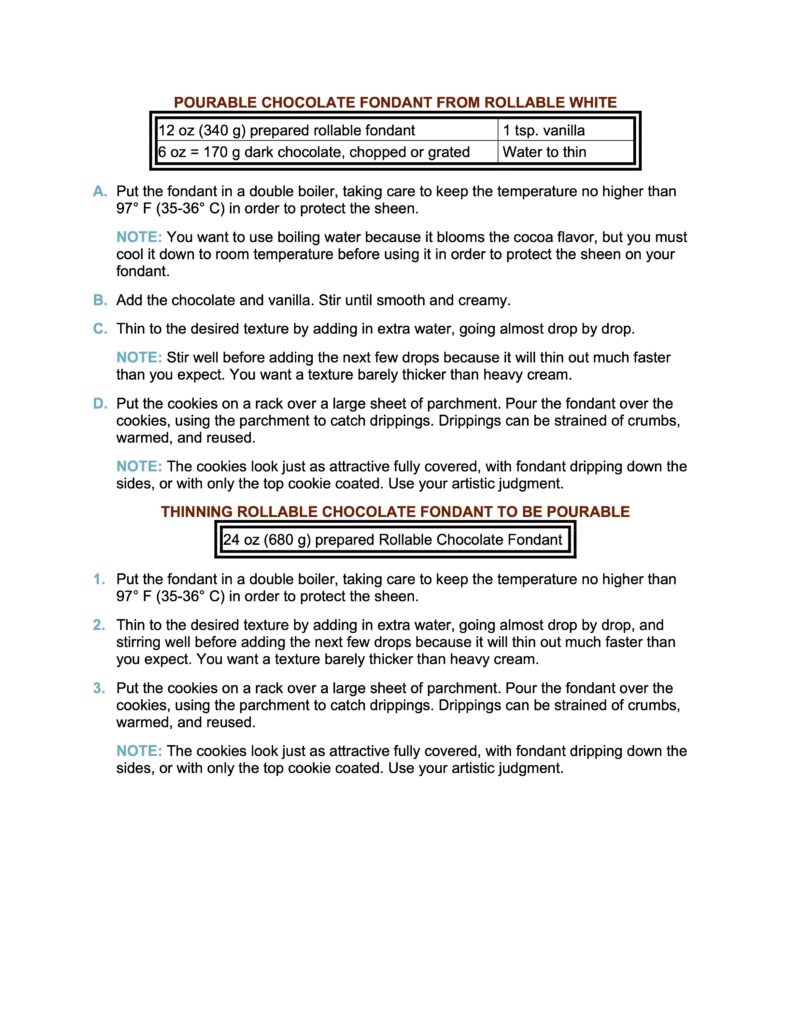
Every almost-final test you’ll read about below got compared to actual, from-the-store Berger Cookies before we moved on. Where possible they also got tested by Baltimore natives for reality checks beyond our own palates. And then we went to the extra effort of nailing down two versions of the frosting, because online sources split evenly between those approaches.

You won’t find a better version because there isn’t one. This recipe is r.i.g.h.t.

ASIDE FROM SCOTT: The most recent test-by-native happened a few weeks ago at a meeting of our local mushroom club. A request went out for Baltimore natives to please see Scott, because he needed them for an experiment. A hand went hesitantly up, and I hurried over to grab her. A certain amount of caution filled her eyes. “I’m not in trouble, am I?”

I had to laugh. “Exactly the opposite. I just need you to confirm we’ve got this right.” I circled behind the ID table, reached down, and popped the lid on my test-cookie tin. Her eyes grew wide. “BERGER COOKIES!!”

She went from trepidation to glee in a nanosecond, and one of my samples appeared in her hand like a magic trick. Then she took a bite and the expression turned to rapture. “Hello?” I called. No answer. She just stood there, smiling gently like a child in a dream. ‘That’s a good sign,’ I thought. “Hello? Can I call these certified by a local expert?” Her eyes opened at last.

“Oh my god, yes. They’re perfect! I haven’t had a Berger Cookie since…” Two friends looked over her shoulder to ask what was going on. Three more cookies vanished from the tin as they walked away. “When we were kids these were the thing we all…”

She did share them, in case you were wondering. [Laughs] I’m telling you folks. Cookies have a magic like nothing else.
The Cookie Part

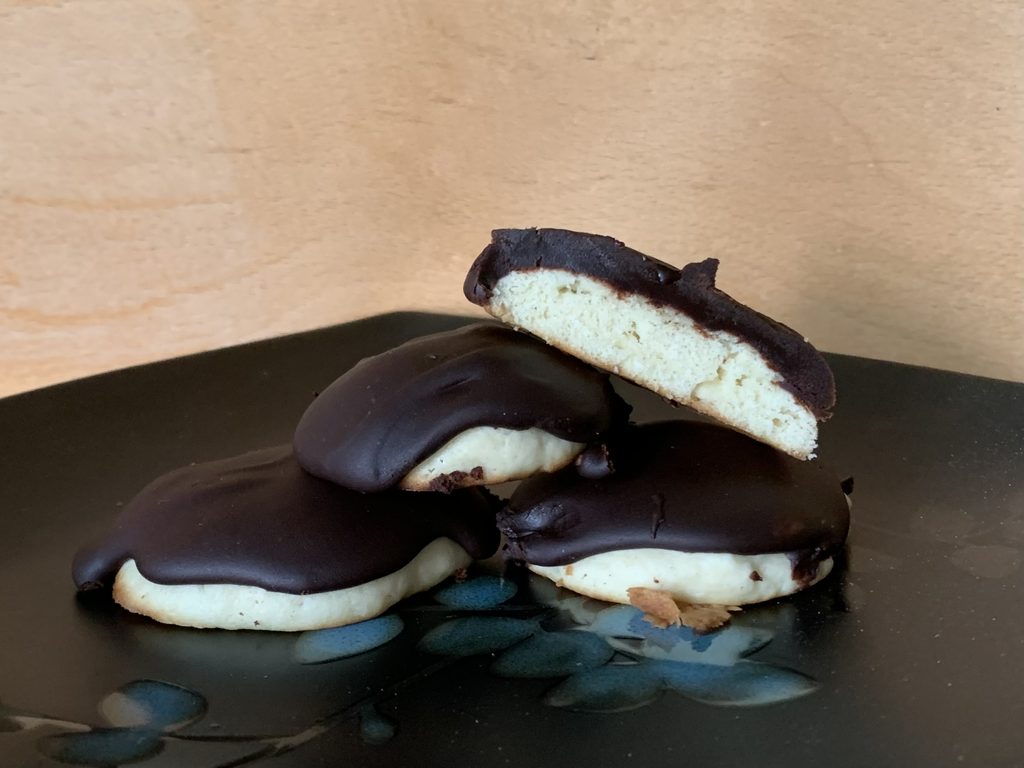
The base came together quicker than the frosting, which makes sense because it’s the velvet dais that puts the jewel on display. There were only a few notable features that required attention. First, the cookie base is quite plain, with a surprising amount of browning on the bottom. It also has some vanilla to accent that browning and it’s quite chewy, which distinguishes it from other 4-bite cookies like NYC Black & Whites.

The online recipes provided an admirable jumping-off point that only required a couple of fidgets. We eventually cut the baking powder in half, from 1 tsp. down to ½ tsp. (for more chew); and we increased the oven from 350 F (175 C) to 375 F (190 C), which increased the browning. All the real work went into that all-important layer of fudge on top.

NOTE FROM KATE: This dough handles best with slightly wet hands. Measure out your ball, roll gently, and then squish it onto the parchment. Start from around 1⅓ tablespoon per ball, and aim for around 1½” (4 cm) in diameter). It’s okay to have imperfect and lumpy-looking balls. To me that is a feature, not a bug! You’d almost think the cookies were made by a human and not generated by AI. Besides, those same lumps magically even out as the cookies bake in the oven.

Frosting, Frosting, Who’s Got The Frosting?

Iced on top, versus iced on the bottoms, because that’s what you do with NYC Black & Whites. Tops are correct. And yes, the icing is this thick!

NOTE FROM SCOTT: Apologies for the length, but we endured something of a saga filled with not-quite-there moments. I try to touch on each in case you find thm useful. Feel free to skim.

Berger Cookies feature a dense, sweet, and fudgy layer that matches perfectly the almost-chewy cookie base. Online research showed two very separate approaches to getting there. Half the bakers built off a dark, butter-based frosting, and half made a ganache built from chocolate chips melted in cream. The only one exception came from Serious Eats, a source for which we have great respect. They called for evaporated milk. We tried that too, but ended up thinking the more traditional approaches both worked fine.

The Butter-Based Frosting. Translating to bakerese, this approach can be summed up as follows: “Make a dark chocolate cake frosting with a few tweaks, and then…” Simple, right? Not so much.

Around half the online recipes called for maple syrup in the mix. That may sound odd, but our research on old fashioned sweeteners offered a perfect explanation. The original Mr. Berger would have been working with Piloncillo (a/k/a jaggery) in 1835, not modern white or brown sugar. The standard substitute for Piloncillo? You guessed it! A good hit of maple. We tried it, and it worked; especially when enhanced by some espresso powder to make chocolate taste bigger. NOTE FROM SCOTT: Old time bakers didn’t use the coffee trick. That’s why it’s only “recommended” in our final recipe. But trust us: you won’t regret it.

The only problem with frosting #1 came from the butter itself, which muddled the pure chocolate flavor we wanted. That led to experiments with shortening instead of butter (a bit artificial), and then a 50/50 mix of the two. Man oh man, was it delicious! But was it right? It didn’t quite match the cookie photos, and…

Oops. Insert drop-of-penny noise. Four versions in, and only now we realized that we had no real target to aim for? Aaargh! What a rookie blunder.

Insert that cry for help in the form of a box from the actual bakery. NOTE: Thanks again Sam.

Cue The Jeopardy Music, And… Two weeks later we got home from our trip with Sam’s box of genuine, store-bought Berger Cookies. Time to compare.

The good news? Our 50/50 frosting tasted exactly like the original. Yay! But the texture wasn’t close. We had a cake frosting, not the extra-thick icing on top of the real deal. But that texture did tell us where to go next. This was the kind of coating an industrial operation will heat to a precise temperature, and then pipe onto production line cookies as thick, oozy lava. Let it cool, et voilà! A dense, somewhat chewy layer of almost-fudge. Our frosting had to be more like a ganache.

Kate, the family chocolatier, suddenly began to see benefits to the idea of that alternate, chocolate chips in cream approach. She’s usually a stickler for quality chopped chocolate rather than commercial chips formulated to have a sturdier melting point. That flaw now turned into an asset. “The right proportion of cream to chocolate chips should harden to just the texture we want, with a lot less fuss.”

Chocolate Chips = Simple? Not So Much. We checked the online recipes for proportions, only to discover the chocolate-to-cream ratio wasn’t the only issue. The recipes were maddeningly far apart! Some had cocoa powder, others didn’t. Some called for maple syrup, others used corn syrup, and some called for both. The specified chips varied from semisweet, down to milk, and then back up to dark. It was so bad that Scott had to compile a table to normalize a full dozen recipes just so we could compare them on an even footing.

Which, thank heaven, yielded some patterns. Darker chips = less cocoa powder, and milk chocolate chips = lots of cocoa powder. Okay, that made sense. Target: dark & fudgy.

As for the syrup, lesson #1 was the fact that every recipe called for some kind of syrup in the first place. Crystallization and graininess must be a real problem! Warning taken. But which one should we choose? The maple recipes described it as an attempt to capture that old-fashioned flavor; perfectly sensible in light of our experience creating the frosting version. Corn syrup recipes all emphasized the need for shine; which was just as sensible because it’s better at reducing crystallization. You might think that leads to an obvious and less expensive compromise, but [insert cosmic buzzer!] Both groups fervently warned against using commercial pancake syrup. [Sigh] So much for the cheap and easy solution.

Our pantry had semisweet chips ready and waiting, so we put together a version using that as a midpoint approach. To this we added a moderate amount of cocoa powder for extra flavor, that ¼ tsp. of espresso powder to round it out, and a mix of both syrups. This yielded an almost-smooth icing that would have a perfect texture if we merely increased the corn syrup a bit. Kate did a second batch, and presto; texture nailed. She declared it done, but Scott demurred.

Yes, she had the right texture. But the butter-based frosting tasted noticeably better. And he had an idea for how to convert cake frosting into cookie-topping fudge. We could simply melt it down!

Melted Frosting? We still had a ton of the airy, butter- or shortening-based frosting. Three batches worth! It was far too tasty to toss, which creates a real problem in our house. We both suffer from a dire medical issue known as, “Just A Taste As I Go By Syndrome.” Heck, our daughters have complained the disease is so contagious they sometimes need to avoid the house! So we detoured back for Scott’s experiment.

He baked another batch of cookies, put some of the 50/50 frosting in a bowl, and popped it into the microwave for a single minute. The result? Effort #1 had bubbled and burned by the time our machine went ding. Doh. Effort #2: try the same thing with 15-second zaps. Still too rough. On to Effort #3: 15-second zaps at 30% power. This product sent Scott running in to the living room to share the good news. “This is pretty close to right. Just a little grainy. I’ll try a new batch from scratch, with melted butter and that corn syrup you added. What do you think about using coconut oil instead? Or maybe some of your carefully hoarded cocoa butter? The ingredients list on the package mentions palm oil…”
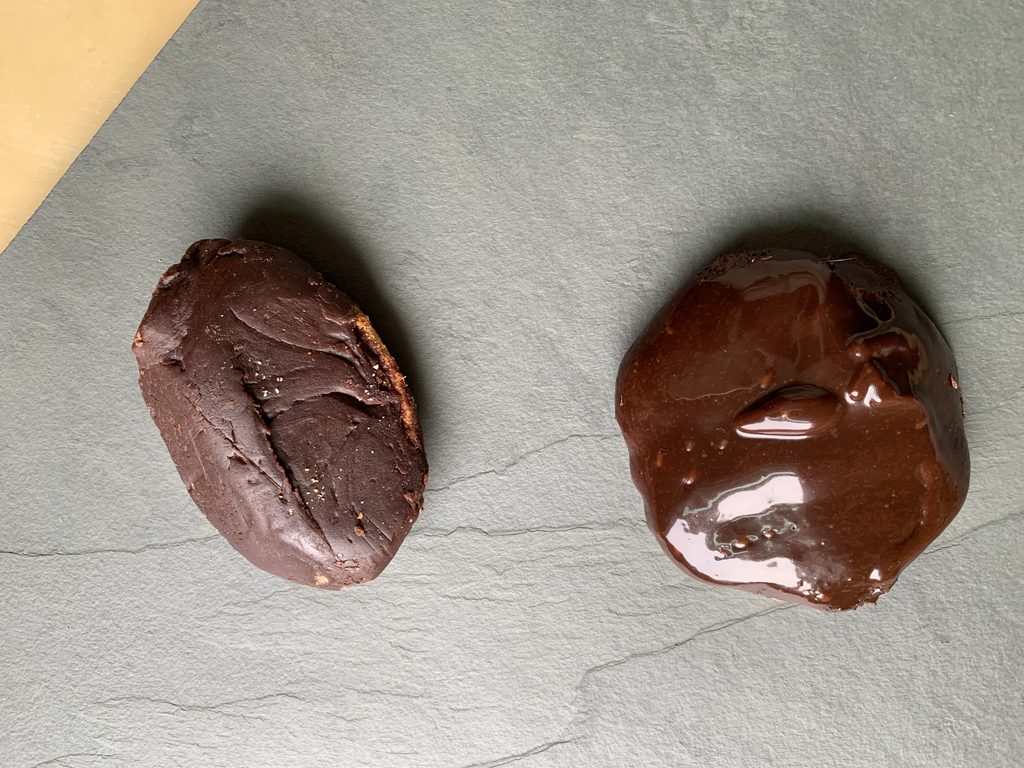
Delicious but grainy on the left; Melted and smooth on the right.

She Who Must Be Obeyed had reached the end of her rope. Kate erupted, “I am sick to death of this cookie! There will be one more batch, and only one more batch. Lives may be jeopardized if I have to sample any more than that! I’m on it. You, dear husband, shall get your sorry butt out of my way. And then you will say nice things when I’m done. Get it? Got it? Good.”

An innocent reply began to form, but up went the infamous Warning Finger of Doom; a digit already shaking with life threatening rage. “Take your new samples to the mushroom club meeting along with all those others polluting my waistline [ahem] countertops. Shoo. Out. What are you, deaf?”

NOTE FROM AN ANONYMOUS EDITOR: Scott did write a full and fair description of the scene, but those observations have been deleted wholesale in the name of marital harmony. Plus that gentle, kind hearted, generosity of soul for which he is so well known.

NOTE FROM KATE: I remind y’all that Scott is not only a superb cookie developer, but also an inspired writer of fiction. I shall forgive him for putting a more adventurous spin on my notoriously conflict-averse way of speaking. At least for now. These are good cookies and I have nothing against them.

Scott went off to the mushroom club, enjoyed that scene with the young lady from Baltimore, and came home to find a new, fully completed batch of Kate-made cookies. And a wife holding up a finger (index!) like a 10-year old with a boo boo. “I singed my finger dipping the cookies into the hot chocolate lava. Even worse, I broke off a few edges when it began to cool and thicken up. But I am calling this one done. There’s leftover frosting if you want it.”

Scott duly kissed the finger, and then re-melted the leftover topping. He applied it to the cookies with a spoon instead of dipping, which turned out to be a very good thing because Kate’s dipped-in layer had been thinner than she thought.

NOTE FROM KATE: I made frosting for my final batch by combining all the leftovers in a double-boiler with a scant quarter cup of chocolate chips, a drizzle of corn syrup, and a splash of cream to make up some missing volume. Then I stirred until it all came together. It worked just fine, proving the recipes are mutually compatible.

Kate’s cookies were so close to the store-bought version that everyone was happy. Almost.

Kate’s final batch, with remelted frosting spooned on top by Scott. Stare close and you can see a little of the graininess we fixed for the final recipe.

Obsessive Bakers Anonymous Should Open A Local Chapter.

Two weeks later the Warning Finger Of Doom had descended, and a pair of questions started to circle their way into family conversations. From Scott, needless to say. First, “I wonder what the temperature should be to get that topping exactly right?” And, “If we’re going to work with a hot coating anyway, why not do a test with that wonderful butter frosting I worked on so hard?”

Kate gave in a week or so later. “Fine. Go ahead and give it a try if you must. But the cookies are going to the dojo, and they *are not* going to stall in this house on their way out the door.”

Not an exclamation point in sight.

So a last and truly final batch went up, with every revision incorporated, additional research performed, and an instant read thermometer on hand. From that we learned the magic temperature for butter-based icing: 175° F (77-80° C). It’s too thick below that, and too thin above. The magic temperature for cream-and-chips ganache is lower, more like 105° F (40° C).

Best. Version. Yet.

Ultra chocolate icing; lots of it; with no graininess at all thanks to the combination of maple and corn syrup.

The Frosting Takeaways (By Kate)

Use a fat that hardens at room temperature. Either don’t add extra air or moisture, or heat the frosting afterward to remove them. As long as you don’t burn the chocolate, the process is quite forgiving.

Whether cake frosting or ganache based recipe, that dark stuff must be liquid, but thick. I once dipped the cookies while the frosting was still a bit hot, which resulted in that too-thin layer. However, once the frosting set, I reheated what was in the pot, and double-dipped them. That works just fine too. Scott reheated the leftovers later, and applied some extra to the rest of the single-dipped cookies with a spoon, occasionally shaping it with a spatula. I compared them to our last commercial cookie, and you cannot tell the two apart except for the spatula marks.

Taste-wise, I was surprised to prefer the chips-and-cream ganache. It’s so simple, and works at a safer temperature. Someday I’d like to experiment with darker chips and a little less cocoa powder. Most frostings are too sweet for my taste. The ones we developed are, however, true to the sweetness level of the commercial product. It is what it is.

And From Scott…

Both of the frosting approaches will work. I prefer the flavor of the butter-based version. It really is a coin toss call that comes down to taste. Which is why we’ve included instructions for both kinds of frosting in the recipe down below. Take your pick.

The biggest concern comes down to temperature control, and there’s no getting around it. Both versions must be applied when the icing is at that delicate stage between being so thin that you don’t get a proper layer, but not thick enough to require a spatula. The magic moment occurs when the icing looks like an extra-thick caramel sauce; at around 175° F (77° C) for butter-based icing, and 105° F (40° C) for cream-and-chips ganache. We recommend you work with the right temperature from the start, and then gently reheat as needed. Think ahead too. Since you will need to reheat, ice the cookies on a screen placed over parchment paper. Then you can recycle any drippings back into the pot right away.

Dipping works but you will get some broken edges because the cookie part is delicate and the icing is thick. Spooning works better. That’s what we put in the recipe. There’s also the ideal answer: invest a few million dollars in an industrial production line to maintain exactly the right temperature, which will also let you pick the exactly right kind of piping nozzle. Tempting… but I think we can leave that to the pros down in Baltimore.

Conclusion

This recipe will give you a cookie as close to the original as anything you’ll find. Tasters literally couldn’t tell which was which when comparing our version side by side to the last originals in the box. And tasters from Baltimore were so enchanted they really didn’t want to be distracted by such things.

The city’s football team may not hold a candle to our proud Pittsburgh standard. [Go Steelers!] But Baltimore’s city cookie? It’s right up there with our own Kauffman Thumbprints, and that’s high praise indeed.

Enjoy!

Kate’s Final Note

I am not responsible for the Terrible Towel / Baltimore Berger Cookie pairing down below. Scott showed up with the towel in hand, thinking he would help with the props. My eyebrows rose so high, I still have a wrinkle in my forehead! But I tried it, and it worked. Competition on a level playing field brings out the best in both sides.
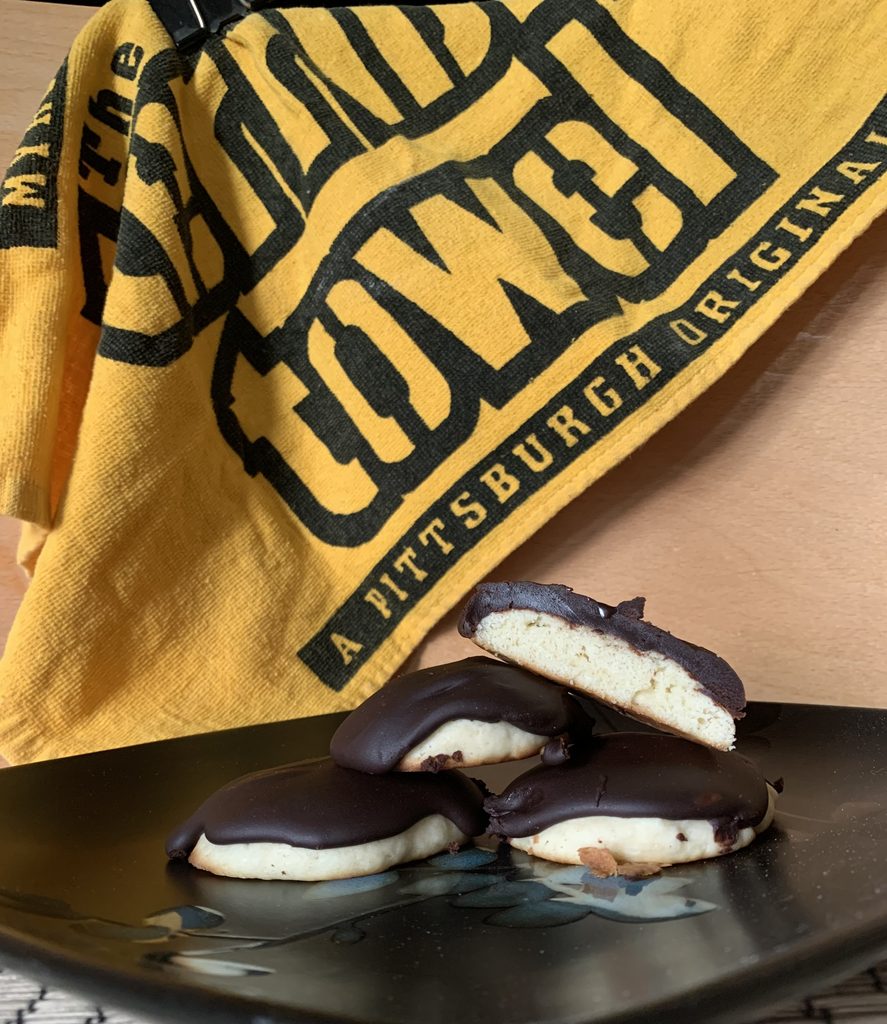
How to season Baltimore’s city cookie; with a proper backdrop!
What the heck. Let’s add some extra cookies for halftime.

ISCHLER COOKIES – The Blessed Union of Linzer Tarts and Sachertorte

Dense nutty shortbread with an apricot filling and chocolate coating. What’s not to love?

“There is a tide in the affairs of bakers. Which, taken at the flood, leads to cookies of legend.”

Williamnot Shakesthepan, ‘Julius Eater’

The bakers of Imperial Austria were always good, but immortality escaped them until the creation of a series of desserts in the 1800’s. Yes, Linzer Tarts date back to at least the 1600’s. But nailing it? Pre- and post-French Revolution. One example is Sachertorte, created in 1832; a dense, extremely chocolatey layer cake with a generous amount of apricot jam on the inside. Ischler Cookies are another.

This particular cookie was created for Emperor Franz Joseph I in 1849 at the spa town of Bad Ischl. Look with care and you’ll see a marriage of the first two; the buttery, nutty, Linzer shortbread sharing the stage with apricot filling and dark chocolate counterpoints.

Exquisite.

As always, skip to the bottom if you are only here for the recipe. Most of this article concerns the choices we made to get there.

MORE A “PROFILE” THAN A “RECIPE”

A search for “Ischler Cookies Recipe” yields somewhere in the area of 2,000 recipes in English alone, and another 10,000 in German, Czech, Slovak, Hungarian, and any number of other languages. Plus books, of course. I’ve scanned maybe a hundred in all, with close study of several dozen, and all the work done on ours. On that authority I feel confident about the [lack of a] target definition:

  1. A sandwich cookie made from a tender, nut-heavy shortbread;
  2. An apricot filling, which often gets varied in the name of creativity;
  3. And a densely chocolate element, which can take any form that human ingenuity can contrive.

This cookie has been around for more than 170 years, and the recipe now has all but infinite variations. If you insist, I will admit to a belief that the original cookie used a lot of hazelnuts, had an apricot filling, and was enrobed in chocolate, but that is based purely on inference and guesswork. Why hazelnuts? Because it pairs so very well with chocolate. Why enrobed instead of sandwiched? Well, if I was a pastry chef, and I wanted to impress an Emperor, that would be my default.

Sensible? Yes. A statement of fact? Not exactly.

So here’s the bottom line. Our version of this recipe is as good as any, better than most, and is 100%, capital-R Right. But that doesn’t mean that other recipes are capital-letter Wrong. They aren’t. We’re looking at a flavor profile, not a fixed recipe. Everything is “right” so long as it has the nutty shortbread, jam filling, and distinct hit of chocolate.

THE NUTTY SHORTBREAD

I spent years refining the proportions in my nutty Linzer Tart dough to perfection, and there is no reason to mess with success for this one. Here is the basic formula:

  • ≈ 1 cup (7 oz = 185 g) of fine nut meal, ideally from gently toasted nuts;
  • 2 sticks (1 cup = 8 oz = 225 g) of butter;
  • 2 cups (10 oz = 185 g) of flour;
  • One large or XL egg yolk;
  • A small amount of baking powder; and
  • A healthy pinch (¼ tsp.) of salt.

Tests pushed us to add an extra half cup of flour to the dough, plus a little beyond that for oily walnuts, but that’s basically where we ended up.

What Nuts To Use? Any. Most modern American recipes tend toward almonds as the nut of choice. Modern recipes from Austria tend to use hazelnuts (filberts). The Hungarians often favor walnuts. Kate and I usually recommend a mix of nuts, but it had to be tested. We did so. And the result was clear: It doesn’t really matter.

NOTE FROM KATE: I figure the preferred nut may have also been a function of availability. The Hungarian versions favor walnuts, which they grow locally. In Bohemia (and I believe Austria) you can find hazelnuts bushes growing prolifically near every village, much to the delight of both youngsters and squirrels. So they make more sense for where I grew up. That said, the 1924 Sandtnerova cookbook uses almonds for almost everything, including her version of Ischler Cookies, and Austria sat in the middle of all these trade routes during Imperial times. Thus the Bad Ischl bakers would have had ready access to all three.

The photos in this post vary from examples that are pure walnut through pure hazelnut, 2:1 hazelnuts and almonds, and 3:1 hazelnuts and walnuts. They look the same, and while a devoted taster can tell one from the other (especially when the nuts are toasted), every variation was just as delicious as the last. So choose what you wish according to personal taste, budget, and pantry.

“What about oddball nuts like pecans, peanuts, macadamia, etc.?” Yes, that’s valid too. Look at the definition! “Nut meal” it says, and that is all it means. You’ll just be making another of those infinite and delicious variations. The only change is the obvious one: walnuts and other oilier nuts create a looser dough, which you’ll need to compensate for by adding some extra flour during the rolling phase. (NOTE FROM KATE: Macadamias would be interesting. They are the oiliest nut in existence and would produce a very short dough. I can already taste a Hawaiian take on the Ischler, with a tropical jam filling and a white chocolate coating on top!)

What Texture of Nuts? This one is more defined. Use nut meal nut flour, without any significant chunks of the sort you’d want if we used the word “chopped.” Yes, many people prefer to have little pops of crunchy nuts in their cookies. And yes, it adds some texture while also being convenient. After all, that is what you can get from a food processor. It just isn’t capital-R Right, because food processors did not exist in 1849. Bakers used table mounted grinders instead. Kate’s Grandma Kandler had one that looked a lot like this:

Image shows a 1930’s version from the Czech company Porkert

(NOTE FROM KATE: Scott has this part only half right. Grandma used one like this for poppy seed, and only occasionally for walnuts (which she used in her zimtsterne-like meringue sticks). She didn’t have a nut grinder for hazelnuts or the oh-so-rare almonds. Those she ground on the Czech equivalent of a box grater, one nut at a time, while listening to the radio and cursing. That works fine if you use the small slicing openings, but it’s laborious and does a job on your manicure.

You might ask, “Why didn’t she have the menfolk do it?” The answer is twofold: 1. The menfolk were busy pounding regular sugar into powdered sugar using a brass mortar and pestle. 2. She didn’t trust the menfolk not to eat the nuts. They were hard to obtain during the product shortages of the communist era, and she often had to visit numerous stores with hours-long lines just to get two small baggies of hazelnuts. For a great tool we can use now, keep reading.)

We have gotten by for 30 years with a much smaller and more familiar device:

Image shows the Oxo Rotary Grater, often used for Parmesan cheese but just as effective with nuts.

Both of those grinders inhale whole nuts and breathe out either fine shreds or powder, depending on which grating blade you insert. They do not produce “chopped” nuts. Thus we believe that (a) nut meal is almost certainly the texture used in the 1849 version of this cookie; (b) it’s a texture we prefer to eat; and therefore (c) it is the texture this recipe recommends. [NOTE: Almond flour and meal have started to become available in U.S. markets. Hazelnut and walnut meal are a lot harder to find, at least in 2022.]

As for chocolate inside the dough… see below.

Can I add some spice to the dough? Absolutely! Linzer Tarts have a hint of spice, and these can too. Just be judicious. Ischler Tarts have a strong, three-legged theme that every good recipe needs to balance; nutty shortbread, chocolate, and jam. Spices that enhance this balance do nothing but help. Spices that add a fourth layer will throw things awry. We didn’t do a whole lot of experimenting along these lines, but experience suggests that the best approach would focus on a spice that works with your central nuts. E.g., walnuts love to pair with ground cloves and coffee; vanilla, cinnamon, and nutmeg pair to perfection with hazelnuts; almonds get along cinnamon or an oddball spice like pepper.

THE APRICOT FILLING

Yes, apricot. We defunded the cookie police before publishing this article, so no one’s going to arrest you for using something else. There are, however, a number of reasons to start with this particular fruit:

  • Apricot and chocolate are a classic Austrian combination, as shown by the much loved Sachertorte;
  • Raspberry has its own cookie in Linzer Tarts; and
  • All accounts seem to agree that the original, 1859 recipe did indeed use apricot and not any other fruit.

QED.

Apricot cookie fillings come in two basic versions. The first is slow-cooked puree or compote a/k/a apricot butter, povidla, lekvar, etc. We prefer these fillings for recipes that bake the filling, but with this one – filled after the fact – we recommend the easier route; a modified apricot jam.

Jam fillings present two issues, both of which are easy to solve. #1 is excess moisture that can soak into the cookies and limit their lifespan. #2 is availability, since our stores only carry “apricot preserves,” and that product has enough chunks to detract from your ideal result.

Cookies made with unstrained preserves. See how the bits of fruit hold the two halves apart? It doesn’t hurt the taste at all, but it’s less perfect than what you can do with only a little more effort.
Same cookies, same presentation, but without the chunks of fruit.

We prefer this cookie with a smooth jam instead, and ideally one that’s just a little drier. You can address both concerns by (a) heating preserves until loose, (b) pushing the hot goo through a sieve, and then (c) spiking it with a squeeze of fresh lemon juice or apricot brandy for that certain je ne sais quoi. Apricot perfection with just the texture you want.

I did try to sieve the jam without preheating, hoping to avoid the danger of handling something so hot. Alas, even a coarse sieve wouldn’t do the job. Preserves are just too hefty, and it did nothing about the moisture concern. Thus you are hereby warned about the danger, and we recommend doing it anyway.

THE CHOCOLATE

Yes, a chocolate component is essential. That is what separates this cookie from being a mere variation on Linzer Tarts. Same genus; different species.

What kind of chocolate? That is a matter of some debate. Look at those 12,000 recipes on line and you’ll see that different bakers try to incorporate the chocolate element in every possible way. And I do mean every. We found recipes based on:

  1. Grated or melted chocolate mixed into the dough. This produces a wonderful cookie on its own merits, and it’s the simplest approach. The drawback? It doesn’t have the same ‘Wow’ factor as a chocolate filling or topping, and it adds flavor without texture.
  2. Cocoa powder mixed into the dough. Again, it’s a wonderful cookie on its own, but it lacks in both Wowness and mouthfeel.
  3. A chocolate ganache filling paired with the apricot filling. This is the most common solution in American recipes because it’s simple, tasty, has a great mouthfeel, and is easy to pack. The drawback? It looks good but not great, and too much of either layer will make your filling squirt out the sides.
  4. A ring of chocolate ganache filling with the apricot placed inside. This is a neater variant on #2, because the piping process enforces exactly the sort of filling-discipline you need. The downside? “Piping” is #1, because many people find it fussy and hard. Visual appeal comes in again as #2. There’s nothing wrong with looking at chocolate, but seeing the jam adds a flash of appealing color. #3, I think it messes too much with the balance of flavors, though Kate disagrees. (NOTE FROM KATE: I have a higher tolerance for bitter than Scott, and find the ring of darker chocolate ganache very pleasant. This is especially true for when used with the sweeter chocolate fondant icing – see below. Also, YMMV.)
  5. Chocolate ganache spread or piped over the top. A great compromise, but the ganache can look a little messy if you don’t pay attention, and it makes for a very sticky top. There’s no way at all you could hope to pack it in a tin. Right idea; wrong solution.
  6. Chocolate buttercream cake frosting piped on top. Think of these sandwich cookies as a tiny cupcake made from shortbread instead of batter. Now go ahead and frost that cupcake. Taste: check. Texture: check. Appearance: check. The drawbacks? (A) It moves us away from “cookie” and into “confection,” (B) no one could even dream of packing them in a tin, and (C) there are better answers yet to come.
  7. A chocolate glaze. Looks fine and packs like a charm, but glazes never have the desired mouthfeel, and almost always lack something on the flavor side too.
  8. Melted chocolate a/k/a why get weird? Alas, but the texture is wrong. The cookies wants a coating that feels dry to the fingers, but gives way to the teeth without any effort. The ‘snap’ of actual chocolate turns from asset to issue in this particular case.
  9. Chocolate melted with butter, and then either poured over the top or used as a dip. This is an ideal solution for taste, appearance, and texture, but it also softens at room temperature, which makes it a mess to eat and impossible to ship unless you heroically cut a piece of parchment as protection.
  10. Coverture a/k/a chocolate melted with extra cocoa butter, used as either a coating or a dip. Ding! This is the best solution of all… if you keep cocoa butter on hand, or have access to specialty stores that sell ready made coverture. If you don’t…
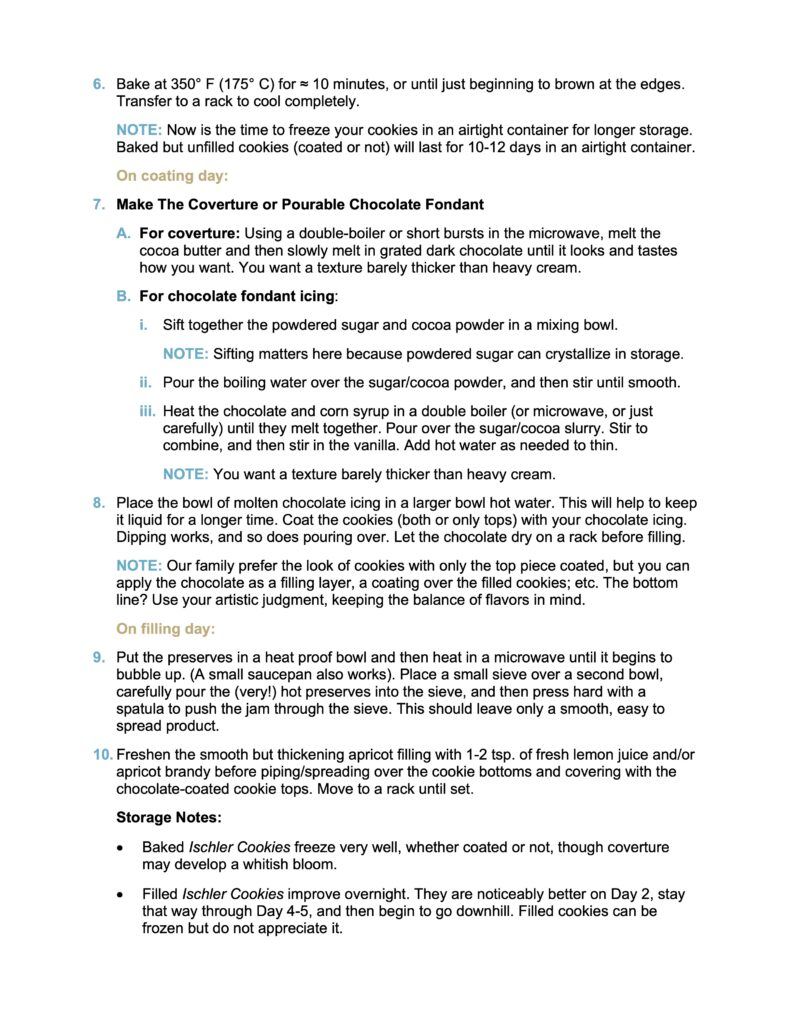
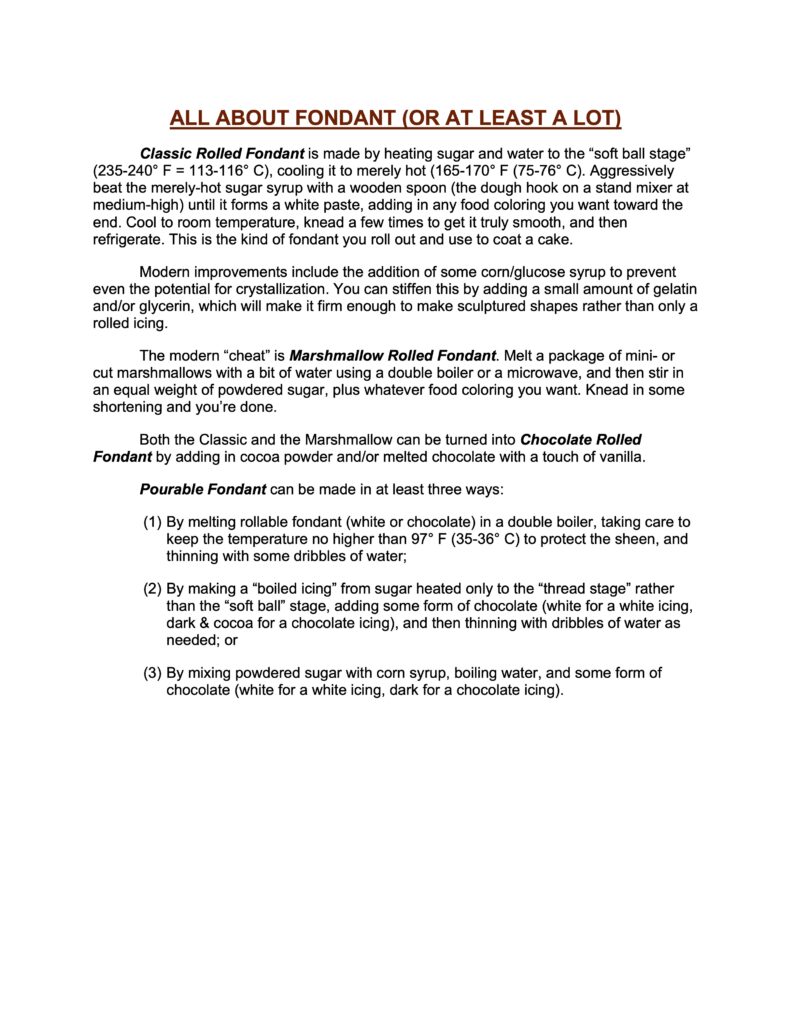
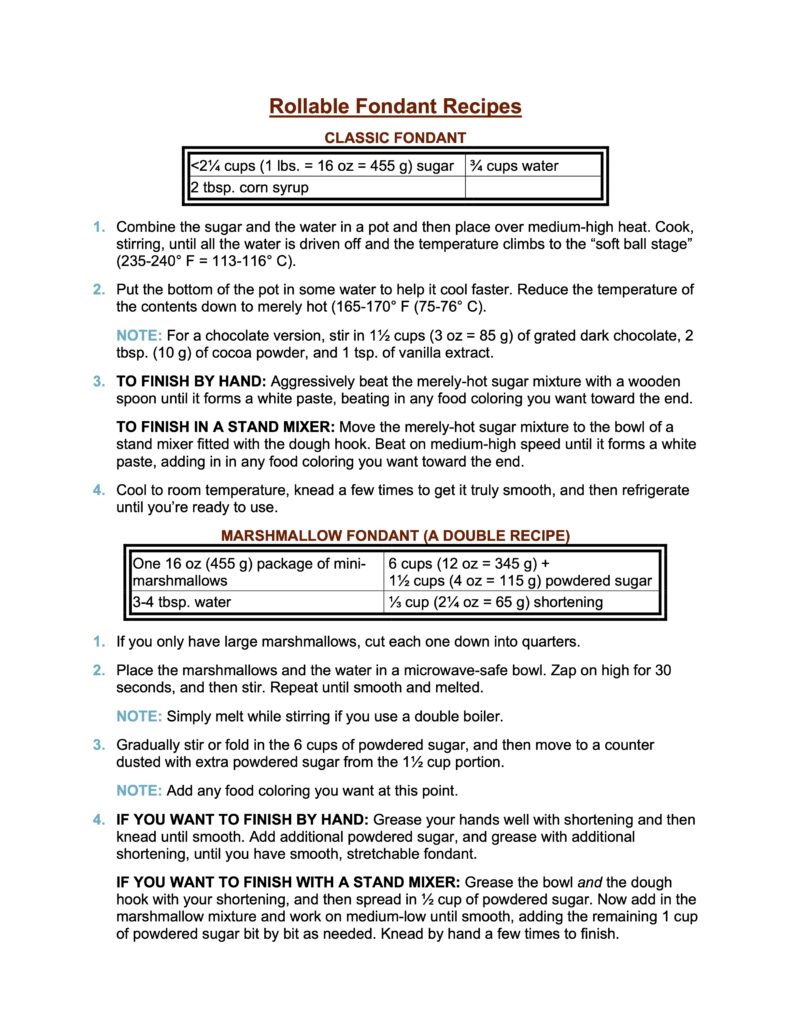
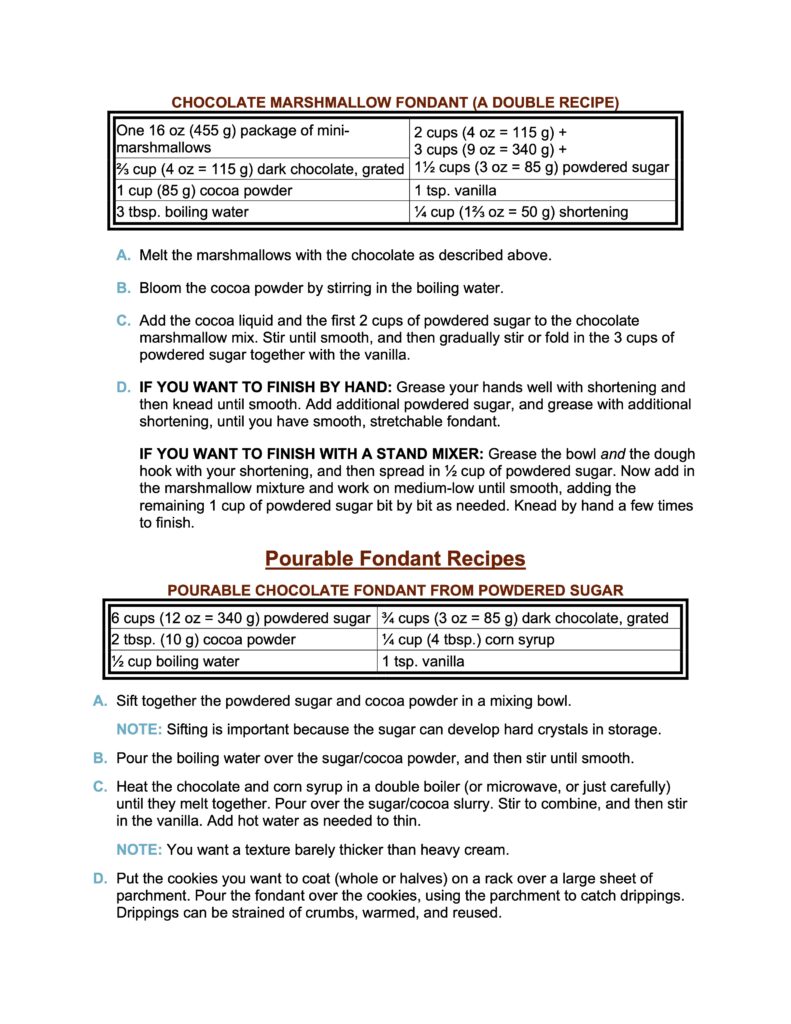
  11. A pourable chocolate fondant used as either a coating or a dip. Ding ding! We have finally arrived at our #1 solution for everyday pantries! Looks perfect; thick enough to give an ideal, luscious mouthfeel; dries enough to pack in a tin without worry; and the flavor is exactly as you want, since it can be varied to taste. It’s even pretty easy… or would prove to be after we figured it out.
Want chocolate icing that flows over your cookies, settles into a coating with some heft, is dry to the touch, but melts in your mouth? Pourable fondant is where it’s at.

THE ICING ODYSSEY

You may find this hard to believe, but we really did try every one of the first nine approaches (other than the frosting). See this parallel article on coverture and pourable fondant. Which one do we recommend? It’s chocolate, people! Chocolate wrapped around rich, nutty shortbread that encases a lively hit of bright apricot filling! Don’t stress. This is the very definition of a no-lose situation.

If you keep cocoa butter on hand, go with coverture. If you don’t, whip up a pourable chocolate fondant.

“But should I pour the coating over? Dip the cookies in? Cover only part of the cookies? Apply decorative stripes or some such?

[Sigh] Do what you prefer. We happened to be testing these just in time for Thanksgiving, which led to an extended family vote in favor of coating only the tops with as smooth a layer as possible. Hence the photos. But we can promise that all the others work too. Once again, you cannot lose, so do not stress.

CONCLUSION

Ischler Cookies can hold their own on any cookie tray in the world. They really are that good, and that full of history and heritage.

Are they actually better than all the other cookies in the world? Well, that one’s up to you. They call it taste for a reason, and I cannot speak for yours any more than you can speak for mine. But I can promise you this. Wise men and women will do a lot of careful tasting and re-tasting before reaching any decision.

“I better have just one more to be sure…”

A FEW FINAL NOTES

On storage:

  1. The dough freezes as well as any other so long as you seal it in plastic wrap or an equivalent.
  2. Baked halves keep as well as any others. Just remember that they are fragile, and do best in an airtight container like a cookie tin.
  3. Baked and coated halves freeze well too, but coverture can sometimes develop a whitish bloom (which doesn’t alter the taste, but does detract from their beauty). Fondant made with actual chocolate can do that too, but less so. Fondant made with only cocoa powder doesn’t mind freezing at all.
  4. Filled cookies freeze ‘okay,’ but not ‘well’ because the added moisture of the jam creates a number of potential problems. Better to freeze before filling.

On lifespan:

Ischler Cookies are a little hard if eaten right after they’re filled; remain perfect for up to a week if kept in a tin; and then go downhill.

That’s about it. Enjoy!

The Companion Article On Chocolate Coverture And Pourable Fondant

POURABLE FONDANT AND COVERTURE – the ideal cookie coatings

All we’ve learned on how to make cookie coatings with texture, thicker than icing but thinner than frosting, which are also safe for shipping

Up until now we’ve been happy to use either a thin chocolate glaze, a ganache filling/frosting, or a coating made from actual chocolate melted with butter. Ischler Cookies, a chocolate coated sandwich with nutty shortbread and apricot jam, wanted that chocolate/butter coating, but had to dry into something that could be packed in a tin without heroic efforts like cutting out custom sized bits of parchment paper.

We have now (finally!) found two answers to the dilemma. The first is coverture, which is essentially a chocolate coating made with cocoa butter instead of regular butter. This has a higher melting temperature and won’t lead to sticky hands until you get toward body temperatures. Think of chocolate bars and you’ll have it.

The problem with coverture? It’s very hard to find in a store, and impossible to make at home unless you keep cocoa butter in the pantry. Most people don’t.

That leaves fondant. You may know this better in the rollable form that people drape over cakes. But did you also know about pourable fondant, the version used for petit fours and the like? It creates an icing that’s almost indistinguishable from coverture from both the visual and textural perspectives. It’s just a good bit sweeter and less chocolaty inside the mouth. An ideal compromise for anyone who wants to stick with standard pantry ingredients.

Heritage Cookies of the Old and New World does include a basic pourable fondant recipe, but we never really dug into the subject to understand how and why it works. Until now. Enjoy!

NOTE FROM KATE: APPLICATION TRICKS. If you have great many cookies and a lot of fondant, by all means use a screen and pour over it, as described above. However, this requires extra sheets, space, and materials. We tested it, and it works. I personally find that dipping a cookie in while holding it yields an excellent result, without having to make coating, and is better suited to the average home kitchen. The only downside is chocolate on your fingers. But I have an answer! To keep having from washing your hands, or fighting the constant temptation to lick your fingers, try using a thin, snug glove! It sure worked for me and my work moved faster. Also, I had absolutely no desire to lick my glove!

P.S. THE HOT WATER TRICK. Our experiments on chocolate coatings led to a wonderful trick:

  • The Problem: Chocolate icings begin to harden as soon as they cool, and it often takes a bit too much time to get all your individual cookies dipped or poured.
  • The Solution: Duh. Keep your icing warm enough to prevent it from cooling too fast. But how?
  • The Method: You have a bowl of molten coating. Fill a slightly larger bowl with hot water, and place your bowl of icing inside. The hot water will keep the icing warm for twice as long, leaving you all the time you need to work.

CHOCOLATE FUDGE COOKIES – ‘Nuff said.

Admission time. There is one treat that I will not study because I don’t want to live with the costs of success. Fudge. Fudge is my bane. I have avoided drugs my entire life because fudge taught the lesson I needed to learn.

No heroin for me, thank you very much. No cocaine. No exotic “baths” with comely and eager triplets. And no fudge. My fear of the f-word is a big part of why Heritage Cookies Of The Old And New World has no section on bar cookies. That would have required me to develop a recipe for brownies. No. Just no.

Enter a certain someone who shall not be named.

“But what about fudge cookies? This isn’t as bright a line as you’re pretending! That high end cookie shop in the mall has this dense, ultimate-chocolate bomb thing? Not a brownie, and not just a double-chocolate chocolate-chip, but something dense, and smooth, and decadent, and… [sigh]. That’s got to be a heritage cookie too, right? They’ve been everywhere since at least the 1970’s.”

Oh. Bloody. Damn. 50 years. That’s long enough to count. And yes, I know the exact cookie that [Unnamed] was talking about. Gauntlet accepted. That’s the cookie we’re about to discuss.

But please. Please! Think twice before you read any further! Will your world really be a better place with a cookie like this inside it? With a recipe for that cookie? Sitting on your shelf or in your computer, biding its time and waiting in ambush like a crocodile in the weeds of your diet? If the answer is “No,” then do us all a favor and turn around now. This is a slippery slope, and once you get started, you’re doomed.

As always, skip to the bottom if you want the recipe without the discussion.

“Luke. If you only knew the Power of the dark side…”

Where to begin?

Do me a favor. Go to your favorite search engine and look up “chocolate fudge cookies recipe.” My effort came back with One Hundred Million results in 0.78 seconds. Yours too? Now look a few over. I think you’ll agree that most of the collection is a mess, with way too many are simple riffs off the classic Tollhouse recipe. “Add some cocoa powder, or extra large chunks instead of chips, and you’ll have a whole new treat!!!” Uhhhh, no.

That said, if you dig through enough of them for other approaches, you’ll start to see some standard proportions where better bakers have all ended up.

  • Cocoa powder in the dry ingredients, plus extra chocolate in the dough;
  • Butter as the fat; and
  • For every 4 ounces of fat (one stick of butter), something like 1 cup (5 ounces) of flour, a bit less than 1 cup of sugar (call it 6 ounces), and one whole egg.

That was enough to get started, but I had a few tricks of my own to include in the mix.

  • We have discovered that made with oil deliver a cleaner chocolate flavor. That needed to be explored. Maybe melted butter? Or ghee?
  • We like to enhance chocolate flavor with a bit of salt, a healthy hit of vanilla, a subtle addition of coffee flavor, and/or a bit of spice. The last one wouldn’t fit this cookie, but the first three had definite potential (and ended up in the final recipe).
  • You can create different chocolate effects by adding chocolate flavor in various layers rather than higher volume. Cocoa powder, bloomed cocoa powder, chocolate in melted, grated, chopped, and chunky forms… All of that can significantly alter the result.

Experimental Results

I originally wrote this up as a blow by blow account of every experimental batch, but my lovely editors complained that it ran too long. Way too long. F-word cookies take some work if you want to put out a recipe worthy of the name. So what follows is more of a summary about the collected lessons learned rather than the process I followed.

It took several batches to really nail the balance between butter and oil. I started at 50/50, and even tried a batch made purely with clarified butter (ghee), but ended up with a cookie made from butter enriched with a hit of oil. It was the texture that suffered. Imagine diving off a board, and then finding yourself underwater without that moment of transition. It’s not something you’d think is important, but you notice when it’s missing. That was the effect we got from using pure fat in the dough. It was all parts fudgy inside, with too little surface crunch.

OTOH, regular, creamed butter was just too cookieish. Melted butter found the best compromise between just enough outer crispness combined with an especially fudgy interior. It also saved a few minutes of effort, and… You know what? Why bother with all that chopping when I could just melt the bulk of the chocolate into the dough?

Melting the chocolate! That turned out to be the magic trick that sets this cookie apart. Finally – finally! – the muse in charge of baking decided to spare me a peck on the cheek.

Hey little dieter. Want a taste? How can a single bite do you any harm?

The rest of the development process took some time to perfect, but that was more craft than art. The very thing we don’t want to weigh this down with. So here is that promised shortcut list of lessons and observations instead:

  1. Blooming the cocoa powder in hot water or coffee doesn’t add enough flavor to be worth the hassle. Just sift it in with the flour and baking powder.
  2. Different cocoa powders might matter, but we did not do that experiment. We used a good dutched cocoa powder in every version.
  3. Chocolate chips pressed into the top distract from the cookie itself. Don’t bother.
  4. But chocolate pockets in the dough make a nice addition if you get the size right. Go with something larger than standard chocolate chips, but not as big as the commercial chocolate chunks. A little trimming of the chunks achieved my perfect compromise. This is in addition to the melted chocolate (see below).
  5. Use white sugar instead of brown. Chocolate clarity works better in this case than muddying the flavor in the name of complexity. And don’t use too much. Those Internet recipes typically used a full cup of sugar in a recipe this size, but we strongly preferred cutting that back by a full 25%. Closer to 5 ounces than 7.
  6. Do not skip the flavor enhancers, and particularly not salt. It’s a case where your victims [ahem] consumers should end up saying, “Is that a hit of salt I taste? It’s surprising, but I like it!” Kate adored it. The vanilla and coffee should be much more subtle.

At Heart It Is All About The Chocolate

The chocolate you use in this cookie matters more than you’re going to think. I actually found that out by accident.

This effort involved so many batches in this effort that we ended up digging deep into the leftover supplies from other cookies. That meant different batches with different brands of chocolate, and the clear differences from one to the other surprised us all. So much so that I made a special trip to the Strip District for a different high-end chocolate to use in one of the final batches. And yes, it produced a different and correspondingly high-end result.

There is a full quarter-pound of melted chocolate in this dough, and it matters.

Don’t mess around. Just invest in and use a darker chocolate that you genuinely like to eat. But it is not a “darker is better” thing. The cocoa powder adds that extra edge all on its own. This is a case where “better is better.” It really is that simple.

Final Notes

All joking aside, the cookies kept surprisingly well in a tin. Even I hit my chocolate saturation point with this many batches, so they ended up getting snitched one or two per day. Not just by me, I hasten to add, which I know from the mix of compliments and curses that kept coming my way! In any case, the cookies were almost as good on Day 10 as Day 1. The recipe says a week, but that includes some general caution that wasn’t required in my own home.

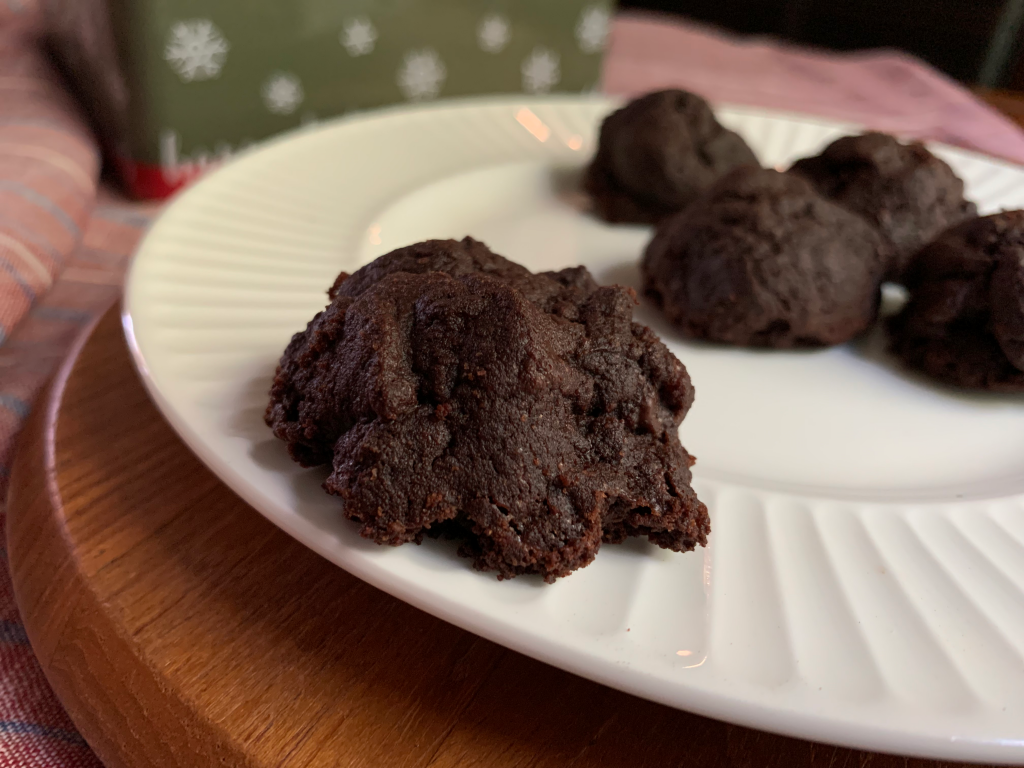
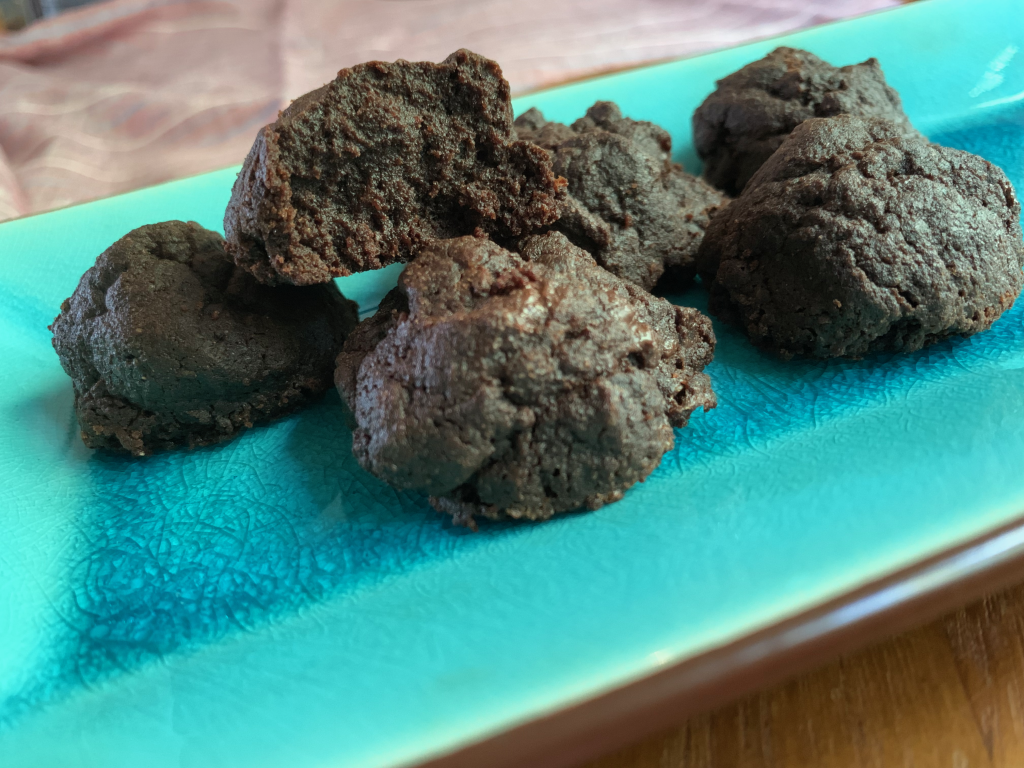
Don’t try to make these extra large. They are plenty rich enough to deliver all the chocolate you want, and delicate enough to fall apart if you start to get physics and gravity involved. Those crumbs you see in the photos are not a coincidence. Balls of dough with a diameter of 1-1/2″ to 2″ across yield 2-3 bite cookies, which is just what you really want.

For whatever reason – and I haven’t figured it out – these cookies don’t tend to spread anywhere near as much as you’ll think they should. So feel free to pat the pieces down on your tray before baking, and expect to have little mounds of intensely chocolate goodness at the end. 50% spread rather than the normal doubling.

They keep better than you’d think, and spread a bit less than you’ll expect.

CONCLUSION

This may be the one cookie I really regret. Not because it falls below our standard. It doesn’t. It’s awesome. The problem lies in feeling like I’ve betrayed your trust.

Our work is to cookies what $80 bottles are to wine. Things that are rare, special, occasionally unique, and meant to be savored by those who appreciate more than just another treat. These? These are high end smack, not wine. Intravenous chocolate injections. Oh, you’ll enjoy the trip. Will you ever! But will you ever forgive me? That’s harder to say.

Enjoy! Just don’t say you haven’t been warned.