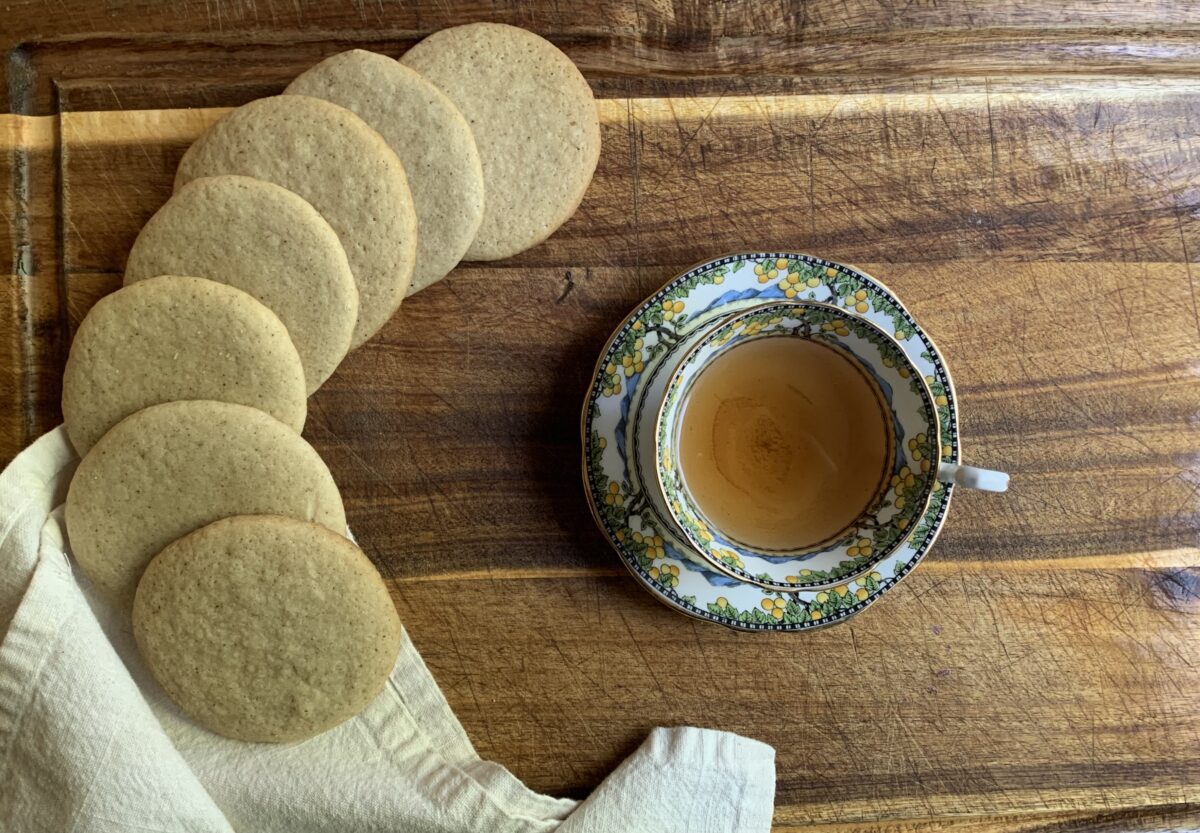
SOUTHERN TEA CAKES, The Most Genteel Of Cookies

The great cookie of the antebellum south

Kate and I recently put out a call to food writers and bloggers around the country for information about any cookie tied to the soul of their city or region. This was the first cookie we heard about, courtesy of Mr. Stacey Little of Southernbite.com. And a worthy cookie it proved to be!

The Tea Cakes tradition goes back to the antebellum south, entrenched so deeply that even today it can be hard to find a church social, teatime, or other gathering that lacks some plates for guests to enjoy. The flavor matches up to that history. Kate and I agreed on “genteel” as the right adjective to describe how these feel when you eat them. They’re at the heart of that tradition called genteel Southern hospitality.

I am a northerner and Kate an immigrant, so neither of us had ever heard of or experienced this cookie. That sent me to Dr. Internet for second-hand experience to start the process.
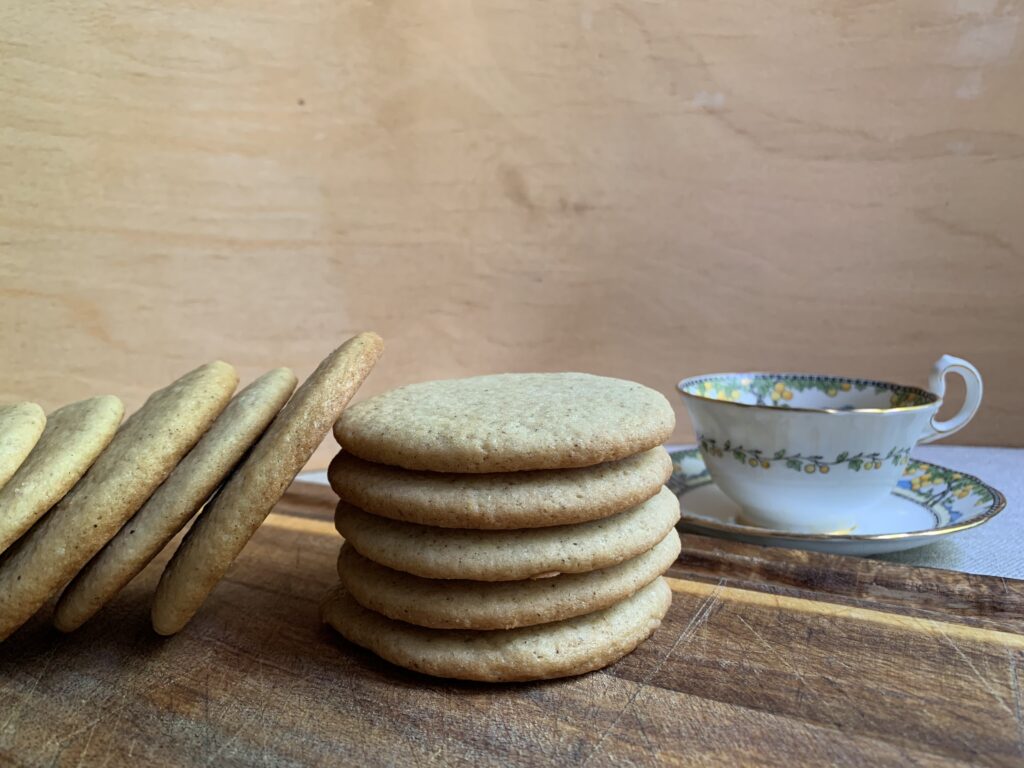
Recipes abound, with virtually every one describing their version as “just like Grandma’s.” As in 90-95%. Anyone who hasn’t done such research may not appreciate how amazing that consistency is. I found 20 recipes to start with, all of them written independently by people striving to be different while caring enough to honor their heritage as well as they could. What does it take for 20 different people to end up focused on that single image of Grandma proudly presenting the treat she’d learned from her own? It shows how deep the cultural roots really are.

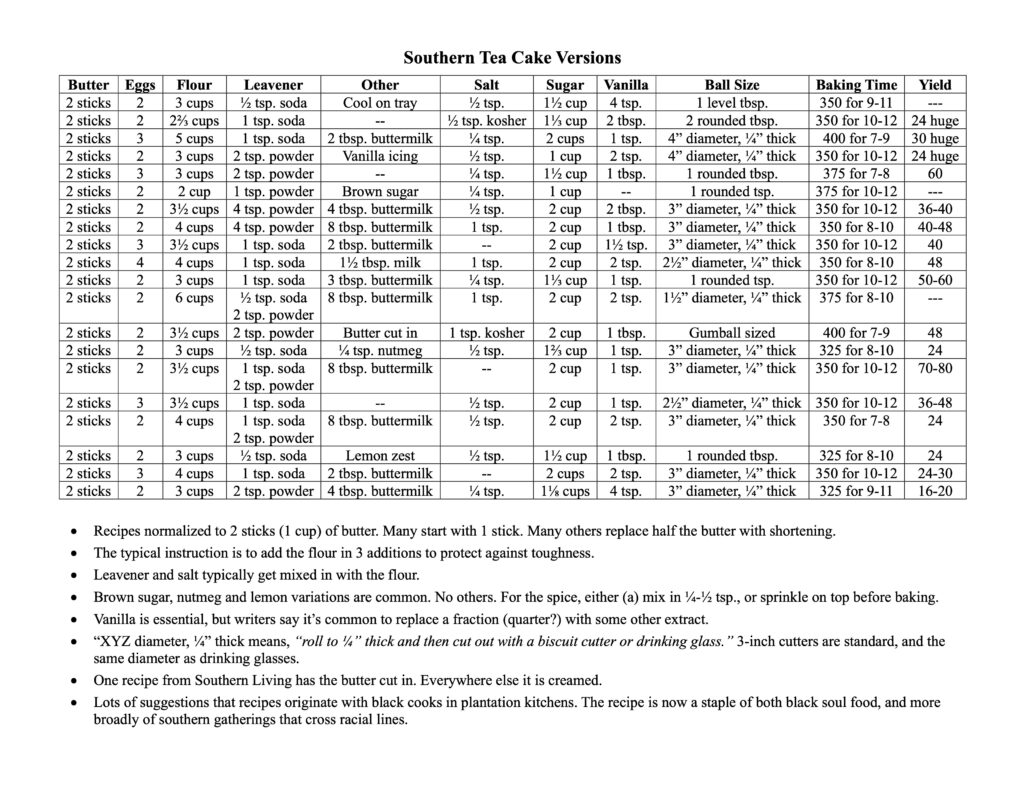
Me being me, I compiled a table of ingredients normalized to two sticks of butter. Then I stepped back to look for an underlying formula.
Choices to Make: Roll or Cut

A few patterns leapt right off the page. First, the writers split more or less evenly on whether to do a drop cookie or a cut out. We chose the roll-and-cut method for our initial version, driven by two reasons. First, most of the recipes call for extra large cookies, as do the array of photos that popped up in my search. Cookies of that size either spread uncontrollably – which conflicted with the possibility of cutting the dough out – or else need some help to stay under control. Second, the idea of large, buttery dough in the American South immediately sent my imagination spinning toward the famous tradition of southern biscuits. How much more “heritage” could you get? And wouldn’t a cookie version of biscuits make sense?

I couldn’t say yes or no either way, but it was a good place to start.

Then I went back to fill in details. Did you know that typical drinking glasses have a diameter of 3″, which not coincidentally pairs exactly to a standard biscuit cutter? Many of the roll-and-cut writers said to use “a round cutter or drinking glass” for the job. The same instruction appears in biscuit recipes. Fair enough. That would be our starting point.

NOTE: Testing proved that I agonized far too much over this choice. Tea Cake dough will ball-and-squish just as well as it rolls-and-cuts. That’s what I did with the leftover scraps, and we found it hard to distinguish the two outside of size and regularity.
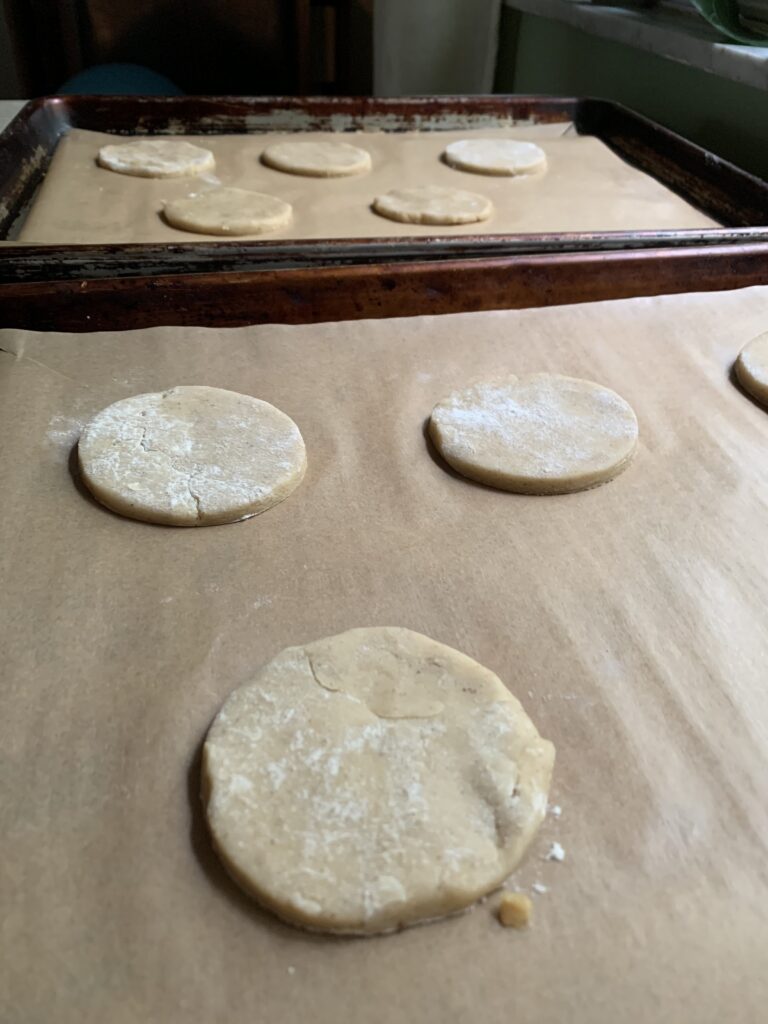
Choices to Make: Buttermilk?

Second question: Many writers add in buttermilk. It’s a readily available ingredient, if one we don’t keep in the house as a staple. Was it worth a trip to the market? You bet it was! Remember that analogy to southern biscuits? Southern buttermilk biscuits? This was a gimme. Besides, some buttermilk tang would help to distinguish this recipe from all the other butter cookies we’ve researched over the years.

It proved to be the right choice. That flavor really does matter.

Catching the Vibe: Variations That Really Aren’t

Everyone agrees that Southern Tea Cakes are, first and foremost, all about the texture. They’re supposed to straddle the line between cake and cookie. The universal instruction to bake until the edges start to brown supports that. It shows there’s also a required contrast between the cookie rim and center. So that was a mandatory target. But what about the flavor?

How many variations are there? Buttermilk, which I’d already decided to try. Then there’s lemon; brown sugar instead of white; nutmeg (but no other spices); and… Wait a second! Those aren’t true variations!

You can make faux buttermilk by mixing lemon into whole milk or half-and-half, often with a fleeting hint of nutmeg. (Nutmeg and dairy love each other, as shown by classic examples such as béchamel sauce). For that matter, many dairy-centric baking recipes also use brown sugar, because a very gentle molasses flavor helps to enhance the base flavor. These recipes weren’t showing different targets. They were just different methods to home in on the same target: a cookie with a profound taste of old fashioned, intensely flavored, aged or mildly fermented butter.

Suddenly it all made perfect sense. And the simple fact that everything aims to the same goal shows yet again how much the culture cares about getting this particular cookie right. We tested all of those tricks and came to the following conclusions:

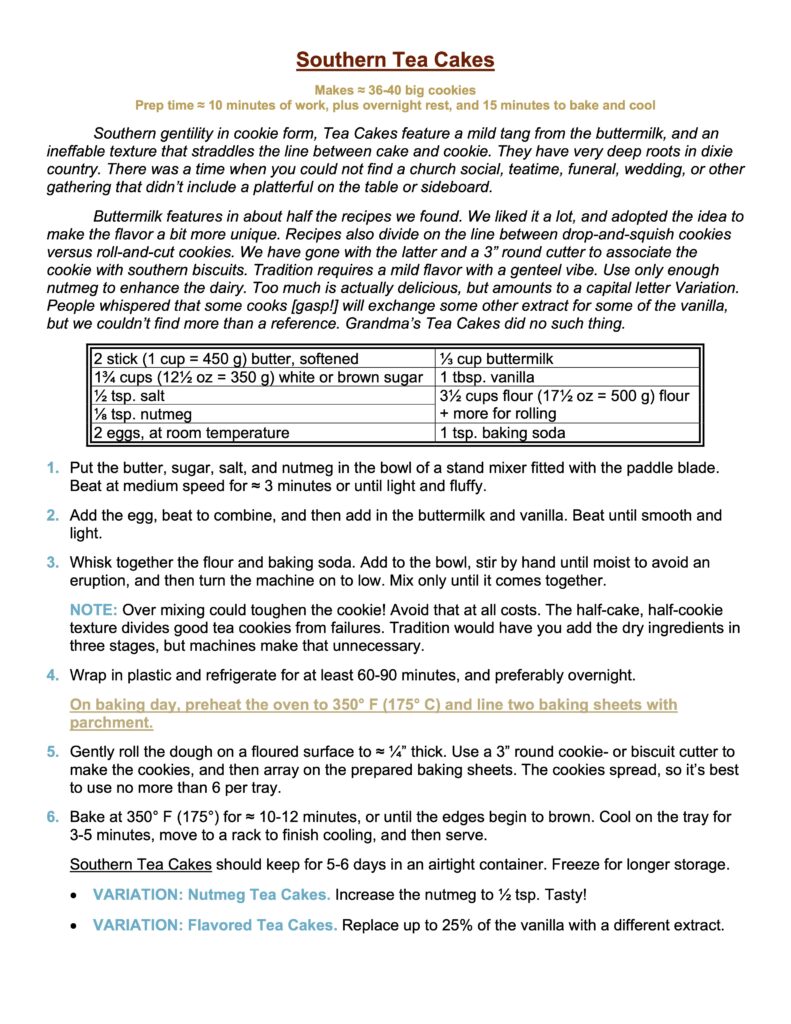
  • Buttermilk: Oh my, yes. It helps in endless ways, and makes the cookie different. We settled on ⅓ cup, right in between the ¼ cup of many examples, and the ½ cup of many more. Modify at will, making up for the extra (or missing) liquid by adjusting the amount of flour.
  • Brown Sugar: An extremely subtle difference in flavor. Someone who cared could argue us into liking it better. Someone who cared the other way could argue us back.
  • Lemon Zest: Disappointing if you use enough to taste it, because it comes across as a failure from both directions. You could convert this to a proper lemon cookie by using 2-3 lemons worth of zest with a sharp glaze made from the juice. Anything short of that left us feeling cheated, until the level drops down low enough to satisfy the anchovy rule: anchovies make food taste better until you can taste them. Then they work in reverse.
  • Nutmeg: See the anchovy rule yet again. A barely discernible hint – no more than ⅛ teaspoon – kicks the whole thing up. Any more than that yields a nutmeg cookie. Really good nutmeg cookies, yes; but a different product when all is said and done. We’ve included the larger amount as a true variation worth trying on its own merits.
  • Other Extract: Do as you like. We prefer to stay true to the original target and intent.
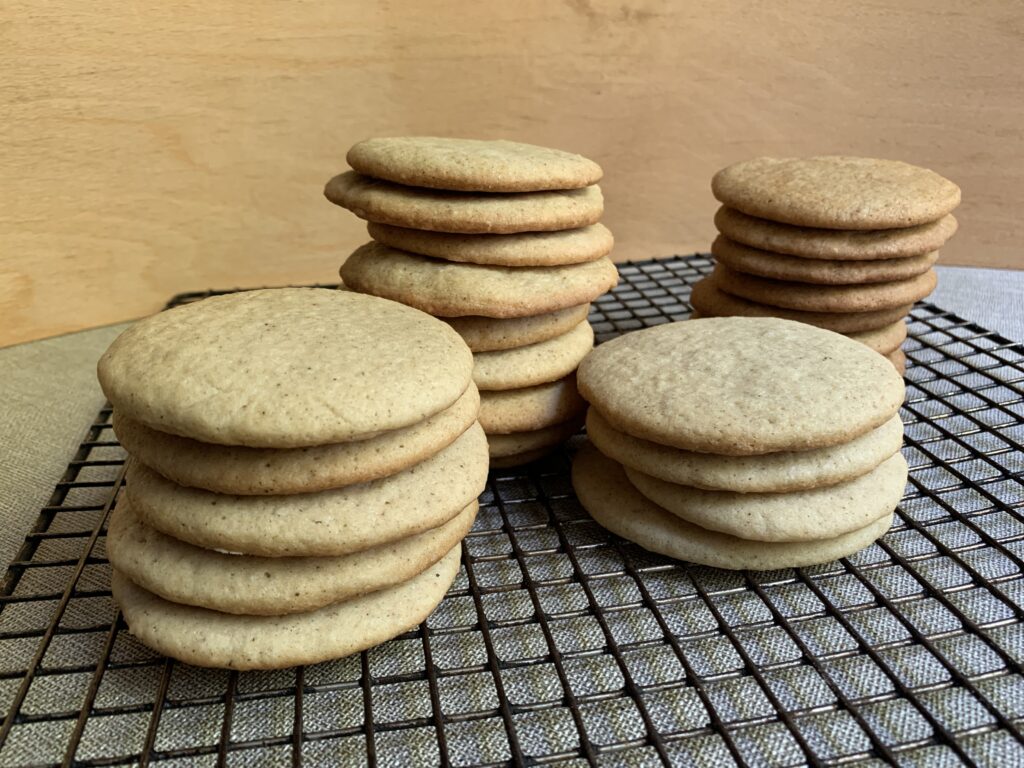
Lemon Molasses
Nutmeg Plain

Vanilla Is Mandatory

Go back and look at that table. Every recipe – 100 % – includes an extremely generous amount of vanilla. We settled on three teaspoons of extract (a/k/a one tablespoon), but this is a case where your taste matters more. Try the recipe as written, take notes, and then adapt it as you wish. Or not.

Roll With Flour, Which Can Be Plain All Purpose

Liquid buttermilk makes this a sticky dough. Like biscuits yet again! Rolling the cookies out on a floured board solved the problem. Just don’t work it over and over, because that could make the cookies tough. Remember: good Tea Cakes have that on-the-line texture, and bad Tea Cakes got too tough.

DIGRESSION: We worried needlessly about whether the texture challenge would require a different flour. It’s a big deal for buttermilk biscuits. Would it matter for Tea Cakes too? I hit the e-books again and found that some people actually tested this. The answer is “No, the flour doesn’t make a difference.” We can also tell you that our cookies came out with the perfect texture using King Arthur all-purpose flour; a brand notorious for its high protein content.

Testing The Cookie: We Have a Winner!

So… I baked the cookies in four batches to cover all the variations. They had a nice flavor. They weren’t just another butter cookie. The texture fit all those descriptions. So they were capital-g Good. But were they capital-r Right?
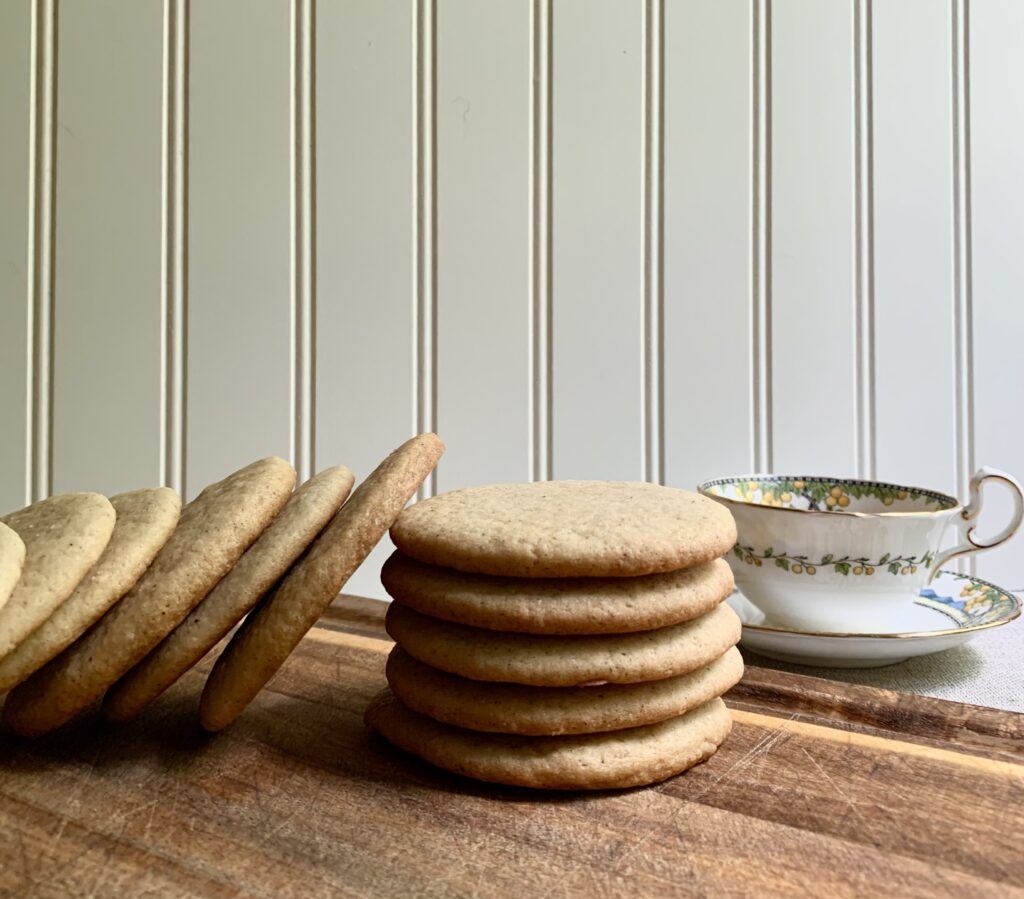
I took a tin of samples and headed for a soul food restaurant on the North Side. Those owners would know for sure!

Closed. And not just for the day. Grr.

But I wasn’t going to give up! I stopped a pair of local street people on my way back to the car, and asked if they could direct me to some other local spot where I could find someone who grew up in the south. “Somewhere like Alabama, Louisiana, Georgia, Tennessee, or the like.”

Instant suspicion! “Why do you want to know?”

After all these years I’ve got that answer down to an art form. You wouldn’t believe how many people think I’m peddling hash brownies or the like. Free cookies = ulterior motives. So I come prepared with both evidence and explanations. Show book; explain that I’m the author; explain about research; explain about the cookie; show the recipe; and then explain that “I can tell if it’s good. That’s easy. But I need native testers to tell me if I’ve got it Right.”

They reacted the same as everyone else, with that head cocked, ‘I guess that makes sense’ look. The one in heavy dreadlocks mumbled something. His friend translated. “He wants you to know that he’s from Alabama.”

I looked at the man and asked, “Do you know Tea Cakes? The cookie? That’s what I’m working on.”

His eyes lit up before he turned to look at the street. He mumbled something to acknowledge a small experience or two.

“Would you mind tasting one of these, and telling me if I’ve got it Right?”

He took the cookie, gave it a good nibble, and got a bit misty eyed. Then he turned his back. Nibble. Grab with both hands instead of one. Nibble more. Munch. Followed by munch, munch, and more munch, grabbing up crumbs until the cookie was gone. Then he gave me a thumbs-up, still turned away.

“That means you got it right,” his friend said.

“Do you want one? Take your pick. There’s another for him too if he’d like.” Another turned-away thumbs up. Then they vanished up an alley to who knows where or what, heads together and talking.

But I still had some cookies to dispose of. Kate would not approve if I returned to the house with dietary sin still in hand. Besides, one tester – however enthusiastic – is still just one.

We’d been standing outside the local public library, so why not? I made my way in, found the young man at the desk, and went through the story again. “Did anyone here grow up in the south? Somewhere like Alabama, Louisiana, Georgia, Tennessee?”

“No, I’m afraid not. I grew up in North Carolina, and that’s as close as you’re going to get.”

“Oh,” I said. “That’s too bad. But… would you happen to know a cookie called Tea Cakes?” His face lit up.

“Of course I do!”

“Care to test one for me?” Book up; recipe shown; explanation made; etc.

“Sure, I’d love to.” One bite and he came close to misting up too. “Y’know, it’s weird how tasting something from your childhood can bring up so many emotions. I didn’t expect that.”

What could I say except to agree? Cookies have a magic, and that’s a big part.

The last cookie went to his fellow librarian at the end of the counter. She was from somewhere just outside the city. “These are really good! I never heard of them before.”

I left as he began to enthuse about growing up in Tea Cake Land. That’s another part of the magic.
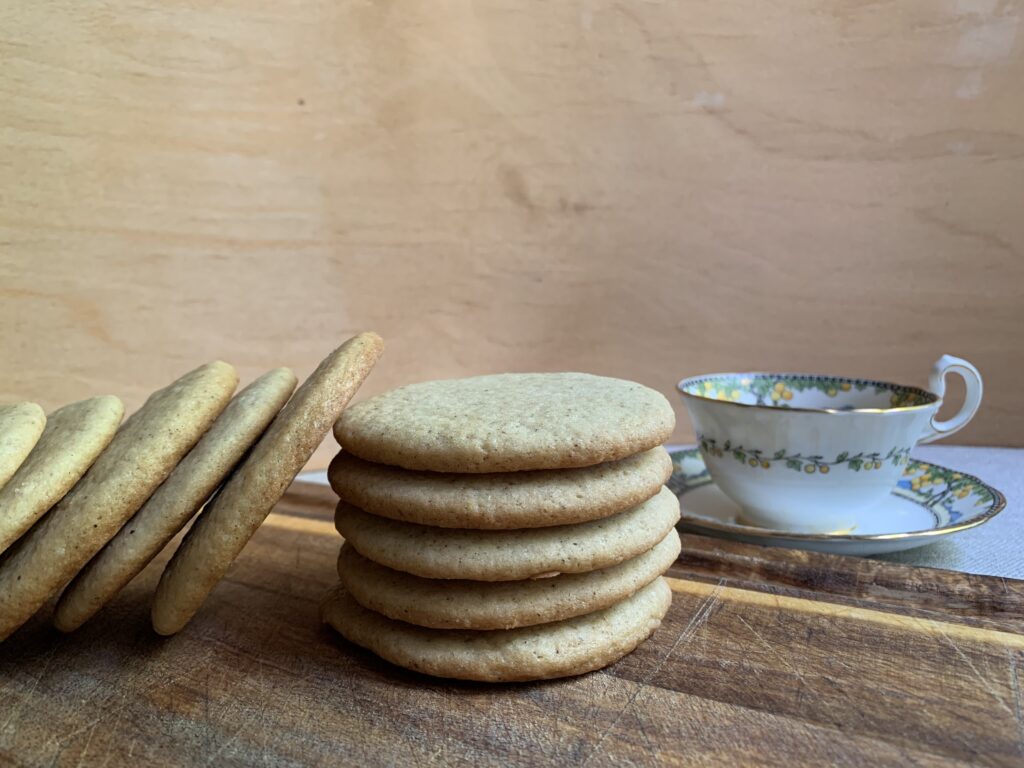
Conclusion

Southern Tea Cakes fit every category of “heritage” you could ever imagine. Right down to embodying a proud part of the culture itself. They really are genteel Southern hospitality incarnate. Homey and a little sweet, with nothing strange except an oddly familiar tang to the dairy flavor, and a remarkable texture right on the line between cake and cookie.

We wholeheartedly approve.

And now I’m off to confirm those findings. Again. I am a loyal husband, after all, and protecting my wife from regret comes with the job. If that means I must throw myself on the fork, so be it.

Enjoy!

NOTE FROM KATE: I agree that Southern Tea Cakes came as a happy surprise. They are pleasantly soft on the day of baking, but harden a bit on the second day. I expressed my mild disappointment with the lemon zest ones, so we talked it over. Yes, it’s there for butter support. No, this is not meant to be a lemon cookie. We have plenty of lemon cookie recipes, and this one isn’t one of them. Scott pretty much said what needed to be said. As for his valiant defense of my waistline, all I can say is, there are risks that come with being around cookies – especially when photographing them. Even though I enjoy some as part of the creative process, it really helps to get them out of the house!
LEBANESE ANISE (“YANSOON”) COOKIES, Crispy Tea Biscuits No One Can Resist

A delightful, aromatic, not-too-sweet cookie adored across the entire Middle East

This classic, crispy Middle Eastern tea cookie appears all over the levant, but those from Lebanon are acknowledged to as the best even in this famously competitive part of the baking world. So we set out with a question: what features make them so special, and how do they differ from all the other anise cookies that dominate the Mediterranean shores?

We’ve recently discovered a whole category of Mediterranean cookies that:

  1. Rely on Hartshorn a/k/a baker’s ammonia as the leavening agent;
  2. Have oil or clarified butter in the dough rather than plain butter; and
  3. Have a dry, crispy, but well spiced flavor that pairs up perfectly with a cup of potent tea or coffee.

Ladokouloura are the Greek version. They feature olive oil, sesame, and orange. These Yansoon Cookies are all about the anise (“yansoon” = anise in Arabic) with sesame as the supporting note and a mysterious other lurking behind. Kate remains torn, but I like this one better.

NOTE FROM KATE: I love anise. My grandma used to make a low-butter type shortbread that had to age well before being served, and those were possibly my most favorite Christmas cookies. They never caught on with Scott. He fell in love with richer fare, so I never bothered making the “anyzky” just for myself. But maybe I should’ve, because this recipe has reminded me what I’ve been missing! These, too, are leaner than your standard butter cookies, but you won’t miss the fat because of their crispy texture. If anise is your jam, definitely give these a try!

What Do You Need For A Great Yansoon Cookie?

My research uncovered three main points:

  • Hartshorn a/k/a baker’s ammonia makes a major difference because it creates a unique texture that particularly suits cookies in this category (tea- and coffee biscuits intended for dunking.

Yes, there are online recipes that use baking powder instead, but the authors almost always say that with regret because it just isn’t the same. The baking powder versions lack that characteristic, next-level crispiness.

See that crisp, honeycomb inside? The magic of hartshorn
  • Vast amounts of anise, and a generous amount of sesame seeds.

Multiple tablespoons seemed like a lot, but testing proved they achieved a nice, balanced flavor – particularly with the mix both ground and whole anise.

NOTE FROM KATE: I believe the amount of air inside this cookie tends to dilute the flavor, which explains why even this level of spice won’t feel excessive.

  • Variation rules more than consistency after the sesame and anise, but every recipe includes a gentle touch of some aromatic extras to create roundness and nuance.

Which “extras” work best? Sorry folks, but that is the sort of question that generates outright feuds among proud grandmas across the region. I’ve been married for long enough to keep my nose faaaaar away from that kind of debate! Besides, it doesn’t seem to really matter so long as they amount to just an evocative murmur in the background.

Our recipe includes 10 separate ideas for mixing-and-matching, but in the end it’s the sort of thing you should customize to taste.

NOTE FROM KATE: Don’t be afraid of “weird” spices. When I was making my test batch, I opted for a slightly savory take on this cookie: All the anise and lemon oil, but also black caraway (nigella) and cumin. The latter two gave the cookie an earthier, slightly savory vibe. It’s my favorite combination so far. Who knows what you will discover?

Any Shape Will Do

In the end we liked the simpler shapes best. The sticks were amazingly snackable. The rings are just so classic. And others work too if you want to get fancy.

An early test with complicated shapes (and no nigella seed)

The Testing

This recipe involved a huge amount of online research, but our initial recipe was almost dead on point. Testing provoked only one real change: my first effort split the leavening agent 50/50 between hartshorn and baking powder. It was good – very good! – but Kate and I agreed that hartshorn alone worked even better because it creates a more pleasant and crispier texture.

FWIW, the Extra Touch Flavors in that first effort were ⅛ tsp. of orange oil, ⅛ tsp. of lemon oil, and ½ tsp. each of almond and vanilla extract. Why those? I had no citrus on hand for zesting (hence the oils), and no mahlab on hand for roundness (hence the extracts). Native testers confirmed both authenticity and delectability… though Grandma’s were of course said to be better.

Kate went savory with our next batch by adding a 1 tablespoon of nigella seed and ½ tsp. of cumin. The cookies tasted good, but were far too savory, and the main flavors got buried. The updated recipe reduces those amounts to 1 tsp. and ⅛ tsp. respectively. Remember: background hints and murmurs.

The Sugar Level

Read the recipe carefully and you will note a surprisingly low amount of sugar. It’s not a typo, and in fact it is typical of the region. Sweetness gradually increases as you travel from Lebanon up to Greece, increases more as you go west over to southern Italy, and then goes up yet again as you enter into the Italian mountains. It’s a matter of regional taste as much as anything else.

But there’s an added factor for Yansoon Cookies. Think about it: doesn’t anise have a sweet note to go along with its aromatics? Just like citrus flavors, almond flavors, and vanilla? Lebanese bakers acknowledge this by cutting back on the sugar in favor of those more ephemeral equivalents. Trust me on this one. Lebanese Yansoon Cookies are supposed to have relatively little sugar compared to other treats. Don’t mess with this aspect until you have made them as intended. After that it’s baker’s choice.

Brown on top, or brown on the bottom, there must be brown
Crispy, toasty, anise & sesame goodness

Bake Until Brown

The cookie crisps up nicely in 15 minutes, but we liked them better with a bit of browning on top. That meant 17-20, which left them a little too dark on the bottoms. We plan to bake future batches on a silicone mat instead of parchment, or with doubled sheet pans to provide some insulation.

Spinning the trays halfway through helps to prevent distinctive differences between top and bottom, and from side to side. We don’t usually bother, but this time it makes a difference.

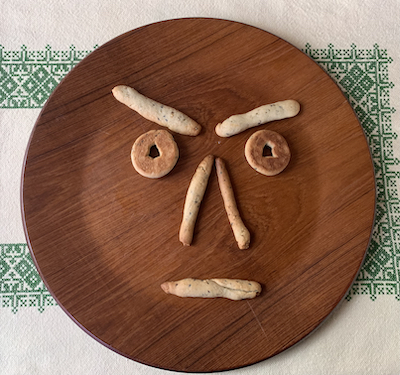
A PHOTOGRAPHIC NOTE FROM KATE: One rule of food photography is to never look for the faces. Once you see a face in your photo, you cannot unsee it, and this will force you to change your whole setup. It can add hours of work. However, once you get done shooting your cookies, and just a few are left, and there’s a round, wooden plate, sometimes the cookies just insist. How could I not use this golden opportunity to have some fun? If you’re not having fun, you’re doing it wrong.

FUN FACT: Poor Scott expected me to AirDrop him a batch of cookbook-worthy Yansoon Cookie photos. I sent him a batch of cookie emojis first! (No worries, the more appropriate images soon followed.)

Conclusion

Kate and I both like anise in general, but neither of us would qualify as special enthusiasts. I feel the same about sesame (Kate is a bigger fan). And yet we couldn’t be any happier with this new recipe despite the copious use of both. Yansoon Cookies will feature prominently if we’re ever asked to cater a tea party, and won’t be rare in the household cookie jar at any time of the year.

Enjoy!

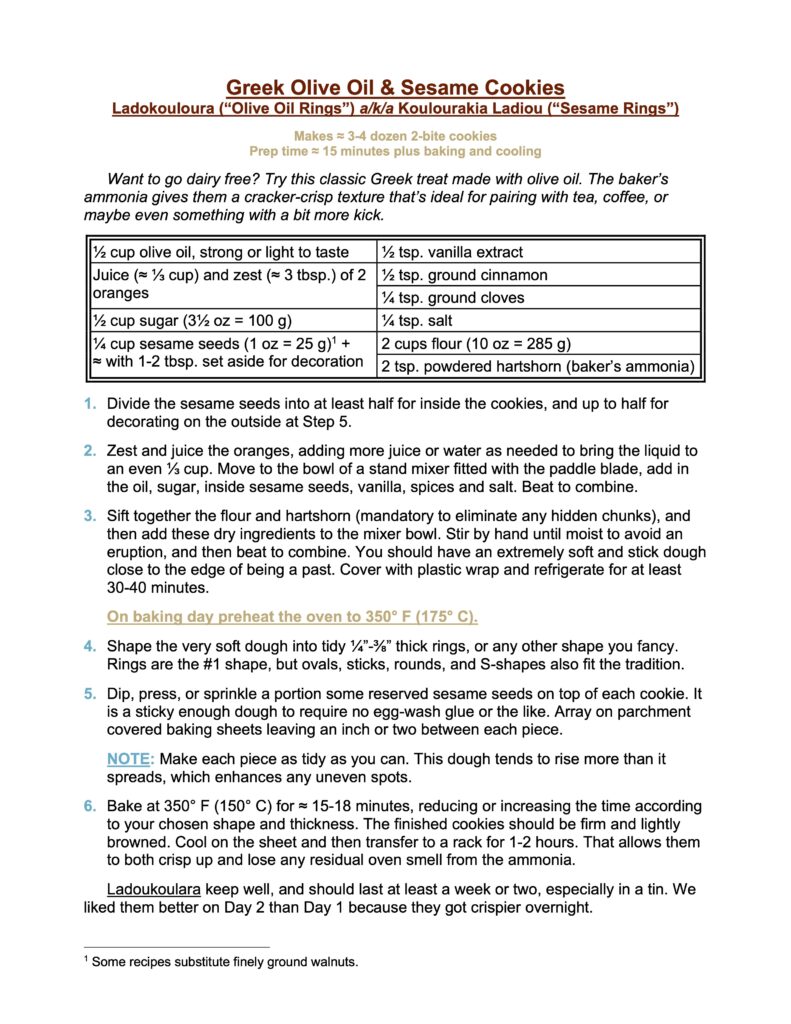
LADOKOULOURA, Greek Olive Oil Cookies

A crisp sesame-orange tea cookie made with olive oil and baker’s ammonia

Click here if you only want the recipe without the lessons we learned

Our Last Minute Discovery of Hartshorn Cookies

A funny thing happened on the way to Heritage Cookies Volume 1. The closer I got to the deadline, the more must-have cookies showed up to thrust their way into view. Typical, right?

Kate and I recently agreed that Volume 2 will come out sometime in 2024. And sure enough, a whole new set of cookies jumped onto the radar – much loved, irresistible, heritage recipes that rely on hartshorn a/k/a baker’s ammonia because baking powder and baking soda simply can’t duplicate its unique properties.

NOTE FROM KATE: At this rate, we will need to put our project management hats on and simply leave other cookies for later. As in, “There might be a slim pamphlet called Heritage Cookie Crumbs, or something equally silly! It’s true, though. As soon as you think you’re done with a project, new opportunities start to push their way through the door!

Northern Europe offered up two incredible Christmas treats, and two amazing illusion cookies: Swedish Drömmar and Polish Ammoniaczki (a/k/a “Vanilla Puffs”) taste as good as any other holiday cookies you know, but have textures that won’t resemble anything else on your tray. Kringla (Norwegian Pretzel Cookies) and Lemon Ammonia Crackers are simply spectacular. The first tastes like a super-crunchy ladyfinger but looks exactly like a salted pretzel. Go have a look if you don’t believe me. The “crackers” taste more like a standard sugar cookie, but their illusion is so good that a visiting daughter got legitimately fooled. She grabbed a few “saltines” to snack on, and got a surprise I will hold over her head for the next several years.

[NOTE FROM KATE: The same daughter then absconded with a large handful for her drive to see the cousins in Maryland, and to try and fool them in the exact same way. She can deny it all she wants, but we are the ones writing the history here.]

What a trove!

I discovered just as many unique recipes from the Mediterranean nations. There’s Croatian Cvite (Flowers), an illusion cookie we haven’t tested yet. There’s at least a pair of honeycentric biscuits out of Italy. Another from Spain. And then come the most common of them all: crispy, crackery “tea cookies” with powerful flavors offset against enough leavening to keep them airy and light. [NOTE: That’s “Tea,” as in actual tea, or coffee, or maybe something a little stronger.]

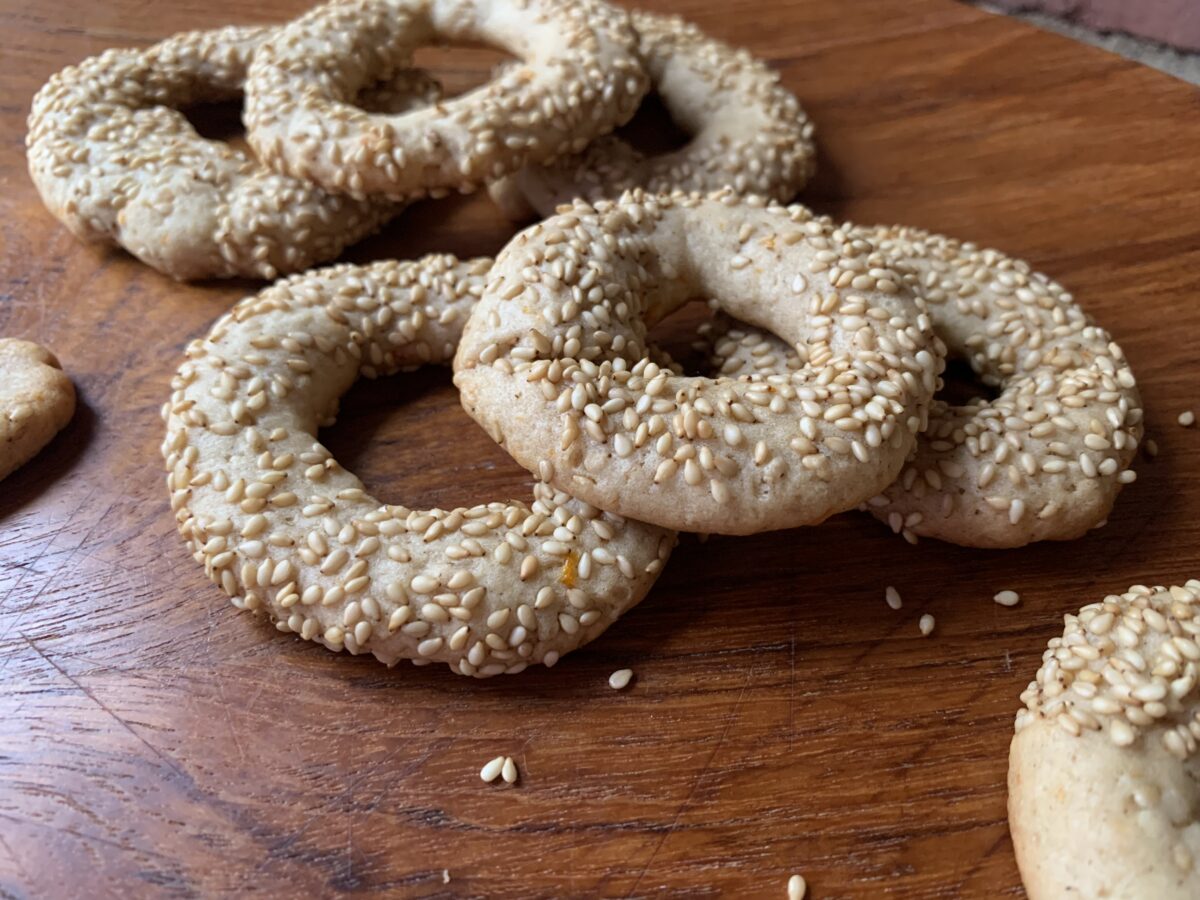
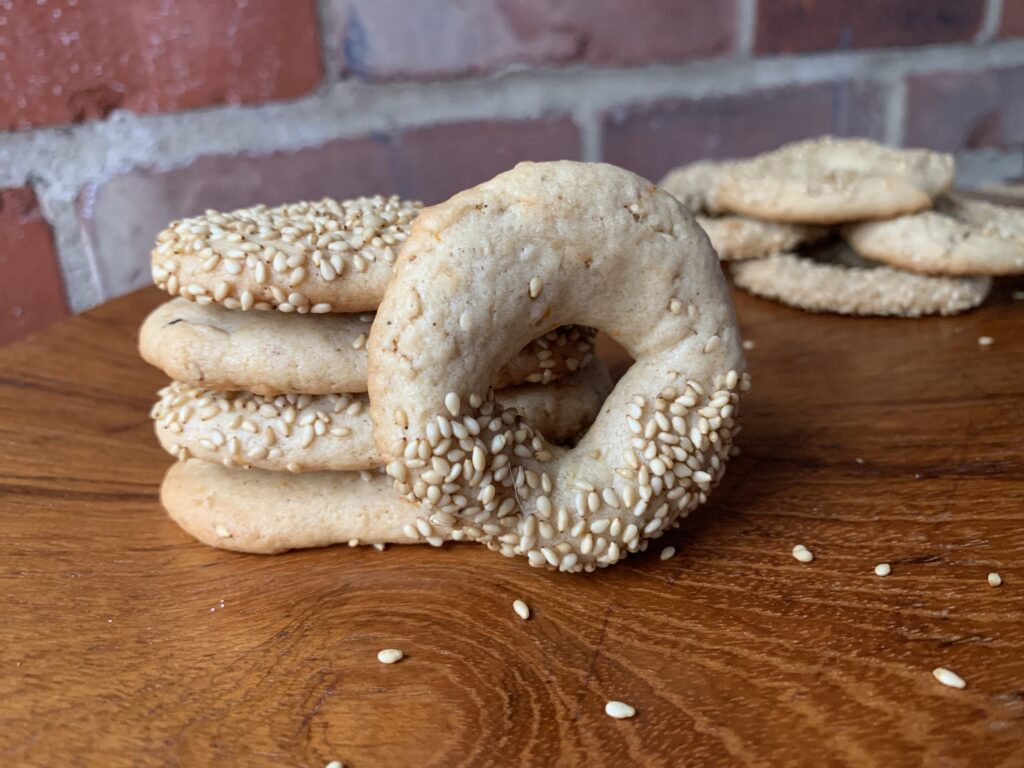
This is the Greek version, known interchangeably as Ladokouloura (“Olive Oil Rings”) and Koulourakia Ladiou (“Sesame Rings”). The names pretty much say it all. The main flavors are good olive oil (adjust the strength to your taste and tolerance), sesame seeds, and a solid hit of orange. Highlights come from delicate amounts of cinnamon and clove. A matching version, Lebanese Anise (Yansoon) Cookies, should be up in the next few weeks.

The rings on the right are the most classic form, but other shapes are almost as common.

NOTE FROM KATE: Back in Czechoslovakia when I was in elementary school, I used to walk instead of taking the bus and I saved my transportation allowance for various treats. Orange-oil scented tea biscuits were one of my favorites. Some of these cookies are the closest home-baked thing I have found to date.

Yes, You Must Use Hartshorn

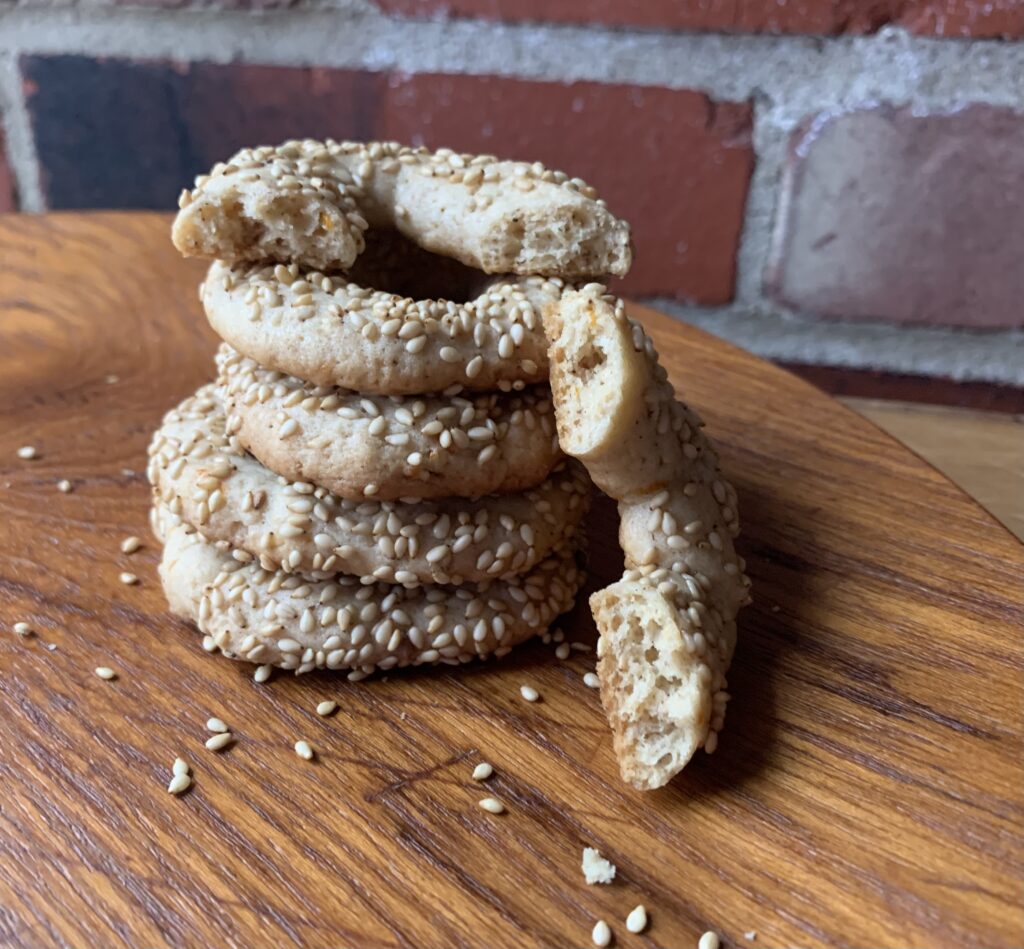
The essence of these cookies lies in how they feel between your teeth: an extremely light center, a crispy crust, and a crunchy texture that baking soda and -powder simply can’t produce. The modern products make a cookie that tastes the same on your tongue. They’re nice. But you won’t “get it” until you taste them made with baker’s ammonia. The feel between your teeth is night and day.

See that crisp, honeycomb core? That’s from the hartshorn.

Lessons In The Baking

Happily, we know several families of first generation immigrants who have been happy to help us with testing Greek cookies. It took only three bakes to get these nailed.

The first one earned raised eyebrows for the exceptional flavor. People really liked the fresh orange notes compared to commercial versions. It only lacked in the texture department.

For version #2 I increased the amount of hartshorn by 50%, and then decided to gild the lily by rolling them in sesame seeds to imitate the ones we were shown in the market. This batch had the right texture, and they looked amazing, but those extra sesame seeds dominated the flavor.

In batch #3 we kept the same level of hartshorn powder, but decided to decorate with some of the sesame seeds originally used inside the cookie. These were perfect according to all our native testers. Or to give a more accurate quote, “Crunch, crunch, mmmmm. Oh my yes.”

NOTE FROM KATE: I love sesame, just love it! To my surprise, however, I found that rolling the entire cookie in sesame went a bit too far. The seedy texture got in the way of the added flavors. For that reason, I tried dipping only the top part (which worked,) on only half of the top part (which produces an interesting effect in itself. Suit yourself – your sesame level is a matter of preference just as the level of orange and clove.

A Final Note On The Olive Oil

Kate loves the taste of olives. I, emphatically, do not. Thus we decided from the very beginning to split the oil 50/50 between powerful extra virgin oil of the sort used in salad dressings, and “light” olive oil of the sort that’s used in cooking.

That turned out to be a very wise choice because it fell exactly at the median opinion. But – BUT – I need to stress that almost everyone fell outside of this middle ground in one direction or the other. Olive aficionados loved the “little hint” of flavor, but would have preferred a little more. Olive doubters could have done without the “vaguely unpleasant note,” but agreed that it wasn’t strong enough to get in the way.

Which camp do you and yours fall into? As some old Greek dude once said, “To know thyself is the first step on the path to wisdom.” It’s pretty good advice for Ladokouloura as well. Though I cannot recommend following that gentleman’s advice for tea to drink alongside… [NOTE: That’s an inside joke for my fellow philosophy and history buffs. If you get it, you win.]

A PHOTOGRAPHY NOTE FROM KATE: This cookie caused me both humor and frustration. The combination of round cookies and the flat ones that look like rectangular teeth had me seeing faces in too many compositions – and once you start seeing faces, you can’t unsee them! I even tried to go with it and made a bunch of goofy, googly-eyed plates. If eating sentient food bothers you, I suggest you bake either circles or rectangles, but not both!

Conclusion

You simply cannot travel through the Greece or any of its neighbors without running into tray after tray of Ladokouloura. They are as ubiquitous as they are loved, which makes them as genuine a Heritage Cookie as anything else we have ever baked.

This is your puppy if you want a true taste of Athens, Santorini, or any of the lands that consider Greece to be a neighbor.

Enjoy!