JOE FROGGERS, Americana From The Age Of Sail

A revolutionary war cookie from coastal Massachusetts.

Imagine an arm around your shoulders and friendly voice saying, “Hi. I’m a cookie.” Then add in this quote from one of our tasters: “That’s the biggest, softest, easiest going ginger snap I ever tasted! Or is it gingerbread?” And then triangulate with sailors on a clipper ship singing in the sunlight, “Ho, ho, ho and a bottle of rum!” Somewhere in that intersection you’ll find Joe Froggers, a cookie created right after the Revolutionary War at a Marblehead Island inn outside of Boston, Massachusetts.

The Cookie On Its Own

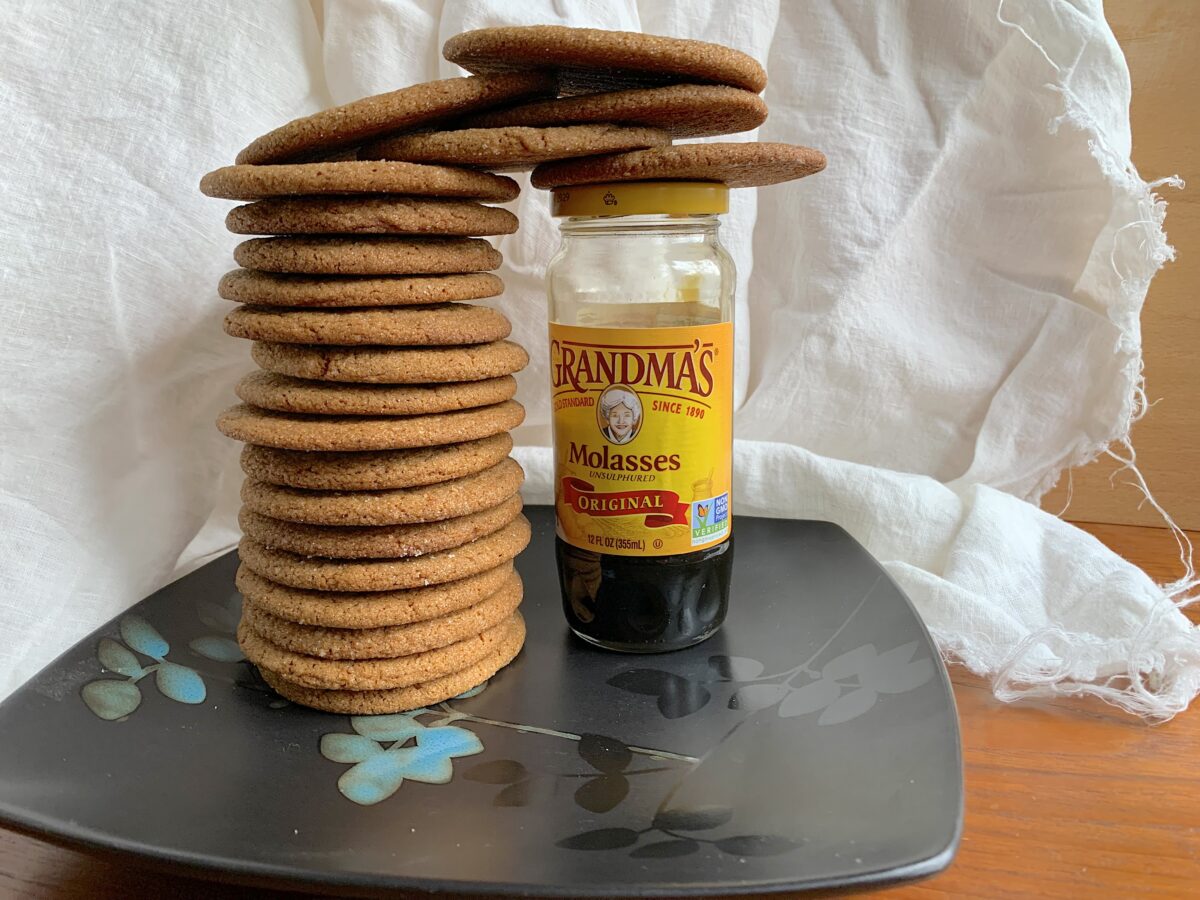
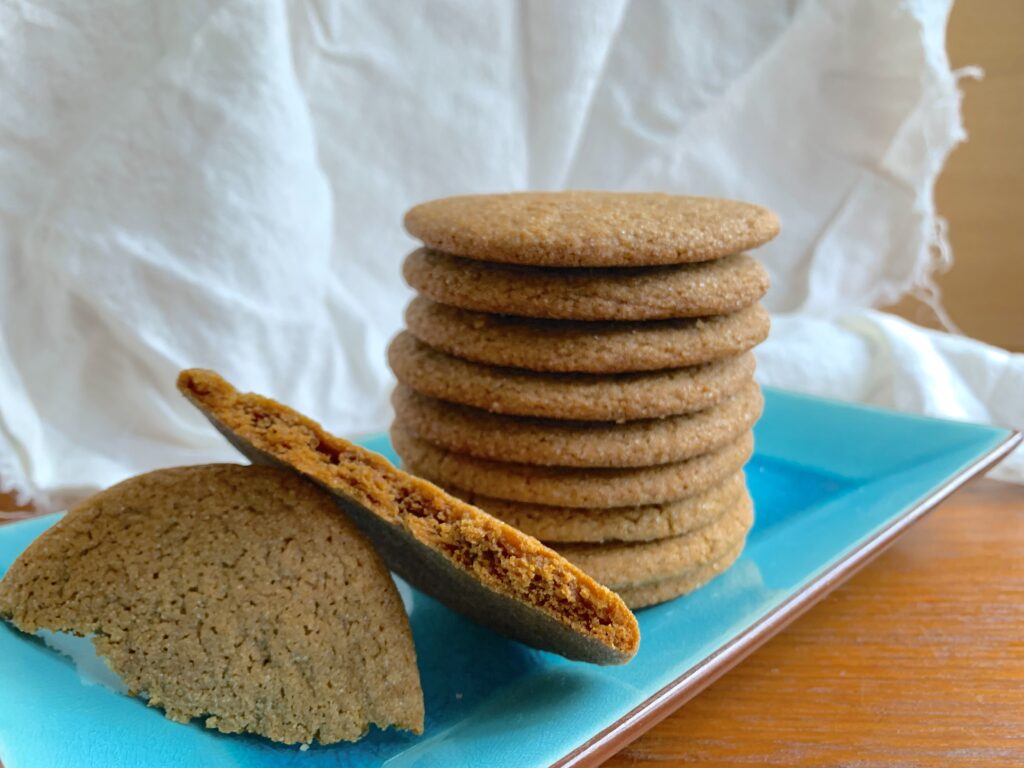
Joe Froggers are a soft, gently spiced molasses cookie with a nice finish from a tot of dark rum in the dough. The cookies were designed and intended for grownups, but they’re also as kid friendly as a cookie can be. The texture is plush and easy; the flavor simple, familiar, and a bit raisiny from the molasses; and they’re about the width of a small child’s face (4″-6″ across), which guarantees the ‘eyes light up with delight‘ reaction.

The earliest versions were made with lard. Most modern recipes call for shortening. Butter tastes best of all, of course, but you give up a bit in the way of texture. We make them with a 50/50 mix of butter unless there’s a special reason to be historically accurate.

NOTE FROM KATE: I felt a need to be historically accurate, so Scott made the first batch with lard. This beautiful cookie is friendly and cheerful, but I felt like I had to work against the unfamiliar flavor of lard after the third bite. This particular fat’s texture sticks to the mouth a bit more than butter or shortening. Not a familiar sensation. Next time I’d go with half lard and half butter. Despite its undeniable culinary advantages, I don’t particularly like shortening, as it’s an ultra-processed food, but YMMV. I can see this one becoming a family favorite!

That’s about all you need to know. It’s a big old, friendly, arm around your shoulders cookie.

“Joe Froggers?” A Taste Of History

The general outline of the story is well known and documented, with its own page at the Marblehead Museum website. The story goes like this.

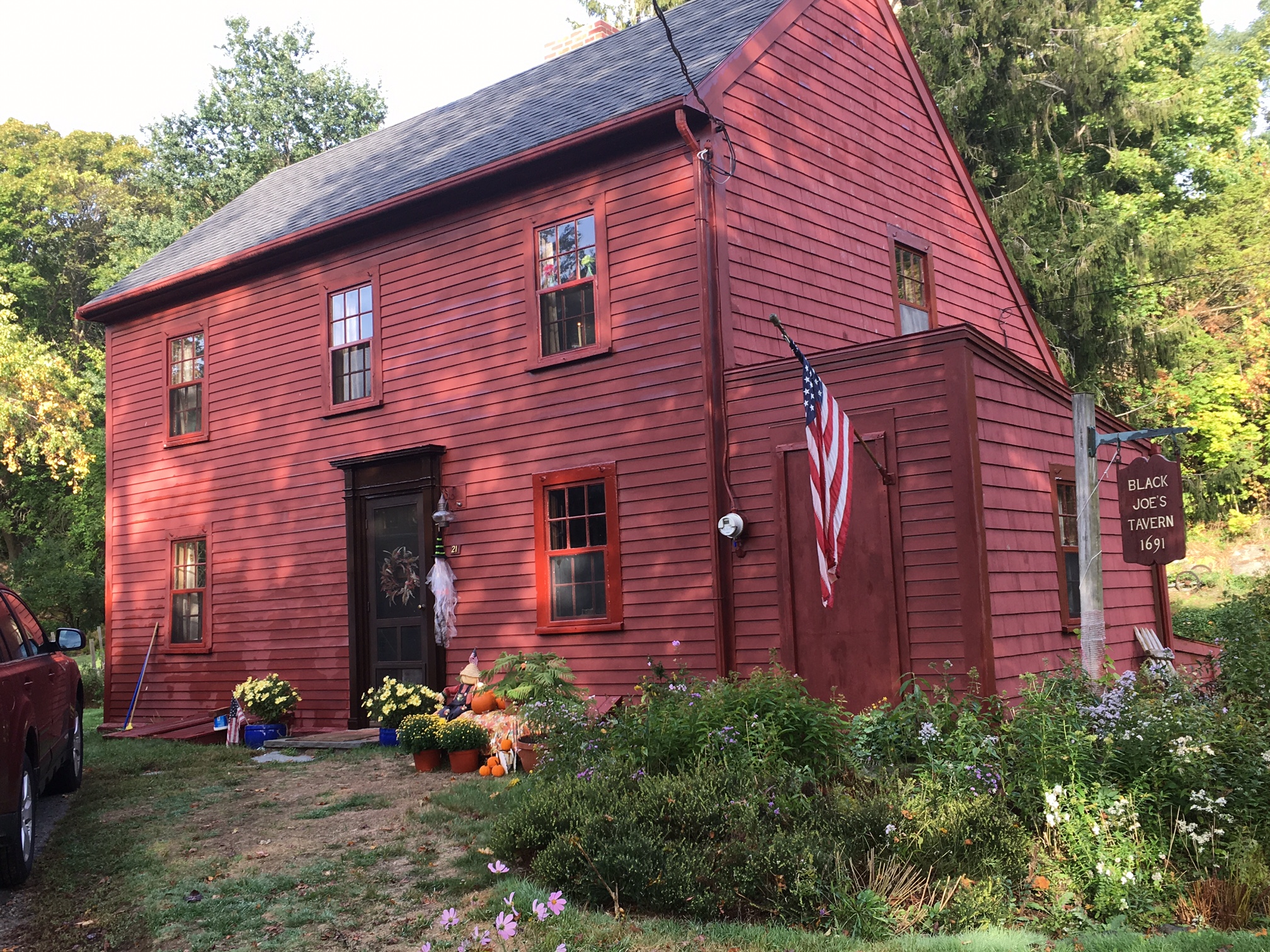
Once upon a time there was a Revolutionary War veteran named Joseph Brown, son of an enslaved, African-American mother and a Wampanoag father. He and his wife Lucretia opened an inn on Marblehead Island after the war, right next to a local frog pond.
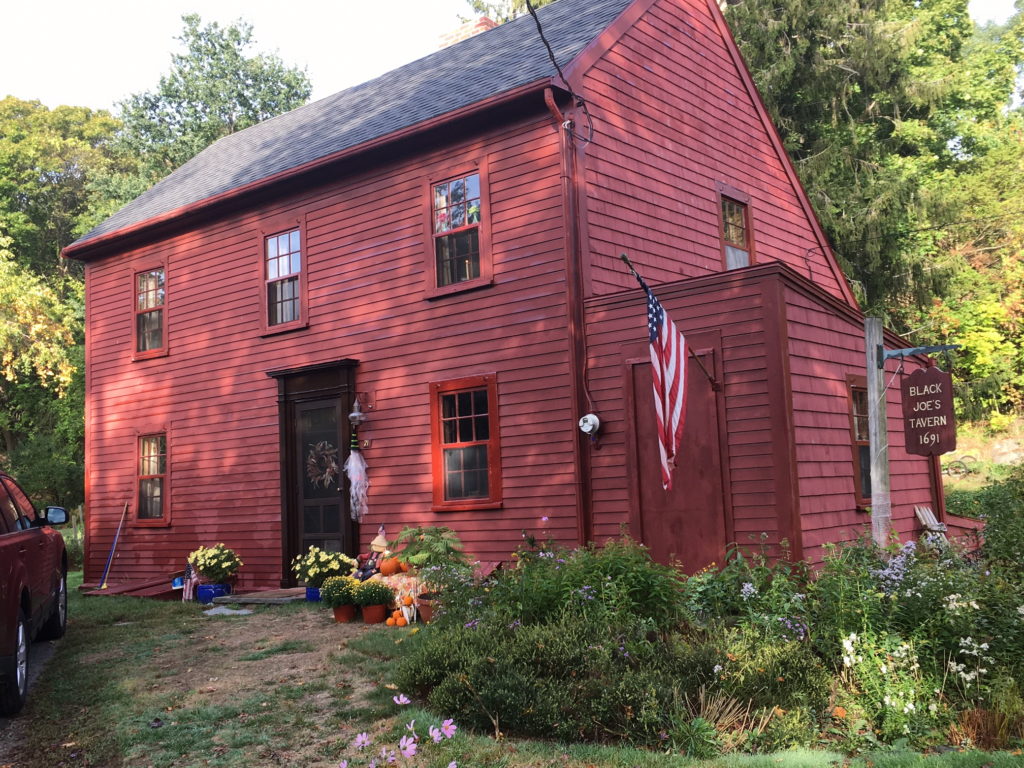
Photo, credited to the Smithsonian Institution, found at MarbleheadMuseum.org.

Lucretia invented the cookie, and it became something of a sensation. They’re not only delicious, but they also have enough molasses to keep for a very long time. The revolutionary era Massachusetts economy centered on fishing, trade, and other maritime activities. Marblehead was a major seaport and shipbuilding center, so much so that it’s also known to history as “the birthplace of the American navy.” That fame would only grow as the young nation built its vast fleet of clipper ships.

Joe Froggers (and Hermits) quickly became the treats of choice to send off on long voyages around the Atlantic, and later around the world. Small, tasty, long lasting, and relatively inexpensive because much of the nation’s molasses and rum trade came through Massachusetts ports.
The name itself is more debatable, with every source we’ve found claiming to have the one true answer. It’s certainly related in some way to the pond out back. And the “Joe” part certainly comes from Joe Brown. Others note that Lucretia Brown (“Aunt Creese”) originally made these on a skillet, like extra chewy pancakes, and everyone who’s done such things will know how often the neat, round shapes you’re after come out looking vaguely like a frog. Others argue for the lily pad idea.

Decide as you like. This is me hoppity hop hopping away from all such debates. It’s probably some combination of them all, plus the fact that the name itself is so fun.

Moving on, Brown’s Inn grew into an immensely popular community center for celebrations of all kinds. Joe became the town fiddler, with his own set of local legends. And Lucretia’s breads, buns, cookies, and cakes were the best one could find. The couple eventually grew into local legends in their later years, and then expanded into lore and myth after their deaths, with the details ebbing and flowing with whoever told the tale.

For our purposes the bottom line is this: “Black Joe” and “Aunt Creese” were real people, who owned a real inn, and really were well known and loved across the island of Marblehead, Massachusetts. Lucretia Brown really did invent and popularize the cookie now known as Joe Froggers. Joe Froggers really did become a “thing” both during and after their lives, traveling around the world on the Bay State and American Navy fleets. And they remain a “thing” across eastern Massachusetts even now, in the 2020s.
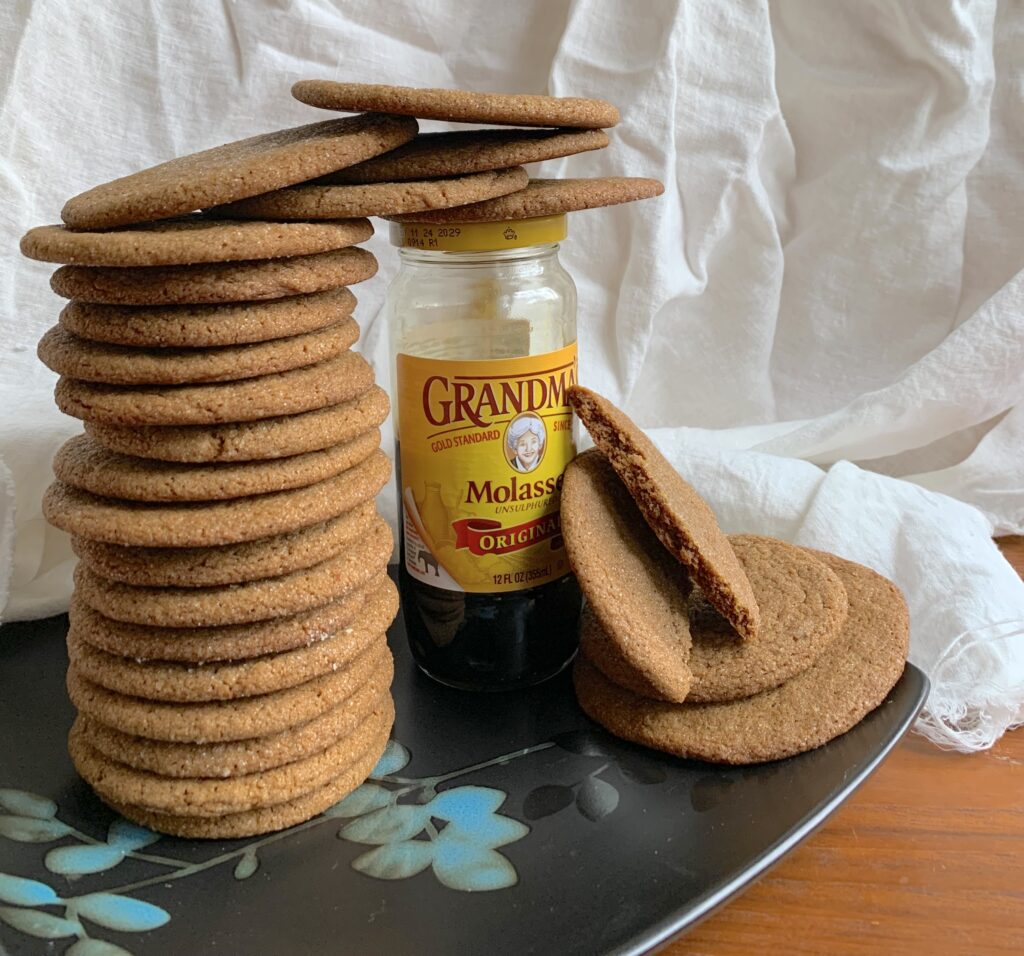
Many cities around the country have “their” cookie. This is the one belonging to Boston – complete with the inevitable carping about how Boston undeservingly managed to absorb all of maritime New England under its umbrella. You’ll make a friend if you acknowledge that injustice to a native of Marblehood, Lynn, Gloucester, or the other seafaring centers of the era. Just acknowledging their claim will make a difference. And Bostonians won’t care in the slightest. It’s all Greater Boston from their point of view. They’re city folk.

An Aside (Sort Of) – The Great Molasses Flood Of 1919

I spent a few hours walking Pittsburgh’s Strip District in search of enough testers to keep us from devouring dozens of these huge cookies on our own. It was a real danger! We each accounted for at least half a dozen when the other wasn’t looking because they are heartbreakingly moreish. The molasses flood must have come up in conversation close to ten times.

It has no direct connection to Joe Froggers beyond “Massachusetts” and “Molasses,” but it’s one of those fascinating events that everyone’s heard about but never remembers until prompted. And then they remember how much they love the story in a guilty kind of way. 20 people drowned in molasses?! The smell lingering on summer days for decades?! Massive and enduring changes to building codes across the nation? Baking ingredients shutting down a city?! Wow.

This goes to a link from the city website Boston.gov if you want to refresh your memory. Here is a fun Wikipedia link that tells the story better, albeit with less authority.

Notes For Fellow Bakers

  • The rum adds an interesting note you don’t really taste unless you know it’s there. But it does matter. First, because it’s a part of the history, and that’s part of what makes this cookie so fun. But also because the rum rounds out the spices to create a whole that isn’t quite gingerbread, and isn’t quite ginger snap, but something unique within the family.
  • Rum extract should work just fine, though we haven’t tried it. We used Gosling’s Black Seal Bermuda Dark Rum because we also keep around the house just for drinking. Good stuff!
  • The fat makes a difference because you can taste it in the final product. Lard and shortening add something to the texture, however, which is why we recommend a 50/50 mix of butter to other. But it’s truly up to you.
  • Purely by chance, I happened to use up my old jar of molasses while making a test recipe. That jar became the perfect vehicle for combining the (topped off) cup of molasses with the hot water and rum. Put it all in the jar, screw down the lid, and shake until it’s all smooth and liquid.
  • This is a really, really sticky dough that’s just over the line from being a batter AFTER it cools and sets in the fridge. Account for that as you get the dough mixed. You want just enough flour to reach that point. Any more will start to toughen the cookies. Remember: you can always mix in more, but cannot take any out.
  • Some recipes will merely sprinkle the pre-baked balls with sugar, but we ended up rolling them simply to make the sticky dough balls easier to handle. This is why we removed 1-2 tablespoons of sugar (⅓ oz = 10 g) from full 1 cup usually listed for the dough.
  • You want to press the balls down to keep them from rolling, but there’s no need to really squish them. The dough will spread all on its own.
  • Speaking of which, a golf ball sized sphere is really big compared to what you probably make with other recipes. That is the minimum size for true Joe Froggers. They’re supposed to be big enough that children will gape in awe at the wealth. Skimp if you must, but please do it on purpose because regular sized cookies don’t leave the same emotions in their wake. We fit only four cookies per standard baking tray, with six slightly smaller ones on the final tray because that’s what was left in the bowl.
  • Adding the flour and liquid in stages works best. Everything gets smoothly and evenly incorporated. But it isn’t essential unless you’re working by hand.
  • This is a no-eggs recipe. That isn’t a typo. It’s a feature, not a flaw.

Enjoy!
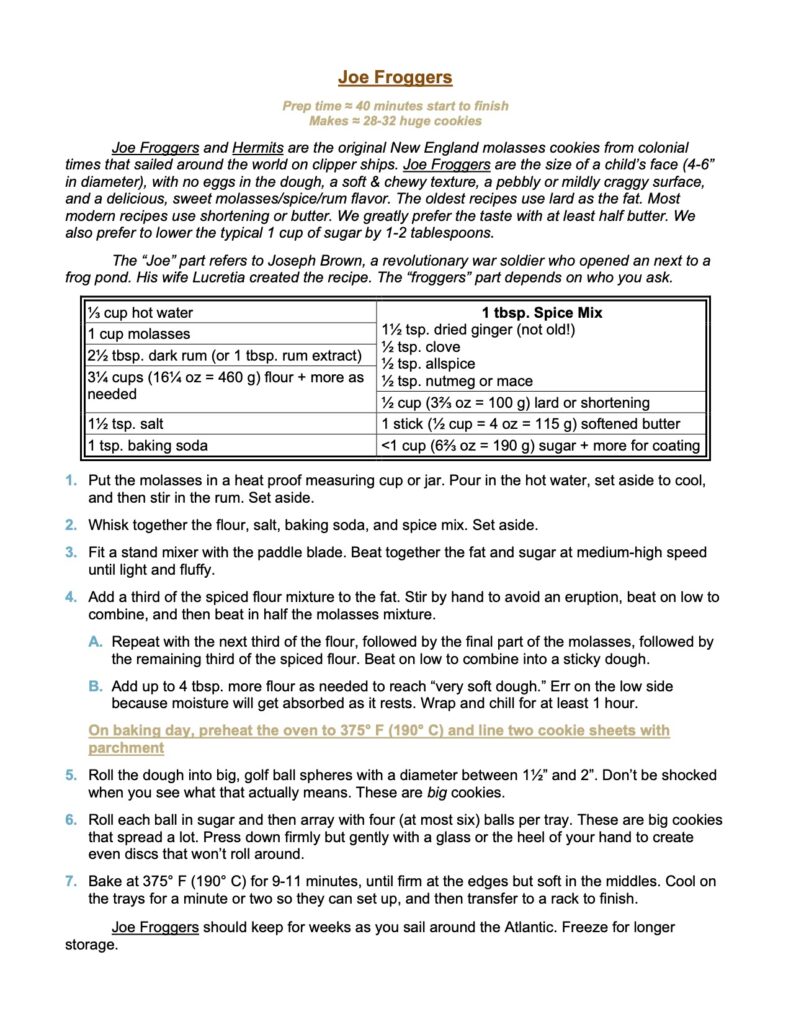
SUSUMELLE, A Honey Cookie From The Toe Of Italy

Honey, orange, cinnamon, and clove in an ancient waybread cookie

After researching a few recipes from the Eastern shores of the Mediterranean, our attention turned toward an interesting Spanish/Portuguese cookie… only to be diverted again by this much loved Italian cookie from Calabria, the “toe” of Italy right across the straits from Sicily. It’s a fun recipe, in part because there really is no single recipe. Nor any two. Nor any three. It’s basically a fill-in-the-blank name for any cookie made with the classic, southern Italian flavor profile of honey, orange, cinnamon, clove, and nutmeg-or-mace, offset by a bitter element, which can be cocoa powder, a bitter chocolate coating, or some molasses in the dough (a “difference” that typically changes the name from Susumelle to Mostaccioli di Napoli).

Can Anyone Define The Term?

Susumelle vary much more than most cookies, ranging from dense and chewy, to light and crispy, and topped with either chocolate or a powdered sugar glaze. But there are a few constants that ought to catch your attention as much as they did ours:

  1. This is an ancient cookie with roots going back well into medieval times, and it seems to have some connection back to the culture of Greece. I don’t think anyone would be surprised if ancient Roman recipes turned up.
  2. The main sweetener is honey, which means they have a very, very long shelf life, and did not require the boost from Age of Exploration sugar crops that caused so many new cookies to be born from the 1500’s on.
  3. Most versions include neither eggs nor fat, which makes them much less tender than other cookies. We’re told that some versions are crunchy enough to use as teething biscuits for babies! [See the safety note at the bottom of this article] But this isn’t a rule. Some recipes do include eggs, and others have oil, though we’ve yet to find any with butter.
  4. Almost every version includes some orange in the dough; zest for sure and often juice, but this can vary off to liqueurs, water, or even wine. Orange and honey! That’s a winning combination every time! Especially when paired with…
  5. A healthy amount of cinnamon, a small touch of clove, and usually an equally small touch of nutmeg or mace. This combination is everywhere in what used to be called the Kingdom of Naples from the 1200’s into the 1800’s. Think “Italy south of Rome and the papal states.”
  6. A bitter counterpart to offset the sweet honey. Cocoa powder is extremely common, and the one used in this recipe. Regions nearer to Naples tend to use molasses instead, with a name change to “Mostaccioli.”
  7. Finally, Susumelle always get coated in something, but that can range from dark chocolate (the most common), to white chocolate, to a powdered sugar glaze, to simple powdered sugar (especially for unleavened versions).

After that you get to the endless variations. And I do mean endless. Hundreds of years of variation yield more differences than consistency. It gets even more confusing as you go back in time! According to this tourist website, back in the old days natives acknowledged three separate categories of Susumelle based on the type of flour: white flour for the wealthy, poverty flours like whole wheat and acorn for the commoners, and “a third called ‘del buon cammino,’ made with good ingredients and destined for priest and friars.”

Does The Name “Susumelle” Provide Any Clues?

Well… not really. First, the word itself means multiple things in modern Italy. If you say “un Susumelle,” you almost can’t be wrong. It means anything that fits the broad category of a dessert made with honey, cinnamon, and clove. If you say “real/proper/etc. Susumelle,” or just “Susumelle” with no adjective, it means either (a) the cookie that Grandma made, with yours and everyone else’s being an abomination, or (b) a commercial version totally unlike Grandma’s but nevertheless real because you can see it in a store.

That same tourist website offers two potential name origins. The first is a combination of the Greek words sesamum (sesame) and mel (honey), which makes more sense than you might think because Calabria is right on the ancient trade routes, and there is are extremely common Levantine and Greek cookie/biscuit recipes with that profile. The other theory also traces to Greek, but is based on the word “susumeda,” meaning food that had gone bad that was given to the poor as charity. It is a Christmas cookie after all…

But that’s not all. Another theory says the name has to do with a local word for ‘una carezz’ (a caress). And I’ve even seen websites and videos claiming the name comes from the often-traditional “S” shape.

Then there’s the eternal category, “all of the above.” When many names work, people love to make puns that can work from multiple directions. And then they love to argue about it even more… but that’s a whole other story.

Does that sound vague, maddening, and designed to make researchers “wrong” no matter what they do? Welcome to my world, friends. Welcome to my world.

Wait A Second… Isn’t This A Waybread?

Frustrated? Me? Heck yeah. But then I realized that this particular kind of frustration rang some bells.

Isn’t exactly the same thing true for Lebkuchen recipes in German-speaking countries? Indeed it is! And for Molasses Gingerbread recipes across Northern Europe? Y’know, that’s true too. Honeycakes/Honey-Gingerbreads in Central and Eastern Europe? A pattern emerges.

And aren’t all those cookies remarkably similar in the big picture, being ancient recipes made with lots of honey, a spice mix, and often a healthy portion of dried fruits and/or nuts? Aha! The penny drops. This is the Southern Italian honey based waybread cookie, with every bit as much variation as its northern cousins.

Time To Treat It As A Master Recipe

After breaking my brain with no less than seven (7!) test versions, I finally realized the problem. I was trying to use one name for at least four different cookies. For our purposes we can break them up into the following variations:

  1. Super hard, use-your-molars crispy examples. These typically have no additions to the basic dough except ground nuts, which only appear on occasion anyway. Molars-hard Susumelle usually include a moderate amount of the ancient leavening agent Hartshorn a/k/a Baker’s Ammonia, and are almost always (a) coated with chocolate, (b) shaped into “S” cookies, or (c) left uncoated for baby to teethe on.
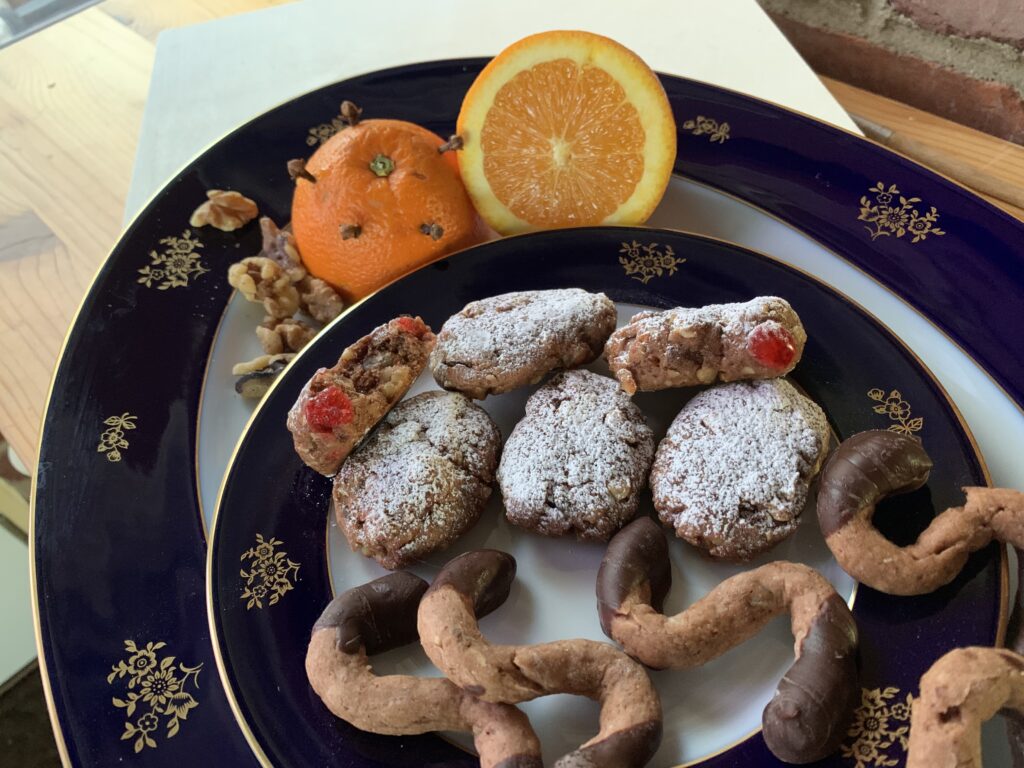
  2. Hard, light, and crispy eating cookies formed into ropes for an “S” shape, or rolled to normal (around ¼”) thickness and then cut. This version has a lot of hartshorn, but baking powder works too because they cook until fully hardened. Nuts are almost required (powdered, chopped, or coarsely chopped), but may be replaced with sesame seed. Light-and-crispy Susumelle always get a chocolate coat, usually dark but also ranging through milk and down to white.
  3. A hard and crispy biscotti version. Take #2 and form it into a single rectangle. Bake for a long time (25 minutes is typical), and then slice into biscotti-shaped pieces. The pieces can be baked a second time, but many don’t bother.
  4. Moderately crispy eating cookies, which can be either hand formed or treated as an extra-thick (around ½”) roll-and-cut. The same as #2 yet again, but with something added to interrupt the texture. That ‘something’ usually includes (a) baking powder rather than hartshorn, supplemented by (b) chopped, candied fruit, (c) chopped, dried fruit, (d) coarsely chopped nuts, and/or (e) eggs or oil added into the dough. This version also requires a coating, but it can vary from any kind of chocolate all the way through any kind of powdered sugar glaze.
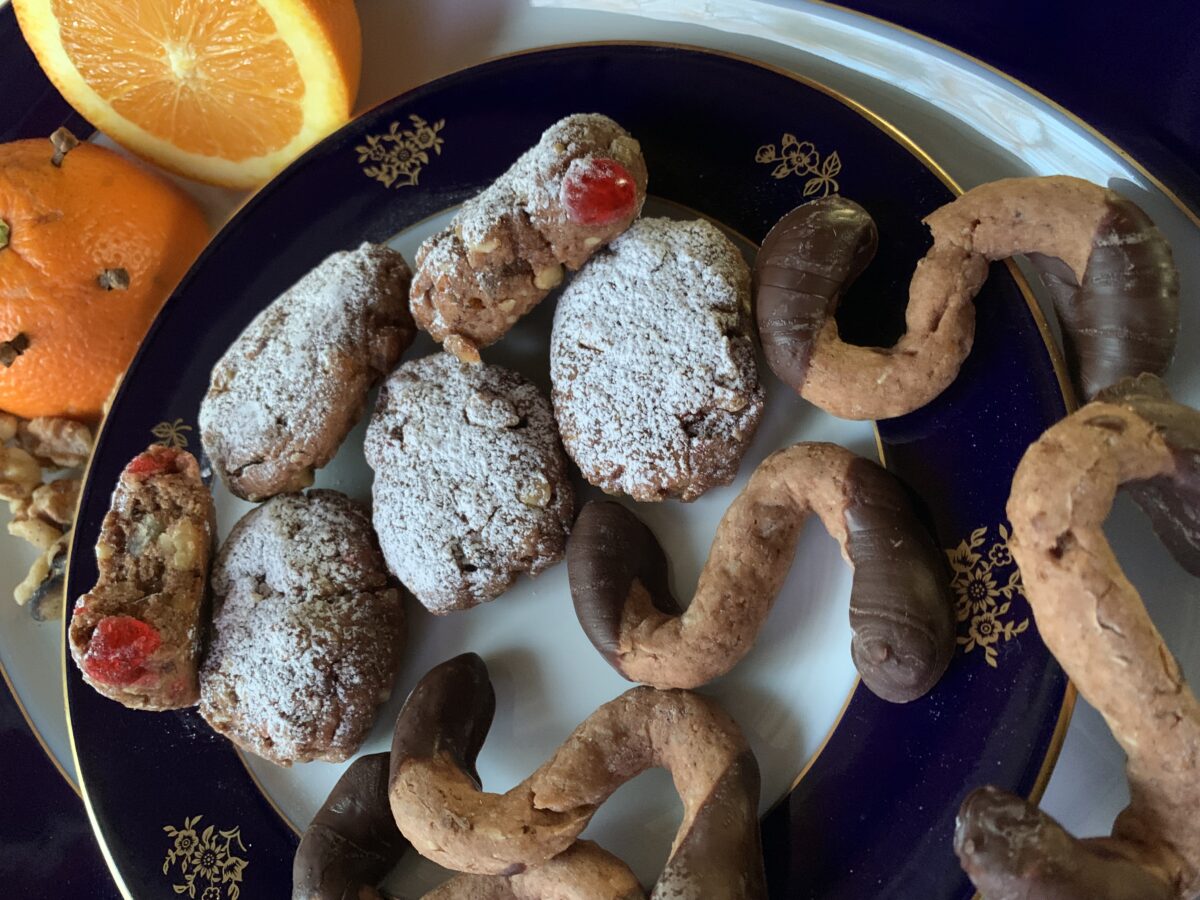
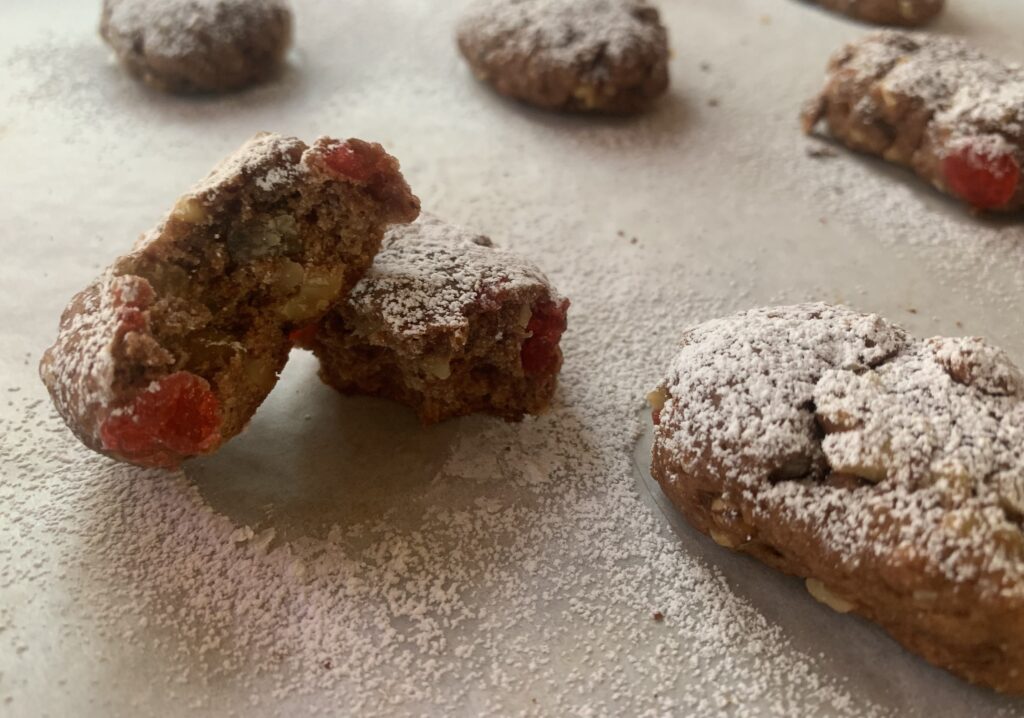
  5. Chewy waybread cookies comparable to Siennese Cavallucci. This version usually has little to no leavening, and is loaded with chopped fruit (candied or dried) and/or nuts. They’re also at least ½” thick, and large enough to be 3-4 bites each. Look for (a) large, roll-and-cut ovals, (b) hand formed egg shapes that settle into ovals inside the oven, or (c) thick ropes formed into an “S” shape. All three shapes are always served with powdered sugar on top.
Option 2 – Light and crispy, with walnuts
Option 5 – Unleavened, with nuts and candied fruit

A Rose By Any Other Name

We published a basic version of a cookie called Mostaccioli in Heritage Cookies of the Old and New World Volume 1. It’s a straightforward combination of chocolate and clove.

The research for this cookie shows that Mostaccioli is actually a broader category than we thought, and amounts to the slightly-more-northern version of Susumelle common in Campania (the shin) and Apulia (the heel) rather than Calabria (the toe) or Sicily (the stone being kicked). You can convert Susumelle to Mostaccioli by reducing the amount of honey, increasing the amount of sugar to compensate, and adding a significant portion of molasses and/or chocolate into the dough as a bitter counter-element. After that it’s the same orange/cinnamon/clove/nutmeg core, with infinite variations. [NOTE FROM SCOTT: I should probably work on a revised version of that recipe…]

Then there’s a third cookie, or more properly a Not Quite A Cookie, called Rame di Napoli; an extra-thick chocolate cake batter with the same basic flavor profile. These get baked in egg-sized mounds, coated in dark chocolate, and sprinkled with chopped pistachios. It’s a specialty of the city itself (Naples), and baked for Italy’s version of Halloween. If you’re interested, the word “rame” means “copper,” and the “cookie” is supposed to resemble an old Neapolitan copper coin. The pistachios represent green oxidation.

NOTE FROM KATE: when Scott develops a recipe, we can generally agree the point at which I can reserve cookies for the photo shoot. This time, the cookies kept arriving. I did enrobe a few of them in chocolate, but I never took photos. Too many variations, and too many baking variables, kept tripping up our decision-making process and every time Scott consulted either blogs or people, more local variations came out of the woodwork!

Now that he has his several varieties sussed out, it’s time to set up a project chart. Variety names, leavening status, textural additions, spice combinations, textures, glazes, shapes. Phylogenetically speaking, it’s as though Sussumelle was a cookie genus, and all these varieties were separate species. I care about the shapes and the glazes more than he does. As our mycologist friends like to insist, species concepts really work better when they are morphologically distinct.

CONCLUSION

Our recipes tend to focus on cookies with a story. Susumelle turned out to be a saga. Batch, after batch, after batch, trying to find the essence beneath all the recipes. We’ve rarely worked on a more frustrating project, until the penny finally dropped and we realized that something close to half a dozen different cookies all go by the same name, with only the main ingredients (honey, cocoa, cinnamon, clove, and nutmeg) as the unifying principle. That may sound mad at first, but only until you realize that much the same holds true for the similarly ancient honey-and-spice waybreads in Central and Northern Europe. Time and popularity equal endless variations.

Which is our personal favorite? Kate can vote for herself, and none are bad, but mine would be the one with no leavening at all, and all those beautiful bits and bobs inside. It’s a Lebkuchen or Honeycake done Southern Style, with a delicious flavor palate unique to these particular regions.

Of course, that opinion might change if we still had teething babies around!

A NOTE ON FEEDING HONEY TO BABIES: The bottom line is this: don’t. Honey harbors a bacteria called “Clostridium” that can on rare occasions cause infant botulism. Bad juju! The risk diminishes as the infant grows, becoming less dangerous around 6 months, safer still after 9 months, and more or less safe after 12; at least according to Doctor Internet. Babies usually start to teeth around 6 months, though some start earlier.

Susumelle recipes cook the honey and the sugar, which you’d think would reduce the risk, but it doesn’t eliminate it. So tradition be damned. Follow your doctor’s advice. The fact that people with no concept of germ theory almost always got away with the risks does not make it the smart thing to do. Do you really want to be the exception?

NOTE FROM KATE: look up the USDA guidelines for killing Clostridium botulinum, compare the temperature and time requirements, and let your comfort level be your guide. Now look up sugar, carb, and oral health guidelines for young children. Seriously dude, teething on hard biscuits is a dentist’s nightmare! The whole idea reminds me of a “teething remedy” my grandmothers used to employ: unripe poppy seeds simmered in sweetened milk, and then used as a soaking liquid for soft bread wrapped in a handkerchief and tied off with string. “It helps the babies slept better,” they both said, “but don’t use it all the time. Poppy makes kids stupid, so it’s a last-resort option.

CANADIAN ARMY MOLASSES COOKIES, A Classic WWII Recipe

The Canadian soldier’s secret trading weapon

Who’da thunk it? Soldiers like to trade amongst themselves, particularly when different groups have different supplies. In World War II the U.S. GI’s were the source for chocolate and smokes. The English always had tea. And the Canadians? They marched into the trading wars armed with cookies that no one else could match – the ones you’ll see below.

Click Here if you only want the recipe without the discussion

The basic recipe comes from the 1946 Canadian Army Cook’s Manual, as published in the Canadian Government website. All we did was test it, which turned out to matter because the volume-to-weight ratios on that page are a little bit off. Following the weights yields a thick drop cookie dough, while the volume measurements (cups) give you a very soft slice-and-bake result. We went with the second one because the instructions specifically mention slicing off pieces before baking. Our version below has corrected weights according to our tried and true conversion tables. Please note, however, that some ingredients (particularly flour) can vary a lot depending on both grind and protein content.

NOTE FROM KATE: When I tested this recipe, I used the scale with an expectation of tidy, slice-and-bake logs. I got a goopy mess of a drop cookie dough, and a discussion ensued along the lines of “You know, this cookie has a HUGE proportion of molasses!” Scott did some recalculating, et voila! The next try yielded slice and bake logs. The cookies bake and taste the same, but I prefer the tidy handling of the logs. It makes for an easier cleanup.

We made only two changes aside from that tweak. (1) The original recipe calls for sour milk, which we successfully replaced with both buttermilk and with fresh milk soured in the kitchen by adding some vinegar/lemon (a standard workaround). Yogurt ought to work too, though we haven’t tested it. And (2) We added raisins and extra spices as optional ingredients. Those might be too expensive for army-level production, but they do yield a tastier result for home cooks making dozens instead of thousands.

So what does it taste like? We found a few dozen tasters for this recipe and got a pretty standard reaction: “Entirely inoffensive with a finger on the scale toward good.” Call it a universal 6 out of 10, with no one going higher than an 8 or lower than a 4. They’d also be a 6 if you had a 1-10 scale from savory to sweet. Add the optional raisins and both scores go up by a notch. Extra spices push it up another.

NOTE FROM KATE: I admit to being spoiled by molasses cookies that bite back. You know, the memorable ones, loaded with spices from the obvious cinnamon to the expensive cardamom, with pepper and ginger for good measure. This is not that kind of a cookie. This is like a mild dish from a famously spicy cuisine. It’s still delicious but it defies your expectations.

People who like spicy cookies will notice a certain lack in this one, while mild food eaters should be thrilled to have a cookie that goes well with both coffee and tea. The restraint on the spice end of things was likely a result of not only preference, but also economy. Spices are expensive, and that matters once you multiply their cost by making enough for the entire Canadian army!

Soft or crunchy?

It’s entirely a matter of baking time and personal taste. Kate prefers these with a bit of residual chew. Scott likes them better when crispy. Choose for yourself. 15-20 minutes gives you one or the other, with all the stages in between.

NOTE FROM KATE: Despite my chew preference, I find that even dry cookies, which sat out for a few days, tasted good! Surprisingly, they didn’t go stale, and they had a nice crisp. Even though the low spice level took me aback at first, this eminently practical cookie grew on me and has now become a part of my “easy and travels well” repertoire!

Enjoy!

ELISENLEBKUCHEN – Flourless honey gingerbread (a/k/a honeycakes) from Nuremberg

The Immortal Queen of Nuremberg Gingerbreads

Here’s a funny but true: we love our classic Lebkuchen recipe so much that we hesitated to work on this one out of pure loyalty. We’ve amassed a great number of honey gingerbread recipes (a/k/a “Honeycakes”), but Lebkuchen remains the a family favorite. Christmas wouldn’t be Christmas if we left them off our tray.

It turned out to be a misplaced loyalty. Elisenlebkuchen bear very little resemblance to regular Lebkuchen when push comes to shove. Our old favorite is a classic built on a flour-based dough that’s jam packed with nuts, fruits, a bit of spice, and a whole lot of honey to act as the binder. Elisenlebkuchen have even more nuts, no flour at all, and instead rely on both honey and a full five (5!) eggs to act as the binder. They are two very different experiences.

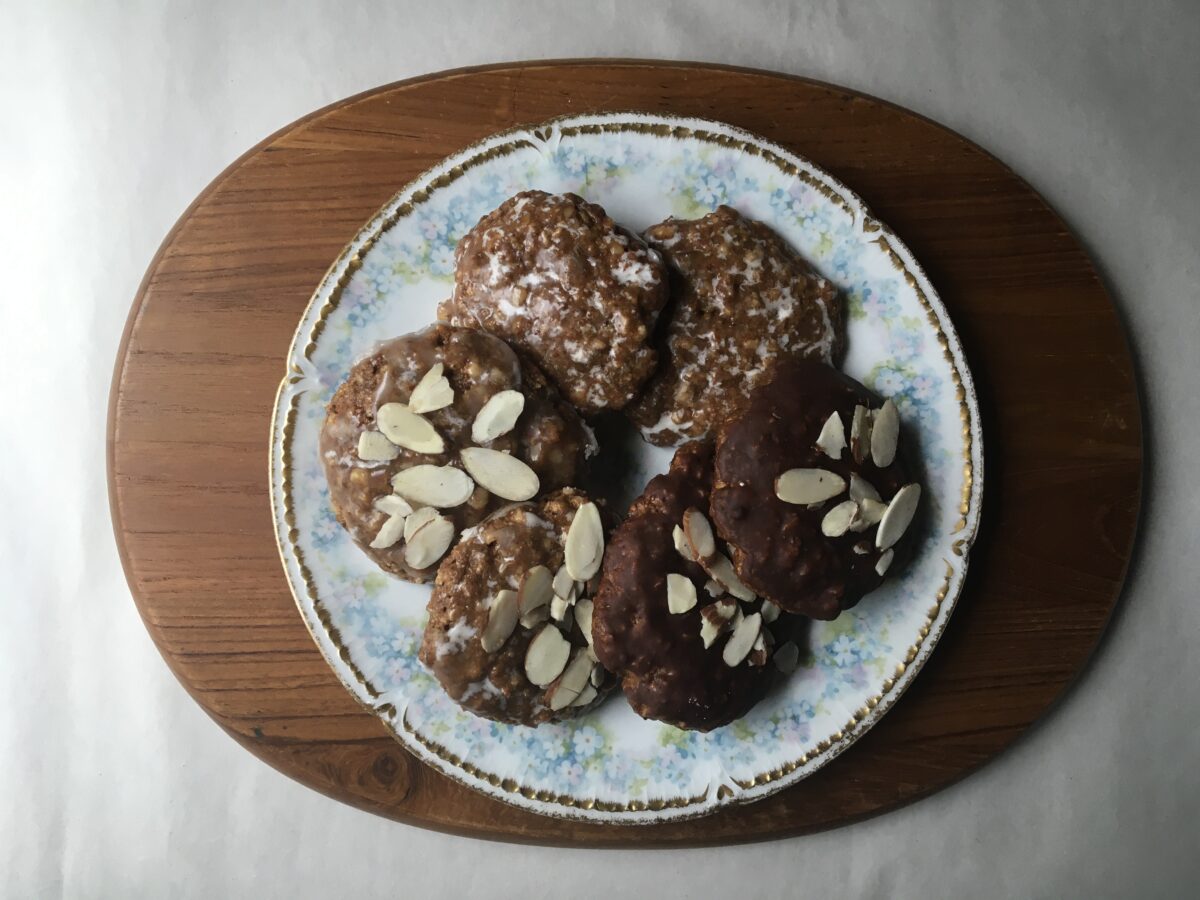
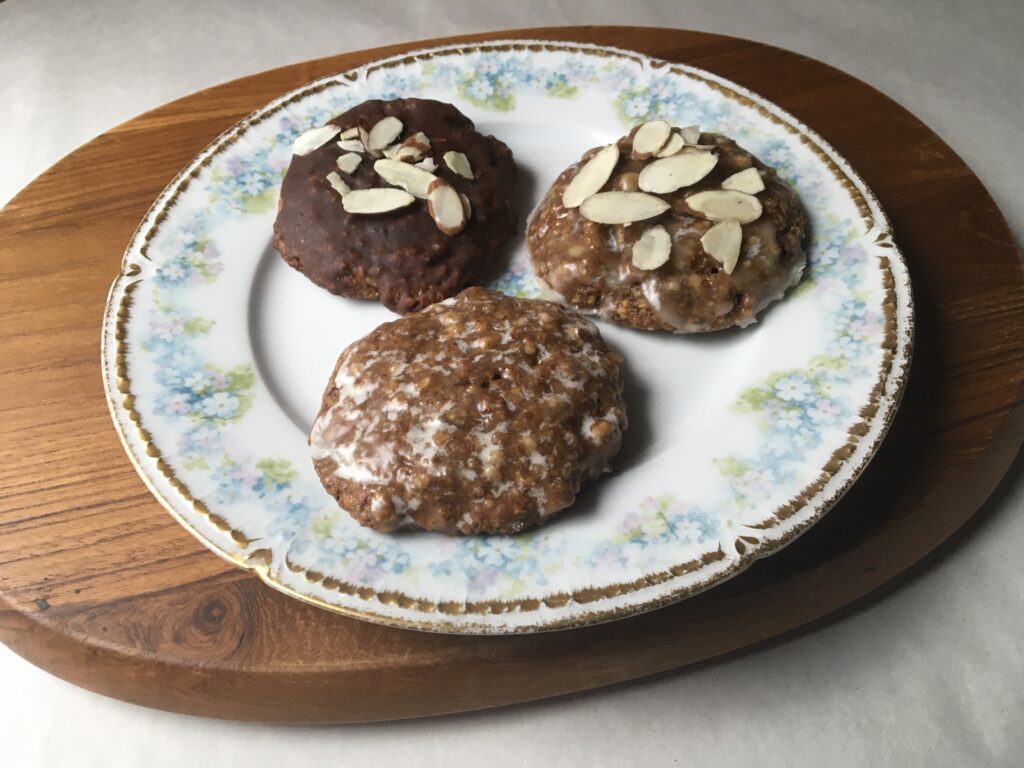
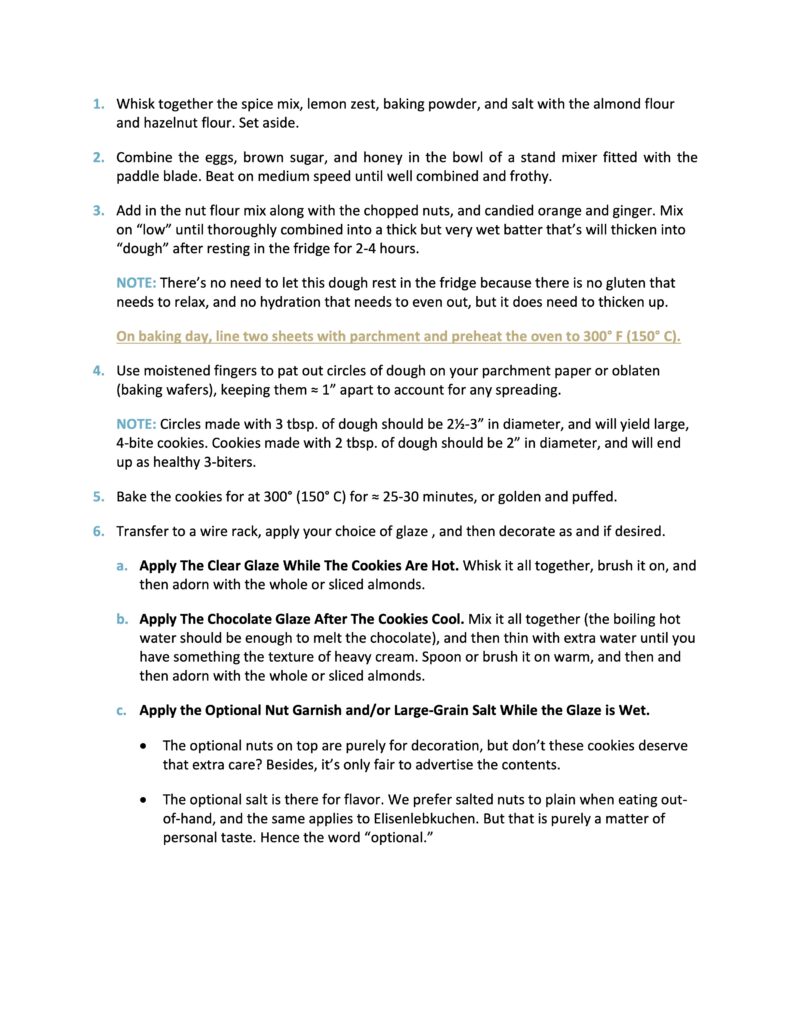
On the Upper Left: chocolate glaze with sliced almonds.
On The Upper Right: vanilla glaze with sliced almonds.
On The Bottom: vanilla glaze only.
Use whichever you think is prettiest.

NOTE FROM KATE: These cookies are horribly deceptive in their overall “goodness.” That is, with the exception of the brown sugar, they are a “whole food,” so what could go wrong, right? I’ll have to do a caloric breakdown one of these days. Let’s just say, they contain more energy than meets the eye. If you were riding across the mountains and had to choose a fabulous, long-lasting food source for the extra space in your saddle bags, these would be it. They remind me of Panforte in their composition, but have eggs for eggstra protein. [Insert eye roll from Scott] The good news? With eggstra protein and the good-for-you fat from the nuts, the sugar in the brown sugar and honey won’t hit your bloodstream too fast. A cookie or two could hold you for hours.

Best of all? Of all our cookies and especially waybreads, these are the closest to the Lembas the elves made famous in the Lord of the Rings. Toss in an apple, and you got yourself a balanced diet for the day! (Shh…don’t tell Scott!)

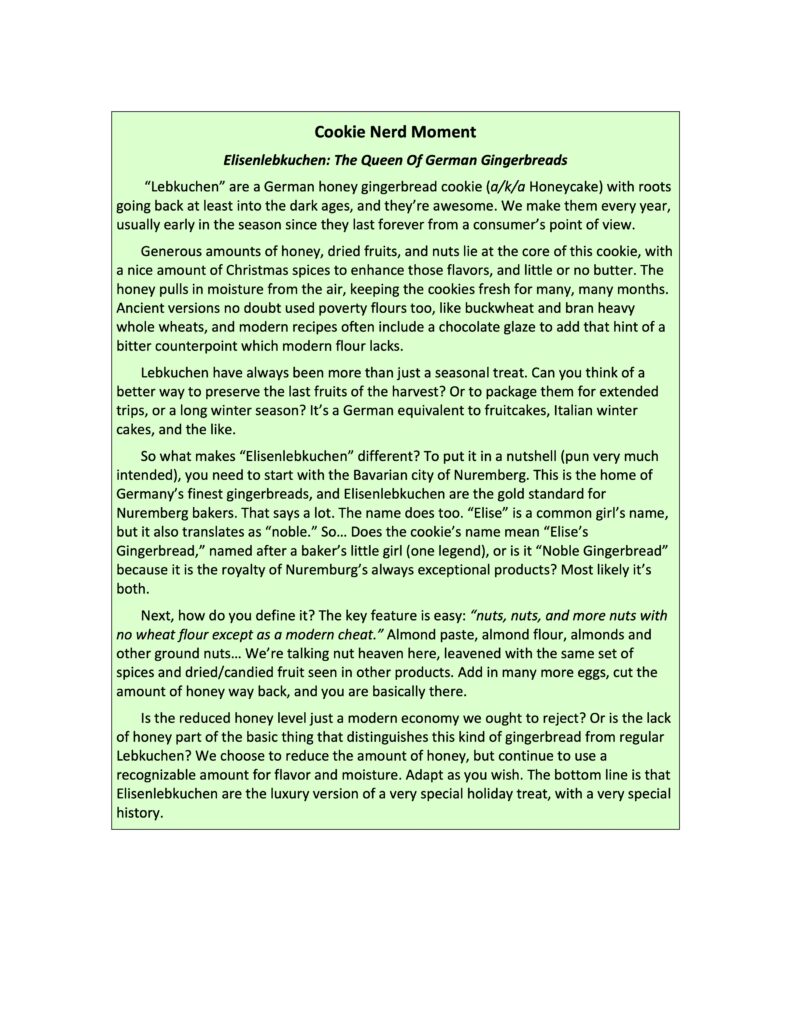
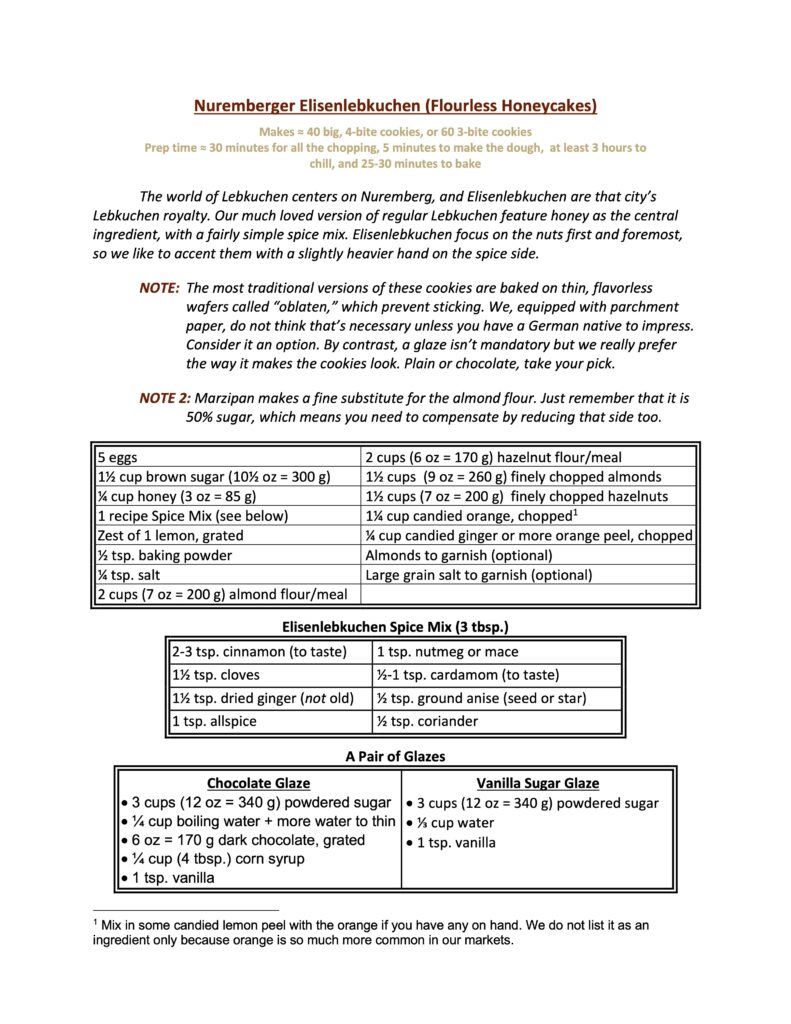
The recipe explains itself, and includes an extensive Cookie Nerd Moment with extra background material, so I will only take the time to discuss a few of the decision points you’ll face when trying this out on your own:

  1. Should I use marzipan or ground nuts? It’s entirely up to you, and makes very little difference. Just remember that Marzipan has almost as much sugar as nuts (our recipe has a ratio of 4:5), and usually has some extra sweetness lurking in the background. If you make this substitution, do it by weight and assume the Marzipan is actually a 50/50 mix. You need to reduce the amount of both almonds and sugar accordingly.
  2. Can I play with the spices? Of course you can! But we do recommend that you (a) stick to the basic, quite generous amount of overall spice, and (b) think of the spices as an accent to bring the best out of your chosen nuts.
  3. Can I substitute in other nuts? Yes, but these are the classics used in Nuremberg. Be aware that you’ll be departing off road from the One True Tradition.
  4. Should I glaze the cookies? Yes. That was easy enough. The glaze definitely enhances the overall look, especially since the bottoms are not glazed.
  5. Should I use the vanilla glaze or the chocolate? Tradition allows for either one, so it’s entirely up to you. Both are thin enough to be only an accent flavor. This cookie is all about the nuts, and even I, a lifelong chocoholic, don’t want to mess with that purity.
  6. Should I add the nut garnish on top? As you wish. They are only there for the sake of appearance and fair warning to anyone who sees them lying there on your tray.
  7. Should I add the optional salt? And why specify “large grain” salt? This is a nontraditional option that we liked so much that we felt obliged to share. Both Kate and I have a strong preference for salted nuts over plain when we snack on them out of hand. The optional salt creates that effect in a light way. We recommend large grain salt sprinkled on top of the glaze because that is the best way to give a salty highlight. The base recipe also contains some salt, but that is more of a bare minimum that the cookie would suffer without.

That’s it folks. Enjoy!

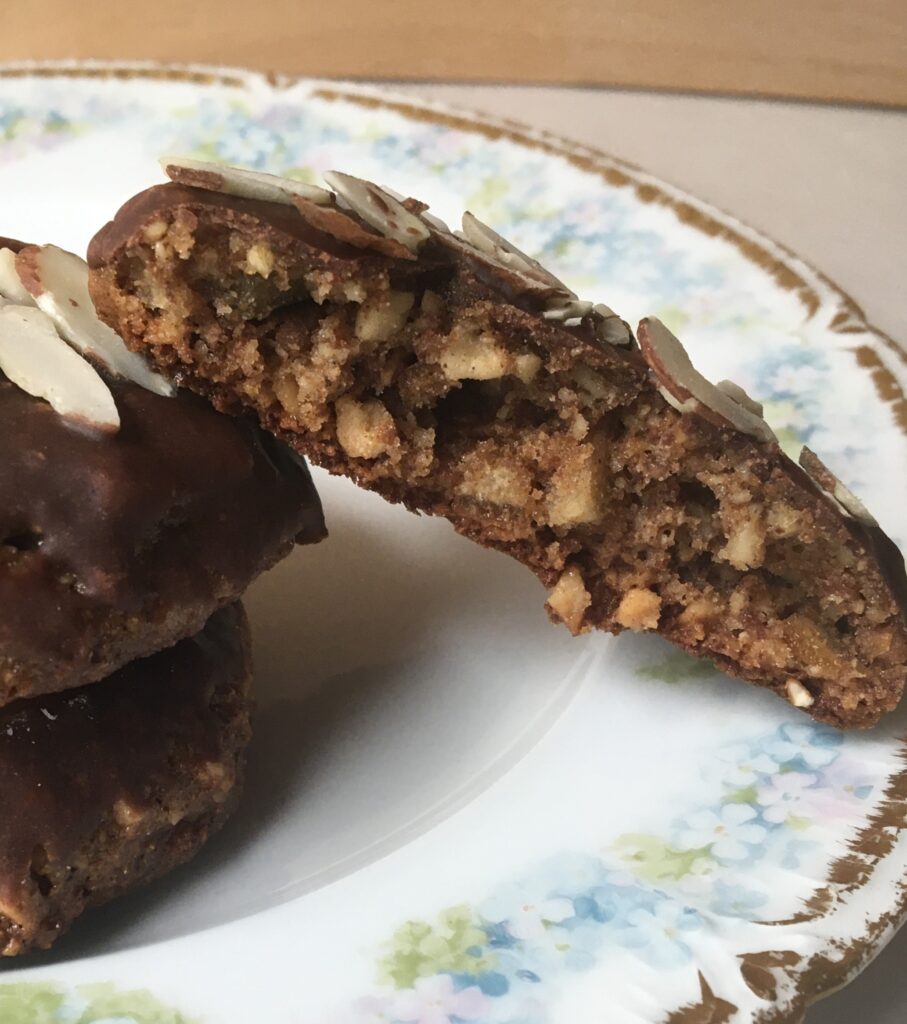
Nuts, nuts, nuts, and fruit. The only other things inside this cookie are honey and eggs as the binder.

CAVALLUCCI – A Honey Biscuit from the mountains of Tuscany

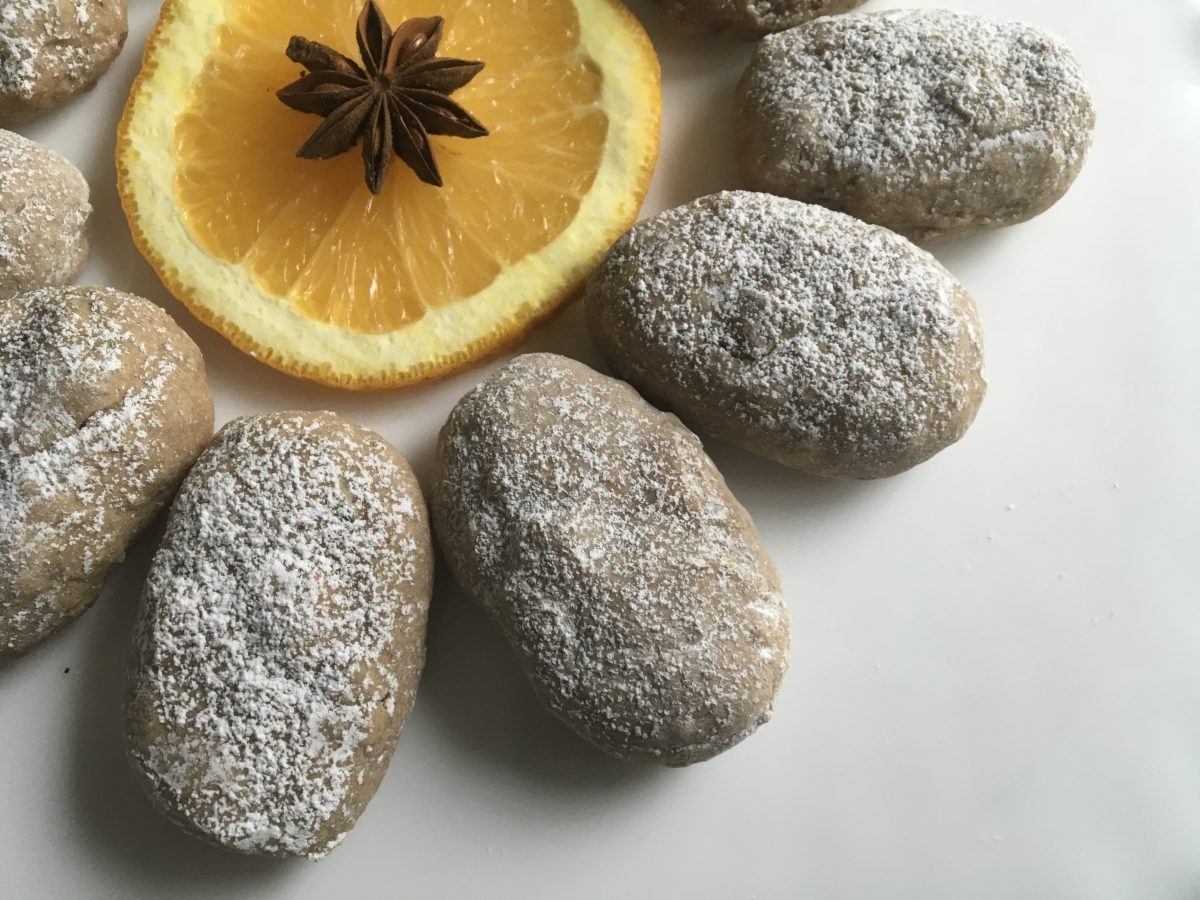
Okay, yes. That is star anise from China rather than regular anise from Italy. Live with it. This makes the prettier picture.

Such a romantic name for such a plain little critter! “Cavallucci” translates to “little horsemen,” which I suspect comes from the fact that having no leavening, and no fat except the nuts, made them ideal treats for horsemen riding through the Tuscan hills. Probably in search of some well grown evergreens, where the elusive porcini can be found. I’m sold right there.

But Cavallucci also have some modern romance. This, and its soft almond lookalike Ricciarelli, are the treats of Sienna, a smaller city about 50 miles south of Florence. You will not escape a visit without getting to experience the unique, chewy balance of honey, orange, anise, and other spice that these are all about. So why not visit from the comfort of your own home kitchen?

As always, skip to the bottom if you want the recipe without any discussion

It’s All About Balance

Moving on, it’s that key word – “balance” – that catches the essence of what these are really about. Our friends and family will attest that your humble authors are better as cooks than we are as bakers. Especially me. Kate does cakes too, but my baking really begins and ends with three categories: (1) heritage cookies, (2) lemon curd, and (3) anything made with chocolate.

Both of us find Northern Italian cuisine particularly intriguing because it’s such a challenge. There’s such delight to be found in achieving perfection through skill and nuance alone. Think of recipes like scaloppini or piccata. They have what, three or four ingredients plus salt and pepper? And yet the results can vary from shlock to divine. It’s a culinary balance beam trick. Impressive as heck if you get the balance right, and embarrassing if you don’t.

Cavallucci should be approached with that same sensitivity. The core of the recipe is little more than flour held together with lots of honey, plus orange peel and walnuts with a healthy shot of anise. Honey, orange, and anise; three flavors that love each other. So what could go wrong? Lots, as it turns out. You’ve got to get the balance right, and that balance has to include texture as well as flavor.

Balancing The Texture

This cookie begins with a trick you see often when honey gets used in bulk. You don’t use the raw material on its own. Rather, you mix it with some added sugar, thin it with some water, and then simmer until everything comes together into a syrup. Candies take it a little further, cooking the sugary liquid up toward the soft-crack, hard-crack, and caramel stages depending on what you intend to do. No need to worry about that here. All you’re after is a nice, smooth syrup. It’s a trick we first learned with German Lebkuchen and Swiss Leckerli. It seemed strange and special at the time, but by now it’s become a standard part of the toolkit. Every one of the dozen or so Cavallucci recipes we looked at started in just that way.

The texture then expands in both directions – chewier and lighter – with the addition of candied orange peel and larger bits of walnut. Nothing to it, right? But it’s easier to fall off the balance beam than it is to stay erect.

A VALUABLE NOTE: There wasn’t enough room in the recipe to emphasize how important it is to get the size of your pieces right. That may sound obsessive but it isn’t. Balance, balance, balance! Candied orange peel has a stick-to-your-molars texture that totally takes over if you let the pieces get any bigger than a raisin, and that disappears in between your teeth if you cut it down to peppercorn size. Both can be annoying. As for the walnuts, they just vanish if you get them down to “finely chopped,” and break the product into sections if you leave them whole. Again, chopped just to raisin size is the perfect compromise.

Balancing The Flavor

That covers the texture. Next up, flavor. What have we got already? Honey (yum) and orange (yum). Two flavors that love each other. But… they’re obvious. No style. That slight bit of bitterness in the walnuts just isn’t enough to round things out. There are a lot of ways you could handle this in theory. Bakers in the walnut loving Balkans and Black Sea regions might grind up a great, big handful of walnuts to use as a bitter nut flour. Health conscious bakers might try substituting in a bit of whole wheat flour. The most common trick in Siena, and the cheapest for American bakers, is to round out the honey with a small hit of molasses.

NOTE: Our favorite page in the entire book – the conversion table! – should can be your friend here. One cup of white sugar plus one tablespoon of molasses equals light brown sugar. Two tablespoons of molasses equals dark brown sugar. We specify light brown sugar in the recipe, but every baker deserves to claim each cookie as his or her own. Those numbers tell you the basic amounts you’re working with, and should empower you to adjust as your palate suggests. The textural properties of molasses will not be an issue because they overlap with the honey. Knowledge is power!

So now the honey works, and the texture is right. The next element to turn these into true Sienese Cavalluci comes from the anise. This recipe contains a whopping four (4) teaspoons of anise seed. Holy. Friggin. Cow. That, however, isn’t strange for the region. Italians adore anise in the same way that Americans love cinnamon. But that much… well, it is another case where you need to work on the balance.

Fortunately enough, the native bakers agree. I do not think we saw a recipe that did not try to soften the licorice flavor with a bit of this and a bit of that. We ended up with a background mixture of other sweet spices, led by cinnamon of course since we are, after all, Americans.

The bottom line here is a waybread biscuit (they aren’t pretty enough to deserve the exalted title of “cookies”) with a distinctive, chewy texture and a sweet, addictive flavor that hits you in waves. It starts with the honey and orange, and then evolves to include the anise. All those rounding-out touches (the walnuts, molasses, and other spices) keep any of those three from dominating the composition, and show up on their own in the aftertaste.

Conclusion

It really is like a good Veal Scaloppini, or Chicken Marsala. Simple food, done very well, and adding up to more than the sum of it’s parts. Serve with coffee, tea, or an aperitif that can handle the sweetness. They are better when they’re not alone, at least in our opinion. But you won’t be disappointed regardless, and a plateful of Cavallucci is much less expensive than a ticket overseas.

A FINAL NOTE: Cavallucci fall in the category of waybreads because all that honey acts as a preservative. They may dry out but they aren’t going to get stale or go rancid unless you lock them in a drawer and forget about them for more time than any of us care to imagine. There is also an easy fix if they do dry out. Put the little bricks in a tin or other tightly sealed container with a slice of sandwich bread. Wait a day or two, and the moisture will move out of the bread and into the cookies; drawn there by the hygroscopic (water loving) power of the honey. Hey presto, Bob’s your uncle. Repeat as needed.

A REALLY, TRULY FINAL NOTE: We haven’t tried it, but this is pretty obviously a formula recipe that ought to work with almost any combination of matching flavors. Honey, orange, and anise typify northern Italy. Do something with dried pineapple or mango, and macadamia nuts, and you ought to get a wonderful treat for drinks on the lanai. Pecans, dried apple, and maple would pair well with a hoppy ale or hard cider on a front porch rocker. Or maybe… You get the idea. We tend to focus on cookies that come with deep historical roots, and a story to match. But there is nothing more American than taking a great idea from the old country and turning it into something new, and maybe even better. So please: test your seat in the baking saddle, and let us know what rides out from your neck of the woods.

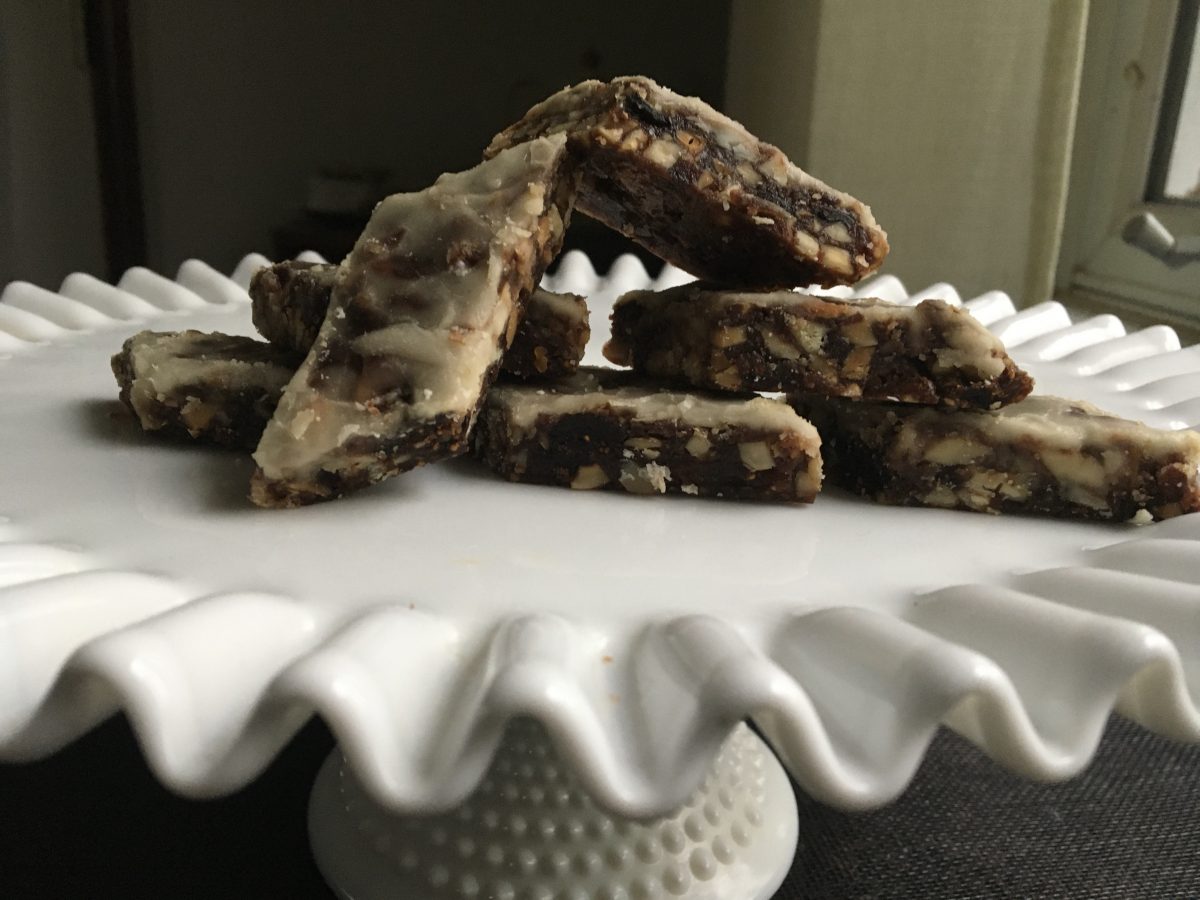
PANFORTE – Sometimes you get it right

Our adventure with this extraordinary cookie began in 2019 when I met an old friend in the local supermarket – a former partner at the firm I joined out of law school. He had a cart full of baking supplies, I had just finished the initial version of our book, and Christmas was in the wind, so you can guess what happened next. I asked a question, he enthused, and we ended up in a discussion about family baking traditions. Who knew that Tom had a reputation going back for decades as the Great Baker of his circle? Birthday cakes, holiday cookies, even the occasional wedding table… just like us.

Tom gave the credit for his skill and passion to his Italian mother and grandmother. And he absolutely *loved* our cookbook project! “That reminds me of the one cookie I never managed to learn,” he said. “I don’t even know the name. It was black, dense, diamond shaped, and filled with chocolate, fruits, and nuts. Never any other shape. I wish I knew what it was.”

You know what? I did. Sort of.

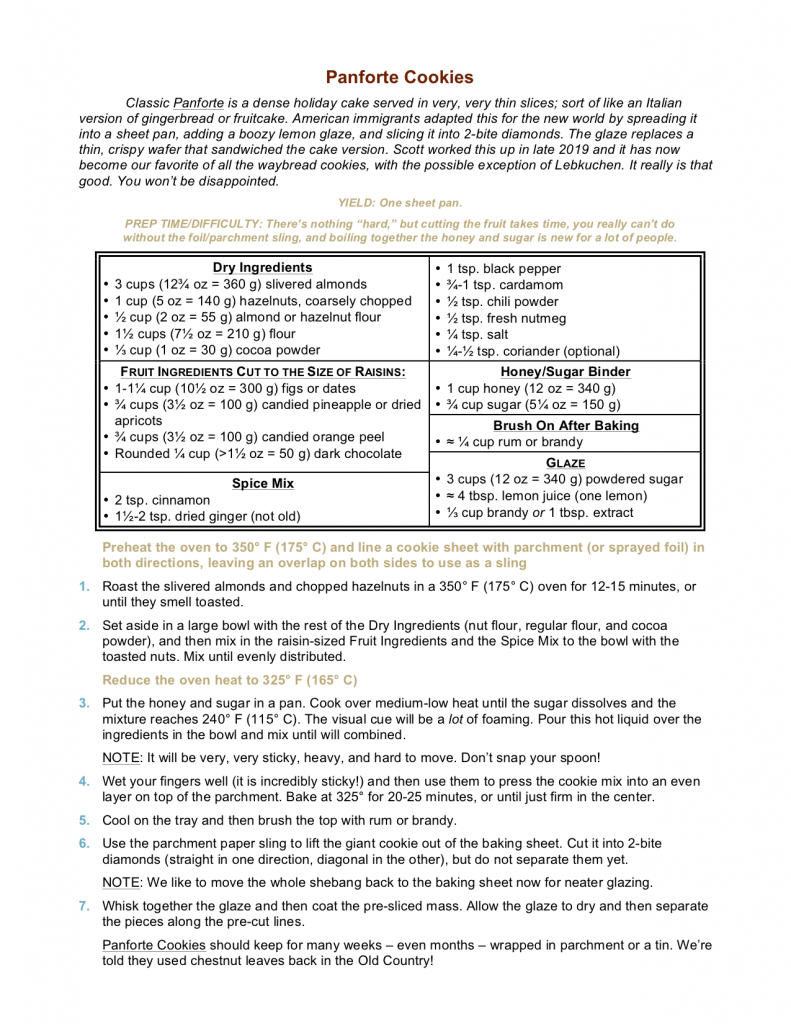
As always, skip to the bottom if you only want the recipe. Most of what follows is the winding process of how we got there, and the tricks we learned along the way.

It Had To Be A Waybread a/k/a Winter Cake

We used to follow a public radio program called The Splendid Table, hosted by a scholar of Italian cooking traditions named Lynn Rosetto Kasper. She had done a segment on something she called “winter cakes;” meal-sized Italian equivalents of what we call “waybreads” in our book. It’s a category populated by dense, ancient treats that your great-to-the-Nth ancestors prepared at two different times: (A) during the holidays, to enjoy in slivers all the way through April, or (B) for a loved one to take on some extended journey. The common denominator? Winter cakes (waybreads) last basically forever from a practical point of view, being packed with so much sweetness, dried fruits, nuts, and often booze that they won’t go stale.

The old English version is fruitcake, inherited into the U.S. tradition with a great deal of snickering and jokes. But other versions abound across Europe, and I knew this had to be one of them. The diamonds gave it away.

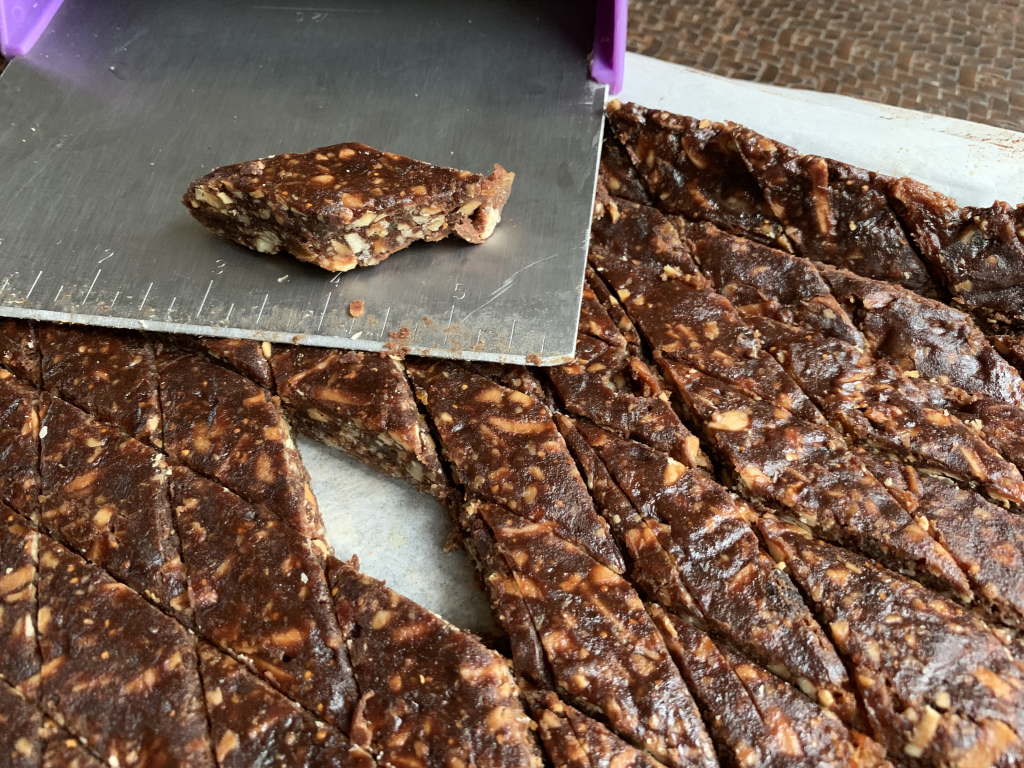
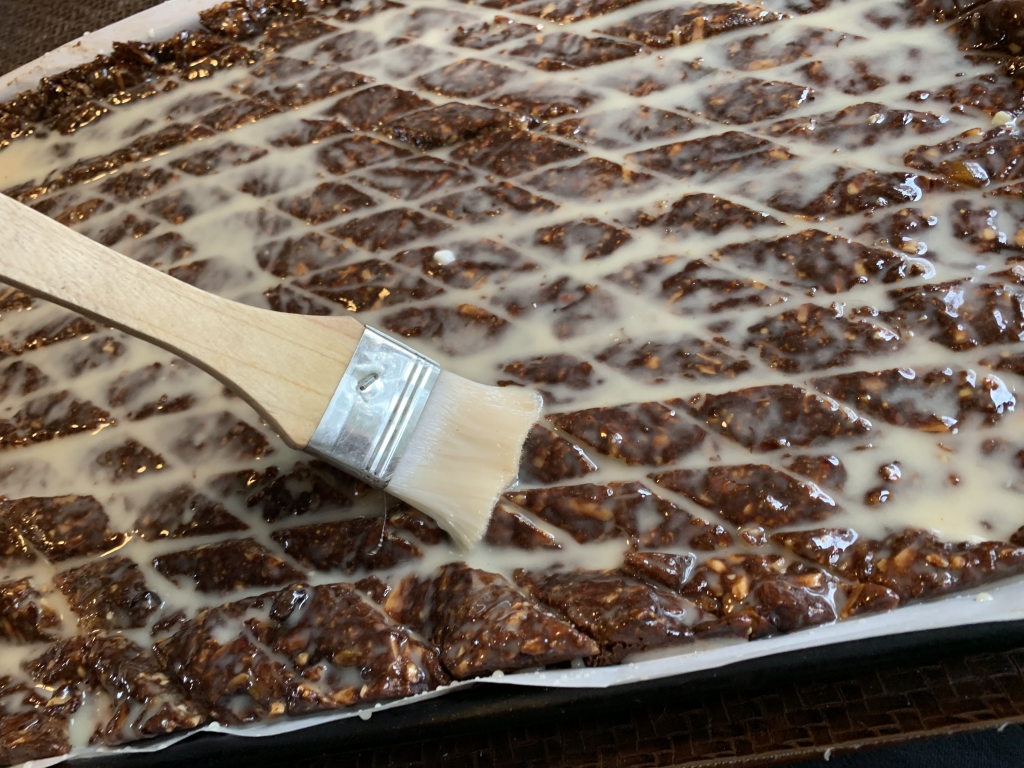
I know from earlier research that American immigrants often adapted their traditional waybreads to the new world by using a standard U.S. sheet pan in place of the specialty cake pans they’d left behind. Cut the sheet-waybread into cookie-sized pieces with a vertical line in one direction and a diagonal in the other, and voila! Diamonds, which are much prettier than little squares, much more “American” than big cake shapes, and have the added bonus of creating a series of little triangles by the edges for the cook and her helpers to “test the bake.”

SIDEBAR: Cookie bits have no calories if you’re nibbling for practical reasons like testing! Everyone knows that, right? Ask your own Baba or Nana or Grandma if you doubt me. Most of them will admit it, and the ones who don’t will huff up in that particular way that lets you know the truth.

So here’s the bottom line. This was some kind of ancient waybread or winter cake. It probably came from Italy, given Tom’s heritage. It was dark to the point of being black. It was heavy and probably unleavened. And the primary ingredients were a mix of various nuts, several fruits, and a solid hit of chocolate.

Which Waybread Was It?

Off to the Internet I went and it wasn’t long before my search returned a long series of hits for something called Panforte; a specialty of the ancient Italian city of Siena, in Tuscany, about an hour by car to the south of Florence. It hit on every category, even down to a series of American photos showing thin, cookie-sized diamonds.

Bullseye!

Our now-familiar development procedure followed after that. First I compiled as many recipes as I could to get a good feel for the variations and the flavor profile. Panforte is pretty common, so I had well over a dozen to choose from.

This research confirmed the mix-of-nuts approach Tom had described, with almonds and hazelnuts being the most common. I balanced the fruit flavors in my head, adding dried apricots as a potential substitute for the surprising presence of candied pineapple in so many recipes. I rejected citron – the bane of fruitcake eaters everywhere! – for the equally common and much better tasting candied orange peel. All pretty standard. Alter as you wish.

The sweetener in the recipe turned out to be a mix of honey cooked together with sugar. No surprise there! One of the best waybreads in Volume I is called Leckerli, a sheet pan cookie centered on walnuts. Northern Italy and Switzerland aren’t that far apart, so it came as no surprise to see parallels in their cookies.ƒ

Next came the spices. These varied hugely, as you might expect. I sifted through a dozen variations and then settled on something more or less in the middle with two minor variations – chili powder and cardamom. Neither was unknown, so this wasn’t a true heresy, but neither were they common. Still, the combination made sense in my head, and offered a side benefit. They gave the flavor profile a little twist compared to all our other recipes. Again, modify as you desire.

Time For Attempt #1, And… Wow.

Mega wow. Ridiculously absurd, over the top, odes-to-the-cookie-gods wow. These darned things were awesome! We almost couldn’t believe it. Were all Panforte this good?

Aye, there’s the rub.

Kate and I can tell good from bad easily enough. And these were certainly good. But how could we tell if they were “right”? Neither of us comes from an Italian background. We had no internal target to aim for.

This, my friends, called for a trip to the Strip District.

Always Find Native Testers

The Strip is a narrow piece of land in Pittsburgh about 2-3 blocks wide and 6-8 blocks long, located just up the Allegheny River from the Downtown triangle where the Al and the Mon meet to form the O. It’s been our favorite part of the city since we moved here because the two main drags (Penn Ave. and Smallman) are lined with wholesale/retail ethnic stores. These include a number of different Italian places with histories going back close to 100 years, and a veritable bevy of first generation immigrants. Just the people to test our new cookie!

First up: Giuseppe at Penn Mac a/k/a the Pennsylvania Macaroni Company. This is our go-to stop for nuts, dried fruit, and other staples, and we bring them a tin every year.

“Giuseppe, we know these are good. That’s obvious. But are they Right? We need someone from the Old Country to give a reality check. Would you mind?”

No, not at all. He took a bite… and then looked at us like we we’d left our brains in the street. “You think there’s something wrong with these? They could be straight from Italia! They’re perfect! Just let me have a couple more pieces before you go… [munch, mumble, mumble, munch].”

Wait a sec. That never happens. Not ever! I had to visit the Strip three different times when I was working up South America’s famous Alfajores, and those are a simple, childhood shortbread. Maybe Giuseppe was just being kind.

No problem. There are other Italian stores in the Strip. On to Enrico’s Biscotti, whose owner, Larry, teaches traditional Italian baking to full houses several times per year. He’s a generous man with both his goods and his knowledge, but also one who believes in sharing the hard truths too.

“They’re perfect! What are you worried about? I especially like that little hint of heat at the end. And that floral note. It’s fantastic [munch, mumble, mumble, munch].”

Chili powder and cardamom: check. Let’s try Colangelo’s around the corner, another wonderful Italian bakery/restaurant.

“You could sell these anywhere in Italy and they’d call them Panforte. And believe me, they’d buy them, too! [munch, mumble, mumble, munch].”

The pattern continues! Sunseri Brothers? Ditto. And on it went, up and down the Strip. The answer was always the same. These weren’t just authentic Panforte, they were among the best Panforte that anyone had ever tasted. Stop worrying. Start bragging. And don’t mess with success. [Munch, mumble, mumble, munch].

Conclusion

I heard back from Tom about a week later.

“You got it! You nailed it! After all these years it’s just like sitting in my mother’s kitchen again.”

I love cookies.

NOTE: You can convert this to the traditional Italian winter cake with a few easy adaptations:

  • First, bake it in a tall cake pan instead of a sheet pan.
  • Second, sandwich the result between special wafers you can buy online.
  • Third, feed the cake version with brandy over time just as people do with fruitcakes; a thin brushing once per week for a month or two.
  • And FWIW… We also found an online note suggesting that Tom’s great-to-the-Nth-Nana would have stored her Panforte in chestnut leaves back in the day. How cool is that?

Panforte cakes should be served it in slivers (not slices) as a special treat to enjoy all the way into early Spring. A little goes a long way.