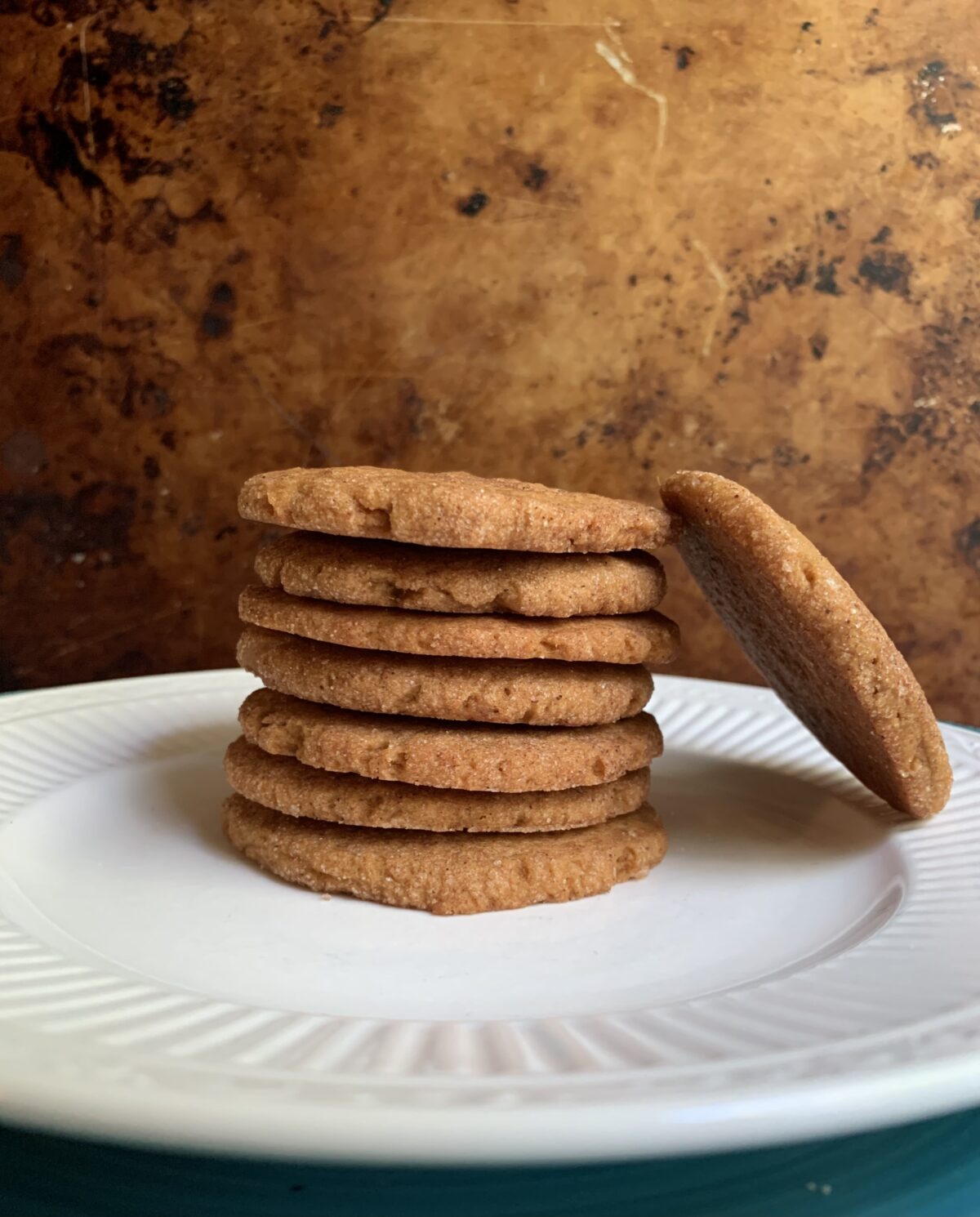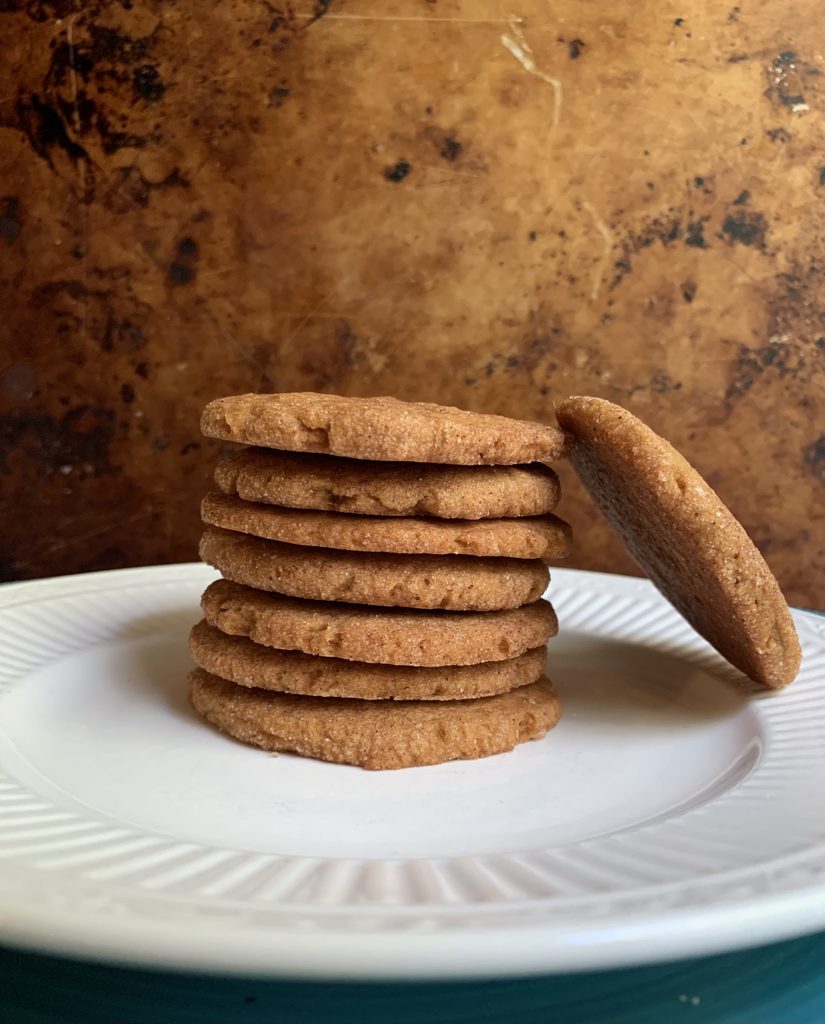
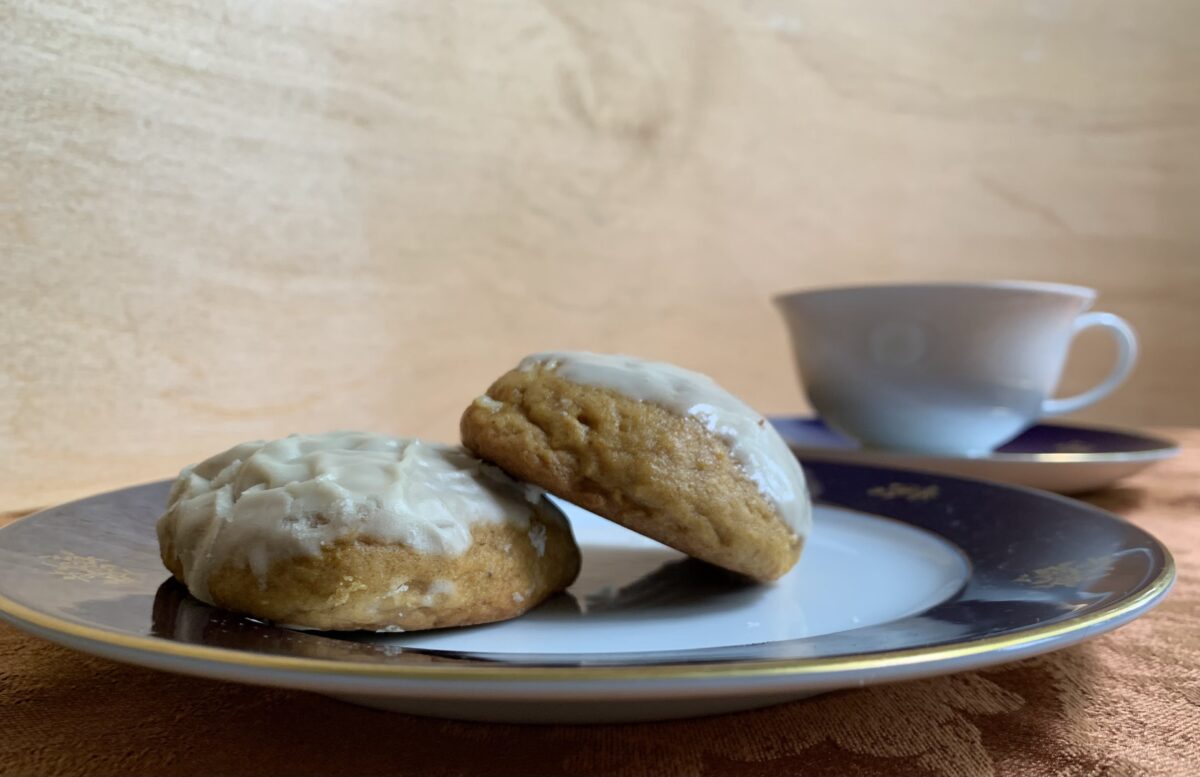
SOFT & CAKEY PUMPKIN COOKIES

Iced and spiced, soft and caky pumpkin cookies

Look up “pumpkin cookie recipe” and two versions will pop right up: chewy and cakey. Our recipe for Chewy Pumpkin Cookies already went up. Both of us are on Team Chewy, so that one got priority in the testing process. But you know what? Scott asked our ever-eager cookie testers about both, and the vote ran very close to 50/50. Team Cakey voted as long, loud, and often for their favorite as the loyal adherents to our favored party. Chewy-biased as we are, we have to agree our neighbors have a valid point. These Cakey Pumpkin Cookies are very, very good indeed. We will definitely make them again when the right opportunity appears.

NOTE FROM KATE: This cookie tastes less sweet than the chewy one – until you ice it. Whether you single-dip or double-dip your cookie in the icing will determine the sweetness level of every bite. If you wish to freeze these, and they will go stale faster than the chewy ones, there’s a definite way to get the best results. First, let the icing dry completely and/or freeze them individually on a baking sheet (recommended if you’ve done anything decorative). Then nestle the dried-icing cookies in a container with a tight-fitting lid, placing baking parchment between each layer. And remember: icing-destructive sticking will definitely occur if you put the cookie into their container while sticky, but it can occur as they thaw. Best to separate the frozen cookies earlier than later.

Get The Moisture Out!

Pumpkin keeps your cookies moist. That’s all to the good. Wet pumpkin? That creates unpleasant, pumpkin flavored snails. Moral of the story?

Get the extra moisture out!

Chewy Pumpkin Cookies do this by cooking the pumpkin in browned butter until the water is gone. That isn’t an option for this recipe, which starts with creamed butter (i.e., softened butter beaten until white, light, and fluffy). That means you need to dry the pumpkin out by hand.

We tested a few methods and ended with a clear favorite. First, it really helps to start with canned pumpkin because that’s already much drier than what you’d serve as a side dish. In fact, you’re going to find it in the baking aisle rather than with the other vegetables because the companies assume it will be used for some kind of pie, and don’t want customers to wrongly assume it’s ready to eat as-is. But pie recipes call for barely-damp pumpkin. That’s what is in the cans. Cookies want all-but-dry pumpkin.

We get there by putting the pumpkin in a fine mesh sieve and then blotting both the top and the bottom with some paper towel. Then we stir it with a spatula, squeeze out the paper towel, and repeat until it’s no longer absorbing a matieral amount of water.

This process taxes several mix-and-blot episodes, but it works and is definitely worth the time. Pro Tip: wring out the wet paper towel and keep reusing it until most of the water is gone. Then switch to a clean towel in order to see the moisture better for your final blottings.

NOTE FROM SCOTT: Blottings? Is that even a word? Some baker’s equivalent to etchings? “Hey Babe, how about stopping up to look over my blottings…” Something tells me that particular pick up line might not work as well as the other.

NOTE FROM KATE: See what I have to put up with?

The Recipe Could Not Be Simpler Once You Remove The Excess Moisture
Have you got your pumpkin basically dry? If so, you’ve got this nailed. The rest is easy.

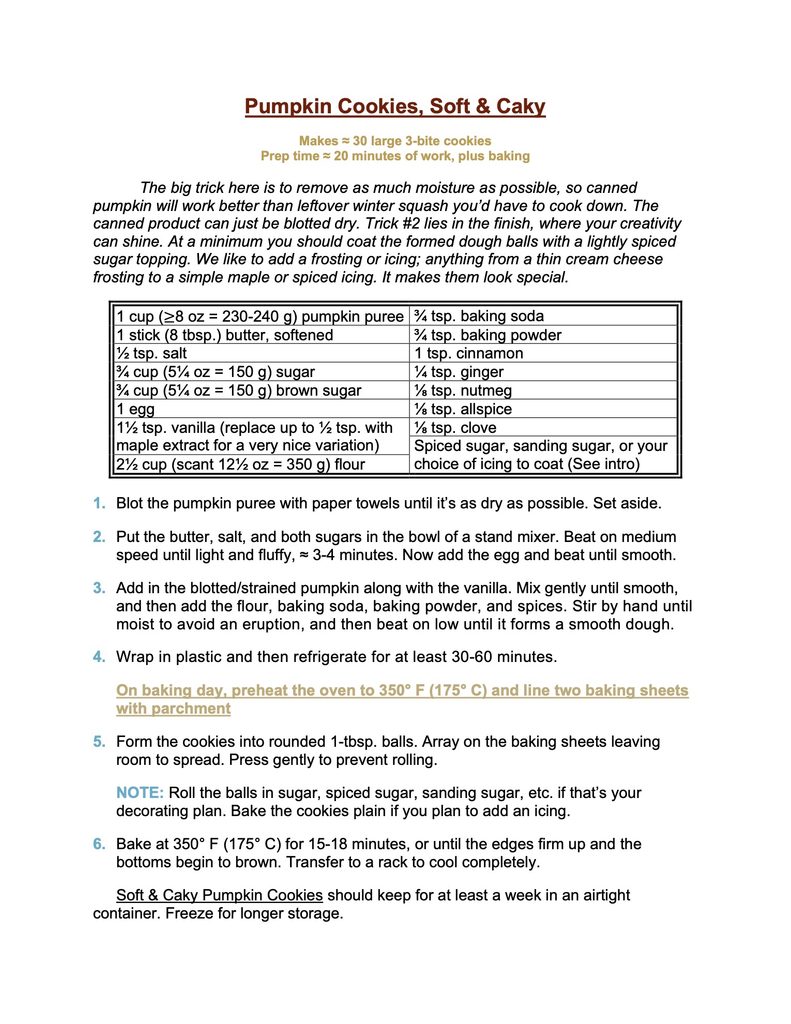
Beat the softened butter with the sugars (white and brown) until light, white, and fluffy. I.e., “cream the butter” if you speak bakerese. Then beat in an egg until smooth. Follow by folding in the pumpkin along with some vanilla (or better yet, some vanilla spiked with maple). Now stir in the dry ingredients, taking care to avoid an eruption, and then refrigerate until the flavors meld and the texture sets into a consistent dough.

Done.

Baking that dough is even simpler. Portion onto baking sheets and let her rip.

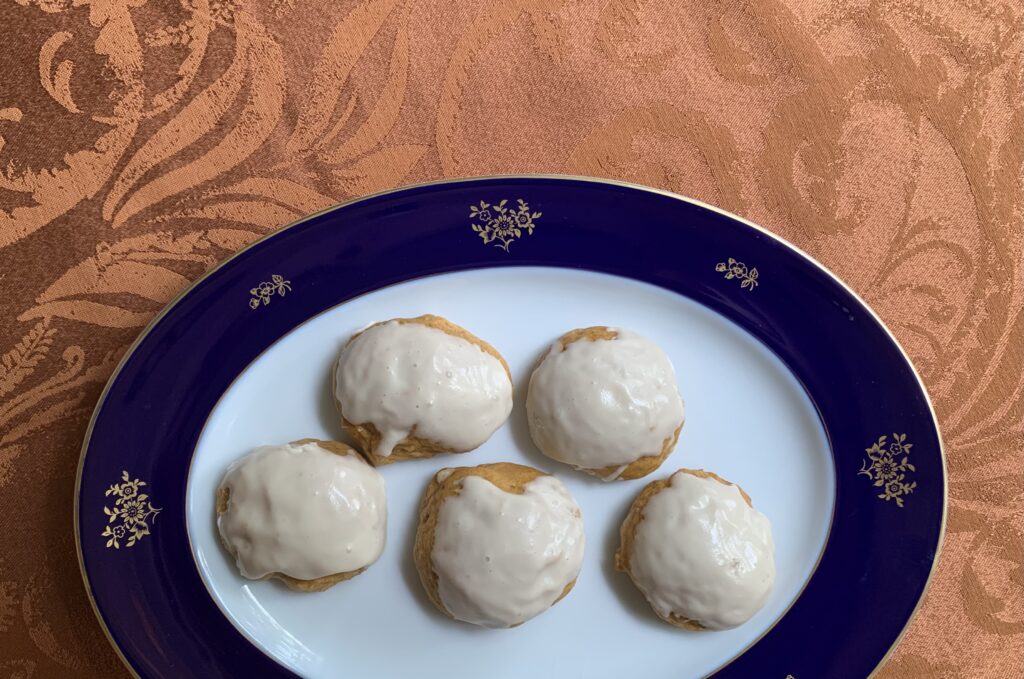
To be fair, we inevitably add a third step, but that’s not exactly a challenge! Depending on the mood of the moment, we’ll either (a) roll the pre-baked cookie balls in spiced sugar like we do for Chewy Pumpkin Cookies, or (b) giving them a quick maple icing when they’re hot out of the oven.

Then comes the hard part. Cool completely before you dive in.

NOTE FROM KATE: This cookie contains two intensely hygroscopic (i.e. water-attracting) ingredients: pumpkin, and sugar. The pumpkin water gets stabilized as Scott described above, and baked, so that part is handled. The sugar in the icing, however, is a bit different. If your weather is humid, AND if you leave the cookies sitting out, the skin on the outside of your lovely icing will pucker up like a bulldog’s face. It’s still good and it still tastes the same, but it can change your expectations a bit.

I found that these cookies refrigerate well, which prevents the icing puckers. But don’t stop there. I also found that smooth icings make this cookie ideal for extra decoration. A colored drizzle line over the off-white icing would look great! Or you could decide that the puckers are a feature rather than a bug, and give the puckered icing a wash of thin, colorful icing for a stone-like effect. (See what I learned in pottery class?) In any case, I doubt the puckered icing will be an issue during the colder months, when our Pittsburgh humidity drops like a rock.
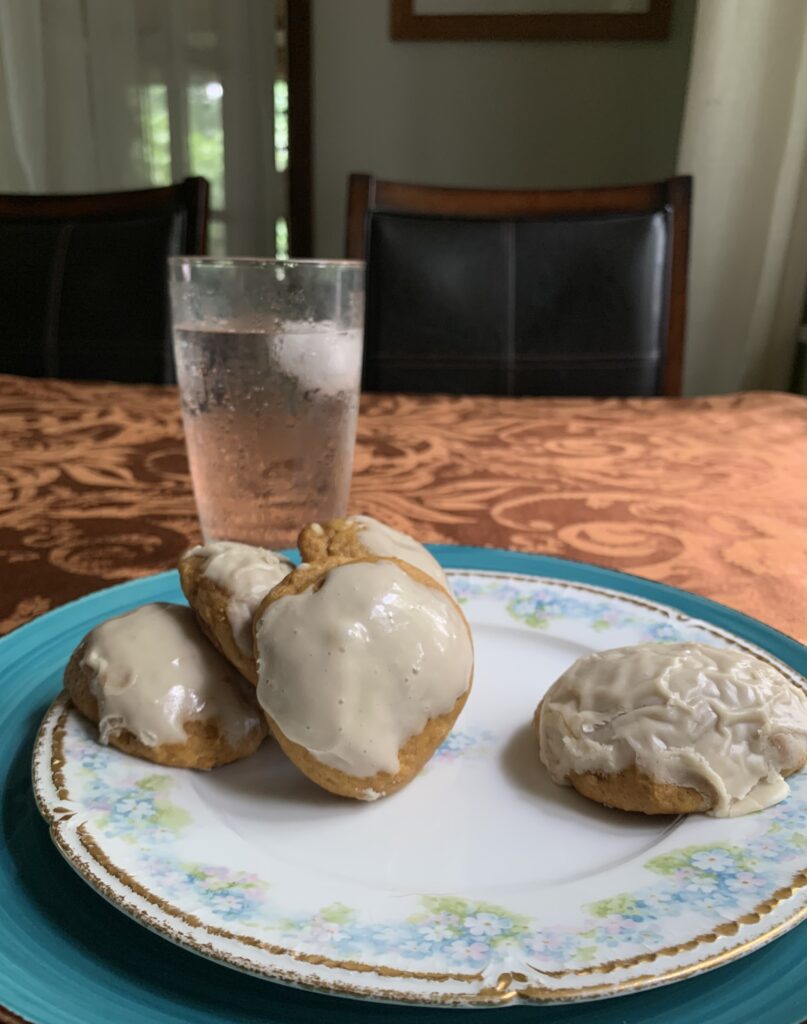
The Golden Rule Of Pumpkin Cookies: Water comes OUT before you make the dough. If you want water, have a glass AFTER they’re baked. Tea is pretty good too, of course.

NOTE FROM SCOTT: So much for my effort to make a pretty swirl in the icing. [Shakes head]

Conclusion

Be they chewy or cakey, pumpkin cookies are a simple, homey, and satisfying project. Half the world will prefer the one, and the other half the other. Make the one that sings to you.

Enjoy!
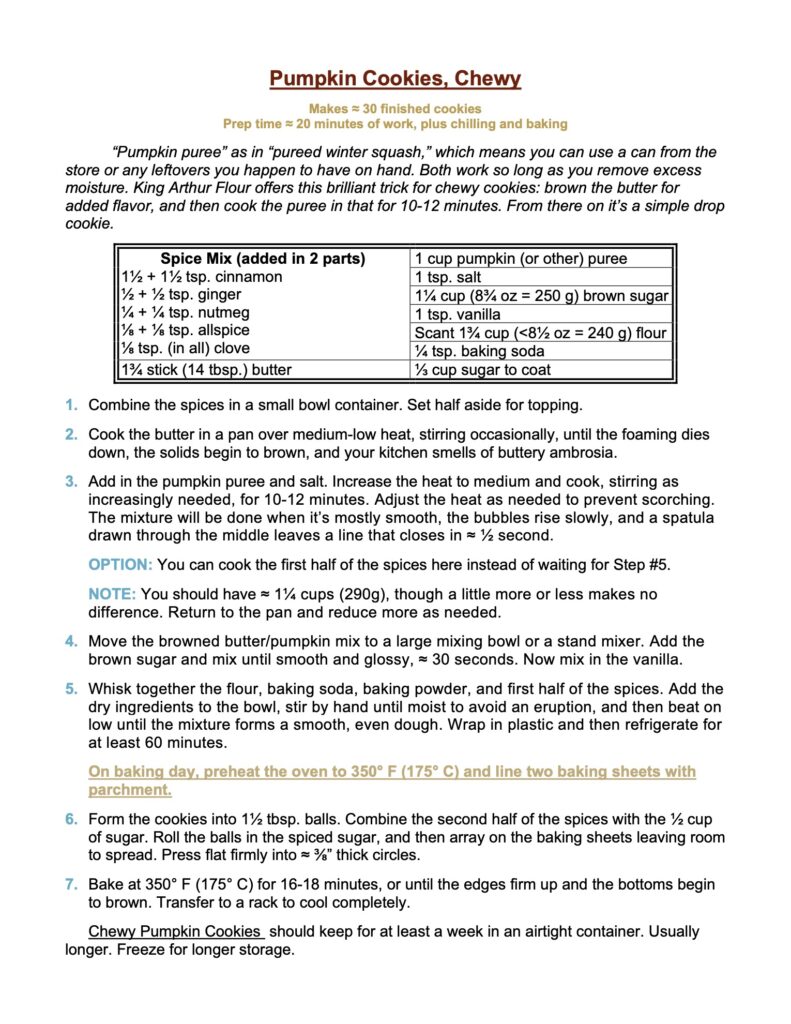
WORLD’S BEST CHEWY PUMPKIN COOKIES

Browned butter, pumpkin, and the child of their love

Pumpkins aren’t just for Halloween!

Pumpkin cookies have become an American classic. European readers who wonder why need do so no longer. The pumpkin flesh inside the dough ensures the cookies hold their texture for a very long time, and also adds a surprisingly elegant flavor with character and depth that play against a gentle spice mix. They are just plain good.

Pumpkin cookies come in two kinds: there is a cakey product similar to many Italian cookies. That recipe will follow in a week or two. We like to add some maple icing to make it extra unique. And then there’s this version: a soft, somewhat chewy drop cookie with a deeper flavor that stands on its own. Both cookies are wonderful for eating out of hand, as well as for coffee and tea. This one you can also dunk!

NOTE FROM KATE: This might be my favorite casual cookie, especially in the fall! But I do have something to add about my new hobby horse: different kinds of flour. A high-gluten bread flour would yield a very different cookie in this case. For comparison, I tried our recipe with a lower-and-weaker-gluten Einkorn flour. They came out flatter, which is not a surprise, but they also had a maltier, more complex taste that complemented the flavor profile. You might not think it, but this is a case where the flour’s actual flavor can make a big difference.

I have now set out to test several of our favorite holiday cookies with Einkorn, sometimes with the addition of rice flour, for those of us who do better on a more low-key gluten approach. Stay tuned.

Hats Off To King Arthur Flour.

King Arthur Flour is one of the oldest continuing millers in the U.S. Some sources say it’s the oldest. But the company really came into prominence for us in the 1980s when it led the nation toward new, higher quality flours and production methods. The company website includes some very good recipes too; including the inspiration for our approach to Chewy Pumpkin Cookies. We’ve tweaked their recipe a bit, but credit should go where credit is due. Here’s a tip of the hat and a courtly bow to Ms. Sarah Jampel. Well done.

The Big Trick To Pumpkin Cookies.

Pumpkin in the dough will keep a cookies moist, but it can also make them downright wet. Even unpleasant. Thus every good recipe for pumpkin cookies starts with an all-important first step: drive off as much water as you can. Wet pumpkin in your dough is B.A.D.

Honor thy father and thy mother. Love thy country. And get the [ahem]ed water out of thy pumpkin before turning it into a dough! Thou hast been warned.

Cakey Pumpkin Cookies start with creamed (beaten until white and fluffy) butter. So that recipe starts by putting a can of pumpkin in a fine sieve and then blotting it with paper towels top and bottom. Stir and repeat until basically dry.

Ms. Jampel found a way to skip that for Chewy Pumpkin Cookies. Dense, chewy cookies often start from melted butter anyway. That was going to be our initial plan. She went one step further and asked, “If water’s the problem, why not brown the butter instead of just melting it?”

Full pause. Execute face palm maneuver. “Doh!”

So we tested it, and here’s your answer: “Brown the butter and your cookies will improve in every way.” Hence recipe instruction #1: Cook enough butter to give you ¾ cup (6 oz = 17t ml) of liquid ambrosia, and then cook the pumpkin in that heavenly substance to drive off all the extra water. Simple.

NOTE FROM KATE: Oh, I totally agree. Especially with Einkorn flour! This approach gives you a nice browned edge and a cookie that’s fabulously rich and yet kind of wholesome at the same time.

NOTE FROM SCOTT: “Kind of wholesome?!” It’s a cookie! Virtue points and cookies are not a good match… [Ow!]… Of course dear. Yes dear. Never yuck the yum.

A Note On Substituting For The Pumpkin

We happened to make both acorn squash and butternut squash over the weeks when this cookie was on the development schedule. Scott claimed all leftovers to test as supplements/substitutes for canned pumpkin.

  • Cookies From Leftovers, Lesson #1: What you make for dinner has FAR too much moisture to ever blot dry like you’d need to do for the Cakey Pumpkin Cookies. But it will dry out if you toss the leftover squash into browned butter and cook it until the extra water is gone. Leftovers work in the chewy version.
  • Cookies From Leftovers, Lesson #2: The flavor was exquisite. Better than canned pumpkin by far, at least in my opinion. But the texture was a bit problematic, and required a quick blitz in the food processor or blender. Problem solved. Yes, that creates an extra thing to clean, but c’est la vie.

SNARK FROM SCOTT: Kate thinks the extra flavor wasn’t worth the effort, but she did no complaining about the cookies. You know: the “kind of wholesome” cookies now made extra virtuous by recycling food from an older meal.

NOTE FROM KATE: Make that “very wholesome, and practically a health food.”

  • Cookies From Leftovers, Lesson 3: It’s a little hard to calculate the volume of pureed squash you’ll end up with, and this is a recipe where volume matters more than weight. It’s smart to have a can of pumpkin ready on the side in case you need to add some in.
  • Cookies From Leftovers, Lesson 4: I worried about whether the butter in our initial dinner squash would throw off the ingredient ratios for the cookie. It wasn’t a problem.

Add The Spices In Two Parts

The first part of the spice mix goes into the dough during either the cook-the-pumpkin-down stage. If you forget, the mix it all together stage works almost as well. The difference between the two was extremely subtle.

The rest of the spice mix works best as a spiced sugar coating on top of the dough, though again: adding it before baking did not change the result in a really noticeable way. Take your pick of method.

Just Dump And Stir; But Avoid That Egg You’re Thinking About

Step 1: Cook the squash/pumpkin in browned butter. Step 2: Cool enough so your baking soda won’t trigger, and then mix everything together. Simple drop cookie 101.

The only question came with whether to add some egg into that dough. A clear majority of online recipes include at least one and often two egg yolks. We tested both so you won’t have to. The conclusion? Don’t bother.

Whole eggs turn out to be essential for cakey cookies because they help to create the right texture. General baking principles say that egg yolks fit well in denser baked goods. So the idea of using egg yolks for this recipe makes sense. But tests proved that the pumpkin itself adds all the structure you needs. If anything, the egg yolks got in the way.

Working On The Spice Mix

Obsessively compulsive bakers, like a certain husband in a certain house that produces an excessive number of cookies, will insist on making every spice mix from scratch. And long suffering wives in such households learn quickly that rolling ones eyes does nothing to make the process smoother. [The foregoing speaks in generalities only. We, of course, have no direct experience in this regard.]

NOTE FROM KATE: Just go with it, friends. When dealings with husbands who describe commercial spice mixes with words like ‘heresy’, one quickly learns that helpful efforts to streamline a process will only prolong it. If the cookie will be the same anyway, why wait longer than you have to? 🙂

Ahem. But it is only fair to note that this particular mix is a standard pumpkin pie formula downsized to preserve the buttery, caramely, pumpkin notes at the heart of the flavor profile. The actual spices you choose matter less than using the right amount to achieve that balance.

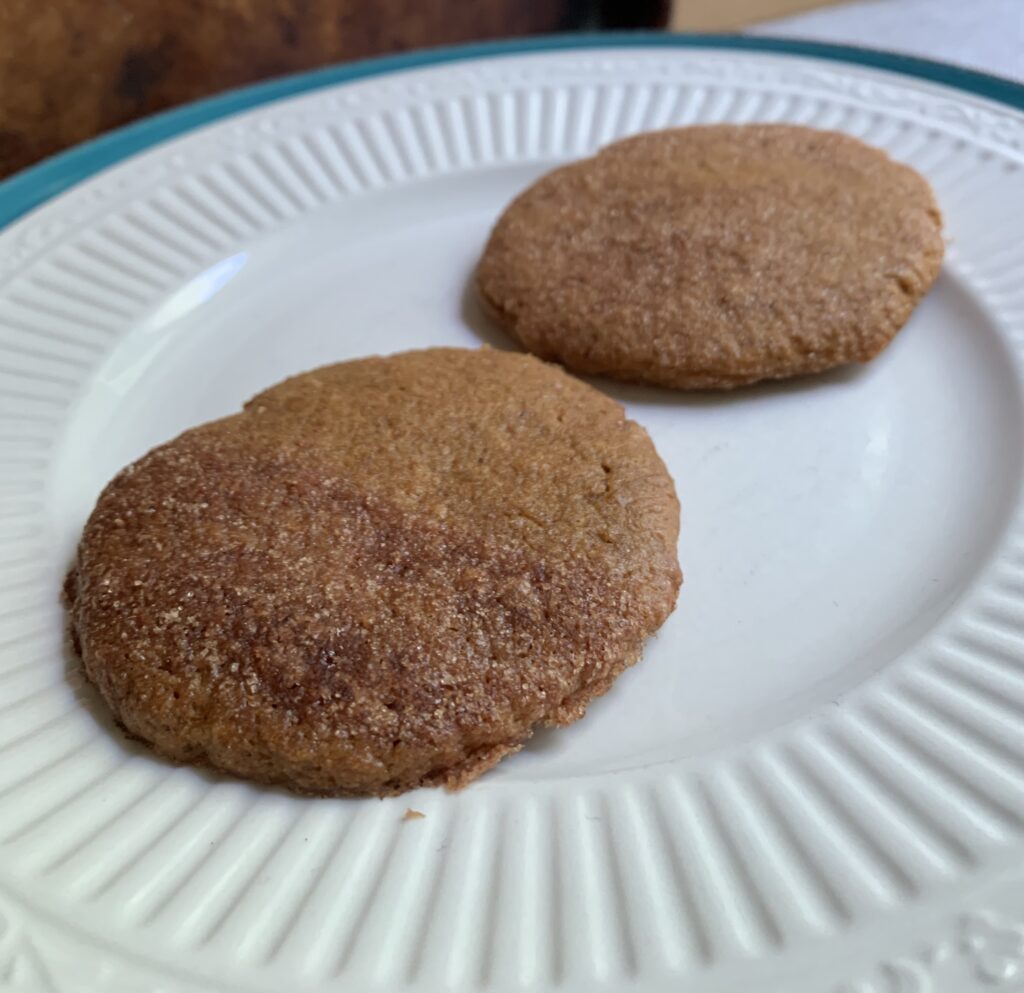
Einkhorn flour (half-spiced) on the lower left.
All purpose flour (unspiced) on the upper right

Conclusion

Every person in our household, and our extended group of tasters, had the same reaction to this cookie. It’s homey; it’s comfortable; it couldn’t go better with a cup of coffee; and the presence of an actual, real life vegetable means you can enjoy them for breakfast without any guilt. Or at least maintain a straight face when you say that to a third party. It’s a cookie everyone will like, no one will dislike, and lovers of the genre will view as a masterpiece.

The only drawback comes down to faint praise. Make these for your kids. Make these for the cookie raffle. Make these to share with all and sundry. And make these to keep in the freezer for times when you’ve earned that limited-guilt treat to go along with your coffee. There isn’t a cookie out there that defrosts better.

The only place they might not fit? An elegant holiday tray. Chewy Pumpkin Cookies are folk music played on a fiddle. December Extravaganzas involve fancy violins and string quartets. At least in our house.

Enjoy!