JOE FROGGERS, Americana From The Age Of Sail

A revolutionary war cookie from coastal Massachusetts.

Imagine an arm around your shoulders and friendly voice saying, “Hi. I’m a cookie.” Then add in this quote from one of our tasters: “That’s the biggest, softest, easiest going ginger snap I ever tasted! Or is it gingerbread?” And then triangulate with sailors on a clipper ship singing in the sunlight, “Ho, ho, ho and a bottle of rum!” Somewhere in that intersection you’ll find Joe Froggers, a cookie created right after the Revolutionary War at a Marblehead Island inn outside of Boston, Massachusetts.

The Cookie On Its Own

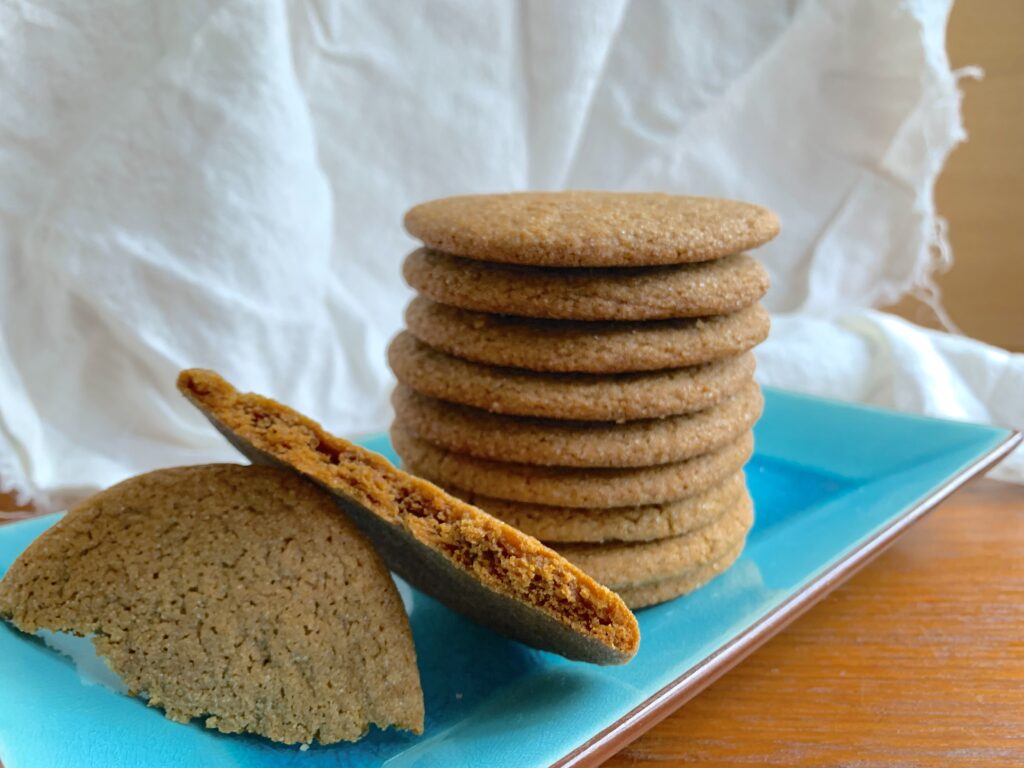
Joe Froggers are a soft, gently spiced molasses cookie with a nice finish from a tot of dark rum in the dough. The cookies were designed and intended for grownups, but they’re also as kid friendly as a cookie can be. The texture is plush and easy; the flavor simple, familiar, and a bit raisiny from the molasses; and they’re about the width of a small child’s face (4″-6″ across), which guarantees the ‘eyes light up with delight‘ reaction.

The earliest versions were made with lard. Most modern recipes call for shortening. Butter tastes best of all, of course, but you give up a bit in the way of texture. We make them with a 50/50 mix of butter unless there’s a special reason to be historically accurate.

NOTE FROM KATE: I felt a need to be historically accurate, so Scott made the first batch with lard. This beautiful cookie is friendly and cheerful, but I felt like I had to work against the unfamiliar flavor of lard after the third bite. This particular fat’s texture sticks to the mouth a bit more than butter or shortening. Not a familiar sensation. Next time I’d go with half lard and half butter. Despite its undeniable culinary advantages, I don’t particularly like shortening, as it’s an ultra-processed food, but YMMV. I can see this one becoming a family favorite!

That’s about all you need to know. It’s a big old, friendly, arm around your shoulders cookie.

“Joe Froggers?” A Taste Of History

The general outline of the story is well known and documented, with its own page at the Marblehead Museum website. The story goes like this.

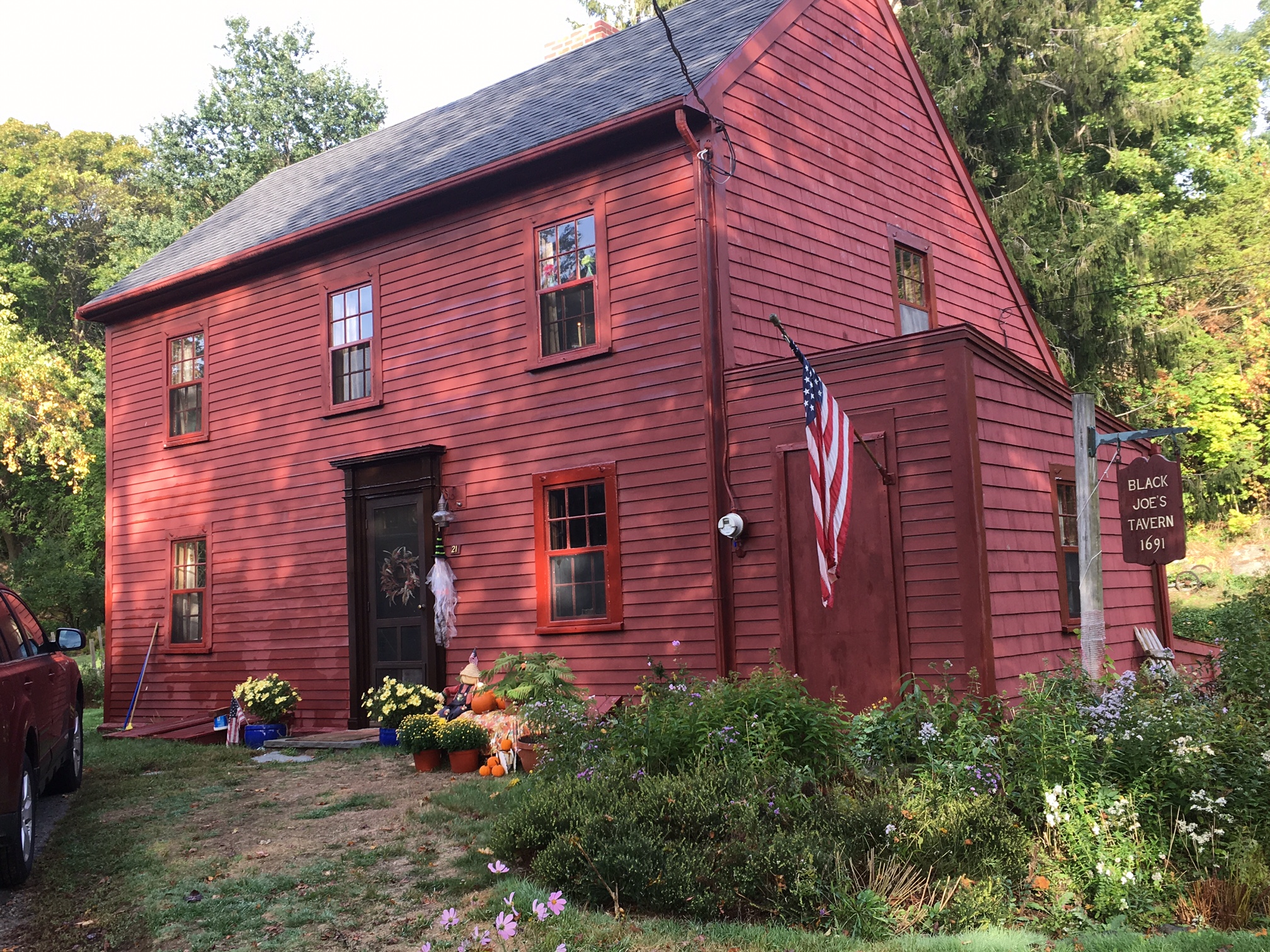
Once upon a time there was a Revolutionary War veteran named Joseph Brown, son of an enslaved, African-American mother and a Wampanoag father. He and his wife Lucretia opened an inn on Marblehead Island after the war, right next to a local frog pond.
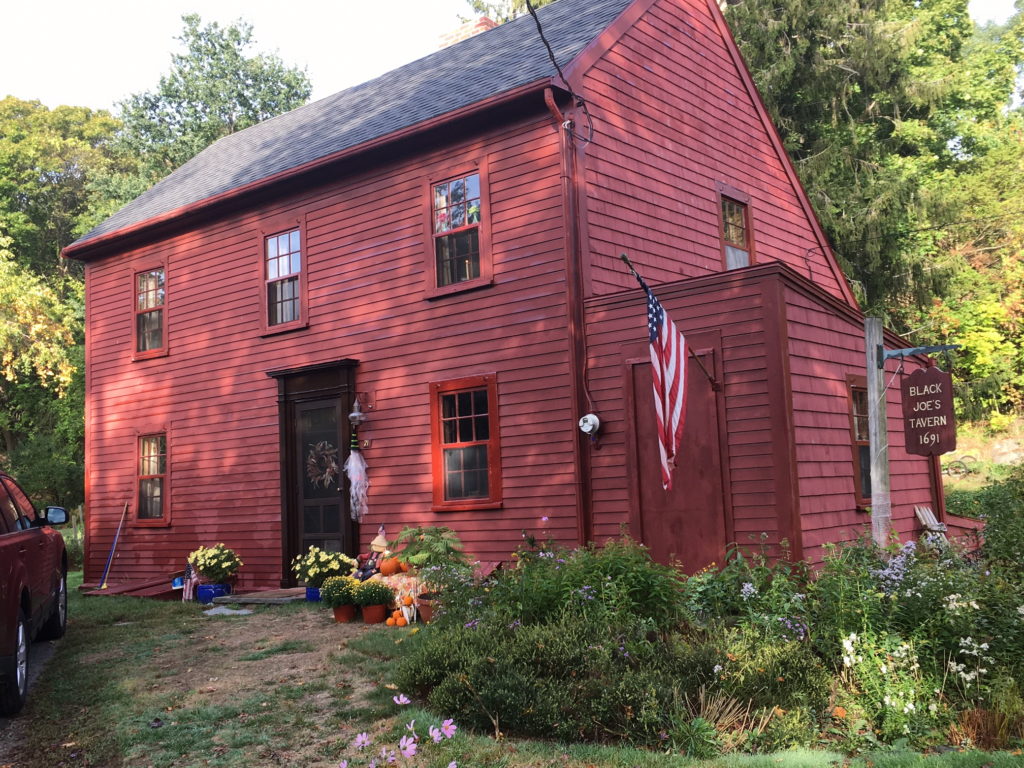
Photo, credited to the Smithsonian Institution, found at MarbleheadMuseum.org.

Lucretia invented the cookie, and it became something of a sensation. They’re not only delicious, but they also have enough molasses to keep for a very long time. The revolutionary era Massachusetts economy centered on fishing, trade, and other maritime activities. Marblehead was a major seaport and shipbuilding center, so much so that it’s also known to history as “the birthplace of the American navy.” That fame would only grow as the young nation built its vast fleet of clipper ships.

Joe Froggers (and Hermits) quickly became the treats of choice to send off on long voyages around the Atlantic, and later around the world. Small, tasty, long lasting, and relatively inexpensive because much of the nation’s molasses and rum trade came through Massachusetts ports.
The name itself is more debatable, with every source we’ve found claiming to have the one true answer. It’s certainly related in some way to the pond out back. And the “Joe” part certainly comes from Joe Brown. Others note that Lucretia Brown (“Aunt Creese”) originally made these on a skillet, like extra chewy pancakes, and everyone who’s done such things will know how often the neat, round shapes you’re after come out looking vaguely like a frog. Others argue for the lily pad idea.

Decide as you like. This is me hoppity hop hopping away from all such debates. It’s probably some combination of them all, plus the fact that the name itself is so fun.

Moving on, Brown’s Inn grew into an immensely popular community center for celebrations of all kinds. Joe became the town fiddler, with his own set of local legends. And Lucretia’s breads, buns, cookies, and cakes were the best one could find. The couple eventually grew into local legends in their later years, and then expanded into lore and myth after their deaths, with the details ebbing and flowing with whoever told the tale.

For our purposes the bottom line is this: “Black Joe” and “Aunt Creese” were real people, who owned a real inn, and really were well known and loved across the island of Marblehead, Massachusetts. Lucretia Brown really did invent and popularize the cookie now known as Joe Froggers. Joe Froggers really did become a “thing” both during and after their lives, traveling around the world on the Bay State and American Navy fleets. And they remain a “thing” across eastern Massachusetts even now, in the 2020s.
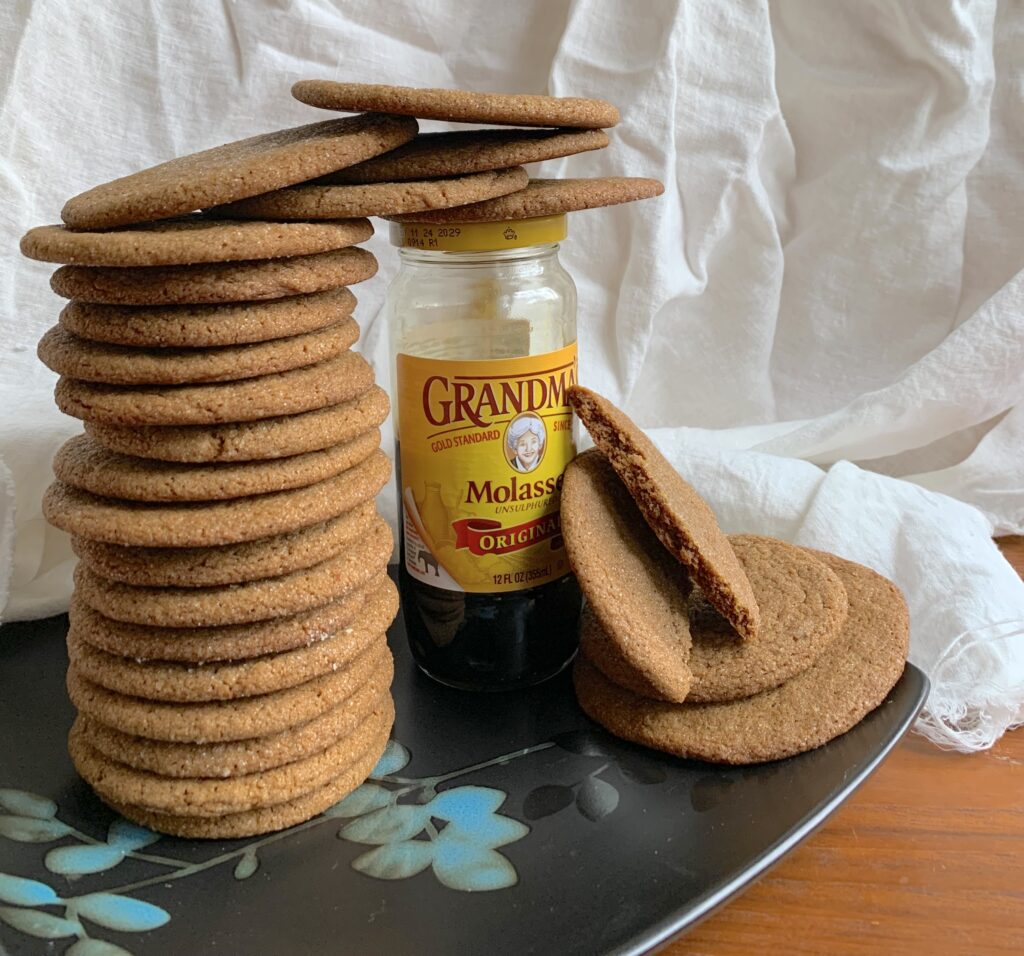
Many cities around the country have “their” cookie. This is the one belonging to Boston – complete with the inevitable carping about how Boston undeservingly managed to absorb all of maritime New England under its umbrella. You’ll make a friend if you acknowledge that injustice to a native of Marblehood, Lynn, Gloucester, or the other seafaring centers of the era. Just acknowledging their claim will make a difference. And Bostonians won’t care in the slightest. It’s all Greater Boston from their point of view. They’re city folk.

An Aside (Sort Of) – The Great Molasses Flood Of 1919

I spent a few hours walking Pittsburgh’s Strip District in search of enough testers to keep us from devouring dozens of these huge cookies on our own. It was a real danger! We each accounted for at least half a dozen when the other wasn’t looking because they are heartbreakingly moreish. The molasses flood must have come up in conversation close to ten times.

It has no direct connection to Joe Froggers beyond “Massachusetts” and “Molasses,” but it’s one of those fascinating events that everyone’s heard about but never remembers until prompted. And then they remember how much they love the story in a guilty kind of way. 20 people drowned in molasses?! The smell lingering on summer days for decades?! Massive and enduring changes to building codes across the nation? Baking ingredients shutting down a city?! Wow.

This goes to a link from the city website Boston.gov if you want to refresh your memory. Here is a fun Wikipedia link that tells the story better, albeit with less authority.

Notes For Fellow Bakers

  • The rum adds an interesting note you don’t really taste unless you know it’s there. But it does matter. First, because it’s a part of the history, and that’s part of what makes this cookie so fun. But also because the rum rounds out the spices to create a whole that isn’t quite gingerbread, and isn’t quite ginger snap, but something unique within the family.
  • Rum extract should work just fine, though we haven’t tried it. We used Gosling’s Black Seal Bermuda Dark Rum because we also keep around the house just for drinking. Good stuff!
  • The fat makes a difference because you can taste it in the final product. Lard and shortening add something to the texture, however, which is why we recommend a 50/50 mix of butter to other. But it’s truly up to you.
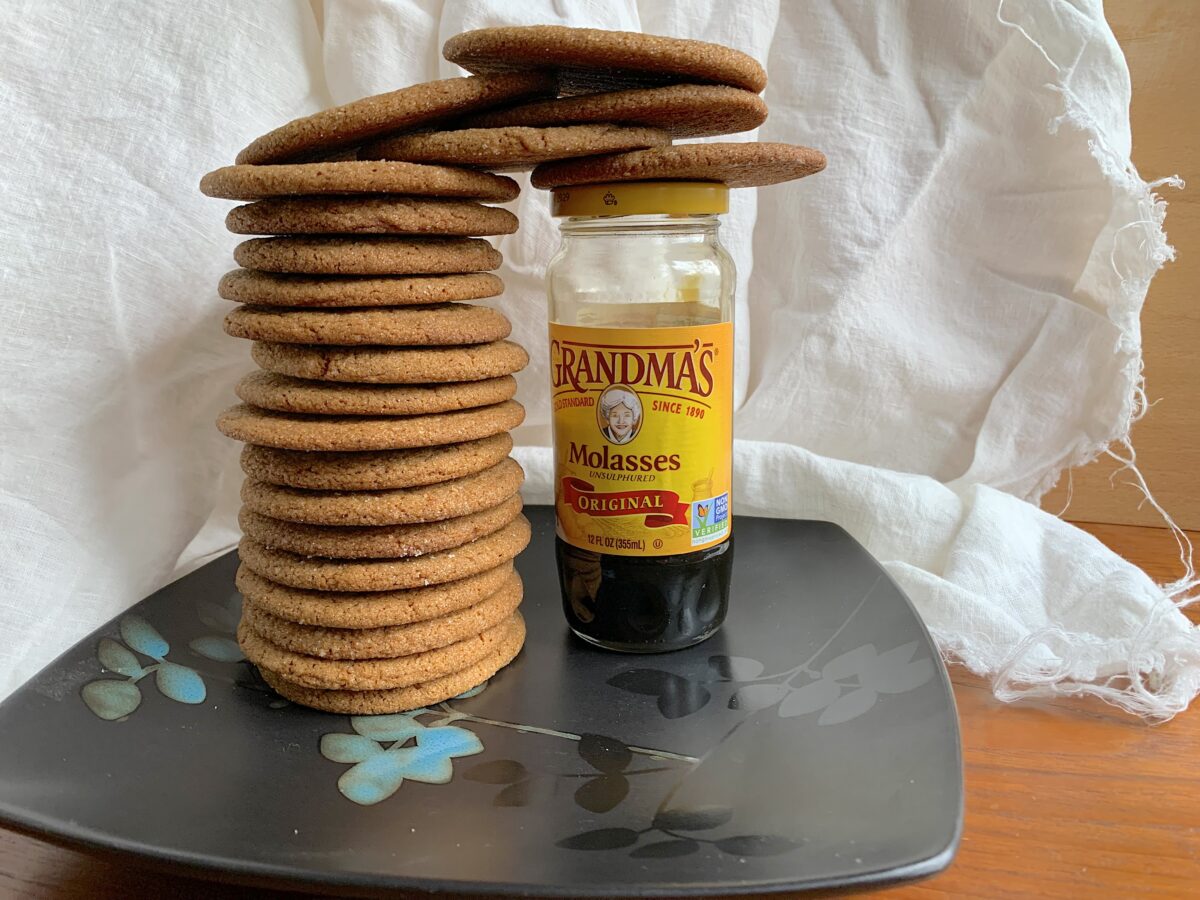
  • Purely by chance, I happened to use up my old jar of molasses while making a test recipe. That jar became the perfect vehicle for combining the (topped off) cup of molasses with the hot water and rum. Put it all in the jar, screw down the lid, and shake until it’s all smooth and liquid.
  • This is a really, really sticky dough that’s just over the line from being a batter AFTER it cools and sets in the fridge. Account for that as you get the dough mixed. You want just enough flour to reach that point. Any more will start to toughen the cookies. Remember: you can always mix in more, but cannot take any out.
  • Some recipes will merely sprinkle the pre-baked balls with sugar, but we ended up rolling them simply to make the sticky dough balls easier to handle. This is why we removed 1-2 tablespoons of sugar (⅓ oz = 10 g) from full 1 cup usually listed for the dough.
  • You want to press the balls down to keep them from rolling, but there’s no need to really squish them. The dough will spread all on its own.
  • Speaking of which, a golf ball sized sphere is really big compared to what you probably make with other recipes. That is the minimum size for true Joe Froggers. They’re supposed to be big enough that children will gape in awe at the wealth. Skimp if you must, but please do it on purpose because regular sized cookies don’t leave the same emotions in their wake. We fit only four cookies per standard baking tray, with six slightly smaller ones on the final tray because that’s what was left in the bowl.
  • Adding the flour and liquid in stages works best. Everything gets smoothly and evenly incorporated. But it isn’t essential unless you’re working by hand.
  • This is a no-eggs recipe. That isn’t a typo. It’s a feature, not a flaw.

Enjoy!
SWEDISH OATMEAL THINS (“HAVREFLARN”), A Year-Round Recipe

A perfect year-round, super fast cookie for all ages and tastes.

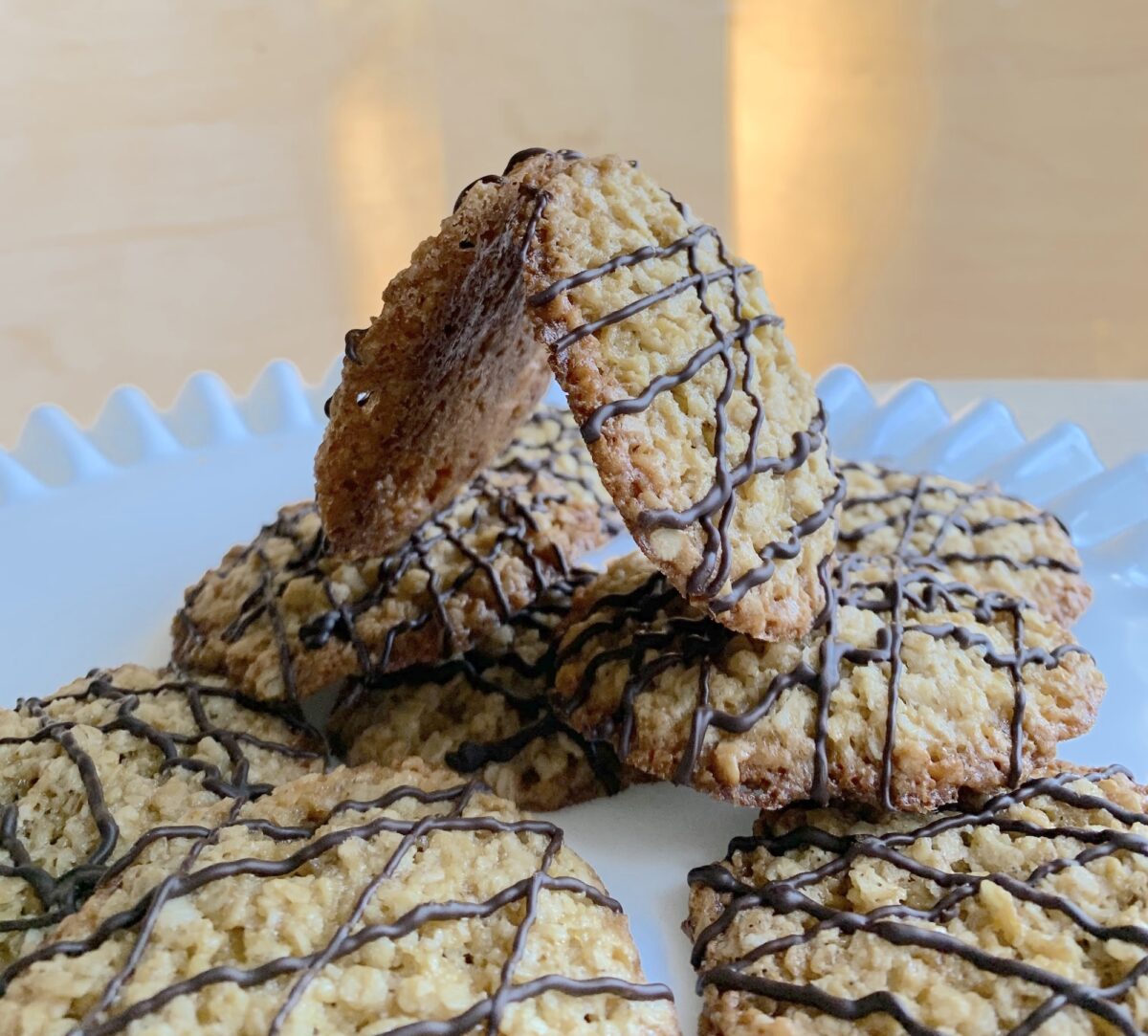
It’s funny how the simplest cookies can be the ones that drive you batty. Scott’s been trying to nail down Tuiles for so long that it’s become a family joke. Oatmeal wafers have been another bane. Until now. These aren’t thin enough to call a proper “wafer” – hence the name “thins” – but they are simple, easy to play with, and utterly delicious. A true year-round cookie rather than something fancy for the holidays.

Click here to see the recipe without the discussion

There isn’t a whole lot more to say beyond “make this cookie, and make it often.” Oat Thins are a classic, relatively bulletproof treat from Scandinavia that is more equivalent to an everyday Chocolate Chip Cookie than any of the fancier Christmas treats.

It’s nailed. Enjoy.

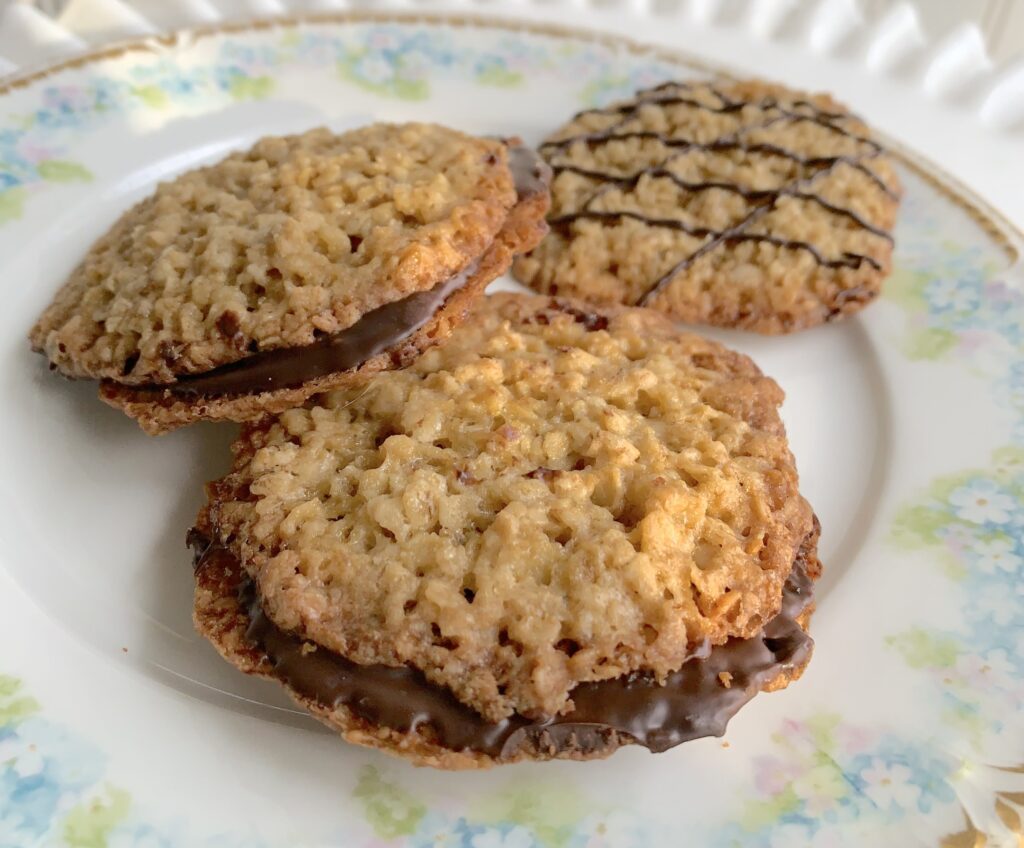
NOTE FROM KATE: I had nothing to do with the baking of this cookie…but I played with the chocolate. The neatest way is to load your melted chocolate into a pastry bag, snip off the tip so you get a thin stream, and make parallel lines across the entire sheet at once. Then stripe them sideways to form the diamonds. To easily make sandwiches, snip the bag opening a little larger, squirt, and squish. As much as I like these with chocolate, I absolutely adore the hit of buttery flavors when these cookies are still slightly warm and pliable!

The most interesting part came when Scott broke the recipe down to put in one of his all-cookie ratio tables. Would you believe that Swedish Oatmeal Thins turn out to be all but identical to our recipe for the deep south’s famous recipe for Benne a/k/a Sesame Wafers? Talk about parallel development!

We’ve now tested the cookies plain, drizzled with chocolate, and sandwiched into a serious, four-bite, chocolate oatmeal sandwich. Every one of those was fantastic. A ten out of ten for good, old fashioned yumminess. The texture is crisp, and stays that way. The flavor has that irresistible caramel/vanilla/oatmeal essence we’ve searched for over the years. And both of those features stay that way over time. What more could you want?

As for ease… wow. This is one of the fastest and simplest cookies we’ve ever come across. No exaggeration: Scott decided to race the clock for our final test batch. He put the oven on to preheat toward 350°, and then hurried to put the dough together and set up the trays.

Ready… set… go. Melt butter; measure out the dry ingredients; stir in the butter; and then stir in the vanilla and egg. Dough done, oven at only 275°. Form balls of dough, array on the trays, and… oven at 337°. The cookies were ready to bake before the oven could finish preheating!

That, my friends, is a cookie that comes together fast. Dump, stir, scoop with a spoon, form into balls, and bake.

Enjoy!

HAZELNUT DROP COOKIES, Simple, Sleek, Elegant, and Awesome

Simple, sleek, hazelnutty perfection

Imagine the esthetic behind Danish Modern furniture: minimal, sleek, efficient, elegant, useful, classically beautiful, and easy to customize. Now take that esthetic and design a cookie to match. We’ve got you covered.

Minimalist: Six ingredients: nuts, butter, sugar, salt, an egg, and baking powder. No more, no less.

Sleek and Efficient: Beat it all together, divide into balls, and bake. There’s no flour to hydrate, and thus no actual need to chill in advance (though I will admit it makes the dough less sticky).

Elegant: How about we kick up the baking temperature to ensure a golden brown, extra-toasty bottom that enhances the basic nut flavor? Clever! And let’s add just enough baking powder to keep the cookie from ever feeling dense or pasty.

Useful: Unexpected guests? Need a moment of self-reward? I’ve yet to meet a cookie that freezes better, and they’re delicious right out of the chill chest.

Classically Beautiful: This is the girl next door of Cookieville, and you wouldn’t be reading this if you didn’t love the type.

Easy to Customize: Want your cookie textured and noshable? Done. Use ground nuts, and remember to bar your door against the likes of my wife. Want something firm but soft, like a shoulder to rest on? Grate the nuts to meal, and do not bar your door because I may be dropping by for a surprise inspection. Want to go all out, and make something that melts on the tongue like almost-liquid flavor? Pulse the grated meal all the way down to flour. Or play with a different nut. Or a mix of nuts. Or… You get the idea.

(A NOTE FROM KATE: I would like to point out that aside from being naturally gluten-free, this cookie is, with the exception of sugar, a “whole food.” Nuts are good for you, eggs are good for you… and why say no to just a bit of sugar? In fact, I predict that cookies such as these will become a new health food trend!)

NOTES ON PROCESS AND PROCEDURE

There isn’t much to say. This really is as simple as it sounds.

(NOTE FROM KATE: To be fair, I did find that the pre-roasted hazelnuts were just a bit too hard for the rotary grinder. Husband + food processor = easy solution.

Do I really need to roast the nuts…? For heaven’s sake, most stores sell them pre-roasted! But if you bought fresh, unroasted nuts, the answer is yes. Roasting develops the hazelnut flavor, which is what you’re after in the first place. Cookies made with raw nuts will work just fine, but the same can be said of furniture no one’s bothered to varnish.

“I’m so confused? Where do I get ground nuts? Or hazelnut meal? Or hazelnut flour? Who carries that?” [Sigh] Start with whole nuts. Then:

  • For ground, put them in a food processor and pulse until you arrive at rough, finely pebbled, ground-nut sand; i.e., the stage right before they start to turn into nut butter. Remember to scrape the sides of the food processor bowl as you go in order to (a) release any fine particles, and (b) check see if you are getting too close to the nut-butter stage.
  • For nut meal, pull out a rotary grater with a middle-fine wheel. Put the nuts in and proceed until you have a light and fluffy meal. Food process coarsely if you need to break down the whole nuts first.
  • For nut flour, pulse the grated nut-meal a few times in the food processor.

Besides, this ability to customize is part of the fun! Some recipes have no room for wiggle. This recipe has wiggle room built into its bones, which is nothing but a plus if your family is anything like ours.

Kate has a strong preference for using ground nuts. She considers that the purest example of what hazelnuts really are, and a nice change from all the shortbreads of the world that melt in the mouth without thought. Yours truly is a softaholic. “Melt in the mouth” is a good thing for me, though I will grant that this cookie benefits from the rustic appeal of nut meal rather than whole scale flour.

In a pastry shop, for elegant tea time nibbles? Okay, now we’re back to proper nut flour, probably with each cookie halved in size for the sake of proper, lace linen daintiness.

You cannot lose. It’s all about how you choose to win on this particular day, for this particular situation. Asset, not hurdle.

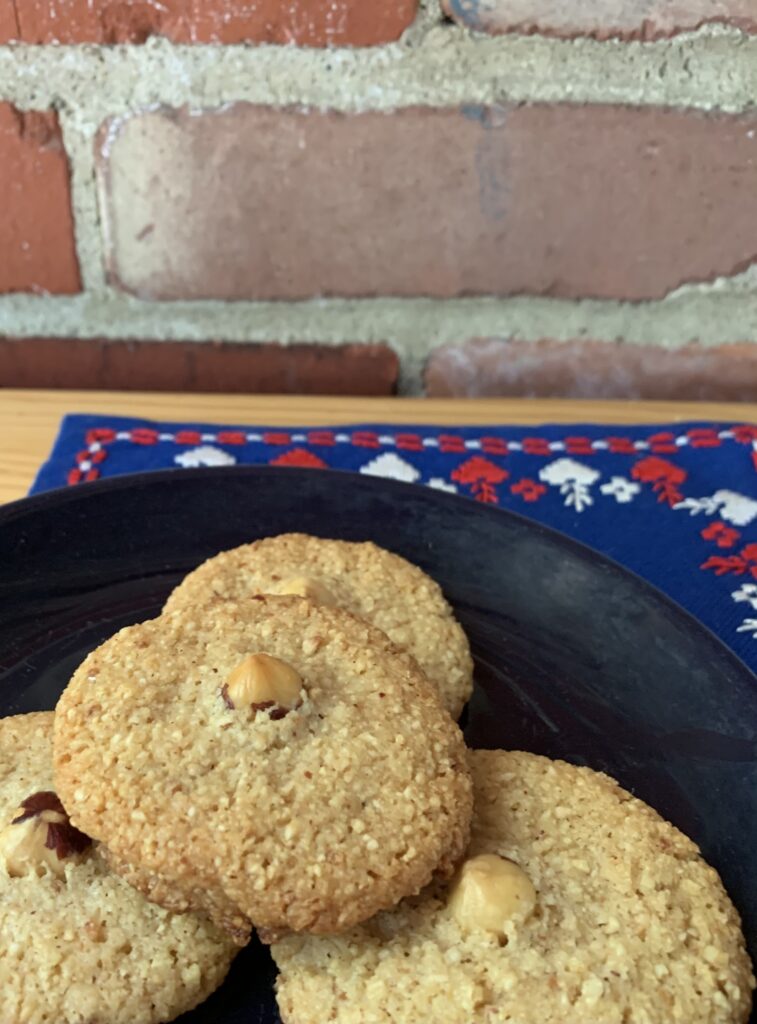
(NOTE FROM KATE: I enjoyed the coarser texture of the machine-ground nuts for its rustic appeal. They look good, and the one hazelnut reserved for the top is very cute, albeit a bit fussy to position nose-up. I admit, however, that fine-textured hazelnut drops would be just as lovely, yet… slightly different.

Here is some good tricks to keep in mind:

  • We don’t use cookie scoops (not enough room in the drawers), so I like to weigh a few dough balls until I have the size right. It keeps a consistent result every time.
  • When forming, give each ball a gentle squish with the heel of your hand to prevent rolling, and garnish with one hazelnut each. These nuts have a pointy “nose,” which I like to aim in the same direction every time.
  • If you want a fine nut meal, start with raw nuts, then toast the flour on a cookie sheet in the oven at 400 degrees Fahrenheit for 4 minutes. Pull out, stir gently, then toast for another few minutes until its scent JUST begins to develop.
  • Unroasted nuts blanch better, so you will have tidier nut toppers. I tried blanching store-bought roasted nuts and almonds, but to my surprise, the skins wouldn’t slip off!

The big note from Scott? At some point you are going to make the dough and then wonder, “Maybe I should add in some vanilla, or spice, or a tough of extract…” You can, and it will be good, but do us a favor and try it straight up the first time. Lilies look best before they’re gilded.

In all honesty, I very seriously considered a preemptive addition of vanilla before our first test batch. After all, vanilla and hazelnut have a historic love affair, and the dough didn’t have as big a flavor hit as I imagined it would. She Who Must Be Heeded prevailed on me not to, and I’m glad to say she was right. The high temperature oven triggers a lot of browning on the bottoms, which adds the exact thing I had been missing.

CONCLUSION

These really are the Danish Modern of cookie baking. Minimal, sleek, efficient, elegant, easy to customize, and absolutely luscious. Plain old cookies just don’t get any better.

Enjoy!

PUMPKIN PIE SPICED SNICKERDOODLES – The American spice cookie with the American spice mix

Heritage Cookies of the Old and New World contains a whole section on spice cookies, with a long set of recipes for the spice mixes alone. The idea is simple. Find the spice mix you like, acknowledge the regional roots for that combination, and then use the mix willy nilly in refrigerator cookies, snaps, molded cookies, and whatever else you choose to make.

Bing, bang, boom. Simple as can be.

I always forget how good these are until I make them again, and say “Wow.”

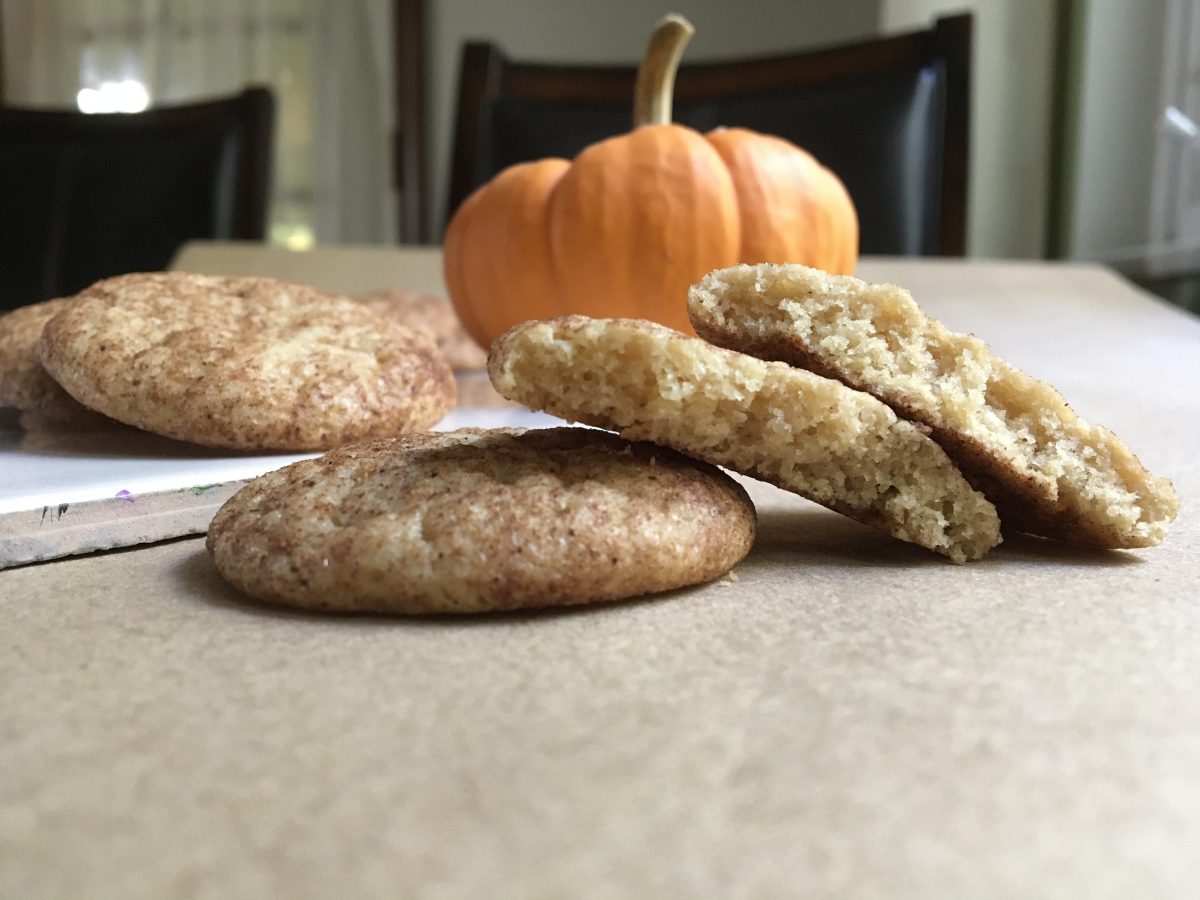
America’s signature spice cookie has to be Snickerdoodles, an extremely simple drop cookie made purely with cinnamon. No spice mixes for us! Until the last few decades, that is. Writing in 2021, I can certify that Pumpkin Pie Spice has become an annual harvest event every bit as common as Jack O’Lanterns in the yard. Why fight a good thing? Here is our version of this now-ubiquitous spice blend, along with a variation on our published recipe for Snickerdoodles.

Please Note: We aren’t kidding about the capital-O Opinions that people have on what makes the proper ratio for your spiced sugar coating. Our daughters join me as Even Steven Types. We prefer a 50/50 ratio. Kate, a summa cum laude graduate of the Accent Only School, greatly prefers a 2:1 ratio of sugar to spice. Any more than that leaves bitter notes on her palate. Make a note on your recipe about where you stand.

Enjoy!

Scott and Kate’s Pumpkin Pie Spice Mix

(makes slightly more than ¼ cup = 4⅓ tbsp = 65 ml)

  • 2 tbsp. cinnamon
  • 1 tbsp. ginger (not old)
  • 2 tsp. nutmeg (not old)
  • 1 tsp. ground allspice
  • 1 tsp. ground clove

Release build up means… BAKING!


SO MUCH GOING ON.

Really, my head is spinning. I’m used to writing fiction. As long as you suspend disbelief, as long as I have no typos and the good guys win, we’re good. Right? Right.

Publishing a cookbook involves so much more. Facts matter. Science is a thing, and conversions from Imperial to Metric to Volume and back rule the day. So do oven temperatures, notes on “what to do if your flour’s gluten content is too high,” and so on. Fortunately, the cookbook is now in the capable hands of our graphic designer, so that’s one less thing to worry about while Scott and I focus on what we do best.

And baking – oh, so much baking. It’s like our big Holiday Crush (we’re ecumenical here, the Menorah burns just one room away from the Christmas tree), except the house smells like baking spices while the temperatures are still warm enough to take my inflatable paddle board on the lake.

In theory, we’ll be sending out a Cookbook Sampler download code along with a cookie tin to a few people, and we’ll be sending that plus a cookbook to a few food writers and reviewers. Thus the cookies.

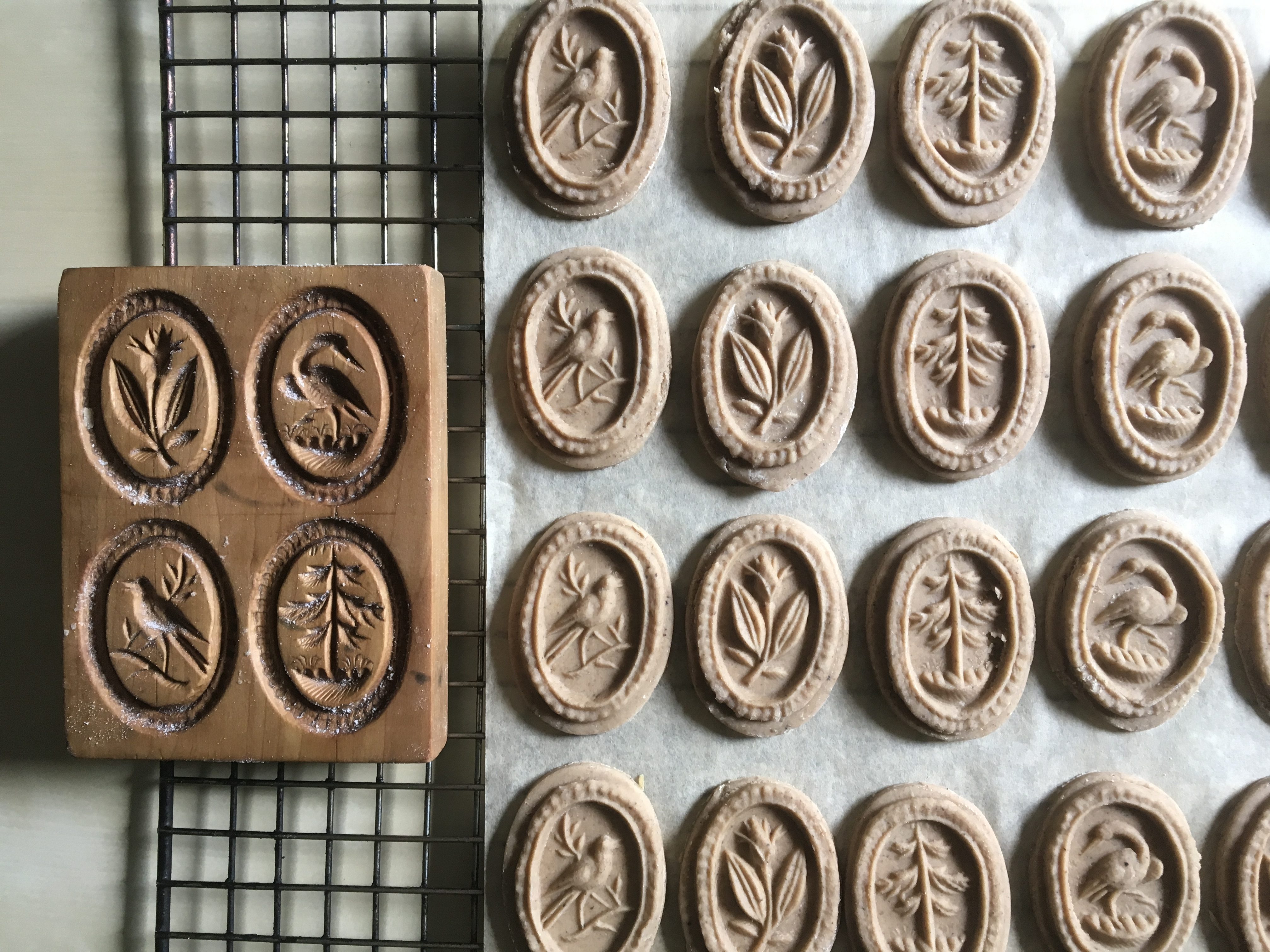
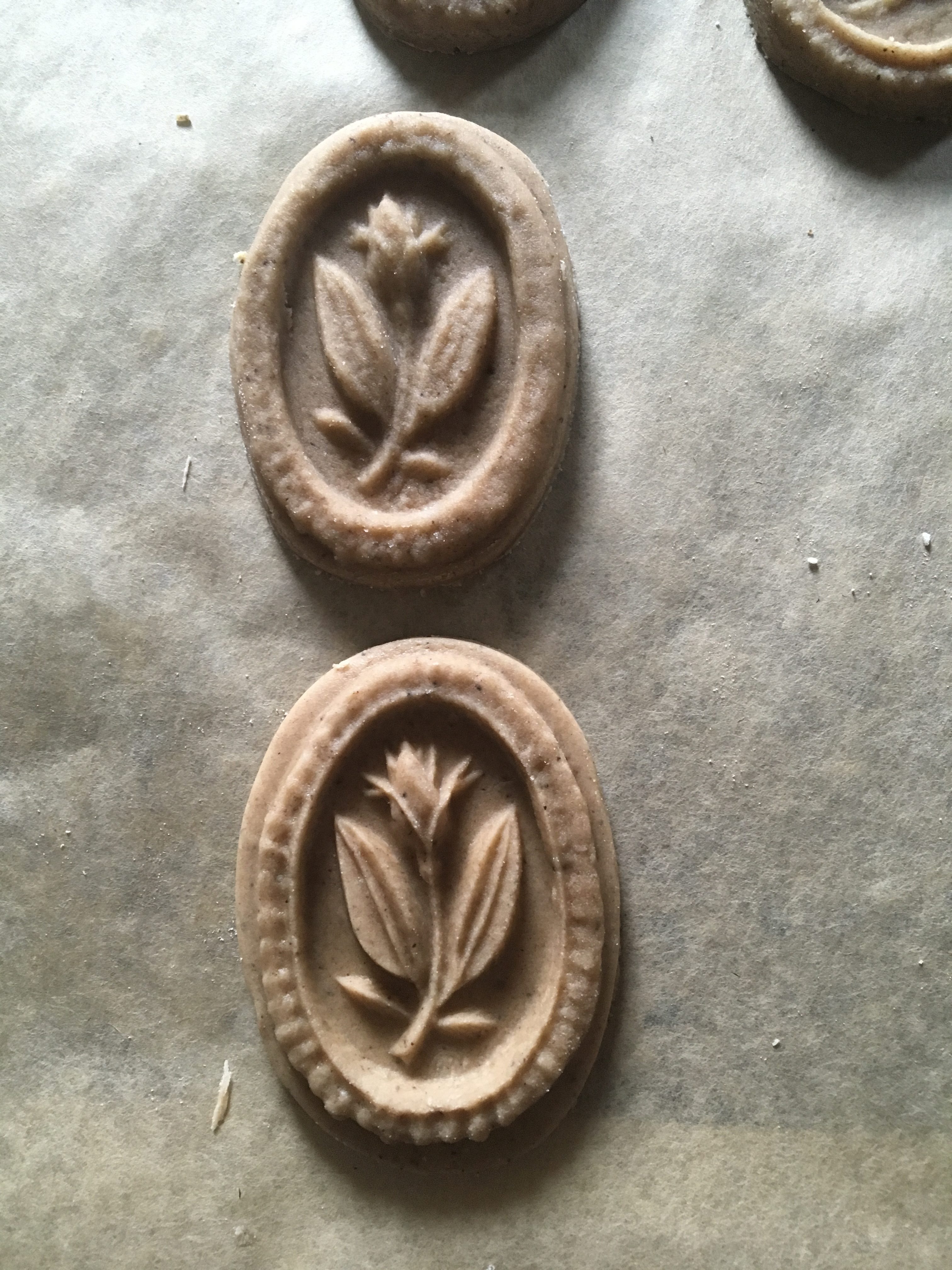
Behold our first batch! These are springerle, and they are very pretty. The mold we’re using here was a gift I got for Scott from e-Bay two years ago. It’s hand-carved wood and dates back to the 1850’s. It requires cleaning with a dedicated toothbrush and a skewer, oiling, flouring, and then we can press the dough in and see what unmolds. Fortunately, the mold came with its own oval cookie cutter, just right for trimming the edges into a neat shape. The cleaning and proper preparation is critical – behold these two cookies. The top one was done with a well-used mold, the bottom one with a freshly cleaned and oiled one:

Scott chose the Speculaas (Dutch windmill cookie) spice mix. It’s a mellow, warming “cinnamon and friends” blend that’s both memorable, yet lacks the bite of gingerbread. Had he stayed with the traditional anise, lemon, or rose water, the cookies would’ve had an amazing white color and would look more like ornaments and less like an edible item! Just FYI, it looks lovely and makes great tree ornaments. Some people like to highlight the raised features with a bit of edible paint or a dash of gold. Just knowing that makes me feel good, because there’s nothing like knowing that some bakers go to even more extreme measures in the chase for the “perfect look,” and I can let go of nagging doubts about my own sense of priorities!

Keep posted on our progress. Gingerbread is next, then Lebkuchen, then Zimsterne. Baking against a deadline – yes, it’s an endurance sport. Who knew?

What are you baking now? Let us know either here, or on our FB page at https://www.facebook.com/heritagecookiesoftheoldandnewworld

Happy baking from both of us,

Kate

Cookies that are easy, elegant, extravagant

Our Heritage Cookies of the Old and New World cookbook is under way! We are baking the last cookies to have them professionally photographed, the recipes have been tweaked and edited, and our graphic artist is doing her layout magic.

Final result: a cookbook compiling edible cultural treasures of our ancestors. My own Czech heritage was the start of it all, and my husband continued baking, until the daughters and I finally said, “You should write a cookbook!”

Behold, then, a product of thirty years of family obsession. You will find historical waybreads, well-known favorites, and new-to-you discoveries. The cookbook’s organization by cookie type, cross-referenced by both main ingredients and ethnic origin, will give you a solid map to guide both your taste and your culinary curiosity.

Producing a quality cookbook takes not only passion, time, and endless hours of remedial exercise to shake off all that buttery, sugary goodness, but also money. Therefore, we will appreciate your purchase once it’s out, whether you buy the e-book format, the print version, or any number of cookie-decorated kitchen items! (Yes… they will be very pretty. Stay tuned.)

Have fun exploring the site, thank you for your support, and happy baking!

~ Kate and Scott