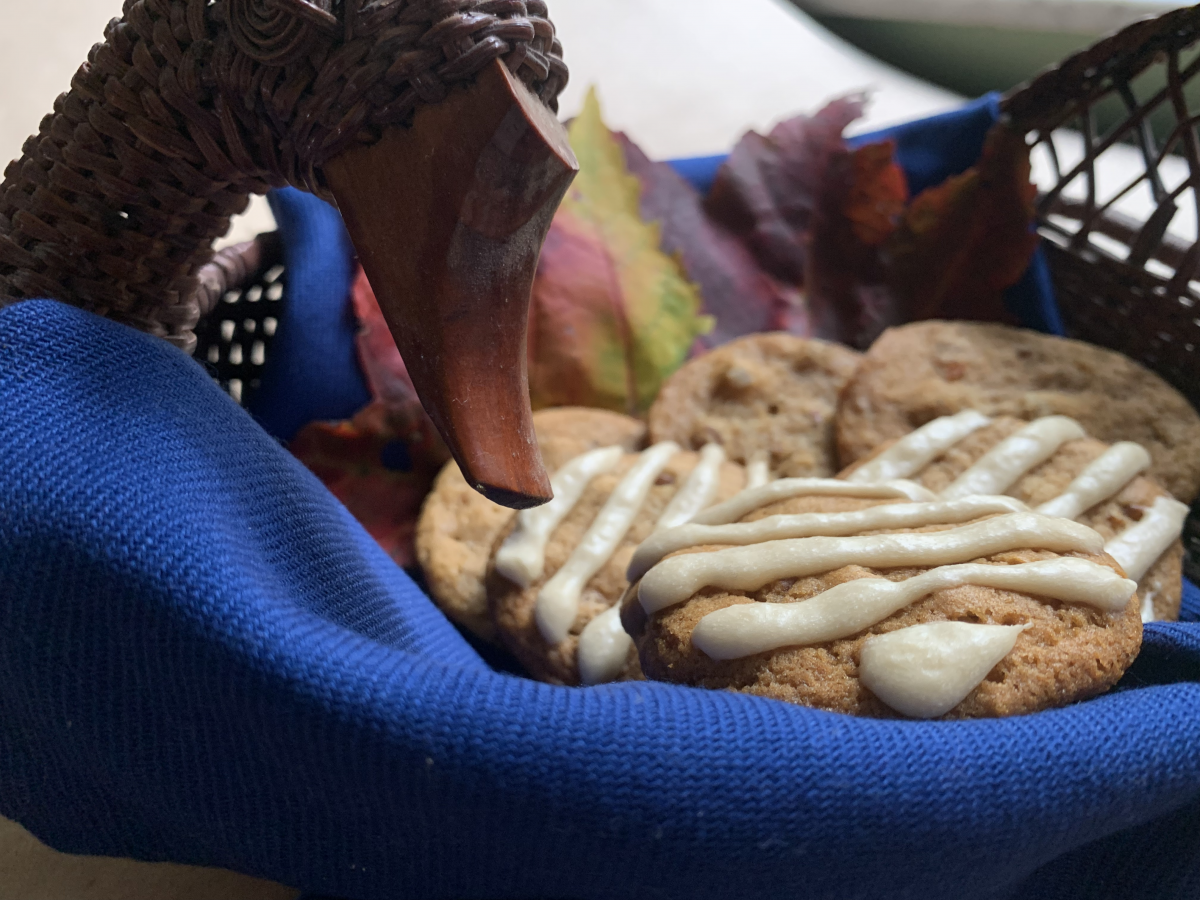
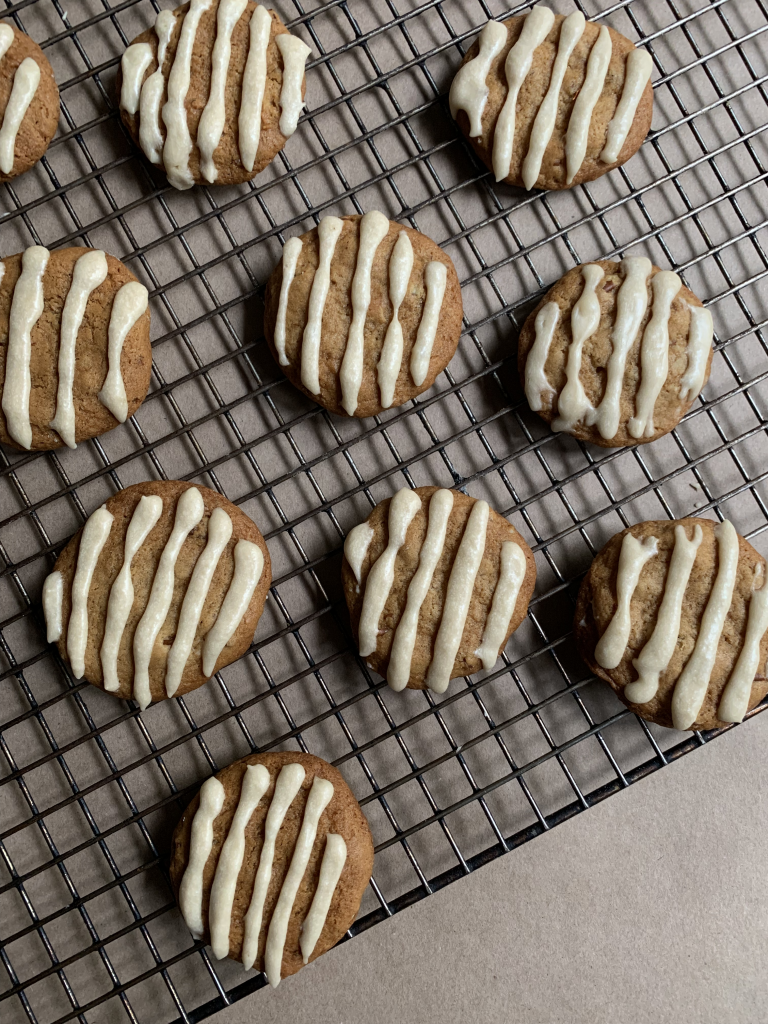
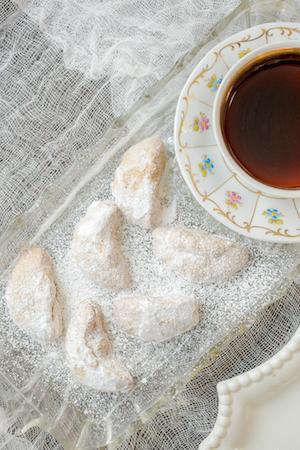
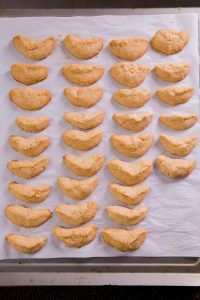
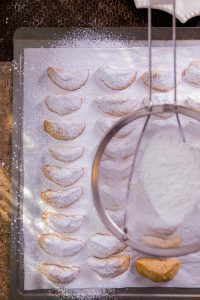
This is the cookie you see in every high end farmer’s market and orchard store across the country. Which is only proper! No one should ever buy a Halloween pumpkin without facing a maple cookie temptation. Alas, but many of those versions aren’t up to par and sometimes (gasp!) they aren’t even available. So here you go.
It is a simple enough recipe, but one that takes a lot of fidgeting to nail down just… exactly… right. This one’s nailed. Is it ever. The only thing to add are the nuggets of experience you’ll want for making your own adjustments.
1. Pecans and maple really do love each other as much as we always think. I tried the cookie with walnuts, and it worked, but it just wasn’t the same. A “7” instead of a “10”.
2. There’s no getting around the maple extract because syrup alone won’t provide the requisite oomph. I’d be curious to try a recipe with maple sugar, and even more curious to use the darker Grade B syrup, but neither are easy to find in my part of the country.
NOTE: We only use natural maple syrup in our house, and that is what we used in the testing. I have no idea how the cookie would work with the flavored corn syrup “artificial” version. Let us know if you do the experiment.
3. That final hit of maple high notes in the glaze/icing/frosting are what send this up to the next level. Don’t leave it out. These photos show a frosting, i.e. the thickest version, but that’s really just a matter of what you want.
NOTE: Give it 24 hours and the topping will dry out enough to pack in a tin without real worry.
4. We’ve gone back and forth on the salt level. My personal preference would be an extra quarter-teaspoon (call it a full 1 tsp. of kosher salt), but Kate thought that gave the cookies a little too much edge, especially before you add the topping.
5. Molasses really helps the flavor by broadening the base of the pyramid. Don’t be tempted to skip it. This amount translates to basically the same thing you’d get from using (a) dark brown sugar in place of the specified white, or (b) light brown sugar plus a single tablespoon of molasses.
That’s about it. Simple cookie, great flavor, with almost no fuss, muss, or bother. Enjoy!
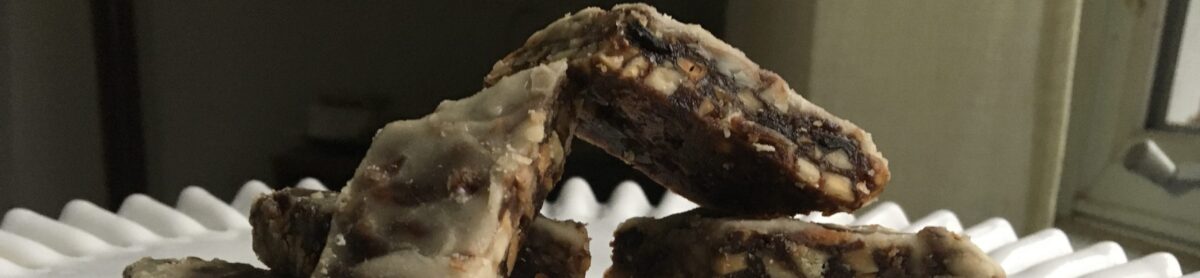
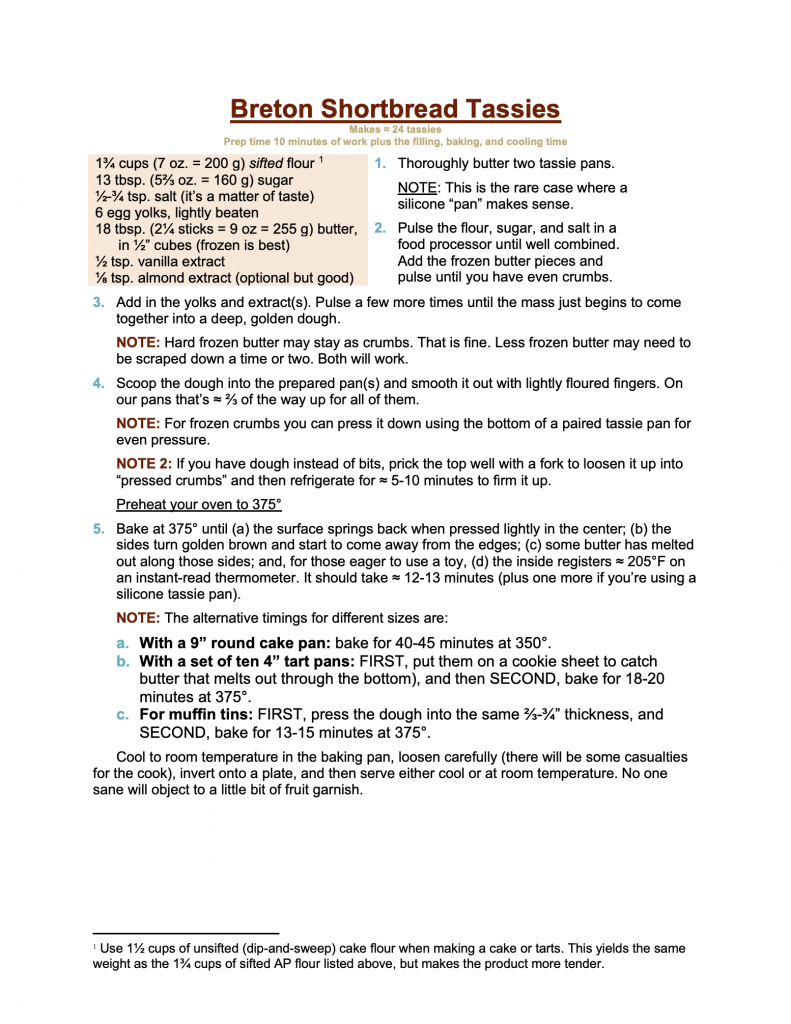
They say that only two groups of people give free samples away: drug dealers and fudge makers. It isn’t quite true. Our friend Jean-Marc Chatellier offers free samples of this ultimate butter cake at his famous bakery in the riverside township of Millvale, PA. But the logic is the same in all three cases: one taste and you’re hooked. The only difference is this: Breton Shortbread a/k/a Butter Cakes a/k/a Gateau Breton beats them all when served with a dollop of crème fraîche and a berry or two.
This recipe went in and out of Volume I for ages.
SCOTT: “It’s a cake, not a cookie.”
KATE: “So what? We cut it into bars half the time anyway.”
SCOTT: “No bar cookies!”
KATE: “But it’s too good to leave out.”
SCOTT: “Do it as a tassie?”
KATE: “I dunno… Isn’t that cheating?”
See what happens when you have two authors and both of them are of two minds? But now that we have a blog to fill, with that harvest tang in the air? Oh, heck yeah.
“Here my friend. Have a taste. One little taste can’t hurt you, can it?”
Honest to God, folks. You can build an entire bakery around this recipe. They are that good.
This is a sample drawn directly from our book Heritage Cookies of the Old and New World. The first part is our favorate “Cookie Nerd Moment” of the entire tome. This is where we stop and take the time to discuss particular tricks, tips, and historical bits that provide a lot of the “why” behind the recipe’s “what.”
Anyone who makes 20 or 30 different cookies each Christmas gets used to two common questions: “What are your favorite cookies” and “What is the favorite cookie in general?” There is no answer. Everyone has his or her own favorite and there isn’t a single cookie that would touch the 10% mark if we kept track of who voted for what.
You probably could have guessed those two if you’d given it a bit of thought. But the third most common question might surprise you: “Do you know how to make [Nut Horns]?” We put that in brackets because the same basic cookie is loved with fervor and devotion across a huge part of the world with very minor changes. In Central Europe the cookie’s known by some word that translates as either Nut Horns or Nut Crescents (Kipferl in Austria and Hörnchen in Germany are two examples). Eastern European bakers shape them into balls, often with a heavier percentage of walnuts, and call them Russian Tea- or Wedding Cookies. Move south and west and the name turns into Italian Wedding Cookies, also ball shaped but with a tilt toward almonds. The south and east features ball-shaped Greek Kourambiedes, which have slightly fewer nuts but include some brandy. The New World knows them best as Mexican Wedding Cookies, which usually feature pecans. We could go on.
Simplicity plays a big part in the cookie’s charm. It’s all about the nuts, with vanilla to heighten their impact. Powdered sugar goes on top – a heavy coat that may also have a hit of vanilla. The Greeks stand out by adding a single whole clove for decoration.
There’s also a common structural theme: you’re after a cookie so tender that it will shatter to fragments at the slightest excuse, and will dissolve in your mouth with a burst of buttery, nutty goodness. That’s the hard part – getting them just tough enough to wait for an excuse without losing that meltiness.
We spent many years fidgeting and playing with this recipe to get it just right. The final product incorporates a number of subtle tricks that will add up to make the best [Nut Horns] you’ve ever eaten. Better even than Grandma’s!
TRICK #1 (for flavor): Toast the nuts in advance. It gives you a longer, deeper flavor.
TRICK #2 (for texture): The textures from your nuts matter as much as the flavors. We strongly prefer to mix that texture up to give the full experience from meltingly soft in most parts to recognizable bits sprinkled here and there. We always start by using a rotary grater to reduce at least half the nuts to a point just short of where you’d start calling them “nut flour.” Maybe even a little short of “nut meal.” The other half should be a mix of textures ranging from “finely ground” to “finely chopped”. If push comes to shove we suggest a 50/50 mix of nut flour for the first half and ground nuts for the second. Grandma may have ground all the nuts for convenience but even she would agree that mixing the textures adds something extra.
TRICK #3 (for flavor and texture): We also favor a mix of nuts. This particular trick may cause Grandma to start muttering about upstarts and heretics when you mention it, but trust us: a little hint of walnut will make your pecans taste more “pecany”, just as some almond and hazelnuts will make your walnuts more “walnutty.”
TRICK #4 (for flavor): A hefty pinch of salt also enhances the nut flavors. Just make sure to use so little that no one can tell it’s there.
TRICKS #5.a to 5.c (to counter fragility): Our recipe hovers right on the edge of falling apart into a 50% casualty rate from being too tender. There are several tricks and options designed to pull it back from that horizon. You’re going to need at least one of them:
A spoonful of water in the flour adds just enough gluten to hold it together. This trick doubles as a way to customize for your particular kitchen and flour.
An egg yolk in the dough works too and is more traditional, but can make the cookies caky if it goes too far. This was the “cheat” that Grandma used in secret because her best friend, the one she wanted to bake like, didn’t need to.
Working the dough as you form the crescents can also add a little gluten, but it comes with a real warning: the heat of your hands can melt the butter in your dough, which turns the cookies oily and guarantees they’ll be too tender.
TRICKS #6.a to 6.c (to counter toughness): Our recipe uses so many nuts that fragility tends to be the bigger problem, but sometimes you have to go the opposite way. We ran into this when we lived in Boston and used the high protein King Arthur as our house default. Here are some techniques that will add tenderness without changing the basic formula:
Remove any extra water or flour from your dough.
Refrigerate the cookies on their tray for 30 minutes before baking. This will relax any built-up gluten.
Remove a tablespoon of flour from the recipe.
TRICK #7 (for flavor): It’s a little counterintuitive but this particular cookie actually tastes better if you narrow the “horns” of your crescents toward the ends. Yes, the easiest way to make a crescent is to form the dough into a rope and then bend it in the middle. Yes, that is a typical way to ensure even baking by creating an even thickness. Yes, you can even treat this as a roll-and-cut cookie with fine results. But this isn’t a typical cookie. Having some parts toastier and others tenderer will only add to the sense that you’re eating something made from [nuts!!!].
TRICK #8 (the post-oven danger zone): You must cool these cookies on the tray until they are only warm. They are ridiculously fragile when hot from the oven and will fall apart if you even stare too hard.
TRICK #9 (for a final touch): We aren’t big believers in fancy chancy “touches” like scenting the powdered sugar for a few days with a more-expensive-than-gold vanilla bean bought for the purpose. This is the one recipe where we sometimes make an exception. Not always… but sometimes. There’s something about the wafting smell of vanilla that seems to stimulate a person’s specialized nut detector taste buds. [What, you never heard of those? Try a proper Nut Horn and you’ll see the proof for yourself!]
TRICK #10 (coating with enough powdered sugar): Warm cookies are fragile cookies, but nevertheless you must coat them with the powdered sugar while they are warm because the outgassing steam helps the sugar to stick. Kate likes to move the whole sheet of parchment onto a cooling rack, dust them there, wait 5 minutes, and then turn them over to dust what had been the bottoms.
Heritage Cookies of the Old and New World contains a whole section on spice cookies, with a long set of recipes for the spice mixes alone. The idea is simple. Find the spice mix you like, acknowledge the regional roots for that combination, and then use the mix willy nilly in refrigerator cookies, snaps, molded cookies, and whatever else you choose to make.
Bing, bang, boom. Simple as can be.
I always forget how good these are until I make them again, and say “Wow.”
America’s signature spice cookie has to be Snickerdoodles, an extremely simple drop cookie made purely with cinnamon. No spice mixes for us! Until the last few decades, that is. Writing in 2021, I can certify that Pumpkin Pie Spice has become an annual harvest event every bit as common as Jack O’Lanterns in the yard. Why fight a good thing? Here is our version of this now-ubiquitous spice blend, along with a variation on our published recipe for Snickerdoodles.
Please Note: We aren’t kidding about the capital-O Opinions that people have on what makes the proper ratio for your spiced sugar coating. Our daughters join me as Even Steven Types. We prefer a 50/50 ratio. Kate, a summa cum laude graduate of the Accent Only School, greatly prefers a 2:1 ratio of sugar to spice. Any more than that leaves bitter notes on her palate. Make a note on your recipe about where you stand.
Enjoy!
Scott and Kate’s Pumpkin Pie Spice Mix
(makes slightly more than ¼ cup = 4⅓ tbsp = 65 ml)
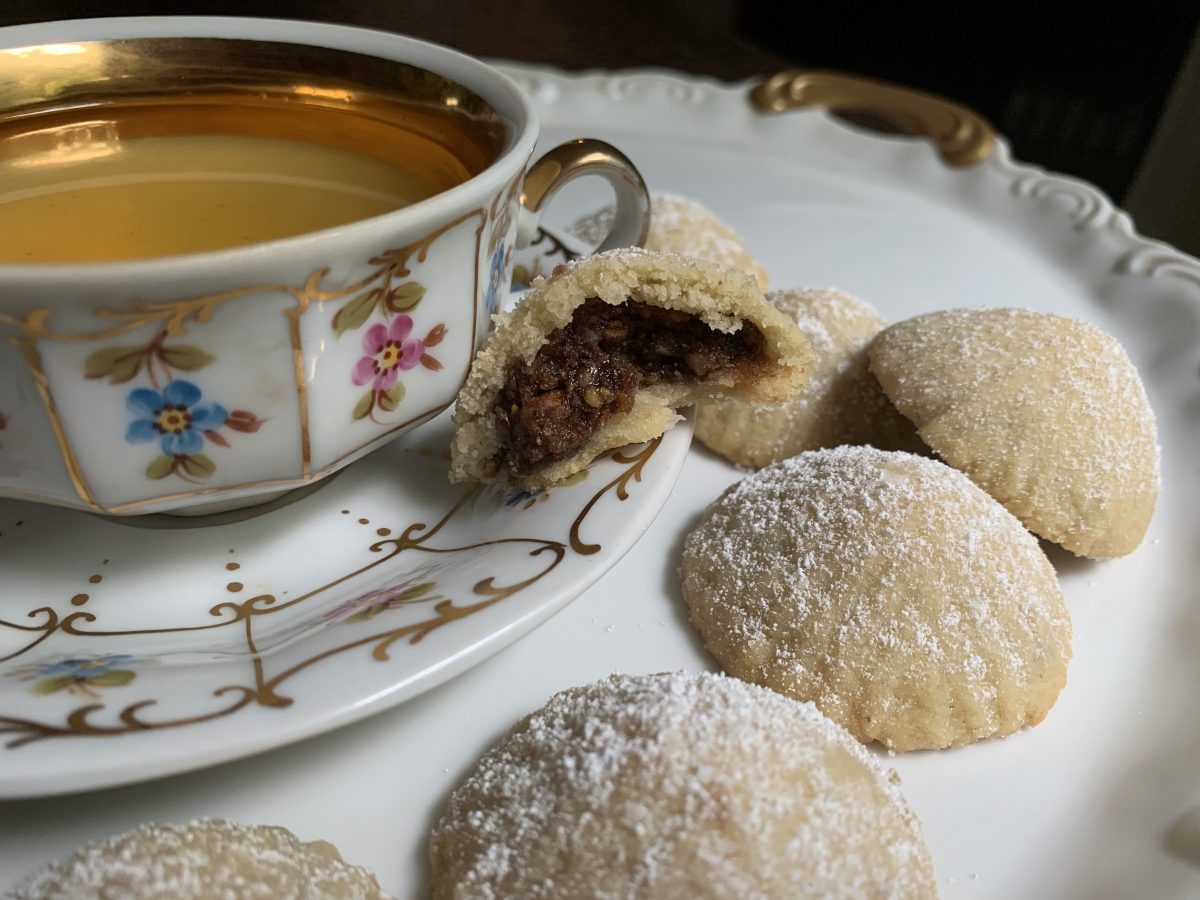
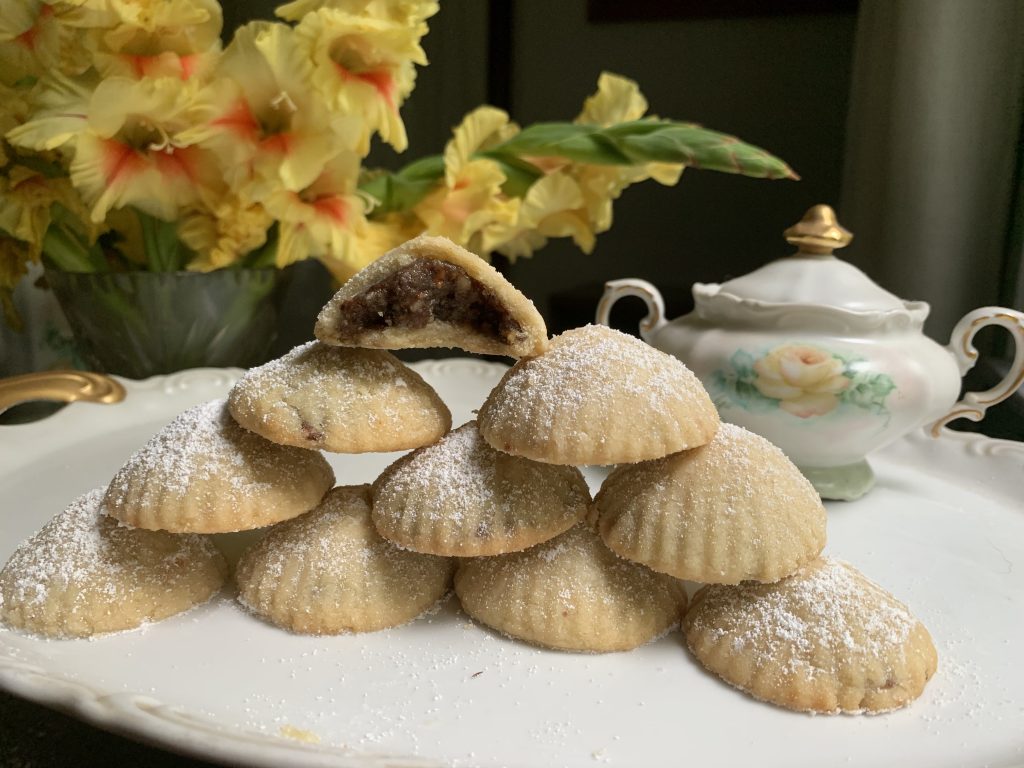
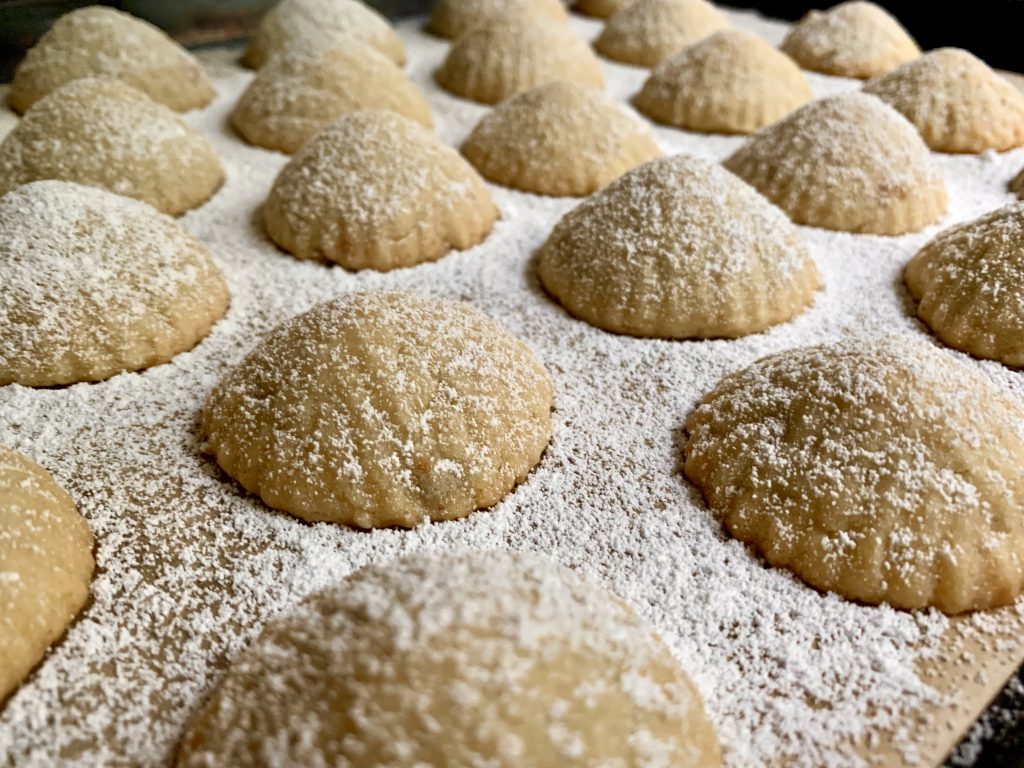
Ma’amoul is the cookie of the Middle East; the one that crosses every cultural division. Muslim, Christian, or Jew, it doesn’t matter. One cannot celebrate Eid, Easter, Purim, or any other big ceremony without this treat any more than you could stage a U.S. wedding without a cake.
What you have here is a very good Ma’amoul that replaces some Mediterranean baking staples (mastic, mahlab, and sandalwood powder) with readily available American substitutes (vanilla, almond, anise, and ginger). The result is an amazing cookie that everyone adores – at least if you’ll accept the testimony of close to 100 taste testers, including several dozen from the local mosque who grew up with the genuine article. The recipe below is one of our proudest successes.
How good is it? Let’s put it this way. Every person in the family – on their own – fell back on poetry when asked for a description. Scott offered antique Arabian Nights phrases like, “the fragrant breeze that wafts from the garden of the Sultan.” Kate produced, “elegant, perfumed Fig Newtons dressed up in flowered bonnets.” Our daughters insisted on “parasols, sun dresses, and corsets bound by ribbons of scented silk.” No one reacted with anything less.
This has to be the most evocative set of flavors we’ve ever come up with. They are fantastic. Awesome. Amazing. Magnificent. I cannot urge them on you any more. Not for Christmas. This is a spring and summer treat, not a winter one. But it’s definitely a cookie you need to experience at least once in your life.
At the same time, do not be tempted to “test” the product by picking up one of those dreadful commercial versions from your local Middle Eastern market. We did, and our sheer dismay almost killed the project before it got started. Calling them “awful” would be too kind. Our daughter, a camp counselor, refused to inflict them on her kids! No, you need to do this one right if you want to see what all the fuss is about. I promise: they’re worth the effort.
As always, skip to the bottom if you want the recipe without the discussion
First Step: What Is The Target?
Do some research and you’ll see that every region, country, city, town, and home claims its own unique twist on Ma’amoul. The sheer number of variations makes it hard to pin down a central theme. I had to read through almost 30 recipes (!) before I could nail things down clearly enough to even work on a recipe. Even then I ended up with a pretty vague description. The target was:
A filled, molded cookie;
A buttery, slightly crunchy crust with some elusive, sweet-spice accents;
A filling made from nuts and dried fruits; and
A healthy dose of rose water to import the Mystery Of The East.
None of those targets was particularly hard to achieve once we figured out what all the exotic ingredients were for, but it took some research to get there.
Bringing The Ingredient List Under Control
The recipes I’d been reviewing called for a number of ingredients that many American bakers could view as exotic. The bulk of the crust is made from:
Semolina flour;
Clarified butter;
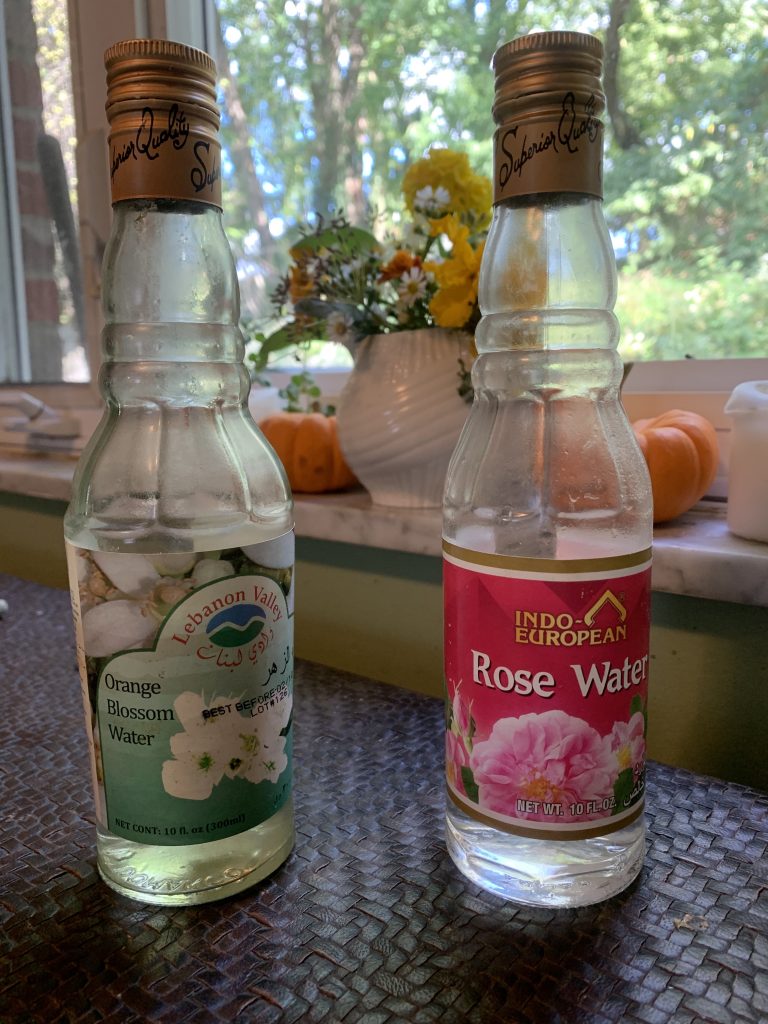
Rose water (mandatory);
Orange blossom water (less so); and
In some cases yeast instead of baking powder.
None of those ingredients posed any special challenge. The yeast could simply be ignored as an option for ultra-purists, since modern Middle Eastern recipes tend to use baking powder anyway. The two flower waters are readily available in modern supermarkets, and certainly in ethnic markets or baking specialty stores. As for semolina and clarified butter, they are even more available than rose- or orange blossom water, and we’d developed some experience on how to use them during our work on the recipe for Ghraybee (the great Middle Eastern shortbread). But then came the little touches to enhance the crust. These were:
A spice called mastic a/k/a mistika (whosis?);
A spice called mahlab (whatsis?); and
Sandalwood powder (in a baked good?!).
None of the recipes used those spices in any significant amount. They were clearly accent flavors, not core ones. But that kind of thing can matter when you want to get the flavor “right” in addition to “good.” That sent me to Internet library… which greatly eased my mind. It turns out that all three are used in ways that American bakers will find both comforting and familiar, and can be replaced by substitutes you already own.
Mastic is a quintessentially Greek spice made from the dried sap of a local tree, commonly used in baking in the same way that Americans use vanilla… Whoa! Hold it right there. Stripped to its core, Ma’amoul is simply a flavored crust wrapped around a fruit-and-nut filling. What could fit a cookie like that better than a touch of vanilla? And vanilla is missing from the ingredient list! Duh. Substitution #1: check. [For what it’s worth, the exchange rate is two parts of vanilla extract for every one part of ground mastic. Reverse engineer as you desire if you keep ground mastic on hand.]
That was easy. What about Mahlab? This, it turns out, is a spice made from the seeds of a shrub related to cherries. It’s typically used as an accent for fruits, and has a flavor that people compare to almond extract mashed up with sweet-spice notes such as cinnamon, anise, and/or cardamom. This makes just as much sense as the first one! You’d have to search long and hard to find a fruit-and-nut filling that doesn’t have some almond extract with a sweet-spice accent. [We ended up at ¼ tsp. of almond extract plus a healthy pinch of star anise to replace ¼ tsp. of mahlab. Reverse engineer as your pantry allows].
On to the… Sandalwood Powder?! Okay, let’s put this on the table. I have a horrible reaction to the smell of sandalwood. One whiff of incense or scented candles can give me a migraine, and one woman in sandalwood perfume is enough to make me flee the elevator in panic. I’m getting a headache now at the mere thought of this noxious toxin showing up in my food.
At the same time, I can see what it’s supposed to do. The same thing that powdered ginger does in other dried fruit recipes. Substitution #3: check that one off as well. [That said, we tried some ginger and ended up leaving it out. You’ll see it in in the recipe as an option for those who like to gild their lilies.]
Getting The Filling Right
All that research proved that the flavor profile in the crust is a lot more standard than you’d think from reading the list of ingredients. The same is even more true of the filling. It’s basically the standard fruit-and-nut filling from Heritage Cookies of the Old and New World, plus a healthy amount of flower water. The only challenge would lie in perfecting the exact proportions for this particular case.
First the nuts. What could be more Middle Eastern than pistachios? The answer is… walnuts, at least in this case. The bulk of this filling requires a softer nut, and the slight bitterness of walnuts fit in perfectly. Pistachios did taste better, but the texture didn’t work. Maybe a mix of the two…? Oh yeah. That’s the way to go. Better than either one standing on its own.
Next, I have to admit that dates aren’t exactly my favorite fruit. They’re just so… meh. But that was not to be. Dates are 100% required if you want to make a proper Ma’amoul. They are the blank canvas for everything else, and no amount of fidgeting can change that basic fact. That said, we once again preferred the multidimensional, sophisticated effect of a mixed fruit filling over something made with dates alone. Figs turned out to be our favorite addition; apricots and raisins our least favorites; and cherries acceptable, but only when used with so much restraint that I left finally left them off the recipe completely. Consider that a secret tip for online readers only!
That left only the elephant in the room: rose water. This is, to put it mildly, a controversial ingredient. Those who like it tend to use it with abandon. Those who are not fans (like me) tend to respond with phrases like “Grandma’s eau de toilette.” If you’re in the first category, please note that many of the recipes I researched use up to three times what you see in ours. Have at it if you will. We, emphatically, will not.
Indeed, my aversion to rose water is strong enough that I tried a version using only orange blossom water, which is much less pushy, and even penciled in a plan to work on a custom version with “more acceptable” aromatics. The test results scotched both of those ideas, but also reassured this rose-water critic that it wasn’t going to be as rough as I feared.
Yes, this is a recipe that requires a certain amount of rose water to do the heavy lifting. You can’t do without it. And yes, up to 50% of that can be replaced with orange blossom water, with fantastic results that all of us preferred. But we also found that these ingredients, and the baking process, tamed the perfume overflow that Kate and I had feared so much. Indeed, consider that as Free Tip #2: You will be surprised how many of the aromatic compounds cook out during the baking, even though the filling is wrapped in a crust.
A version made with 50/50 blends on both the nuts and fruits, plus 2 tbsp. each of rose- and orange blossom water turned out great. More than enough to trigger requests for the next batch. But there was some room for refining.
First I replaced the bulk of the sugar with honey. A fantastic idea you should embrace. Then I adjusted the salt level, and… O.M.G. Words cannot express the magic embodied by how these ingredients come together, marry, and create a whole that is vastly more than the sum of its parts. Ma’amoul really are an experience straight out of the Arabian Nights.
Forgetting A Part, Aren’t We Scott? What About Putting The Cookie Together?
Oh. Yeah.
I’m not going to kid you: forming the Ma’amoul is the most time consuming part of the recipe. In fact, it’s by far the most time consuming part of the recipe, because the dough and the filling are as simple as a cookie gets once you have the ingredients ironed out.
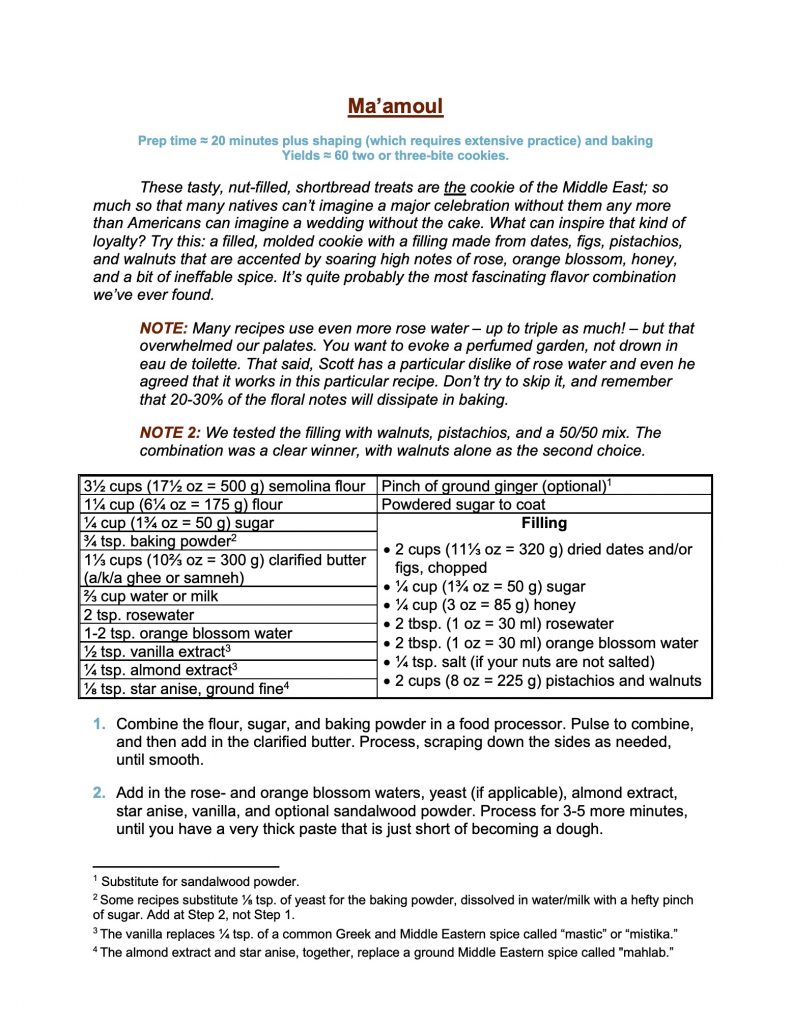
For The Dough: Whirl the dry dough ingredients in your food processor to distribute, and then process in the wet. Remove, wrap, and refrigerate until you’re ready to form.
For The Filling: Put everything but the nuts into your food processor, whirl until smooth, and then process in the nuts until they are ground to your satisfaction. Remove, wrap, and refrigerate until you’re ready to form.
It honestly couldn’t be any quicker or easier.
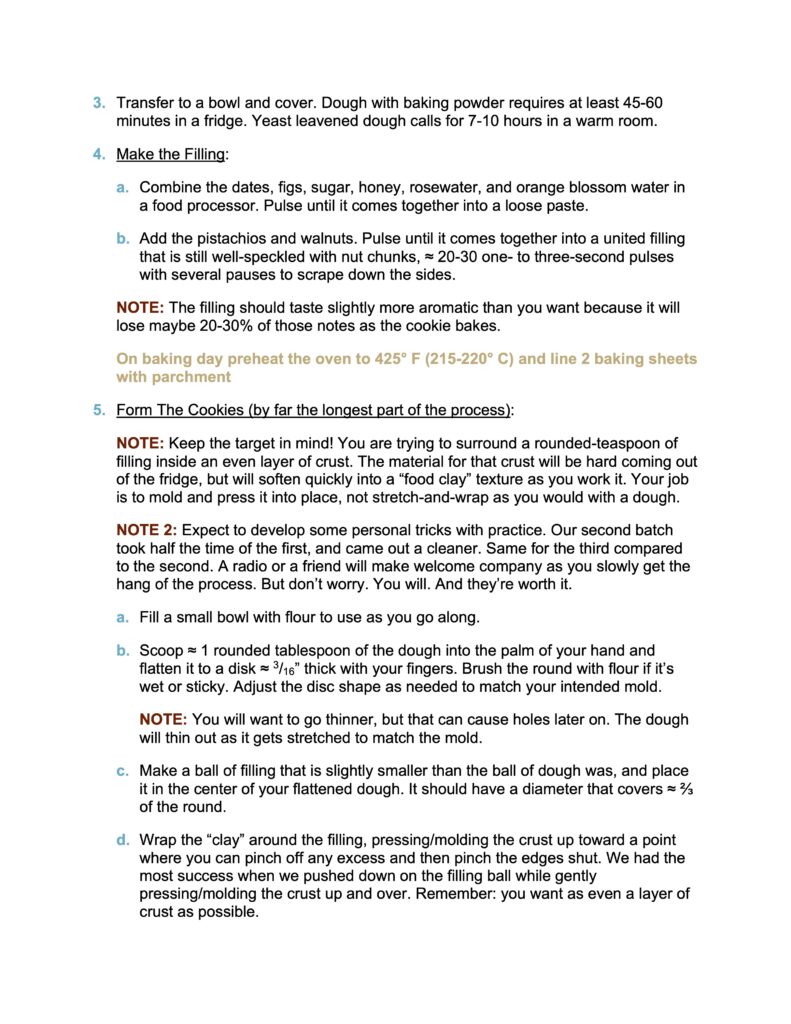
Forming the cookies isn’t all that hard either, but it does take some fidgety technique you can only develop with practice. The recipe contains good, step-by-step instructions. Both Kate and I took careful notes. But nothing is going to replace a bit of practice. Grow up in the Ma’amoul Zone and you’d probably master the process after 500 cookies under the careful eyes of your mother. We’re aiming to get that number down to 200. But that’s still a solid couple of batches. Just enjoy the fact that making your Ma’amoul definitely gets easier and faster as you go along, and is a fine thing to do with company.
I also want to emphasize that Ma’amoul are easier to form than other filled products such as Trogirski Rafioli, filled Gingerbread, and savory foods like tortellini, pierogies, etc. That’s because those have actual doughs that you need to roll out. The Ma’amoul “dough” is more like a very thick paste once it warms up from a stay in the fridge. You can wrap it around a ball of filling with nothing more than a bit of dedicated work to pinch the thick areas over to where the crust is thin.
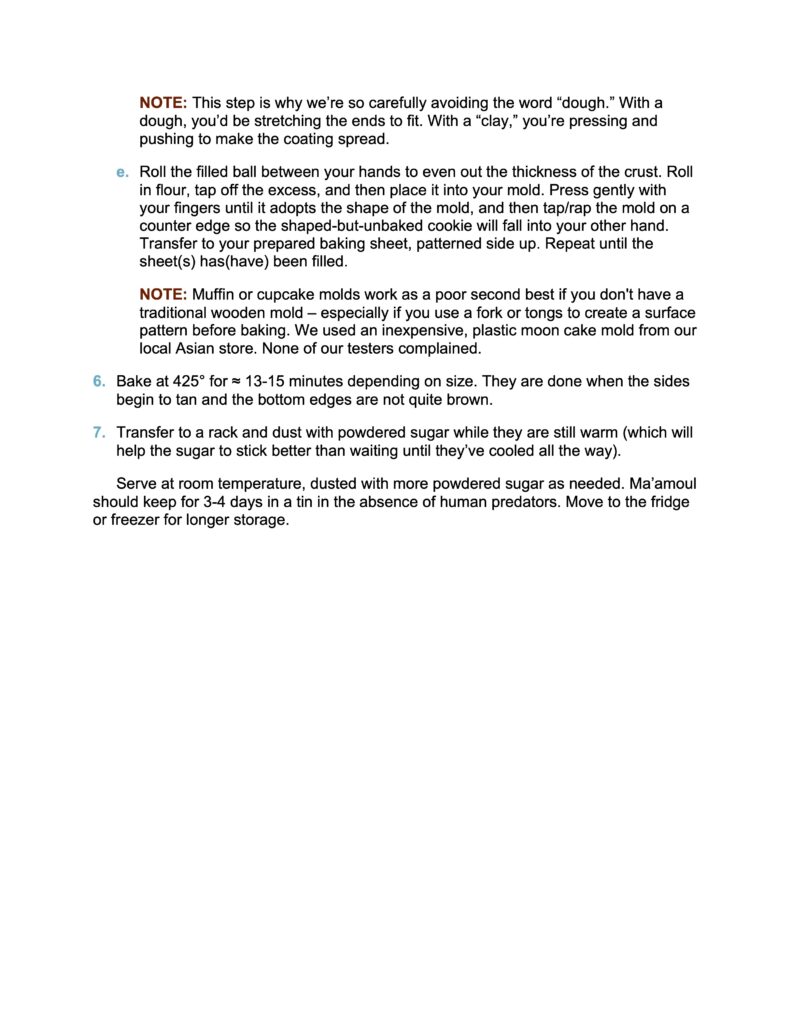
Next, you can leave them plain, and they will taste just as good but why shy away from that final touch which makes them extra, extra special? Home bakers typically shape their Ma’amoul with a neat little mold that comes with a handle. This is a much easier tool to master than Europe’s elaborate Gingerbread, Speculaa, and Springerle molds. The cookies come free with nothing more than a few whacks on the counter if you’ve got it properly floured. Kate bought me the inexpensive plastic mold below just for our Ma’amoul testing, but I promise that we will both be using it for a great many European cookies in the years to come.
Note To Friends And Family: Don’t be surprised if your next set of filled gingerbreads comes with a geometric pattern instead of a figurine. This mold is especially easy to use.
Final Observations, Wisdom, and Lessons Learned
Anyone who loves the idea of Heritage Cookies should make this cookie. How many recipes are there that trace their roots back to the time of the pharaohs? How many can claim to be as central in their culture as wedding cake to a U.S. ceremony? How many will inspire an ode, or transport your imagination to a fantasy world you haven’t summoned up since childhood? I can only think of one, and this is it.
Ma’amoul are a fabulous treat that I guarantee you’re going to enjoy. G.U.A.R.A.N.T.E.E. But they are ever so much more than that, too. This cookie is a cultural ambassador. No matter your point of view – taste, texture, romance, culture, or history – it is a recipe that has it all. “Special” barely scratches the surface.
A NOTE FROM KATE: My grandmother used the word “maamul” in Czech to denote a person who begs shamelessly, and the verb “maamulit” to describe the act of begging until I got my way. It is a colloquial slang. I have heard others use it too. But there is no Czech etymology that would tie the word to begging as such. My best guess is that the frequent trade between Czechoslovakia and the countries of the Middle East introduced a new cookie that people loved to eat, but didn’t know how to make. Translation? If you want a cookie that will reduce your family to begging for more, you have found it!
POSTSCRIPT
Many thanks go out to the kind folk at the Islamic Center of Pittsburgh, who put up with a long pair of visits, including one on their sabbath, and provided invaluable feedback on what a good Ma’amoul is supposed to be.
Speaking of which… This may be the best takeaway I can provide about what we mean by a “proper heritage cookie.” The Islamic Center of Pittsburgh has an intriguing mix of parishioners from many different backgrounds. There’s the Middle Eastern contingent, the Indian Subcontinent group, the African group, and various homegrown American Muslims, all wedded into a unique and welcoming mélange. I, of course, was looking for the Middle Eastern natives. I knew the cookies were good – any moron could tell they were good! – but I needed feedback on whether they were capital-R “Right.” That had to come from people who grew up eating them.
I got my help, sure enough. But there’s a story that goes along with that help.
If I watched it once, I watched it twenty times. A gentleman from Lebanon, Syria, Palestine, Morocc0, Libya, etc. agrees to lend me a hand. He tastes a sample, nods sagely, and says something along these lines: “These are good. Very good! Not as good as my mother’s, of course, but they aren’t too sweet, and yes: they are definitely a true Ma’amoul. Nice job.”
Then someone he knows from one of the other groups looks over his shoulder and innocently says, “What are those?”
“You don’t know Ma’moul? How is that possible? You have to try one!”
Three more samples disappear from the tin. There follows the sound of munching, an ecstatic exclamation, and then a buzz of excited conversation and delighted laughter as the group passes out of range.
Admission time. There is one treat that I will not study because I don’t want to live with the costs of success. Fudge. Fudge is my bane. I have avoided drugs my entire life because fudge taught the lesson I needed to learn.
No heroin for me, thank you very much. No cocaine. No exotic “baths” with comely and eager triplets. And no fudge. My fear of the f-word is a big part of why Heritage Cookies Of The Old And New World has no section on bar cookies. That would have required me to develop a recipe for brownies. No. Just no.
Enter a certain someone who shall not be named.
“But what about fudge cookies? This isn’t as bright a line as you’re pretending! That high end cookie shop in the mall has this dense, ultimate-chocolate bomb thing? Not a brownie, and not just a double-chocolate chocolate-chip, but something dense, and smooth, and decadent, and… [sigh]. That’s got to be a heritage cookie too, right? They’ve been everywhere since at least the 1970’s.”
Oh. Bloody. Damn. 50 years. That’s long enough to count. And yes, I know the exact cookie that [Unnamed] was talking about. Gauntlet accepted. That’s the cookie we’re about to discuss.
But please. Please! Think twice before you read any further! Will your world really be a better place with a cookie like this inside it? With a recipe for that cookie? Sitting on your shelf or in your computer, biding its time and waiting in ambush like a crocodile in the weeds of your diet? If the answer is “No,” then do us all a favor and turn around now. This is a slippery slope, and once you get started, you’re doomed.
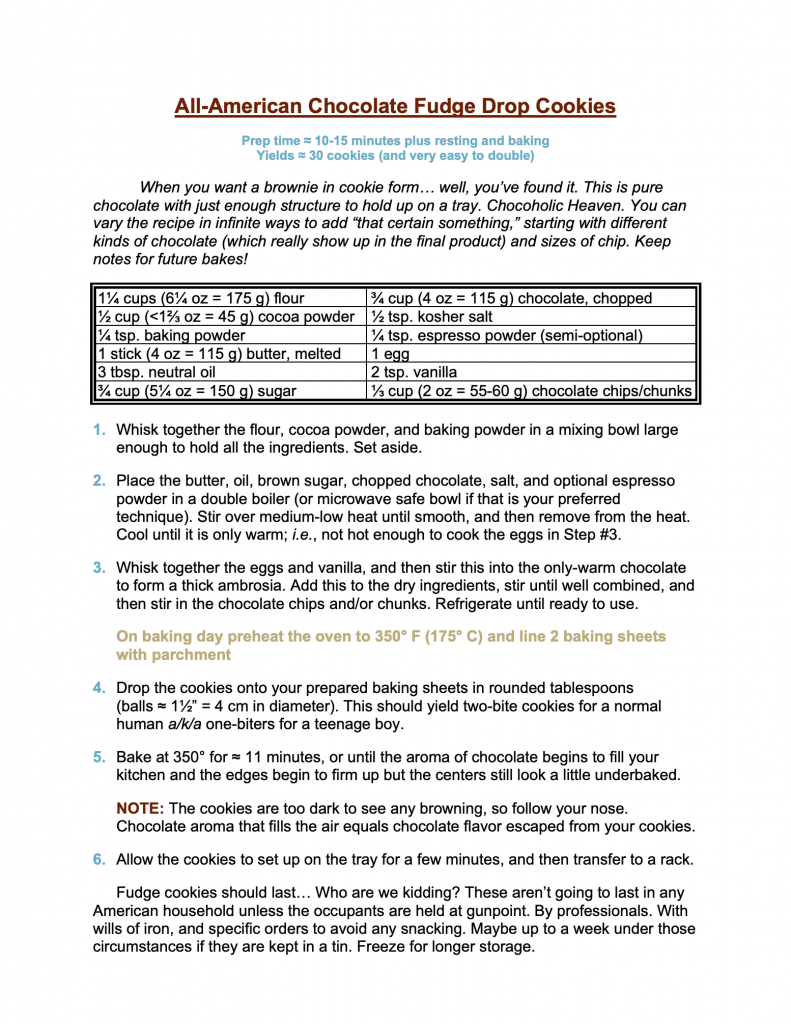
As always, skip to the bottom if you want the recipe without the discussion.
“Luke. If you only knew the Power of the dark side…”
Where to begin?
Do me a favor. Go to your favorite search engine and look up “chocolate fudge cookies recipe.” My effort came back with One Hundred Million results in 0.78 seconds. Yours too? Now look a few over. I think you’ll agree that most of the collection is a mess, with way too many are simple riffs off the classic Tollhouse recipe. “Add some cocoa powder, or extra large chunks instead of chips, and you’ll have a whole new treat!!!” Uhhhh, no.
That said, if you dig through enough of them for other approaches, you’ll start to see some standard proportions where better bakers have all ended up.
Cocoa powder in the dry ingredients, plus extra chocolate in the dough;
Butter as the fat; and
For every 4 ounces of fat (one stick of butter), something like 1 cup (5 ounces) of flour, a bit less than 1 cup of sugar (call it 6 ounces), and one whole egg.
That was enough to get started, but I had a few tricks of my own to include in the mix.
We have discovered that made with oil deliver a cleaner chocolate flavor. That needed to be explored. Maybe melted butter? Or ghee?
We like to enhance chocolate flavor with a bit of salt, a healthy hit of vanilla, a subtle addition of coffee flavor, and/or a bit of spice. The last one wouldn’t fit this cookie, but the first three had definite potential (and ended up in the final recipe).
You can create different chocolate effects by adding chocolate flavor in various layers rather than higher volume. Cocoa powder, bloomed cocoa powder, chocolate in melted, grated, chopped, and chunky forms… All of that can significantly alter the result.
Experimental Results
I originally wrote this up as a blow by blow account of every experimental batch, but my lovely editors complained that it ran too long. Way too long. F-word cookies take some work if you want to put out a recipe worthy of the name. So what follows is more of a summary about the collected lessons learned rather than the process I followed.
It took several batches to really nail the balance between butter and oil. I started at 50/50, and even tried a batch made purely with clarified butter (ghee), but ended up with a cookie made from butter enriched with a hit of oil. It was the texture that suffered. Imagine diving off a board, and then finding yourself underwater without that moment of transition. It’s not something you’d think is important, but you notice when it’s missing. That was the effect we got from using pure fat in the dough. It was all parts fudgy inside, with too little surface crunch.
OTOH, regular, creamed butter was just too cookieish. Melted butter found the best compromise between just enough outer crispness combined with an especially fudgy interior. It also saved a few minutes of effort, and… You know what? Why bother with all that chopping when I could just melt the bulk of the chocolate into the dough?
Melting the chocolate! That turned out to be the magic trick that sets this cookie apart. Finally – finally! – the muse in charge of baking decided to spare me a peck on the cheek.
Hey little dieter. Want a taste? How can a single bite do you any harm?
The rest of the development process took some time to perfect, but that was more craft than art. The very thing we don’t want to weigh this down with. So here is that promised shortcut list of lessons and observations instead:
Blooming the cocoa powder in hot water or coffee doesn’t add enough flavor to be worth the hassle. Just sift it in with the flour and baking powder.
Different cocoa powders might matter, but we did not do that experiment. We used a good dutched cocoa powder in every version.
Chocolate chips pressed into the top distract from the cookie itself. Don’t bother.
But chocolate pockets in the dough make a nice addition if you get the size right. Go with something larger than standard chocolate chips, but not as big as the commercial chocolate chunks. A little trimming of the chunks achieved my perfect compromise. This is in addition to the melted chocolate (see below).
Use white sugar instead of brown. Chocolate clarity works better in this case than muddying the flavor in the name of complexity. And don’t use too much. Those Internet recipes typically used a full cup of sugar in a recipe this size, but we strongly preferred cutting that back by a full 25%. Closer to 5 ounces than 7.
Do not skip the flavor enhancers, and particularly not salt. It’s a case where your victims[ahem] consumers should end up saying, “Is that a hit of salt I taste? It’s surprising, but I like it!” Kate adored it. The vanilla and coffee should be much more subtle.
At Heart It Is All About The Chocolate
The chocolate you use in this cookie matters more than you’re going to think. I actually found that out by accident.
This effort involved so many batches in this effort that we ended up digging deep into the leftover supplies from other cookies. That meant different batches with different brands of chocolate, and the clear differences from one to the other surprised us all. So much so that I made a special trip to the Strip District for a different high-end chocolate to use in one of the final batches. And yes, it produced a different and correspondingly high-end result.
There is a full quarter-pound of melted chocolate in this dough, and it matters.
Don’t mess around. Just invest in and use a darker chocolate that you genuinely like to eat. But it is not a “darker is better” thing. The cocoa powder adds that extra edge all on its own. This is a case where “better is better.” It really is that simple.
Final Notes
All joking aside, the cookies kept surprisingly well in a tin. Even I hit my chocolate saturation point with this many batches, so they ended up getting snitched one or two per day. Not just by me, I hasten to add, which I know from the mix of compliments and curses that kept coming my way! In any case, the cookies were almost as good on Day 10 as Day 1. The recipe says a week, but that includes some general caution that wasn’t required in my own home.
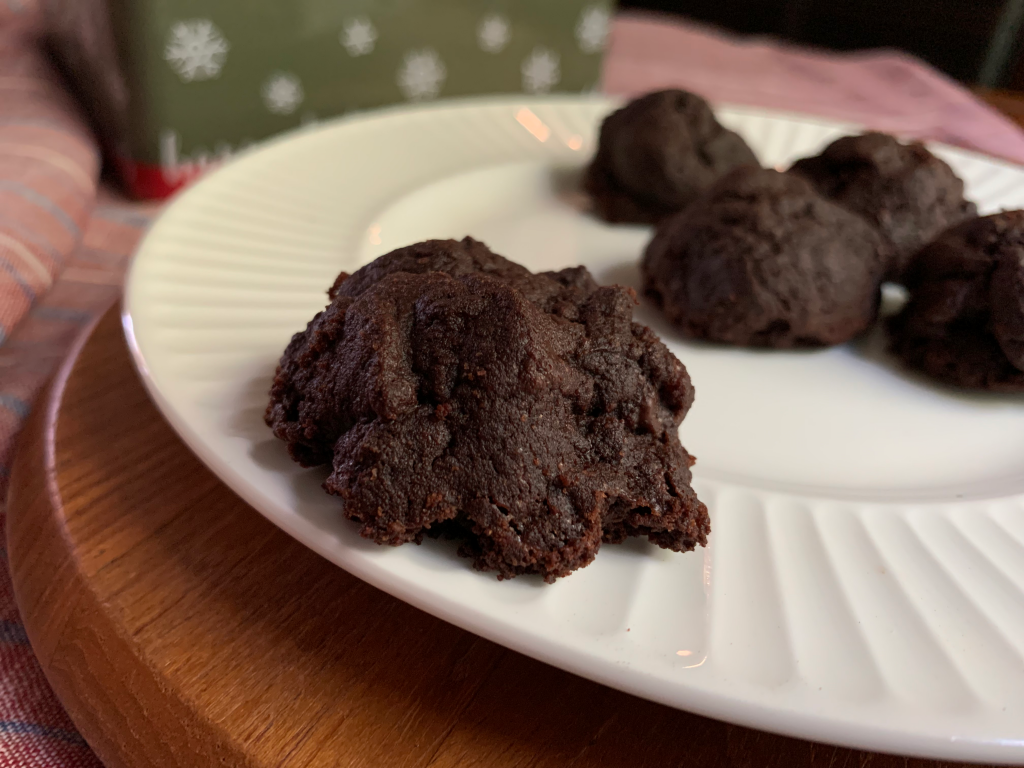
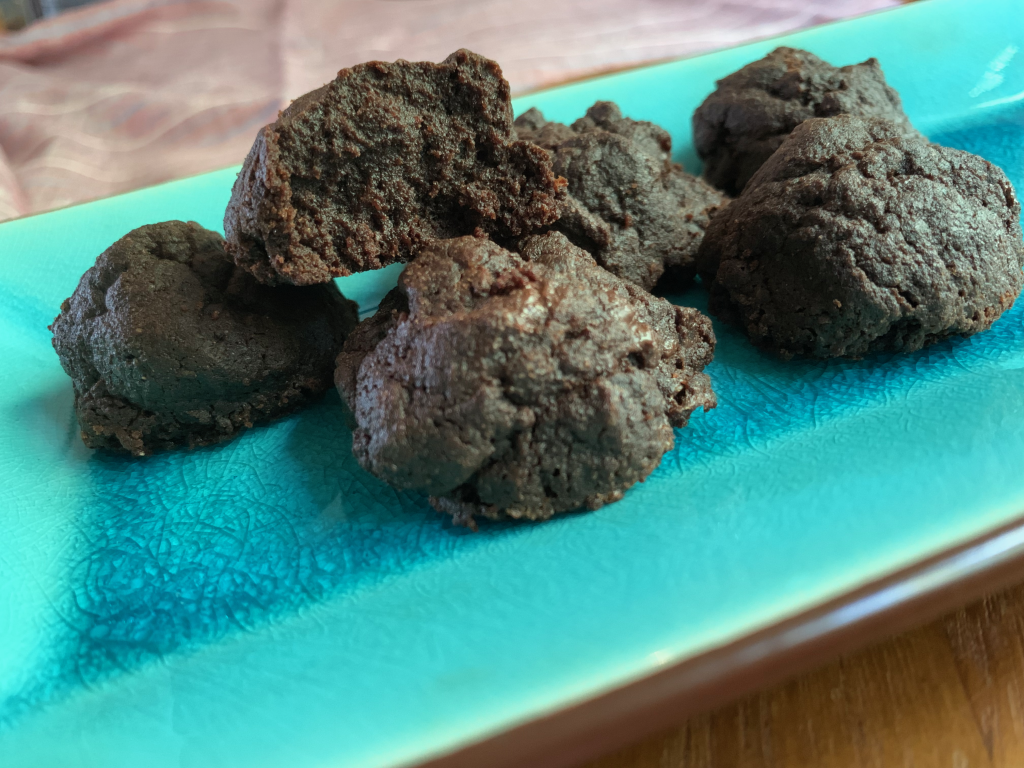
Don’t try to make these extra large. They are plenty rich enough to deliver all the chocolate you want, and delicate enough to fall apart if you start to get physics and gravity involved. Those crumbs you see in the photos are not a coincidence. Balls of dough with a diameter of 1-1/2″ to 2″ across yield 2-3 bite cookies, which is just what you really want.
For whatever reason – and I haven’t figured it out – these cookies don’t tend to spread anywhere near as much as you’ll think they should. So feel free to pat the pieces down on your tray before baking, and expect to have little mounds of intensely chocolate goodness at the end. 50% spread rather than the normal doubling.
They keep better than you’d think, and spread a bit less than you’ll expect.
CONCLUSION
This may be the one cookie I really regret. Not because it falls below our standard. It doesn’t. It’s awesome. The problem lies in feeling like I’ve betrayed your trust.
Our work is to cookies what $80 bottles are to wine. Things that are rare, special, occasionally unique, and meant to be savored by those who appreciate more than just another treat. These? These are high end smack, not wine. Intravenous chocolate injections. Oh, you’ll enjoy the trip. Will you ever! But will you ever forgive me? That’s harder to say.
As always, you can skip to the bottom if you’re only here for the recipe.
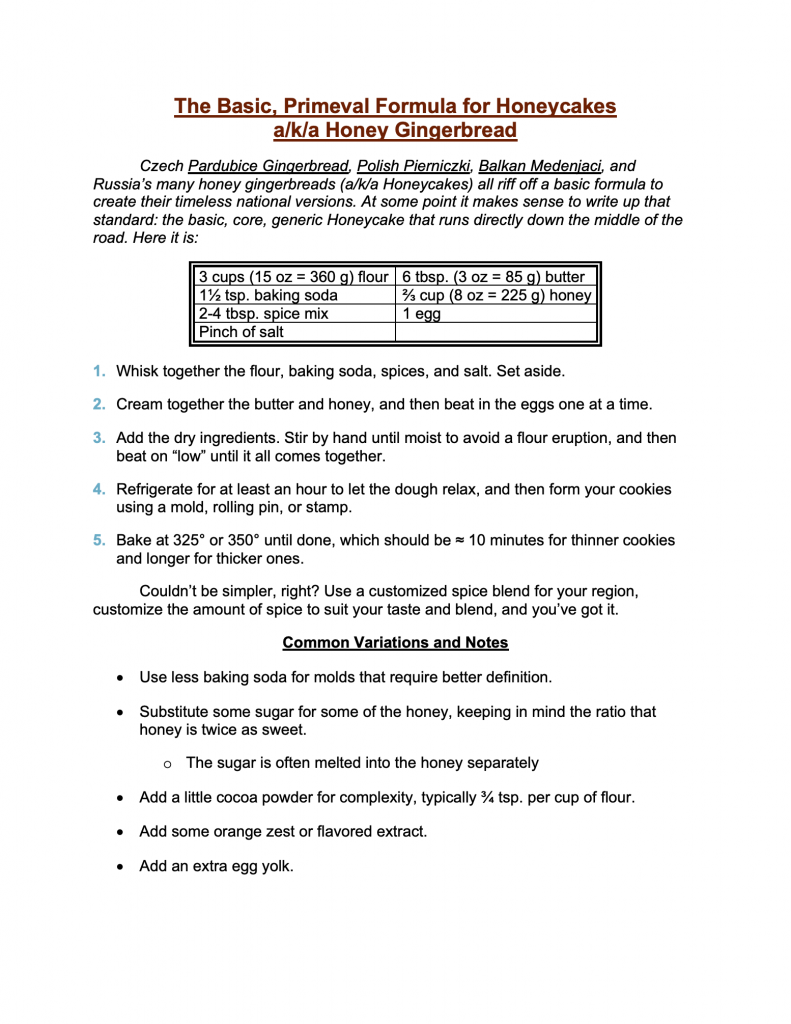
I began this recipe looking at the Baltic version, and finally realized that Honey Gingerbread a/k/a Honeycakes are a category unto themselves. They’re particularly common in the Slavic nations of Europe’s center (bottom to top) and east. I’ve seen so many other versions from the Czechs, Poles, Russians (and all the ethnic subgroups), the Baltic States, Ukraine, etc… Might the the talented Southern Slav bakers have something really unique?
I pinned those hopes on the simple lack of spice. All those beautiful and famous Honeycakes from the Slavic nations to the north? Czech Pardubice Gingerbread, Polish Pierniczki, etc.? They’re all variations on a basic formula that differ mostly with the use of some subtle and sophisticated spice blend developed by that particular region. Balkan bakers vary their Medenjaci by playing with the structural part of the cookie – particularly when it comes to the use of eggs.
So was it really different? Sort of… but not in some fundamental way. Leaving out the spices works. It yields a relatively pure, easy to access flavor that’s worth the experience. And adding extra egg yolks plays with texture in a radical way that’s almost a revelation. We fully intend to play with it over the next many years. But what you really have here is an expansion kit to the mix-and-match options that all those other recipes have in common too.
In other words, this is an article about pure, baker’s geekery. Read on and you’ll learn how to seize control of that traditional recipe from your Baba, and convert it like a chemist into exactly what you want.
Every one of those famous cookies uses one or more of those variations, so they really do come out as distinct individuals, but the family kinship is there.
Medenjaci differ in two ways. First, they tend to use a much simpler spice mix, and less of it. Two tablespoons in a 3-cup recipe would be a lot, and it is rare to include more than a healthy dose of cinnamon with a touch of ginger, nutmeg, mace, or clove. I suppose you could argue that they tend to be heavier on the citrus too.
The bigger difference is in the eggs. Our recipe adds four(!) egg yolks to the one whole egg, and we aren’t the only ones. Scott compiled the following table of online recipes to provide some idea of both the variations and the consistency.
Flour
Butter
Leavener
Sweetener
Spices
Eggs
5⅔ cup (805 g) mix of AP, Cake & Whole
1 cup
1 tsp. soda
255 g honey 285 g brown
2 tsp. cinnamon ½ tsp. ginger ½ tsp. clove ½ tsp. nutmeg
3 whole 1 yolk
5¼ cup (750 g) mix of AP, Cake & Whole
1 cup
1 tsp. soda
250 g honey 180 g brown
2 tsp. cinnamon ½ tsp. ginger ½ tsp. clove ½ tsp. nutmeg
3 whole
4¼ cup (600 g)
¾ cup
1 tbsp. soda
200 g honey 200 g sugar
6 tsp. cinnamon 3 tsp. vanilla
2 whole
3 cups (425 g)
½ cup
1 tsp. soda
170 g honey 70 g brown
1 tsp. cinnamon ½ tsp. ginger ½ tsp. nutmeg ¼ tsp. clove
2 whole 1 yolk
3 cups (425 g)
½ cup
1 tsp. soda
170 g honey 100 g brown
1 tsp. cinnamon ½ tsp. ginger ½ tsp. nutmeg ¼ tsp. clove
2½ tsp. cinnamon 1 tsp. ginger ½ tsp. clove ½ tsp. nutmeg Extra as an option
1 whole 4 yolks
Our Version of Medenjaci
Let’s be honest for a moment: we’ve been doing this for a long time, and have a lot of Honeycake (a/k/a honey gingerbread) recipes. All this research said two things: Medenjaci were pretty middle-of-the-road from a flavor point of view, but some of the recipes used extra eggs to create really unique textures. That led in turn to two options: we could “fix” the spices to make something more appealing to our (admittedly) Northern palates, or we could embrace the egg-centric approach and see how far it could go.
We went with the latter. So let it be said up front. Our version of Medenjaci is dead-on true to what you’d find in Belgrade, Zagreb, or Sarajevo from the flavor point of view, and on the cakier side from the textural perspective.
The result is a cookie that comes off as a light, honey-centric gingerbread with a rounded flavor and a chewy, meaty texture like nothing else in our repertoire. Easy to like, hard to hate, and really entertaining if you happen to be a baking nerd.
A Final Note: Looks Can Be Deceiving
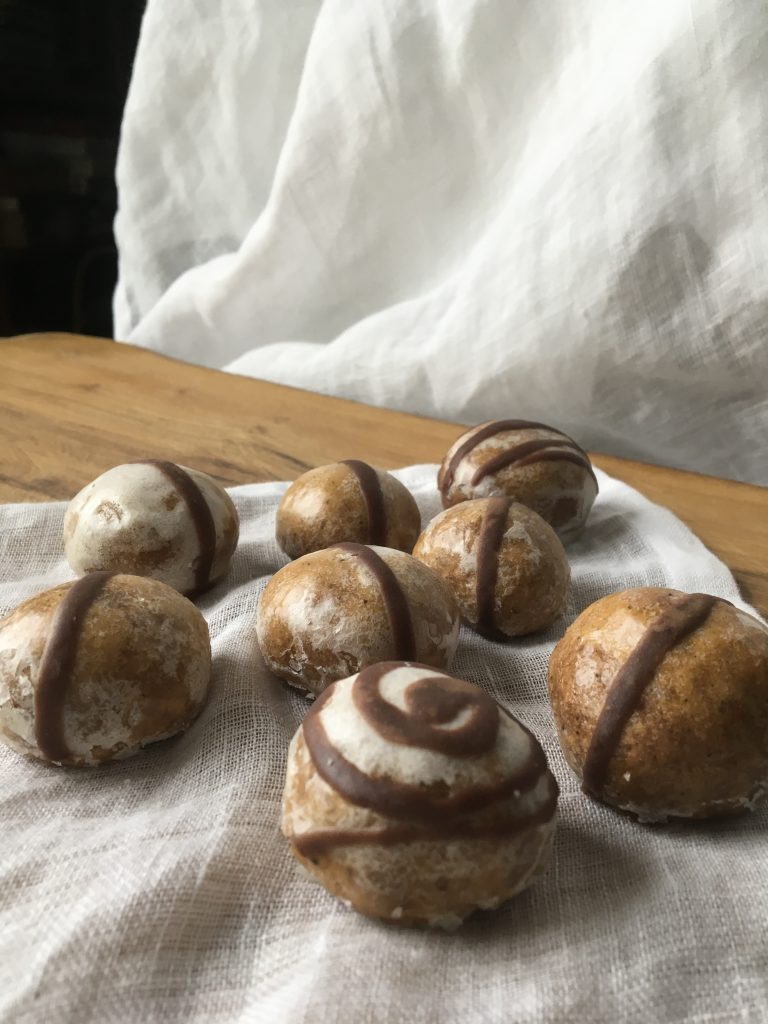
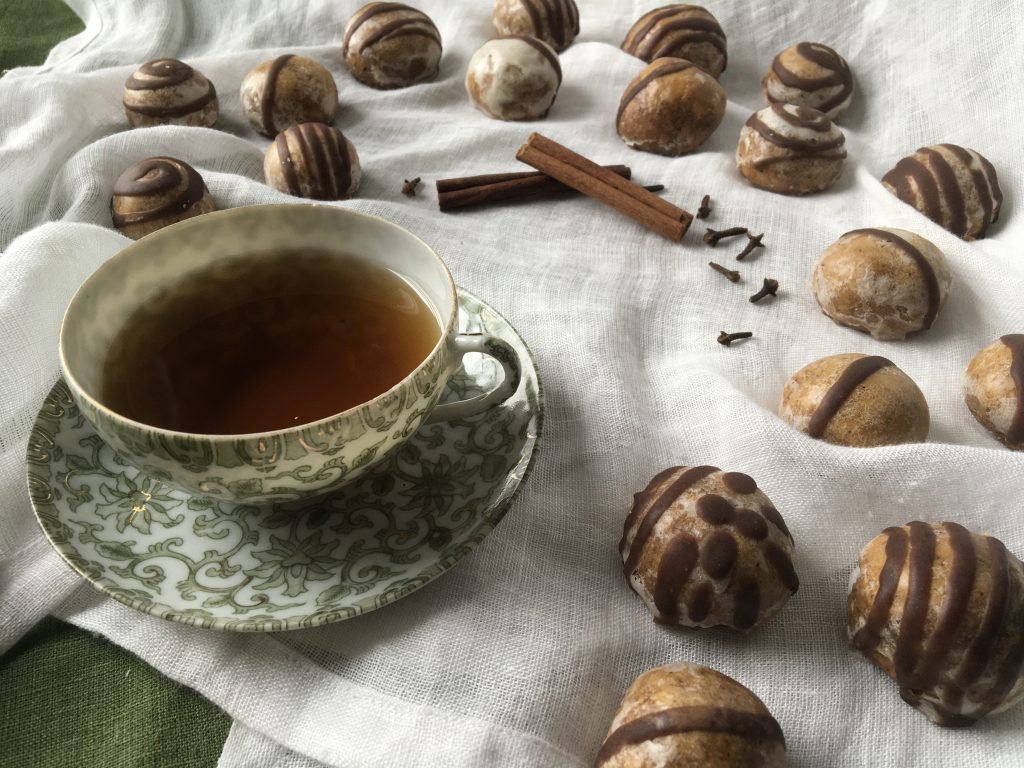
Yes, the photos look like Pfeffernusse, the famous Dutch/German cookie. And yes, Pfeffernusse are a honey-spice cookie. But that is where the similarities end. A good half the bulk of Pfeffernusse comes from almond or hazelnut meal, which is often combined with chopped softer nuts such as walnuts or pecans. They also have a bare minimum of leavening (¼ tsp. of baking soda), and are bound by two whole eggs. That combines to give them a nut-cake texture, and often a crispy one because many people prefer to add a few minutes to the baking time. Medenjaci? No nuts at all, just flour; half the amount of butter; and much more in the way of leavening and eggs. They may look alike, but no one would ever confuse the two after even a single bite.
NOTE: There are at least a dozen different ways to spell the name of this cookie even though everyone seems to agree on the pronunciation. For the first syllable-and-a-half, imagine the word “gray”, pronounced with an extra-hard “G” in a Cockney accent to sound almost like “g-rye”. The second syllable is pronounced “bee,” like the insect. The efforts to turn that into letters has somehow resulted in “Ghorayebah,” “Graybah,” “Ghrybi,” “Gorabee”, and several others you’ll find with any quick search online. We went with the spelling that seemed closest to the pronunciation: “Ghraybee”. But of course, so did every other writer… [Sigh].
Clarified Butter: To make one (1) cup of clarified butter, start with 1¼ cups of raw butter (i.e., 25% more than you want to end up with) and then cook it on medium-low heat until melted. Skim off the foam, and then spoon out the golden goodness, leaving behind the water and the solids on the bottom. That goodness is pure butter fat, a/k/a clarified butter. It tastes just like regular butter, but is pure butterfat that will handle differently when cooked.
Ghee/Samneh: Don’t just melt the butter, but instead continue to cook on medium-low until the major bubbling stops, which indicates that all the water has been cooked out. Spoon or pour out the remaining liquid, leaving any remaining solids behind. It has a slightly more intense flavor that clarified butter because the fat absorbs the flavor of the now-cooked butter solids. Ghee has become available by the jar at various markets and is easy to find in any that are oriented toward Indian food. Indian Ghee and Arabic Samneh are basically identical, subject to minor differences in brand that in turn alter the cooking time or temperature, and the original milk sources (butter from different cows has a subtly different flavor).
Browned Butter: Follow the procedure to make Ghee but keep on cooking at medium-low until the solids at the bottom turn nut brown and heaven’s own aroma sings through your kitchen. This is the end of the line. Go any further and the solids will blacken and burn, infusing a bitter flavor instead of Ultimate Butter.
Put another way, clarified butter is pure butterfat; browned butter is clarified butter flavored with toasted butter solids; and ghee is halfway between the two. All three appear in more savory recipes than baked goods because removing the solids significantly raises the “smoke point” of the fat; i.e., the temperature when your cooking fat begins to burn and turn bitter. Most cooking oils have a smoke point between 400° and 450° F. Regular butter begins to smoke at 302°. These clarified butter fats have a smoke point all the way up to 482°! Higher temperature cooking yields more browning, which equals more flavor, and so forth. None of which matters for us, of course.
What matters for Ghraybee is the extra flavor and tenderness that come from using purified butter fat instead of regular butter.
Help! I have Butter Overload Syndrome and need to be consumed by a photographer with a sense of humor!
NOTE: As always, I recommend skipping to the bottom if you’re only after the recipe. The bulk of what follows is about the process of getting there and what we learned along the way.
Initial Failures and Discovering Ghraybee
I’ve been working for years on the idea of a shortbread cookie made with browned butter instead of regular butter. Why? Because I adore browned butter! Butter is always good, but browned butter sits at a whole new flavor level. I started the effort with a straight butter cookie recipe but found that the shapes wouldn’t hold when I used browned butter in place of plain. The cookies also came out exceptionally rich, almost too much so, and the outsides felt a bit greasy. Then I tried adding some egg yolks to create an emulsion. Still didn’t work. Then I tried adding back the 25% water that I cooked off to brown the butter in the first place. No dice. Same with milk instead of water. Arrrgh! Finally, I cheated by making a straight butter cookie and adding a browned butter frosting. Okay, that worked well enough to ease my frustration even though it wasn’t worth the effort. But it was enough to let me move on to other projects that at least satisfied my interest in heritage recipes over creative ones. Someday, maybe…
You can imagine my excitement when, a few years later, I came across a recipe for Ghraybee, a famous and much-loved cookie with a fantastic history that was made from clarified (or browned!) butter. I’d missed it for all these years because my focus has been on Europe, and this is a purely Middle Eastern treat.
I dove right in to the research, and you know what? Ghraybee bakers suffer from the same problems that I ran into but have a few centuries of experience and advice on how to overcome them. The first thing I noticed surprised me. Ghraybee contain no eggs, nor any of the vanilla you see in basically every European butter cookie. Quite the opposite. Ghraybee are a stripped down, essentials-only recipe made from nothing except flour, sugar, butter, and a tiny bit of orange blossom water to make the butter taste more interesting. The tricks are all about technique, experience, and understanding what’s going on.
First and foremost, you need to understand that the cookie is designed and intended to hold the greatest possible amount of butter. This means that you will often get excess butter oozing out – greasiness – at every stage, particularly if the dough gets too warm. What solves that is time. Let the dough rest overnight, and it will absorb the greasiness back inside. Let the shaped cookies rest in the fridge or freezer, and ditto. Same thing for the cookies when they come out of the oven. They should feel a little greasy. It’s a sign you’ve done it right. The sensation will vanish as the cookies age.
I’d been on the right track from the beginning. I just hadn’t been patient enough.
Mix Very Well Indeed
Second, you want to beat the dough for a very long time. The first recipe I found (from Egypt) suggests a three-stage mixing effort at low, then medium high, then low again for 5 minutes each. (You can find this recipe online under the name “Perfect Ghorayebah”). That worked, and you could see visible changes over the first 5-10 minutes; but to be perfectly honest, we saw no changes at all over the final 5 minutes, and after a great deal of testing we think the whole rigamarole is excessive. Ten minutes on medium is all the mixing you need. It’s still much more than one usually sees.
It does make a difference, at least for consistency. The one batch we tried with minimal mixing behaved differently at the forming stage, and lost several cookies to fractures in the oven. So that is out. But why a full 10 minutes instead of just 4-5? We’ve wracked our brains and our research sources alike, and have no good answer. We can only speculate based on our semi-informed understanding of food chemistry.
What the beating process does not do is build up gluten. Gluten forms when two proteins in flour (gliadin and glutenin) combine in the presence of water. Beating the flour makes that happen faster, and helps the gluten molecules combine into long sheets. Ghraybee dough has no material amount of water, and thus you should get no gluten regardless of how long you beat the dough. It isn’t about gluten.
Could the long beating be an attempt to remove air bubbles created when the butterfat gets softened in the mixer? Maybe… but if so, why not use a melted product instead of whipping it in the first place? We tried that too. The cookies tasted right but crossed the line into being a bit too tender.
That’s left us with only two hypotheses. First, the long beating time ensures absolutely uniform distribution of all the ingredients. This is emphatically not one of those cookies where you want identifiable bits of pure butter surrounded by dough. Second, we think it may force some of the butterfat into the granules of flour. Recall that Ghraybee repeatedly hover on the edge of that point when they’ll turn greasy because a butter slick escaped from the binding flour, but then reabsorb that extra butter fat when you give the dough (and later the cookies) several hours to do so. It makes some intuitive sense that the totally dry flour might benefit from a kickstart at the beginning in the form of extended time in the mixer. Especially since the dough felt a little greasy even after that long beating time, but then felt fine after a night in the fridge and time on the counter to soften.
Is the extra-long beating time essential? Maybe not. Most Ghraybee say no more than, “mix very well.” That Egyptian recipe was the only one I found that made a religion out of the process. We’ve specified the time and speed only because “very well” is a little vague, 10 minutes works, and why mess with success? Let us know if you try a shortcut approach. We’d be curious to hear your results, both good and less so.
Semolina? Who do you plan to share with? This is a cultural icon.
The next trick is more controversial and dips you into the murky world of Middle Eastern politics: adding in some semolina flour a/k/a farina. The bakers I spoke with (American immigrants) told me that semolina is a thirstier flour that will hold the butterfat a little tighter. The downside is a change in texture. Semolina makes the cookies a little sandier. Is that bad? The answer, it turned out, was all in the eye of the beholder. If you grew up with semolina versions (common in Syria and other places), that sandy texture is part of the experience, and the cookies won’t be “right” if it’s missing. If you grew up in Lebanon or Egypt, semolina is anathema because the ultra-fine crumb is part of what makes the Ghraybee – you guessed it – “right”. Though it might be more accurate to say that everyone views the alternative approaches as “wrong…” and will care about that even though it’s said with an obligatory, self-deprecating laugh.
It iss a little hard to come up with a cultural equivalent for the U.S., but let’s try this: Think of your perfect brownie. Got it? Now imagine that someone comes and proudly shares their favorite recipe… and it isn’t all of that. The product may be good when taken on its own merits, but no argument in the world will dent your conviction that someone has failed to grok the One True Way. Maybe it’s too fudgy, or not fudgy enough. Maybe it’s too soft, or too crispy, or too thin, or too puffy. Maybe it has chips, or chips that are too big or too small. Or nuts, or no nuts. Maybe the chocolate flavor is too pronounced or too attenuated. But the fact is, it won’t be right.
No one is saying that your friend will suffer eternal damnation for the trivial sin of misunderstanding these culinary truths. But a few years of penance? Maybe. It’s certainly not going to help his/her case up at the pearly gates. [Insert self-deprecating laugh.]
We all know these are matters of taste. People are allowed to prefer one type of brownie over another. It may even be a good thing in the broader picture. But that doesn’t change the fact that brownies are supposed to be smooth and fudgy, not cakey, and those who disagree are just plain wrong. And don’t even get me started on the Whipped Cream Heretics who waste those extra egg whites in a Key Lime Pie instead of using them for meringue as the good Lord intended. That’s got to cost them at least a decade in purgatory, scrubbing some heavenly pots and pans.
That is the culture of Ghraybee in a nutshell. People love this cookie so much that they genuinely care when it isn’t “right,” even if all parties understand that it all comes down to what you grew up with. There’s even a modern tradition of bakers who make “improved” Ghraybee by such adventurous risks as adding ground almonds or pistachios to the dough. Everyone loves those if said baker takes the time to put a modifier on the name: “Pistachio Ghraybee”, “Ghraybee with nuts,” etc. Just don’t get caught describing an “A” when someone else will think it’s a “B.” Not unless you’re willing to argue about the reality that there are as many Ghraybee versions across the Middle East as there are for butter cookies across the nations of Europe.
Dealing With The Richness
Why fight what ought to be embraced? One of my early testers took me into the aisles of his Middle Eastern grocery to point out packages of commercial Ghraybee. They came in several shapes – but not several sizes. Every single cookie one was very small compared to what we usually make; no more than 1¼” to 1½” across (325-350 mm). Aha!
The cookie packs an oversized wallop of butter? Make a smaller cookie. They do, and you should.
Dealing With The Shapes
Simple shapes work best.
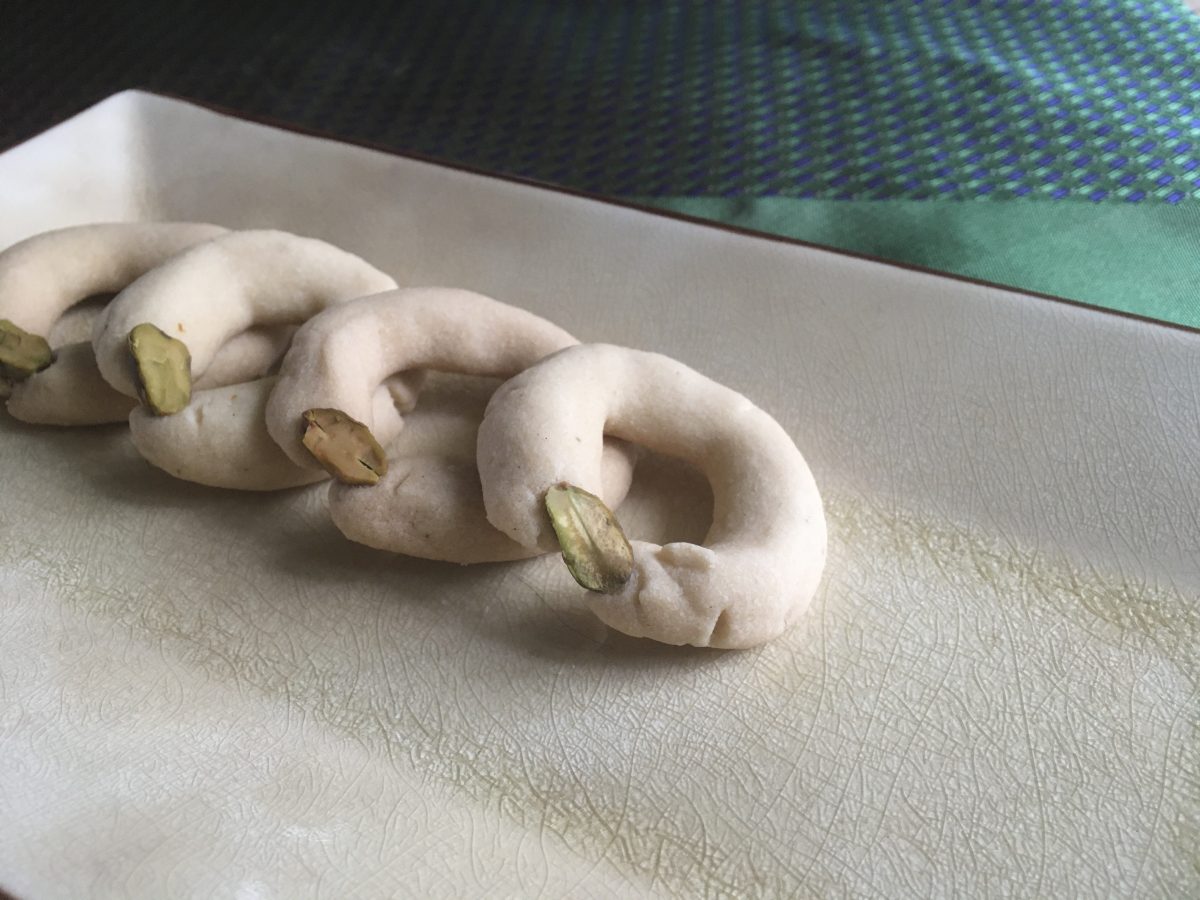
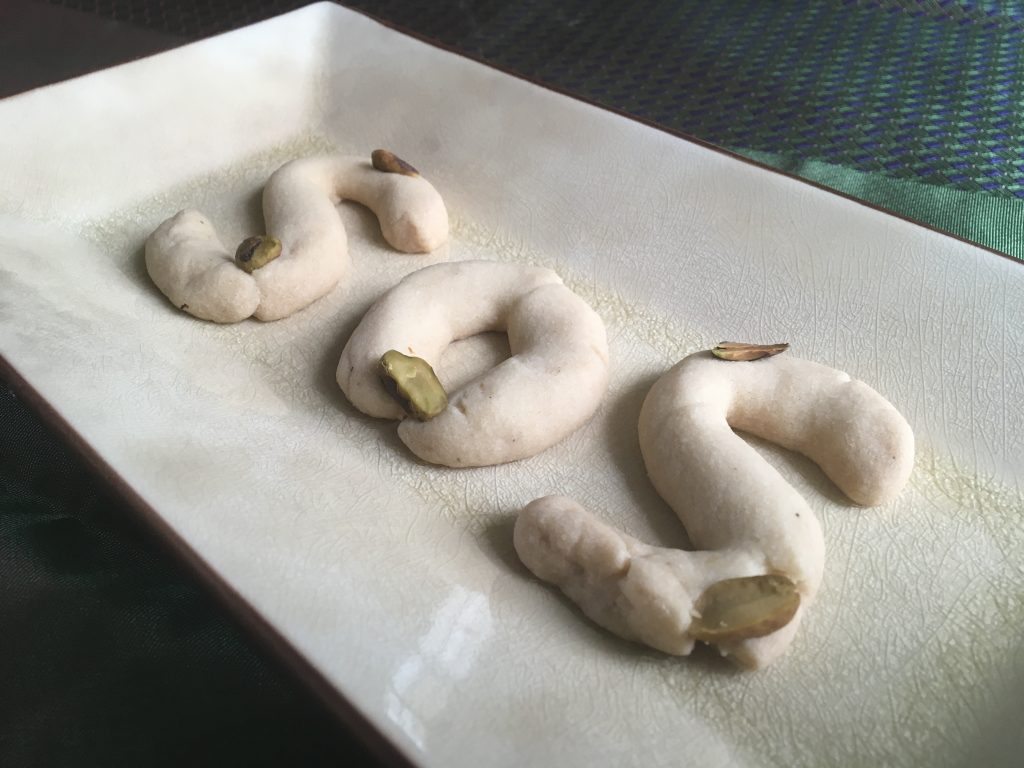
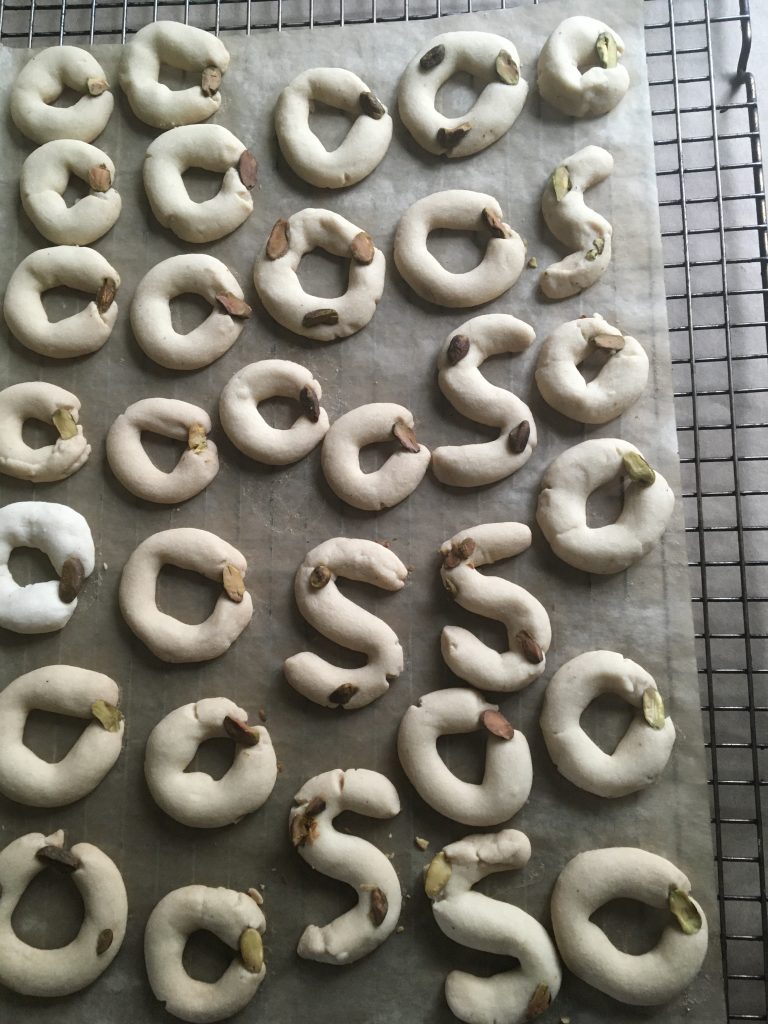
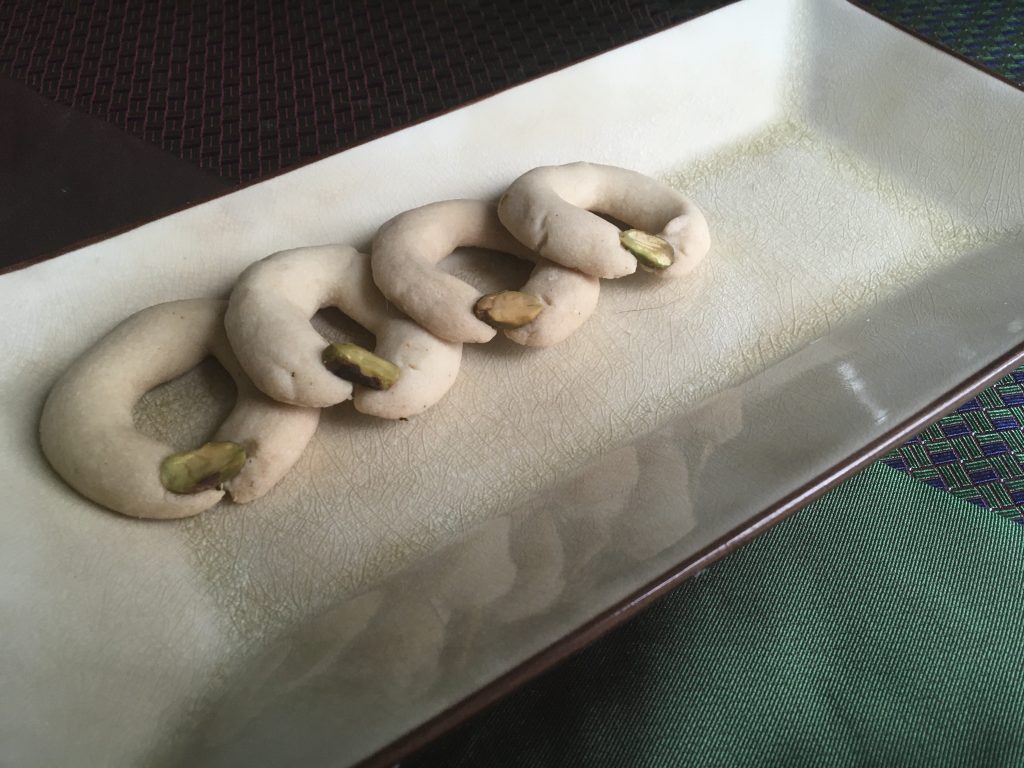
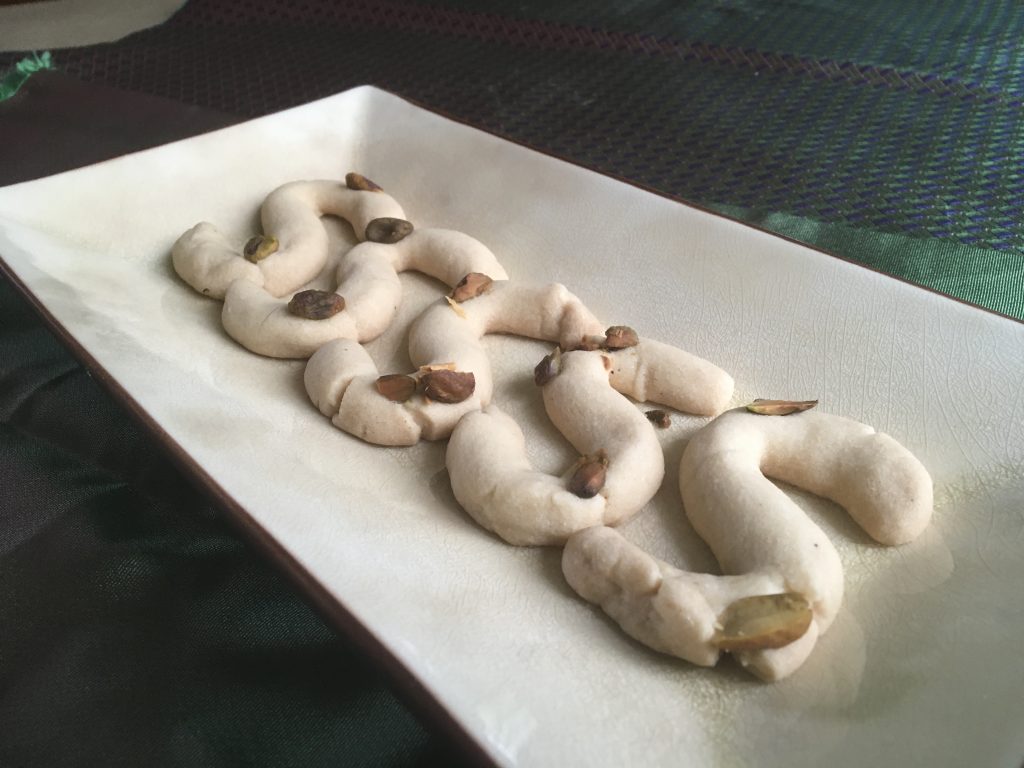
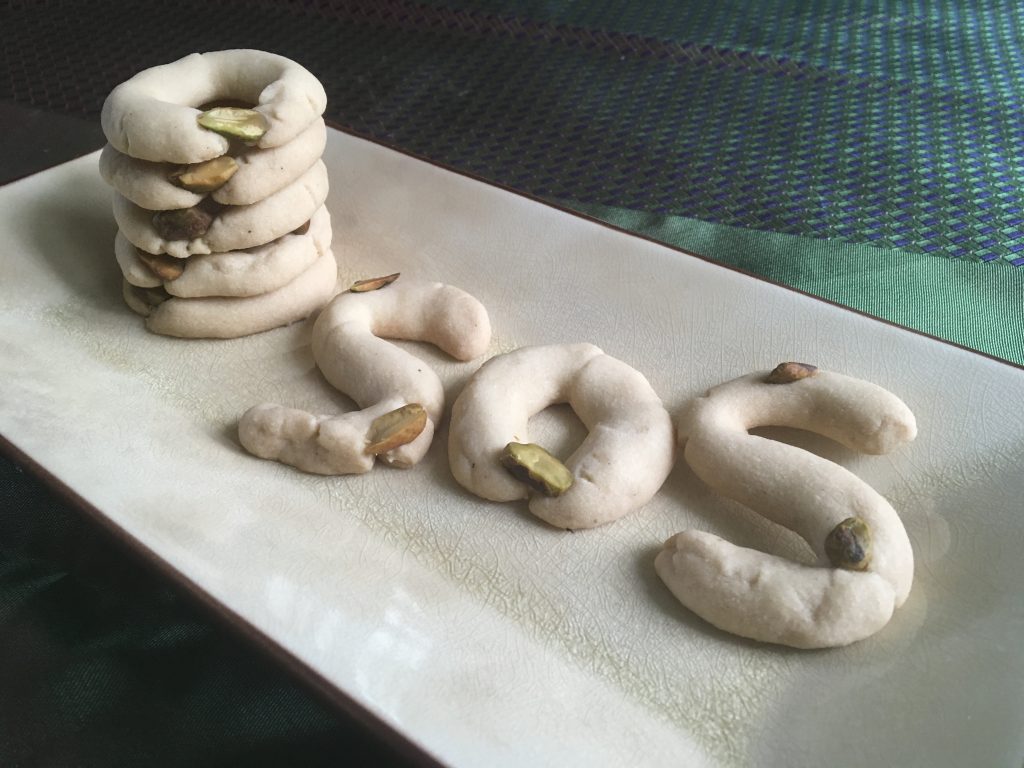
Every source we’ve read or consulted had the same advice: keep it simple. Most Ghraybee are shaped into a small O, C, or S shape, with a single flaked almond or pistachio half as an ornament. We think the pistachios look better, but your mileage may vary. A minority of recipes just went with drop cookies by squashing small balls, with an almond or pistachio pressed in the center. Again, do as you wish. But we do urge you to use some kind of nut as a decoration because it provides some contrasting texture. Salted nuts add in interesting pop of extra flavor, but preferences vary.
We also feel obliged to note that shaping the cookies can be a midlevel chore depending on whether you’re one of those people who are blessed with cool hands versus hot hands. We are in the latter category, and found to our chagrin that the dough came out of the fridge rock hard, and then fought us at every stage by (a) sticking to our palms like crazy, and (b) softening into paste before we finished up. Imagine shaping cold butter in your hands and you’ll understand what’s going on.
We solved the sticking problem by dusting our hands with a little flour. It works perfectly so long as you expect to have the problem, and keep a little bowl by your side.
We solved the softening problem by working quickly and returning any too-soft pieces to the fridge for a few minutes.
We also learned that our trays of shaped cookies come out more regular if we put them in the freezer for 5-10 minutes, or the fridge for 10-20. That brought everything back to the same temperature and ensured even baking.
SHAPING NOTE #1: Interviews with experienced Ghraybee makers show that those problems are a personal thing more than a technical one. Some people run into difficulty with the shaping, and others do not. We really do think it’s a question of cold hands versus hot hands, rather than anything to do with the recipe. You see the same thing with pie crusts sometimes. The cookies come out just as well regardless.
SHAPING NOTE #2: Kate did an experiment where she put those too-soft pieces in a piping bag and used that to make the cookies instead of rolling the pieces in our hands. It worked – the dough really does get soft enough to pipe – but the results were similar to cookies made from liquid butterfat. They crossed the line into being too tender, and fell apart even on the cookie sheets.
About the Sugar…
American bakers have such a legendary sweet tooth that it has become a common joke in every immigrant community we’ve explored. And, sure enough, the base recipe I put together from various English-language sources came out a bit too sweet for the palate of those who knew this cookie from childhood. Citizens who grew up in the States loved them, of course. I have deferred to tradition in the recipe that follows, and made the cookie to Middle Eastern standards by using 3 ounces (85g) of powdered sugar. If you want to adapt it to the tastes of American children, increase the sugar to 4 ounces (115 g).
Final Thanks
Additional thanks go out to Barbara Pabotoy, a fine baker we met on Facebook who shared her mother’s Lebanese version of the cookie (“Ghraybeh”). I get the feeling that she’s confused about how long it took us to feel comfortable in sharing a recipe that’s second nature for her and her family. I can only answer with the words “pie crust” and “omelet.” And the snide, totally unworthy observation that I’m betting she has nice, cool hands for dealing with the shaping process.
Some things are so simple that they take some practice to master. Those same things usually end up being some of the best exemplars of the larger craft. Ghraybee fall in both of those categories. Don’t be surprised if it takes you a little fussing before the process suddenly becomes easy. But stick with it! Oh yes, definitely do that. This may be the most buttery cookie that it’s possible to make, even in theory. It’s certainly the biggest butter bomb that we’ve ever made, and it won’t be a stranger in the house moving forward. These are a true, close-your-eyes, omigod-where-have-you-been-all-my-life experience to treasure.
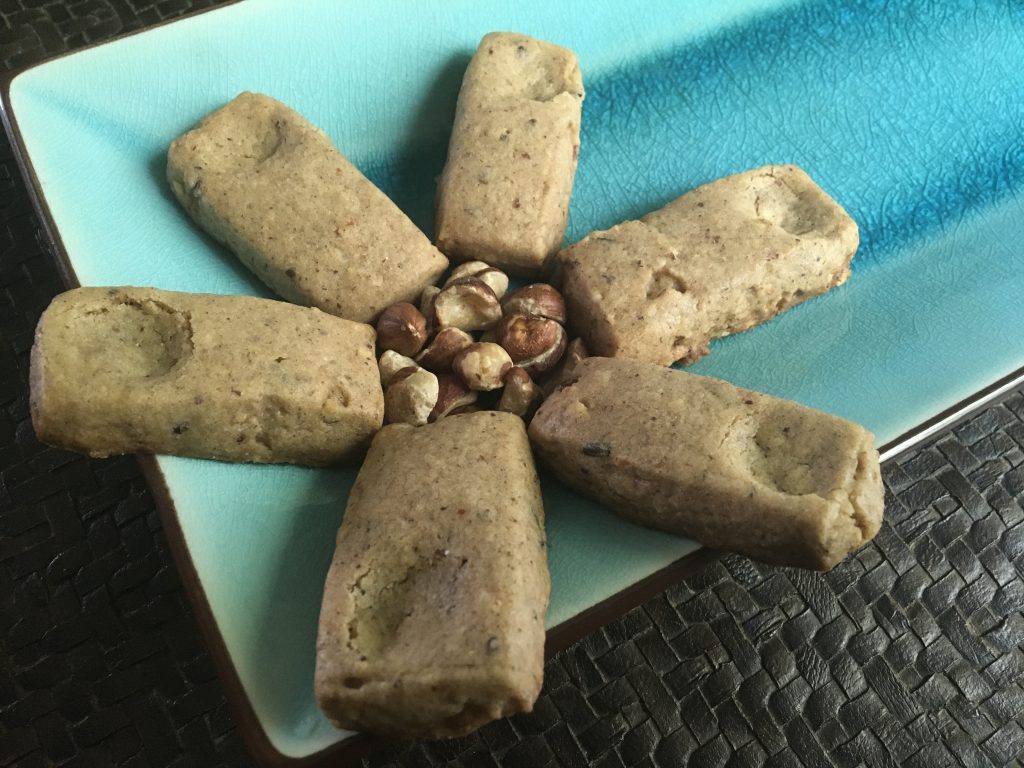
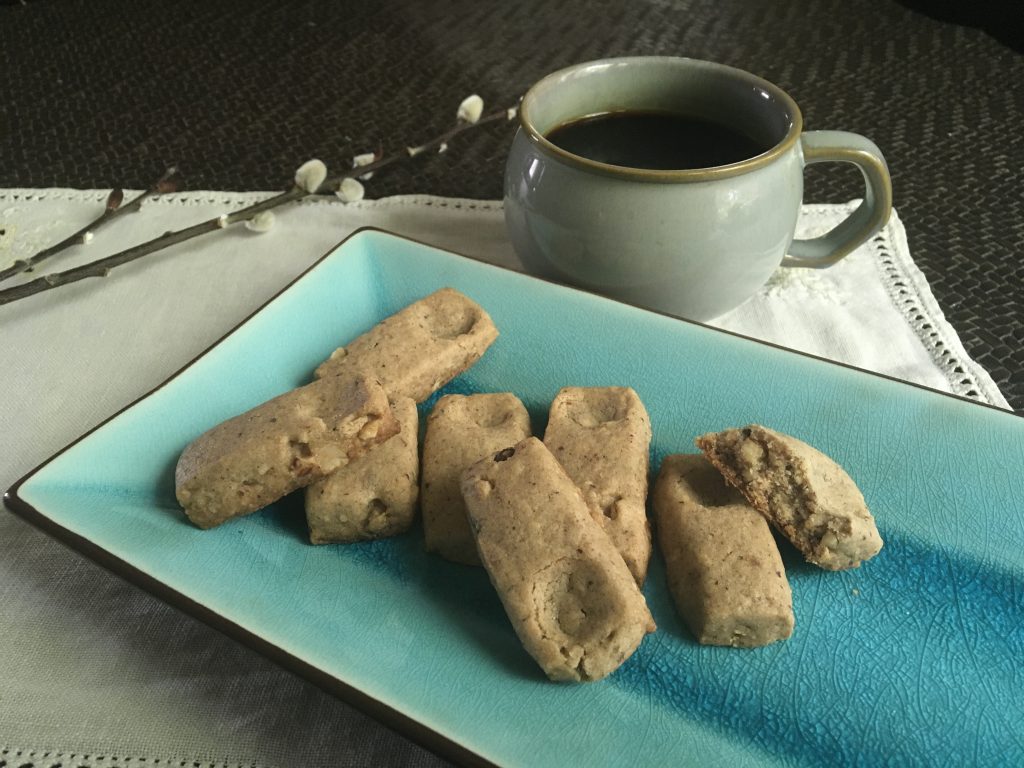
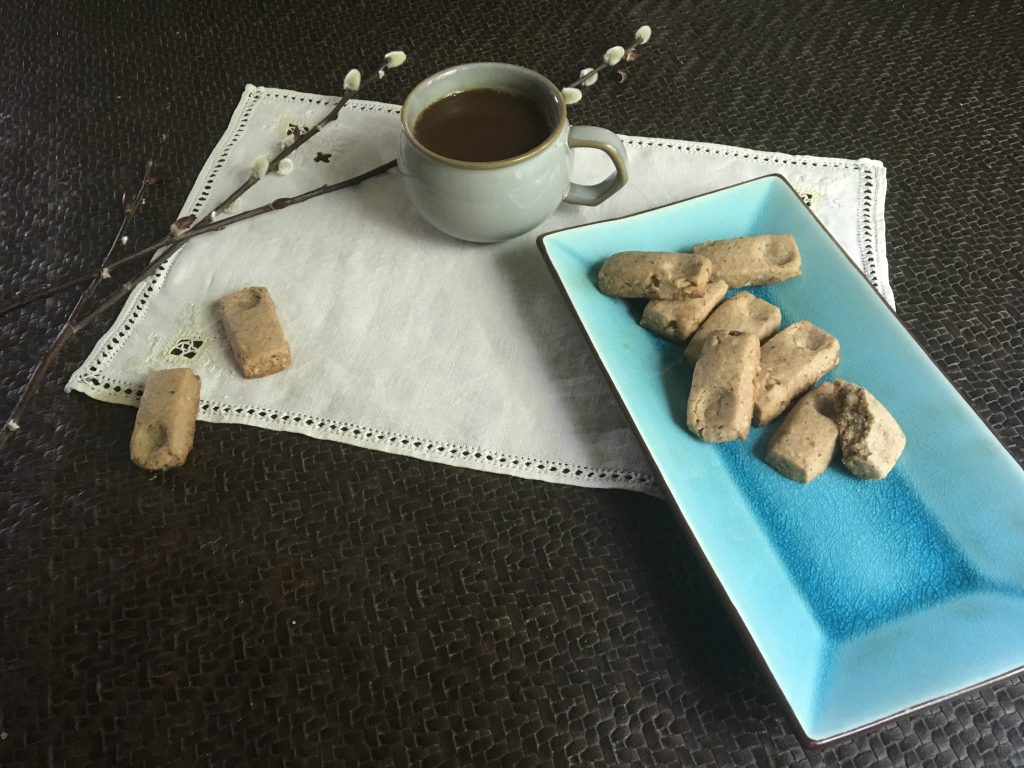
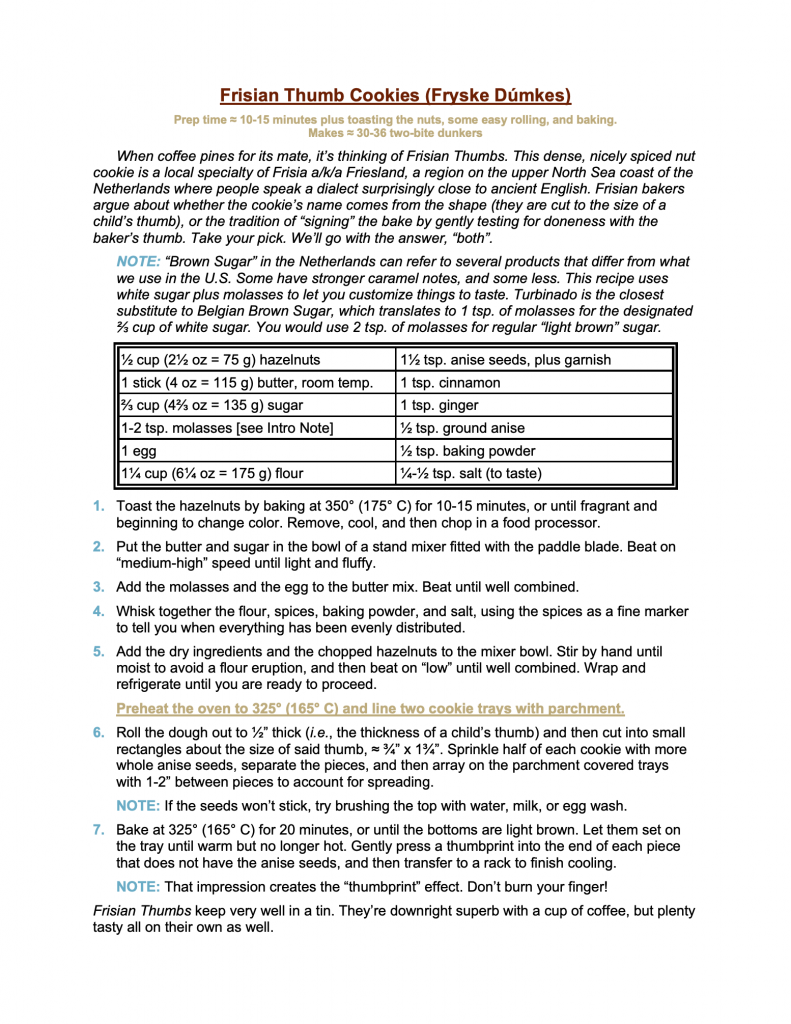
A buttery, hazelnutty, spice cookie dunker from the Netherlands’ Viking province that has become our new favorite to pair with a cup of good coffee.
It’s been a busy few weeks and that’s cut into cookie testing, but to be entirely honest the delay also comes from my perpetual fidgeting with a new recipe for the Ultimate Butter Cookie. Another batch or two and I’ll have it out… but all of that is just an explanation for why I’m now publishing something totally different. [Talk about a teaser!]
That butter cookie comes from the Middle East, so I wanted to go back to Europe for a break. Clearing my head for the final assault on the ramparts, as it were. I keep an ongoing “cookies to test” list, so I pulled that out and asked Kate to choose one that caught her eye. She marked off a few possibilities and then paused.
“Frisian Thumbs? What in the world?”
I smiled. “Top 10 on the great names list, right? It’s a Kate Cookie too – they describe it as a dunker made with a lot of hazelnuts and some spice. Butter too, I’m afraid.”
She asked to see the initial recipe I’d downloaded, approved both the idea and the incursion into her monthly butter allowance, and then waved me away to work some magic. Magic done; mischief managed. This is a good one.
By this point I have a pretty well established pattern for working on new cookies. I usually find them in the first place by wandering through the Wide World of Google doing searches like, “regional cookies of [This Place]” or “local baking traditions of [That One].” E-tourism, cookie style. Potential targets pop up in various locations: regional promotion sites, historians looking through an oddball lens, memoirs from tourists, émigré groups sharing memories, other bakers, etc. I mark down the names, look up the recipes, pick an example for the files, and then put it on the “cookies to test” list with a brief description for later.
When it’s time to look deeper – now, in the case of Frisian Thumbs – I go to the next level in two different ways. First there’s the recipe. I start on that by searching out every possible version the Internet contains. This gives a firm idea of the parameters, from which I’ll write something up using round figures and my experience with other projects.
Then there’s the heritage part. That also begins with the Internet, but then moves on to a search for actual humans who know the cookie, and can provide some context. Those two steps provide the raw ingredients: a recipe to work from, and a heritage to explore. And the follow up question: How did these two meet and marry? Which is where the test batches come in, followed by gifts for my sources to sample, and adjustments to account for both my reactions and theirs.
ASIDE: There are few things more satisfying than developing my version of a beloved childhood treat for someone who knew it back in the Old Country. Life doesn’t have many perfect moments. Two strangers exploring a cookie together, on truly neutral ground? That is one.
STEP 1: Creating the initial test recipe
So, off I went and found no less than eleven (11) different recipes, most with photos and descriptions. These taught me a lot about the underlying issues. Here are my notes:
Almost every recipe centered on anise, supported by a background of cinnamon and ginger in roughly equal amounts. What an odd combination! But it works. Taste it in your head and you’ll see.
The hazelnuts bring it all together. Remember to toast them first. No two ways about it.
The cookies bake low and long. 325° for 20 minutes. Interesting.
The recipes are pretty close together after normalizing…
“Are you done yet?” I stop and look up. It’s Kate, back from her writing lair. “Those thumb cookies sounded really good, and I’m going to make a pot of coffee. Any chance you’ll have some ready for me to try?”
My friends, this never happens! Don’t get me wrong. Kate is a certified cookieholic. She’s at least as bad as I am. But her addiction gets triggered by proximity. See cookie; snitch cookie; savor cookie; repeat. I’m the one who gets entranced by recipes alone. But not this time, apparently. I wasn’t the only one getting hit in the, Oh that sounds good! spot.
I promised to get her something in the next day or two and then went back to my research.
… normalizing to a single stick of butter (½ cup = 115 grams). Which is a surprisingly small amount; most cookies start with two sticks. Hmmm. One stick of butter yields three dozen cookies? Definitely on the small side.
The big difference between the recipes comes down to the amount of flour. Anywhere from 130 grams all the way up to 250. What’s going on? Aha! The ones with more flour have some baking powder added, and the ones with very little look slumped in the photos.
The flour also ties in with eggs. Most of the recipes include an egg on the inside, excluding only the ones with very little flour. The recipes with both an egg and some milk have the most flour. Got it.
But there is not a lot of flour in any of these by the standard of other dunkers! Corsican Canistrelli have a good 50% more in the flour to fat ratio, plus a cup of chestnut flour to push the ratio even further. The hazelnuts in this recipe are chopped, not ground. They won’t act the same. So Frisian Thumbs may be dense, but they shouldn’t be hard, dry, or crispy.
And that flavor profile! Hazelnut, hazelnut, spice, and hazelnut. That’s what we’re after here! No extract, either. Very elegant even if they are kind of plain to look at. One for bakers rather than bakeries.
Time to check in on the heritage part of the equation.
STEP 2: What’s the story behind all this?
I knew going in that the Frisians were a big deal back in the Viking Age. Why would someone name a cookie after their thumbs? It turns out there’s a string of small islands off that coastline called – look at that! – the Frisian Islands, with the modern Netherlands province of Friesland right in the sheltered area behind them. The name “Frisia” goes back to Roman times, but modern Frisians descended from a Viking tribe who settled in the region after a series of environmental disasters had emptied out most of the original inhabitants. These new Frisians (they adopted the name) were closely related to the Angles and the Saxons who settled in England, only to be conquered in 1066 by the even fiercer Norman Vikings who had settled 400 miles further south.
The Frisians who didn’t travel to England with their Anglo-Saxon cousins settled down and became famous for breeding the finest warhorses on the continent. Including, ironically, the mount used by William the Conqueror. Cool! Their descendants maintain a fierce pride about their particular roots, with a regional dialect that is sort of like ancient English mixed with Dutch and German.
There’s no way I was going to find a group of Frisian émigrés here in Pittsburgh! But as it happens, I do know several Dutch bakers through a Facebook group devoted to the molded cookie Speculaas. Thanks go out to one and all. And to Google Translate, since the recipes they pointed me to were written in Dutch, with notes on particular Frisian words.
The material from my online friends brought me up to 14 versions, which led to a modified master recipe while also answering a lot of questions. First, Frisian Thumbs are a true specialty of modern day Friesland, and little known outside its borders. They are not an extension of other Dutch cookies. Second, Frisians are a lot more culturally distinct than Americans would tend to assume. So much so that road signs in the province appear in both Dutch and Fries. Thus it may be inevitable that Frisian bakers will start from normal Dutch ingredients when it comes to flour and sugar (see below), but they wouldn’t be caught dead using a standard spice mix from the store with some extra anise.
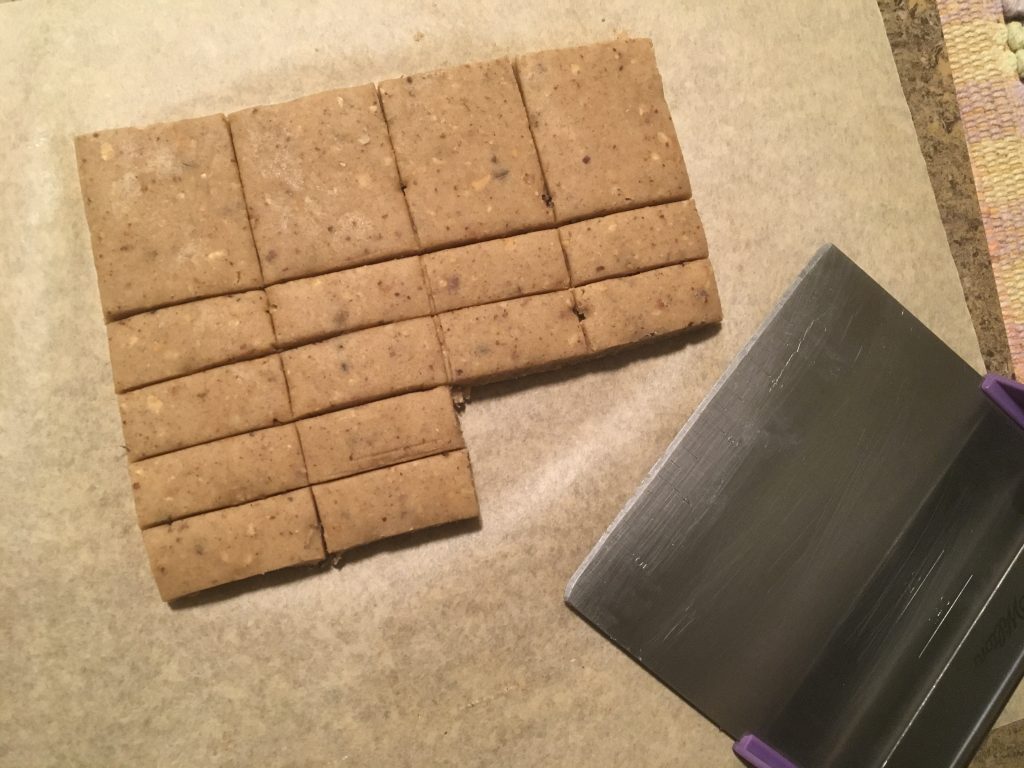
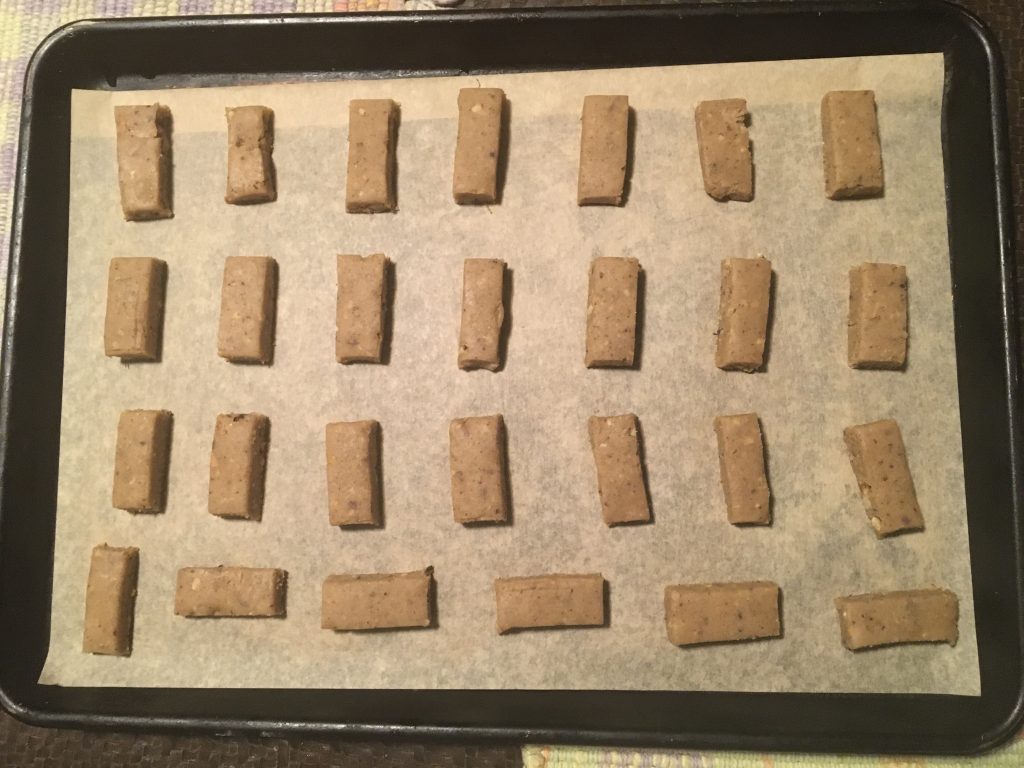
Third, the photos make it clear that these cookies are supposed to be small, thick rectangles, not oblong drop cookies. They must have enough flour to more or less hold their initial shape. That evocative description about, “the size of a child’s thumb” actually makes a good deal of sense. Pull out the ruler and… ½” thick x ¾” wide x 1¾” long.
Just roll out a slab and slice to shape. Nothing fancy. This would be the point to put anise seeds on top as fair warning. They are all buried inside this particular dough.
Fourth, not a single one of the Dutch photos contain the thumbprint mark. They’re all plain old rectangles. But I did see several others that had the dent, and you know what? It creates an effect that looks a lot like a thumbnail! I like it.
What’s a thumb without its nail? They are just as tasty plain as they are with the decoration, but it does add a certain distinction. Press the shape in when they are warm and fresh from the oven. I was too eager and got a little burn. Next time I will press in using the tip of a spoon.
Next, I wanted a chewy and somewhat dense texture, but not excessively so. Too much flour, especially with no leavening, would make little bricks. Balance is everything.
Speaking of which, those websites convinced me that balancing the spices had to be job one. Spice cookies are normal for the Netherlands, and don’t raise eyebrows over there like they often do in the U.S. On the other hand, Dutch cooking incorporates a very particular sense of poise and restraint. It shows up on the savory side too. Any cookie that Amsterdam writers would praise as “well rounded” had to be exactly that. So my target was clear: a nut cookie enhanced by anise, rounded out with cinnamon and ginger, chewy but not dense, and ideal when paired with a cup of coffee.
DIGRESSION: A primer on Dutch ingredients
Dutch ingredients can differ a bit from their counterparts here in America. To start with, bakers in the Netherlands have a different type of flour than you find in the U.S. Here in America we grade our flour according to protein content, going from low protein cake flour all the way up to high protein bread flour. On the Continent they grade their flour more by grind size. The best Speculaas, e.g., use something called TIP-00 flour, an Italian product that is ground to a spectacularly fine level “similar to baby powder.” That doesn’t matter for the recipe at hand, but it makes a real difference for a molded cookie where the features are a key difference between good and better.
In this case we need to look at the sugar. U.S. sugar is made by grinding sugar cane to a pulp, extracting the sweet syrup, and then removing the impurities to leave only pure sucrose. Those impurities are sold separately as “molasses.” Mix a generous tablespoon of molasses back into a cup of white sugar, and you get “light brown sugar.” Mix in two tablespoons and you’ll have “dark brown sugar.” Half a tablespoon yields “turbinado sugar.” [NOTE: you technically want to add a little bit more than just 1 tbsp. Hence the word “generous.”]
Not so in the Netherlands. Their basic ingredient comes from sugar beets rather than sugar cane, which creates some differences you’d notice if the two were used side by side. Speculaas use something called “Belgian Brown Sugar,” which is made by taking regular sugar, gently caramelizing a small portion, and then mixing it back in with the white kind. Stella Parks published a great essay and recipe on this at SeriousEats.com if you want to learn more. This goes to the second part. Then there’s a “brown sugar” made by mixing some actual cane molasses into beet sugar; and another “brown sugar” that’s made by mixing in a cooked sugar syrup that Dutch families use on pancakes instead of the U.S. maple syrup. And…
You get the point. The recipes all used “brown sugar,” but those words don’t mean the same thing in the Netherlands as they do in America. Fortunately enough, I’m told by people who have lived on both sides of the pond that these differences are real, but subtle, and not enough to alter the cookie’s character. The recipe you’ll find below starts with white sugar and adds just enough molasses to turn it into turbinado (i.e., identical to splitting the total 50/50 between white sugar and light brown sugar). Add more molasses to taste. That’s a great spot to customize.
STEP 3: Putting it all together to reveal a Heritage Cookie
After all that research, and a second “are we there yet?” episode from my beloved, the final test recipe came together quickly. I stayed up late to make a batch for the morning coffee, went out of the kitchen to head upstairs… and discovered She Who Must Be Obeyed waiting on her reading chair, drawn from her aerie by aromas of cooking hazelnuts, butter, and spice.
“They smell fantastic. Are they ready for testing?”
“It’s a dunker. They’ll be all soft and warm fresh out of the oven. It won’t be a fair way to judge.”
She cocked her head and gave me a look. “How many are there in a recipe?”
“Almost 40 for this batch. They’re actually kind of small.”
“Then there will be plenty left for tomorrow, won’t there?”
“I don’t know. My photographer gets awfully picky…”
“I’m the photographer! If you want to see picky, keep standing there in the way and you’ll learn about picky!”
I am a man. A mere man. I can’t even translate that sentence. I certainly didn’t want to experience it. So I stepped aside. But I spoke up even as I deferred. “I do want to press in the thumbprints, at least on some. Then we can sample any ugly ones.”
And so we did. I burned my thumb. She did not. I will make my thumbprints with the tip of a spoon next time. She will laugh when I do. We both think it’s a great look. And yes, we both had a taste. And then another. They were goooooood.
FOLLOW UP NOTE: This batch produced 39 cookies. We ate two that evening, and Kate put ten aside for the photography. There were exactly 20 left when I put them in a tin for my “get thee out of the house” sharing trip. Cookie gremlins are a thing in this house, and I can’t exactly blame them. Frisian Thumbs are goooooood.
NOTE FROM KATE: Scott is a talented writer of fiction. I categorically deny all of the above. Except the part about Frisian Thumbs being good. No one can deny that.
Final touches
Some cookies take a ton of fidgeting. Others just slide together all on their own. This was one of the latter. They were great warm, and the ones that survived our gremlins were even better the next morning. I’m noshing on some of the rapidly vanishing leftovers even as I type. So there weren’t a lot of changes in this one. But there are a few decision points beyond the recipe that our readers should know about in advance. Knowledge is power, and this way so you can make your own choices.
About the flavor. The first thing you taste is a combination of butter and hazelnut, which changes as the ground spices kick in, and then changes again when you crunch through one of the whole anise seeds. It’s definitely a spice cookie, and definitely a hazelnut cookie, and definitely unique, but at the same time there’s nothing here that is “strange”. We’d have no problem serving this to kids of all ages with no warning other than, “Here’s a cookie you’ve never had before…”
About the anise. No warning unless you dislike anise, that is. Some people don’t. My Dad hated licorice flavor, and our younger daughter is lukewarm at best. This isn’t a cookie for them. No, it isn’t an “anise cookie.” Anise is just a component flavor. But it is a clear and distinct component.
About the whole anise seeds. Whole seeds can get annoying when a hull gets caught in your teeth. It isn’t a big issue, and the whole seeds add a late-hitting pop of flavor that both of us enjoy. Kate would keep them buried inside the dough for the sake of simplicity, but you’ll see that I wrote the recipe in a way that sets half of the seeds aside to be placed on top. I only did it to remind people that the seeds are there, and to expect the occasional chewy bit. Don’t bother if you don’t care.
About the salt. Using the full ½ teaspoon of salt gives this cookie a noticeable kick that I enjoyed, but I also prefer salted nuts over plain for eating out of hand. The salt level might have been a tad too much on some other day. The cookie definitely wants some salt to bring out the nutty flavors, but we recommend that you start at the ¼ teaspoon level and then add more as desired. Make a note of your preference on the recipe.
About the coffee, and the dunking. I have never come across a cookie that pairs better with a cup of coffee. Not ever, anywhere, in any form. It’s almost stunning to write those words, but they are true. At the same time, it really is a “pairing” rather than a case where one side needs the other. Together, they are more than the sum of their parts. But separated they’re still darned good on their own. Frisian Thumbs have enough texture to hold up well as a dunker, but they also have enough moisture and suppleness to eat out of hand. Frisian Thumbs are goooooood.
That’s about it. Sorry to run on so long. This is an easy cookie to fall in love with, and both of us have. Head over heels. Let us know if you feel the same.
Most of the cookies that Americans would consider ‘obvious’ and ‘normal’ made their way into the original Heritage Cookies of the Old and New World. We are, after all, Americans. That is our world view, like it or not, so the things that have become traditional for the U.S. qualify by definition. But every so often you hit one of those “Doh!” moments when you’re reminded of a recipe everyone knows, that somehow slipped through all nets to lie there waiting for Volume II.
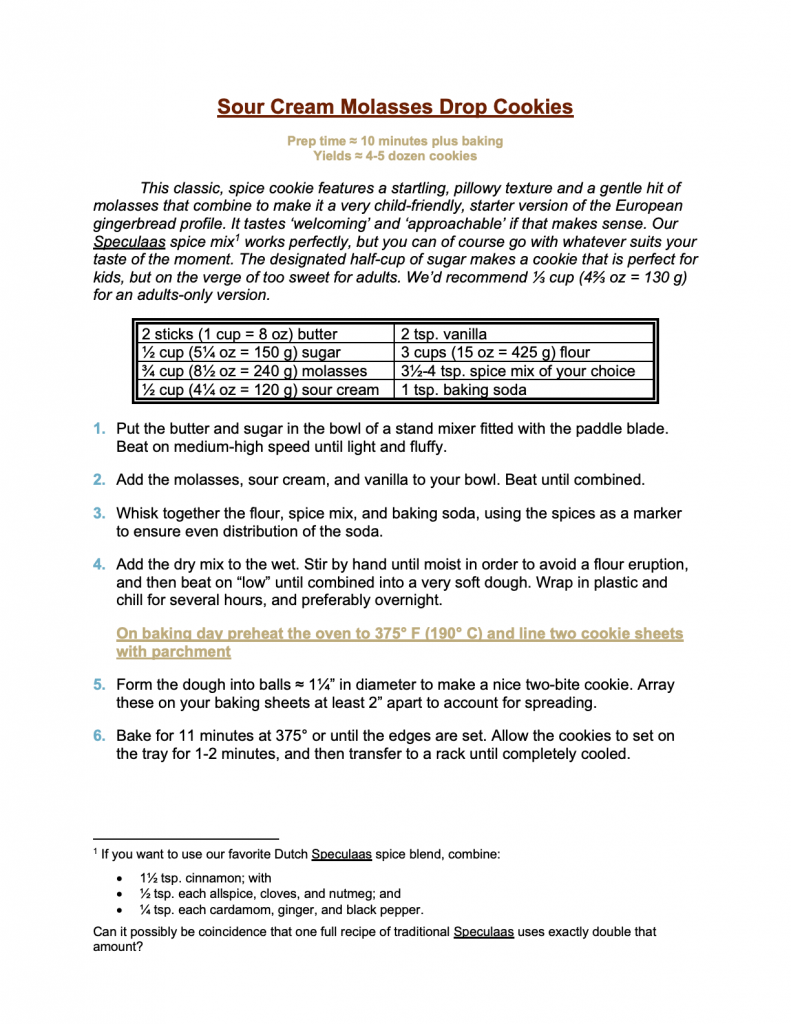
Case in point: Sour Cream Molasses Spice Cookies.
The moment happened in this case when a Facebook friend published an odd version of Speculaas – the great Dutch molded cookie – that included sour cream in the dough. Sour cream is a uniquely American ingredient, created in the U.S. as a version of Europe’s crème fraiche that could be produced on an industrial scale. She wrote that the recipe came from family friends who presumably brought the recipe back to Europe after visiting the States; reverse immigration at its best!
We’ll probably work up a version of that recipe for some future article, but the important thing here was Scott’s reaction: “Oh, I know where that comes from; this is that soft molasses spice cookie we had growing up… DOH!!”
There’s really not much more to say. This is a cookie you knew as a child; as warm, comforting, and familiar as Grandma’s lap. It’s a classic American drop cookie, made extra tender and pillowy by the addition of a little sour cream, and interesting by the addition of some sweet gingerbread spices. Bing, bang, boom: done. They really are just that easy.
There are only two notes we’d like to emphasize before closing. First, please customize these by using your favorite spice mix. We went with our Speculaas mix for the recipe in deference and thanks to Hayden for bringing the memory back to life, but the cookie will work just as well with anything that suits your particular, mood, taste, and spice cabinet. Pumpkin pie spice; classic. Apple pie spice; classic. Your mother’s gingerbread mix; classic. Just make it balanced, and maybe weighted a little bit toward the cinnamon since this is, after all, an American cookie and we are obsessed by that particular spice in our baking.
Second, have a source ready to receive your largess because these things won’t last in the house. They are high powered, superconducting hand magnets, and once the cookie reaches your fingers, you know where it is going to end up. On the plus side, this is also a perfect way to get the children in your life started on a lifelong enjoyment of the wonderful world of spiced breads, cakes, and other treats. And to teach them basic courtesy. “Please” and “thank you” are easy concepts to learn when there are cookies in the jar.