
“There is a tide in the affairs of bakers. Which, taken at the flood, leads to cookies of legend.”
Williamnot Shakesthepan, ‘Julius Eater’
The bakers of Imperial Austria were always good, but immortality escaped them until the creation of a series of desserts in the 1800’s. Yes, Linzer Tarts date back to at least the 1600’s. But nailing it? Pre- and post-French Revolution. One example is Sachertorte, created in 1832; a dense, extremely chocolatey layer cake with a generous amount of apricot jam on the inside. Ischler Cookies are another.
This particular cookie was created for Emperor Franz Joseph I in 1849 at the spa town of Bad Ischl. Look with care and you’ll see a marriage of the first two; the buttery, nutty, Linzer shortbread sharing the stage with apricot filling and dark chocolate counterpoints.
Exquisite.
As always, skip to the bottom if you are only here for the recipe. Most of this article concerns the choices we made to get there.
MORE A “PROFILE” THAN A “RECIPE”
A search for “Ischler Cookies Recipe” yields somewhere in the area of 2,000 recipes in English alone, and another 10,000 in German, Czech, Slovak, Hungarian, and any number of other languages. Plus books, of course. I’ve scanned maybe a hundred in all, with close study of several dozen, and all the work done on ours. On that authority I feel confident about the [lack of a] target definition:
- A sandwich cookie made from a tender, nut-heavy shortbread;
- An apricot filling, which often gets varied in the name of creativity;
- And a densely chocolate element, which can take any form that human ingenuity can contrive.
This cookie has been around for more than 170 years, and the recipe now has all but infinite variations. If you insist, I will admit to a belief that the original cookie used a lot of hazelnuts, had an apricot filling, and was enrobed in chocolate, but that is based purely on inference and guesswork. Why hazelnuts? Because it pairs so very well with chocolate. Why enrobed instead of sandwiched? Well, if I was a pastry chef, and I wanted to impress an Emperor, that would be my default.
Sensible? Yes. A statement of fact? Not exactly.
So here’s the bottom line. Our version of this recipe is as good as any, better than most, and is 100%, capital-R Right. But that doesn’t mean that other recipes are capital-letter Wrong. They aren’t. We’re looking at a flavor profile, not a fixed recipe. Everything is “right” so long as it has the nutty shortbread, jam filling, and distinct hit of chocolate.
THE NUTTY SHORTBREAD
I spent years refining the proportions in my nutty Linzer Tart dough to perfection, and there is no reason to mess with success for this one. Here is the basic formula:
- ≈ 1 cup (7 oz = 185 g) of fine nut meal, ideally from gently toasted nuts;
- 2 sticks (1 cup = 8 oz = 225 g) of butter;
- 2 cups (10 oz = 185 g) of flour;
- One large or XL egg yolk;
- A small amount of baking powder; and
- A healthy pinch (¼ tsp.) of salt.
Tests pushed us to add an extra half cup of flour to the dough, plus a little beyond that for oily walnuts, but that’s basically where we ended up.
What Nuts To Use? Any. Most modern American recipes tend toward almonds as the nut of choice. Modern recipes from Austria tend to use hazelnuts (filberts). The Hungarians often favor walnuts. Kate and I usually recommend a mix of nuts, but it had to be tested. We did so. And the result was clear: It doesn’t really matter.
NOTE FROM KATE: I figure the preferred nut may have also been a function of availability. The Hungarian versions favor walnuts, which they grow locally. In Bohemia (and I believe Austria) you can find hazelnuts bushes growing prolifically near every village, much to the delight of both youngsters and squirrels. So they make more sense for where I grew up. That said, the 1924 Sandtnerova cookbook uses almonds for almost everything, including her version of Ischler Cookies, and Austria sat in the middle of all these trade routes during Imperial times. Thus the Bad Ischl bakers would have had ready access to all three.
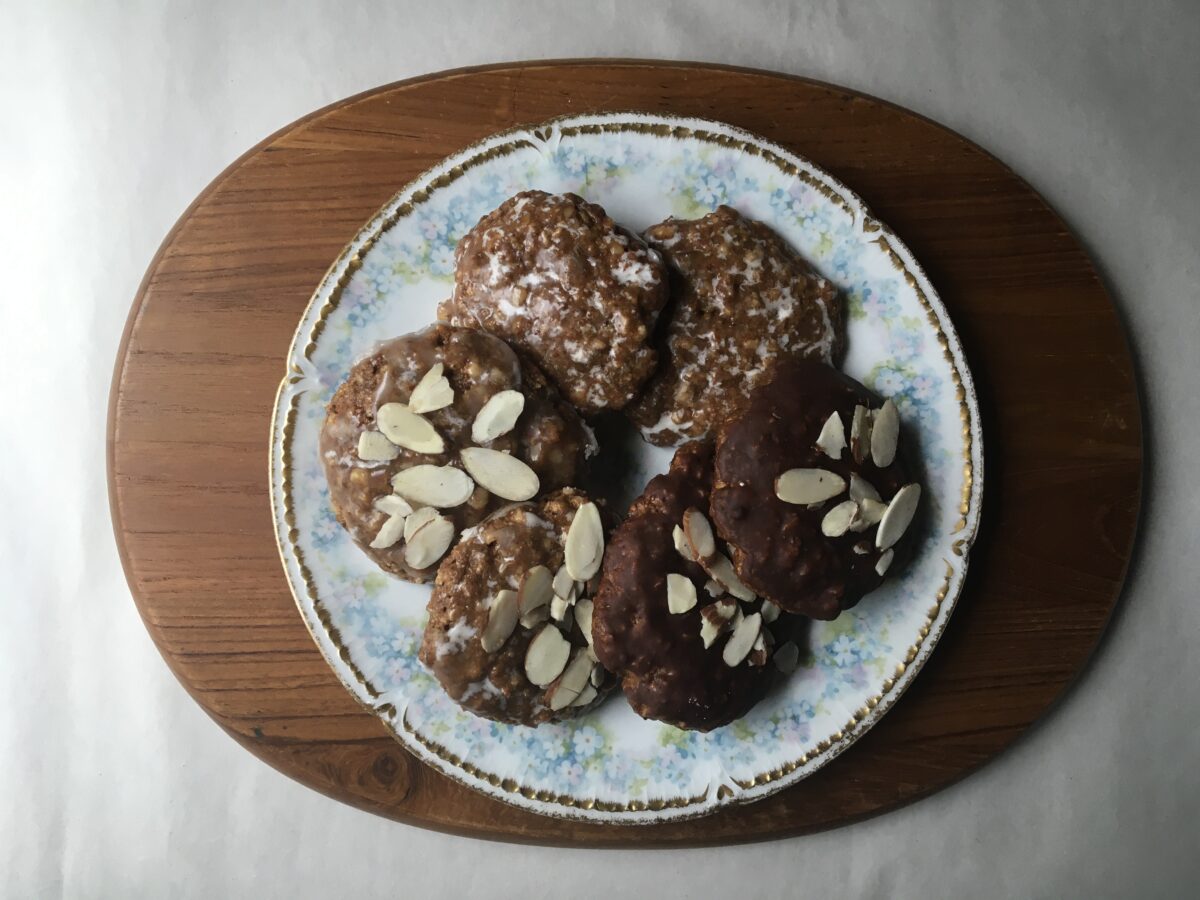
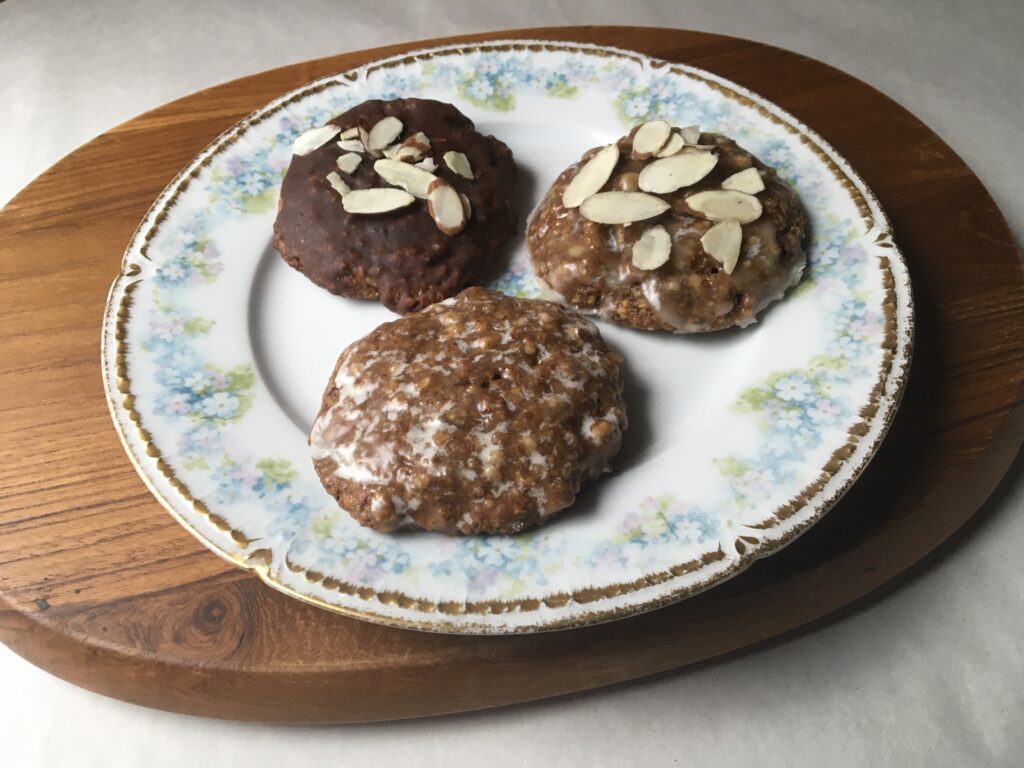
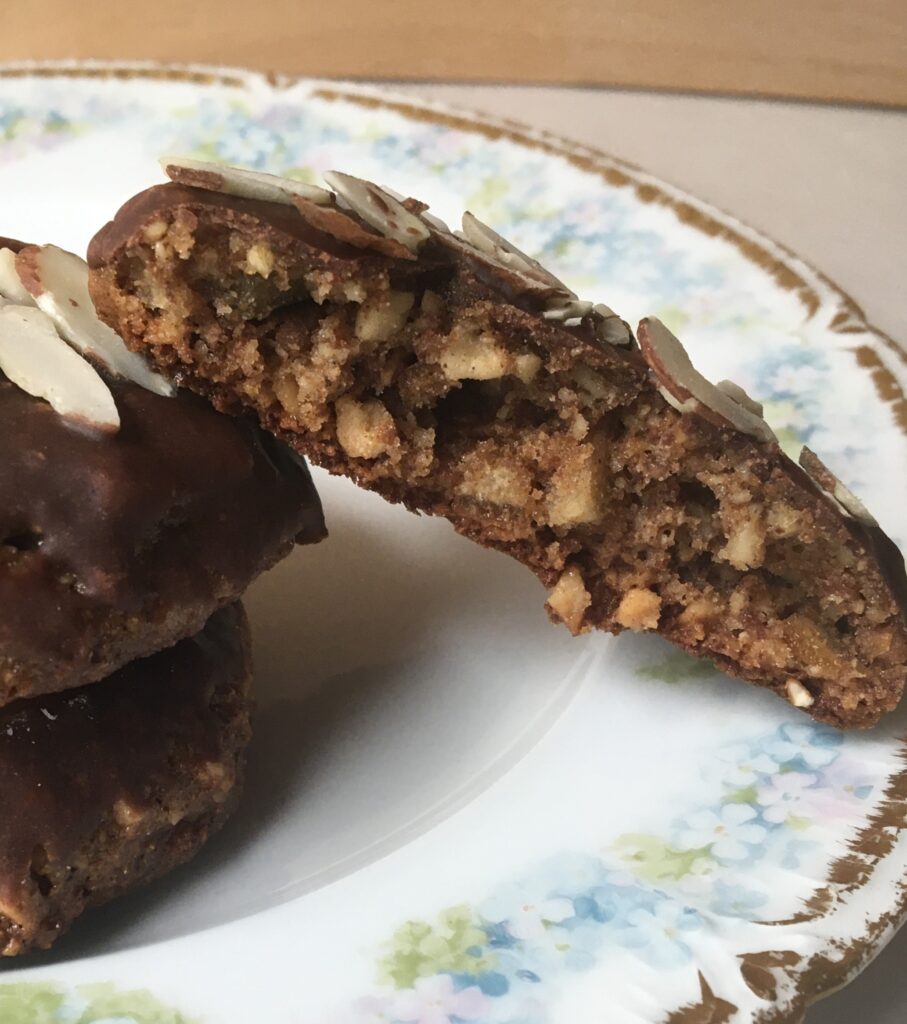
The photos in this post vary from examples that are pure walnut through pure hazelnut, 2:1 hazelnuts and almonds, and 3:1 hazelnuts and walnuts. They look the same, and while a devoted taster can tell one from the other (especially when the nuts are toasted), every variation was just as delicious as the last. So choose what you wish according to personal taste, budget, and pantry.
“What about oddball nuts like pecans, peanuts, macadamia, etc.?” Yes, that’s valid too. Look at the definition! “Nut meal” it says, and that is all it means. You’ll just be making another of those infinite and delicious variations. The only change is the obvious one: walnuts and other oilier nuts create a looser dough, which you’ll need to compensate for by adding some extra flour during the rolling phase. (NOTE FROM KATE: Macadamias would be interesting. They are the oiliest nut in existence and would produce a very short dough. I can already taste a Hawaiian take on the Ischler, with a tropical jam filling and a white chocolate coating on top!)
What Texture of Nuts? This one is more defined. Use nut meal nut flour, without any significant chunks of the sort you’d want if we used the word “chopped.” Yes, many people prefer to have little pops of crunchy nuts in their cookies. And yes, it adds some texture while also being convenient. After all, that is what you can get from a food processor. It just isn’t capital-R Right, because food processors did not exist in 1849. Bakers used table mounted grinders instead. Kate’s Grandma Kandler had one that looked a lot like this:
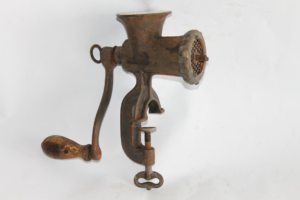
(NOTE FROM KATE: Scott has this part only half right. Grandma used one like this for poppy seed, and only occasionally for walnuts (which she used in her zimtsterne-like meringue sticks). She didn’t have a nut grinder for hazelnuts or the oh-so-rare almonds. Those she ground on the Czech equivalent of a box grater, one nut at a time, while listening to the radio and cursing. That works fine if you use the small slicing openings, but it’s laborious and does a job on your manicure.
You might ask, “Why didn’t she have the menfolk do it?” The answer is twofold: 1. The menfolk were busy pounding regular sugar into powdered sugar using a brass mortar and pestle. 2. She didn’t trust the menfolk not to eat the nuts. They were hard to obtain during the product shortages of the communist era, and she often had to visit numerous stores with hours-long lines just to get two small baggies of hazelnuts. For a great tool we can use now, keep reading.)
We have gotten by for 30 years with a much smaller and more familiar device:

Both of those grinders inhale whole nuts and breathe out either fine shreds or powder, depending on which grating blade you insert. They do not produce “chopped” nuts. Thus we believe that (a) nut meal is almost certainly the texture used in the 1849 version of this cookie; (b) it’s a texture we prefer to eat; and therefore (c) it is the texture this recipe recommends. [NOTE: Almond flour and meal have started to become available in U.S. markets. Hazelnut and walnut meal are a lot harder to find, at least in 2022.]
As for chocolate inside the dough… see below.
Can I add some spice to the dough? Absolutely! Linzer Tarts have a hint of spice, and these can too. Just be judicious. Ischler Tarts have a strong, three-legged theme that every good recipe needs to balance; nutty shortbread, chocolate, and jam. Spices that enhance this balance do nothing but help. Spices that add a fourth layer will throw things awry. We didn’t do a whole lot of experimenting along these lines, but experience suggests that the best approach would focus on a spice that works with your central nuts. E.g., walnuts love to pair with ground cloves and coffee; vanilla, cinnamon, and nutmeg pair to perfection with hazelnuts; almonds get along cinnamon or an oddball spice like pepper.
THE APRICOT FILLING
Yes, apricot. We defunded the cookie police before publishing this article, so no one’s going to arrest you for using something else. There are, however, a number of reasons to start with this particular fruit:
- Apricot and chocolate are a classic Austrian combination, as shown by the much loved Sachertorte;
- Raspberry has its own cookie in Linzer Tarts; and
- All accounts seem to agree that the original, 1859 recipe did indeed use apricot and not any other fruit.
QED.
Apricot cookie fillings come in two basic versions. The first is slow-cooked puree or compote a/k/a apricot butter, povidla, lekvar, etc. We prefer these fillings for recipes that bake the filling, but with this one – filled after the fact – we recommend the easier route; a modified apricot jam.
Jam fillings present two issues, both of which are easy to solve. #1 is excess moisture that can soak into the cookies and limit their lifespan. #2 is availability, since our stores only carry “apricot preserves,” and that product has enough chunks to detract from your ideal result.


We prefer this cookie with a smooth jam instead, and ideally one that’s just a little drier. You can address both concerns by (a) heating preserves until loose, (b) pushing the hot goo through a sieve, and then (c) spiking it with a squeeze of fresh lemon juice or apricot brandy for that certain je ne sais quoi. Apricot perfection with just the texture you want.
I did try to sieve the jam without preheating, hoping to avoid the danger of handling something so hot. Alas, even a coarse sieve wouldn’t do the job. Preserves are just too hefty, and it did nothing about the moisture concern. Thus you are hereby warned about the danger, and we recommend doing it anyway.
THE CHOCOLATE
Yes, a chocolate component is essential. That is what separates this cookie from being a mere variation on Linzer Tarts. Same genus; different species.
What kind of chocolate? That is a matter of some debate. Look at those 12,000 recipes on line and you’ll see that different bakers try to incorporate the chocolate element in every possible way. And I do mean every. We found recipes based on:
- Grated or melted chocolate mixed into the dough. This produces a wonderful cookie on its own merits, and it’s the simplest approach. The drawback? It doesn’t have the same ‘Wow’ factor as a chocolate filling or topping, and it adds flavor without texture.
- Cocoa powder mixed into the dough. Again, it’s a wonderful cookie on its own, but it lacks in both Wowness and mouthfeel.
- A chocolate ganache filling paired with the apricot filling. This is the most common solution in American recipes because it’s simple, tasty, has a great mouthfeel, and is easy to pack. The drawback? It looks good but not great, and too much of either layer will make your filling squirt out the sides.
- A ring of chocolate ganache filling with the apricot placed inside. This is a neater variant on #2, because the piping process enforces exactly the sort of filling-discipline you need. The downside? “Piping” is #1, because many people find it fussy and hard. Visual appeal comes in again as #2. There’s nothing wrong with looking at chocolate, but seeing the jam adds a flash of appealing color. #3, I think it messes too much with the balance of flavors, though Kate disagrees. (NOTE FROM KATE: I have a higher tolerance for bitter than Scott, and find the ring of darker chocolate ganache very pleasant. This is especially true for when used with the sweeter chocolate fondant icing – see below. Also, YMMV.)
- Chocolate ganache spread or piped over the top. A great compromise, but the ganache can look a little messy if you don’t pay attention, and it makes for a very sticky top. There’s no way at all you could hope to pack it in a tin. Right idea; wrong solution.
- Chocolate buttercream cake frosting piped on top. Think of these sandwich cookies as a tiny cupcake made from shortbread instead of batter. Now go ahead and frost that cupcake. Taste: check. Texture: check. Appearance: check. The drawbacks? (A) It moves us away from “cookie” and into “confection,” (B) no one could even dream of packing them in a tin, and (C) there are better answers yet to come.
- A chocolate glaze. Looks fine and packs like a charm, but glazes never have the desired mouthfeel, and almost always lack something on the flavor side too.
- Melted chocolate a/k/a why get weird? Alas, but the texture is wrong. The cookies wants a coating that feels dry to the fingers, but gives way to the teeth without any effort. The ‘snap’ of actual chocolate turns from asset to issue in this particular case.
- Chocolate melted with butter, and then either poured over the top or used as a dip. This is an ideal solution for taste, appearance, and texture, but it also softens at room temperature, which makes it a mess to eat and impossible to ship unless you heroically cut a piece of parchment as protection.
- Coverture a/k/a chocolate melted with extra cocoa butter, used as either a coating or a dip. Ding! This is the best solution of all… if you keep cocoa butter on hand, or have access to specialty stores that sell ready made coverture. If you don’t…
- A pourable chocolate fondant used as either a coating or a dip. Ding ding! We have finally arrived at our #1 solution for everyday pantries! Looks perfect; thick enough to give an ideal, luscious mouthfeel; dries enough to pack in a tin without worry; and the flavor is exactly as you want, since it can be varied to taste. It’s even pretty easy… or would prove to be after we figured it out.

THE ICING ODYSSEY
You may find this hard to believe, but we really did try every one of the first nine approaches (other than the frosting). See this parallel article on coverture and pourable fondant. Which one do we recommend? It’s chocolate, people! Chocolate wrapped around rich, nutty shortbread that encases a lively hit of bright apricot filling! Don’t stress. This is the very definition of a no-lose situation.
If you keep cocoa butter on hand, go with coverture. If you don’t, whip up a pourable chocolate fondant.
“But should I pour the coating over? Dip the cookies in? Cover only part of the cookies? Apply decorative stripes or some such?
[Sigh] Do what you prefer. We happened to be testing these just in time for Thanksgiving, which led to an extended family vote in favor of coating only the tops with as smooth a layer as possible. Hence the photos. But we can promise that all the others work too. Once again, you cannot lose, so do not stress.
CONCLUSION
Ischler Cookies can hold their own on any cookie tray in the world. They really are that good, and that full of history and heritage.
Are they actually better than all the other cookies in the world? Well, that one’s up to you. They call it taste for a reason, and I cannot speak for yours any more than you can speak for mine. But I can promise you this. Wise men and women will do a lot of careful tasting and re-tasting before reaching any decision.
“I better have just one more to be sure…”
A FEW FINAL NOTES
On storage:
- The dough freezes as well as any other so long as you seal it in plastic wrap or an equivalent.
- Baked halves keep as well as any others. Just remember that they are fragile, and do best in an airtight container like a cookie tin.
- Baked and coated halves freeze well too, but coverture can sometimes develop a whitish bloom (which doesn’t alter the taste, but does detract from their beauty). Fondant made with actual chocolate can do that too, but less so. Fondant made with only cocoa powder doesn’t mind freezing at all.
- Filled cookies freeze ‘okay,’ but not ‘well’ because the added moisture of the jam creates a number of potential problems. Better to freeze before filling.
On lifespan:
Ischler Cookies are a little hard if eaten right after they’re filled; remain perfect for up to a week if kept in a tin; and then go downhill.
That’s about it. Enjoy!

The Companion Article On Chocolate Coverture And Pourable Fondant