Here’s a funny but true: we love our classic Lebkuchen recipe so much that we hesitated to work on this one out of pure loyalty. We’ve amassed a great number of honey gingerbread recipes (a/k/a “Honeycakes”), but Lebkuchen remains the a family favorite. Christmas wouldn’t be Christmas if we left them off our tray.
It turned out to be a misplaced loyalty. Elisenlebkuchen bear very little resemblance to regular Lebkuchen when push comes to shove. Our old favorite is a classic built on a flour-based dough that’s jam packed with nuts, fruits, a bit of spice, and a whole lot of honey to act as the binder. Elisenlebkuchen have even more nuts, no flour at all, and instead rely on both honey and a full five (5!) eggs to act as the binder. They are two very different experiences.
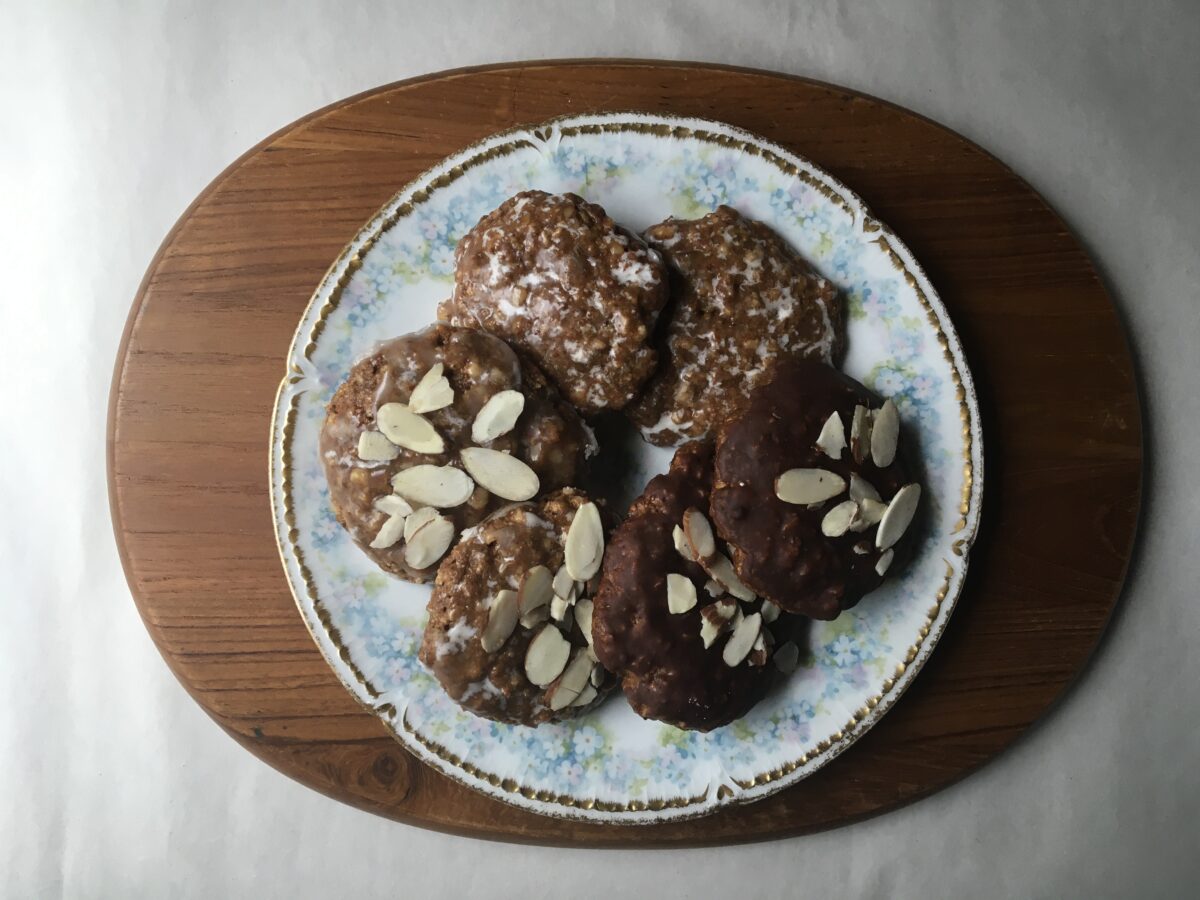
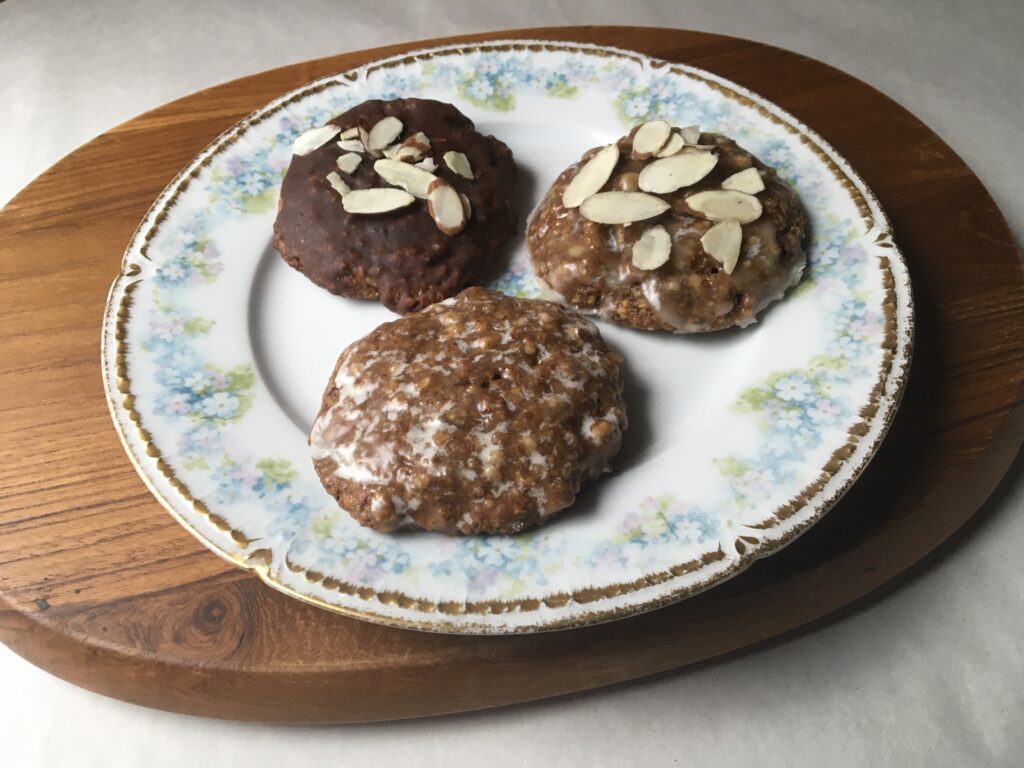
On the Upper Left: chocolate glaze with sliced almonds. On The Upper Right: vanilla glaze with sliced almonds. On The Bottom: vanilla glaze only. Use whichever you think is prettiest.
NOTE FROM KATE: These cookies are horribly deceptive in their overall “goodness.” That is, with the exception of the brown sugar, they are a “whole food,” so what could go wrong, right? I’ll have to do a caloric breakdown one of these days. Let’s just say, they contain more energy than meets the eye. If you were riding across the mountains and had to choose a fabulous, long-lasting food source for the extra space in your saddle bags, these would be it. They remind me of Panforte in their composition, but have eggs for eggstra protein. [Insert eye roll from Scott] The good news? With eggstra protein and the good-for-you fat from the nuts, the sugar in the brown sugar and honey won’t hit your bloodstream too fast. A cookie or two could hold you for hours.
Best of all? Of all our cookies and especially waybreads, these are the closest to the Lembas the elves made famous in the Lord of the Rings. Toss in an apple, and you got yourself a balanced diet for the day! (Shh…don’t tell Scott!)
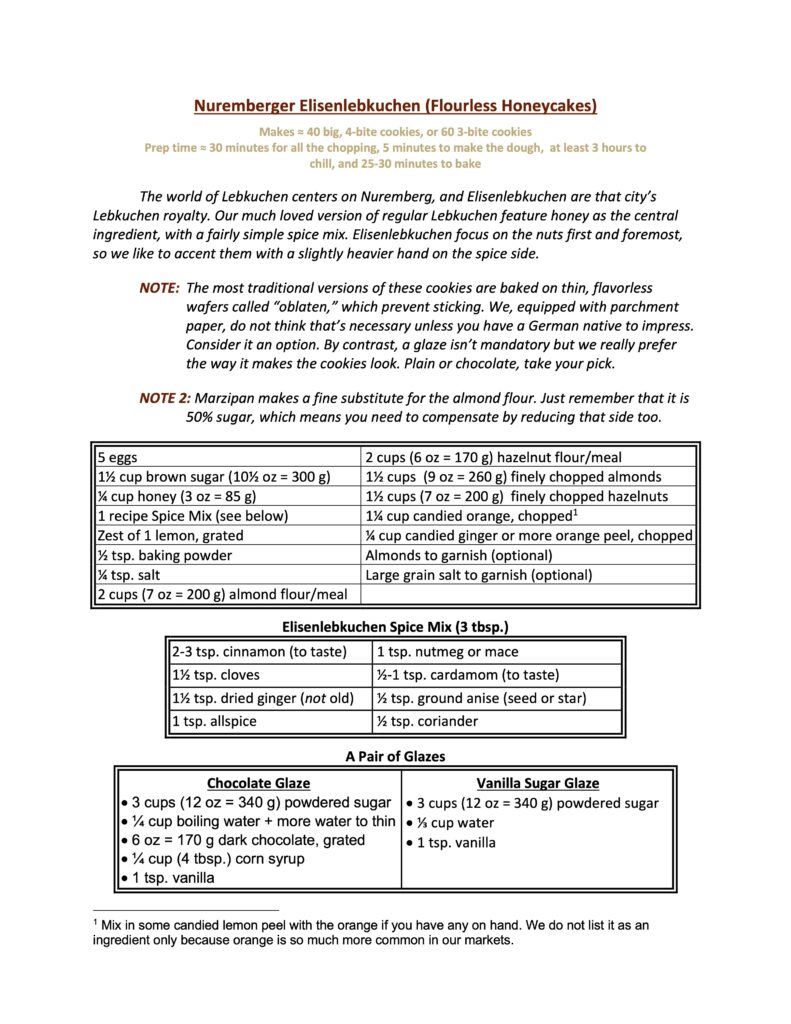
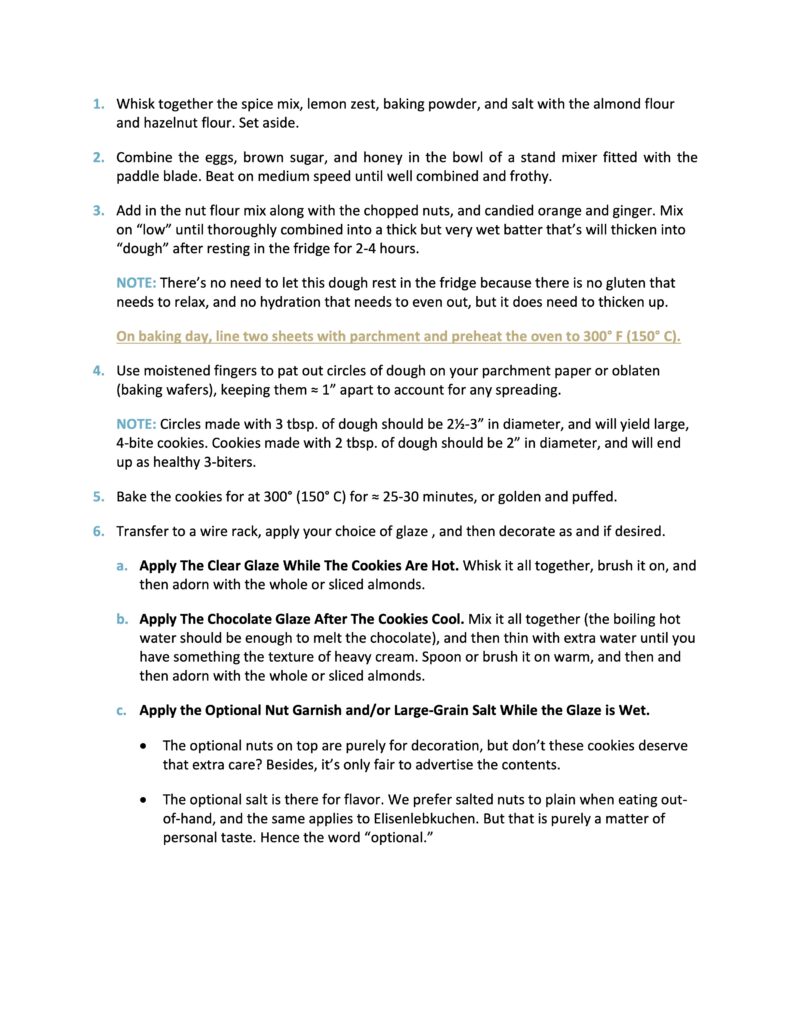
The recipe explains itself, and includes an extensive Cookie Nerd Moment with extra background material, so I will only take the time to discuss a few of the decision points you’ll face when trying this out on your own:
Should I use marzipan or ground nuts? It’s entirely up to you, and makes very little difference. Just remember that Marzipan has almost as much sugar as nuts (our recipe has a ratio of 4:5), and usually has some extra sweetness lurking in the background. If you make this substitution, do it by weight and assume the Marzipan is actually a 50/50 mix. You need to reduce the amount of both almonds and sugar accordingly.
Can I play with the spices? Of course you can! But we do recommend that you (a) stick to the basic, quite generous amount of overall spice, and (b) think of the spices as an accent to bring the best out of your chosen nuts.
Can I substitute in other nuts? Yes, but these are the classics used in Nuremberg. Be aware that you’ll be departing off road from the One True Tradition.
Should I glaze the cookies? Yes. That was easy enough. The glaze definitely enhances the overall look, especially since the bottoms are not glazed.
Should I use the vanilla glaze or the chocolate? Tradition allows for either one, so it’s entirely up to you. Both are thin enough to be only an accent flavor. This cookie is all about the nuts, and even I, a lifelong chocoholic, don’t want to mess with that purity.
Should I add the nut garnish on top? As you wish. They are only there for the sake of appearance and fair warning to anyone who sees them lying there on your tray.
Should I add the optional salt? And why specify “large grain” salt? This is a nontraditional option that we liked so much that we felt obliged to share. Both Kate and I have a strong preference for salted nuts over plain when we snack on them out of hand. The optional salt creates that effect in a light way. We recommend large grain salt sprinkled on top of the glaze because that is the best way to give a salty highlight. The base recipe also contains some salt, but that is more of a bare minimum that the cookie would suffer without.
That’s it folks. Enjoy!
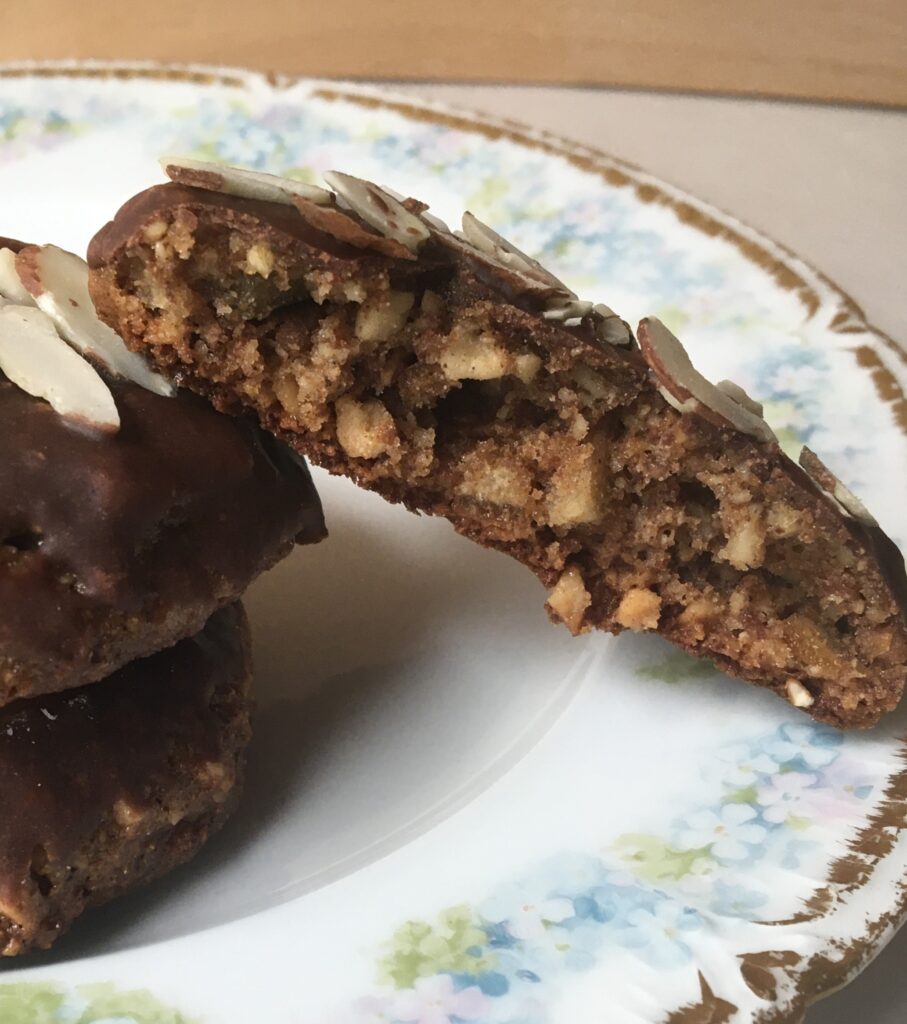
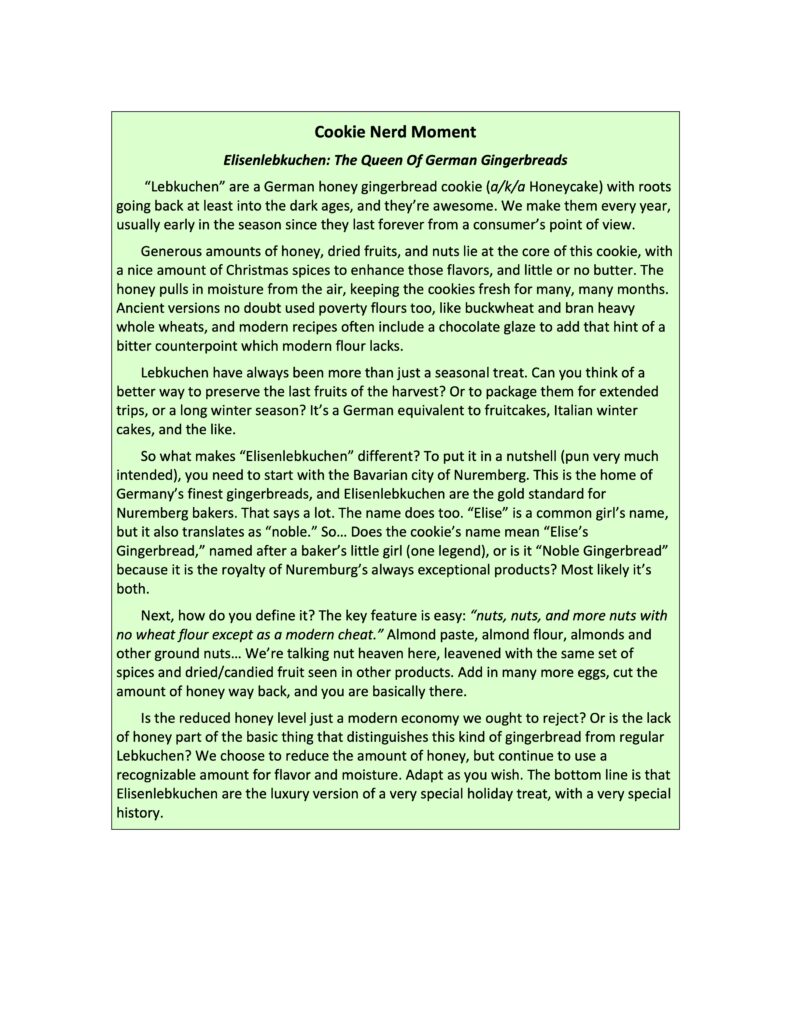
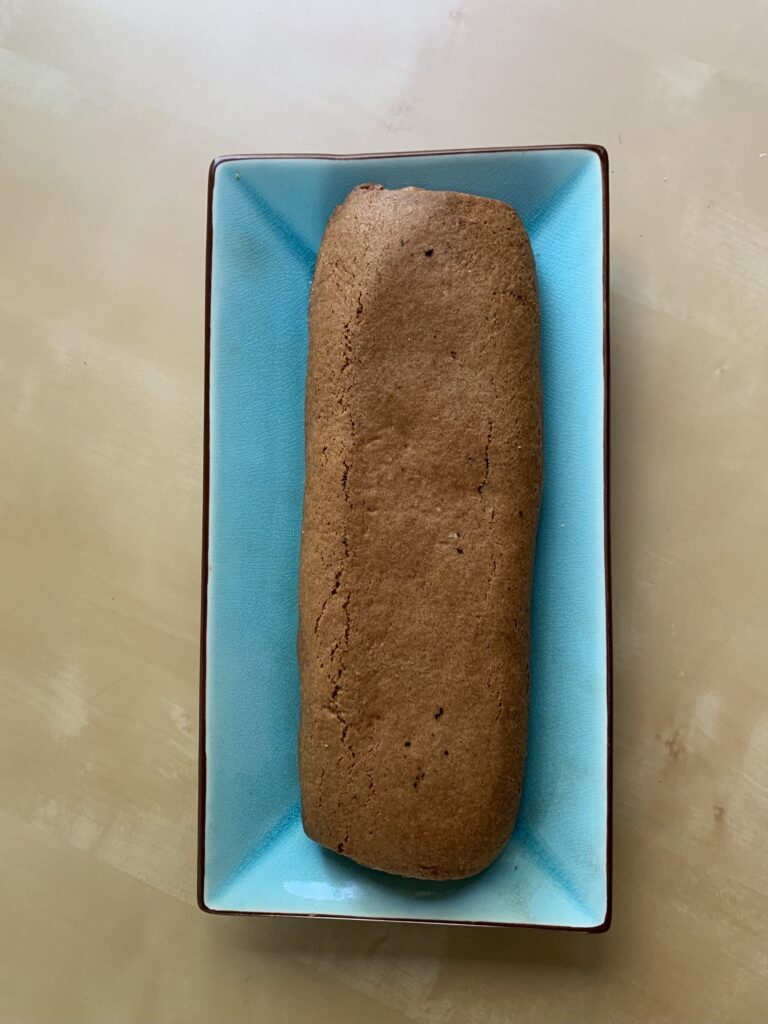
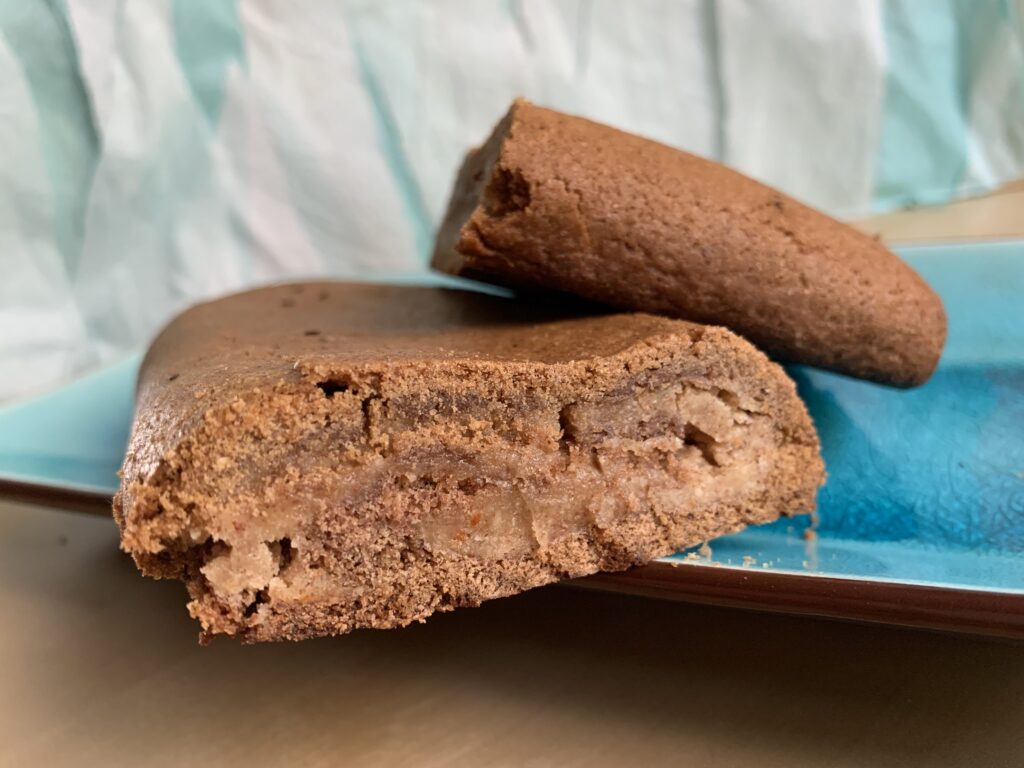
Nuts, nuts, nuts, and fruit. The only other things inside this cookie are honey and eggs as the binder.
Speculaas filled with almond paste? Thank you Mom, can I have another?
Our published book, Heritage Cookies of the Old and New World, has a wonderful recipe for Nut Dough Speculaas, which offers up a soft, tender version of the famous Dutch spice cookie. This recent article is all about the ultra-authentic, thin-and-crispy version, featuring a recipe straight out of Belgium. Our research for that article accidentally revealed a third style that is immensely popular next door in Holland (a/k/a the Netherlands): Speculaas dough filled with almond paste.
The Nut Dough recipe makes an extra tender version. The 100% Authentic recipe comes out thin and crisp. This is the one in the middle; toothsome, gently spiced, and made with U.S. pantry ingredients. Take that and fill it with homemade almond paste? [Finger Kiss]
As always, you can skip to the bottom if you want the recipe alone. The discussion of our stumbles and revelations along the way is going to take some time.
A SIMPLE, PANTRY-FRIENDLY SPECULAAS DOUGH
Easy peasy, I promise. Yes, this is a top shelf American version of a very European cookie, but that doesn’t make it complicated. The approach couldn’t be more standard. Cream the butter and sugar, beat in an egg, and then mix in the flour, leavening, and spices. Cover and refrigerate overnight so the flour can hydrate and the spices even out. Form and bake however you wish.
The only potential complication lies in the hydration part. You are after a drier dough with only enough moisture to hold together when squeezed. (the Almond Paste filling will add any richness you think is missing). That means the base recipe is likely to be too dry outside of a humid environment. You solve that by adding extra water a tablespoon or two at a time until it holds when squeezed. One or two is usually enough, though it could take as many as six to eight.
Just go sparingly! It is much easier to add more water in than to take any out. I did one batch with the full eight tablespoons (½ cup), and had to double the batch in order to avoid throwing the whole thing out. Tripling would have worked even better. Fortunately, the recipe has enough flexibility to have saved me from that extreme.
THE ALMOND PASTE FILLING
No need to waste a lot of time on this piece either. Almond Paste is super easy to make, and we have a whole discussion of it in the article on Marzipan. The only difference for this purpose is the subtle addition of some citrus zest to help it meet and marry with the flavors of the dough.
We include instructions for the almond paste in the cookie recipe down below. I’ve added our recipe for Marzipan and Almond Paste too, as a free bonus. [NOTE FROM KATE: I love anything resembling marzipan, and the orange notes in this paste have a delicious more-ishness to it. So much so that Scott had to keep chasing me away as I tried to execute numerous rounds of diligent quality control.]
THE MANY DIFFERENT SHAPES
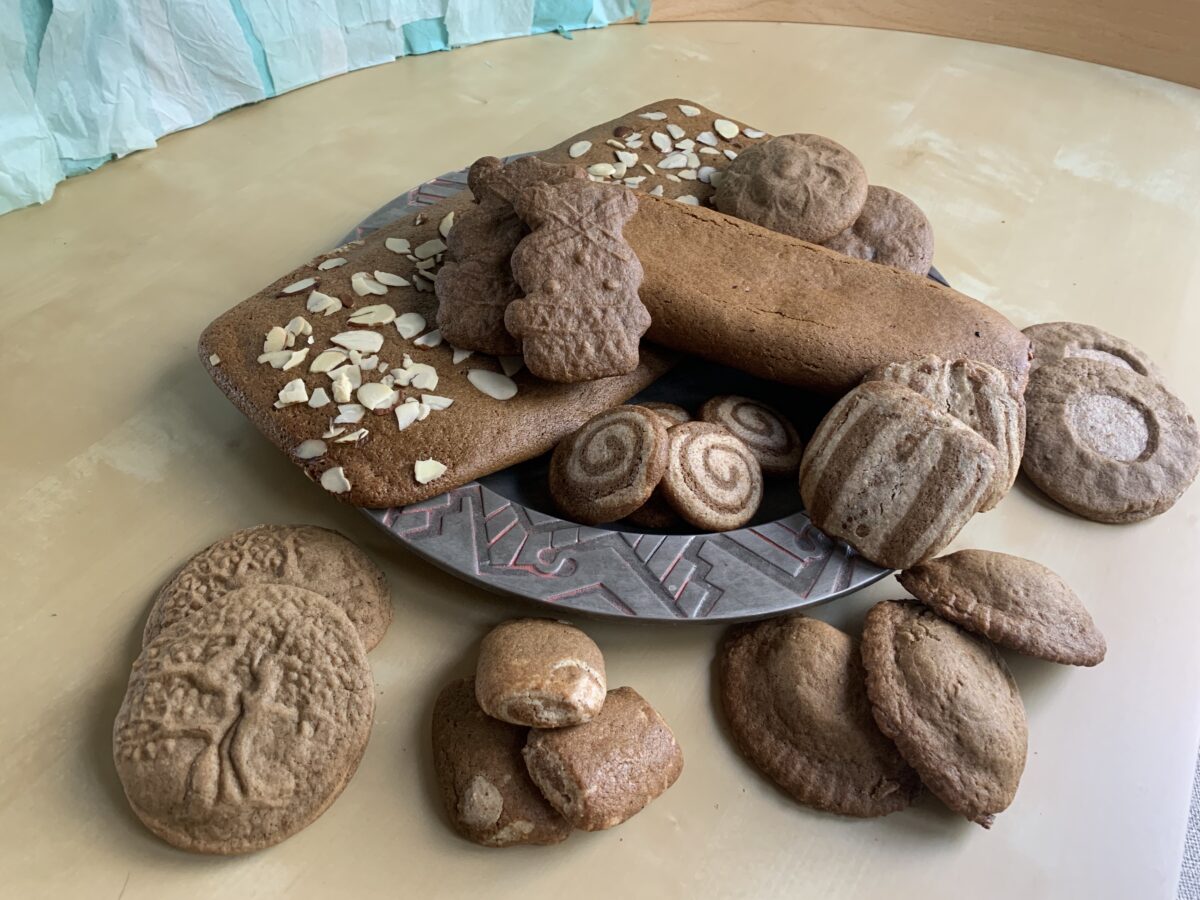
And now we get to the long part. But not because the shaping is hard! It isn’t. The dough is friendly, too, and the techniques are all straightforward. The length comes from the sheer number of options. This article lists a full dozen (12!) possibilities, and you don’t have to stop there. Jam and fruit fillings spread in the oven, searching for any crevice where they can leak out to create black and bitter disaster on your cookie sheet. Almond Paste does not. That feature opens up your options to basically any cookie shape you can imagine.
Bar Cookies? We Don’t Need No Stinking Bar Cookies!
Honesty compels me to admit that most people make Gevulde Speculaas as a bar cookie. You simply coat the bottom of the baking dish with one layer of cookie dough, spread a thick layer of almond paste on top (it should be noticeably thicker than the dough), and then cover that with a second layer of dough. Bake at 350° F (175° C) for about 18-25 minutes, or until the cookie part on top has set by the edges but is still a little soft in the center.
We, however, have a rule: no bar cookies! (Read the article on Chocolate Fudge Cookies if you insist on knowing why). That changes the focus to all those infinitely more interesting options, such as…
Sandwich Cookies!
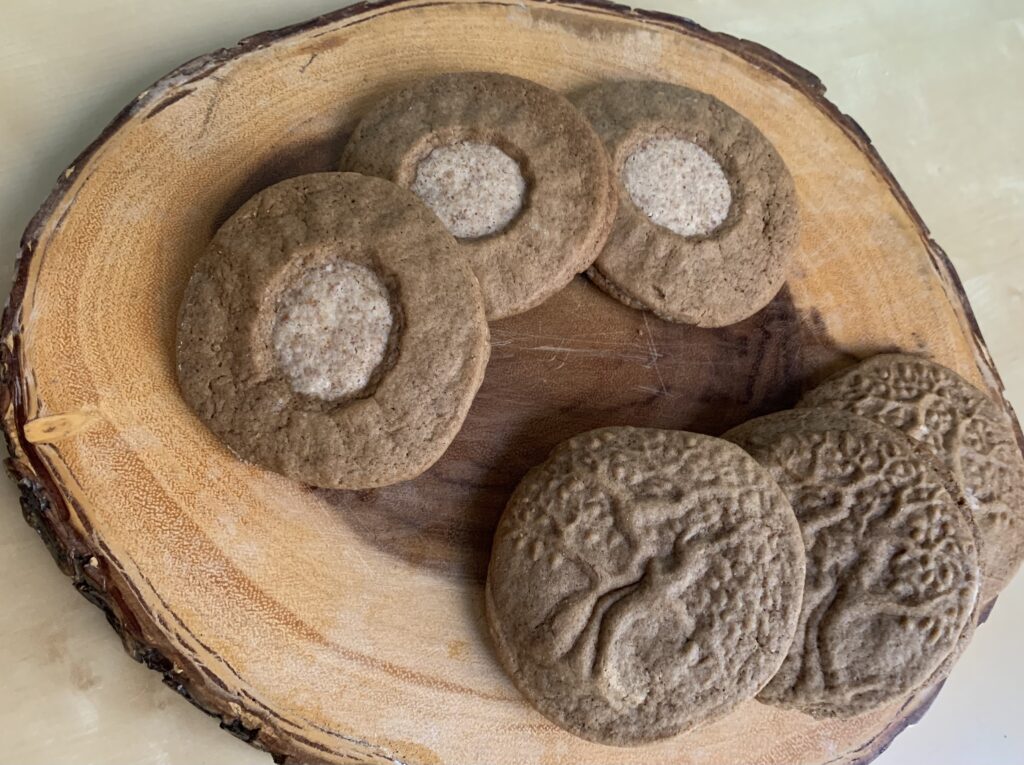
Roll out the dough to 3/8″ thick. Cut out your choice of shape (we used larger rounds) and mark half of them with whatever you want for the top (we did a cutout for one, and a cookie stamp for a second.
Array the bottoms on a lined baking sheet (or two), keeping 1″ between each piece to account for spreading. Coat the bottom of the cookie with almond paste,* and then place the tops on top. Bake at 350° F (175° C) for about 12-15 minutes, or until the edges have set and the cookie has puffed up.
* Our favorite way to spread the almond paste goes like this:
Roll up a ball of almond paste of the size you estimate you’ll need. Place this in the center of the bottom cookie, and then place a piece of parchment paper on top. You can dust it with some powdered sugar if there is an excessive amount of sticking.
Press down with a rolling pin to evenly flatten the ball without spreading it all the way to the edges.
Now stop, peel off the paper, and check where you are. (A) Was your estimate about right? Hooray! Replace the paper and use your pin to spread the paste out to the edges. (B) Were you a little short? Add a little more almond paste and repeat the process. Your new almond paste will meld right into the original piece. Or (C) did you add a little too much almond paste? If so, use dampened fingers or a dampened spoon to remove the excess and then proceed, giving thanks that you did not press down all the way when you started.
Trim the edges with a dampened cookie cutter as needed. NOTE: You need it to be damp because the almond paste will stick like crazy if it isn’t.[NOTE FROM KATE: I was way too impatient, so I made a ball of almond paste and squished it with the bottom of a wet glass. It’s messier, I admit I had to sop up extra water off a cookie or two. It was fast though, even enough, and got the job done.]
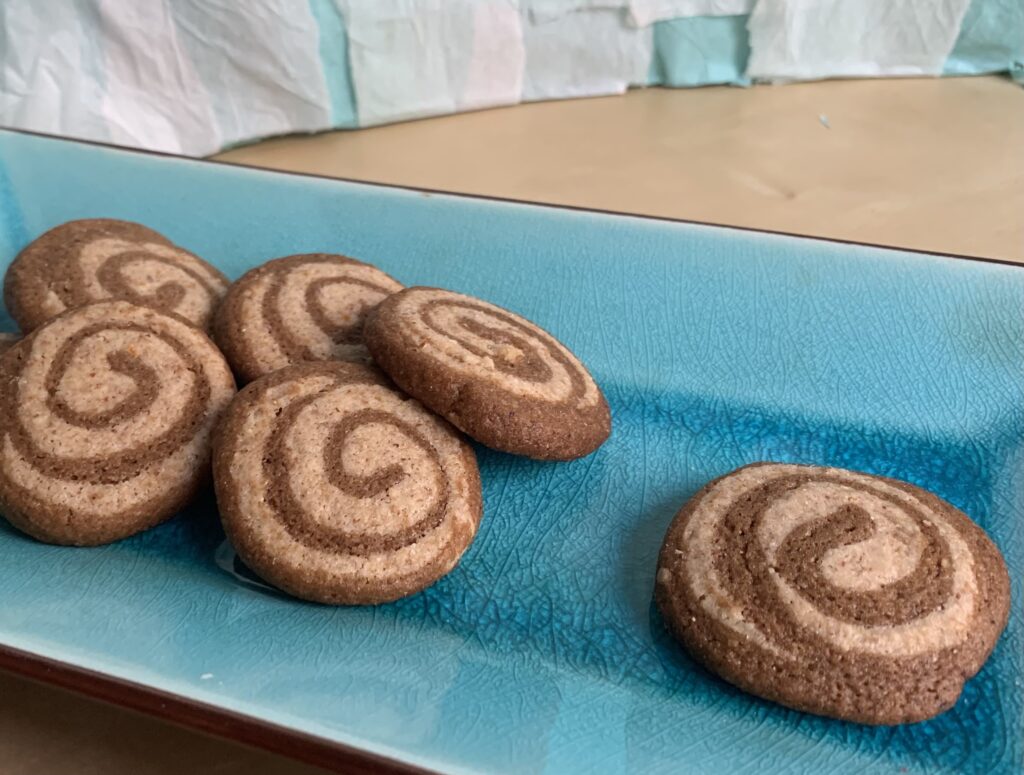
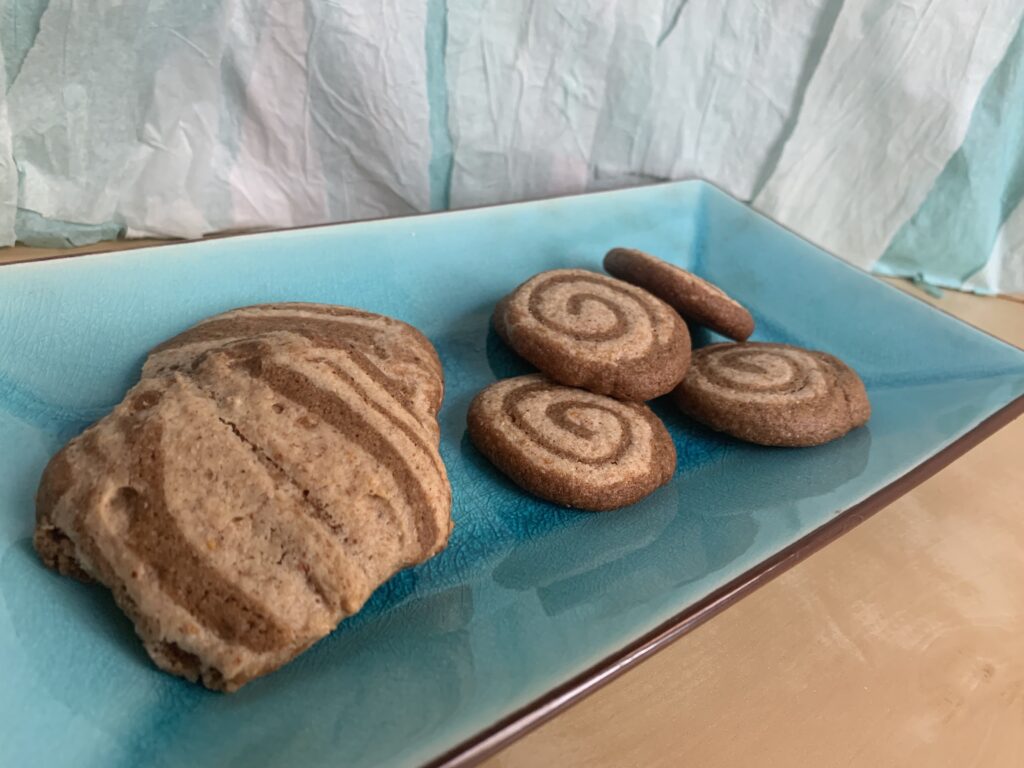
Spiral a/k/a Pinwheel Cookies!
Roll out the Speculaas dough into a 13” x 7” (33 cm x 18 cm) rectangle ≈ ¼” thick.
Use the “balls of almond paste” trick described above in the sandwich cookie section to create an almond layer that is also ¼” thick on top of the dough layer. Making it as even as possible will yield the best patterns in the end.
Roll the whole thing up “jelly roll” style, and then move to a refrigerator to firm up for at least 15 minutes.
Use a thin thread, lightweight fishing line, or dental floss to cut off ⅜” cookies, and then array prettiest-side-up on your parchment lined sheet, leaving 1” between each to account for spreading. You should end up with 35-40 cookies. NOTE: This is a great trick if you do not know it! Shimmy the thread under the roll ⅜” from an edge. Bring up the sides so the thread crosses over at a spot ⅜” from the same edge, but on top of the roll. Pull on both threads so the loop shrinks down to cut off your piece. The thread has less surface area than even the thinnest knife, and will therefore leave a cleaner pattern. You can roll a sticky thread in flour or powdered sugar if you want to gild the lily, but we didn’t need to.
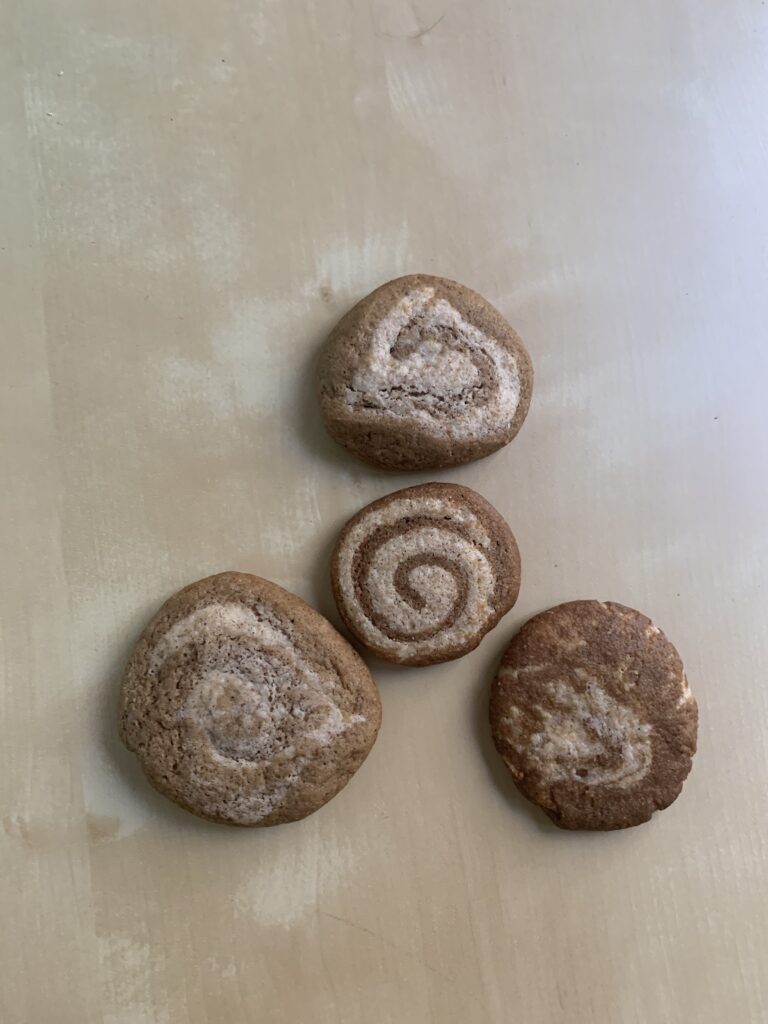
Bake at 350° F (175° C) for ≈10 minutes, or until the edges are firm and the cookies have puffed. Let them set on the tray for ≈1 minute, and then move to a rack to cool completely. NOTE: The baked tops should show a distinct pattern, but the bottoms against the tray will turn into an almost uniform brown.
The ends are never as pretty, especially when you need to press down to flatten the odd shaped pieces out. This shows three end pieces surrounding one middle piece.
Bullseye Cookies! [NO PHOTOS]
Roll out the Speculaas dough into a 13” x 7” (33 cm x 18 cm) rectangle ≈ ¼” thick on a sheet of parchment paper.
Place a long, 1” diameter sausage of almond paste down the middle of each strip. Roll up lengthwise to encase that sausage in the dough.
Use a thin thread, lightweight fishing line, or dental floss to cut off ⅜” cookies, and then array them prettiest-side-up on your parchment lined sheet, leaving 1” between each to account for spreading. You should end up with 35-40 cookies.
Bake at 350° F (175° C) for ≈10 minutes, or until the edges are firm and the cookies have puffed. Let them set on the tray for ≈1 minute, and then move to a rack to cool completely.
Tubes and Lengthwise Lines!
Roll out a thinner spiral and cut it into 2” lengths. Starting with a 13” x 6” (33 cm x 15 cm) rectangle should do it.
For tubes, bake at 350° F (175° C) for ≈11-12 minutes, or until the outside is firm and the cookies have puffed. NOTE: The tubes will settle into being flat on the bottom. We haven’t figured a way around that.
For Horizontal lines, use a thin paring knife or a long thread to cut through the top from end to end. Array these curved side down on the baking sheet. What would have been spirals when viewed from the edge in will appear as lines when the roll is cut lengthwise. NOTE: you can also use the paring knife to cut almost all the way through, leaving only a thin piece at the bottom to connect the two halves. Unfold this like an opening flower and you’ll have a double-width line cookie. Bake these at 350° F (175° C) for ≈9-11 minutes depending on thickness.
Let the baked pieces set on the tray for a few minutes, and then move to a rack to cool completely.
Line cookies on the left, spirals on the right. It’s basically the same pattern, but in one case you cut across to reveal the spiral, and in the other you cut lengthwise to reveal straight lines.
NOTE: You can use the “Bullseye” method here as well, or make the final shape a little thinner and broader by creating a filled rectangle instead of a filled tube.
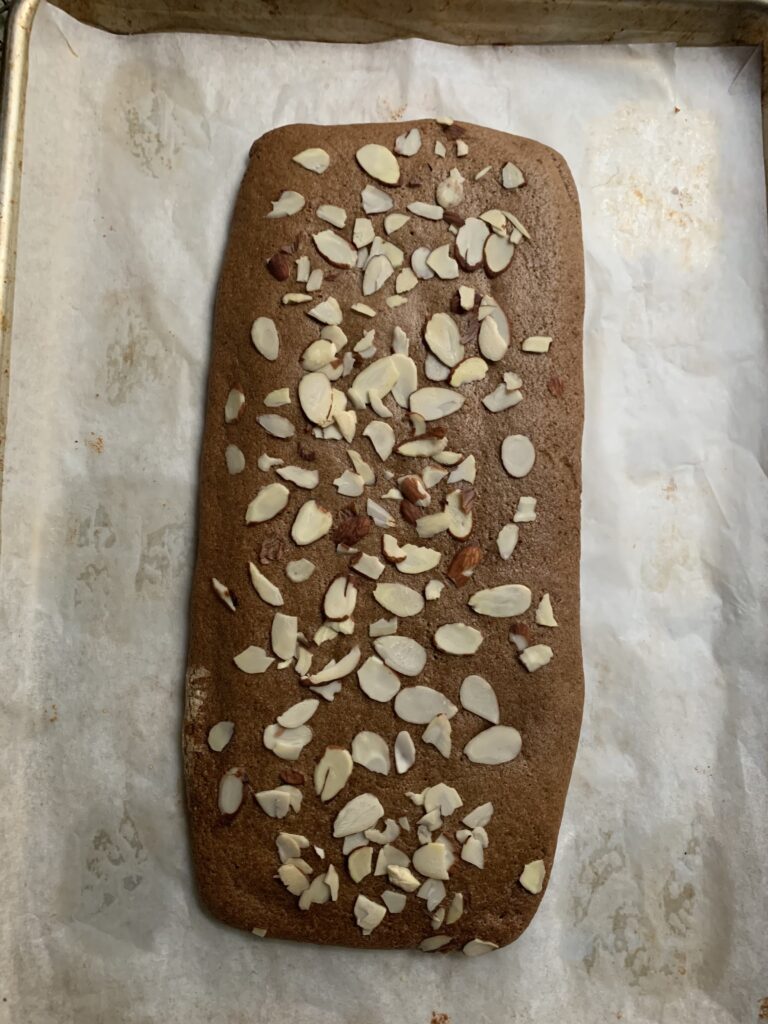
NOTE #2: For Tube Cookies it’s it’s often worth decorating the top of the tube/cake with slices almonds. See the photos of the “Bake And Slice” method down below.
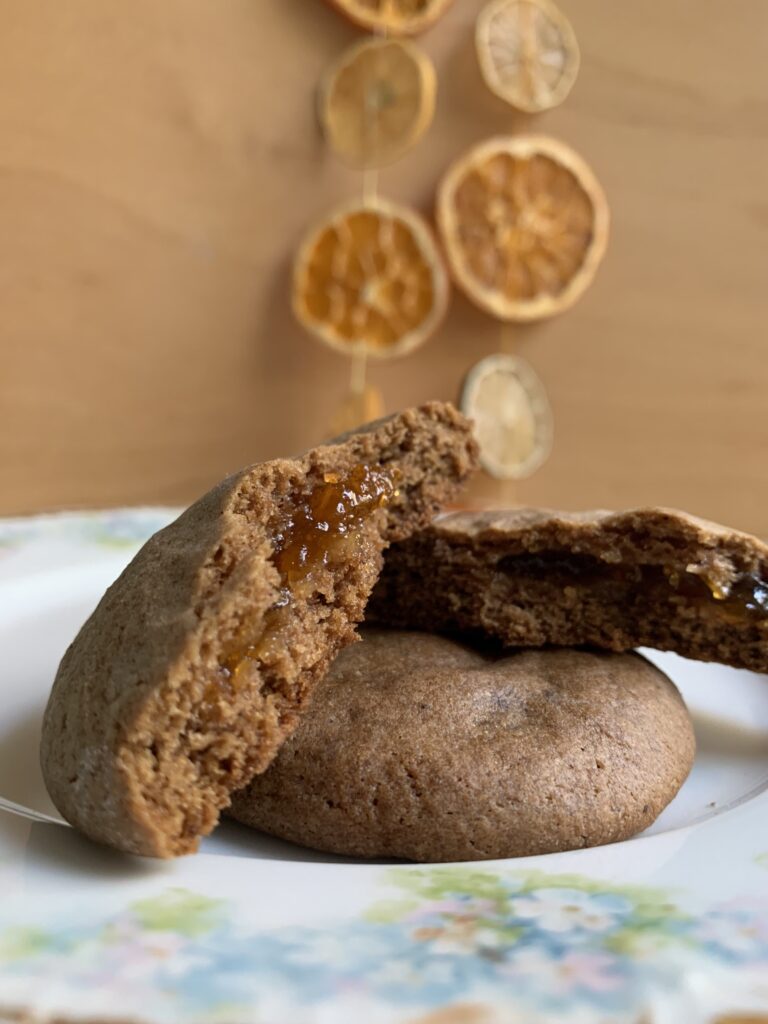
Molded and Filled Speculaas (Works With Jam Too)!
Apricot jam for the filling worked great, but we lost the pattern on top because I forgot to chill before baking.
Filled and plain Speculaas using the 100% authentic, Belgian Brown Sugar dough instead of this U.S. Brown Sugar dough. That time I did chill before baking.
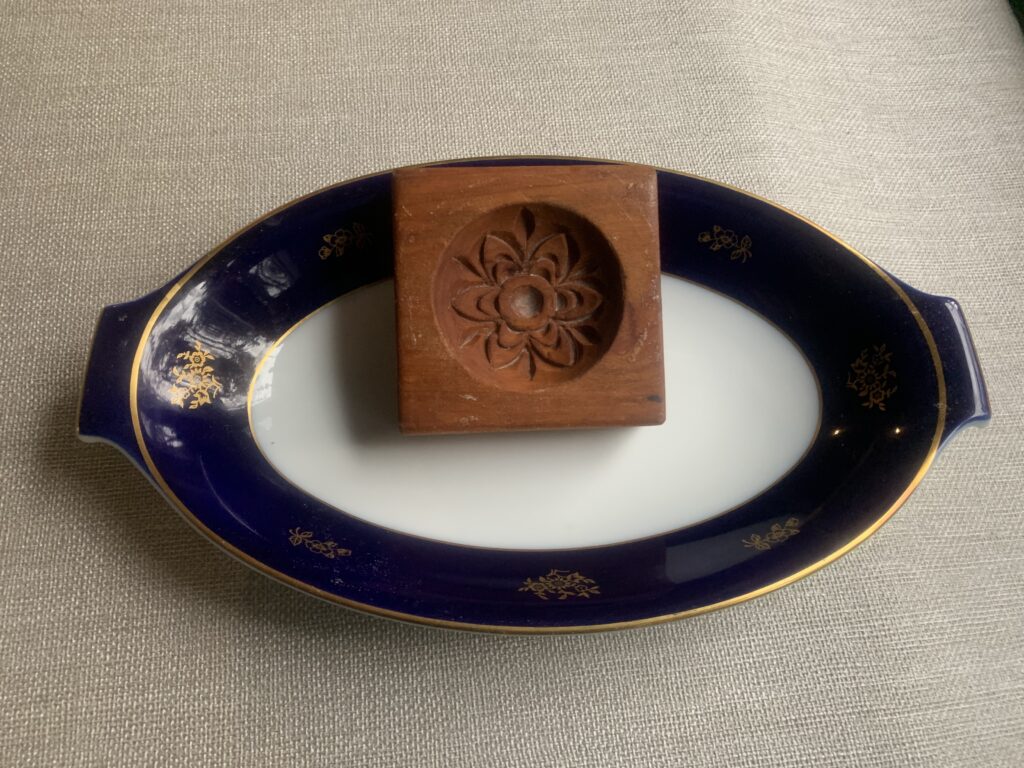
Our favorite mold for individual Filled Speculaas (and gingerbreads of all kinds). We bought it at an actual castle on a trip to visit family in the Czech Republic! It was actually called a “butter mold” rather than a cookie mold, not that it makes any difference.
This Ma’amoul mold would have also worked, but can you imagine the amount of almond paste in each cookie?
Fill a bowl with with rice/corn/tapioca flour. Spoon this in to fill your mold, turn it over to pour the excess back into your bowl, and then rap the back firmly to knock off any excess. Voila! A perfectly dusted mold. (See the articles on the Speculaas Master Class and Filled Gingerbread cookies for more variations and details). FYI, we used this mold to make individual portions:
Roll the dough out to ¼” thick (thicker for a larger mold, of course), and then cut out a piece of dough just large enough to fit inside the entire mold while leaving a thin rim of dough up and over the side of the mold. Use well-dusted to press it gently into the pattern. NOTE: Too much dough is better than too little since you can always trim. NOTE #2: Holes aren’t a disaster. Patch them by pressing in extra dough with your floured fingertips. It will subtract from the inside space by a smidgen, but no one should see it when the cookies are baked.
Add a filling of your choice to a level that reaches level with the top of the mold. REMEMBER: That does NOT mean the top of your dough rim around the edge! Do that and you’ll have too much filling, which will lead to leaking, bursting, and other bad results.
Roll and cut out a second piece of dough sufficient to cover the filled in mold. Place this on top and then run a rolling pin over the entire thing to join the seams. Tap the filled cookie out with the mold-side up, and then use a paring knife to clean up the edges.
Array on a lined baking sheet, and then chill in the refrigerator for at least 15-30 minutes. This will help to keep the pattern a little sharper.
Bake at 350° F (175° C) until the edges are firm. It took ≈11-12 minutes for our smaller mold, but will obviously vary according to the size and thickness of the one you choose to use.
NOTE: It’s a good idea to precook any jam filling before you use it (simply bring it to a boil in the microwave or a small pan). Raw jam tries very, very hard to find a crack it can seep out of. The precooked jam is much, much less runny and will only seep out if you’ve made a noticeable mistake in sealing things up.
Cookie “Dumplings” and “Ravioli”!
Note the extra thick amount of almond inside
Our handy dandy dumpling press, last used when we were working up the recipe for Croatian Rafioli
NOTE: This method uses a bit more almond paste per piece. It should also work with a pre-cooked fruit filling, but we haven’t tried it.
Roll out the Speculaas dough to ⅜” thick, cut out a circle the right size to fit your handy dandy dumpling press, and then fill it with a football-shaped piece of almond paste. Squeeze gently to seal the edges.
Array on a parchment lined baking sheet as you pop the piece out of the press. Leave 1” between each one to account for spreading.
Bake at 350° F (175° C) until the edges are firm. It took ≈ 10 minutes for ours, but we anted to make sure they were baked all the way through.
Leave the cookies on the tray for 10 minutes and then move to a rack to cool completely.
Thumbprints! [No Photo]
Duh. I can’t believe I didn’t think of this in time to get some done for the photo shoot. Bad baker. Bad, bad, bad. No biscuit for you.
Roll the dough into balls ≈ 1¼” in diameter.
Use the handle of a wooden spoon to poke a deep hole, and then fill that hole with almond paste.
Array on a parchment lined baking sheet, and give each ball a gentle squish to make sure it will stay in position with the almond paste facing up. Keep 1-2” in between each piece to account for spreading.
Bake at 350° F (175° C) for ≈ 10-12 minutes, or until the edges are firm.
Bake-And-Slice Rolls and Rectangles!
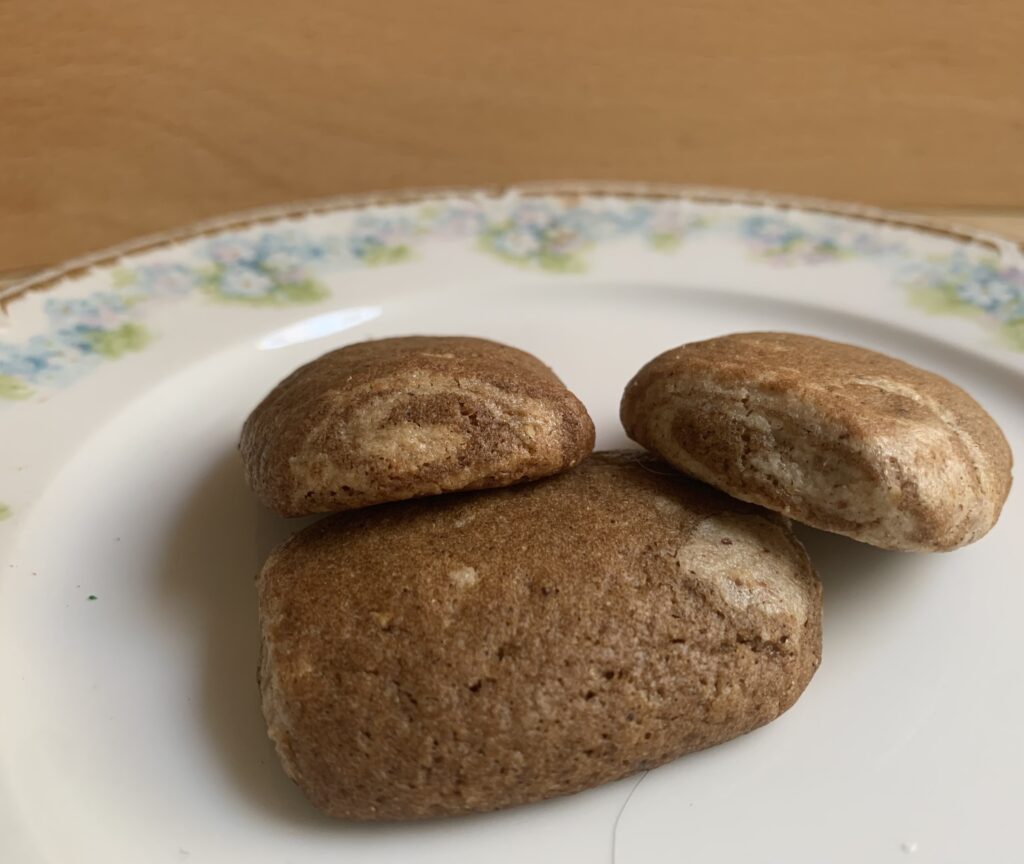
This began it’s life as a Spiral Cookie roll. It was baked before slicing, which allowed it to slump into a rectangle.
The flattened spiral from a baked-before-slicing roll.
Make a roll as described above for Spiral or Bullseye cookies, but a little thicker. You achieve this by starting with a 13” x 8” (33 cm x 21 cm) rectangle.
Bake at 350° F (175° C) for ≈20 minutes, or until the outside is firm, the tube has slumped down into a rectangular “cake”, and cookies have puffed.
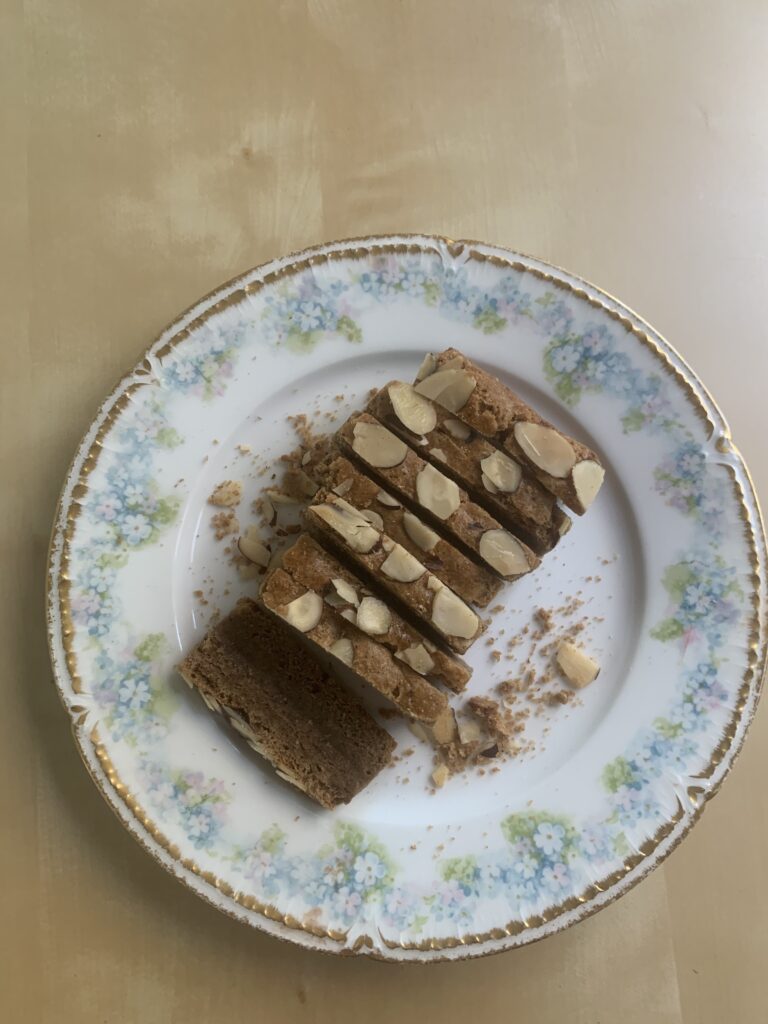
Let this set on the tray for ≈5 minute, and then move to a rack to cool completely. Slice with a thin, sharp, serrated knife after it’s completely cool. You will end up with elongated, almost-rectangular spirals.
A “Bullseye Cookie” bar decorated with almond slices. We tried to have this one start as a filled rectangle instead of a roll, but that only enhanced the slumping. Still tasty, and kind of nice if you want the sharper edges in the end.
Don’t Bother To Fill At All
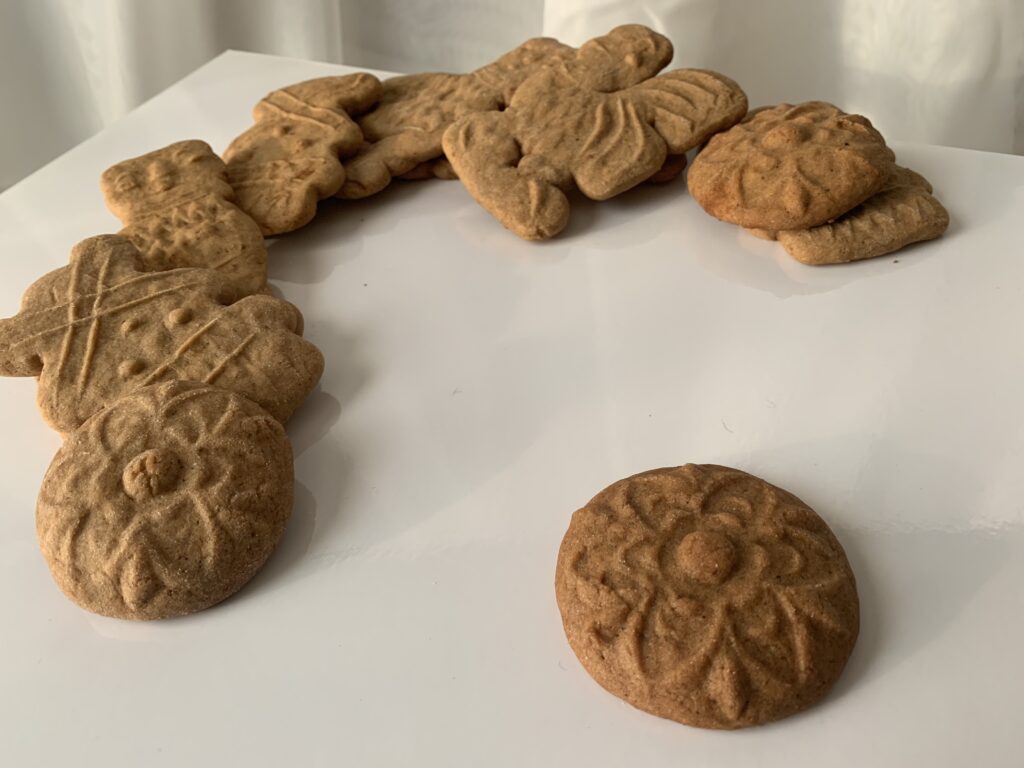
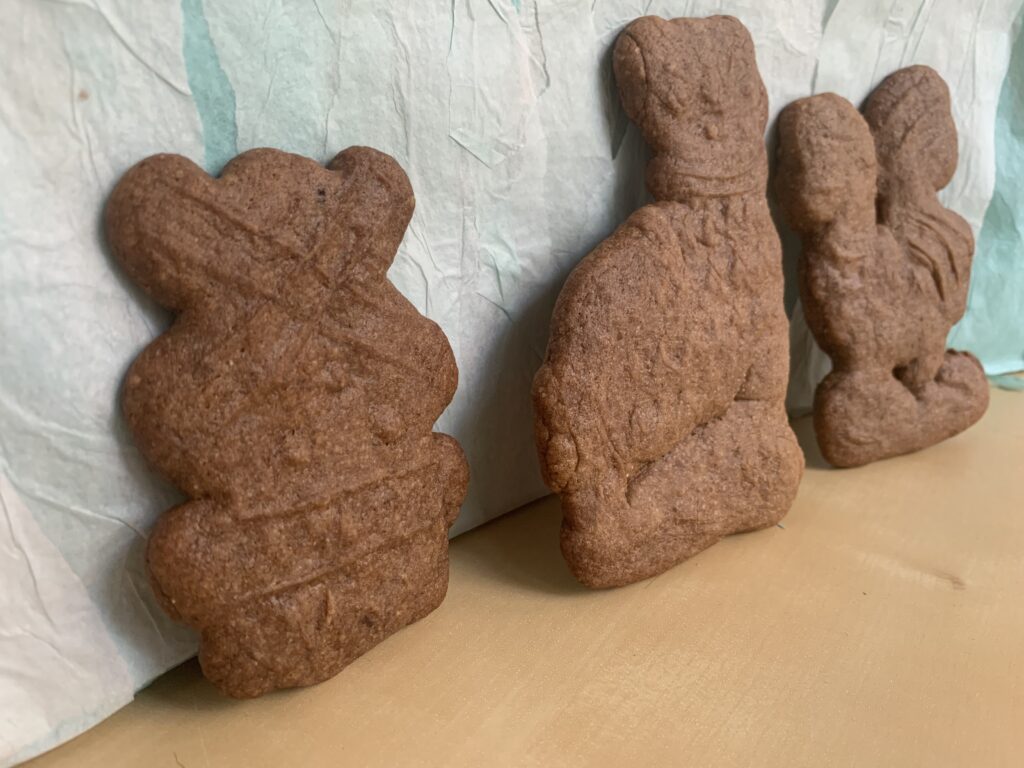
Straight, unfilled Speculaas made from this dough. Not bad, are they?
The dough works fine as a plain old Speculaas cookie pressed into a mold. It doesn’t hold patterns quite as well as the 100% Authentic Speculaas, but it’s pretty darned close. Bake according to the instructions in that article using 350° F (175° C) instead of 375° F (190° C). The molasses in the U.S. brown sugar apparently makes them cook just that little bit faster.
NOTE: You may (may, not will) want to knead in a small amount of extra flour or starch if the dough is particularly soft and sticky. That’s a useful characteristic for the many methods described above, but can result in either sticking or unreliable patterns for straight-out molded cookies. Be judicious, as it won’t take much.
CONCLUSION
The dough is standard and easy. The almond paste is standard and easy. The shaping is fun and interesting once you pick a method (and get used to liking off almond paste from your fingers). And the flavor is just about perfect if you want the world’s friendliest, most accessible, spice cookie treat.
What’s not to love?
We urge you to give it a try. If you do, there’s basically no way it’s ever going to leave your repertoire. They are, as our English friends say, intensely “more-ish.”
Enjoy!
IMPORTANT: You want to make Almond Paste for Gevulde (Filled) Speculaas, not marzipan
One of my favorite bakes is gingerbread, and I especially like the way it comes out of the mold. I know that Scott gave you got a molded cookie in a recent blog, but we tend to start with the hardest ones first. We also start our baking with cookies that need to sit for a while and soften naturally.
Behold the soft plentitude of molasses and spices! The glaze is optional – I like to mix rum or brandy with powdered sugar until it’s thin enough to paint on with a soft, clean paintbrush.
These beauties are raw, the way they come out of the carved wooden mold. Their features dull a little upon baking, but the glaze will bring them back out. Stay tuned for more images later.
Leave the formed cookies out to dry overnight, preferably in the fridge or under a fan. This will create a surface that’s just a little firmer than the bottoms that were resting on your parchment or tray. When the cookies rise during baking, Boyle’s Law says they will tend to have that surface rise up instead of spreading out with the moister, underneath part of the dough.
These are the two main tricks that allow for the creation of super-fine features on Springerle, the smooth caps on Macarons, and all the other cookies that feature a “foot” on the bottom..
And now I’m off to order our special, “we’re releasing our cookbook” tins! We’re not scouring local dollar stores this time. I want all the tins to have a nice, streamlined design and a custom-made label that will echo the branding of the cookbook cover – something I hope to show you next week.