MOLDED GINGERBREAD – How about a special treat?

Greetings from Kate!

One of my favorite bakes is gingerbread, and I especially like the way it comes out of the mold. I know that Scott gave you got a molded cookie in a recent blog, but we tend to start with the hardest ones first. We also start our baking with cookies that need to sit for a while and soften naturally.

Behold the soft plentitude of molasses and spices! The glaze is optional – I like to mix rum or brandy with powdered sugar until it’s thin enough to paint on with a soft, clean paintbrush.

These beauties are raw, the way they come out of the carved wooden mold. Their features dull a little upon baking, but the glaze will bring them back out. Stay tuned for more images later.

[Two Tricks From Scott:

  1.  For finer features, replace the baking soda in your recipe with Hartshorn a/k/a baker’s ammonia a/k/a ammonium carbonate a/k/a smelling salts. This 19th-century leavener creates smaller, more even bubbles that in turn create a finer, better refined texture.
  2. Leave the formed cookies out to dry overnight, preferably in the fridge or under a fan. This will create a surface that’s just a little firmer than the bottoms that were resting on your parchment or tray. When the cookies rise during baking, Boyle’s Law says they will tend to have that surface rise up instead of spreading out with the moister, underneath part of the dough.

These are the two main tricks that allow for the creation of super-fine features on Springerle, the smooth caps on Macarons, and all the other cookies that feature a “foot” on the bottom..

And now I’m off to order our special, “we’re releasing our cookbook” tins! We’re not scouring local dollar stores this time. I want all the tins to have a nice, streamlined design and a custom-made label that will echo the branding of the cookbook cover – something I hope to show you next week.

Till then, happy baking!

~Kate
Release build up means… BAKING!


SO MUCH GOING ON.

Really, my head is spinning. I’m used to writing fiction. As long as you suspend disbelief, as long as I have no typos and the good guys win, we’re good. Right? Right.

Publishing a cookbook involves so much more. Facts matter. Science is a thing, and conversions from Imperial to Metric to Volume and back rule the day. So do oven temperatures, notes on “what to do if your flour’s gluten content is too high,” and so on. Fortunately, the cookbook is now in the capable hands of our graphic designer, so that’s one less thing to worry about while Scott and I focus on what we do best.

And baking – oh, so much baking. It’s like our big Holiday Crush (we’re ecumenical here, the Menorah burns just one room away from the Christmas tree), except the house smells like baking spices while the temperatures are still warm enough to take my inflatable paddle board on the lake.

In theory, we’ll be sending out a Cookbook Sampler download code along with a cookie tin to a few people, and we’ll be sending that plus a cookbook to a few food writers and reviewers. Thus the cookies.

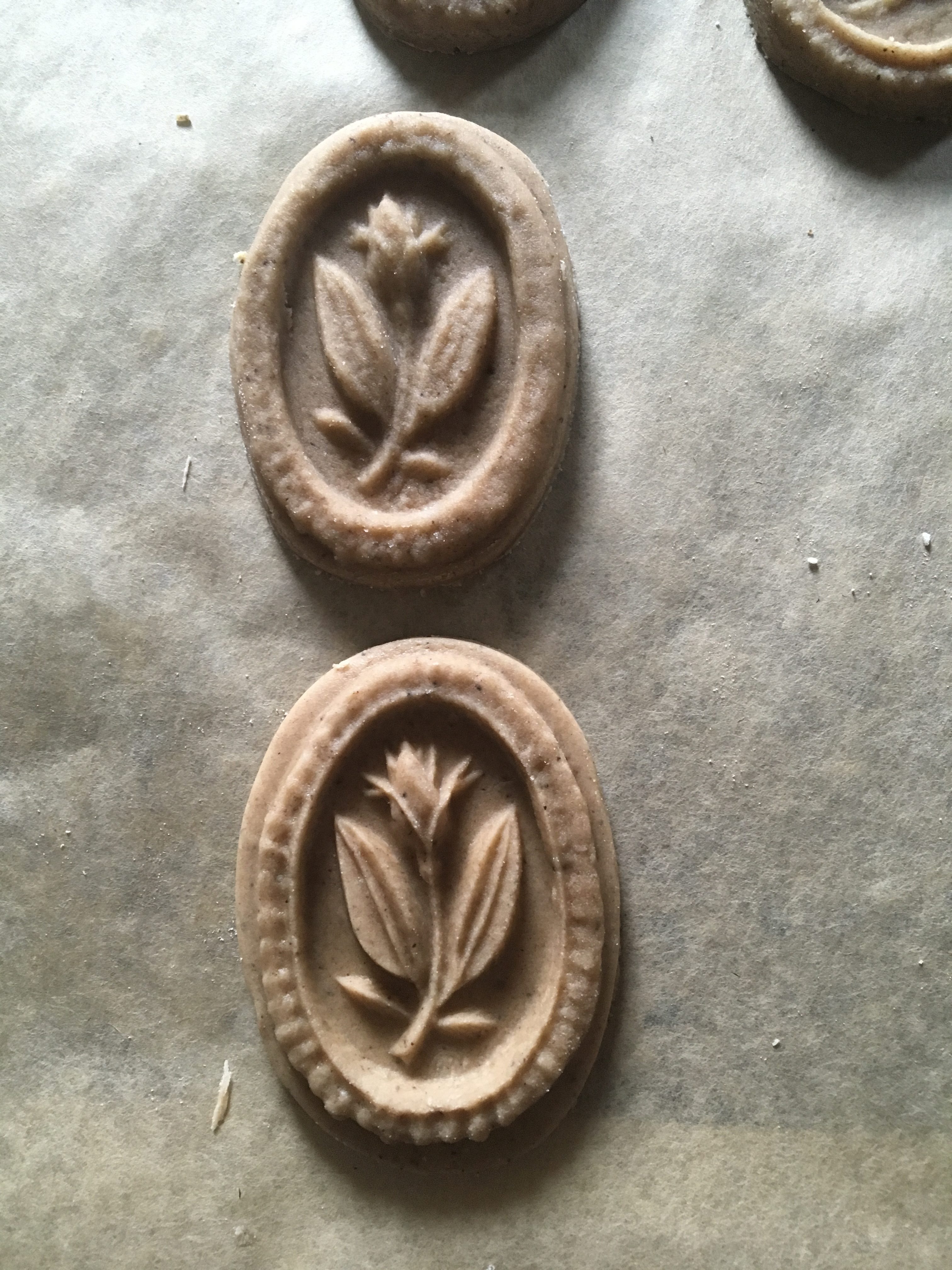
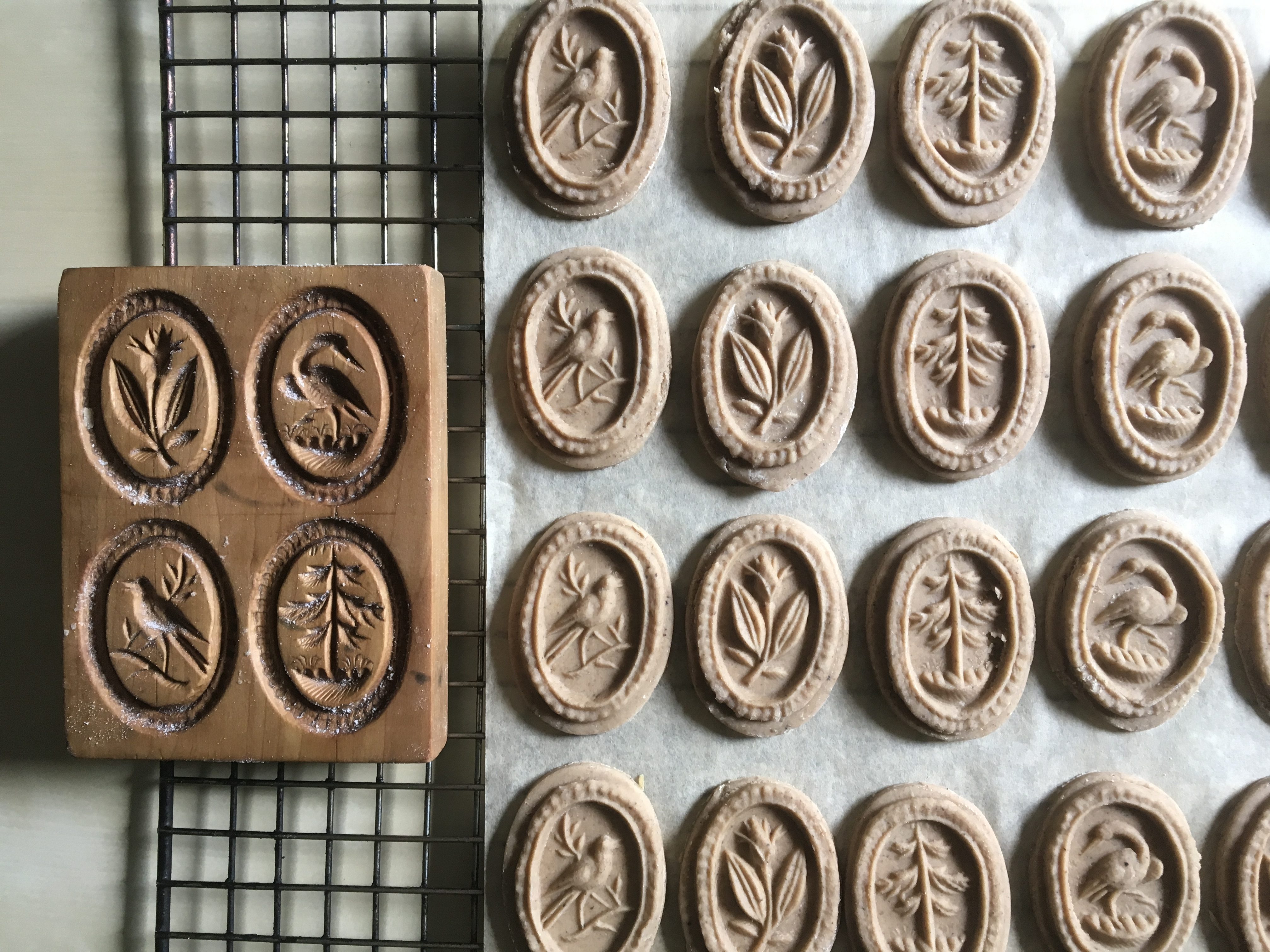
Behold our first batch! These are springerle, and they are very pretty. The mold we’re using here was a gift I got for Scott from e-Bay two years ago. It’s hand-carved wood and dates back to the 1850’s. It requires cleaning with a dedicated toothbrush and a skewer, oiling, flouring, and then we can press the dough in and see what unmolds. Fortunately, the mold came with its own oval cookie cutter, just right for trimming the edges into a neat shape. The cleaning and proper preparation is critical – behold these two cookies. The top one was done with a well-used mold, the bottom one with a freshly cleaned and oiled one:

Scott chose the Speculaas (Dutch windmill cookie) spice mix. It’s a mellow, warming “cinnamon and friends” blend that’s both memorable, yet lacks the bite of gingerbread. Had he stayed with the traditional anise, lemon, or rose water, the cookies would’ve had an amazing white color and would look more like ornaments and less like an edible item! Just FYI, it looks lovely and makes great tree ornaments. Some people like to highlight the raised features with a bit of edible paint or a dash of gold. Just knowing that makes me feel good, because there’s nothing like knowing that some bakers go to even more extreme measures in the chase for the “perfect look,” and I can let go of nagging doubts about my own sense of priorities!

Keep posted on our progress. Gingerbread is next, then Lebkuchen, then Zimsterne. Baking against a deadline – yes, it’s an endurance sport. Who knew?

What are you baking now? Let us know either here, or on our FB page at https://www.facebook.com/heritagecookiesoftheoldandnewworld

Happy baking from both of us,

Kate

Cookies that are easy, elegant, extravagant

Our Heritage Cookies of the Old and New World cookbook is under way! We are baking the last cookies to have them professionally photographed, the recipes have been tweaked and edited, and our graphic artist is doing her layout magic.

Final result: a cookbook compiling edible cultural treasures of our ancestors. My own Czech heritage was the start of it all, and my husband continued baking, until the daughters and I finally said, “You should write a cookbook!”

Behold, then, a product of thirty years of family obsession. You will find historical waybreads, well-known favorites, and new-to-you discoveries. The cookbook’s organization by cookie type, cross-referenced by both main ingredients and ethnic origin, will give you a solid map to guide both your taste and your culinary curiosity.

Producing a quality cookbook takes not only passion, time, and endless hours of remedial exercise to shake off all that buttery, sugary goodness, but also money. Therefore, we will appreciate your purchase once it’s out, whether you buy the e-book format, the print version, or any number of cookie-decorated kitchen items! (Yes… they will be very pretty. Stay tuned.)

Have fun exploring the site, thank you for your support, and happy baking!

~ Kate and Scott