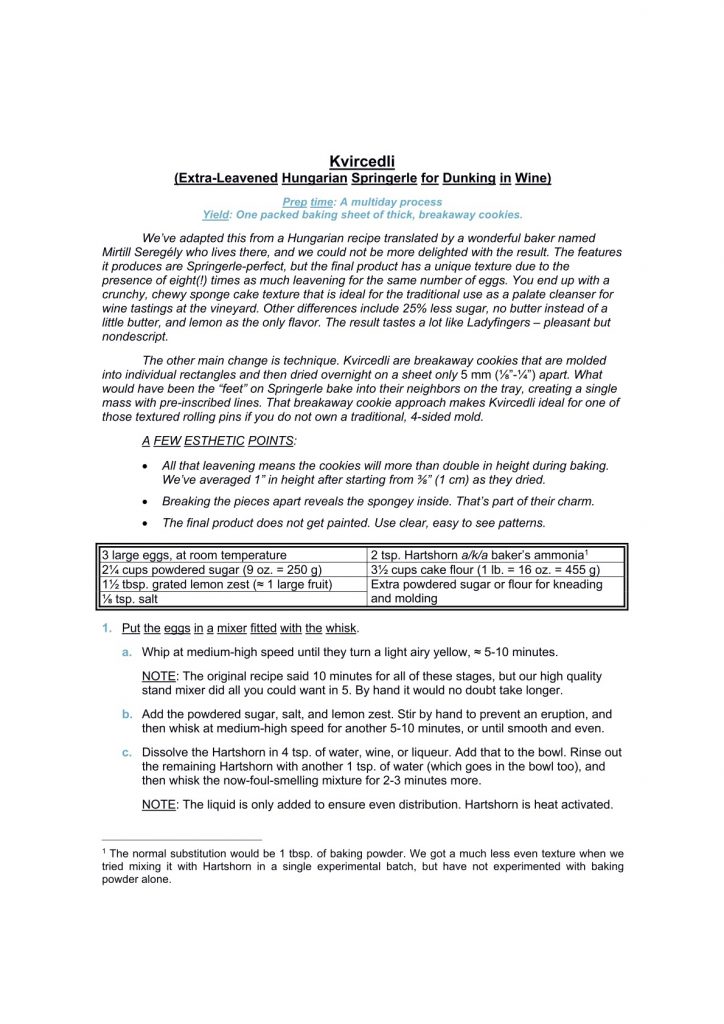
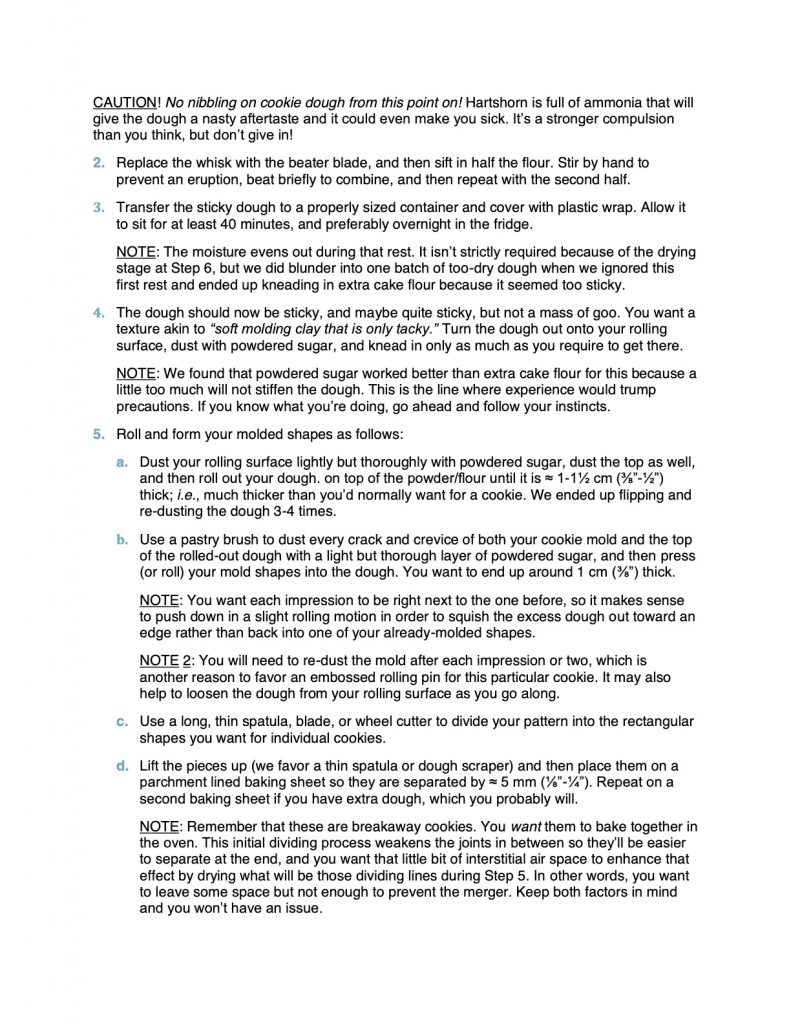
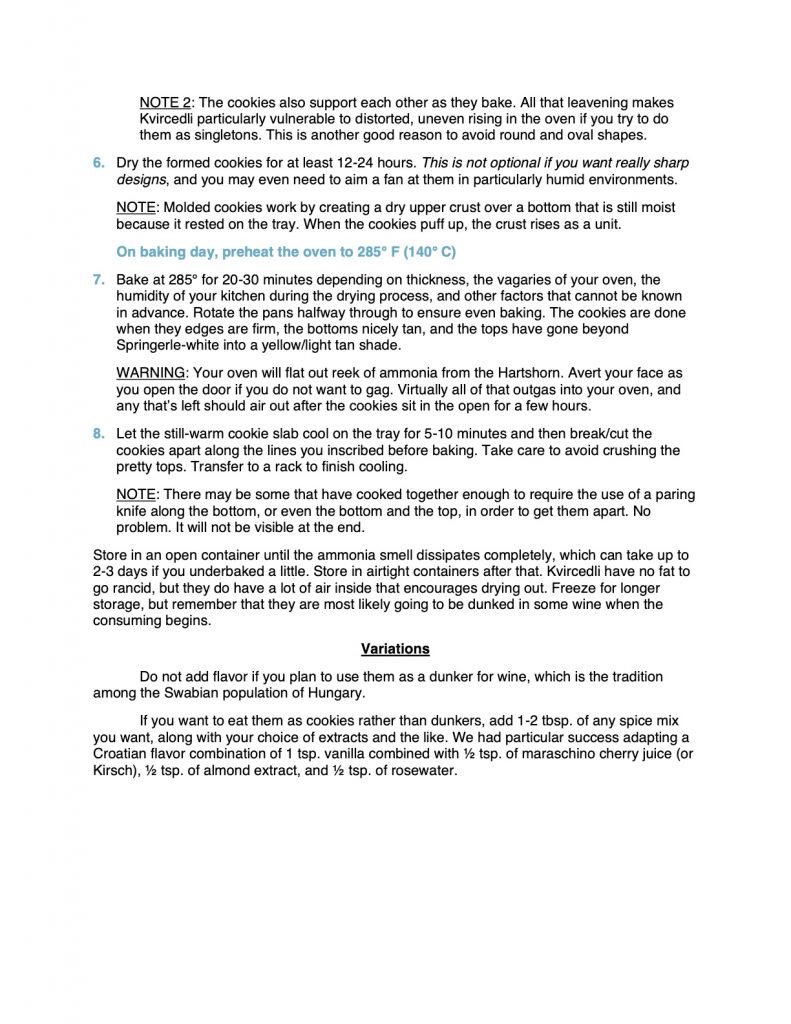
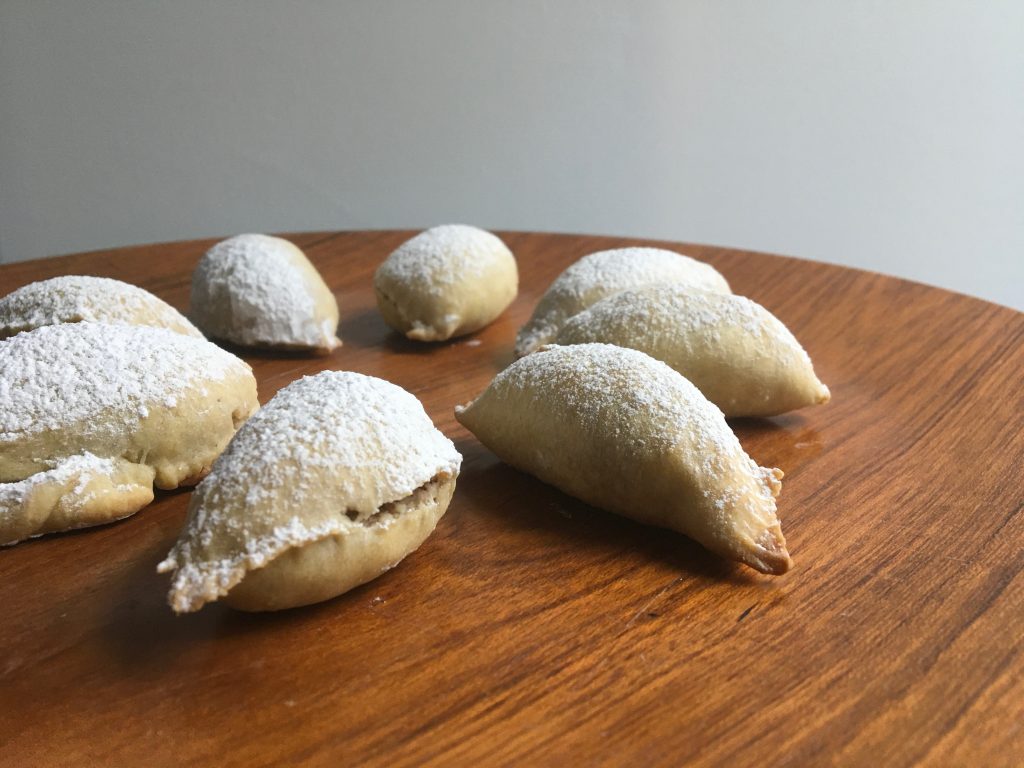
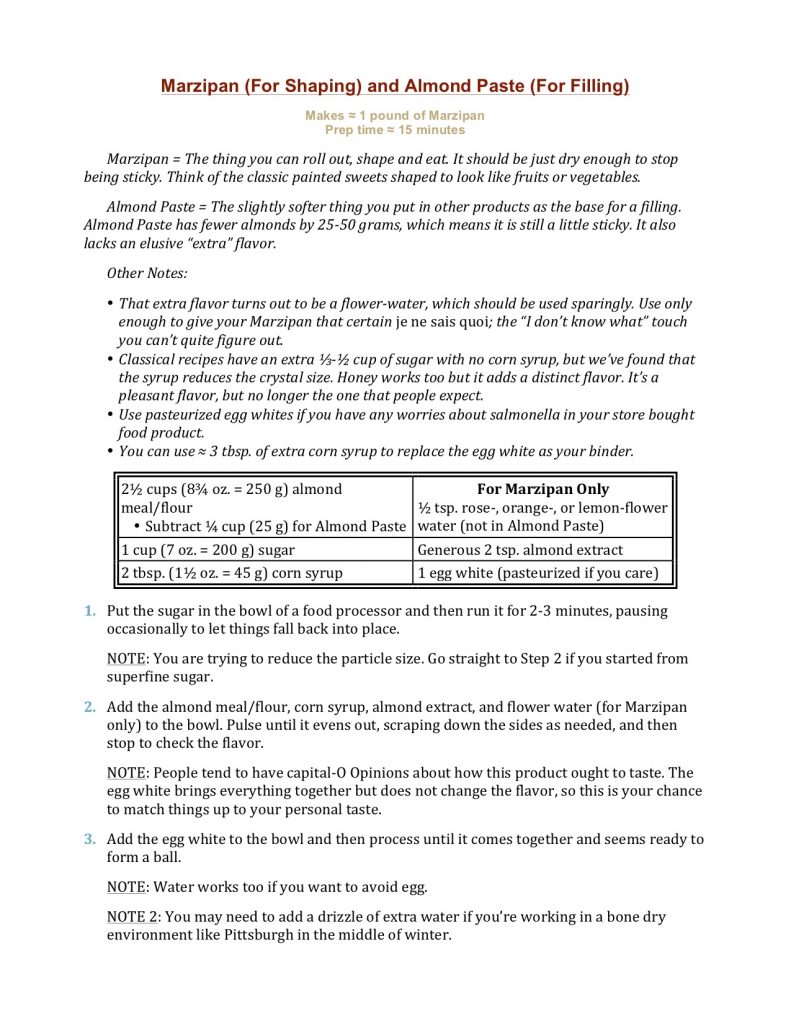
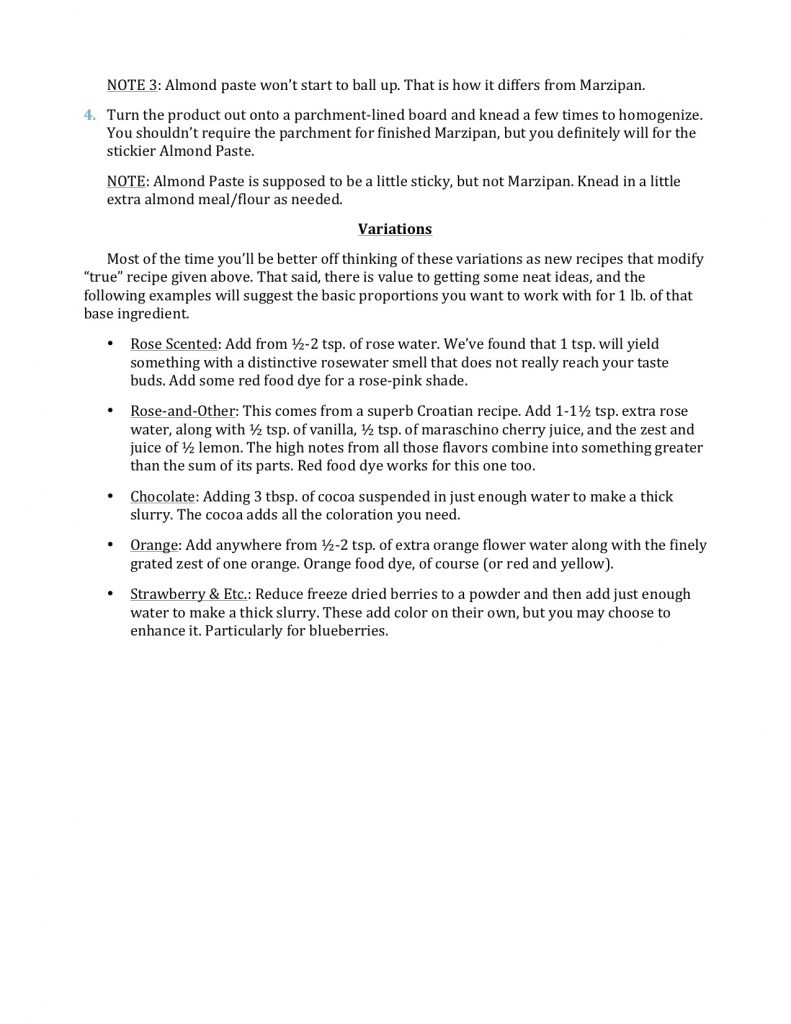
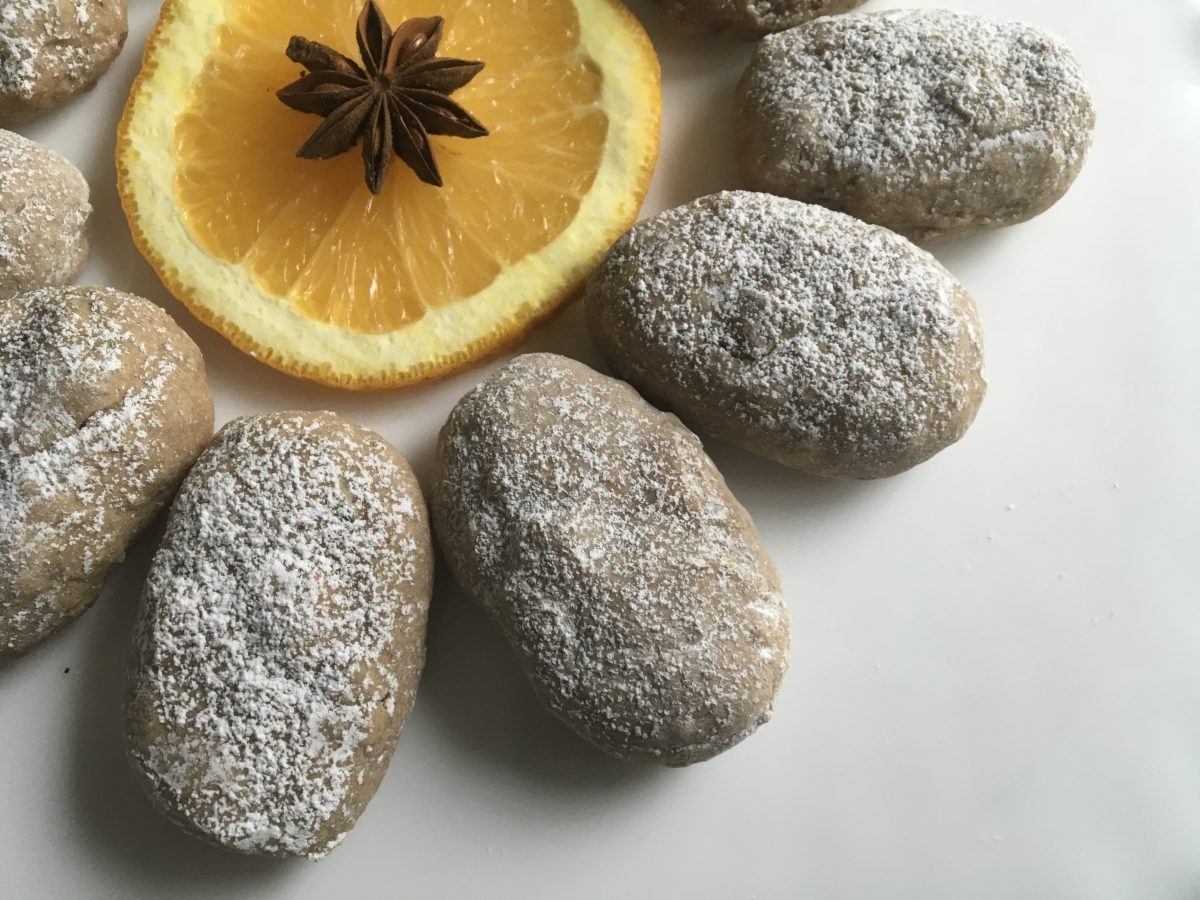
Italy has a fascinating cookie tradition that is broad, deep, and very distinct from the rest of Europe. That’s particularly true for the citrus cookie genus. North and central European countries tend to make a buttery shortbread or sugar cookie base, which they’ll kick up with a sharply flavored glaze. The Lemon-Lime Cookies from HERITAGE COOKIES OF THE OLD AND NEW WORLD are a perfect example.
Italians tend to make their cookies vastly more puffy by adding copious amounts of baking powder, with thinner and often optional icings, and a lot of orange or lemon zest in the dough. Many recipes reinforce the zest with some citrus oil or extract. But that’s not all. There’s also a very different philosophy when it comes to the fat. Shortbreads and sugar cookies are built on butter, but Italian cookies will often play around with that aspect. The Ricotta Cookies in our book use butter, but lighten everything up with cheese to create a unique experience. Lemon Drops a/k/a Lemon Knots a/k/a Anginetti use liquid oil. This recipe uses shortening, or in older versions, lard.
Butter is wonderful stuff. Extraordinary stuff. There’s a reason why simple butter cookies like French Sablés, American Meltaways, Middle Eastern Ghorayeba, and the ubiquitous Spritz Cookies fill bakery and market shelves alike. They’re good. Nor will we deny that butter and citrus marry extremely well. They do. But the offspring of butter and citrus tends to be a pleasing, 50/50 combination of the two. Neutral fats like shortening or oil are the way to go if you want a purified hit of citrus essence (or of chocolate for that matter).
Enter Italian Orange Cookies.
NOTES ON THE RECIPE:
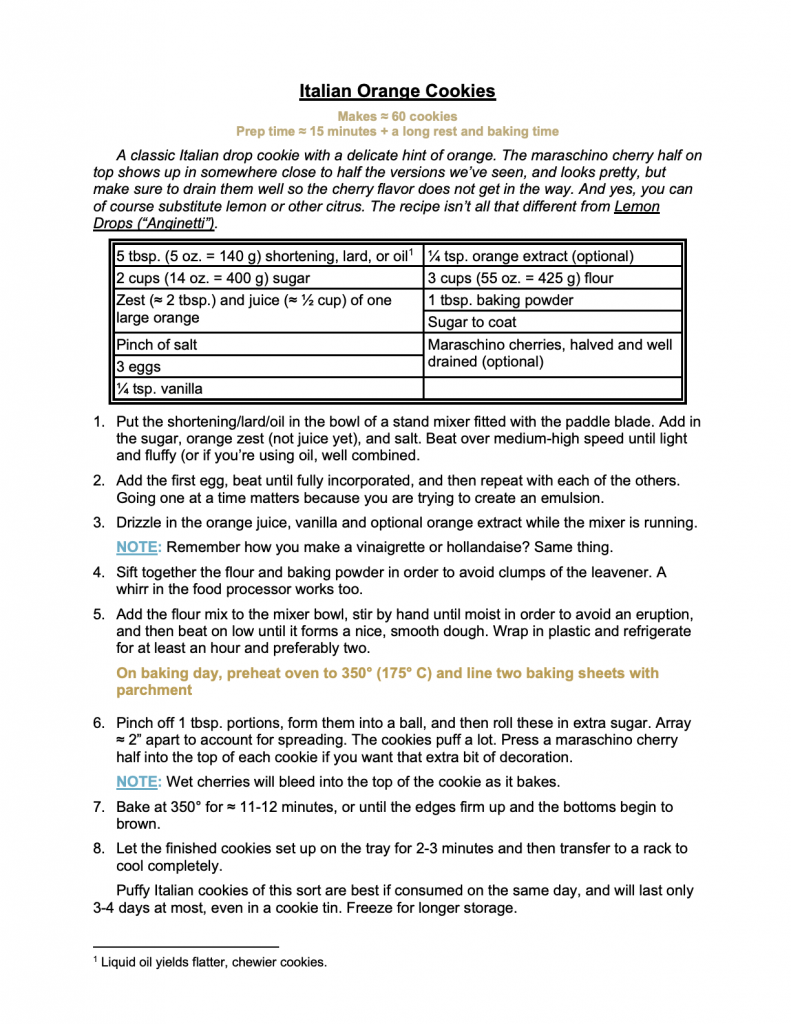
There is no surprising technique required to make this cookie. It hardly takes any attention if you have the basics down. (1) Whisk or sift together the dry ingredients to evenly distribute the baking powder. (2) Cream together the shortening/lard, sugar, orange zest, and extract(s) so the fat can absorb the citrus and vanilla flavors. (3) Add in the eggs, taking care to go one at a time in order to create an emulsion. (4) Thin with some fresh orange juice from the one you zested, which is slightly unusual. And then (5) mix in the dry ingredients, taking care to avoid a flour eruption.
The only odd ingredients are the sheer quantity of eggs (three of them, when most recipes will use just one) and baking powder (a whopping tablespoon of baking powder where most recipes would use just a half-teaspoon).
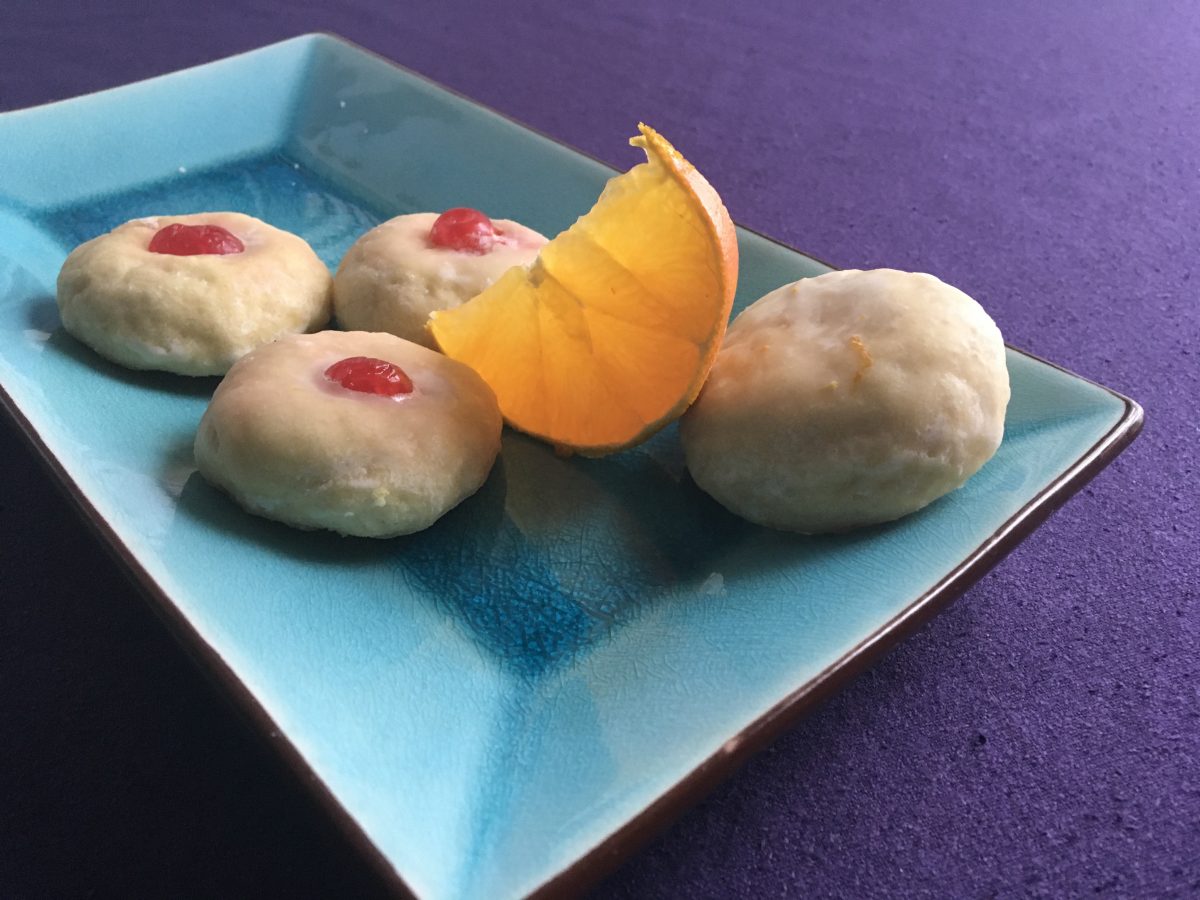
And the only odd decoration part is the very common use of half a maraschino cherry to create a “Rudolph’s Nose” effect like you see with Amaretti (a macaroon rather than a drop cookie). We were tempted to ignore that cherry in favor of an orange glaze (see the photo below), but it turned out to be a nice touch. Maraschino cherries add nothing to an ice cream sundae beyond a neon-red flash of color, but their almond-laced flavor makes a real difference on this scale. They create an odd counterpoint that actually enhances the orange flavor rather than competing with it.
(1) Rolled in sugar with a cherry on top, (2) With an orange glaze, and (3) Cherry on top coated with orange glaze. All three are delicious, so choose the one that you like best.
In the end we decided to leave the decorations in the recipe as an option.
First option: roll the dough in sugar before baking, and then press in a well drained maraschino cherry that’s been patted dry with a paper towel.
Second option: coat the baked cookies with a quick orange glaze made from extra OJ and powdered sugar, plus grated orange peel if you wish.
Third option: bake with the cherry and then coat with the glaze.
All three work fine. Just make sure to dry the cherries well. Scott forgot to be careful enough in the test batch, which led to that unfortunate pink stain you can see in the photo. (He was going to do a second batch to make them look perfect, but Kate put her foot down and pointed out that showing the problem offers more value to readers than just giving the warning).
Limited Life Span
These puffy, super-leavened cookies have a particular charm but they do come with a downside: they’re going to go stale in no more than a day or two.
The word “stale” actually refers to a series of small effects that are all caused by oxidation. Sitting out in the open gives the oxygen in your air a chance to do its evil work. Cookie tins slow the process down by limiting the O2 levels to just the amount that was in the container when you sealed the lid. Freezing reduces oxidation even more by slowing down the chemical process. This is why freezing in a vacuum provides the best of all worlds for preserving your food, though that isn’t really practical for delicate cookies.
Leaveners like baking powder work by expanding in the oven to create CO2 bubbles in the dough, which rapidly get replaced by plain old air as the cookies finish baking and then cool off. Well leavened cookies feel and taste “light” because they quite literally are: they’re puffed full of air on the inside. Air that will turn them stale from the inside out if you give them any time at all.
So we’re afraid there’s no way around it. Italian Orange Cookies are made to be eaten, and eaten on the day they’re baked. Have your cup of tea handy (even Scott admits they are fabulous with a cup of tea), and your cookie-hunting spouses and children on standby.
Conclusion
This is a simple, happy and cheerful cookie. They’re simple to bake, a joy to behold, and pack a clear orange flavor that’s certain to make you smile. They’re also an absolute classic that shows why Italian bakeries thrived so well and spread so quickly as the immigrants flooded through Ellis Island in the late 19th and early 20th centuries.
Scott had a lot of fun making them. Kate had a lot of fun making the photos. And you’re going to have a lot of fun with the recipe for many years to come.
Most of the cookies that Americans would consider ‘obvious’ and ‘normal’ made their way into the original Heritage Cookies of the Old and New World. We are, after all, Americans. That is our world view, like it or not, so the things that have become traditional for the U.S. qualify by definition. But every so often you hit one of those “Doh!” moments when you’re reminded of a recipe everyone knows, that somehow slipped through all nets to lie there waiting for Volume II.
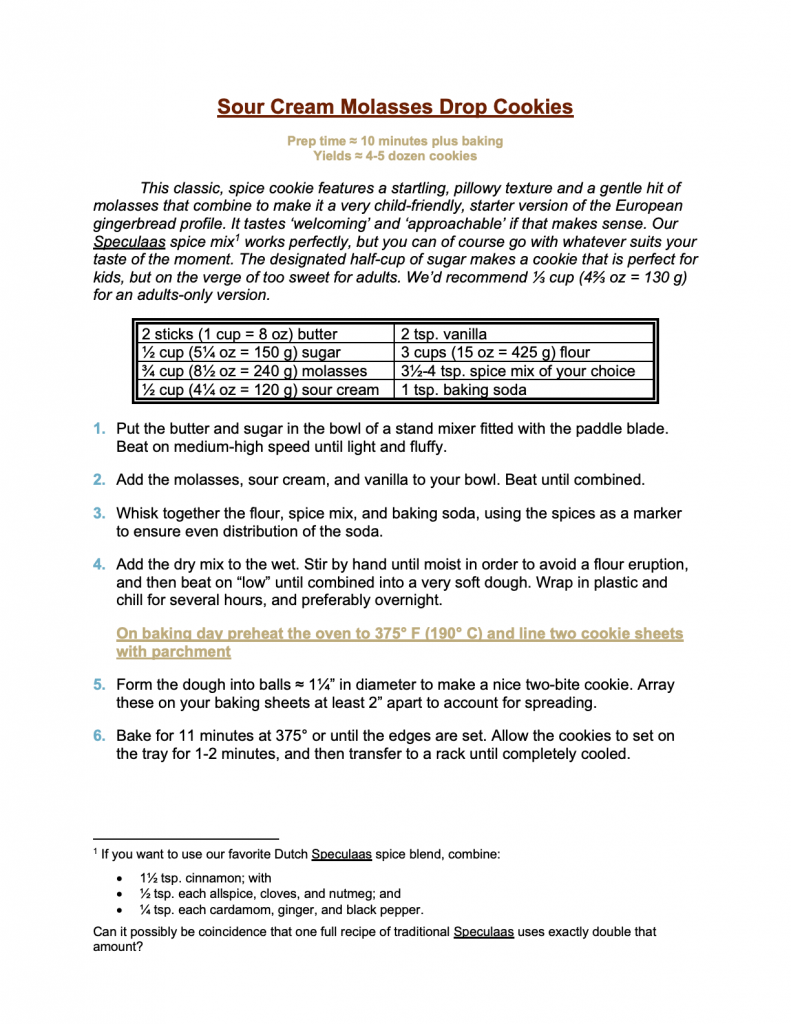
Case in point: Sour Cream Molasses Spice Cookies.
The moment happened in this case when a Facebook friend published an odd version of Speculaas – the great Dutch molded cookie – that included sour cream in the dough. Sour cream is a uniquely American ingredient, created in the U.S. as a version of Europe’s crème fraiche that could be produced on an industrial scale. She wrote that the recipe came from family friends who presumably brought the recipe back to Europe after visiting the States; reverse immigration at its best!
We’ll probably work up a version of that recipe for some future article, but the important thing here was Scott’s reaction: “Oh, I know where that comes from; this is that soft molasses spice cookie we had growing up… DOH!!”
There’s really not much more to say. This is a cookie you knew as a child; as warm, comforting, and familiar as Grandma’s lap. It’s a classic American drop cookie, made extra tender and pillowy by the addition of a little sour cream, and interesting by the addition of some sweet gingerbread spices. Bing, bang, boom: done. They really are just that easy.
There are only two notes we’d like to emphasize before closing. First, please customize these by using your favorite spice mix. We went with our Speculaas mix for the recipe in deference and thanks to Hayden for bringing the memory back to life, but the cookie will work just as well with anything that suits your particular, mood, taste, and spice cabinet. Pumpkin pie spice; classic. Apple pie spice; classic. Your mother’s gingerbread mix; classic. Just make it balanced, and maybe weighted a little bit toward the cinnamon since this is, after all, an American cookie and we are obsessed by that particular spice in our baking.
Second, have a source ready to receive your largess because these things won’t last in the house. They are high powered, superconducting hand magnets, and once the cookie reaches your fingers, you know where it is going to end up. On the plus side, this is also a perfect way to get the children in your life started on a lifelong enjoyment of the wonderful world of spiced breads, cakes, and other treats. And to teach them basic courtesy. “Please” and “thank you” are easy concepts to learn when there are cookies in the jar.
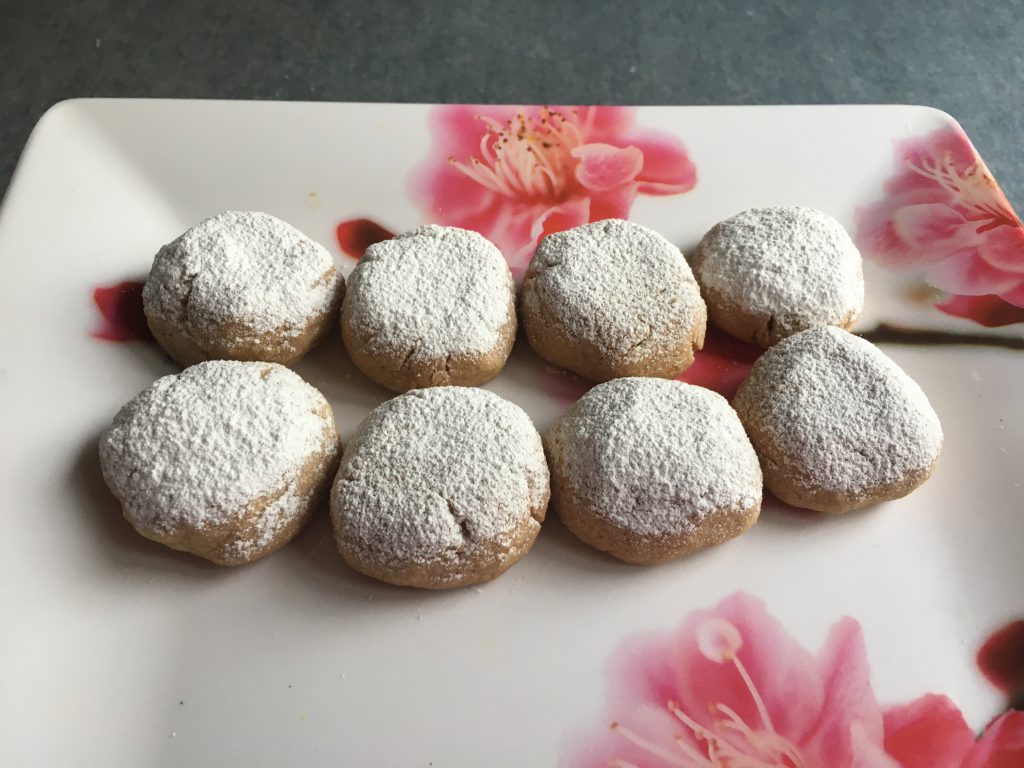
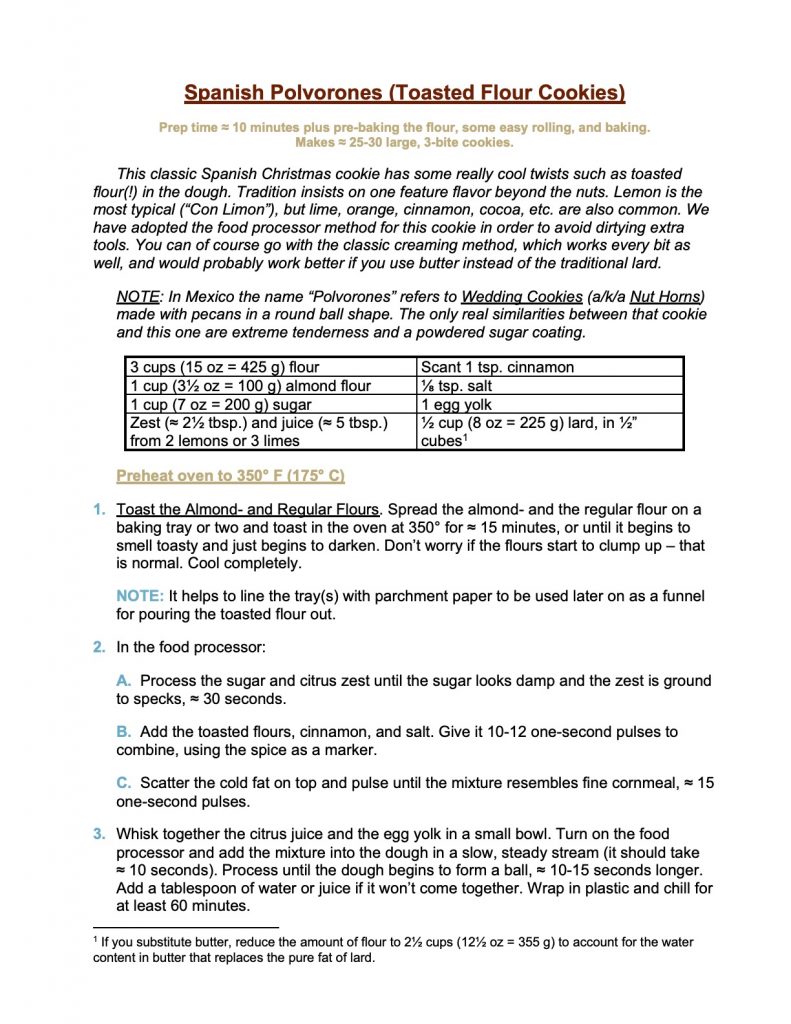
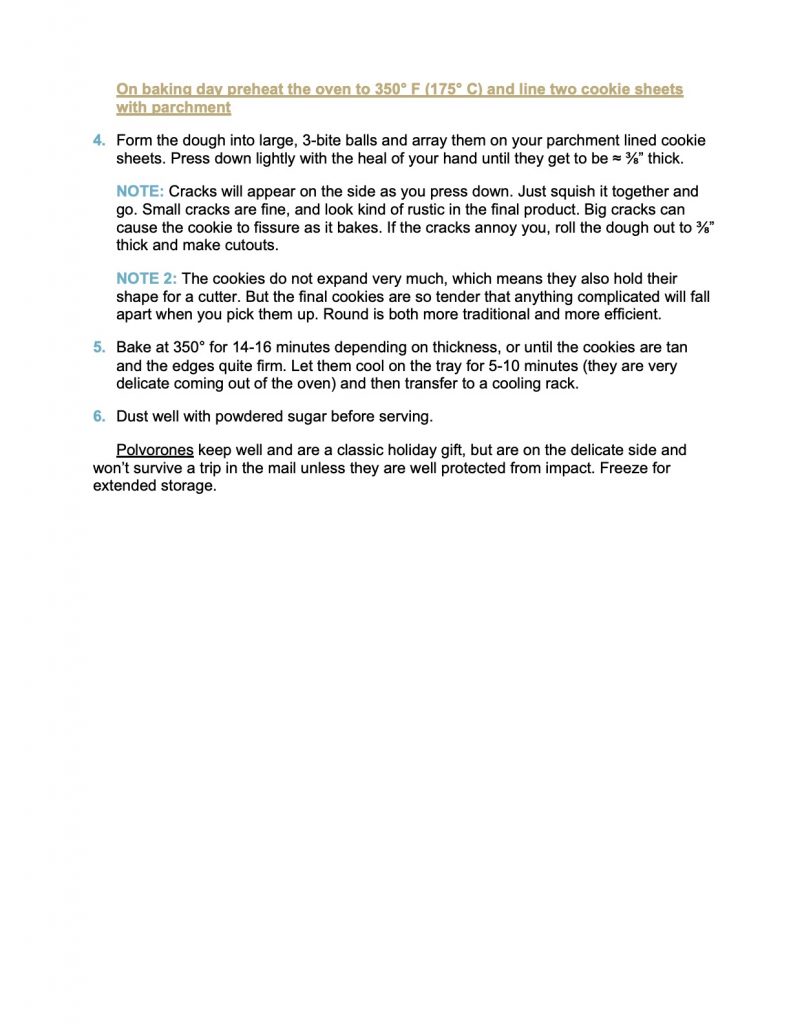
A few weeks ago we discussed the long lost tradition of bacon cookies. This week we address an even more ancient lard based cookies, but that isn’t the magic ingredient. Not by a long shot! No, the big trick to Spanish Polvorones is the use of TOASTED FLOUR. If that sounds intriguing, you’re right. It is. This is one cookie that Scott started testing the same day he found the recipe, and it was for just that reason. Toasted flour is gooooood stuff! Just think of the difference between a dark roux and a light rough and you’ll know exactly what’s going on.
The general description: This is a lemony, melt in your mouth shortbread cookie; the Spanish equivalent to whatever in your background is the “most tender cookie in the universe;” Scottish Shortbread for England, Nut Horns for Central Europe, Meltaways in the U.S., etc. The unique difference is the toasted flour and a very hefty hit of citrus.
They’re also the exact sort of treat that gets Scott in trouble for adding inches to a certain well-loved waistline. And they’re dairy-free! That matters in these days when Kate’s been forced away from butter.
A NOTE FROM KATE: These cookies are a real revelation! It’s good to have dairy free options. I’ll have to experiment with using oil instead of lard to see what happens.
SOME NOTES ON NAMES AND HISTORIES TO AVOID CONFUSION: There’s close to a half-dozen cookies out of the Spanish tradition that have tastes and textures close enough to cause some confusion. Iberia offers a straight butter cookie, like everyone else, but also offers:
Bizcochitos, the official state cookie of New Mexico, are designed to hold their shape during baking, and can even hold a basic imprint from a cookie mold. They are typically cut into animal shapes and often sprinkled with some cinnamon sugar at the end. It is a lard based cookie, with anise and orange as the central flavors. The version in Heritage Cookies of the Old and New World has graced many a Christmas tray in our home.
Mantecados are another lard-based shortbread, but include a little olive oil to make them even more tender. They feature a lemon/anise profile with just a hint of cinnamon. It’s on our list of cookies to test, and will no doubt appear here as soon when we get the recipe right.
Spanish Polvorones are the cookie we’re looking at here. These are made with toasted flour, feature a lemon/lime profile, and are also a little sweeter than Bizcochitos. They are formed into flattened balls instead of animal cut-outs.
Mexican Polvorones a/k/a Mexican Wedding Cookies are a butter-based nut cookie made from pecans. That recipe is much closer to Nut Horns than it is to any of the three above.
Filipino Polvorones are a version of the Spanish that are baked into simple molds because they are so tender. A baker who lived there for 30 years tells me the recipes vary by region, but the fat is usually a less refined version of lard, with melted butter or clarified butter (ghee) as the alternative. Many online versions seem to feature a special toasted rice product for texture on the inside.
Why the similar names? That Spanish-speaking friend tells us that “polvo” translates to “dust” or “powder”, which does seem to tie the recipes together. This is the tenderest, “shortest,” Spanish-heritage cookie in that cultural heritage. Think of Scottish Shortbread made with toasted flour and an Iberian sensibility.
Toasted Flour
This is the magic ingredient here, and it’s easier than you think. Simply bake it for 15 minutes or so at 350°. Doing this makes as big a difference in flavor as toast versus bread, and a lot of you are going to put this into your repertoire of baking secrets for the rest of time. Just be aware that toasting the flour radically changes its microscopic and chemical properties, which alters both its thickening and gluten-forming powers. It’s more like a unique, toasty-but-mild flavored nut flour than all-purpose, cake, or bread flour.
Filipino chefs use a wok to toast their flour over medium heat on the stove top. That actually works better than the oven because you can push things up to the point where smoke begins to rise. All you need is the patience to keep stirring once it gets close. We don’t own a wok, but instead have a very large 14″ skillet. That works just as well, but the sides are shallow enough to create a fear of spillage for quantities at this scale. Verdict: the oven method works well enough, and for us those that final layer of extra toastiness isn’t worth the inconvenience. The old 90:10 rule in action. But if you want perfection, go with the wok/pan method on the stovetop.
DIGRESSION: Family members reading this post will know that Scott is actually more of a savory cook than a baker. Close family will also remember how Grandpa Art used to ask for plates of Scott’s famous Gumbo maybe twice a week during his final year. Gumbo is a Cajun stew that’s built on “dark roux” (a/k/a “Cajun napalm”). Traditional recipes require you to mix the flour and fat in a pan, and then cook it for 30-40 minutes over medium-low heat until it turns into the color of an old penny. Toasting your flour in a skillet is quicker, faster, and safer (they ain’t kiddin’ about the “napalm”). Just follow the instructions above (large pan, flour, medium heat, lots of stirring) and cook until it turns to a light tan and smoke begins to rise. Turn the heat down at that point and add in your oil, butter, etc. Stir, and behold! Roux the color of an old penny in 15 minutes instead of 40.
The Rest Of The Process…
…could not be simpler. You can make this cookie using either the creaming method (beat the lard and sugar in a mixer until airy, mix in the egg and citrus, and then add in the dry ingredients), or in a food processor. We chose the latter because it makes for easier cleanup by ≈ 3-4 minutes. Go with whatever seems more convenient and familiar to you.
The only real warning we’d share is to use a light hand with the cinnamon. The main flavors here should be the toasted flour and the citrus. A healthy touch of cinnamon marries and enhances that combination. Too much would turn the cinnamon from a supporting actor into a co-star; which isn’t exactly bad, but is not what you want.
CONCLUSION
There’s not much more to add. This is a really simple cookie to make, but unique for U.S. bakers because of how it uses lard instead of butter, and toasts the flour for a totally different flavor profile. It’s strange and familiar all at once, which is really hard to accomplish.
Dairy free and delicious, what’s not to like? This cookie offers a unique flavor profile with a familiar texture somewhere in the slice-and-bake or sugar cookie range. The only unusual part is that title ingredient, and it’s hard to say if that’s really as unusual as people might think.
EXTRA SPICE FROM KATE: Okay, hold the phone a sec. My husband’s version of “health consciousness” can sometimes cross that invisible line into “health denial”. Before he continues with his ode to pork, we want to point out that butter, lard, shortening, and all other saturated fats – even bacon [gasp!] – are not good for you. That is why cookies are a treat, not a staple. No, bacon fat is not really any worse than any of those others. Granted. And he’s 100% right that using it in a cookie is “heritage”, not “weird.” But keep the enthusiasm within bounds. This is not a physics-optional cartoon. You may proceed now.
Animal fat cookies are rare in the U.S. for sure, but that is only because we tend to be wastrels and spendthrifts when it comes to leftover fats and drippings. Americans are taught to reach for purified, store-bought fats like butter, shortening, or oil when we cook. But that isn’t how things used to be, and it still isn’t true in professional kitchens, or in any part of the world where people pinch their pennies a little harder. In all those situations the leftover fat, such as drippings from a roast, are treasures to be saved, not waste to be discarded.
That isn’t to say we are holier than thou. Here is our standard method for cooking a few slices of bacon for breakfast: place some slices between several layers of paper towel, put it on a plate, and then microwave for 3-5 minutes until it gets as crispy as you desire. Discard the dirty paper with all that nasty fat.
What could be better? Well… how about not wasting all that fat, which qualifies as “delicious” rather than “nasty” in any other time and place the world has ever known? Sorry to sound all rant-y. We really do use that paper towel trick, and it really does work. But it is sort of embarrassing when you consider the historical perspective.
Try this method instead if you have any plans to use the fat: Place your slices on a rack over a sheet pan (spiced as you desire) and then cook at 375° for 15-25 minutes, depending on thickness. Remove it from the oven when it hits the level of crispy you want. Flip it over with tongs to let any pooled fat drain into the pan, give it a minute, and then dab off any excess with paper towels. Super easy, super reliable, and nothing wasted. Use 350° for chewier bacon and 400° if you like more char and you’re willing to tolerate the smaller safety window before it burns.
FWIW, this recipe calls for ½ cup of fat, which is almost exactly what you ought to get from rendering a pound (16 oz = 450 g) of bacon. A perfect and thrifty method for whenever you cook large amounts of the Mighty Meat.
Comparison Recipes
Lard (pork fat) has to be the most common cooking fat after butter, shortening, and oil. U.S. bakers adore it for pie crusts and biscuits, but lard is also a common cookie ingredient; particularly in Spain and its colonies. Bizcochitos, the official state cookie of New Mexico, are the best known variation (see Heritage Cookies Volume I for a recipe). Spanish Mantecados are a more tender example, with less flour and a little olive oil added to create a shortbread effect. Look for it in a future blog post.
Bacon fat is nothing more than lard with extra flavor, if you look at it sideways. We’ve found many more savory recipes than sweet ones in the world of baking. There is a German side dish called Speckkuchen (“Bacon Cakes”) that’s definitely worth your attention if this interests you. But this article is about the sweet-treat, cookie versions and they are far from unknown.
Tricks From The Testing
This turned out to be a pretty easy recipe to perfect because the U.S. went through a bacon craze in the early 2000’s that hasn’t quite ended yet. People put bacon into everything! And it kept working, and working, and working again. As we write this in 2021 there’s still a common catchphrase that, “Bacon makes anything better.” Okay, that probably isn’t true in the literal sense. Spend some skull sweat and you’ll probably come up with a few exceptions. But the basic point stands: savory, sweet, smoky bacon goes very well with many, many flavors.
We chose a classic Christmas Ham profile for this recipe, using cinnamon, ginger, cloves, and molasses. Feel free to substitute any spice combination you prefer. Just think of it as something to go with bacon rather than something meant for a cookie. Scott is halfway toward eager in his plans to make an extra-smoky version the next time we have a big, multifamily brunch to cook for.
The cookie itself was just as easy. The proportions fell dead center into the classic sugar cookie and drop cookie range. All those charts in the book before each section? This is where they come in handy.
The only complication came with narrowing things down to the final version. The two of us went back and forth on whether the cookie wanted a bit of crispy texture inside. Translation: should we add in some of the bacon we had lying around from rendering the required fat? In the end we left that as an option. Somewhere around two slices (≈ 2 tbsp. when chopped) is the right amount if you have any extra.
But it still wanted… something. That turned out to be bits of dark chocolate.
You’re in good company if that sounds wrong. Kate almost blanched at the idea, and Scott has to agree that chocolate-dipped bacon was one of the less appealing excesses of that bacon-with-everything craze we described above. But this is the exception that proves the rule. The chocolate sort of widened the flavor, while the textural contrast rounded things out.
CONCLUSION
Bacon tastes good. Everyone agrees on that, and we waste never a crumb.
Bacon fat also tastes good. Everyone agrees there as well, but we waste it all the time. There’s no good reason to do so, and people never did until we grew wealthy enough to value convenience over thrift and flavor. This is just one example of the many, many ways in which you can use this overlooked treasure to make treats that will make you sound like a genius. We’ve seen, tasted, and enjoyed Bacon Ice Cream! If that can work, and we assure you it does, then cookies should be taken in stride.
Welcome to another long article, which obviously has nothing to do with a wordy author! Blame it on the combination of a stubborn cookie with a lot of noteworthy tricks and a fascinating tradition. Many thanks up front to Mirtill Seregély, a wonderful Hungarian baker we met online. She’s the one who published the original recipe, and was also our primary source for the cultural background that turned out to be essential. Essential how, you ask? Read on.
Kvircedli are a rectangular molded cookie that holds good impressions but does not get painted. It has a texture like crunchy, chewy sponge cake, a nondescript but familiar flavor that will remind you of Ladyfingers, and an almost unique profile that displays the airy texture inside.
The recipe itself looks like a classic Springerle, with 25% less sugar, lemon as the only flavor, and a whopping eight (8) times as much leavening. That last is the elephant in the room. Normal Springerle use ¼ tsp. of Hartshorn (baker’s ammonia) for a 3-egg recipe. Kvircedli use a full 2 tsp. Two bloody teaspoons!
That enormous amount of leavening requires a lot of little tricks that are hard to figure out, but turn out to be directly tied into the cookie’s history, tradition, and purpose. So let’s turn to that front next.
Kvircedli History and Tradition
The former Hapsburg Empire left behind a legendary baking tradition that pervades every one of the varied corners to which it stretched. Austria in the west? Ever hear of Linzer Torte or Strudel? The Balkans to the south? They may hate each other politically, but the Serbs, Croats, Bosnians, Albanians, etc. have nothing but respect for their respective baking traditions. We do too. The Czechs and Moravians to the north? Awesome. The Czech tradition of Christmas sweets is what drove us into baking so much in the first place.
The Hungarians in the east use their ovens every bit as well as their former Imperial brothers. Kifle, the filled flaky cookies we called “Kolachy” in Volume I; the famous Esterhazy and Dobos Tortes; the Poppy Seed and Nut Rolls found in half the bakeries of America; it doesn’t end. You could probably list dozens of absolute classics that either originated in Hungary, or get made there with as much skill as anywhere else in the world. So when we saw the Hungarian folk recipe that Mirtill shared, which took dense Springerle in a whole new direction, we knew it had to be tried.
You’ll read below about some of the troubles we ran into. Those didn’t get solved until Scott went back to Mirtill for a lesson on the sort of deeper background that often gets ignored.
The Hungarian people go back to Attila the Hun and his wild tribesmen from the vast steppes of Asia, who invaded the Roman Empire more than 1500 years ago. After his death in 453 they settled in the land that now holds their name, with a hauntingly beautiful language related to nothing in Europe except Finnish and Estonian – three peoples who trace their history to common roots.
The following centuries naturally saw a certain amount of immigration from other areas, leading to several ethnic minorities. The German speaking minority are known as the Swabians. Somehow or other that group (apparently with the aid of some Capuchin monks) became big players in Hungary’s winemaking tradition, with a major center in the little town of Mór (population just under 15,000). Think of it as Hungary’s Napa Valley and you’ll get the idea. Other parts of the country specialize in rich reds or aromatic dessert wines, but Wikipedia says that Mór built its reputation on dry white wines similar to sauvignon blanc.
Kvircedli come from that region, and are best known as the treat that winemakers still serve whenever they open the doors for a tasting. Mirtill tells me the cookie also shows up at special events like baptisms and weddings, though I suspect you’d get into a flavored variation for those. More on that below.
Stop and think about that. This is a cookie designed and used in a small, immensely scenic part of the world for the express purpose of vineyard tours and celebrations. How awesome is that? But it gets even more quaint if you dig a little deeper!
Legend holds that local women created Kvircedli to get around a religious law that forbade them from drinking alcohol. Some ignorant, almost-certain-to-be-a-bachelor really thought he could expect the wives to sit there quietly while their husbands quaffed the local product? Even in the name of religion? Riiiight. The ladies responded by inventing this airy, absorbent cookie with a convenient rectangular shape that’s perfect for dipping into unwatched cups. And thus they “ate” their wine instead of “drinking.”
Problem #1: Is the Flavor Too Bland?
The history and the story both help to explain the flavor profile. Traditional Springerle have a distinct anise flavor that would not play well at a wine tasting. Okay, it might not ruin a well balanced red, but after that you’re looking at some potentially ugly clashes. A nice, neutral, vaguely lemon profile makes a much better palate cleanser, while the crunchy-outside, chewy-inside texture does the exact same thing for your other senses. It makes an ideal reset button to move from one wine on to the next.
Pretty smart! If you’re a winemaker looking for a fantastic and proven gimmick, I offer Kvircedli at your tastings as suggestion #1.
But what if you just want to enjoy the cookie in some other setting, like one of those baptisms or weddings? Well… I guess my first answer would be that celebrations often involve a lot of wine, and simple flavors tend to be child friendly too. That said, it takes almost nothing to jazz this dough up with whatever interesting flavor may strike your fancy. We did a batch with that Croatian flavor profile that worked so well for Dalmatinski Rafioli, and the result was all we could have hoped. A spice or spice mix would work every bit as well. We put a suggested proportion in the recipe if you’re interested.
Problem, if it is a problem, solved.
Problem #2: Stick to Simple Patterns
Springerle taste fine and all, but their glory lies in the amazing, painted patterns that make people say, “That looks way too pretty to eat.” We went into this hoping that Kvircedli would offer a similarly result with a very different texture. The strong similarities between the two doughs gave us a lot of hope in that regard. But it was not to be.
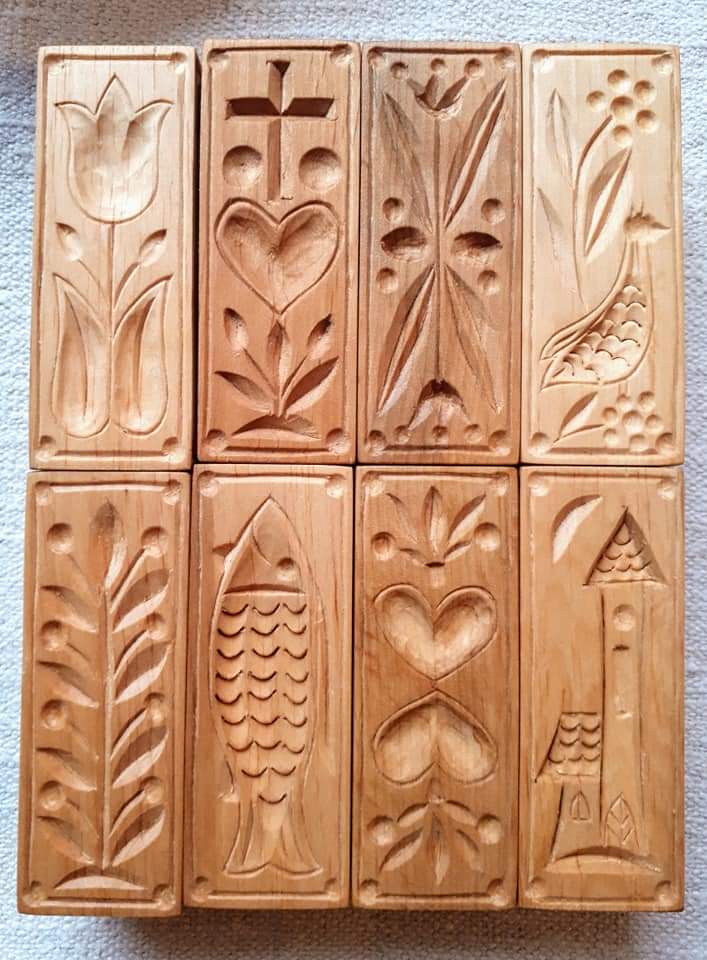
It took a while for us to realize it, but that rectangular shape is actually a major key to making this recipe work. Here is a picture of some traditional molds that Mirtill Seregély shared:
Traditional Kvircedli molds carved from alder wood by Zsuzsanna Sáriczné. Note how the impression comes from rolling the mold over the dough, side after side so the pictures end up touching. Read below and you’ll see why that matters! Photo Copyright 2021 by Mirtill Seregély, and used with permission.
A fuller array of traditional Kvircedli molds carved from alder wood by Pál Szarka. Photo Copyright 2021 by Mirtill Seregély, and used with permission.
That rectangular shape turned out to be important.
Kvircedli stray from the traditional Springerle recipe by using an enormous amount of leavening to change the internal structure of the cookie. That’s the core idea. When we used a traditional Springerle mold, particularly a round or oval one, the pretty surface patterns held up fine, but the cookies baked into uneven, lopsided shapes tilted as much 45º off the level. The dough puffed out randomly to one side or the other, and occasionally even heaved up unevenly in two directions.
Looking a little closer at the recipe, and at some online examples, showed us why. One of the key features in a traditional Springerle is the “foot”; a ring of dough that puffs out sideways as the cookie bakes. You see this in Macarons too. The cause is the same in both cases.
First you make the dough, and then you stamp it with a fancy shape (for Springerle) or pipe it into a neat circle (for Macarons). Then you let the dough rest on a counter long enough for the outside surface to dry out into a skin. That takes up to 2 hours for Macarons, and 24 hours for Springerle. The bottom, of course, does not dry out because it is resting on a parchment-lined tray.
When you bake the cookies, the bottom and core expand as heat turns the inside moisture to steam and/or activates the leavener to create CO2. Boyle’s law says those gases need to expand in all directions, but they can’t go up through the dried out skin. So instead you get extra vertical rise combined with a horizontal “foot” as dough puffs out around the bottom.
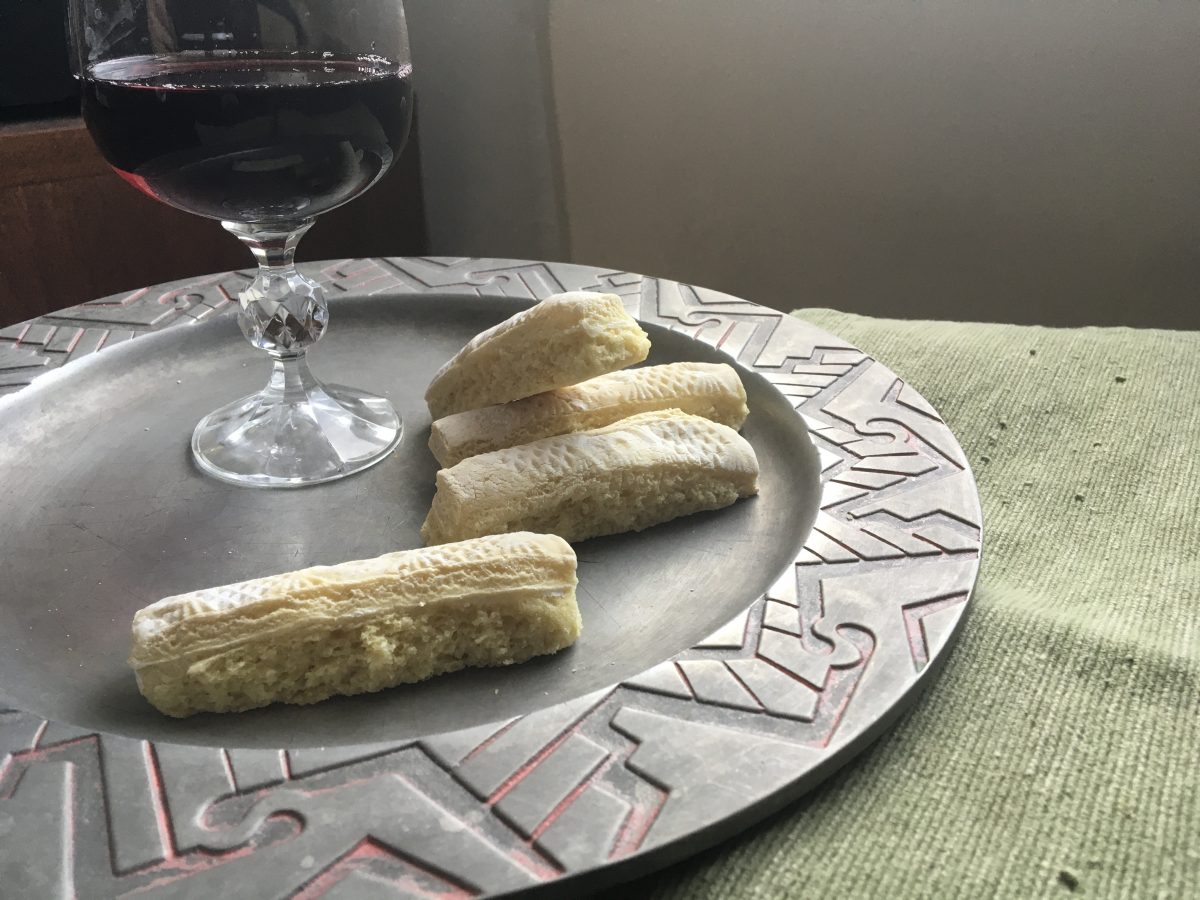
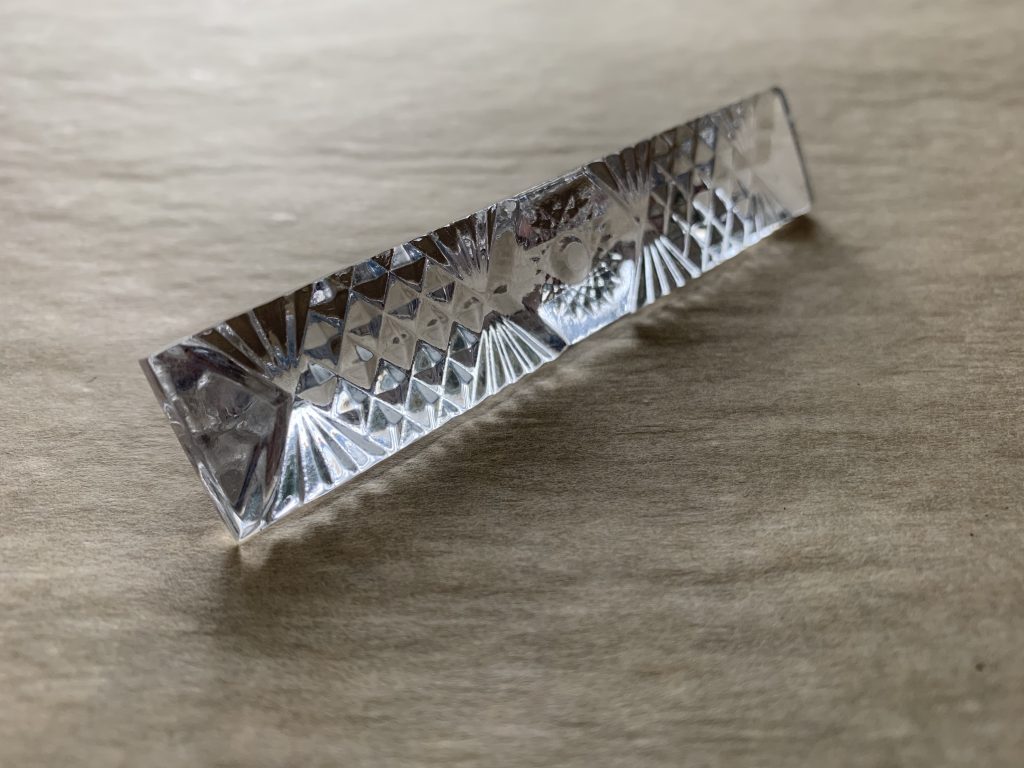
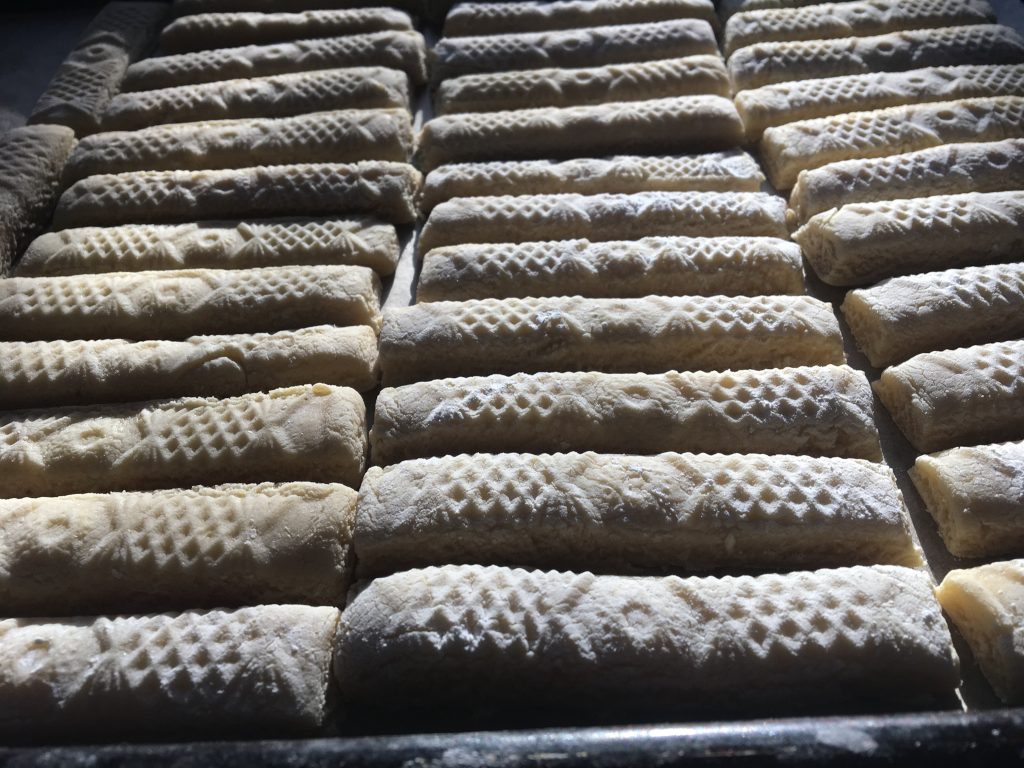
A pan of Kvircedli packs the unbaked cookies close enough together (about 3-4 mm = ⅛” apart) for the feet to expand into each other. The result? Each cookie supports its neighbors from the side as they bake, adding a little extra rise while also preventing a tilt in any one direction. Have a look at the tray we just baked for this article (stamped with the bottom of a crystal knife rest since we do not have one of Mirtill’s special molds to play with):
There are would-be cookie molds all over the house!
Soldiers lined up and waiting to bake. The dough is ⅜” thick after being impressed with the pattern, but not yet puffed.
That is the raw dough.
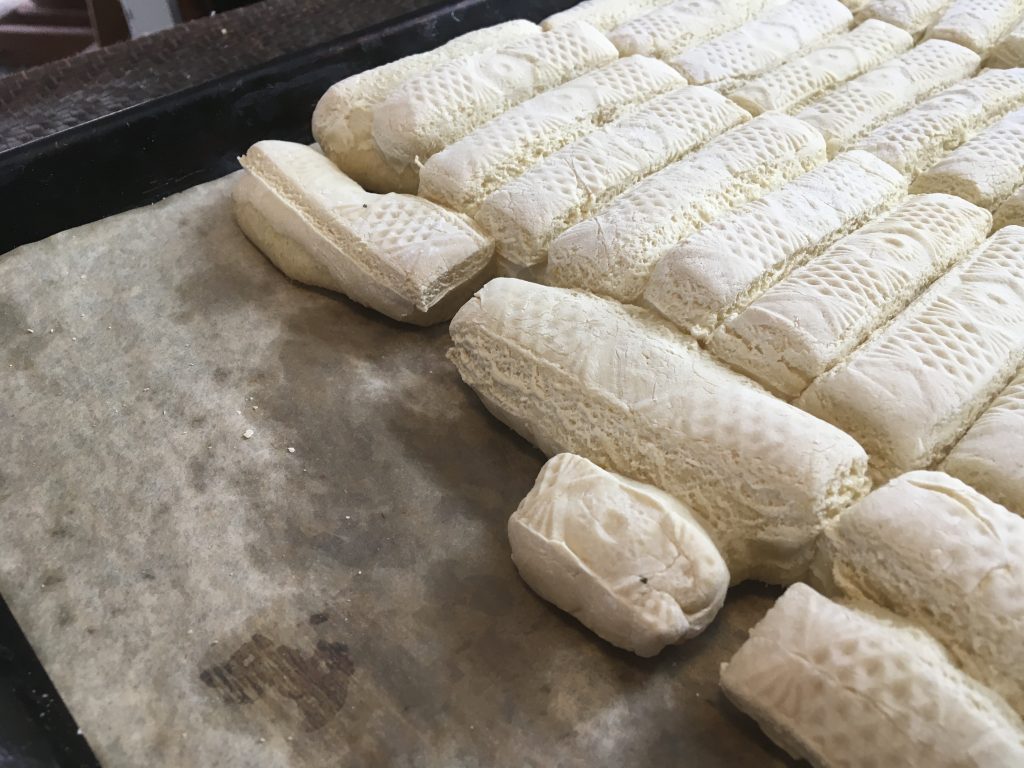
See how the ones on the edges have puffed unevenly?
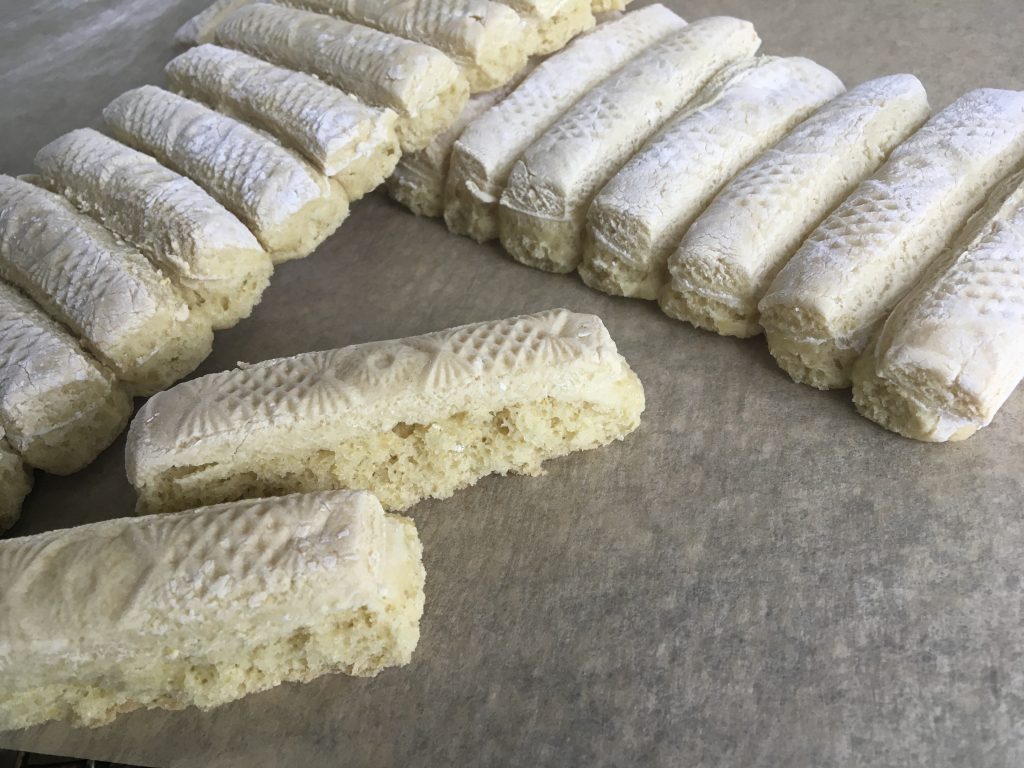
Here is the same tray after baking. The middle ones are nice and even, and have puffed from ⅜” up to a full 1″ tall. The ones on the edge got lopsided because they received no support from a neighbor. FWIW, this process also results in a much desired side effect. Kvircedli are a breakaway cookie that gets divided along those pre-inscribed lines. Doing so reveals the uniquely beautiful, spongy interior.
Showing the lovely sponge cake texture. Just be careful not to crush your pattern as you pull. There is nothing wrong with using a paring knife to get things started if the cookies started out a little too close together on the tray.
Problem #3: The Evil, Cat Box Reek of Ammonia
But there was a joker in the deck! Hartshorn a/k/a Baker’s Ammonia a/k/a Ammonium Carbonate has yet a fourth name: Smelling Salts. And believe me, they work. If your beloved should ever swoon in a most dainty and Victorian manner, one good whiff of this stuff will quickly break the trance. Blech.
Hartshorn works by breaking down into ammonia and CO2 when heat is applied. The ammonia bakes off, while the CO2 provides the lift you wanted. Springerle recipes use a bare ¼ tsp. in the dough for this volume of eggs and flour. That amount is enough to leave a foul odor in your oven, but won’t be noticed in the final product over all the anise notes. With Kvircedli you’re going to wince when you open that oven, and sticking your nose against the fresh baked cookies is not going to make you happy. Indeed, our recipe contains an explicit warning to avert your face when you open the oven door in order to spin the baking trays, and again when you remove the finished cookies.
Some of that odor inevitably ends up embedded inside the freshly baked cookies.
We tried a few things to fix this. First, we cut the amount of Hartshorn in half and replaced that portion with baking powder at our normal ratio of 3 parts baking powder for every 2 parts of Hartshorn being replaced. That was the batch mentioned above, where we used proper Springerle molds in addition to the knife-rest stamp. The results were uneven. Literally, and sometimes at multiple angles inside the same piece. It was worst in the oval Springerle that baked in splendid isolation, but the phenomenon showed up in the square ones we baked side by side. So was it the leavener? The much more varied heights of the pattern? Or the fact that “side by side” meant a nice even row, that only gave mutual support from one direction?
Bad science on our part. There’s a reason why each experiment is supposed to change just one variable at a time. But we never did go back to finish looking at the baking powder idea because Scott paused to talk things out with Mirtill. Understanding the history and purpose showed us that Kvircedli were meant to have a plain flavor, and were not a medium for display like Springerle. Who would want to dunk a work of art? Why would you want to distract from the wine you’re sampling, especially with brilliant, jewel tone colors? And if the rectangular shapes served a purpose, that meant the breakaway effect was deliberate, which in turn…
You get the idea. It made more sense to go back and tweak the original recipe for a longer and lower cooking time that would allow more of the ammonia to bake off. The original formula called for 12-20 minutes at 150º C, which is 300º F. We reduced the temperature to 140º C (285º F) and left them in for the full 20 minutes, with a single spin at the 10 minute mark to avoid hot spots.
The result? A little less browning on the bottom, which we missed; the exact “yellow” tone described in the original recipe, which hadn’t been as clear before; and about 75% less reek in the finished cookies. Mirtill had also told us that she’d done enough casual research to believe that true Swabian bakers solve the problem by simply leaving the baked cookies out for a day before eating. Another baker we met on Facebook confirmed this in a conversation with her Hungarian relatives. And, sure enough, that leftover smell disappeared after a few hours on a plate once we instituted the longer baking time.
And so you get to our final verdict. For shaped and dried cookie dough that is ⅜” thick (1 cm), bake at 285º for 20-25 minutes instead of 300º for 12-20. That’s what you will read in the recipe below. Here in private we will use less exact numbers and call it 18-30 minutes to allow for differing ovens and the erratic moods of your household gremlin. We’ve all got one, and they have a notoriously fickle sense of humor.
Problem solved, at least well enough to avoid going back for a new round of experiments with baking powder. Let us know if you try it, however. We’d love to know if there is a way to make the recipe without having to deal with the cat box effect.
Conclusion
Molded cookies involve some extra work to stamp in the pattern, and extra time because of the overnight rest that forms the required crust. There is no getting around that. But if you are the sort of baker who likes that process, we 100% believe you ought to give Kvircedli a try. That goes double if you happen to own a traditional 4-sided mold that can be conveniently rolled-and-pressed, or one of those patterned rolling pins. Either way, target a final thickness of around ⅜” (1 cm), which will be cut into nice, rectangular shapes. Array on your tray about ⅛” (3-4 mm) apart, and then proceed.
Go with the classic lemon-only profile if you want to stick with tradition and/or use them in a wine tasting. They really work that way, and yes: we did make sure to test it. [Hic!]
Add flavor to the dough if you want to eat the cookies out of hand (although Kate loves everything lemon and adores them as they are). Flavored, eating cookies can be painted if you so desire, but do not do so for dunkers. It serves no purpose and distracts from the wine itself.
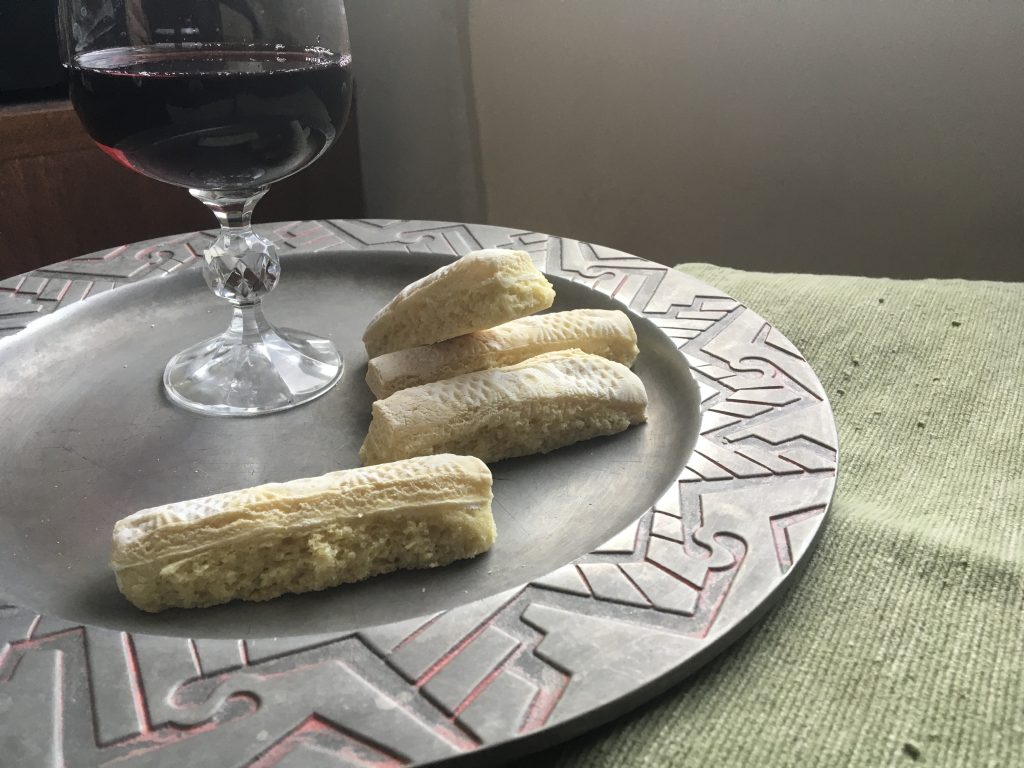
Here is a final photo, and a copy of our updated recipe. Enjoy!
It should be a dry white wine, of course. That is the style of Mór, whence Kvircedli originate. The photographer, however, responds that white wine may be correct, but red is more photogenic. That answers that.
First things first. This is a delightful cookie, and is much easier to make than you might think from Scott’s tale of woe toward the end.
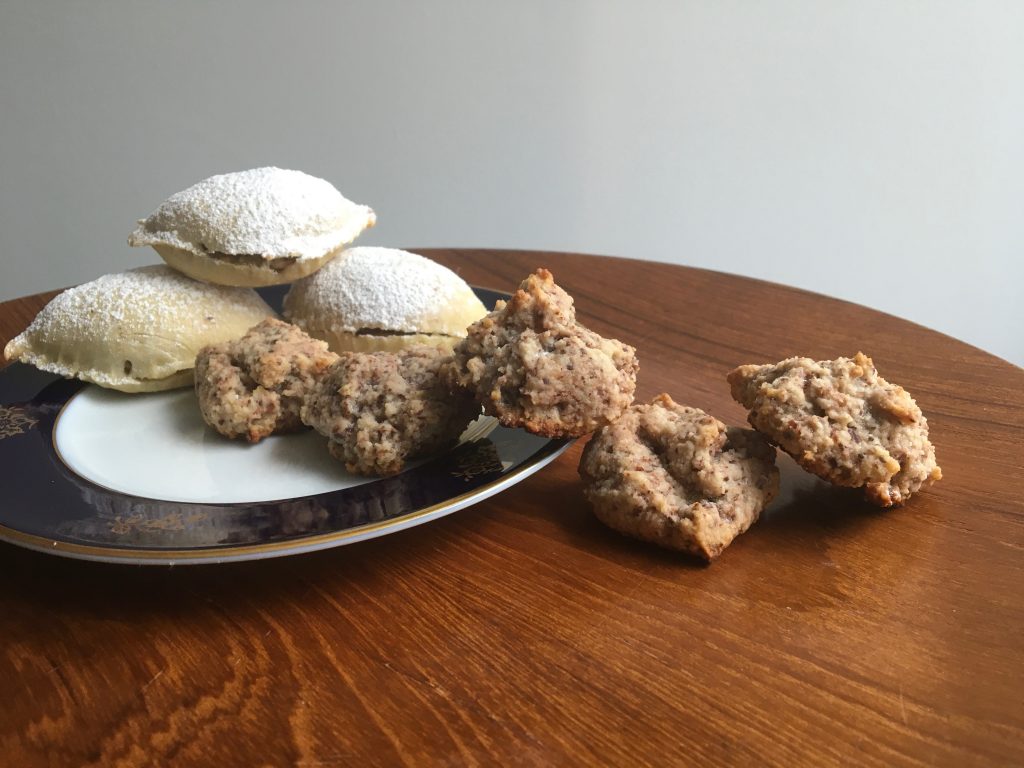
The dough is super simple: throw it all together and knead until smooth. The filling is just as simple: mix the dry ingredients and then fold in whipped egg whites. Then you wrap “A” around “B”, seal, and bake. It’s nothing more than a classic, fine grained macaroon with special flavors that is wrapped inside an easy crust.
The challenges only exist for people (like us) who’ve never learned how to seal a filled dumpling like pierogies or one of the Italian pastas. If you have that trick down, you’re golden. Easy peasy. If not, blame the difficulties on your (our) lack of skill at issue, not the recipe. We have no more right to complaint someone with no knife skills can object to instructions like, “dice the onions.”
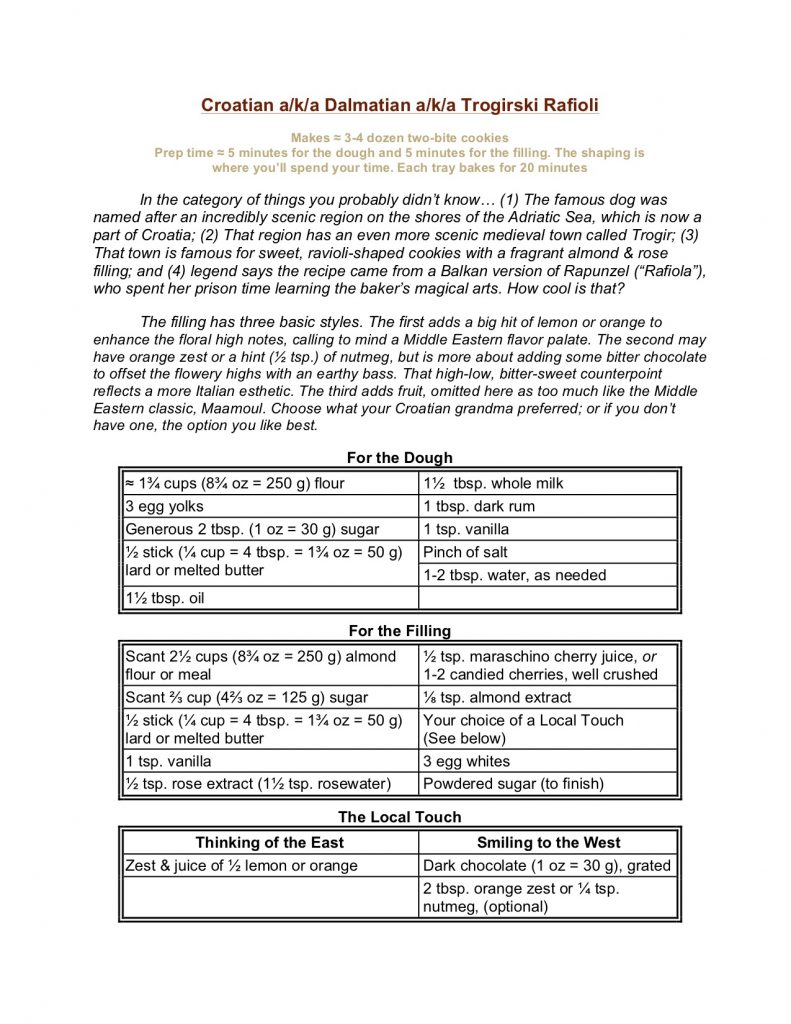
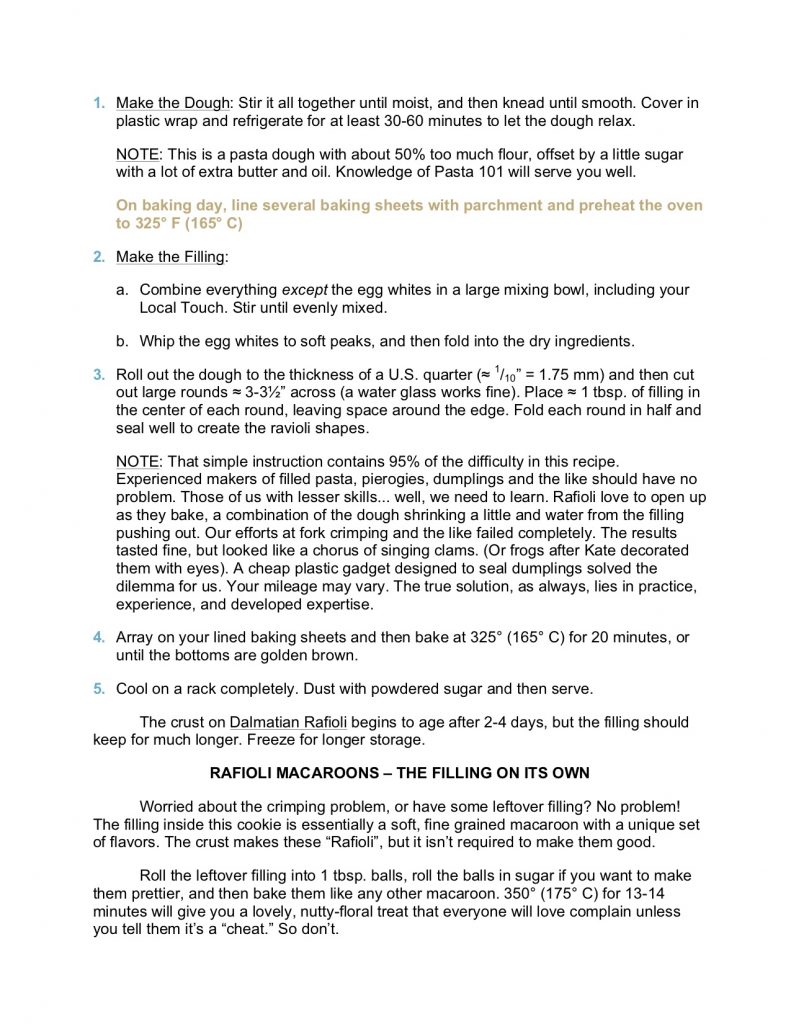
As always, skip to the bottom if all you want is the recipe. Most of this post is about the legend, history, influences, and cultural importance behind this cookie – the “heritage” part that we find so interesting. That will require some time. No need to slog through the story if that isn’t your thing.
PART I: WHAT’S SO SPECIAL ABOUT THE STORY?
First we need to set the scene. Croatia is a small country in the Balkans with an enormous coastline on the eastern side of the Adriatic Sea (that’s the one between the Italian and Greek peninsulas). This coastline has a natural beauty to rival anywhere on earth. Those legendarily lovely Greek islands and coasts you see in glamour shots? Same geography and part of the world.
The region of Dalmatia (from whence the dogs are named) nestles into the most scenic part of that beautiful coastline. There are no bad spots, but the most beautiful of them all may be around the untouched medieval town called Trogir (a Unesco world heritage site since 1997), which lies just above the legendary Isle of Vis; a place so lovely that they moved some of the Mamma Mia II filming there for extra flavor.
Adjectives fail.
Vis and Trogir are ground central for the most famous of all Croatian desserts: a sweet, filled cookie called “Rafioli”. Every village and grandma in the country claims its or her own special variation, of course, and serves it for every baptism, wedding and holiday feast in the year. We found a good dozen translatable recipes on the Internet with names starting from the largest region (“Croatian”), and working on down through Dalmatian (“Dalmatinski”), Trogir (“Trogirski”), and a few others.
Fortunately enough, the devil lies in the details. The basics are always the same. Rafioli start with a lot of eggs. Our recipe uses half a dozen. You then (A) make a sweet pasta dough with the yolks, (B) make a sweet filling by combining the whites with finely ground nuts and various floral notes, and then (C) wrap A around B and bake. The result is a perfect compromise between Italian desserts and the more rose- and flower-water notes of the Ottoman Empire. But more on that later. First we have to finish the story.
Life in Trogir has been repeatedly shattered over the millennia by invasion and war from every direction. It started with the ancient kingdom of Dalmatia. That fell to Rome in a famously bloody conquest. Rome lasted a while, but then split in two with this region right on the dividing line. It ended up going with the eastern half under the sway of Constantinople, but only after some more fighting. The Saracens came through and left the town ashes during the 1100’s, which led to 300 years of semi-life comparable to an old jalopy that backfires every few miles. This went on until 1420, when the Renaissance city state of Venice absorbed the town as part of its trading empire.
That golden age, such as it was, lasted until the Hapsburgs (Austria) took over Venice itself in 1797. It gets no better after that, but we don’t need to continue. Rafioli were born in that 400-year period of Venetian rule.
Now you may think the name is nothing more than a bastardization of “ravioli”, a word that derives naturally enough from the Italian verb “to wrap.” It’s a natural enough assumption, but don’t say that in Croatia unless you want to start a fight! They insist that the name actually derives from a maiden called Rafiola, the Croatian equivalent to the French, Spanish and Italian names Rafaela, Rafiela, and equivalents with different spellings like a “ph” for the “f”, and/or multiple L’s. Think “a feminine version of the famous Renaissance artist’s name.”
What’s the true answer? I’ve spent more time thinking about it than anyone should, and my guess would be that the cookie name is and always was a pun designed to include both of the competing word origins. It only matters for us because the lady comes with a legend! It goes like this.
Once there was a beautiful young maid who got herself locked in the famous tower of Trogir Castle, which rises above the sea up to the present day. There she waited, like the maiden Rapunzel (named after an herb if you want more puns), for her lover to come to her rescue. But Rafiola did not sit idle, braiding her magical hair! No, she was much more productive. She studied the arts of nigh-on-magical baking, so she’d be ready to delight the young lord who’d come to her rescue.
To make a long story short, he eventually found her, she continued her baking, and they lived happily ever after. The end. Or rather the beginning, for the great creation that took on her name: Rafioli (the plural of Rafiola). Talk about “heritage”! It doesn’t get any better than that.
Your Honors, please accept our nomination for Valentine’s Cookie of the Year: Croatian a/k/a Dalmatian a/k/a Trogirski Rafioli.
PART II: WHAT’S SO SPECIAL ABOUT THE COOKIE?
We wrote a gigantic doorstop of a cookie book with more than 250 recipes, most of which came from Europe and few of which are just variations on a classic theme. It wasn’t just 80 Versions Of A Drop Cookie With Different Ingredients. That’s a fact that makes us very proud. Instead it covered every different type and approach to cookies that we could find. This recipe has no real parallel in any of the ones we studied before.
The cookies in this blog will eventually yield Volume II if we can ever get enough of them tested. So far a lot of those new recipes have come from looking deeper into baking traditions across the Mediterranean. Corsica gave us Canistrelli. Sardinia, Pappassani. The areas around Florence yielded Ricciarelli and Cavallucci. Ancient medieval trade routes broadened our repertoire of macaroons. The Middle East is yielding secrets such as Persian Nan-e Berenji, Egyptian Ghorayebah, Israeli Tahini Cookies, and others. Etc.
This cookie is almost unique in that context too. The only analogy we’ve come up with – and it is a loose one – is this: Rafioli are something like an East-Meets-West marriage of the most refined Italian coffee house sweets with Maamoul, the ubiquitous, rosewater scented, filled cookie that’s across the entire Muslim world. In short, you are reading about a culinary missing link that differs from everything else you’ve ever made, and is marvelous enough to stand with the best of them. That’s what we call special.
The filling starts with a base of sugar and powdered nuts; usually almonds, but occasionally pine nuts or pistachios. We recommend almond flour. Flavor that base with rosewater, vanilla, maraschino cherry juice/liqueur, and your choice of the Local Touch that suits your taste and mood (see below). That’s about it. Fold in the whipped egg whites and you’re done.
The cherry part is nothing short of brilliant, by the way. It marries amazingly well with the rose, which would be overwhelming on its own. Consider the vanilla (another flower if you think about it) as your chaplain to bind the two together. It’s one of those combinations you’d never imagine on your own, and will never forget once you’ve tried it. We’ve seen versions that add in some cherry jam as well, but did not test them. Let us know if you do. It sounds like that could work.
It’s the Local Touch that divides Croatian bakers into their respective camps. Some recipes (a clear minority) add in raisins, dates, or figs to create a filling almost identical to what you see on the Mediterranean’s eastern shores. We’ve omitted that option on the grounds that Maamoul the Great deserves its own post. No copycats allowed.
The next two variations are where we focused our attention. The clear #1 for genuine Rafioli from Trogir adds a hefty shot of lemon or orange to enhance the floral high notes. That combination has a more of a sunrise eye, calling to mind a Middle Eastern flavor palate. The sunset version may have orange zest, but never the juice because you don’t want the acid. This Local Touch centers on some bitter chocolate that offsets the flowery highs with an earthy bass. That balance of bitter against sweet reflects the Italian side of the Adriatic.
We include both options because only a fool would stick his nose into a fight among Balkan partisans. Choose the one that matches your personal taste. But if you’ll accept some free advice, do not argue with the Croatian grandma who tells you that you’ve got it wrong.
PART III: AND THEN CAME THE CRUST
We have struggled with finding the best solution for these filled Mediterranean cookies. Our book includes a fantastic recipe for Flaky Foldovers, but that is a very north-European recipe that’s more similar to a buttery piecrust or French puff pastry than what you see around the Mediterranean. The Italian crusts for filled cookies like Tortelli tend to add a little bit of egg white into the dough. They taste okay, but the texture is too dry for American palates (even though we’ve been assured by natives that this is normal for Italy). Maamoul, mentioned above, is made with a crust that uses clarified butter a/k/a ghee a/k/a samneh to create a moldable paste more than an actual dough.
What they do in Croatia is totally different. Remember how the filling starts with what’s essentially a flavored almond paste, and then lightens it up with whipped egg whites? Croat bakers add those egg yolks to the cookie’s crust. The result is surprisingly close to an actual pasta dough! We kid you not.
The recipe below uses 6 egg yolks, 500 g. of flour, 12 tbsp. of oil, and 50 g. of sugar (plus some extra flavors).
Reduce the flour to 350 g., the oil to 3 tbsp., and strip out the sugar and flavors. You now have a standard, if yolk-heavy, ravioli dough of the sort you’d wrap around meat or cheese.
Rafioli to ravioli in one easy step. Coincidence? Probably not. It’s far more likely to be yet another example of how east meets west in this unique little cookie.
PART IV: FILLING, CHECK. CRUST, CHECK. FILLING… NOT SO MUCH
We said it above, and will say it again down here. Nothing about this cookie was “hard” until it came to getting the filling inside its wrapper of dough. That will no doubt be easy for those of you who grew up making ravioli, tortellini, or pierogies. You have the tools, and you have the knowledge. Knowledge is power.
We came to this project with neither. The instructions are easy enough.
First you want to roll the dough out thin. A pasta machine would make this simple, but we don’t own one. And we weren’t about to invest in yet another device that would occupy already overcrowded shelf space. That left rolling by hand. The dough really, really likes to snap back, but that wasn’t where we ran into the problem. Sealing the edges turned out to be… problematic.
There’s no way to sugar coat it. This was our test batch #1 after Kate got through playing with it:
Note the light color of the “macaroon” filling. This was the more East-looking version that includes both lemon zest and juice. Down below there are photos of the more West-looking variation, which contains some dark chocolate to balance out the high notes.
[Sigh].
EXTRA SPICE FROM KATE: I love my husband dearly, but he is an obsessive perfectionist when it comes to these cookie recipes. We are not a commercial bakery! We are not required to have every cookie come out looking like it belongs inside a window display on the paradise island of Vis! Those cookies were smiling because they tasted just as good as their prim and proper counterparts. Maybe even better. They were not, Not, NOT “failures”! They just had a special character all their own.
My wife is wise. My wife is right. But obsessive perfectionists have our place as well! I was not about to be defeated by something that people with a little extra experience do hundreds of time per day with nary a flaw. The solution, at least for me, lay in two tricks. The first cost exactly $1.29 and looks like this:
Found at our local Oriental food market being sold as a tool for “meat pies” a/k/a pork dumplings. The impression did not last in the dough. Similar products are available for pierogies, and a bit of online research shows six-at-a-time versions for ravioli.
That gadget, and learning that you want to roll the dough out to exactly the thickness of a U.S. quarter (1/10” = 1.75 mm), finally got us to this:
The one that separated was rolled too thin. The dough shrinks a little as it cooks, just as the filling will push out a little as it cooks. Scott rolled this one out to where you could read through the dough, as you’d do for a strudel.
So the moral of the story is clear. The cookies taste just as good if the seals burst open. It’s your home, and anyone who complains will only leave more for you. Right? But $1.29 and a little attention will solve the issue, and prevent your spouse from making jokes about choruses of singing frogs and, god forbid, car lashes.
Don’t ask. You don’t want to know. If that isn’t a line to end on, I don’t know what is. Happy baking to you all!
P.S. Note the end of the recipe. The leftover filling makes absolutely delicious macaroons when cooked on it’s own.
“Too busy!” says Kate. “Cheerful and charming!” says Scott. And you say? BTW, please note the filling-only macaroons on the left. They’re really, truly scrumptious! Though it may be presumptuous… Oh no, what have I done? That ear worm is not going away any time soon.
More from the too-thin dough school here. You can see the “macaroon” filling on the inside. This batch has a darker shade because it was tested with the “Sunset oriented” version that includes a bit of grated chocolate. Yum.
A few weeks ago we put up recipes for a set of Five macaroon recipes we’ve come to love – which could be described as marzipan suspended in an egg white meringue. And I am now working busily on a special Croatian treat called “Rafioli”, which is basically an exotically flavored almond paste wrapped inside a baked pasta shell. [Watch for it!]
German Mandelhörnchen and a Greek equivalent are also on our “to do” list after Kate took an initial whack that wasn’t too far from being right. Those amount to a flavored marzipan or almond paste lightened with fewer egg whites than you’d use for macaroons, formed into crescents, and then dipped in chocolate.
EXTRA SPICE FROM KATE: We have no photos of the Mandelhörnchenbecause a mysterious cookie gremlin raided our kitchen before anyone could add the chocolate part. Skeptical spouses have wondered if “doppelganger” would be a more accurate than “gremlin,” but I admit nothing. He only suggests such an outrageous thing because they are one of my all time favorites, both tasty and toothsome.
And then… Hmm, a pattern seems to have formed! There are dozens, if not hundreds of baked goods that start with a base of finely ground almonds, mixed with sugar and then bound by egg whites. That ingredient is called “Almond Paste” when left loose and a little sticky, or “Marzipan” when you add enough extra almonds to make it solid. We wouldn’t call either one a “cookie” all on its own. Commercial marzipan is actually marketed more like a not-so-sweet candy (with U.S. and English versions tending to be sweeter), and almond paste as an ingredient. But the basic concept gets used in so many true cookies, and cookie fillings, that it’s only fair to give our version.
Besides, Valentines Day is coming next month and you can earn some major brownie points by making Marzipan treats and forming them into something romantic. And double-besides, the recipe for Marzipan contains a couple of surprises that many people don’t know about, such as a tiny bit of rosewater used as everyone’s not-so-secret ingredient.
Anyway, here is our version for your education, edification, and delight.
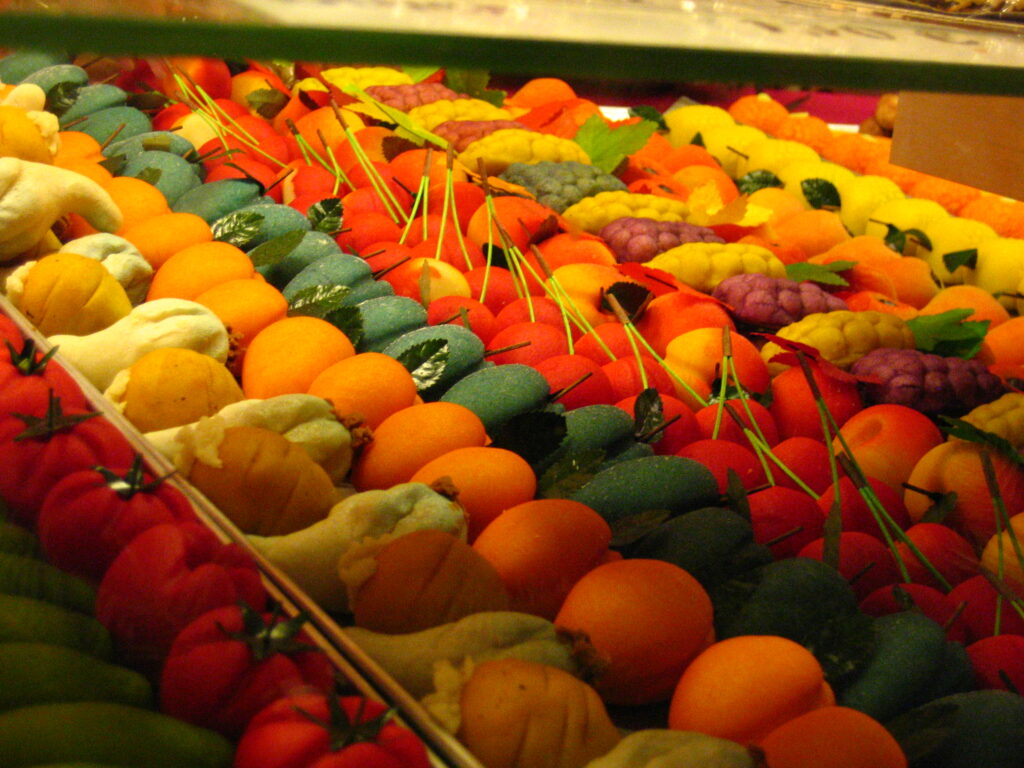
This lovely photo of Marzipan Fruits at the Nuremberg Christmas Market is available under a Creative Commons Attribution-Share alike 2.0 Generic license at the linked website. Many thanks to the author for his or her generosity.
Okay, yes. That is star anise from China rather than regular anise from Italy. Live with it. This makes the prettier picture.
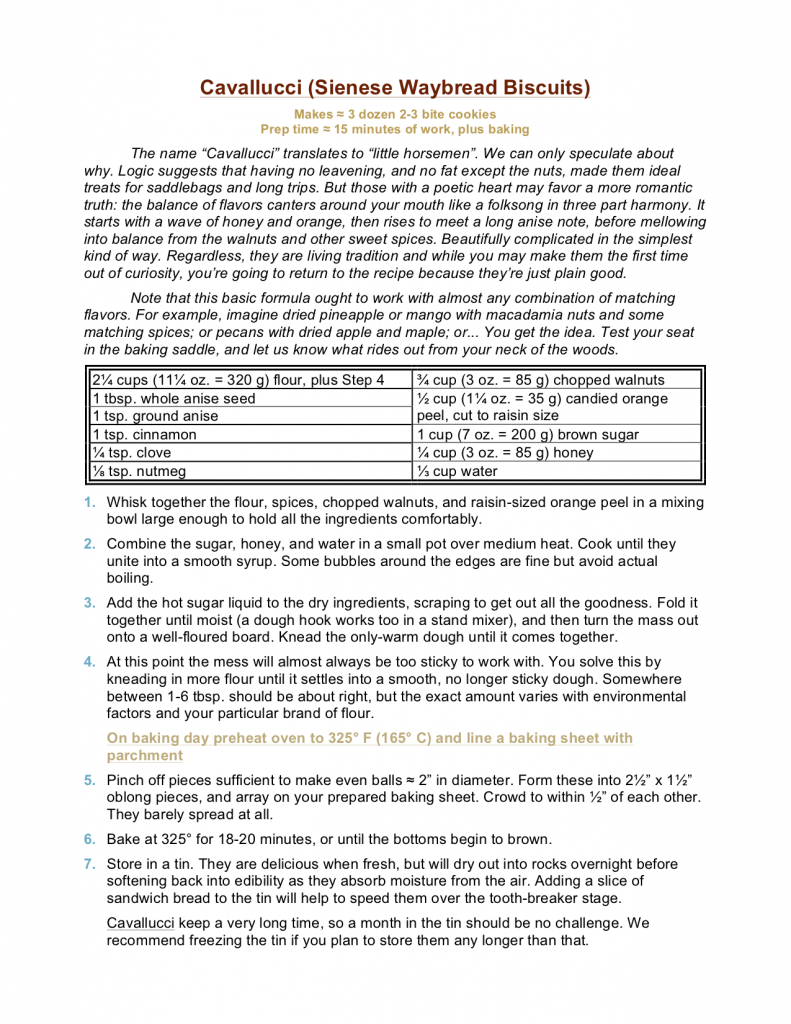
Such a romantic name for such a plain little critter! “Cavallucci” translates to “little horsemen,” which I suspect comes from the fact that having no leavening, and no fat except the nuts, made them ideal treats for horsemen riding through the Tuscan hills. Probably in search of some well grown evergreens, where the elusive porcini can be found. I’m sold right there.
But Cavallucci also have some modern romance. This, and its soft almond lookalike Ricciarelli, are the treats of Sienna, a smaller city about 50 miles south of Florence. You will not escape a visit without getting to experience the unique, chewy balance of honey, orange, anise, and other spice that these are all about. So why not visit from the comfort of your own home kitchen?
As always, skip to the bottom if you want the recipe without any discussion
It’s All About Balance
Moving on, it’s that key word – “balance” – that catches the essence of what these are really about. Our friends and family will attest that your humble authors are better as cooks than we are as bakers. Especially me. Kate does cakes too, but my baking really begins and ends with three categories: (1) heritage cookies, (2) lemon curd, and (3) anything made with chocolate.
Both of us find Northern Italian cuisine particularly intriguing because it’s such a challenge. There’s such delight to be found in achieving perfection through skill and nuance alone. Think of recipes like scaloppini or piccata. They have what, three or four ingredients plus salt and pepper? And yet the results can vary from shlock to divine. It’s a culinary balance beam trick. Impressive as heck if you get the balance right, and embarrassing if you don’t.
Cavallucci should be approached with that same sensitivity. The core of the recipe is little more than flour held together with lots of honey, plus orange peel and walnuts with a healthy shot of anise. Honey, orange, and anise; three flavors that love each other. So what could go wrong? Lots, as it turns out. You’ve got to get the balance right, and that balance has to include texture as well as flavor.
Balancing The Texture
This cookie begins with a trick you see often when honey gets used in bulk. You don’t use the raw material on its own. Rather, you mix it with some added sugar, thin it with some water, and then simmer until everything comes together into a syrup. Candies take it a little further, cooking the sugary liquid up toward the soft-crack, hard-crack, and caramel stages depending on what you intend to do. No need to worry about that here. All you’re after is a nice, smooth syrup. It’s a trick we first learned with German Lebkuchen and Swiss Leckerli. It seemed strange and special at the time, but by now it’s become a standard part of the toolkit. Every one of the dozen or so Cavallucci recipes we looked at started in just that way.
The texture then expands in both directions – chewier and lighter – with the addition of candied orange peel and larger bits of walnut. Nothing to it, right? But it’s easier to fall off the balance beam than it is to stay erect.
A VALUABLE NOTE: There wasn’t enough room in the recipe to emphasize how important it is to get the size of your pieces right. That may sound obsessive but it isn’t. Balance, balance, balance! Candied orange peel has a stick-to-your-molars texture that totally takes over if you let the pieces get any bigger than a raisin, and that disappears in between your teeth if you cut it down to peppercorn size. Both can be annoying. As for the walnuts, they just vanish if you get them down to “finely chopped,” and break the product into sections if you leave them whole. Again, chopped just to raisin size is the perfect compromise.
Balancing The Flavor
That covers the texture. Next up, flavor. What have we got already? Honey (yum) and orange (yum). Two flavors that love each other. But… they’re obvious. No style. That slight bit of bitterness in the walnuts just isn’t enough to round things out. There are a lot of ways you could handle this in theory. Bakers in the walnut loving Balkans and Black Sea regions might grind up a great, big handful of walnuts to use as a bitter nut flour. Health conscious bakers might try substituting in a bit of whole wheat flour. The most common trick in Siena, and the cheapest for American bakers, is to round out the honey with a small hit of molasses.
NOTE: Our favorite page in the entire book – the conversion table! – should can be your friend here. One cup of white sugar plus one tablespoon of molasses equals light brown sugar. Two tablespoons of molasses equals dark brown sugar. We specify light brown sugar in the recipe, but every baker deserves to claim each cookie as his or her own. Those numbers tell you the basic amounts you’re working with, and should empower you to adjust as your palate suggests. The textural properties of molasses will not be an issue because they overlap with the honey. Knowledge is power!
So now the honey works, and the texture is right. The next element to turn these into true Sienese Cavalluci comes from the anise. This recipe contains a whopping four (4) teaspoons of anise seed. Holy. Friggin. Cow. That, however, isn’t strange for the region. Italians adore anise in the same way that Americans love cinnamon. But that much… well, it is another case where you need to work on the balance.
Fortunately enough, the native bakers agree. I do not think we saw a recipe that did not try to soften the licorice flavor with a bit of this and a bit of that. We ended up with a background mixture of other sweet spices, led by cinnamon of course since we are, after all, Americans.
The bottom line here is a waybread biscuit (they aren’t pretty enough to deserve the exalted title of “cookies”) with a distinctive, chewy texture and a sweet, addictive flavor that hits you in waves. It starts with the honey and orange, and then evolves to include the anise. All those rounding-out touches (the walnuts, molasses, and other spices) keep any of those three from dominating the composition, and show up on their own in the aftertaste.
Conclusion
It really is like a good Veal Scaloppini, or Chicken Marsala. Simple food, done very well, and adding up to more than the sum of it’s parts. Serve with coffee, tea, or an aperitif that can handle the sweetness. They are better when they’re not alone, at least in our opinion. But you won’t be disappointed regardless, and a plateful of Cavallucci is much less expensive than a ticket overseas.
A FINAL NOTE: Cavallucci fall in the category of waybreads because all that honey acts as a preservative. They may dry out but they aren’t going to get stale or go rancid unless you lock them in a drawer and forget about them for more time than any of us care to imagine. There is also an easy fix if they do dry out. Put the little bricks in a tin or other tightly sealed container with a slice of sandwich bread. Wait a day or two, and the moisture will move out of the bread and into the cookies; drawn there by the hygroscopic (water loving) power of the honey. Hey presto, Bob’s your uncle. Repeat as needed.
A REALLY, TRULY FINAL NOTE: We haven’t tried it, but this is pretty obviously a formula recipe that ought to work with almost any combination of matching flavors. Honey, orange, and anise typify northern Italy. Do something with dried pineapple or mango, and macadamia nuts, and you ought to get a wonderful treat for drinks on the lanai. Pecans, dried apple, and maple would pair well with a hoppy ale or hard cider on a front porch rocker. Or maybe… You get the idea. We tend to focus on cookies that come with deep historical roots, and a story to match. But there is nothing more American than taking a great idea from the old country and turning it into something new, and maybe even better. So please: test your seat in the baking saddle, and let us know what rides out from your neck of the woods.
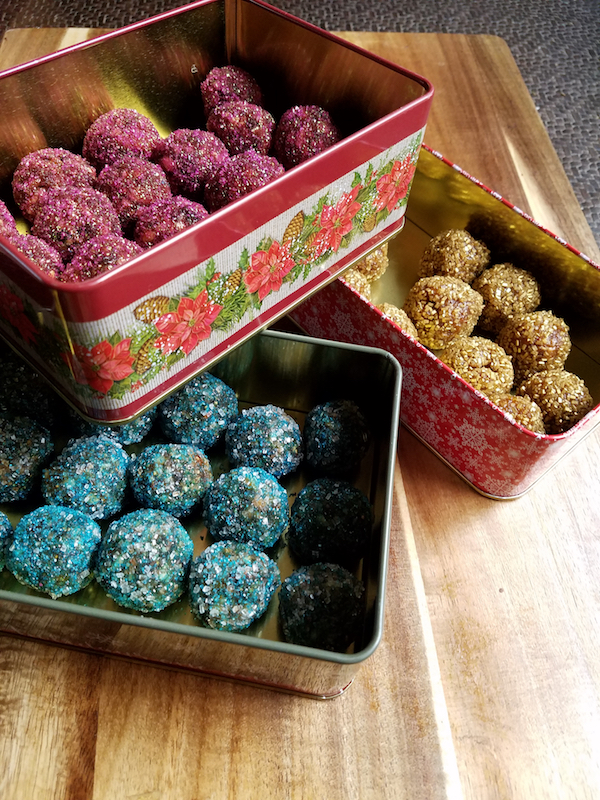
Three different Sugarplums from our 2017 tray. The red ones are made with pecans and almonds for the nuts; 2 oz. each of dried cherries, dates, figs, raisins, and candied orange for the fruit; Kirsch for the booze; and the Warm Spices mix. The gold balls are made with almonds for the nuts; dates, apricots and candied orange peel for the fruit; brandy; and the Scandinavian spice mix. The blue ones have walnuts & almonds; candied ginger, figs and a couple of dates; gin; and a combination of lemon zest, cardamom, and pepper, much less clove, and a touch of cinnamon. Kate got to play!
Kate writes:
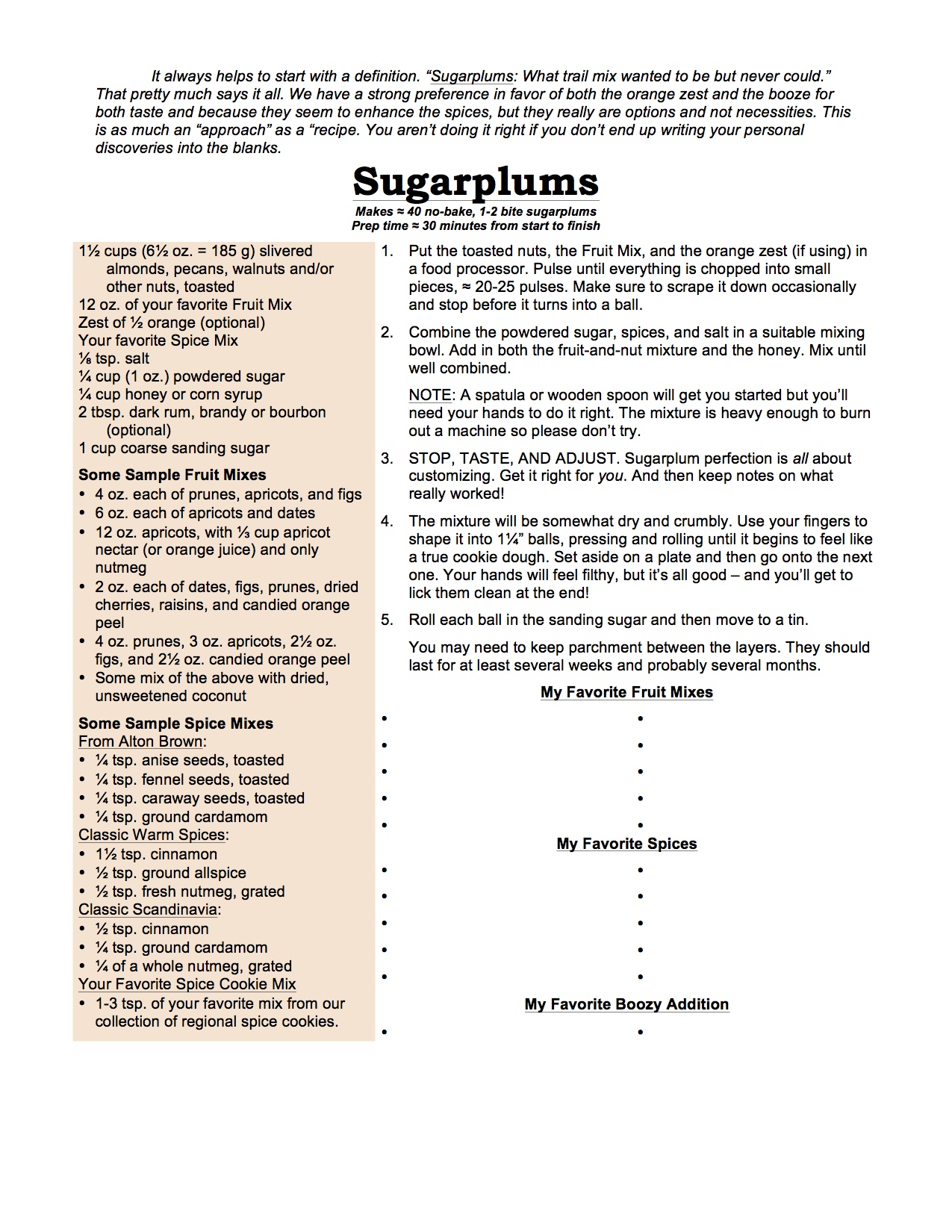
“I never took the concept of no-bakes seriously at all until we tried making Sugarplums. Sugarplums! Dried fruit and nuts and spices, tied together with a bit of honey. Highlighted with candied or grated orange zest and a bit of brandy. Coated in sparkling colored sugar, they look as festive as they taste. And if you excuse the sugar coating, which can be substituted by finely chopped nuts, you’ll even get a treat that consists of wholesome ingredients!
Thus it was the humble, ancient sugarplums that turned my eye, changing my mind about the concept of no-bake cookies. Because a cookie can be perfectly delicious despite being easy to make. These are part of our ‘easy’ category.”
Scott adds:
If you don’t have the paper book, I urge you to print this recipe out, put it in a plastic sheet protector, and start keeping annual notes on your various experiments. There is no “right” Sugarplum! That is their basic and most fundamental charm. They are all about what YOU like, and what YOU come up with.
And if you have out paper book, for heaven’s sake feel free to start writing on the pages. It isn’t holy writ! We put those blanks and “My Notes” pages in for a reason. We wrote our book to be that one you will use to death and then pass on to the next generation. How will they be able to reproduce what [Grand] Mom and Dad did if you don’t record your own special tricks and observations?
It’s not like you need our permission, but you have it. Permission and active encouragement. Make that copy your own! Nothing would make the authors happier.
It’s hard to get more “heritage” than the early Renaissance, and that’s what we have here: four famous cookies that grew into maturity along with the likes of Leonardo, Michelangelo, Donatello, Botticelli (with whom Leonardo supposedly founded a restaurant), Verrocchio, Raphael, and the rest of them. And Columbus for that matter. What can inspire artistic brilliance more than a really good cookie? The answer is obvious: Nothing!
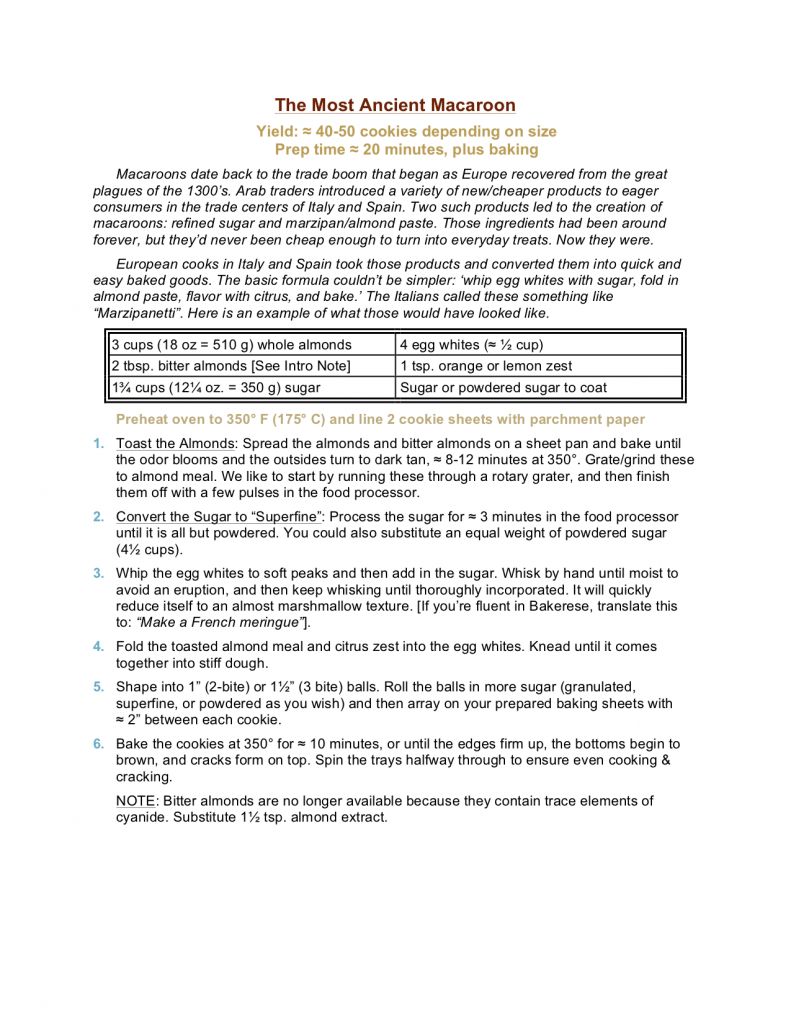
We’re talking about classic macaroons, a cookie dating back to the trade boom that followed the Black Death’s destruction of medieval civilization. Arab traders introduced a variety of products to eager consumers in the trade centers of Italy and Spain. Two main ones in turn led to the creation of macaroons: refined sugar and marzipan a/k/a almond paste. Yes, those ingredients had been around forever, but they’d never been cheap enough to turn into everyday treats. Now they suddenly were, and Renaissance Europe was ready to adopt new ideas their grandparents would have scorned.
Italian and Spanish cooks started the process by incorporating the new ingredients into quick and easy baked goods using methods known since antiquity. The basic formula couldn’t be simpler. First whip some egg whites with sugar to make a meringue, using a more generous amount of sugar than before since it was now more affordable. Fold in some imported almond paste, and then bake. And there you have it! The first macaroons, commonly known as “Marzipanetti in Italy.
Matters evolved from there, with bakers slowly adopting the regional variations that eventually hardened into recipes. We have now worked up four versions of that basic recipe, distinguished by relatively small changes in the way they’re flavored and presented. Here is a table to more-or-less compare the four recipes, normalized to an even one pound of almonds. [NOTE: The different egg sizes occur because those recipes start from a different amount of almonds].
The Most Ancient Macaroon included a hefty amount of sugar and some bitter almonds. We were forced to substitute almond extract for the latter. Bitter almond extract would be even better if you can find it. This cookie is super simple, focused on those new imports, and consistent with the oldest macaroon recipes we could find after a week or two of search. NOTE: Scott believes it may be even more authentic to replace the sugar and almonds with premade almond paste, because that product would have been easier to ship back in the day.
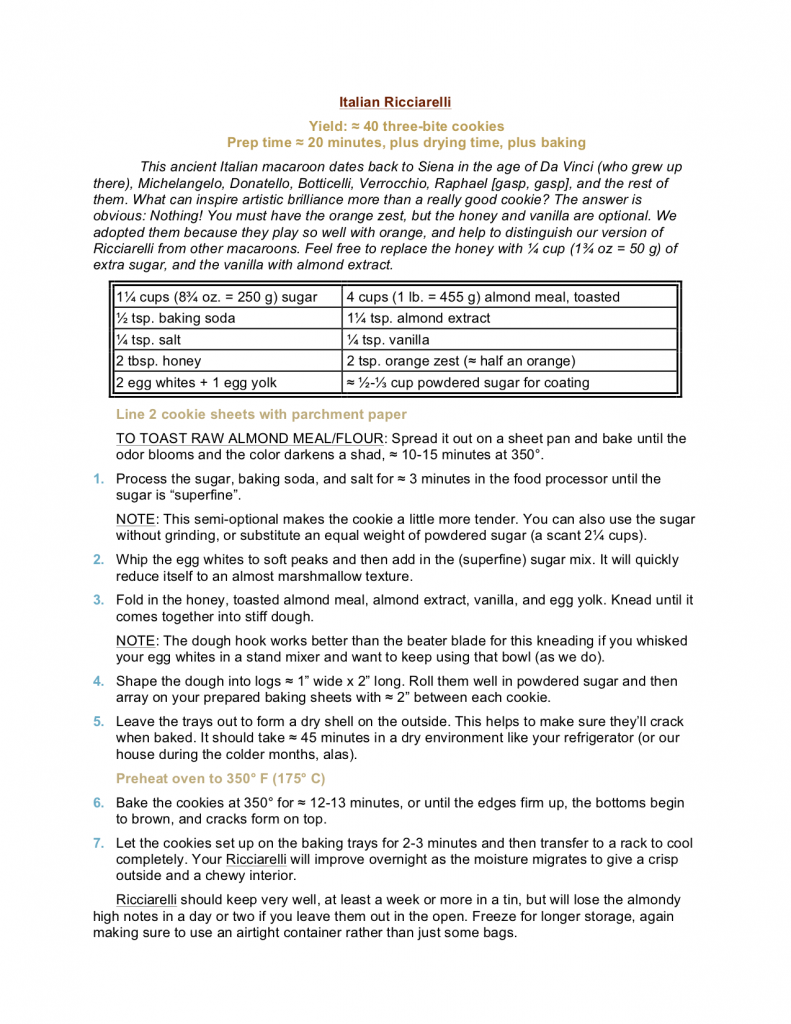
Italian Ricciarelli, a specialty of Siena, must have orange zest but vary from there. We reviewed more than a dozen variations before settling on a version that includes an elusive hint of vanilla, some honey to enhance the sugar, and a single egg yolk to give them some richer chew. The cookies would still be Ricciarelli without those additions, but they help to distinguish this cookie from its macaroon peers. And they’re good. We also adopted the trick of adding some baking soda into the dough, because it creates attractive cracks in the powdered sugar crust.
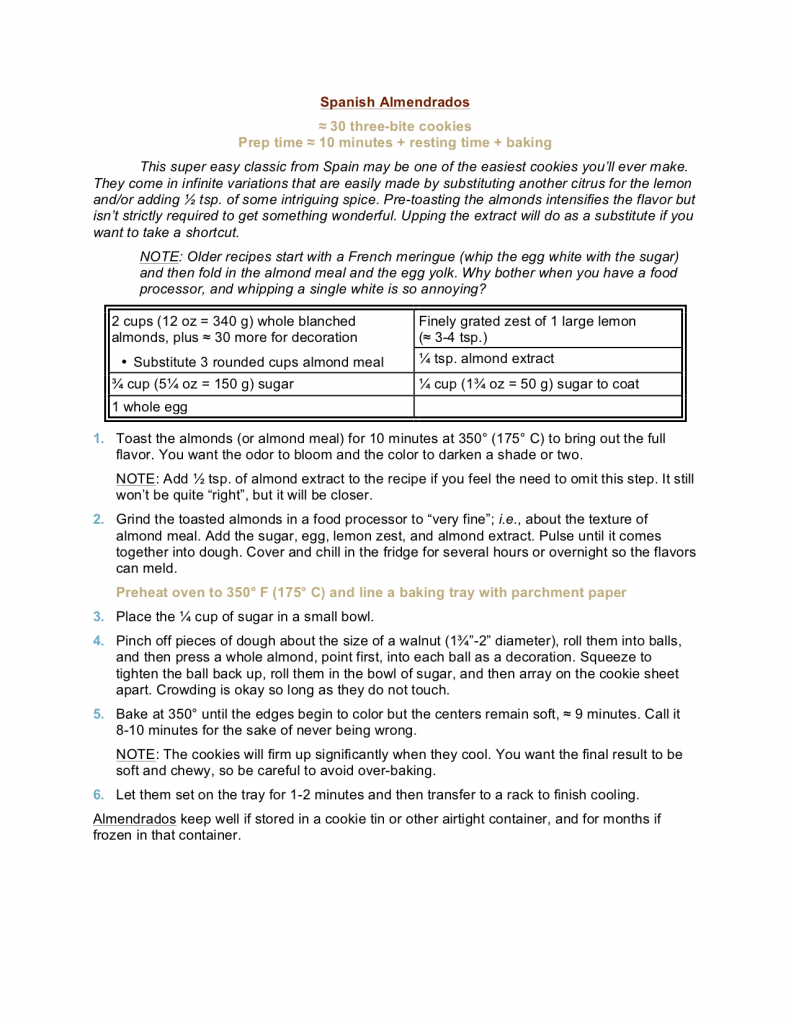
Spanish Almendrados add lemon zest instead of orange, use whole eggs, and ignore the initial meringue step. Throw it all in a food processor and go! This methodology, combined with the shorter baking time, gives the cookie a fabulous chew you’ll particularly enjoy. They come with a classic almond-on-top decoration, and a granulated sugar crust.
You can find Amaretti in our cookbook, Heritage Cookies of the Old and New World. The recipe looks very similar to the Most Ancient Macaroon except for a monstrous hit of almond extract, and the candied cherry on top. Our reference to “Rudolph’s Nose Cookies” wouldn’t have made much sense in 15th century Italy. Neither would reindeer if you think about it.
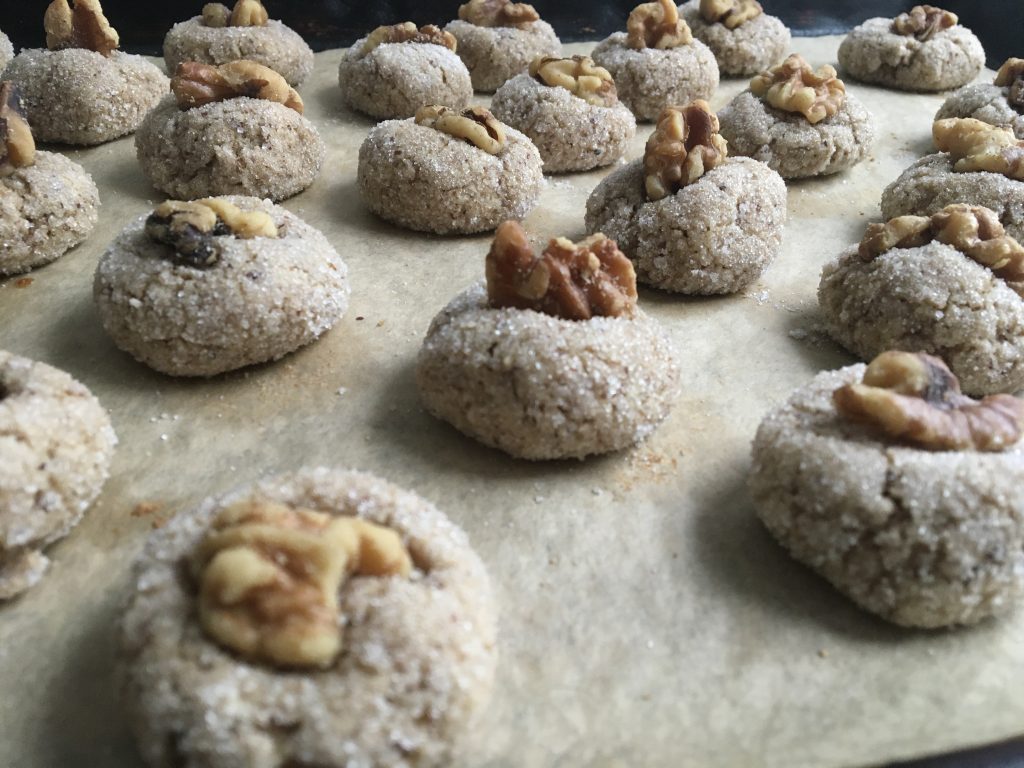
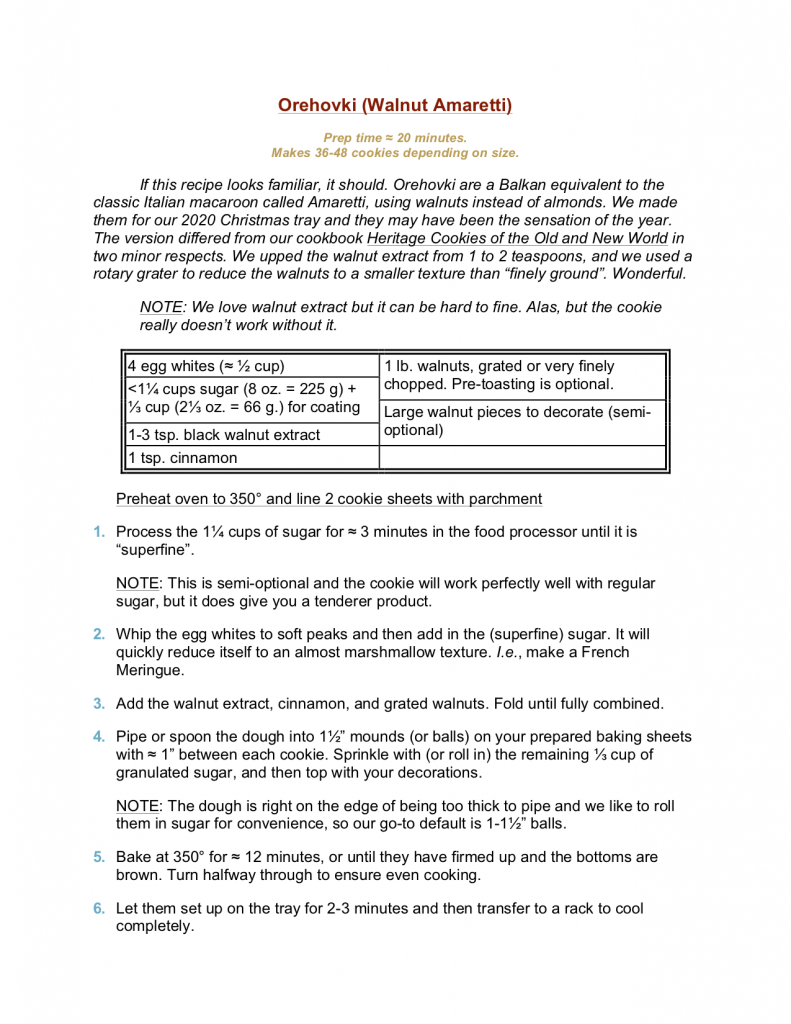
Continue your travels around the Mediterranean and you’ll see extremely similar cookies such as those flavored with rose water (a favorite in Turkey), or with walnuts and walnut extract in place of almonds. Move north and things begin to differ more, with roll-and-cut meringues such as Basler Brunsli (mix of almonds and hazelnuts, cocoa powder, and cherry liqueur) or German Zimtsterne (mix of almonds and hazelnuts, cinnamon, other spices, and lemon icing).
But here’s the bottom line. Macaroons go so deep into the roots of modern Europe that there’s really nothing older except the extant waybread recipes. They’re also simple to make and easy to modify into infinite variations. It’s an invitation to play, and we encourage all you creative people to do so!
Here are our recipes for all four, plus a bonus recipe from the Balkans: a terrific macaroon based on walnuts instead of almonds.
Enjoy!
Ricciarelli, the ancient macaroon of Sienna, Italy that Leonardo and the rest grew up on