
A few weeks ago we discussed the long lost tradition of bacon cookies. This week we address an even more ancient lard based cookies, but that isn’t the magic ingredient. Not by a long shot! No, the big trick to Spanish Polvorones is the use of TOASTED FLOUR. If that sounds intriguing, you’re right. It is. This is one cookie that Scott started testing the same day he found the recipe, and it was for just that reason. Toasted flour is gooooood stuff! Just think of the difference between a dark roux and a light rough and you’ll know exactly what’s going on.
The general description: This is a lemony, melt in your mouth shortbread cookie; the Spanish equivalent to whatever in your background is the “most tender cookie in the universe;” Scottish Shortbread for England, Nut Horns for Central Europe, Meltaways in the U.S., etc. The unique difference is the toasted flour and a very hefty hit of citrus.
They’re also the exact sort of treat that gets Scott in trouble for adding inches to a certain well-loved waistline. And they’re dairy-free! That matters in these days when Kate’s been forced away from butter.
A NOTE FROM KATE: These cookies are a real revelation! It’s good to have dairy free options. I’ll have to experiment with using oil instead of lard to see what happens.
Please skip to the bottom if you’ve only come for the recipe. Most of what follows is discussion about how and why we got there.
SOME NOTES ON NAMES AND HISTORIES TO AVOID CONFUSION: There’s close to a half-dozen cookies out of the Spanish tradition that have tastes and textures close enough to cause some confusion. Iberia offers a straight butter cookie, like everyone else, but also offers:
- Bizcochitos, the official state cookie of New Mexico, are designed to hold their shape during baking, and can even hold a basic imprint from a cookie mold. They are typically cut into animal shapes and often sprinkled with some cinnamon sugar at the end. It is a lard based cookie, with anise and orange as the central flavors. The version in Heritage Cookies of the Old and New World has graced many a Christmas tray in our home.
- Mantecados are another lard-based shortbread, but include a little olive oil to make them even more tender. They feature a lemon/anise profile with just a hint of cinnamon. It’s on our list of cookies to test, and will no doubt appear here as soon when we get the recipe right.
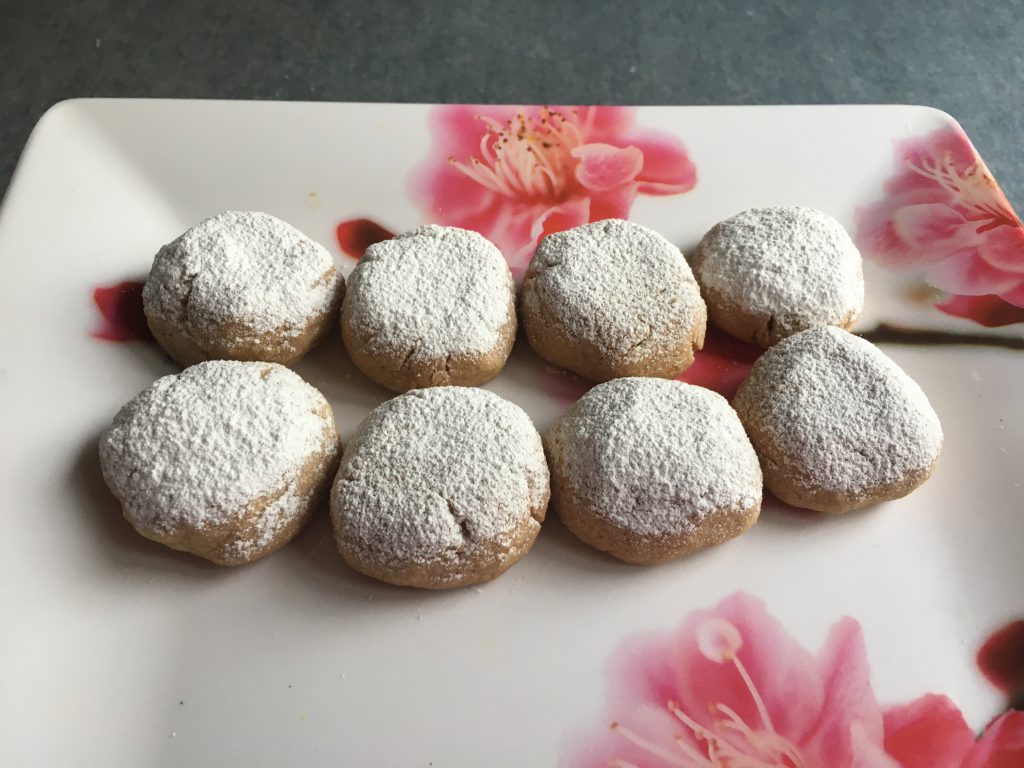
- Spanish Polvorones are the cookie we’re looking at here. These are made with toasted flour, feature a lemon/lime profile, and are also a little sweeter than Bizcochitos. They are formed into flattened balls instead of animal cut-outs.
- Mexican Polvorones a/k/a Mexican Wedding Cookies are a butter-based nut cookie made from pecans. That recipe is much closer to Nut Horns than it is to any of the three above.
- Filipino Polvorones are a version of the Spanish that are baked into simple molds because they are so tender. A baker who lived there for 30 years tells me the recipes vary by region, but the fat is usually a less refined version of lard, with melted butter or clarified butter (ghee) as the alternative. Many online versions seem to feature a special toasted rice product for texture on the inside.
Why the similar names? That Spanish-speaking friend tells us that “polvo” translates to “dust” or “powder”, which does seem to tie the recipes together. This is the tenderest, “shortest,” Spanish-heritage cookie in that cultural heritage. Think of Scottish Shortbread made with toasted flour and an Iberian sensibility.
Toasted Flour
This is the magic ingredient here, and it’s easier than you think. Simply bake it for 15 minutes or so at 350°. Doing this makes as big a difference in flavor as toast versus bread, and a lot of you are going to put this into your repertoire of baking secrets for the rest of time. Just be aware that toasting the flour radically changes its microscopic and chemical properties, which alters both its thickening and gluten-forming powers. It’s more like a unique, toasty-but-mild flavored nut flour than all-purpose, cake, or bread flour.
Filipino chefs use a wok to toast their flour over medium heat on the stove top. That actually works better than the oven because you can push things up to the point where smoke begins to rise. All you need is the patience to keep stirring once it gets close. We don’t own a wok, but instead have a very large 14″ skillet. That works just as well, but the sides are shallow enough to create a fear of spillage for quantities at this scale. Verdict: the oven method works well enough, and for us those that final layer of extra toastiness isn’t worth the inconvenience. The old 90:10 rule in action. But if you want perfection, go with the wok/pan method on the stovetop.
DIGRESSION: Family members reading this post will know that Scott is actually more of a savory cook than a baker. Close family will also remember how Grandpa Art used to ask for plates of Scott’s famous Gumbo maybe twice a week during his final year. Gumbo is a Cajun stew that’s built on “dark roux” (a/k/a “Cajun napalm”). Traditional recipes require you to mix the flour and fat in a pan, and then cook it for 30-40 minutes over medium-low heat until it turns into the color of an old penny. Toasting your flour in a skillet is quicker, faster, and safer (they ain’t kiddin’ about the “napalm”). Just follow the instructions above (large pan, flour, medium heat, lots of stirring) and cook until it turns to a light tan and smoke begins to rise. Turn the heat down at that point and add in your oil, butter, etc. Stir, and behold! Roux the color of an old penny in 15 minutes instead of 40.
The Rest Of The Process…
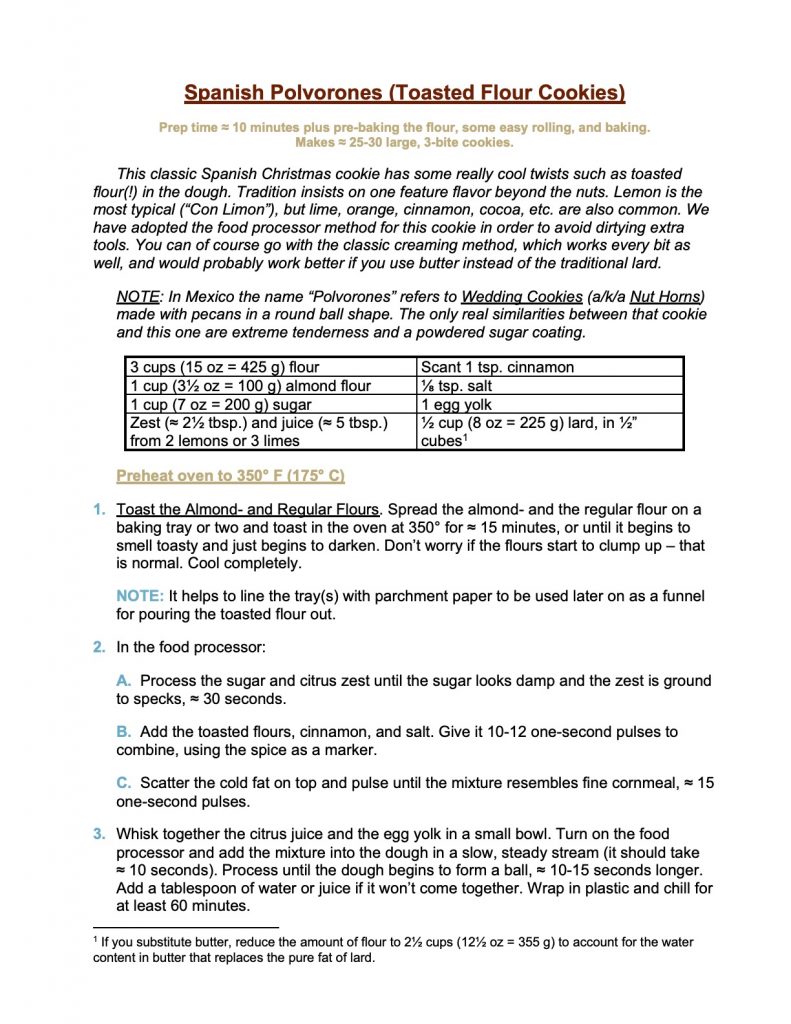
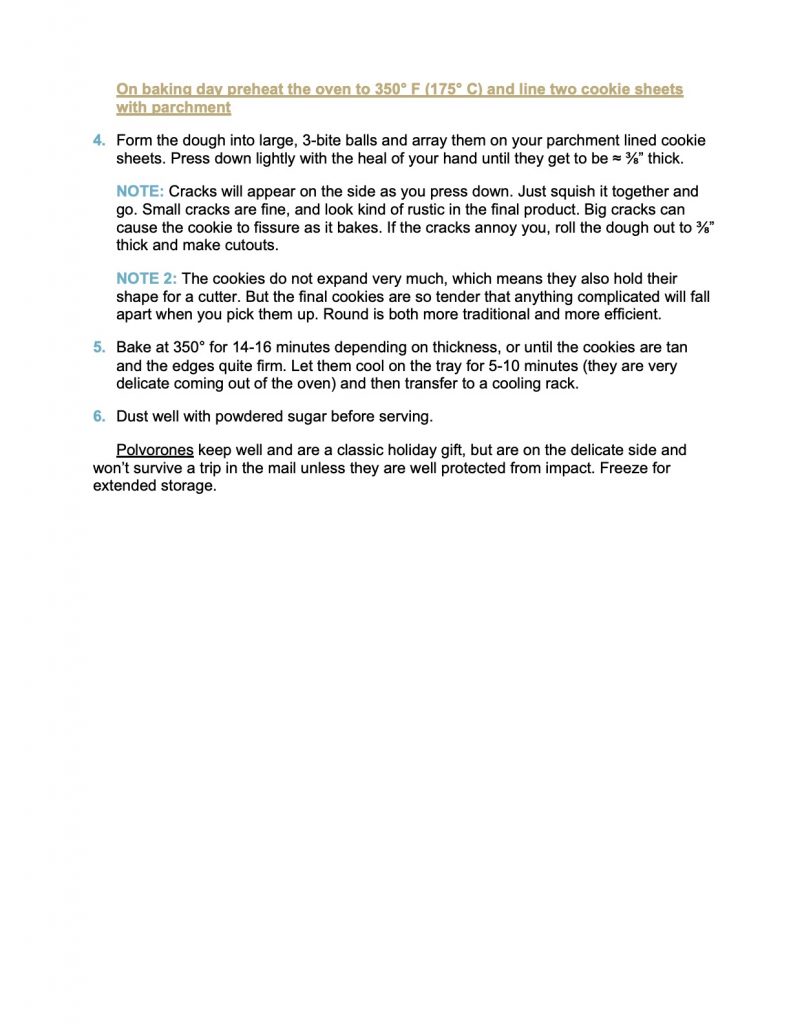
…could not be simpler. You can make this cookie using either the creaming method (beat the lard and sugar in a mixer until airy, mix in the egg and citrus, and then add in the dry ingredients), or in a food processor. We chose the latter because it makes for easier cleanup by ≈ 3-4 minutes. Go with whatever seems more convenient and familiar to you.
The only real warning we’d share is to use a light hand with the cinnamon. The main flavors here should be the toasted flour and the citrus. A healthy touch of cinnamon marries and enhances that combination. Too much would turn the cinnamon from a supporting actor into a co-star; which isn’t exactly bad, but is not what you want.
CONCLUSION
There’s not much more to add. This is a really simple cookie to make, but unique for U.S. bakers because of how it uses lard instead of butter, and toasts the flour for a totally different flavor profile. It’s strange and familiar all at once, which is really hard to accomplish.
Enjoy!