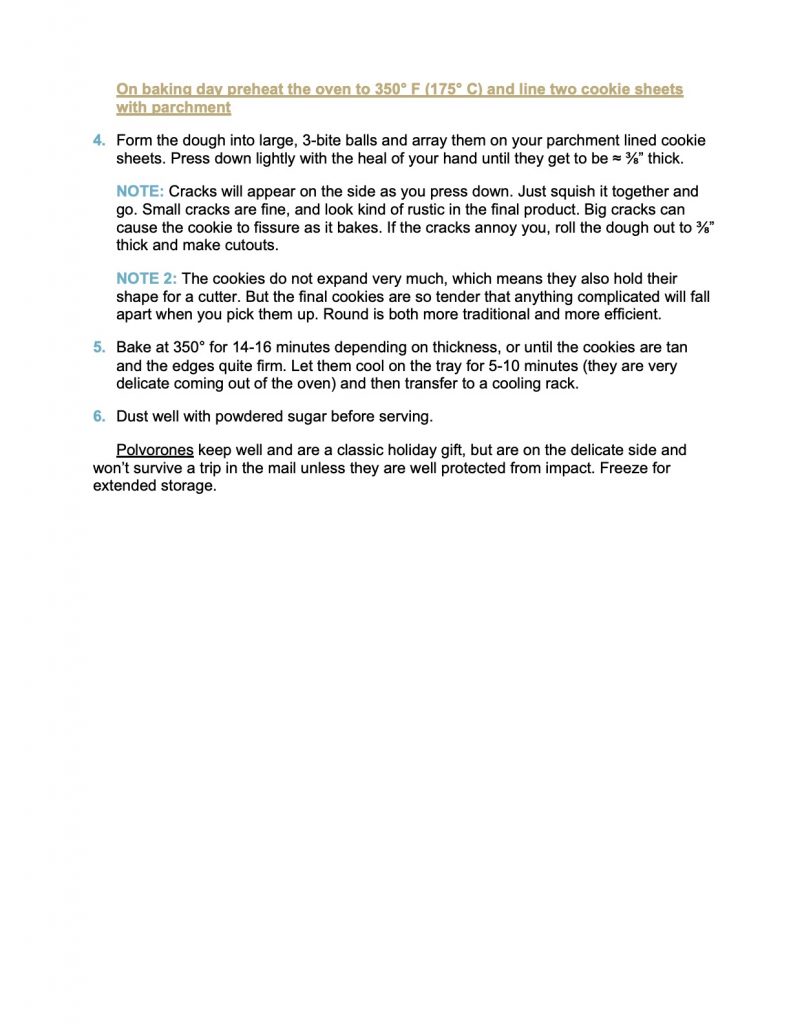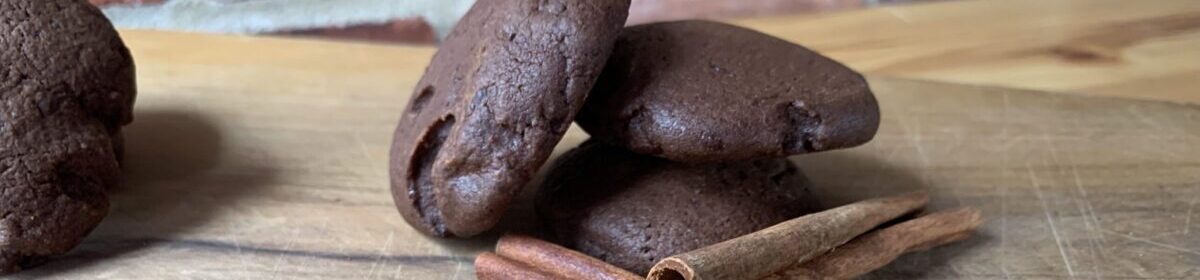

“Infinite Temptation” may make more sense in the title than “Infinite Delights.” The testing began with a Chocolate Black Pepper cookie, and the batch looked good as it came out of the oven. Thirteen nice, hefty, 2½” pieces. I tasted one, and liked it. A lot! So I duly brought them out to my beloved, and left them there on a plate so she could try one too. Then I went off do some work on another project.
I strolled back in about 30 minutes later. There were 4 cookies left on the plate. Our pup had been with me in the office. Kate had been left alone with the plate, parked on the sofa with her laptop.
13-1 = 12. 12-4 = the sort of math that wise old husbands forgot how to do a great many years ago. Make that wise and generous husbands, since I immediately ate three more and was kind enough to leave her the last.
Batch #2 got made when we hosted a dinner for our daughter and niece. Miranda had the will power to resist, thanks to a bit too much spice for her taste. Amanda? Amanda ate so many that I don’t have the heart to rat her out in public. Let’s just say that we now have testimony to how well the cookies go with a glass of wine, and with a glass of water, straight out of hand when no one seems to be looking, and with coffee too.
Get it? Got it? Good. These really are all of that; as simple as can be, absurdly rich, and with just enough of a twist to always be unique.
NOTE FROM KATE: One whole pound of chocolate, divided into only four dozen cookies. That’s a lot of antioxidants per cookie! So these aren’t just delicious, they are a regular health food! [Yay! That’s my story and I’m sticking to it!]

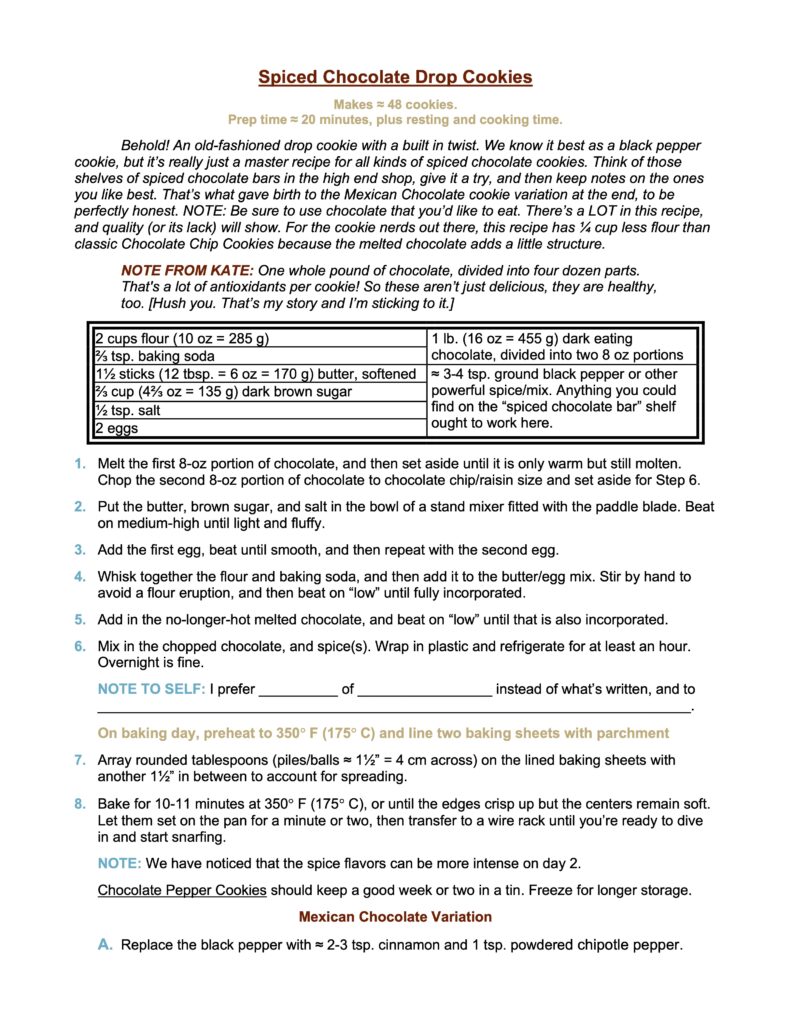
As always, skip to the bottom if you only want the recipe without the process.
The Cookie Part
This is a fairly standard drop cookie, so there’s no need to bore you with the chemistry. Go look at a regular Chocolate Chip Cookie recipe. Subtract ¼ cup (1¾ oz = 50 g) of flour, and replace it with half a pound (8 oz = 225 g) of melted chocolate. Bing, bang, boom, you’ve got it. The chocolate adds back the structure you lost by removing that bit of flour.
Add another half pound of chopped chocolate (or really good chips), the spice du jour, and you’re done. The only tricky part comes with the baking time. It’s easy to overbake a cookie this dark, and doing means sharing chocolate essence with the air, so we limited the baking time just to be on the safe side. 10-11 minutes instead of the more normal 10-12.
Just make sure to use a good chocolate. There is a full pound of chocolate in every batch. The flavor comes through, and cheap chocolate will show.
NOTE FROM KATE – ABOUT CHOCOLATE: Some of you might’ve seen articles about chocolate with elevated heavy metal levels. Long story short: which risk factor do you want to go with on a given occasion: chocolate or chardonnay?

Development
Chocolate is great. Chocolate is awesome. But the special part here comes from the spice.
Please note that I didn’t actually create this cookie. We publish heritage cookies not mind numbingly good original creations. That said, the accusation has been made and so I feel the need to defend my process.
I began the project looking to highlight a black pepper cookie. Think about it: all those spice snaps, with flavors ranging from across the map, and yet almost no one remembers to try the one spice that’s in basically every kitchen across the breadth of Western civilization. It couldn’t be right… and it wasn’t. Examples abound. And I may get back to them idea later on. But the thought of chocolate black pepper cookies could not be resisted, and thus I went a little sideways.
A Google search for the term “chocolate spice cookies” comes back with a bit more than 68 million results! Italian recipes lead the way, but U.S. versions (like this one) aren’t far behind. There’s one from South Africa with just black pepper… there are a few based on Mexican chocolate… Viennese chocolate pepper cookies (a roll out)… It doesn’t end. This isn’t an original idea, just my version of one that every baker across the world has thought about from time to time.
So what did I do? (A) I elected to go with a U.S.-style drop cookie, and (B) I made it so good that all the other 67,999,999 are stuck with trying to come in second.
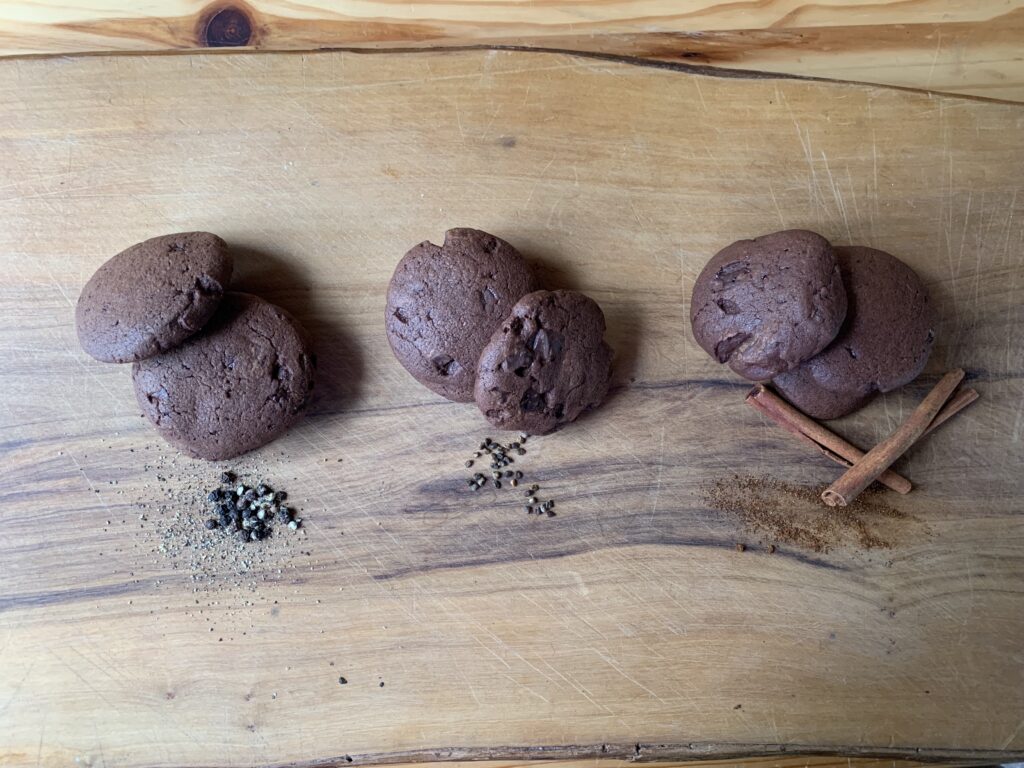
NOTE FROM KATE – ON FLOUR: We had a batch where we ran out of AP flour (11.7% gluten) and ended up using pizza flour (14% gluten) for about a quarter of the required amount. Those cookies didn’t spread. They had so much more structural integrity that if you made a little pyramid, it would probably look like a little mountain upon baking. The cookies in the photos are made with regular AP flour, and they did spread some but not very much. This begs the question, would a softer flour yield a more traditional cookie with more spread? Would substituting some starch for 10% of the flour do the trick? If you try it, let us know on our eponymous FaceBook group.
FYI, there was nothing wrong with the pyramidal cookies went came to taste. Their centers remained soft and may even have held on to moisture better. High levels of either cocoa or chocolate will suck moisture out of any baked good, and this is a great example of the phenomenon.
The Spice Part
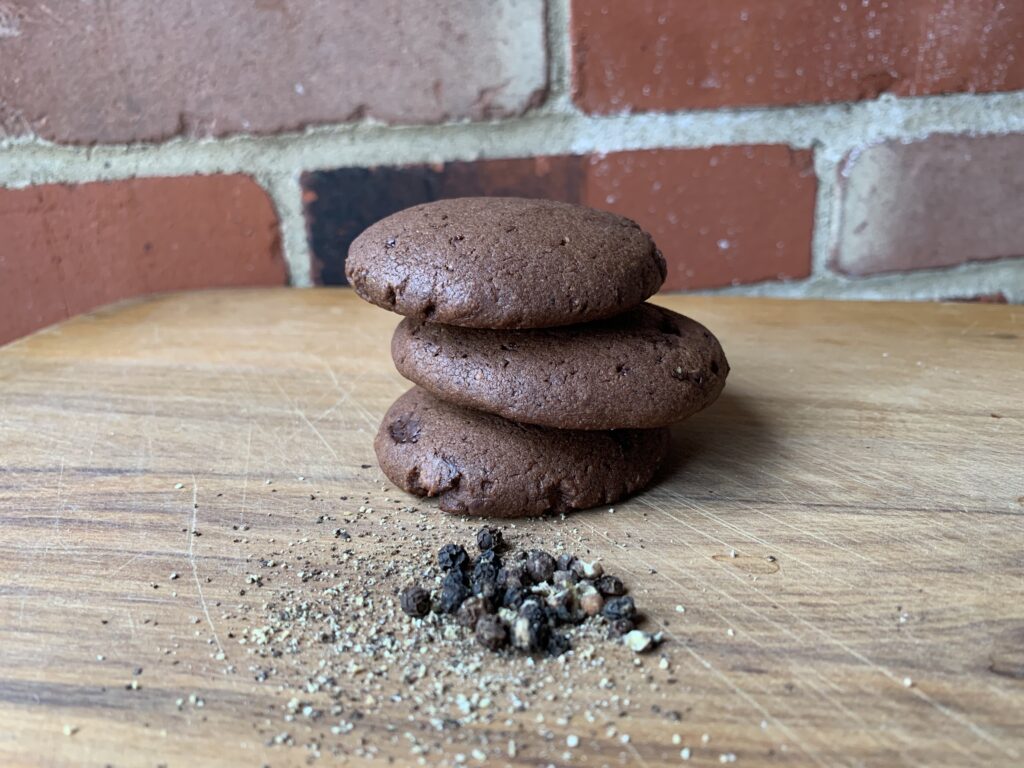
The first test batch stuck with black pepper. Four teaspoons of it! The result was superb, but it did push right up against that line between “right” and “too much.” The recipe accordingly says 3-4 now. But the big Aha! moment came when we realized that black pepper was just the tip of this particular iceberg.
Go out to your favorite chocolate shop and you’ll find a whole shelf of well spiced options. Chocolate flavored with cinnamon. Chocolate flavored with cinnamon and chili (the Mexican chocolate profile). Chocolate flavored with cayenne, garam masala, ginger, nutmeg, star anise, cloves, gingerbread mix… It’s endless! I mentioned this to Kate and her eyes lit up with an evil gleam.
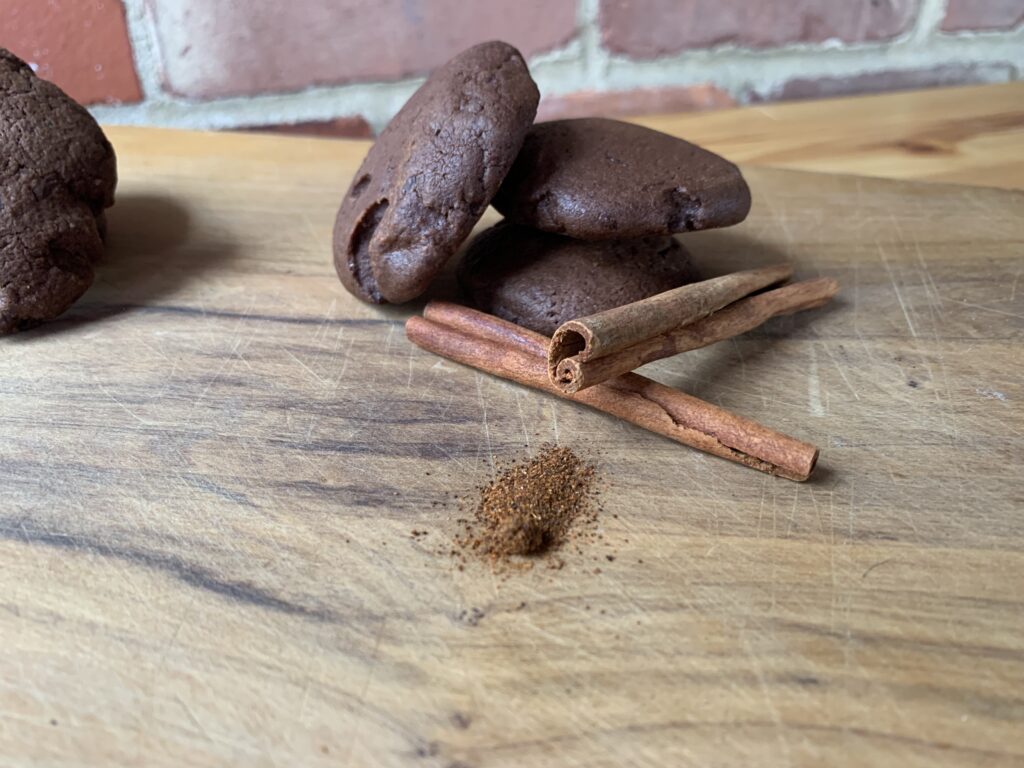
Every single one of those would work in this recipe. Just compare the potency of your chosen spice to the designated 3-4 tsp. of black pepper in this master recipe, and keep notes so that Version B will be perfect. Bing, bang, boom.
NOTE FROM KATE: I prefer more spice. The cookie doesn’t have to bite back, but higher spice level helps the flavor linger. The pepper version is warming and makes you raise an eyebrow in surprise (use fresh-ground for best effect.) The cinnamon-chipotle one is familiar, with a long and warm finish. Cardamom alone didn’t have the same bite, but the high floral notes carried beautifully, and I plan to see how that spice would play well with black or spicy pepper or to attain an extended note.
One whole recipe gives you approximately 1,200 grams of dough. I divided it into four bowls with 300 grams each, rounding them off to get even weights. (The exact amount of each batch will vary depending how much dough you use for “quality control,” how hard you pack your brown sugar, the size of your eggs, etc.). Then I added proportionate amounts of spices, getting 15 cookies of each per cookie sheet. Label your baking parchment so you know which is which. These are mystery cookies. They all look the same, the first bite keeps you guessing, but by the second bite you know.
NOTE FROM SCOTT: That might even be a fun game. Make several versions with different spices, and then let the party figure out what’s what...
Let us know your favorites so we can give them a try. I might even get to try a few myself before the invisible cookie gremlins get hold of the dozen I left on the plate. Deaf, dumb and blind, thy name is husband of 30+ years.
Enjoy!