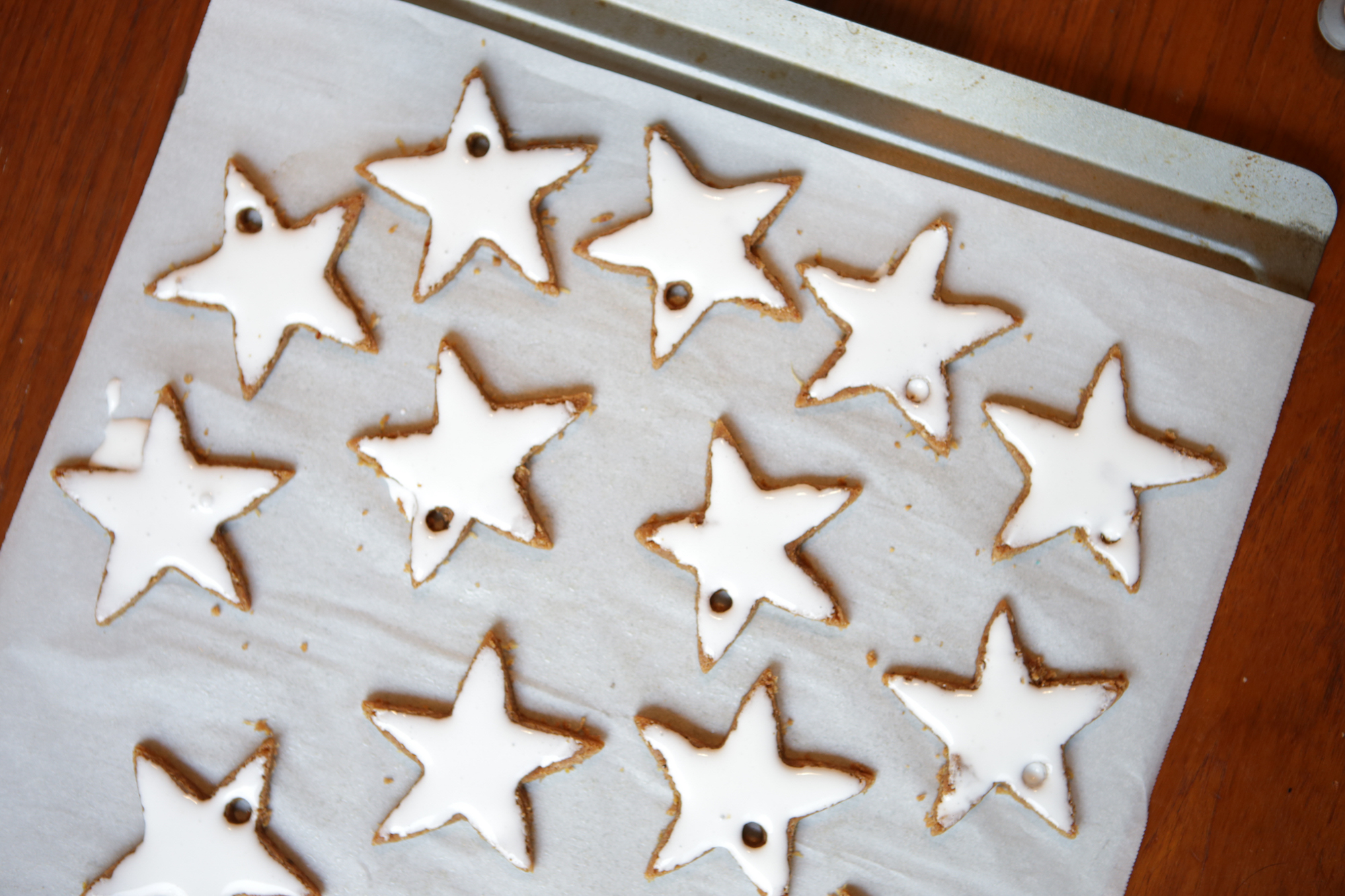
This is the cookie we point to when people ask for an example of what we mean by a “heritage” cookie. There aren’t many Americans who are familiar with Zimtsterne (zimt = cinnamon, sterne = stars), but you’d be hard pressed to find anyone in a German speaking country who does not know them. Or in a country that borders on one of those nations. They are as common and ubiquitous in that part of the world as Chocolate Chip Cookies in the U.S.
The fact that people need to learn about them is one part of the “strange”. The other lies in how the cookies are made.
As always, skip to the bottom if you only want the recipe.
If you’re reading this, we assume that you’re a baker. Have you ever seen, anywhere, a cookie where you bake on the icing? It’s brilliant!
At their core, Cinnamon Stars are nothing more than a very refined version of a dense macaroon. You grind up nuts (in this case using a mixture for added complexity), flavor those nuts (in this case with spices for yet more complexity), mix that with a French meringue (egg whites whipped with superfine or powdered sugar), and then bake (in this case using a very low oven for color and texture. Change the type of meringue with a higher percentage of whites, and you’ll end up with a flavored Macaron. Change the spices to metric ton of almond extract with an average 350 F (175 C) baking temperature, and you’ll have Amaretti. Make that a bit of citrus with almond meal instead of flour, and you’ll get the antique Renaissance versions like Sienese Ricciarelli or Spanish Almendrados.
It’s a simple concept. But… whoever heard of rolling out your macaroon dough before baking? Or baking on the icing?
It works because the icing is just that same French meringue mixed with added lemon juice. Meringue bakes well. Obviously. And that lemon juice works wonders, because being in the icing preserves all the high notes. That is one of the tricks we learned along the way. Lemon zest works great inside a cookie because the zest holds all the essential oils (the perfume of the fruit). But the tang of the lemon juice will disappear. If you want to catch those sharp, acidic notes you need to put them into an icing.
That covers “strange.” Wonderful comes from the overall flavor, and a Northern European tradition we’ve adopted for years: the Tree Of Gifts.
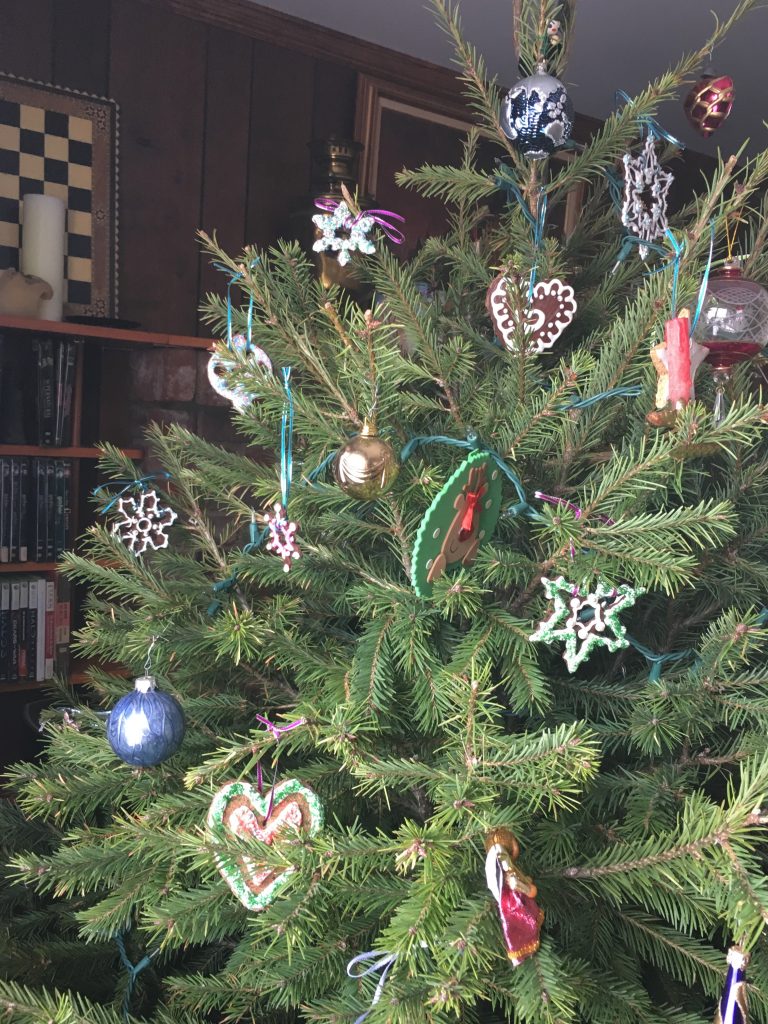
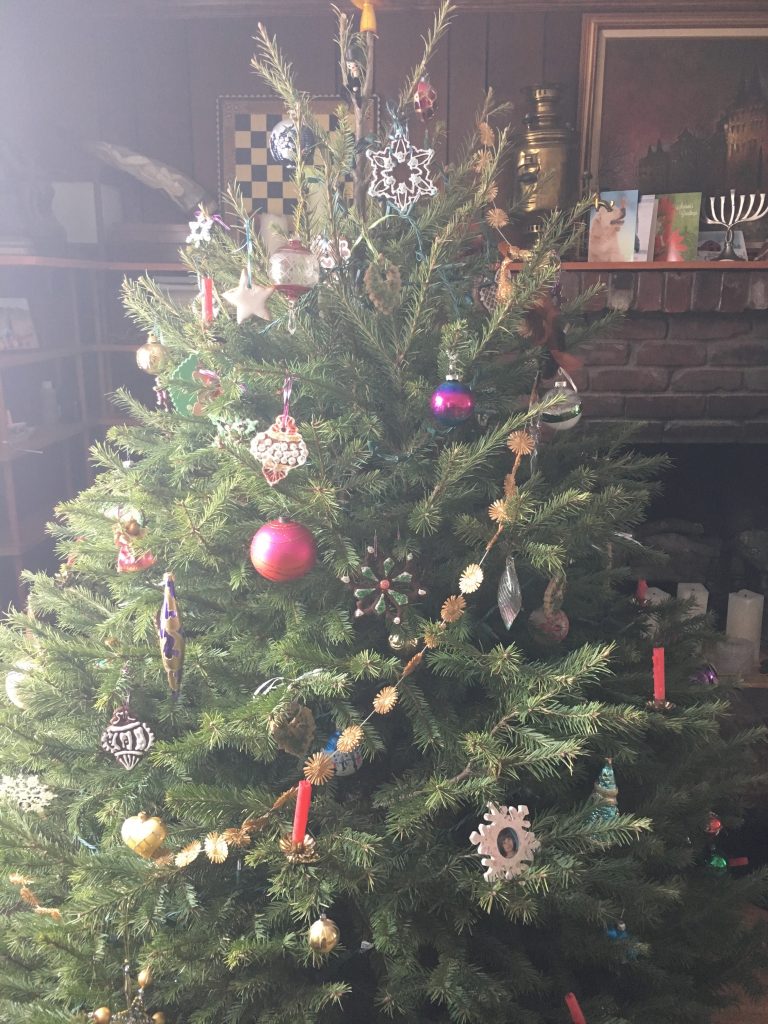
A guest arrives during the holiday season? Invite them in, and say “Please have a treat off the tree!” It captures the spirit of the holiday like nothing else. Tree; decorations; sweets; cookies; and all topped off with hospitality.
Cinnamon Stars make great decorations because they’re sturdy enough to last through the holiday season. Snowflakes have no rival when it comes to appearance, but any humidity in the air will soften them up enough to sag an break through a ribbon. (Don’t even think of hanging them with a metal wire). And gingerbreads tend to be so thick and heavy that they make the branches sag if you aren’t careful. Cinnamon Stars are ideal.
You can decorate Cinnamon Stars by tinting the dough, the icing, or both. Or by standard decorating after they’re baked using royal icing, dragees, luster dust, etc. We tend to keep them plain, but that’s a question of taste.
As for “familiar”, there is absolutely nothing in this cookie that will surprise or offend the most tender of American palates. Cinnamon Stars taste like dense, chewy, lemony Snickerdoodles with a fantastic appearance, and a lot of fragrant nuts. It’s a no risk experiment.
A FINAL BONUS: THREE FREE TIPS THAT AREN’T IN THE BOOK:
- The recipe calls for three egg whites. That works, but things get tight when you try to toe the line between reserving what you want for the icing, and still having enough to hold all the nuts. You’ll gain safety margin if you use size XL egg whites instead of the standard U.S. “large”.
- Add a tablespoon of molasses to the dough if you want a higher contrast between the base and the bright white icing. It changes the flavor a bit, but not unpleasantly. Our book includes a standard variation on this recipe (Vanilla Sticks), and that is more different than the effect of a little molasses.
- Remember that you don’t need to spread your icing all the way to the edge. The cookies look just as good, and arguably better, if you leave a gap between the edge of the icing and the edge of the cookie. To be completely honest, we only avoid that because our decoration skills aren’t up to that level of precision. Baking, yes. Precision artistry? Not so much.
And now, on to the recipe. Enjoy! This was the very first Pavelle addition to the Stoy family collection of every-year cookies. Don’t be at all surprised if it turns out to be mandatory for your family too.
NOTE: If the cookies dry out, put them in a tin with a piece of bread and leave it overnight. Come the next day they’ll be perfect all over again.