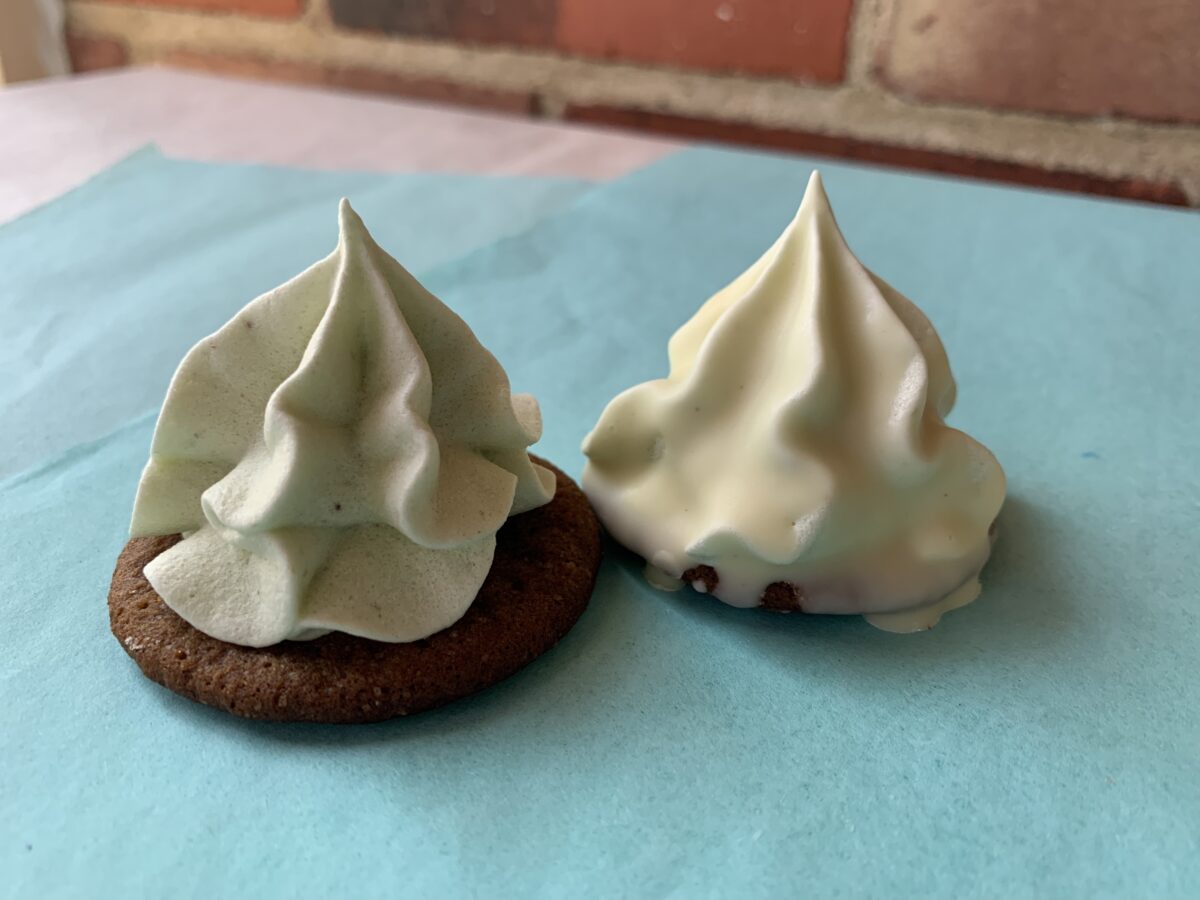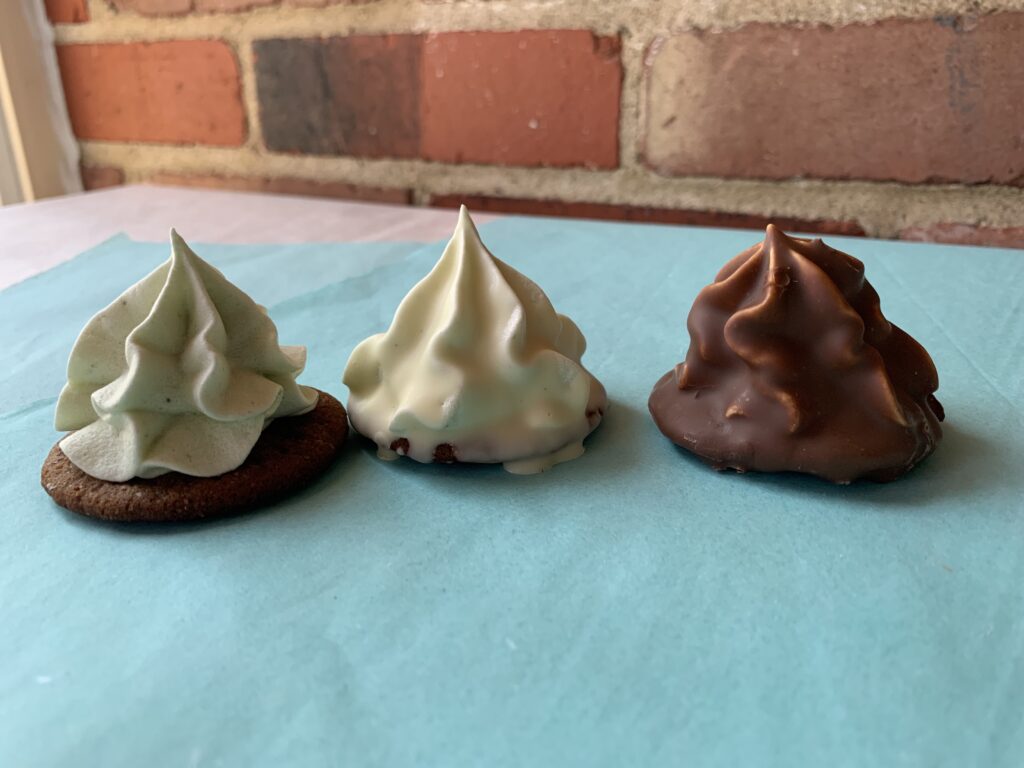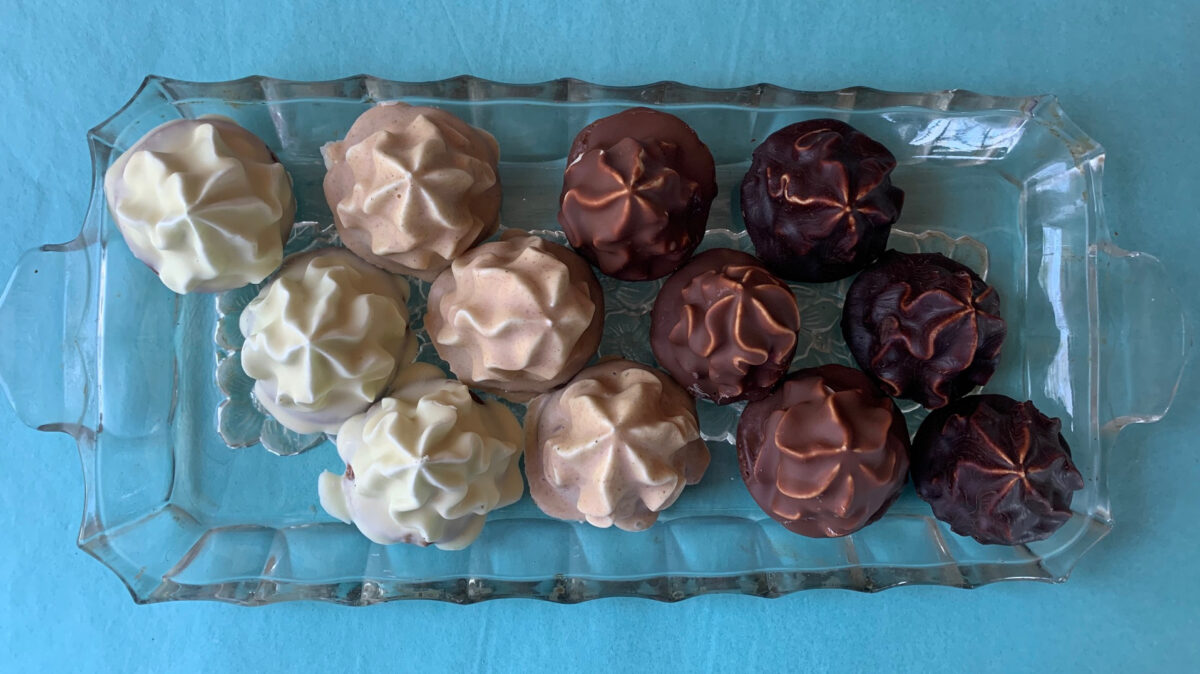
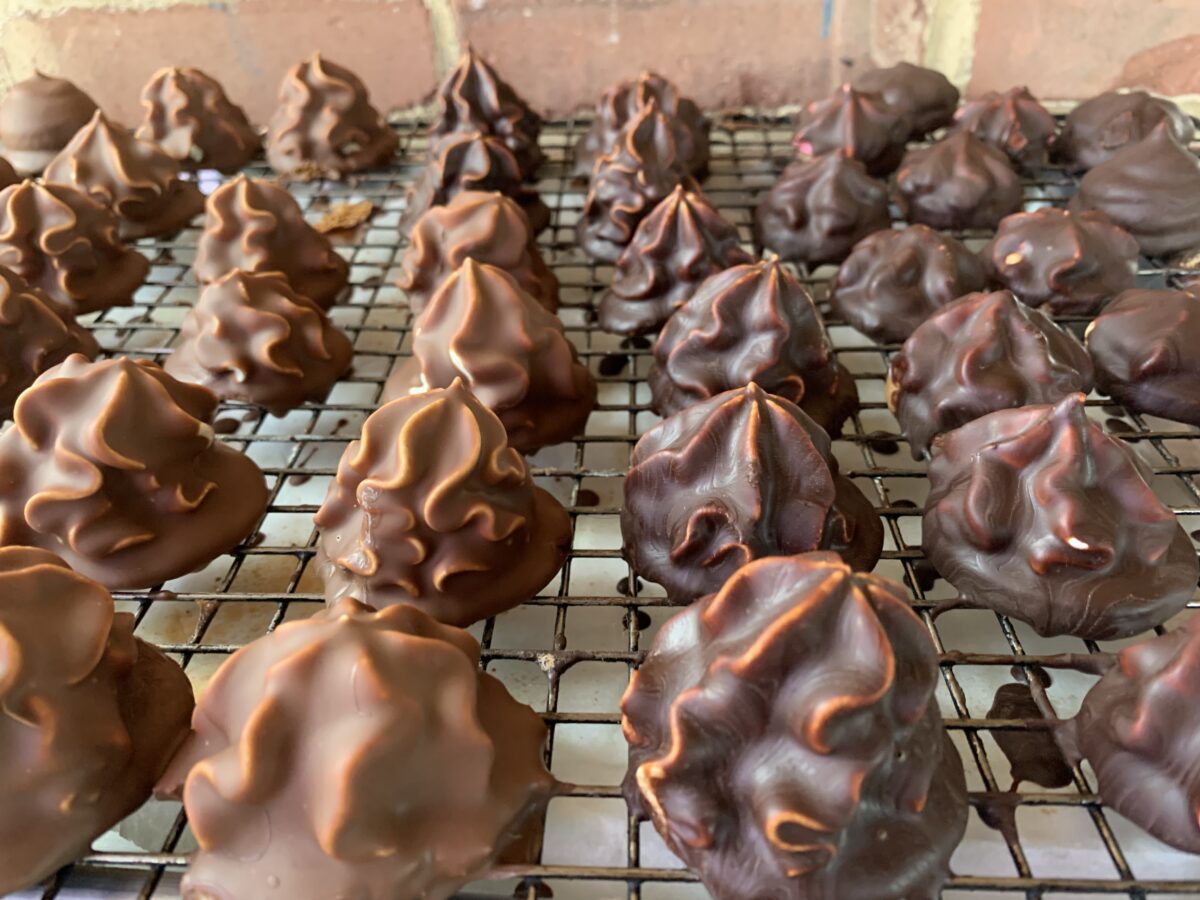
This is by far the most challenging recipe we’ve undertaken even though the basic instructions for all of the 73,000 variations could not be simpler:
- Make a simple, basic cookie base.
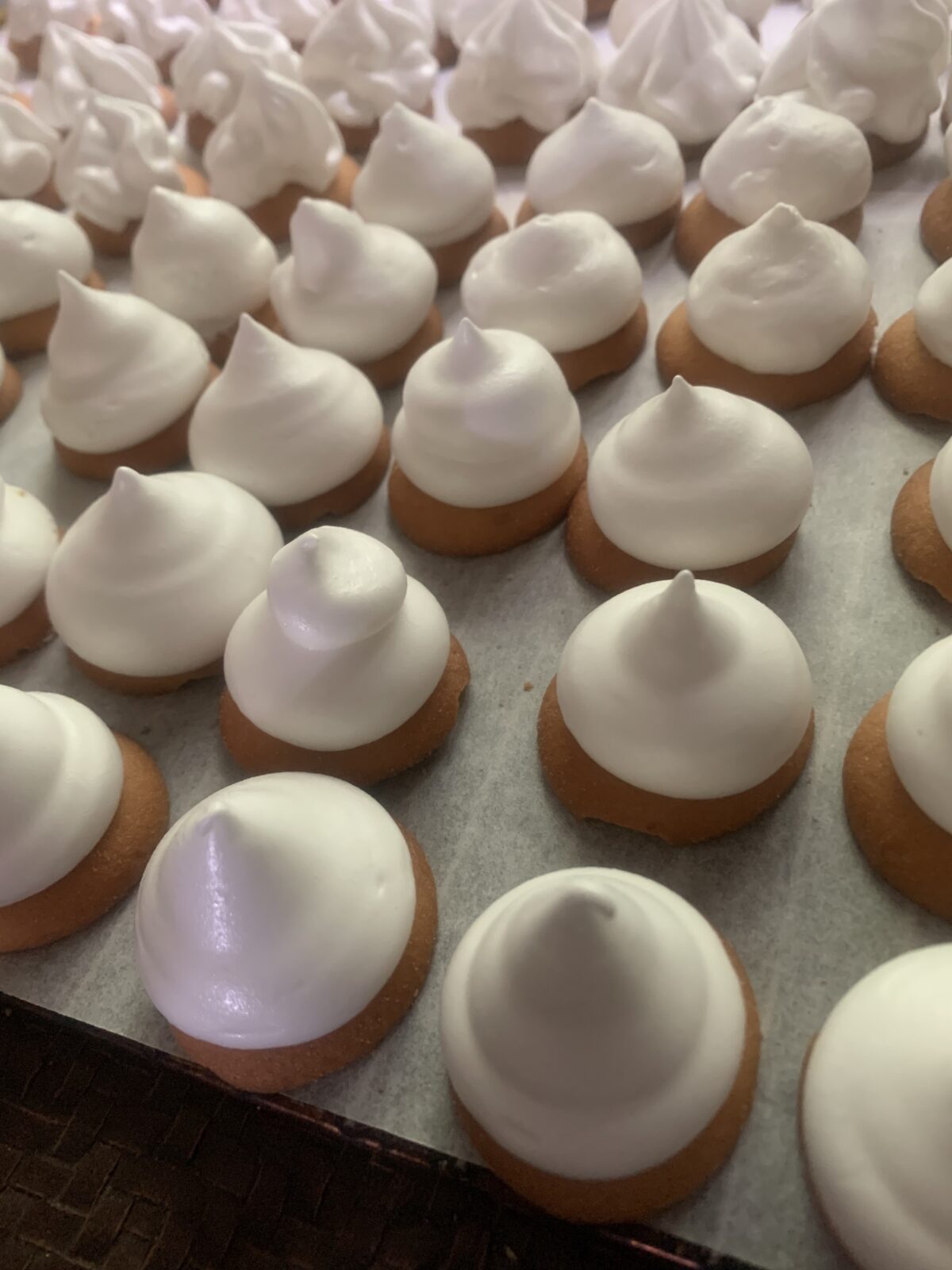
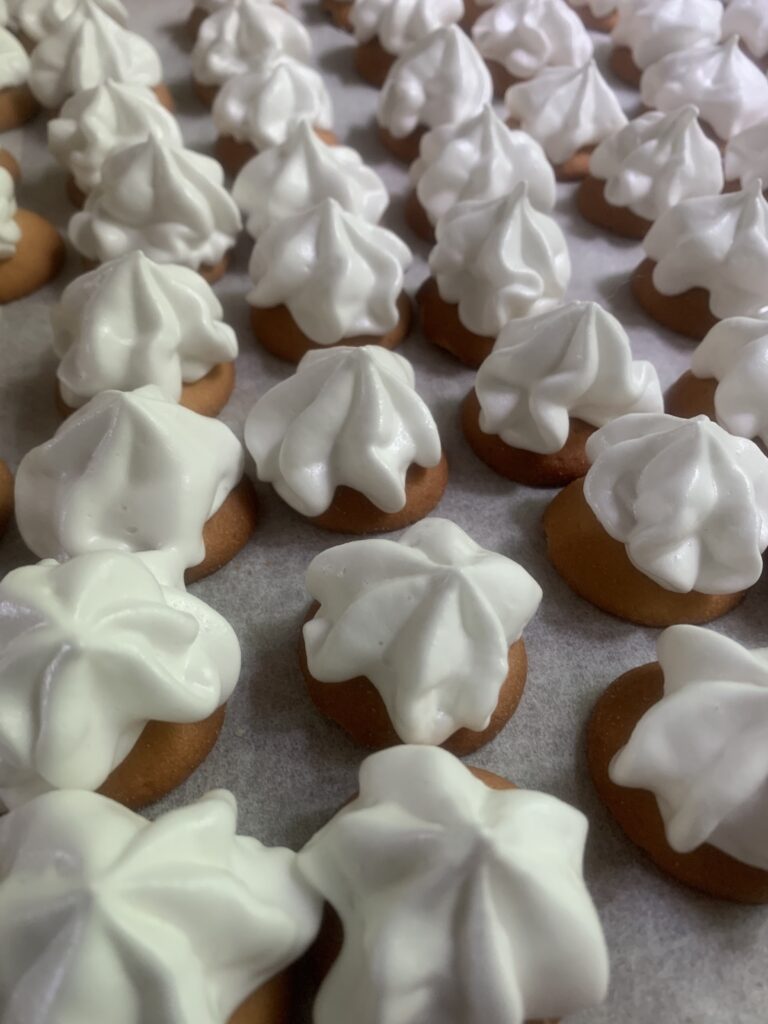
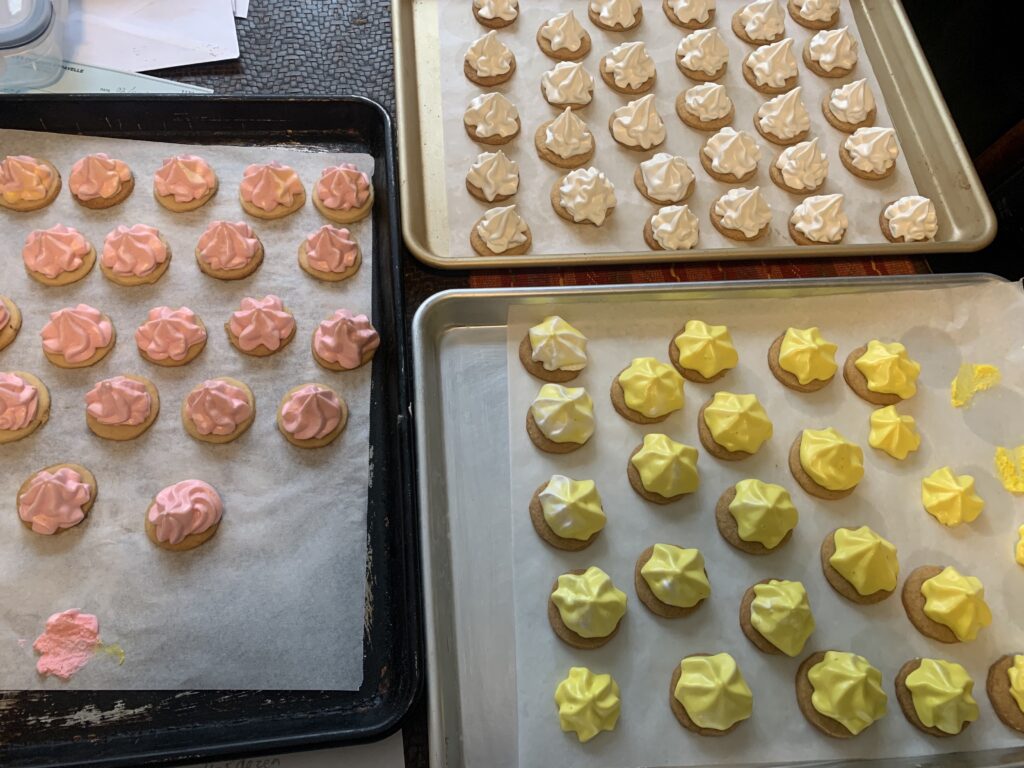
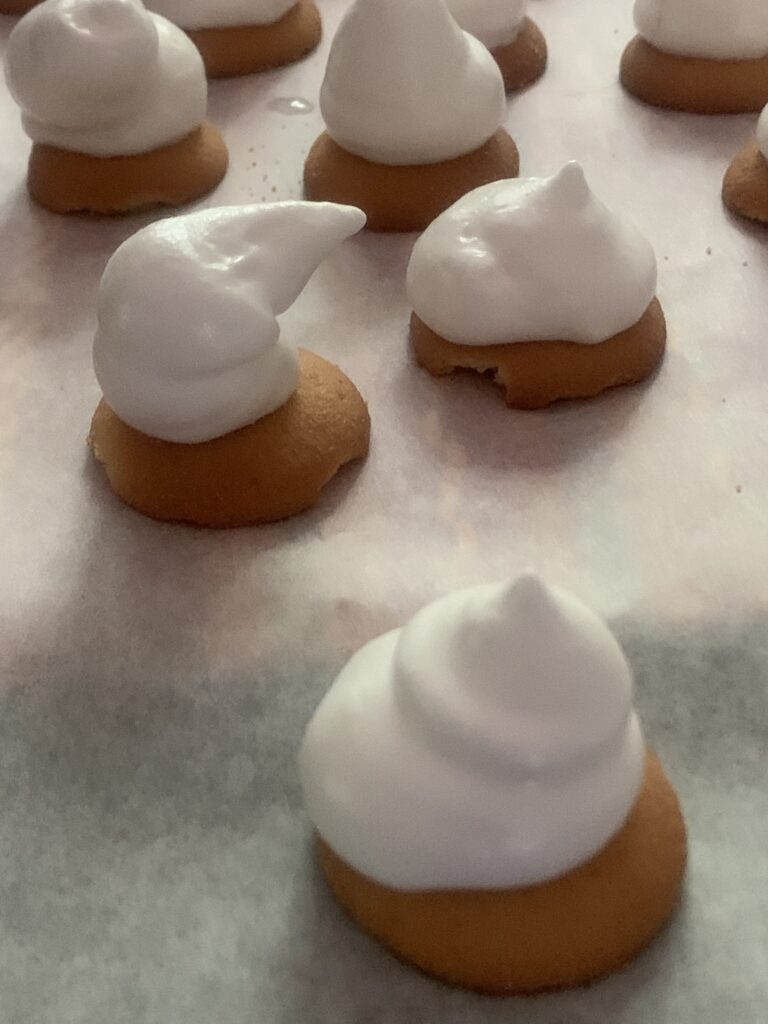
- Make a marshmallow filling and pipe it on top of the base.
- Cover with a thin coat of snappy chocolate.
Easy, right?
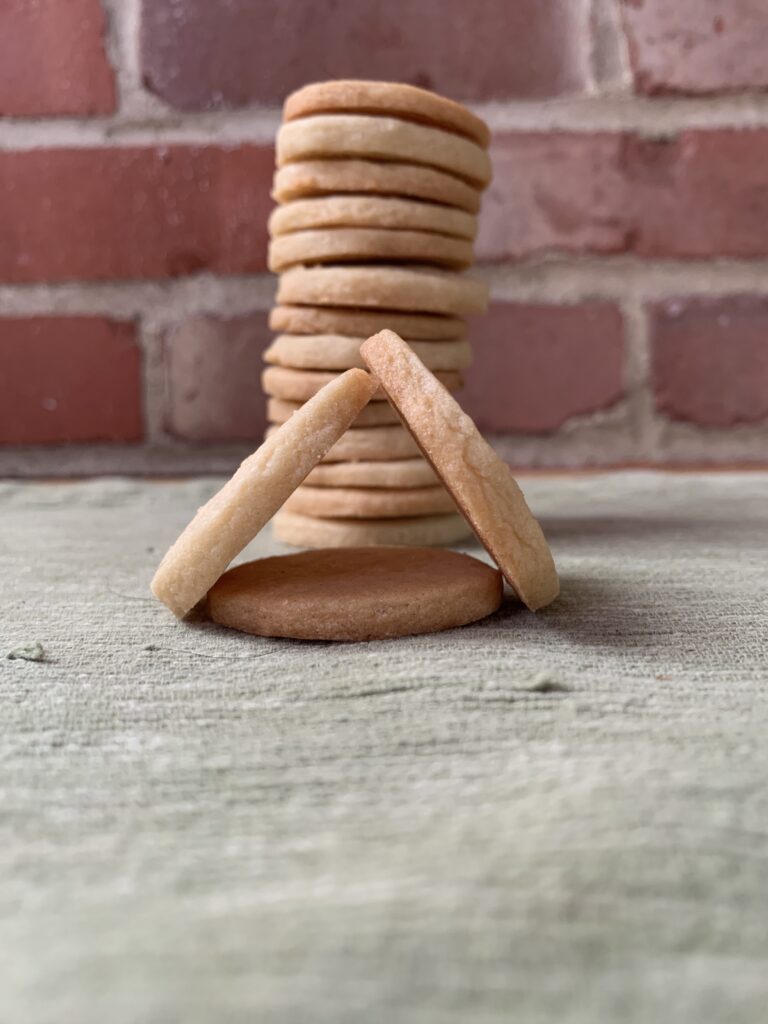
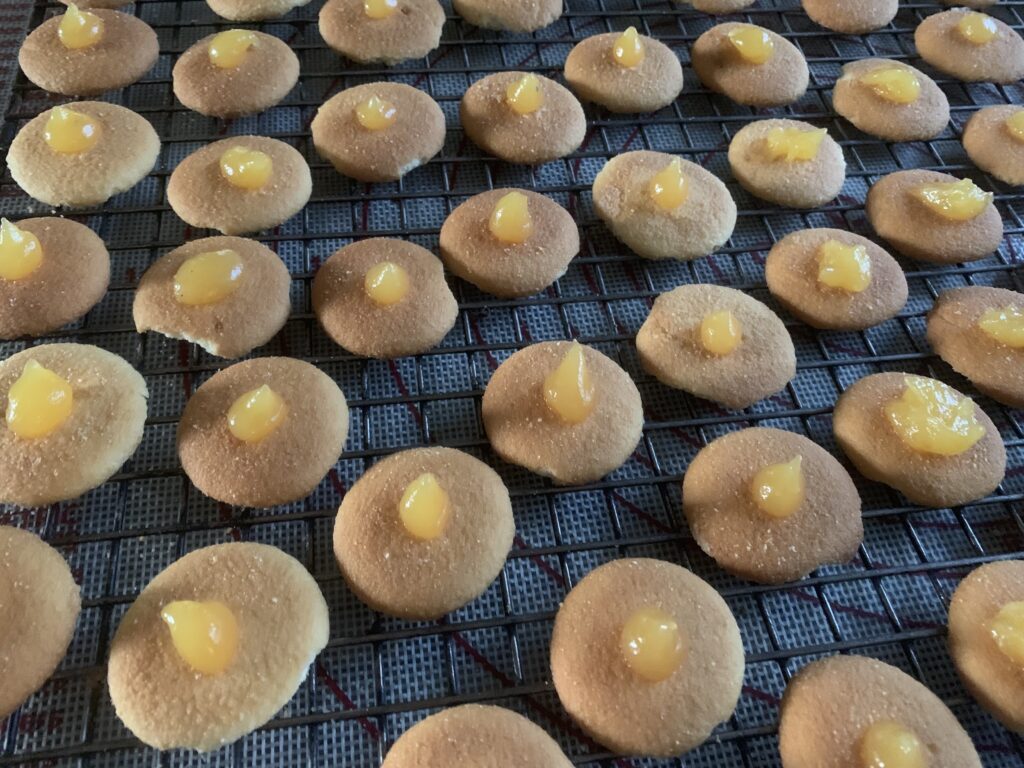
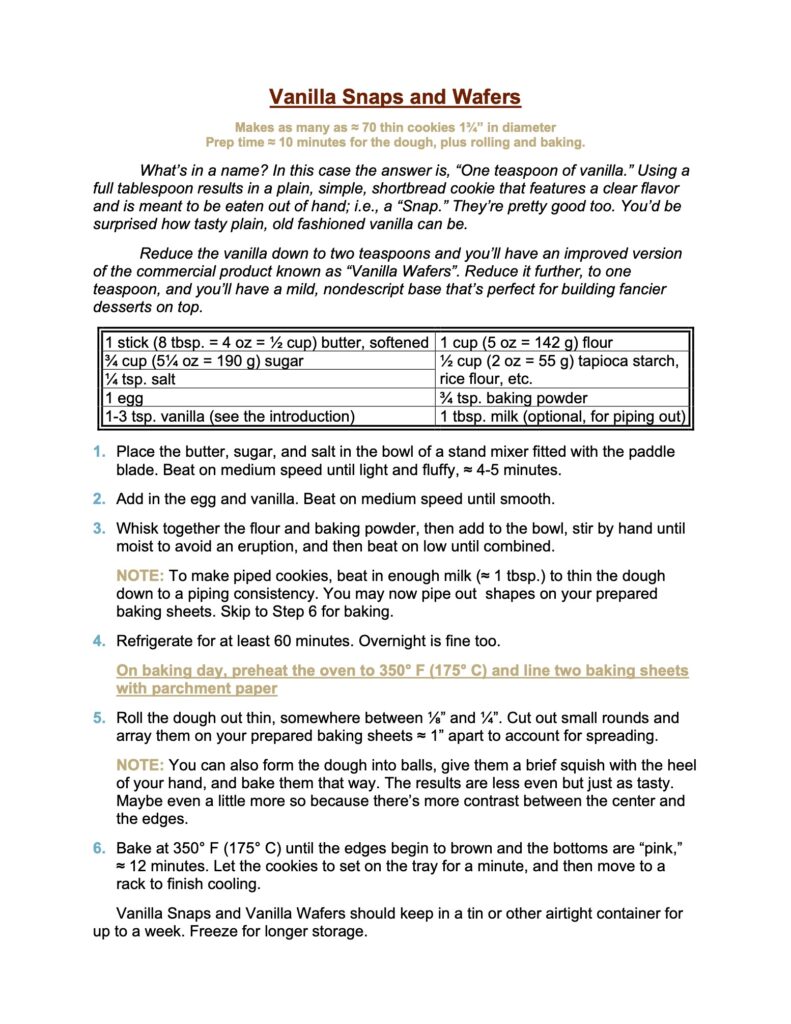
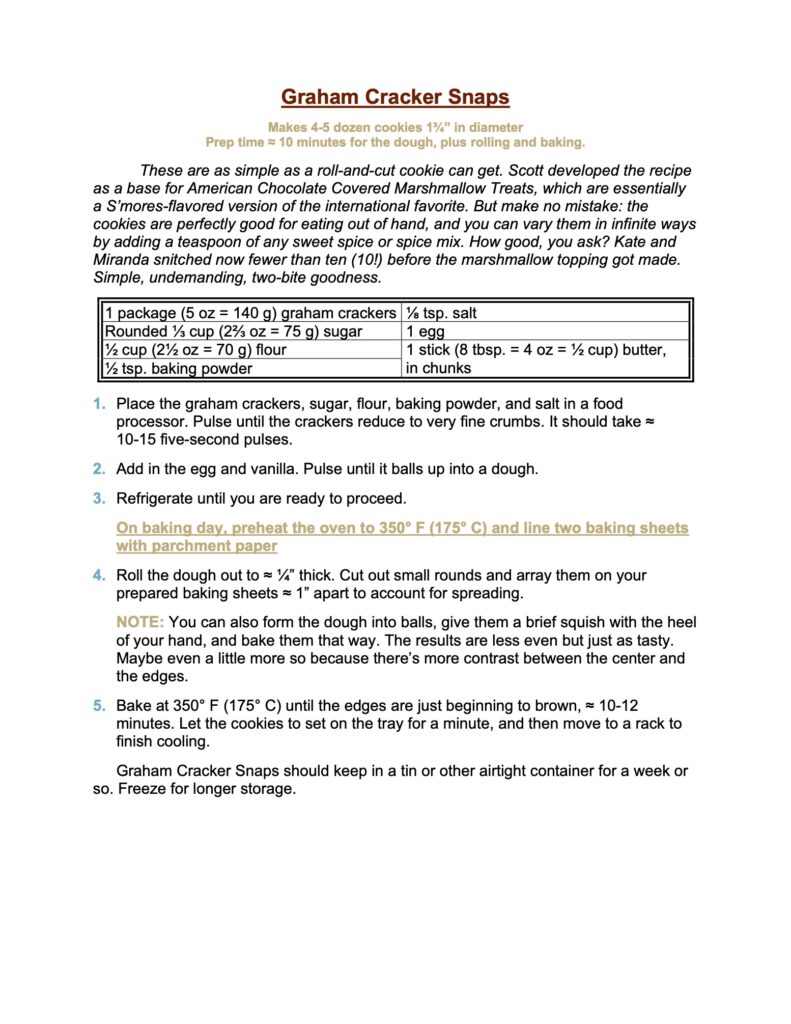
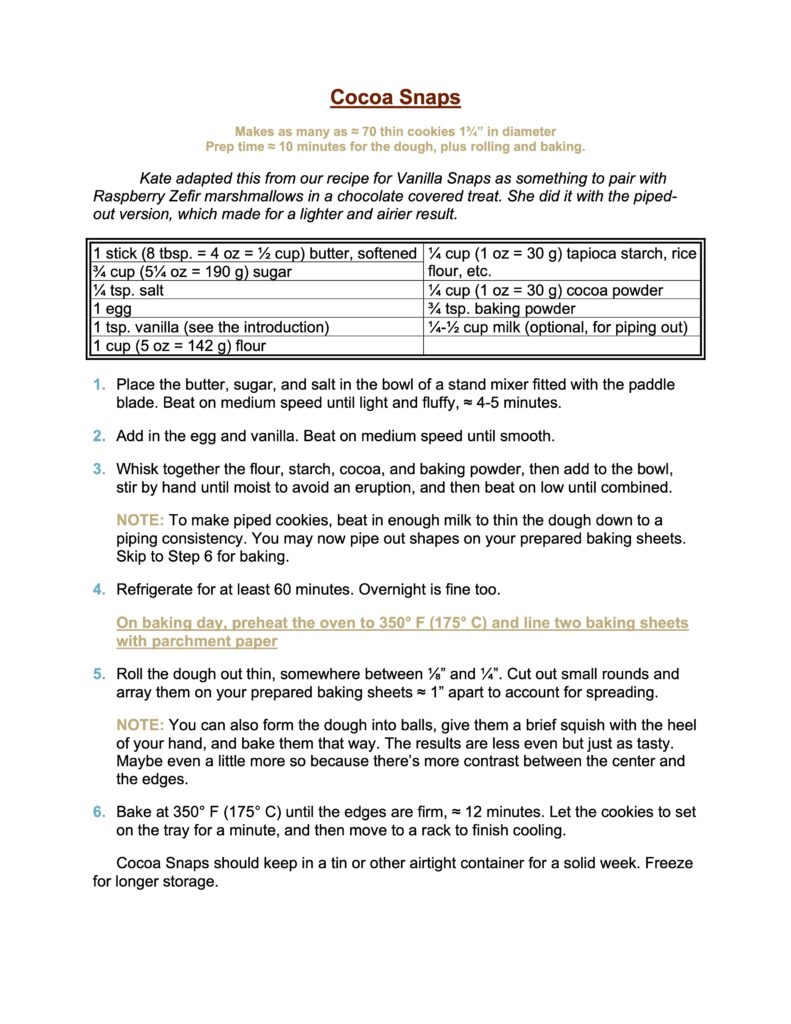
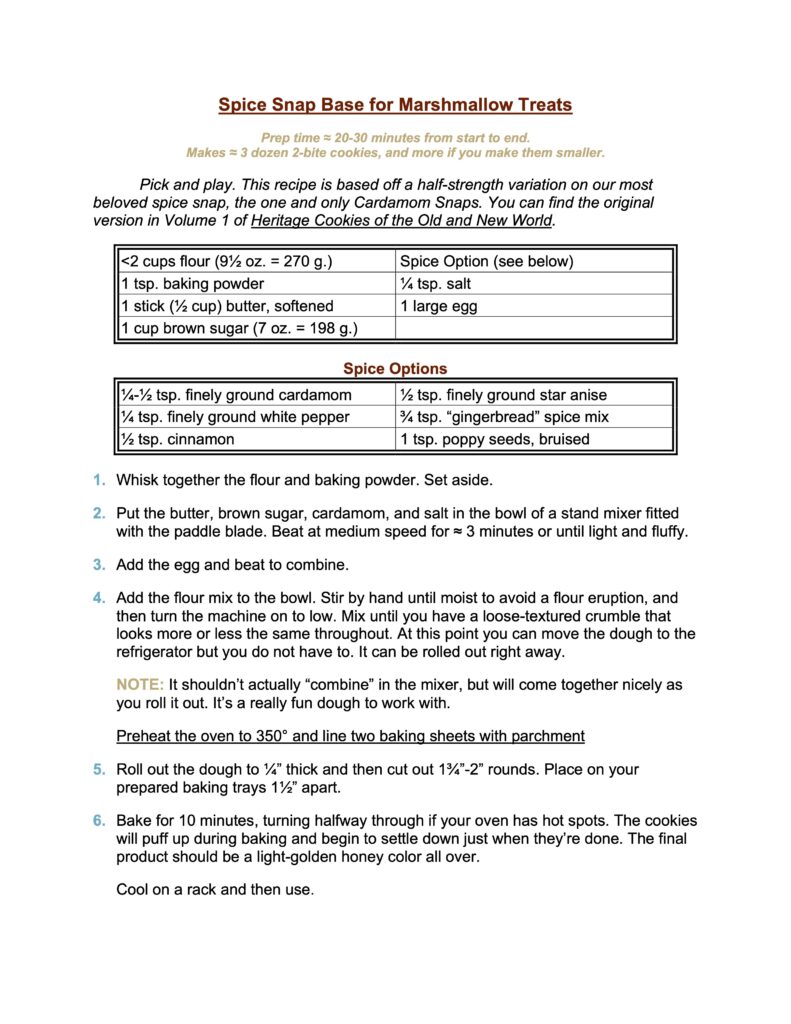
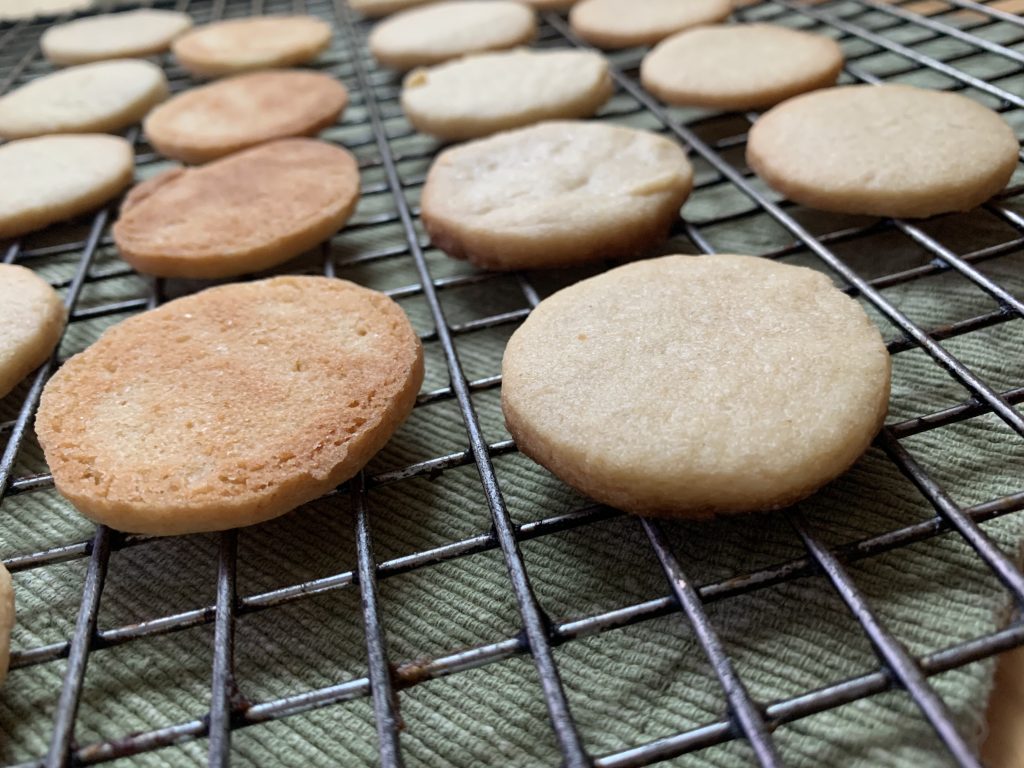
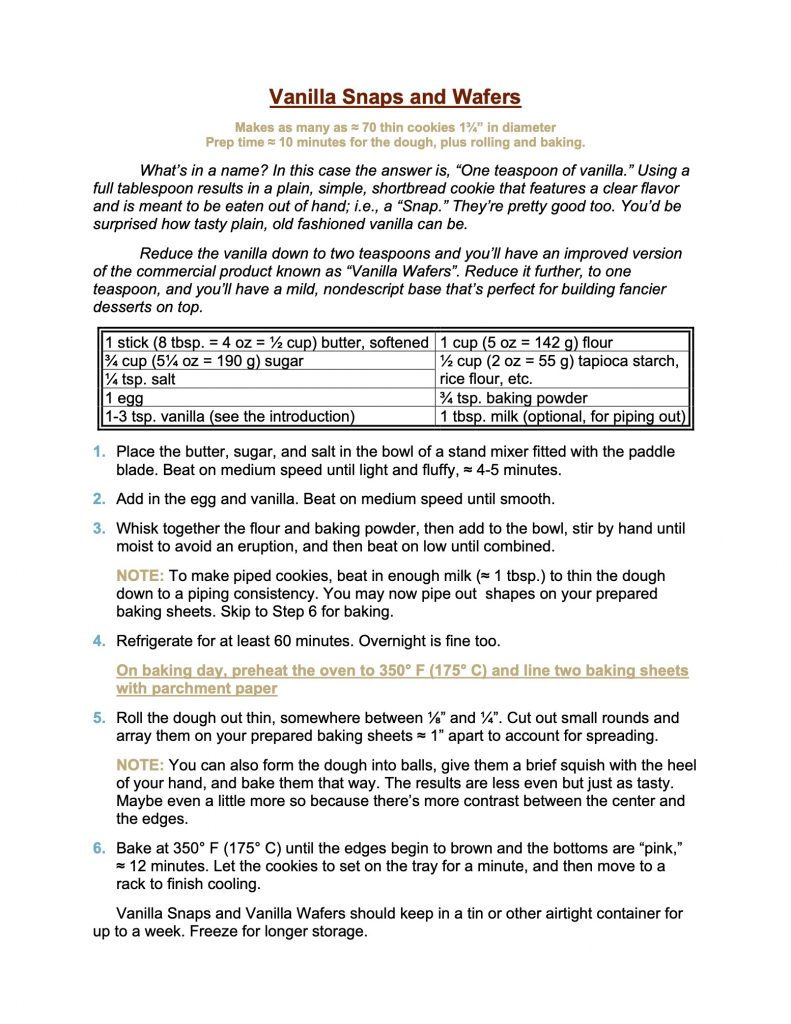
Well, maybe the cookie part… until you account for the infinite variations and my obsessive need to test each and every one. But that’s just volume of work, not difficulty, and I can sum it up quickly. (A) any plain cookie of the proper size will work, and we took great delight in playing around. It’s almost shocking at how big a difference you can create by shifting to a cardamom, cinnamon, or gingerbread flavored base in lieu of the classic Vanilla or Graham Wafer. (2) Straightforward shortbreads like your favorite butter cookie will also work. But (3) It is vital to keep the intensity under control, so the base to be a partner in the enterprise, and not a dominator. If you’re starting from a standard spice cookie (a/k/a “snap”), cut the amount of featured flavor in half.
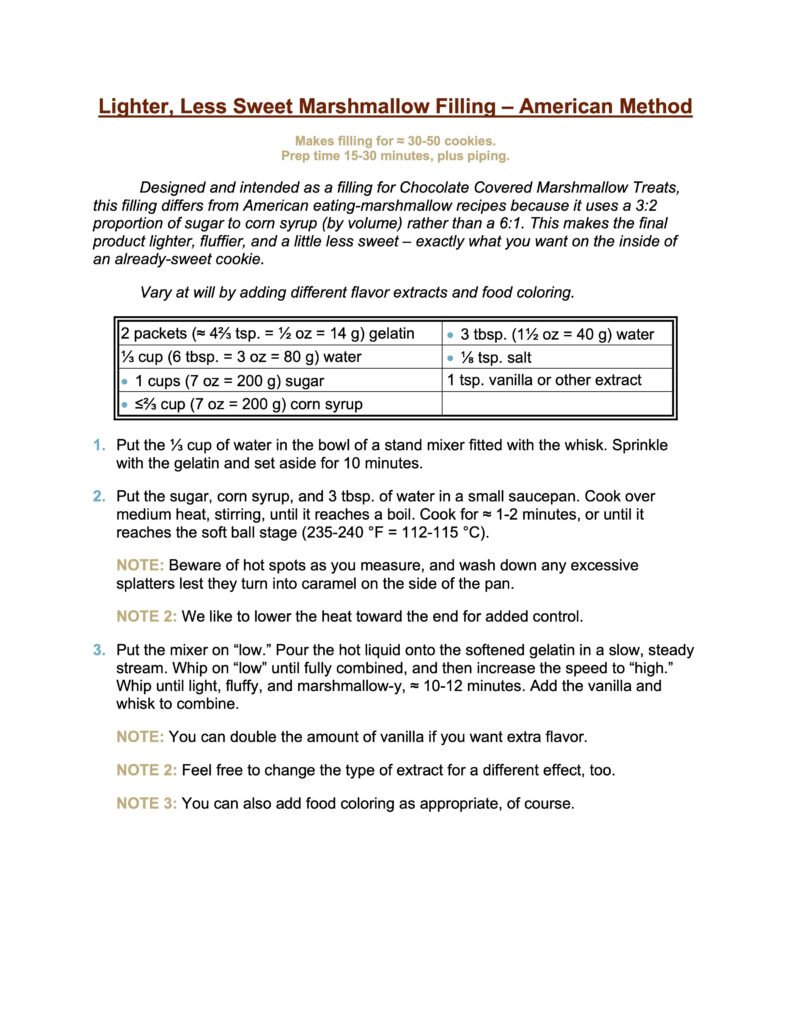
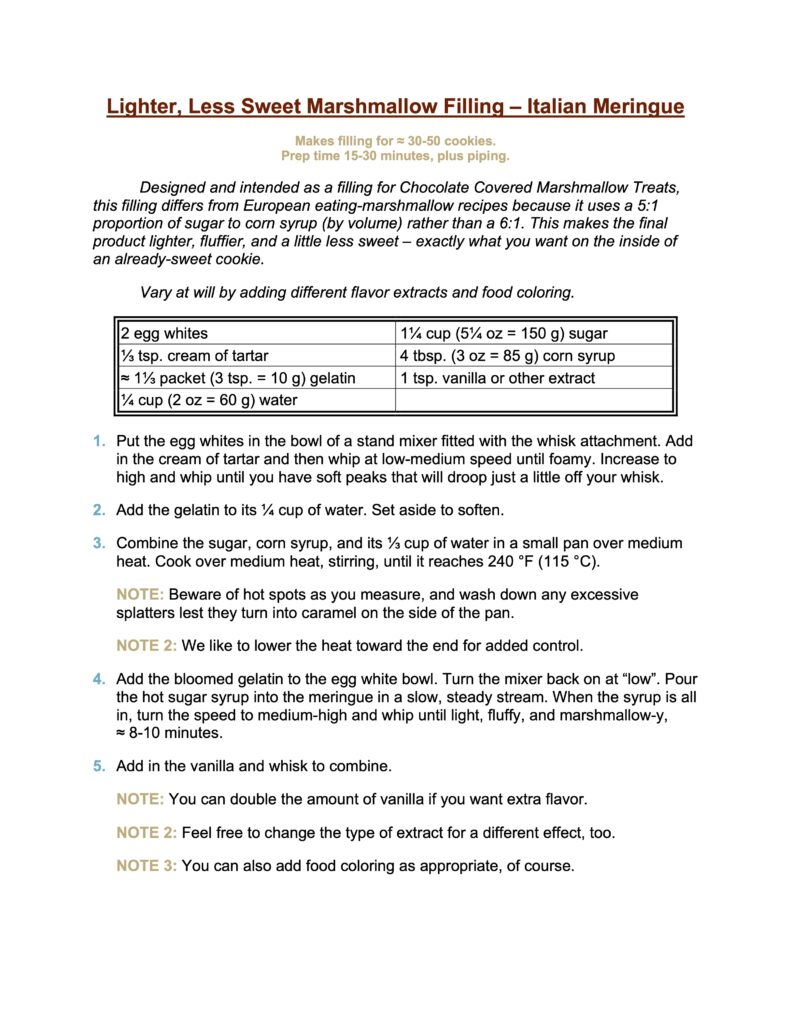
The marshmallow fillings posed a bigger problem. We are bakers, not candy makers, which created a learning curve issue before we could start narrowing down toward the perfect version. I discovered there are two basic approaches to making a homemade marshmallow: the U.S. gelatin-only version, and the European Italian-meringue version. Both recipes work… if you want to make a marshmallow to eat out of hand. They emphatically do not work when you’re after an ultra-light, not too sweet marshmallow filling!
The solution came down to food chemistry in action, as discussed in this online grade school experiment. All marshmallows have a certain proportion of corn syrup (glucose) in addition to regular sugar (sucrose). They must, because at these concentrations you need to combine the two sweeteners in order to prevent crystallization. If you do the experiment, you’ll learn that a higher percentage of corn syrup yields a fluffier but less sweet product. Ding ding! That was exactly what I wanted! The two marshmallow fillings have different proportions, but raising the level of glucose pretty much solved the problem. More than solved. Taste testers actually stopped to ask, “how did you get this texture?”
Then came the third kind of marshmallow… but that’s the tale of Part 5.
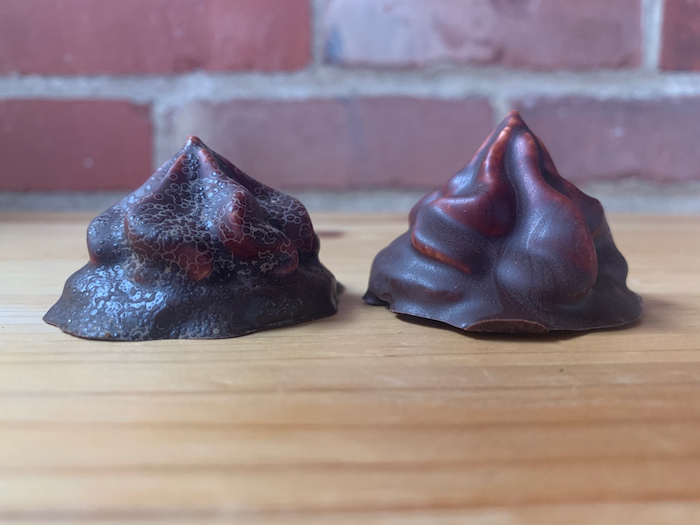
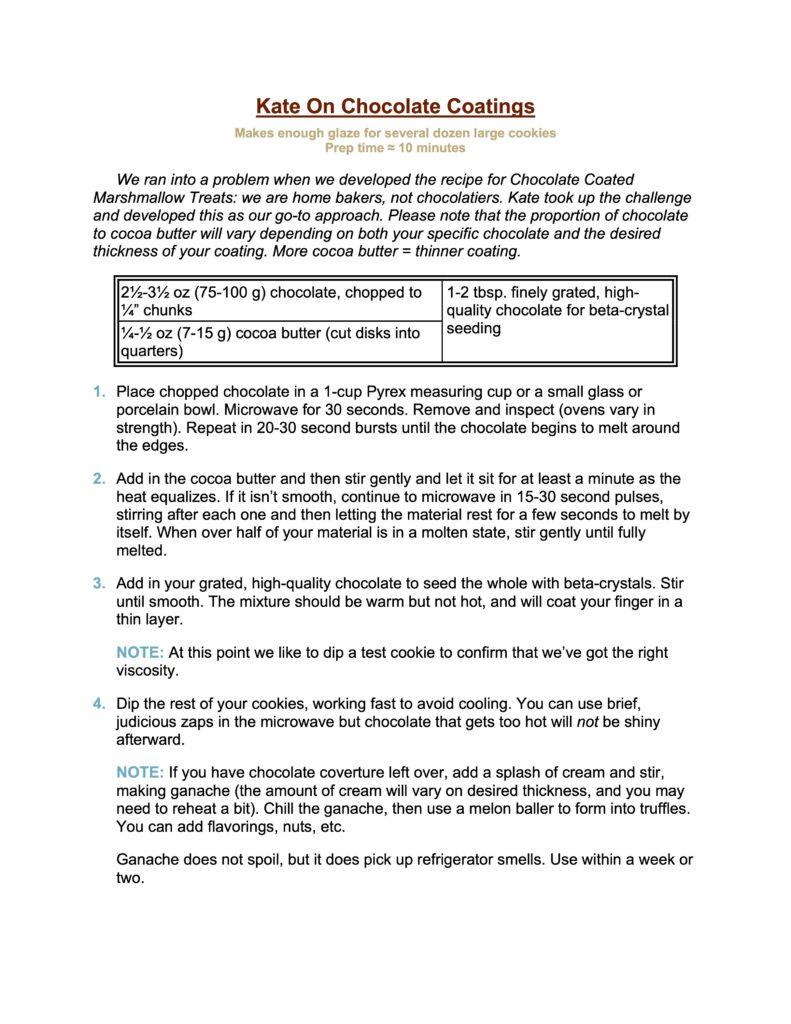
The chocolate coatings drove poor Kate nigh unto madness. [NOTE FROM KATE: Ahem! “To a level of high frustration.” Husbands.] Here’s the problem in a nutshell: you’re trying to duplicate cheap, commercial, pseudo-chocolate shells using quality products in a homemade environment. So how the devil could you create that thin, snappy shell at room temperature without all the apparatus of industry?
Back to the food chemistry research I went, where I discovered that the answer lies in the kind of fat you use to thin out the chocolate. Think of it this way. You’re really trying to create a version of the “magic shell” liquid used to coat ice cream. That is nothing more than melted chocolate thinned with coconut oil. It works because the cold ice cream hardens the oil to create a shell. Leave your finger on that shell, and the spot you’re touching will turn soft and gooey because the heat of your body is higher than the melting point of coconut oil.
What we needed for Chocolate Marshmallow treats was a fat that would harden/soften at body temperature rather than room temperature. Industry uses palm oil, which does just that and is also cheap. But palm oil is evil. The combination of slave labor and environmental havoc behind that industry means that we won’t have anything to do with it. Palm oil was out. Cocoa butter was in.
For what it’s worth, our taste runs toward a classic dark chocolate coating, but white and milk versions will also work, and sprinkles, sparkles, or stripes, ground nuts, espresso powder, & etc. could be used to guild the lily. Oh yes! You can also flavor the chocolate with a touch of coffee or liqueur.
Permutations Multiplied By Possibilities; And Again; and Again; and Again.
Look at the options we had at this point in time. Start with cookie bases limited only by your imagination; multiply by two marshmallow fillings that can be piped in any shape; multiply again by literally any extract buried away in your spice cabinet; multiply a fourth time all the different forms of chocolate; multiply a final time for the ways you can flavor that chocolate; and then consider all the ways you could decorate those final products.
You could fill an entire bakery with that many variations, and still have ones you left out. Macarons 2.0, done and ready to publish. Right? Not exactly. It turns out there is a third kind of marshmallow, which will blow your mind unless you grew up in Eastern Europe.
Zefir, named after the gentle southern wind,is a marshmallow that starts from a base of concentrated fruit. But that doesn’t do it justice. They don’t taste of “fruit” so much as FRUIT!!!! The level of pure flavor is almost hard to believe, especially when you factor in the distinctly sour tang that no extract could even begin to imitate. It’s like nothing else we’ve ever come across.
Zefir are usually sold on their own, with neither a cookie base nor a chocolate coating. But both variations exist on store shelves in every country from Poland and the Czech Republic eastward into Central Asia, and no study centered on marshmallow fillings would be complete without at least mentioning Zefir as a potential variation.
Alas, but Zefir are also a maddening puzzle we still haven’t cracked! The basic method could be the simplest one of all, and it has worked spectacularly for both sour apple and raspberry versions. But it’s also failed completely with some other fruits, and we’ve yet to understand why. So part five of this series is a work in progress. We can promise results for the apple and raspberry versions, but things get inconsistent after that.
CONCLUSION
Macarons are a very elegant, grownup treat. Chocolate Marshmallow Treats make your inner child jump up and down like a vibrating six year old. But the two cookies share something in common: they can be made in endless, high-end variations that deserve to be tucked into elegant little boxes for a nifty markup. If you’re a bakery owner, take me at my word and do a few “Why not?” experiments of your own. It could be the start a whole new trend, and it’s as simple as 1, 2, 3:
- Cookie Base, flavored with anything you want;
- Marshmallow Filling, flavored with anything you want; and
- Chocolate coating, flavored with anything you want, and decorated as you desire.
It took us forever to get each of those pieces capital-R Right, but none of them is hard on its own once you have the recipe. So don’t be daunted! People across the world will bow at your feet once you master the simple tricks that let you make these for gifts, parties, and sales. Wait a sec… Let me lodge the protest on your behalf:
“Across the world?” Come on Scott. Why the exaggeration? We all know this treat from childhood. It’s hardly the sort of thing that would make people all over the world go wild!
Think not? Let me leave you with this:
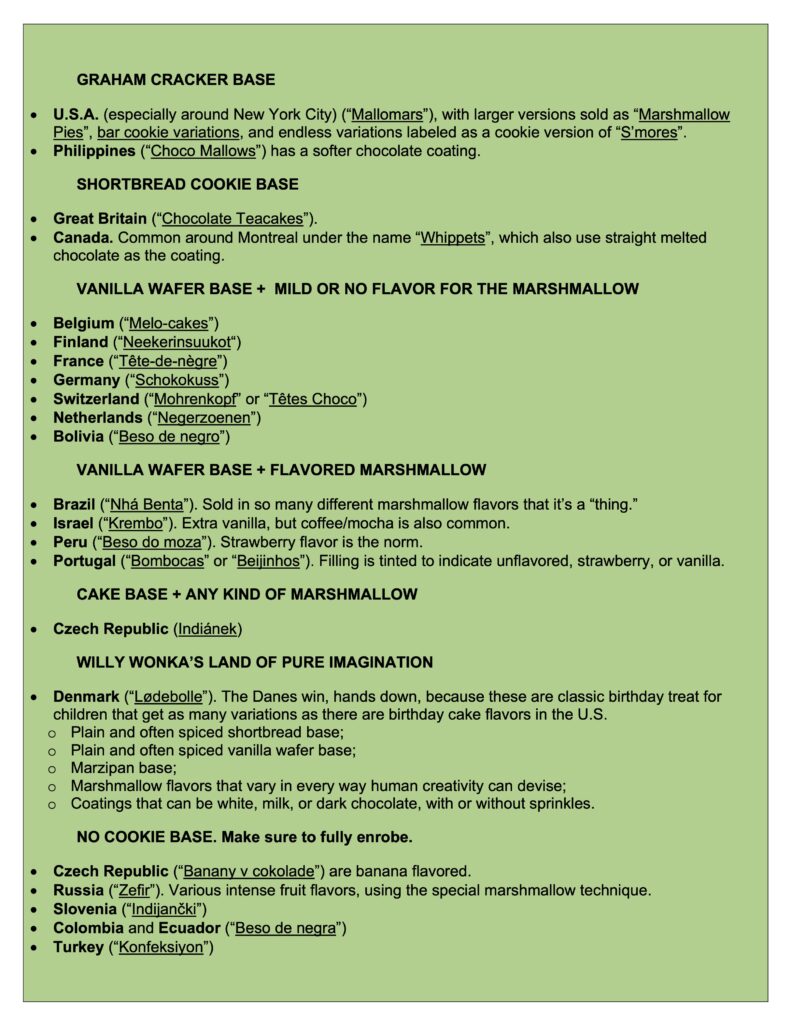
A LIST OF INTERNATIONAL VERSIONS, VARIATIONS, AND NAMES (drawn from perhaps the best Wikipedia article ever)
THE CHOCOLATE MARSHMALLOW TREATS SERIES
Part 1, The Chocolate Marshmallow Treat Overview
Part 2, The Cookie Base Options
Part 3, The Marshmallow Filling Options
Part 4, The Chocolate Coating and Finishing Options
Part 5, Experiments With Fruit-Based Zefir Marshmallows