
This is a great cookie.
You have never tasted anything like this cookie. Not ever. Anywhere.
If you ask 30 different people to help you find words that describe it, you will get this answer from well over 20, and the ones who don’t say it out loud will be thinking it: “What the heck…?!” Think. Think. Think. “No, I really can’t.”
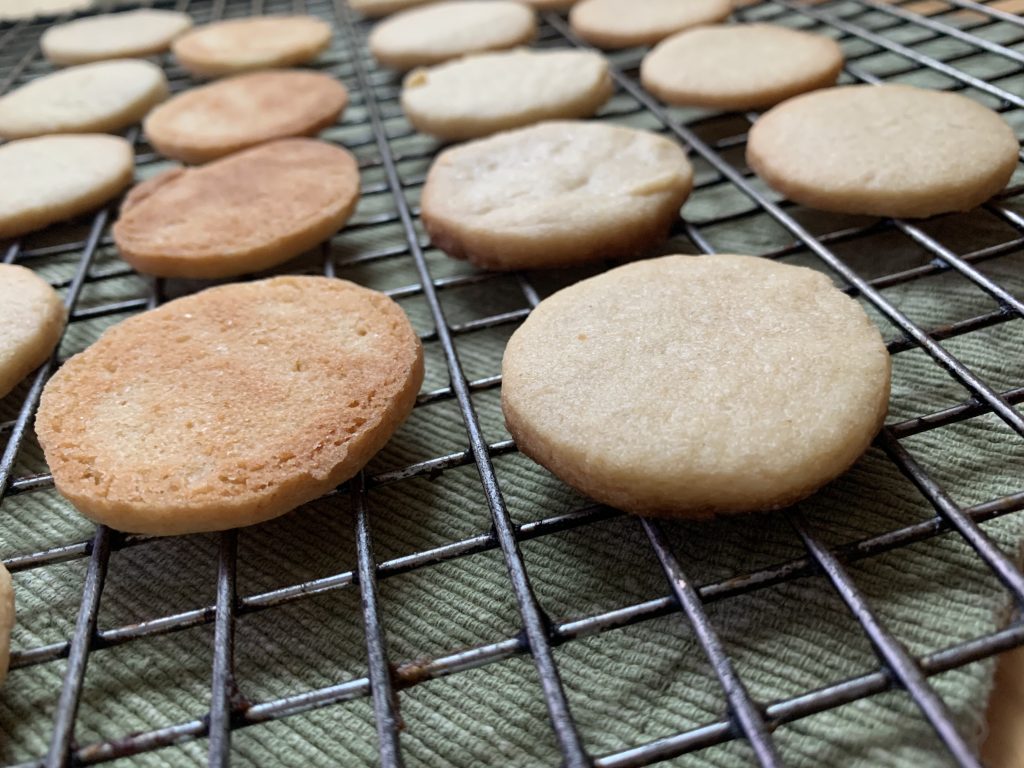
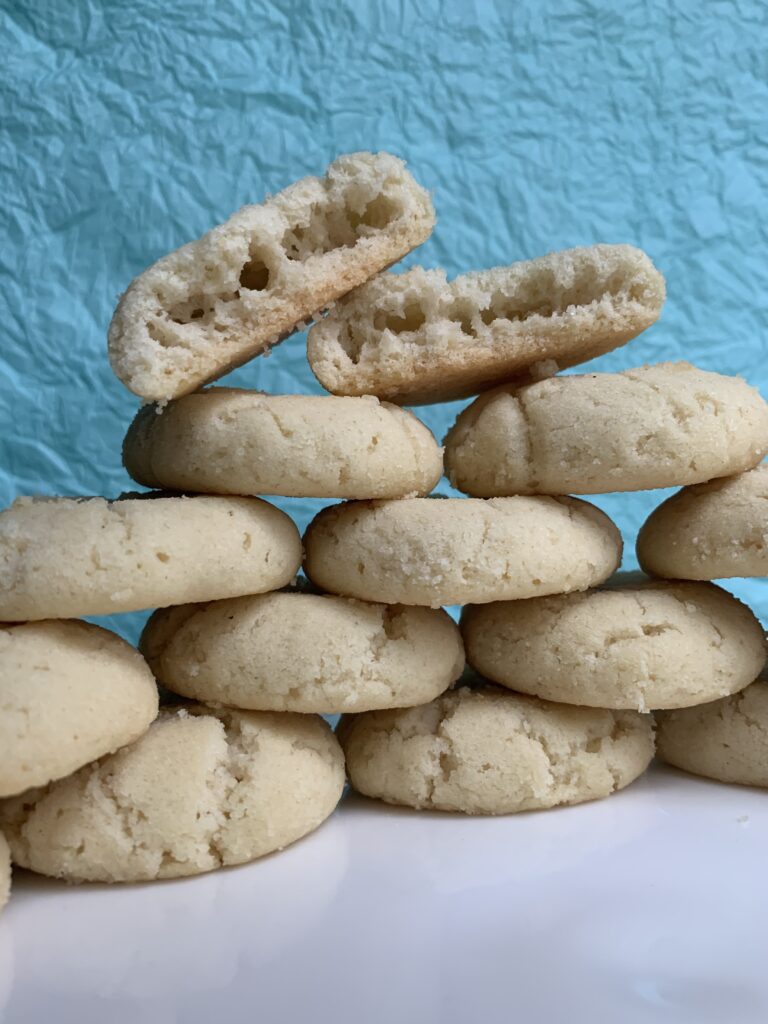
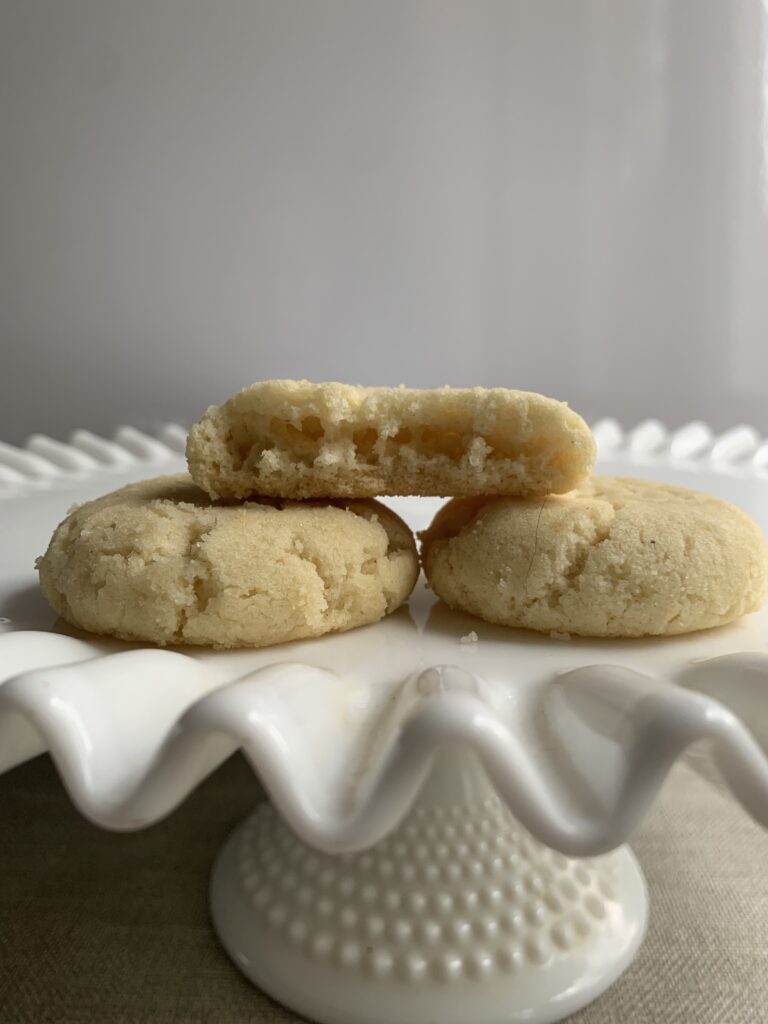
The flavor isn’t that hard. Remove the textural component and it’s a straight, generously sweet, vanilla cookie flavor. But that texture is wild! There are only two kinds of people in the world. Those who have eaten Drömmar before, and those who have not met anything remotely like it.
I have personally tested and (mostly) published more than 300 different cookies, each with multiple batches to get them right, and that’s without considering variations on the theme. I wouldn’t have believed it possible to create a cookie that reminded me of nothing. But there it is. Drömmar are unique.
NOTE FROM KATE: The only baked sweet remotely similar to Drömmar harkens back to a tea shop sweet I used to favor in Prague as a child. My grandpa would take me to a bakery where a display livened up the cooler case. He would order a cup of strong coffee, but never anything to eat. Instead, he enjoyed watching my pint-sized self sit up straight in a chair, fancy in my good dress and hair bows, drinking over-sweetened tea from a cup like a proper little lady. And I, of course, was the one who got to order a dessert.
This was often a confection called “rakvicka.” The English translation is a coffin or a casket. The not-quite-a-cookie mass was composed of whipped egg yolks and sugar, baked in rectangular, casket-like mold. The casket would puff up to leave a hollow interior. and was served with a squiggle of optional whipped cream.
Breaking a casket with a teaspoon and tasting a fragment was a fabulous sugar bomb experience, with the sugar converted into a friable structural element. It fell apart as soon as it hit the mouth. Eating the Drömmar is a messy proposition, but not as bad as the one time when I tried to bite off a corner of a casket and had the confection explode in my hand.
Enjoy this cookie – it’s unique, intriguing, and its playful nature will bring a smile to your face.
Click here if you only want the recipe without the discussion.
How Can We Describe That Which Can’t Be Described?
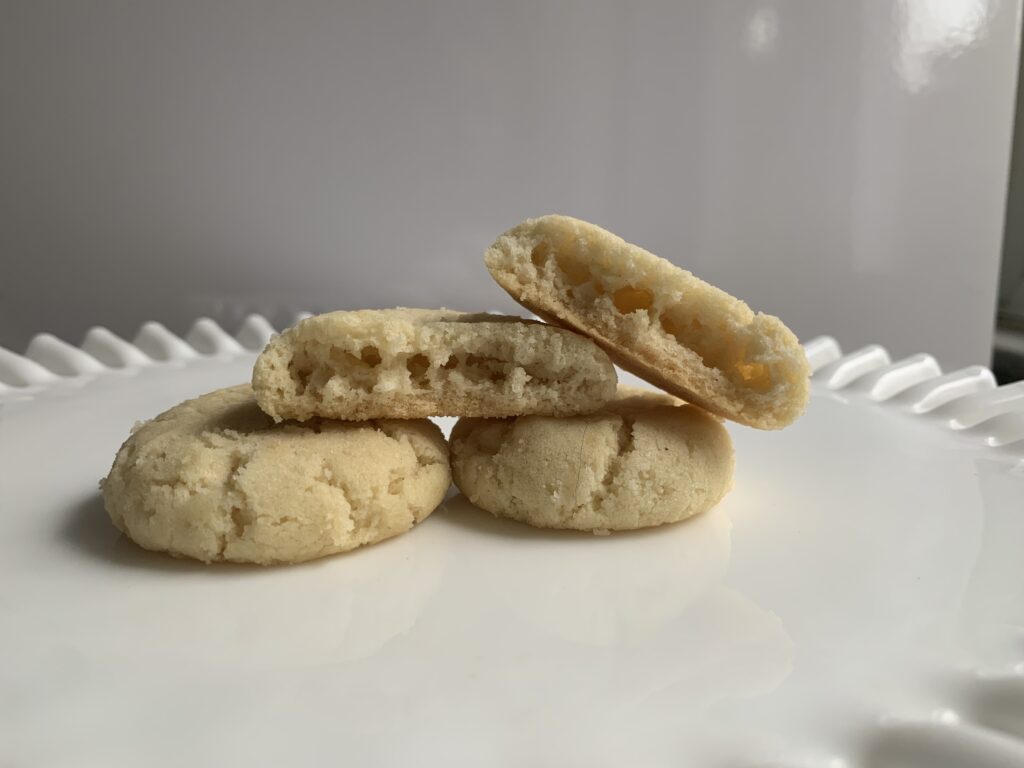
Those 30 testers and I had a lot of fun coming up with “sort of like this except…” possibilities. It wouldn’t be fair to you if I left without even trying, right? Here are the best of the bunch:
- “Imagine cotton candy that tastes like a sweet vanilla cookie, but is crispy, crunchy, and actually a little filling.”
- “Sweet, ephemeral, crispy/crunchy goodness that vanishes inside your mouth.”
- “Sugary air shaped into a cookie, but it doesn’t leave you empty.”
- “You could call them ‘clouds’ just as easily as ‘dreams.’ If clouds were crunchy, crumbly, and delicious.”
- “How about the child of a dried meringue who married a funnel cake?” To which came the answer: “No! I like meringues, but no meringue ever dreamed of being this crunchy, and these have too much substance even though they vanish in your mouth.”
- “They taste like vanilla and sugar. After that?… Uhm… Errr… Well… How about…? Gee, this is hard!”
Do you know the story about six blind men who fought over how to describe an elephant? The one by the ear said, “An elephant is like a carpet!” The one by the leg said, “No, an elephant is like a tree!” The one by the tail insisted that both were wrong. “An elephant is like a rope!” “No, it’s like a wall!” said the one on the side. “You mean a great, big snake!” answered the sixth man feeling at the trunk.
So it is with all those descriptions of Drömmar. Every description is true, yet none capture the whole experience.
An Overview Of The Recipe
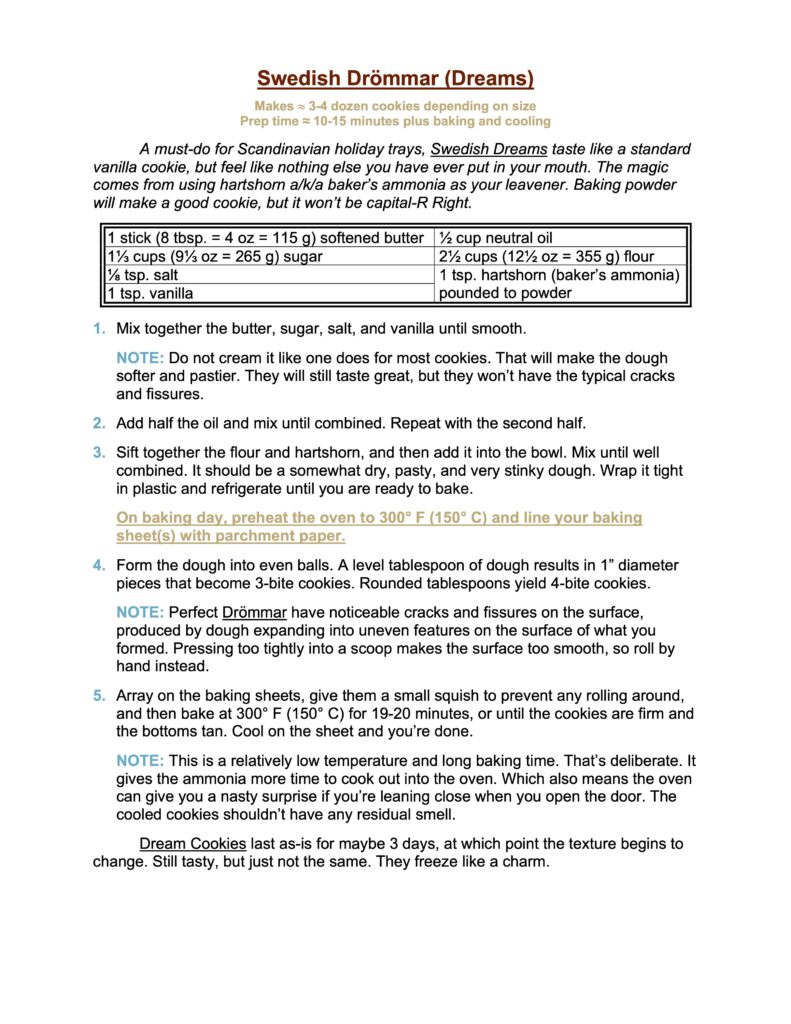
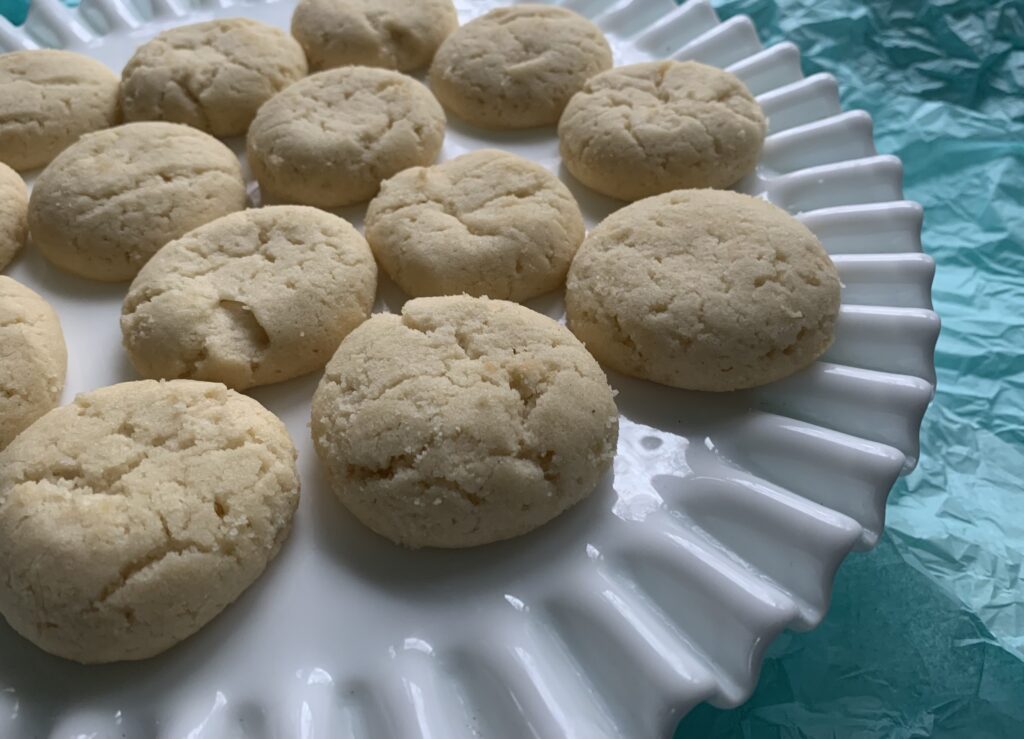
This is drop cookie, the easiest of them all to form, and the dough is so easy to make that traditionalists will simply pull out a mixing bowl and a fork. No kidding. I only used a mixer because my arm has been protesting the idea of typing on a laptop actually held in my lap. [Lesson learned. Don’t do it.] It adds up to this: First, mix the softened butter with sugar and vanilla sugar until it’s more or less smooth. No creaming required (see below). Second, mix in the oil (and vanilla extract if you go that route) bit by bit until you once again have an even texture (again, see below). Then mix in your dry sifted-together flour and hartshorn (see below). You are done. Go ahead and bake.
[A NOTE FROM SCOTT: True story about how bulletproof the formula really is. I started by normalizing 11 recipes I found online to a dough based on 1 stick of butter, and then targeting the average of those fairly consistent amounts. I must have gotten my math wrong, because the first batch produced more of a dough paste than a pasty dough. But here’s the thing. Other than leaving oil on the fingers, that first batch tasted crispy, sugary, vanilla-y, and altogether delicious. The current recipe has exactly twice as much flour as that first one. Can you name another recipe that will work even if you blunder by using half (half!) the amount of flour you should have?]
A Water-Free Dough
This dough contains basically no water except the little bit that’s inside the butter, the microscopic amount that’s produced in the leavening process, and the equally microscopic level contained in dry flour. That changes things in a few key ways.
- The dough is the next best thing to gluten free.
Wheat flour contains two proteins called glutenin and gliadin. Add water and those two will combine into gluten. Kneading hastens that process, and also makes the gluten bits combine into the long strands that bakers try to control. Remove the water and there’s no way to make any gluten.
Since this dough has no water, and the flour grains get coated in fat anyway, there is basically no gluten at all except at trace level. We can’t call it “gluten free” because a testing lab would definitely find some molecules here and there, but it’s entirely fair to say it’s the “next best thing to gluten free.” This cookies should be quite safe if you really are sensitive to gluten and not to other parts of the flour. Or not, if your reaction has more to do with the grain than the gluten.
- Baking soda and baking powder (sodium bicarbonate products) will not work. I recently did a lot of research on this to figure out why. It comes down to the chemistry differences between the mechanism by which ammonium carbonate (hartshorn) breaks down versus the reaction chain for sodium bicarbonate (the active ingredient in baking soda and powder).
Hartshorn creates lift through “thermal decomposition” alone. Apply any level of heat above 96-99° F (36-37° C), basically the same as body temperature, and the ammonium carbonate will break down into two gases (ammonia and CO2) plus a molecule of water. The reaction continues and gets faster as the oven temperature rises, until there’s finally nothing left. Both gases contribute to lift as they expand out through the dough.
Sodium bicarbonate begins to break down at a significantly higher temperature (180° F = 80° C), and results in CO2 + water + a chemical called sodium carbonate (not bicarbonate). Sodium carbonate is a potent base, which is why goods containing high levels of baking soda can taste soapy and bitter. Recipes solve this by adding an acid into the dough to create a secondary reaction (chemical, not thermal decomposition) that produces yet more CO2 and water.
That’s all well and good except for one thing: that chemical reaction between base and acid will not occur in the absence of enough water for the two to travel around and find each other. This is why baking powder stays stable in your pantry. It may contain both a base and an acid, but they’re both bone dry.
Since this dough has no water to speak of, the sodium bicarbonate will go through thermal breakdown, but the sodium carbonate result will end up stranded in your final product, producing that nasty, soapy, aftertaste. Yes, there will be some dry acid too if you used baking powder, but they will be sitting there side by side instead of reacting.
That Makes Hartshorn An Essential Part Of The Recipe
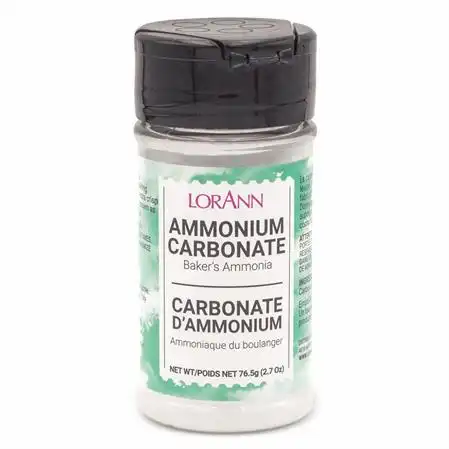
Hartshorn a/k/a baker’s ammonia a/k/a ammonium bicarbonate reacts where baking soda and powder won’t (in this cookie), and it’s also responsible for the unique, micro-honeycomb texture that makes these cookies so special. This ancient leavening agent has become an obscure ingredient for normal households, but it is readily available online, in bakery supply stores, and even in craft stores like Michael’s. [If you live in Pittsburgh we can recommend Make A Cake on Rochester Rd.]
We’ve always used the LorAnn brand but that’s only because it’s the most common one around. Ammonium bicarbonate is a pure chemical compound and thus identical regardless of source.
NOTE FROM KATE: Hartshorn, which used to be called sal ammoniac, has a long and twisted history. First imported by Venetian traders in 12th century, its Egyptian manufacturing process was a closely guarded secret. It took five hundred years before European alchemists and scientists figured out how to make the stuff from antlers (“hart” is an antique name for male deer).
Note that there are several ammonia salts with similar chemical properties. Deer antlers were preferred for baking use on the old belief that particular parts of the animal parts will provide a stronger medical benefit. Hooves, skin, etc. were used elsewhere. My research suggests that burning them n the presence of lime yielded what we now know as ordinary smelling salts (though hartshorn will serve just fine in that role too). The Egyptians actually used heated animal dung to extract their ammonia product.
Our vegetarian friends will be relieved to find that no animal parts need to be used. Modern ammonium salts are all factory made from commonly available chemicals. Although, knowing how the Egyptians made them inspires me to test the process, come Spring, in our fire pit. I am sure our neighbors won’t even notice… And there’s no way it could be as bad as when I tried to brain-tan a deer hide in a garbage can on our driveway.
Sifting is MANDATORY
Modern baking soda and baking powder products tend to be clump-free, which makes sifting much less important. Not so for hartshorn. Our little jar started out as a powder when we bought it last year, but as of today it’s such a solid block that I’m forced to chip pieces off. Heaven help any tongue that meets one of those chips! That makes it vital for any user to either grate/pound it back into a powder, or else dissolve it in water before use.
You don’t want to add water to this particular dough (see above), which leaves only the reduce-to-powder option. I have done this in two different ways: by pounding in our mortar and pestle, and by pressing/scraping it through our fine mesh strainer (a/k/a sieve). Both seem to work equally well.
Mixing Your Butter Does Not Mean You Should Cream It
“Creaming” is the process of beating butter for several minutes until it turns white and fluffy from tiny air bubbles you’ve mixed in. It’s probably the most common first step out there for cookie making. This recipe asks you to mix your butter and sugar, not cream them together. Remember, we’re trying to replicate mixing with a fork. Machines are just too convenient to bother with that, but that result is your target. Forks do not cream your butter. All they do is mix.
Another Trick: Add Your Oil Bit By Bit
There is just as much oil in the dough as butter. Add it in at least two stages. Pouring all the oil in at once makes it harder to get everything smooth.
Salt?
I added an unnoticeable bit of salt to the recipe sugar because experience has taught us that even sugar bomb cookies work better that way. Feel free to leave it out.
Vanilla Extract?
Every Swedish recipe I found specified the use of vanilla sugar, not extract. It seems to be a regularly available product over there, and it makes extra sense to use it because it adds no moisture (see above).
Vanilla sugar can be hard to find here in the U.S., but vanilla extract is everywhere. And while it is indeed wet, the recipe calls for only a teaspoon, and most of that liquid is alcohol rather than water. So if you have vanilla sugar, use it. Extract will work fine if you don’t.
CONCLUSION
Do you, like us, have a little bottle of baker’s ammonia tucked away in the pantry for the next time you want to make Springerle or crackers? If so, make this cookie! Add exclamation points as needed to make you believe me about that. Drömmar are unique. Drömmar are delicious. Drömmar are universally popular. And Drömmar will make you a better baker after you take the time to go back and figure out how such a weird, amazing, and awe inspiring cookie really works.
Enjoy!
AFTERWORD
I posted this recipe in our Facebook group. This follow up came a little later from a fine baker who was intrigued enough to give them a try:
I am not obsessed with Drömmar. LOL
But lying in bed thinking about the meltaway character of some favorite shortbread, I decided to try the secret ingredient in those in the Drömmar: rice flour.
I replaced just under a third of the flour with rice flour, or ⅔ cup of the total 2½ cup called for. This made a noticeable difference in the texture to enhance that lovely melt-in-your-mouth feeling.
Other adjustments: used almond oil instead of canola, baking them without refrigerating the dough since i had plenty of time, lowered baking temperature to 285°F, and extended baking time to about 28 minutes total (rotating pans).
This is such a lovely recipe, so easy, quick, and fun to play around with.
It ain’t just us, folks. Think of a straightforward, delicious, and buttery shortbread… and then twist it by creating this fantastically unique texture. How could it be anything but “lovely?”