The recipe for Bear Paws took us more time than any other recipe we’ve dealt with so far. It took that long because Kate knew what they were supposed to be, and there wasn’t a single version that even came close. It was maddening! We went through more than a dozen trials trying to nail things down. Probably closer to 20. At some point you stop keeping count.
As always, feel free to skip to the bottom if you want the recipe without the blow by blow development choices.
Building Up From Flour And Nuts
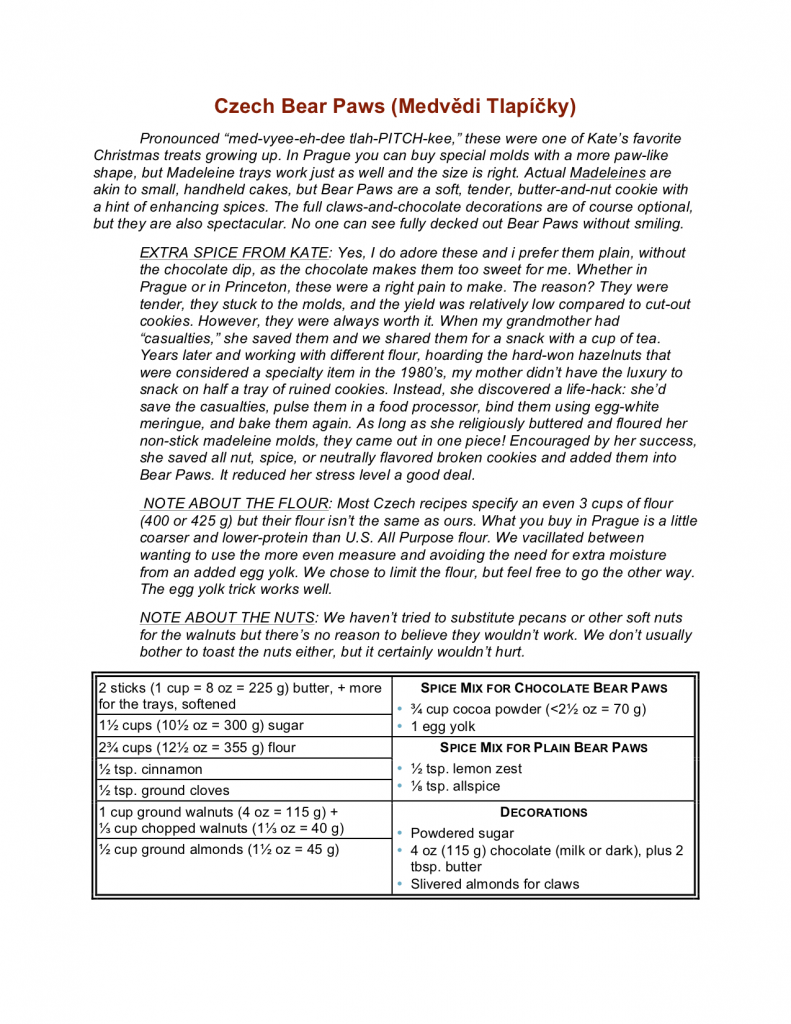
The first problem we faced had to do with flour. Most Czech recipes specify an even 3 cups of flour (400-425 g) but our experiments with this amount failed. The flour you buy in Prague is a little coarser and lower-protein than the AP flour used here, and the amounts did not translate. We vacillated between adapting the recipe around that standard, or reducing the amount of flour to match the other ingredients. In the end we went with the latter, settling on 2¾ cups (around 350 g). (NOTE: For what it’s worth, adding an egg yolk had been the best solution at the 3-cup level and we invite you to use it if you want a cookie that’s a bit less heavy on the nuts. We needed an egg yolk anyway for the chocolate version.)
Next up came the nuts. You need to understand that nut cookies lie close to all Czech hearts, as exemplified by the national adoration for Nut Horns. Bear Paws don’t go quite that far, but they’re still a nut-centric treat. That meant we had to spend a lot of time playing with the flavor and texture at the same time we were working on the flour as well. Quick tip: there is a reason why scientists insist on changing only one variable at a time.
But we got there in the end! A big key to getting this recipe “right” lies in using different sizes of walnut (ground and also chopped), combined with some other nut for a more complex flavor. We ended up using ground almonds. Hazelnuts would have worked too, but I put my foot down. “Enough is enough. People who want nut perfection should turn the page to the Nut Horns recipe!” Besides, cookbook recipes should have different flavors, not just different shapes and textures. We weren’t after Nut Horns made in a mold.
The same logic applied to toasting the nuts in advance. We do that religiously for Nut Horns, but chose not to for Bear Paws. The added flavor, combined with the spice/honey flavors, did not add enough to justify the extra work, especially when we wanted the final product to stand out as something different.
But – the big “but” – you Dear Reader, do not have that same need! These may be forks in the road where you want to go right instead of left. Are you a founding member in the Cult of Filbert? If so, by all means feel free to replace all or part of the almonds with hazelnuts. (Just be sure to make a note in your book about the experiment and its results, so both the future you and your heirs won’t have to rely on the vagaries of the mind). The same thing goes for the soft nut component. We used walnuts because that’s what they have in Prague, and Heritage Cookies of the Old and New World focuses on traditional recipes rather than exploring new possibilities. But there’s no reason why American pecans would not work as well as walnuts, and maybe even better. Go ahead and give them a try. The same goes for cashews, macadamia nuts, and even peanuts. Play to your heart’s content.
Moving On To The Details
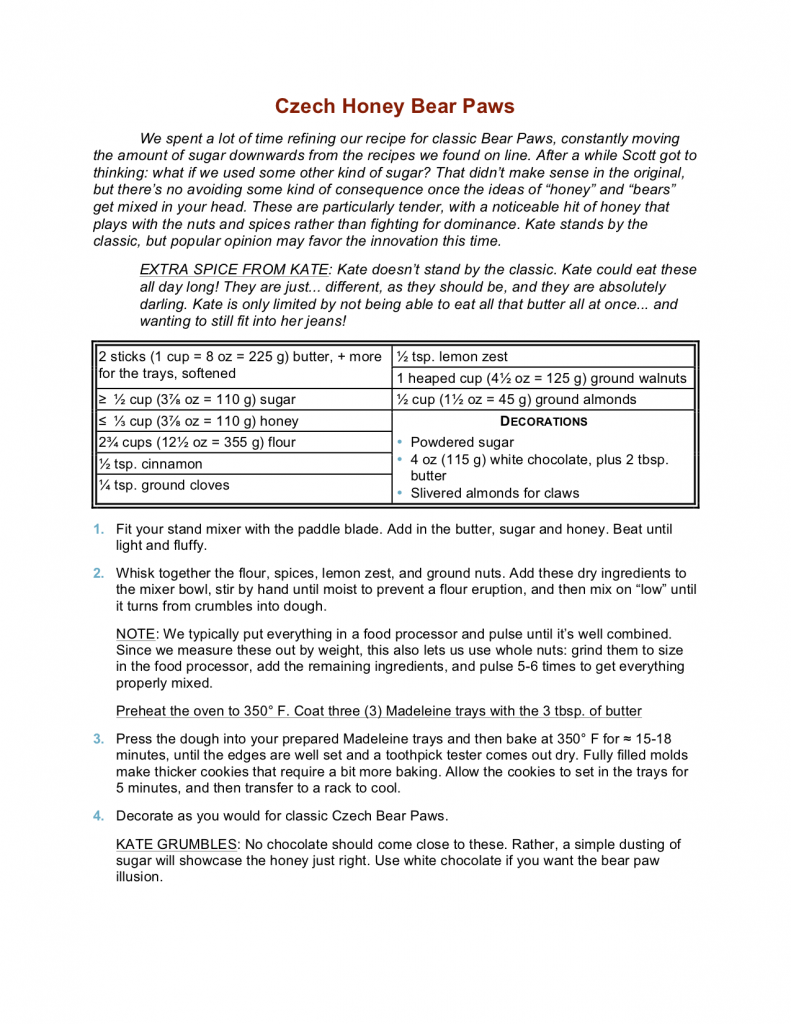
That covered the two main ingredients: flour and nuts. Our next few batches involved ventures into Spice Cookie Land. This, thank heaven, took less time than the first set of issues. The only complication lay in customizing the mix for the nut-only version and the chocolate-nut variation;, and then a third time for my Honey Bear Paws (which have now become the family favorite).
AN ASIDE: Yes, I really did put the name “Hunny Bear Paws” down as the initial recipe title for that variation. You have Kate to thank for avoiding the pain that eye roll would have caused. Just note that she issued the veto more because they were too good, than in protest against poor Pooh. “There’s nothing childish about that cookie, and it doesn’t deserve a childish name!” Fair enough. She was right on both accounts.
Of Cookies That Stick And Life Hacks Around Them
Think we were done? Nope. There were two separate issues that go to the question of casualties. First, as Kate wrote in the book, “Whether in Prague or in Princeton, these were a right pain to make. The reason? They were tender, they stuck to the molds, and the yield was relatively low compared to cut-out cookies.” We tried, but could not solve that inherent problem.
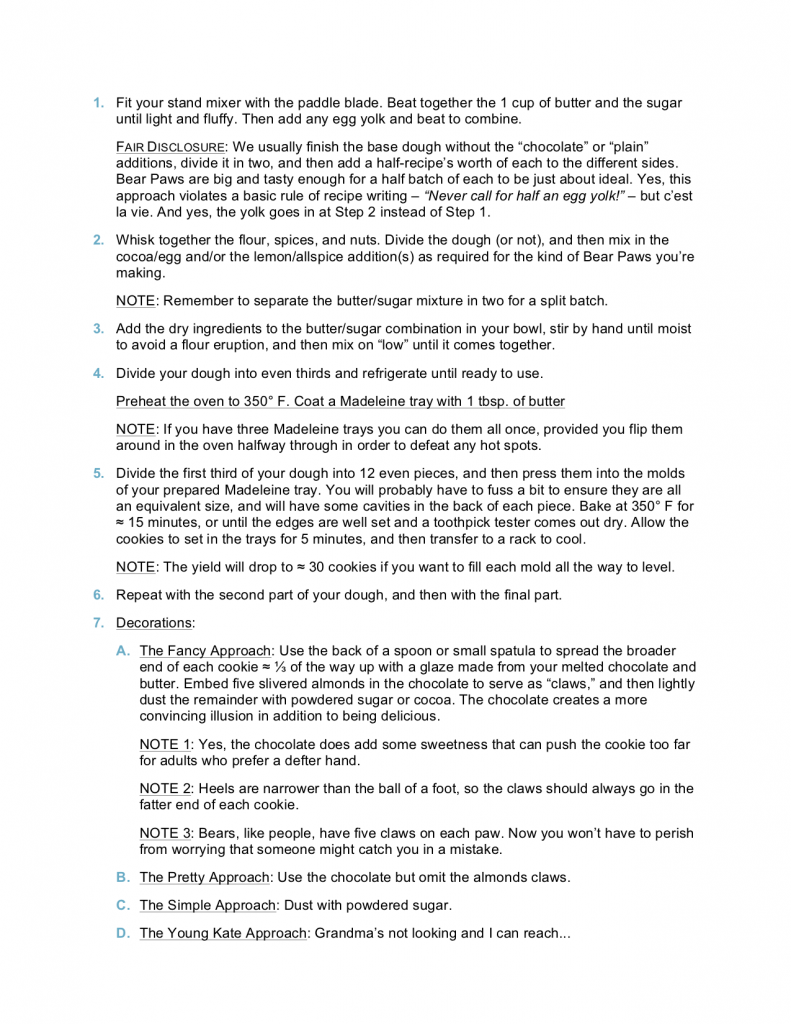
Coat your your trays well with both butter and flour. Very well indeed. Fail and you won’t be happy.
But that still left us with some family history to contend with. Kate’s Grandma Kandler actually liked to have a certain level of “casualties” because they made perfect snacks to go with her daily cup of tea. [NOTE FROM SCOTT: And perhaps as perfect lures to gain tea-time with a cookie-obsessed granddaughter…? Grownups are tricky that way.]
Kate’s mom faced a different problem after they immigrated to America. She tried to avoid the casualties. First, because a lot of nuts were hard to find back in the 1980’s (particularly hazelnuts), and second, because she got less joy from sampling the wares. So Mom created a life-hack instead. Old fashioned Bear Paws resulted in too many losses? No problem. She saved those casualties in a big bag along with all the other damaged nut, spice, and butter cookies, and then combined them to make what we’ll call “Smart Lady Bear Paws.”
After everything else was done, Jarmila took out that bag of broken bits, tossed them into a food processor, and ground them into crumbs. Then she bound the crumbs with an egg-white meringue and voila! A tasty and pre-sweetened Casualty Macaroon dough! But then she made the next discovery; that dough would hold its shape if baked in a (religiously buttered and floured) Madeleine mold. And it was much less fragile than true, old fashioned Bear Paws. What came next… Well, let’s just say that the original ursine appendage cookies found themselves on the endangered species list.
That trick reduced Mom’s stress level a good deal, but it added to ours. Did we need to include the egg white version too? Should we just focus on the original ones you’d buy from a bakery in Prague? Should it be a separate cookie, a variation, or a Cookie Nerd note about casualties?
We went a good way down that road before I put my foot down again. “We’re writing a book about Heritage Cookies, not life hacks. The Smart Lady version might be a family tradition, but it hasn’t been around long enough to qualify as a heritage recipe.” And 20 darned attempts was enough. Besides, I wasn’t producing that many casualties after all that practice.
KATE: Bwaa haaa haaa! Tee hee hee hee!
SCOTT: She really does tee-hee. Honest.
KATE: Well, that part is true.
SCOTT: And no, the scarcity is not tied to me testing the bake! Besides, that’s the baker’s privilege.
KATE: omitted. [Author’s privilege].
SCOTT: Did you know, Dear Reader, that some people view unladylike words as even worse than unladylike guffaws?
KATE: Touchy, aren’t we? Tee hee hee.
But seriously – how do you write a recipe when there’s no way to know the proportion you’ll have of spice cookie bits compared to broken Butter Jellies and Bear Paws? Jarmila’s life hack wasn’t a “recipe,” it was a way to beat the system. And now you know it too.
Final Notes
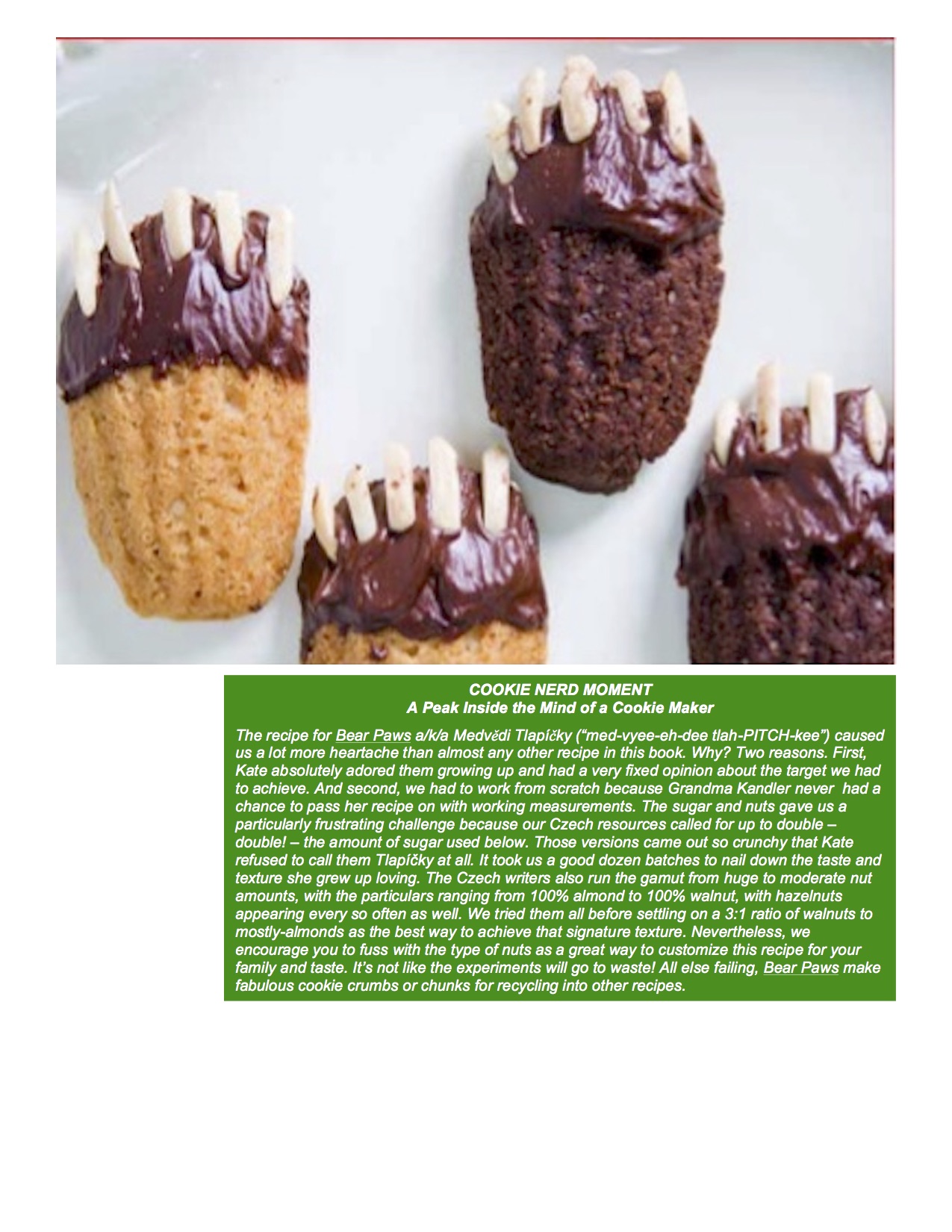
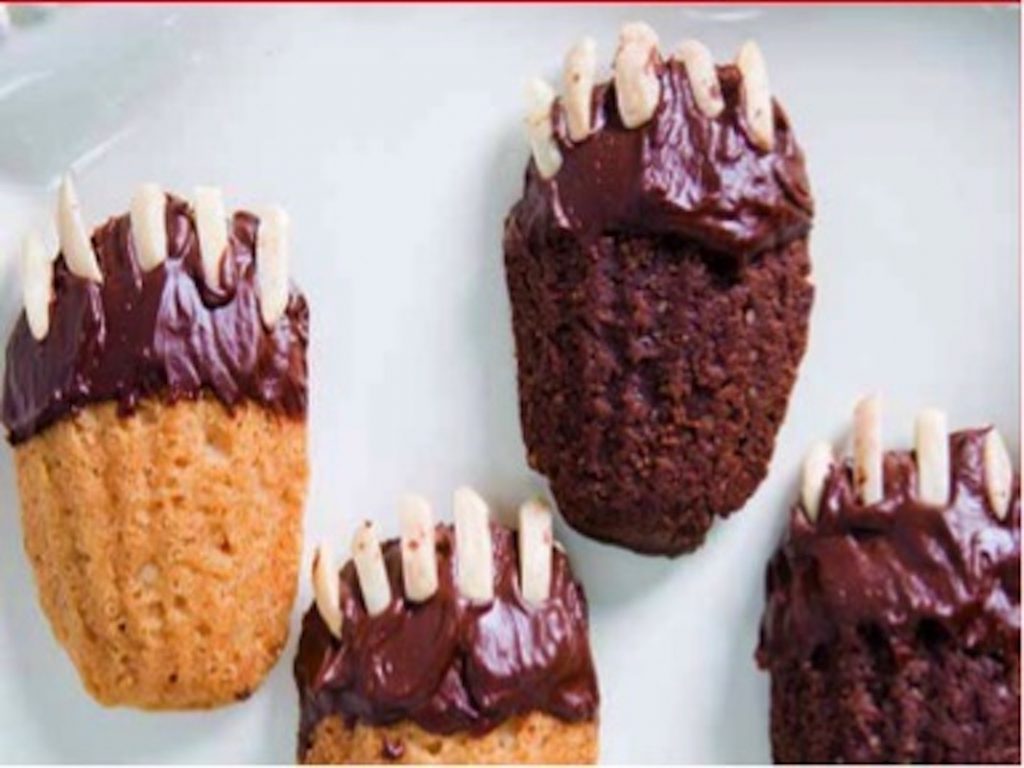
About the decorations… The photos in our book show the full, impossibly cute version but there’s no need to go that far. We went whole hog with the decorations so the photo would tell a story that prevented people from confusing these for actual Madeleines.
The thing is, Kate will argue that less really is more in this case. The cookie itself tastes and feels amazing all on its own. All three varieties! The decorations add some extra sweetness, and the nut “claws” mess with that texture. There is something to be said for impossible cuteness, but fair is fair: you, Dear Reader, deserve to know that our household version does get baked in the Madeleine trays, but they’re served with nothing more than a dusting of powdered sugar. Especially the Honey Bear Paws.
And that covers it. Sorry for the length, but getting these right really was a saga. Enjoy!