It’s hard to get more “heritage” than the early Renaissance, and that’s what we have here: four famous cookies that grew into maturity along with the likes of Leonardo, Michelangelo, Donatello, Botticelli (with whom Leonardo supposedly founded a restaurant), Verrocchio, Raphael, and the rest of them. And Columbus for that matter. What can inspire artistic brilliance more than a really good cookie? The answer is obvious: Nothing!
We’re talking about classic macaroons, a cookie dating back to the trade boom that followed the Black Death’s destruction of medieval civilization. Arab traders introduced a variety of products to eager consumers in the trade centers of Italy and Spain. Two main ones in turn led to the creation of macaroons: refined sugar and marzipan a/k/a almond paste. Yes, those ingredients had been around forever, but they’d never been cheap enough to turn into everyday treats. Now they suddenly were, and Renaissance Europe was ready to adopt new ideas their grandparents would have scorned.
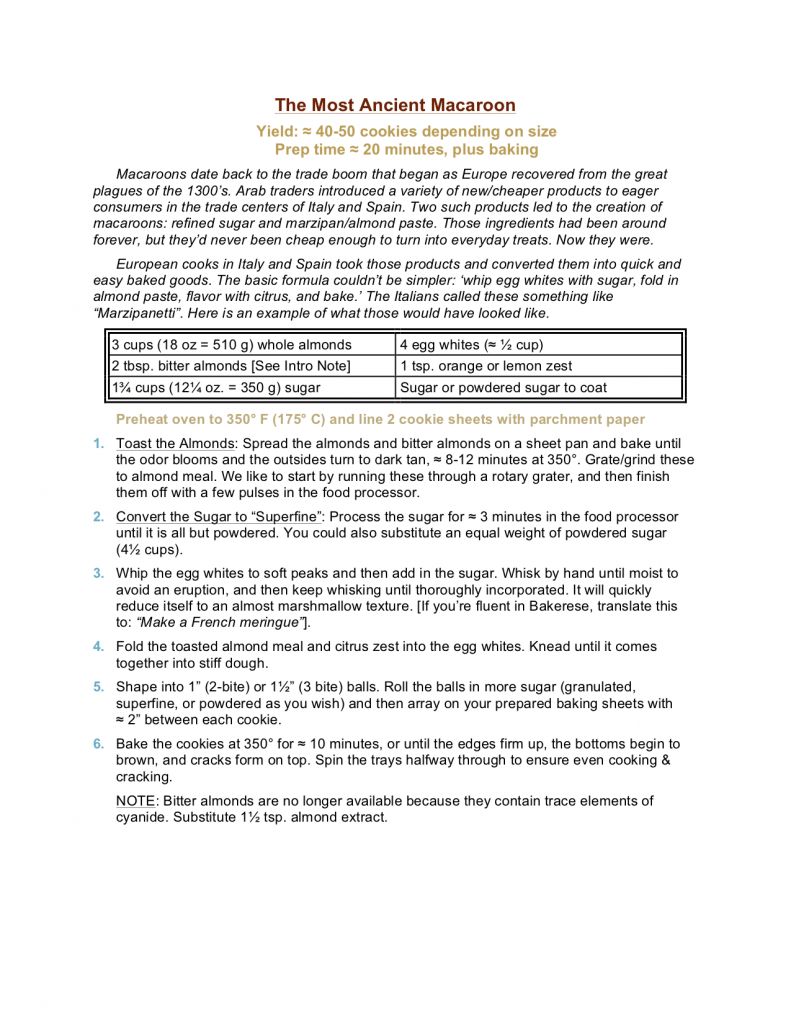
Italian and Spanish cooks started the process by incorporating the new ingredients into quick and easy baked goods using methods known since antiquity. The basic formula couldn’t be simpler. First whip some egg whites with sugar to make a meringue, using a more generous amount of sugar than before since it was now more affordable. Fold in some imported almond paste, and then bake. And there you have it! The first macaroons, commonly known as “Marzipanetti in Italy.
Matters evolved from there, with bakers slowly adopting the regional variations that eventually hardened into recipes. We have now worked up four versions of that basic recipe, distinguished by relatively small changes in the way they’re flavored and presented. Here is a table to more-or-less compare the four recipes, normalized to an even one pound of almonds. [NOTE: The different egg sizes occur because those recipes start from a different amount of almonds].
| Most Ancient Macaroons * 450 g almond meal * 300 g sugar * 3 XL egg whites * No zest * ½-1 tsp. almond extract * 350° for ≈ 10 minutes | Ricciarelli * 450 g almond meal * 300 g sugar or 150 g honey * 2 egg whites + 1 yolk * Orange zest * 2 tsp. almond & vanilla * 350° for ≈ 12-13 minutes | Alemandrados * 450 g almond meal * 265 g sugar * 1 jumbo egg * Lemon zest * ½ tsp. almond extract * 350° for 8-10 minutes | Amaretti * 450 g almond meal * 290 g sugar * 4 egg whites * No zest * 9 tsp. almond extract * 350° for ≈ 12 minutes |
Not a lot of differences, are there?
- The Most Ancient Macaroon included a hefty amount of sugar and some bitter almonds. We were forced to substitute almond extract for the latter. Bitter almond extract would be even better if you can find it. This cookie is super simple, focused on those new imports, and consistent with the oldest macaroon recipes we could find after a week or two of search. NOTE: Scott believes it may be even more authentic to replace the sugar and almonds with premade almond paste, because that product would have been easier to ship back in the day.
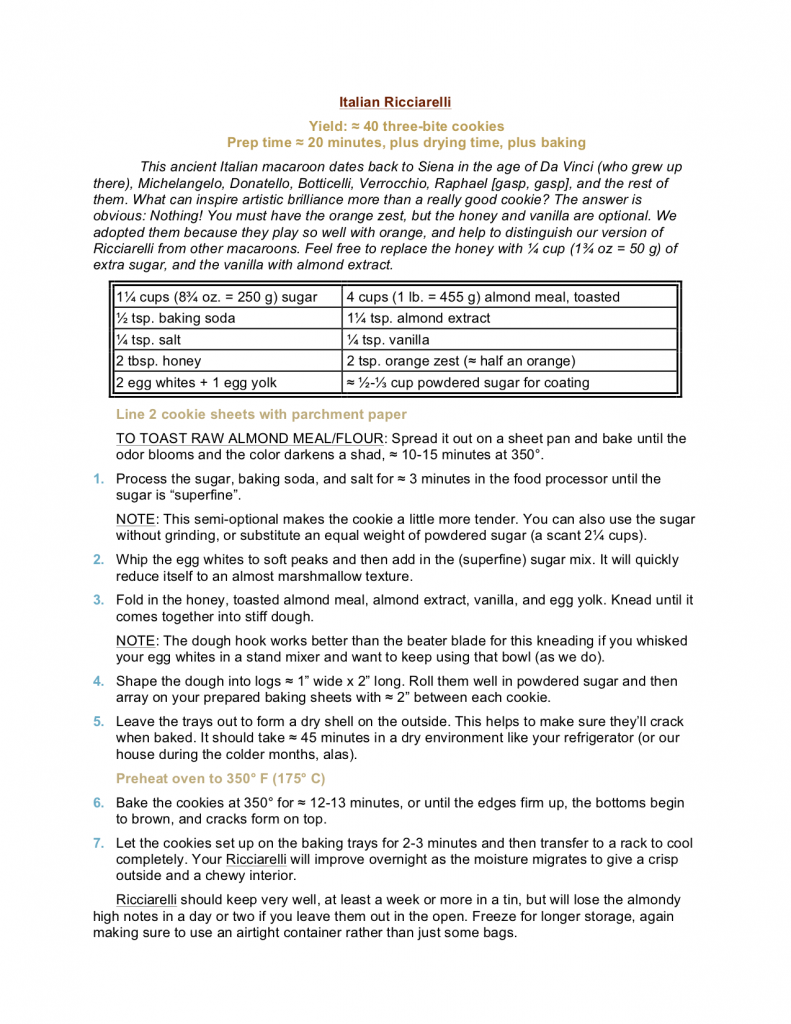
- Italian Ricciarelli, a specialty of Siena, must have orange zest but vary from there. We reviewed more than a dozen variations before settling on a version that includes an elusive hint of vanilla, some honey to enhance the sugar, and a single egg yolk to give them some richer chew. The cookies would still be Ricciarelli without those additions, but they help to distinguish this cookie from its macaroon peers. And they’re good. We also adopted the trick of adding some baking soda into the dough, because it creates attractive cracks in the powdered sugar crust.
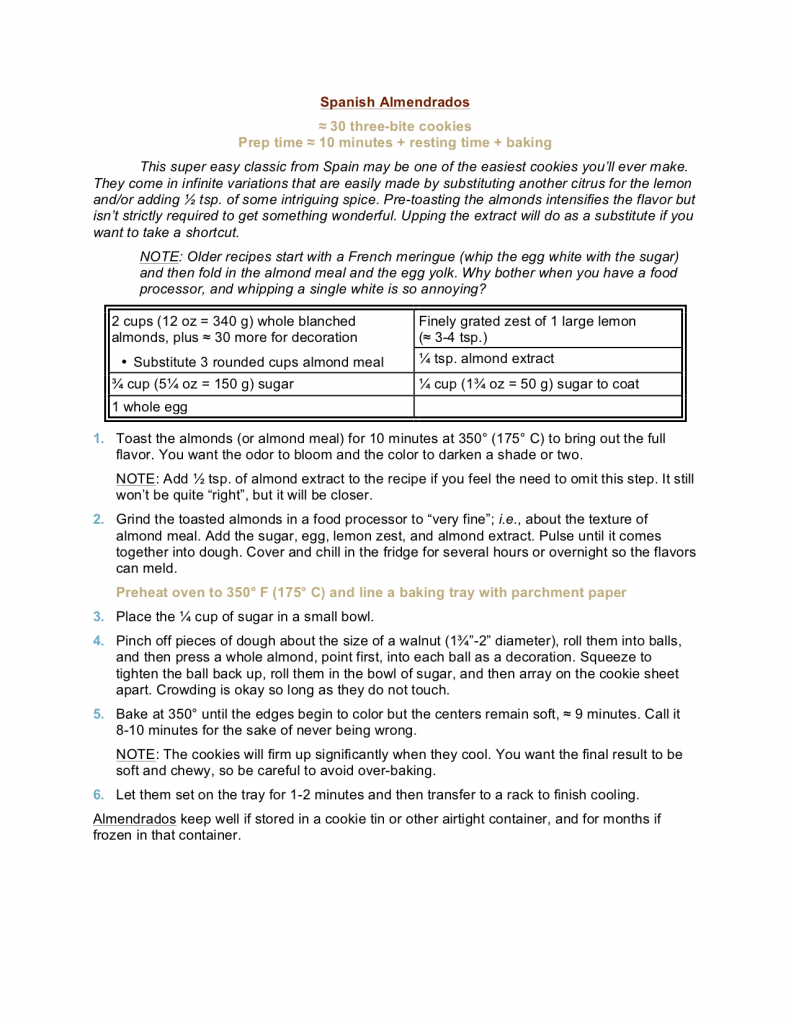
- Spanish Almendrados add lemon zest instead of orange, use whole eggs, and ignore the initial meringue step. Throw it all in a food processor and go! This methodology, combined with the shorter baking time, gives the cookie a fabulous chew you’ll particularly enjoy. They come with a classic almond-on-top decoration, and a granulated sugar crust.
- You can find Amaretti in our cookbook, Heritage Cookies of the Old and New World. The recipe looks very similar to the Most Ancient Macaroon except for a monstrous hit of almond extract, and the candied cherry on top. Our reference to “Rudolph’s Nose Cookies” wouldn’t have made much sense in 15th century Italy. Neither would reindeer if you think about it.
Continue your travels around the Mediterranean and you’ll see extremely similar cookies such as those flavored with rose water (a favorite in Turkey), or with walnuts and walnut extract in place of almonds. Move north and things begin to differ more, with roll-and-cut meringues such as Basler Brunsli (mix of almonds and hazelnuts, cocoa powder, and cherry liqueur) or German Zimtsterne (mix of almonds and hazelnuts, cinnamon, other spices, and lemon icing).
But here’s the bottom line. Macaroons go so deep into the roots of modern Europe that there’s really nothing older except the extant waybread recipes. They’re also simple to make and easy to modify into infinite variations. It’s an invitation to play, and we encourage all you creative people to do so!
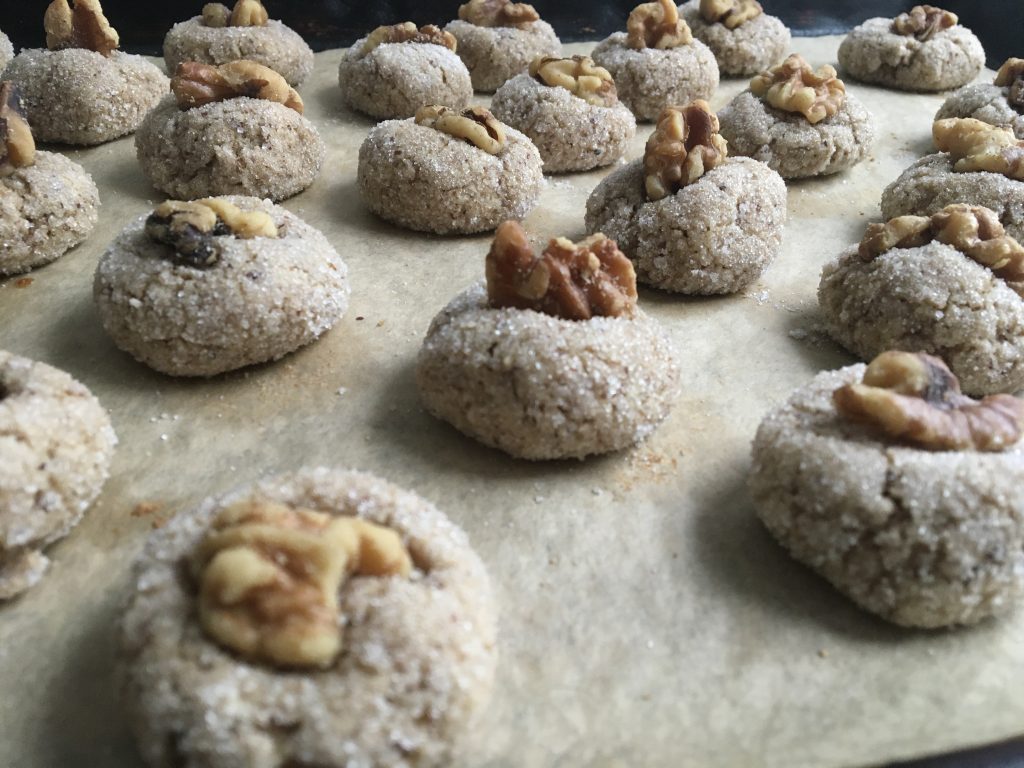
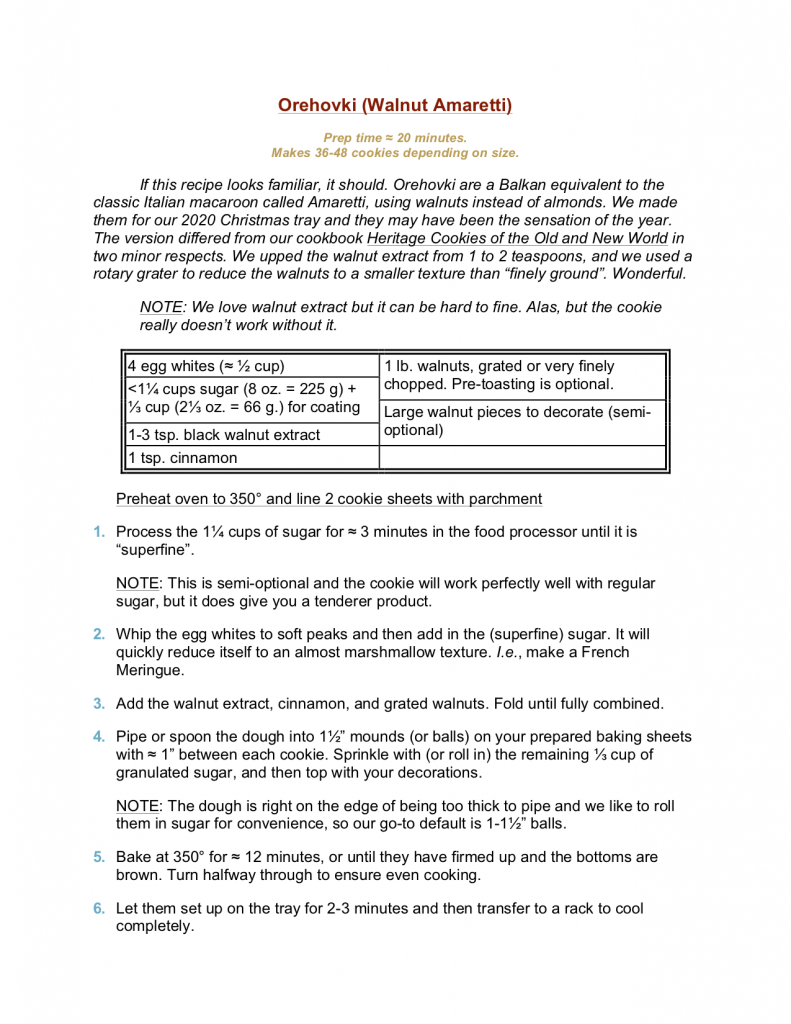
Here are our recipes for all four, plus a bonus recipe from the Balkans: a terrific macaroon based on walnuts instead of almonds.
Enjoy!