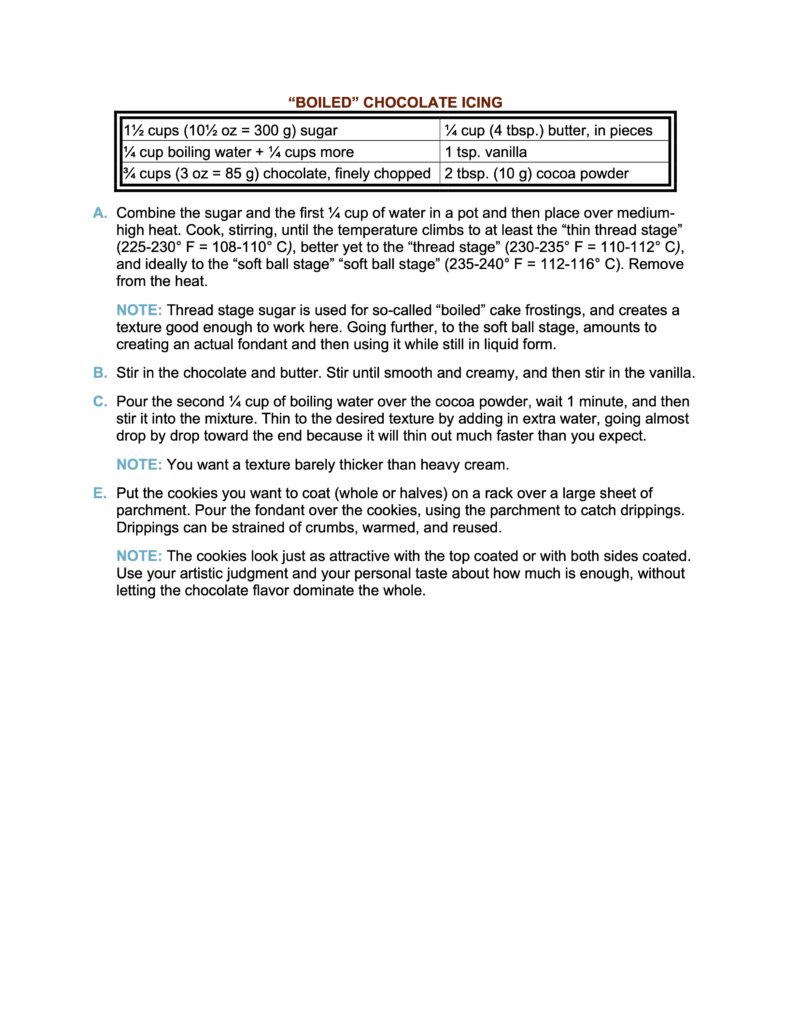

Up until now we’ve been happy to use either a thin chocolate glaze, a ganache filling/frosting, or a coating made from actual chocolate melted with butter. Ischler Cookies, a chocolate coated sandwich with nutty shortbread and apricot jam, wanted that chocolate/butter coating, but had to dry into something that could be packed in a tin without heroic efforts like cutting out custom sized bits of parchment paper.
We have now (finally!) found two answers to the dilemma. The first is coverture, which is essentially a chocolate coating made with cocoa butter instead of regular butter. This has a higher melting temperature and won’t lead to sticky hands until you get toward body temperatures. Think of chocolate bars and you’ll have it.
The problem with coverture? It’s very hard to find in a store, and impossible to make at home unless you keep cocoa butter in the pantry. Most people don’t.
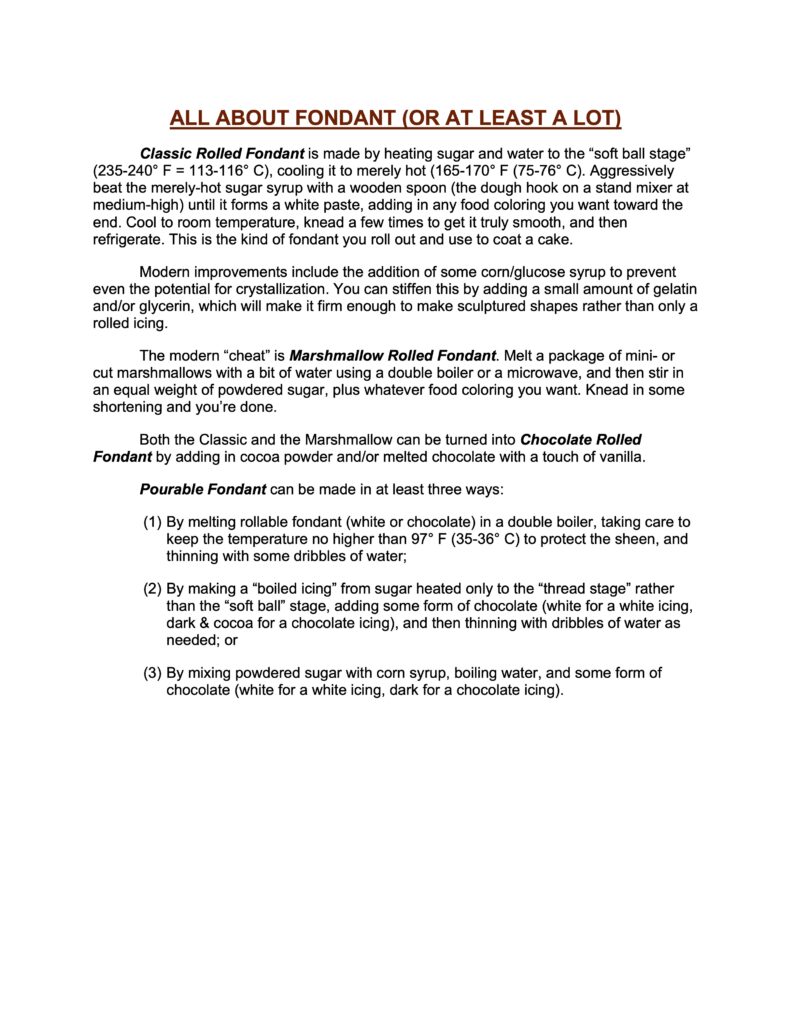
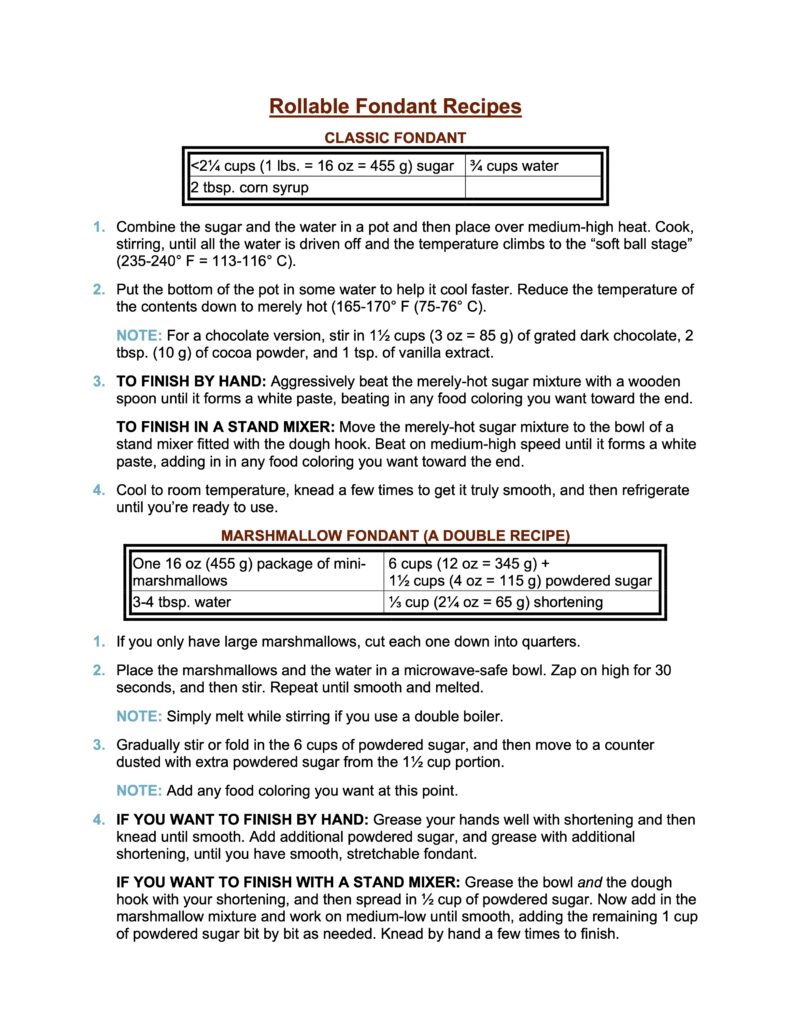
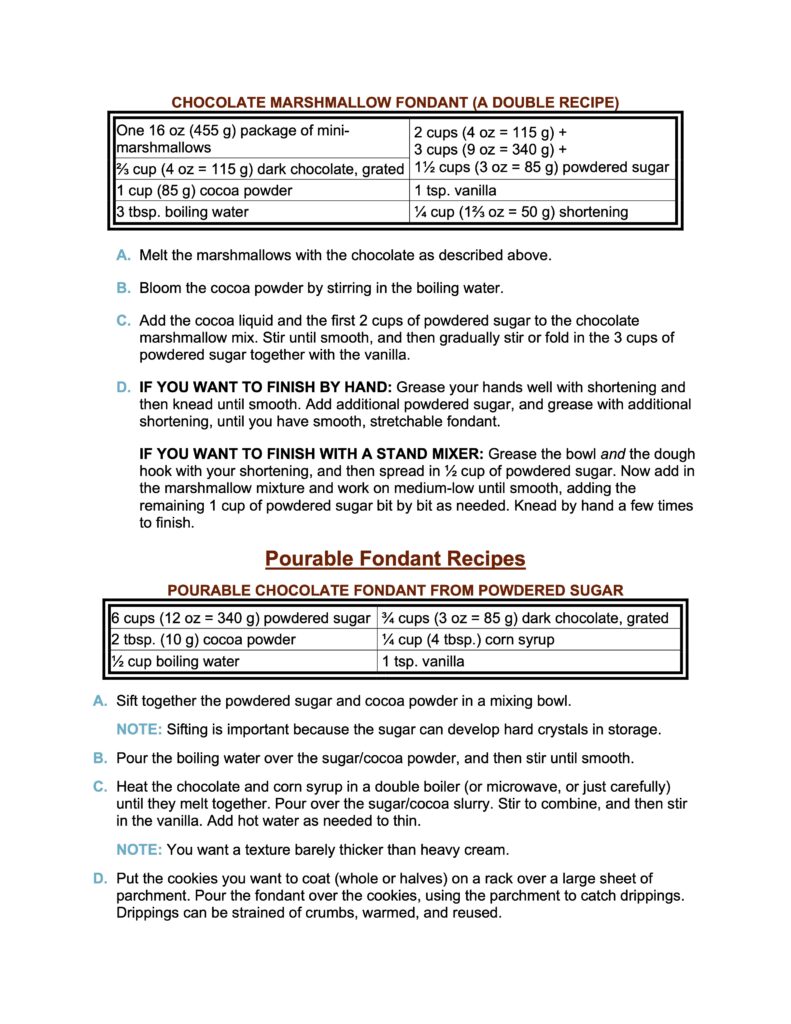
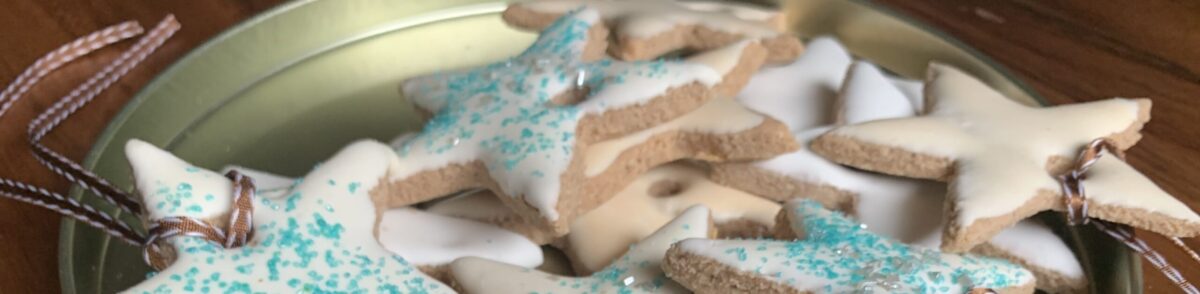
That leaves fondant. You may know this better in the rollable form that people drape over cakes. But did you also know about pourable fondant, the version used for petit fours and the like? It creates an icing that’s almost indistinguishable from coverture from both the visual and textural perspectives. It’s just a good bit sweeter and less chocolaty inside the mouth. An ideal compromise for anyone who wants to stick with standard pantry ingredients.
Heritage Cookies of the Old and New World does include a basic pourable fondant recipe, but we never really dug into the subject to understand how and why it works. Until now. Enjoy!
NOTE FROM KATE: APPLICATION TRICKS. If you have great many cookies and a lot of fondant, by all means use a screen and pour over it, as described above. However, this requires extra sheets, space, and materials. We tested it, and it works. I personally find that dipping a cookie in while holding it yields an excellent result, without having to make coating, and is better suited to the average home kitchen. The only downside is chocolate on your fingers. But I have an answer! To keep having from washing your hands, or fighting the constant temptation to lick your fingers, try using a thin, snug glove! It sure worked for me and my work moved faster. Also, I had absolutely no desire to lick my glove!
P.S. THE HOT WATER TRICK. Our experiments on chocolate coatings led to a wonderful trick:
- The Problem: Chocolate icings begin to harden as soon as they cool, and it often takes a bit too much time to get all your individual cookies dipped or poured.
- The Solution: Duh. Keep your icing warm enough to prevent it from cooling too fast. But how?
- The Method: You have a bowl of molten coating. Fill a slightly larger bowl with hot water, and place your bowl of icing inside. The hot water will keep the icing warm for twice as long, leaving you all the time you need to work.