CZECH BEAR PAWS (MEDVEDI TLAPICKY) – Nailed at last! With nut, chocolate, and honey versions

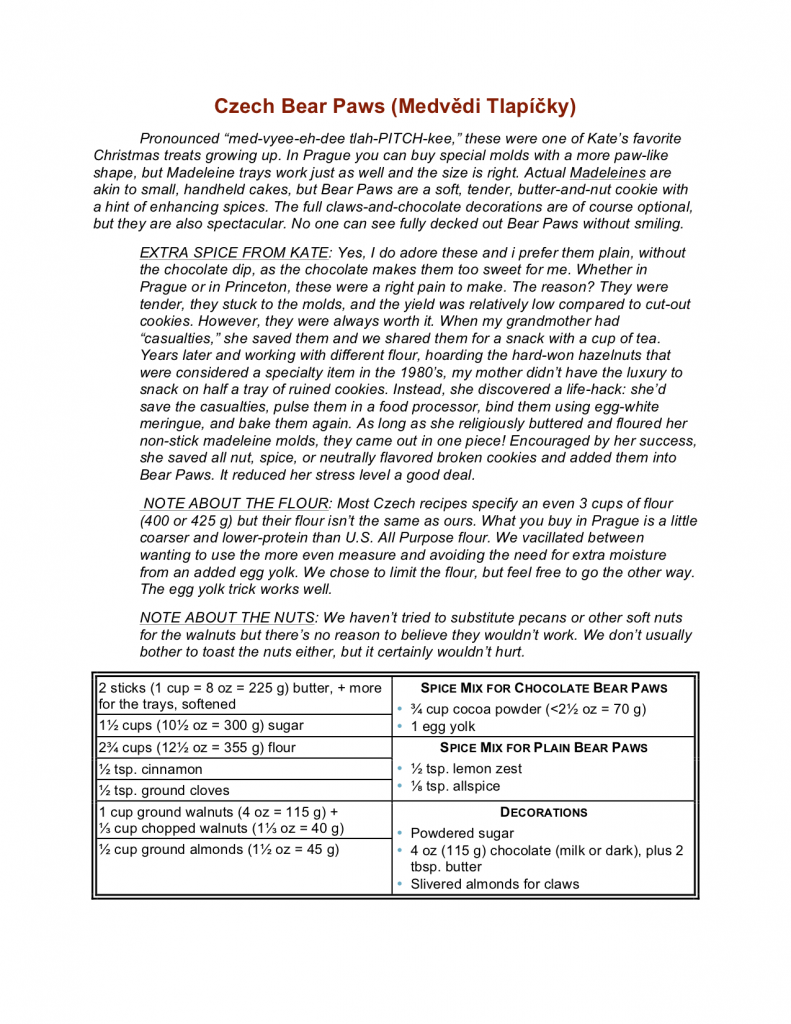
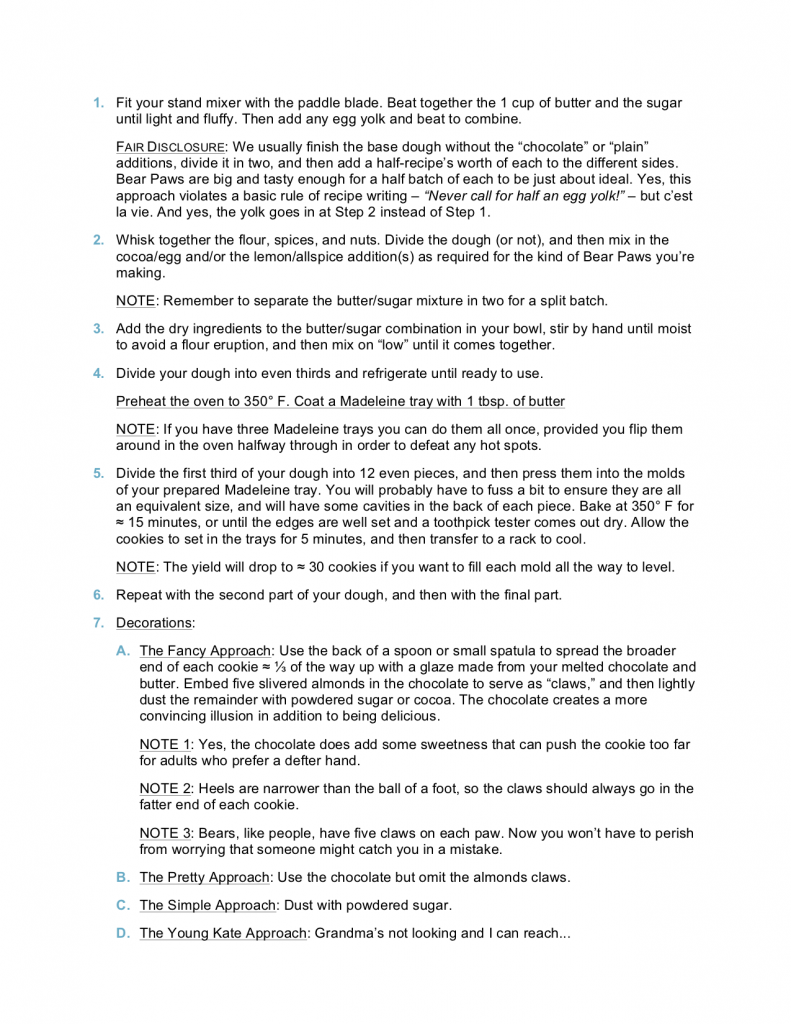
The recipe for Bear Paws took us more time than any other recipe we’ve dealt with so far. It took that long because Kate knew what they were supposed to be, and there wasn’t a single version that even came close. It was maddening! We went through more than a dozen trials trying to nail things down. Probably closer to 20. At some point you stop keeping count.

As always, feel free to skip to the bottom if you want the recipe without the blow by blow development choices.

Building Up From Flour And Nuts

The first problem we faced had to do with flour. Most Czech recipes specify an even 3 cups of flour (400-425 g) but our experiments with this amount failed. The flour you buy in Prague is a little coarser and lower-protein than the AP flour used here, and the amounts did not translate. We vacillated between adapting the recipe around that standard, or reducing the amount of flour to match the other ingredients. In the end we went with the latter, settling on 2¾ cups (around 350 g). (NOTE: For what it’s worth, adding an egg yolk had been the best solution at the 3-cup level and we invite you to use it if you want a cookie that’s a bit less heavy on the nuts. We needed an egg yolk anyway for the chocolate version.)

Next up came the nuts. You need to understand that nut cookies lie close to all Czech hearts, as exemplified by the national adoration for Nut Horns. Bear Paws don’t go quite that far, but they’re still a nut-centric treat. That meant we had to spend a lot of time playing with the flavor and texture at the same time we were working on the flour as well. Quick tip: there is a reason why scientists insist on changing only one variable at a time.

But we got there in the end! A big key to getting this recipe “right” lies in using different sizes of walnut (ground and also chopped), combined with some other nut for a more complex flavor. We ended up using ground almonds. Hazelnuts would have worked too, but I put my foot down. “Enough is enough. People who want nut perfection should turn the page to the Nut Horns recipe!” Besides, cookbook recipes should have different flavors, not just different shapes and textures. We weren’t after Nut Horns made in a mold.

The same logic applied to toasting the nuts in advance. We do that religiously for Nut Horns, but chose not to for Bear Paws. The added flavor, combined with the spice/honey flavors, did not add enough to justify the extra work, especially when we wanted the final product to stand out as something different.

But – the big “but” – you Dear Reader, do not have that same need! These may be forks in the road where you want to go right instead of left. Are you a founding member in the Cult of Filbert? If so, by all means feel free to replace all or part of the almonds with hazelnuts. (Just be sure to make a note in your book about the experiment and its results, so both the future you and your heirs won’t have to rely on the vagaries of the mind). The same thing goes for the soft nut component. We used walnuts because that’s what they have in Prague, and Heritage Cookies of the Old and New World focuses on traditional recipes rather than exploring new possibilities. But there’s no reason why American pecans would not work as well as walnuts, and maybe even better. Go ahead and give them a try. The same goes for cashews, macadamia nuts, and even peanuts. Play to your heart’s content.

Moving On To The Details

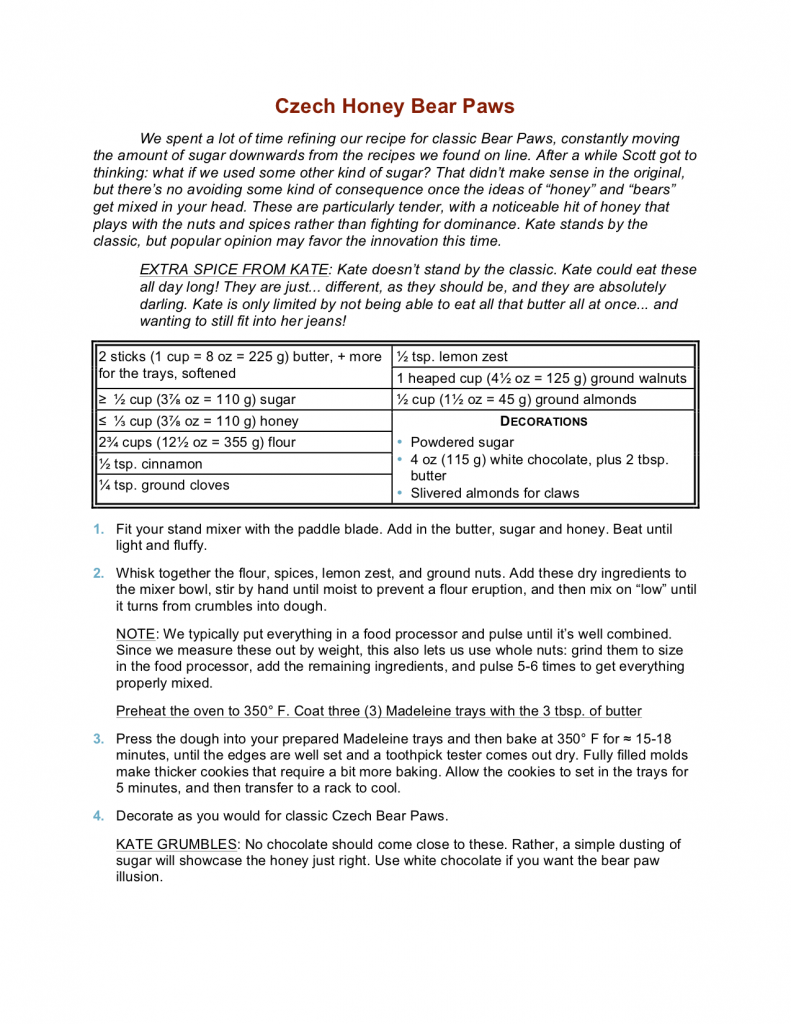
That covered the two main ingredients: flour and nuts. Our next few batches involved ventures into Spice Cookie Land. This, thank heaven, took less time than the first set of issues. The only complication lay in customizing the mix for the nut-only version and the chocolate-nut variation;, and then a third time for my Honey Bear Paws (which have now become the family favorite).

AN ASIDE: Yes, I really did put the name “Hunny Bear Paws” down as the initial recipe title for that variation. You have Kate to thank for avoiding the pain that eye roll would have caused. Just note that she issued the veto more because they were too good, than in protest against poor Pooh. “There’s nothing childish about that cookie, and it doesn’t deserve a childish name!” Fair enough. She was right on both accounts.

Of Cookies That Stick And Life Hacks Around Them
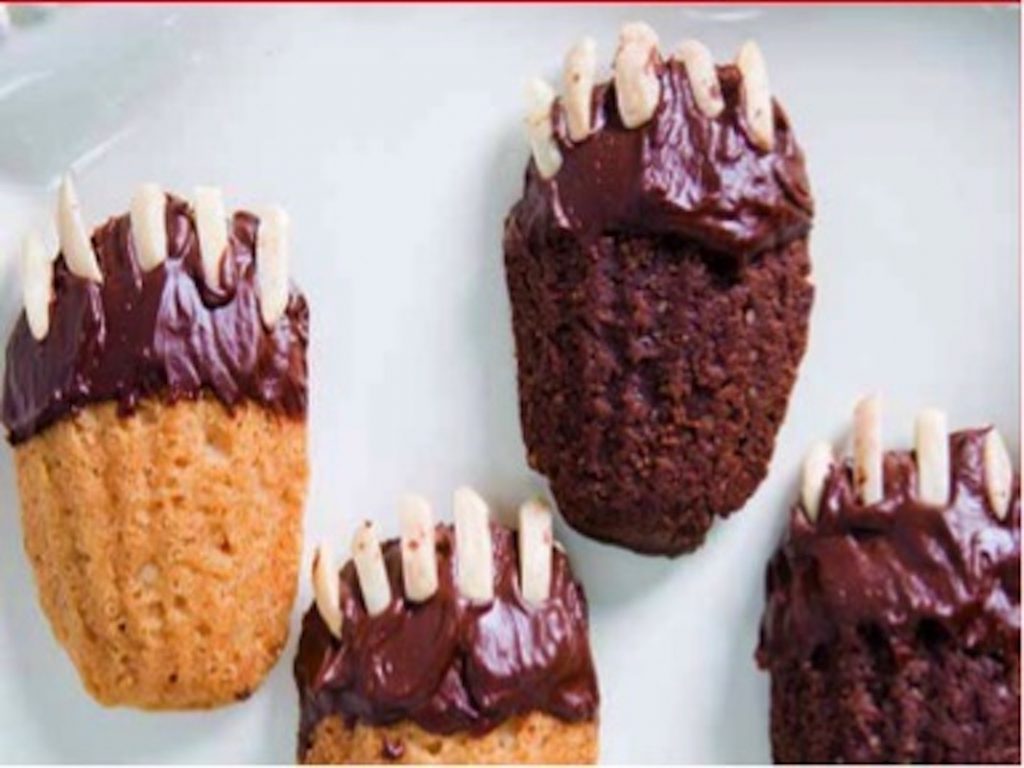
Don’t let the appearance confuse you! Actual Madeleines are a small, handheld cake. Bear Paws are a dense, flavorful nut-and-spice cookie. Only the shapes are the same, and in the Czech Republic people use the traditional paw-shaped molds instead.

Think we were done? Nope. There were two separate issues that go to the question of casualties. First, as Kate wrote in the book, “Whether in Prague or in Princeton, these were a right pain to make. The reason? They were tender, they stuck to the molds, and the yield was relatively low compared to cut-out cookies.” We tried, but could not solve that inherent problem.

Coat your your trays well with both butter and flour. Very well indeed. Fail and you won’t be happy.

But that still left us with some family history to contend with. Kate’s Grandma Kandler actually liked to have a certain level of “casualties” because they made perfect snacks to go with her daily cup of tea. [NOTE FROM SCOTT: And perhaps as perfect lures to gain tea-time with a cookie-obsessed granddaughter…? Grownups are tricky that way.]

Kate’s mom faced a different problem after they immigrated to America. She tried to avoid the casualties. First, because a lot of nuts were hard to find back in the 1980’s (particularly hazelnuts), and second, because she got less joy from sampling the wares. So Mom created a life-hack instead. Old fashioned Bear Paws resulted in too many losses? No problem. She saved those casualties in a big bag along with all the other damaged nut, spice, and butter cookies, and then combined them to make what we’ll call “Smart Lady Bear Paws.”

After everything else was done, Jarmila took out that bag of broken bits, tossed them into a food processor, and ground them into crumbs. Then she bound the crumbs with an egg-white meringue and voila! A tasty and pre-sweetened Casualty Macaroon dough! But then she made the next discovery; that dough would hold its shape if baked in a (religiously buttered and floured) Madeleine mold. And it was much less fragile than true, old fashioned Bear Paws. What came next… Well, let’s just say that the original ursine appendage cookies found themselves on the endangered species list.

That trick reduced Mom’s stress level a good deal, but it added to ours. Did we need to include the egg white version too? Should we just focus on the original ones you’d buy from a bakery in Prague? Should it be a separate cookie, a variation, or a Cookie Nerd note about casualties?

We went a good way down that road before I put my foot down again. “We’re writing a book about Heritage Cookies, not life hacks. The Smart Lady version might be a family tradition, but it hasn’t been around long enough to qualify as a heritage recipe.” And 20 darned attempts was enough. Besides, I wasn’t producing that many casualties after all that practice.

KATE: Bwaa haaa haaa! Tee hee hee hee!

SCOTT: She really does tee-hee. Honest.

KATE: Well, that part is true.

SCOTT: And no, the scarcity is not tied to me testing the bake! Besides, that’s the baker’s privilege.

KATE: omitted. [Author’s privilege].

SCOTT: Did you know, Dear Reader, that some people view unladylike words as even worse than unladylike guffaws?

KATE: Touchy, aren’t we? Tee hee hee.

But seriously – how do you write a recipe when there’s no way to know the proportion you’ll have of spice cookie bits compared to broken Butter Jellies and Bear Paws? Jarmila’s life hack wasn’t a “recipe,” it was a way to beat the system. And now you know it too.

Final Notes

About the decorations… The photos in our book show the full, impossibly cute version but there’s no need to go that far. We went whole hog with the decorations so the photo would tell a story that prevented people from confusing these for actual Madeleines.

The thing is, Kate will argue that less really is more in this case. The cookie itself tastes and feels amazing all on its own. All three varieties! The decorations add some extra sweetness, and the nut “claws” mess with that texture. There is something to be said for impossible cuteness, but fair is fair: you, Dear Reader, deserve to know that our household version does get baked in the Madeleine trays, but they’re served with nothing more than a dusting of powdered sugar. Especially the Honey Bear Paws.

And that covers it. Sorry for the length, but getting these right really was a saga. Enjoy!
CORSICAN CANISTRELLI – From dog biscuits to dunkers

It’s Autumn, which means I am already in the early throes of cookie baking. The annual checklist has been pinned by the calendar to keep track of the various cookies, and their status. These will be for giveaway; those for the house; those others for giveaways at book signings; etc. It’s all part of a well established system.

First, everyone in the family goes through our entire list of primary recipes. Each member picks five cookies that no one else has selected, making a total of 20 since our Labrador gets no say. Those go above the line.

Next, the parents/primary bakers slide in a few recipes to “balance the tray.” Have we covered citrusy, chocolaty, nutty, fruity, and dry-fruity? Did crunchy, light, chewy, fancy, and melty all get their due? We have to be fair, you know [eyes roll].

And then we get to step #3: cookies that I want to test. It isn’t official, but it happens every year so I may as well own up to it. You see, the research may continue year round, but we really do very little baking before October or after January. The recipes pile up until the [ahem] weight becomes hard to resist. And thus every Fall includes a certain amount of nagging requests for input about which ones the feminine component are [ahem] most eager [a/k/a willing] to try.

We probably average 2-4 of these every season, with January devoted to another 2-3 that I couldn’t get authorized during the Holiday extravaganza.

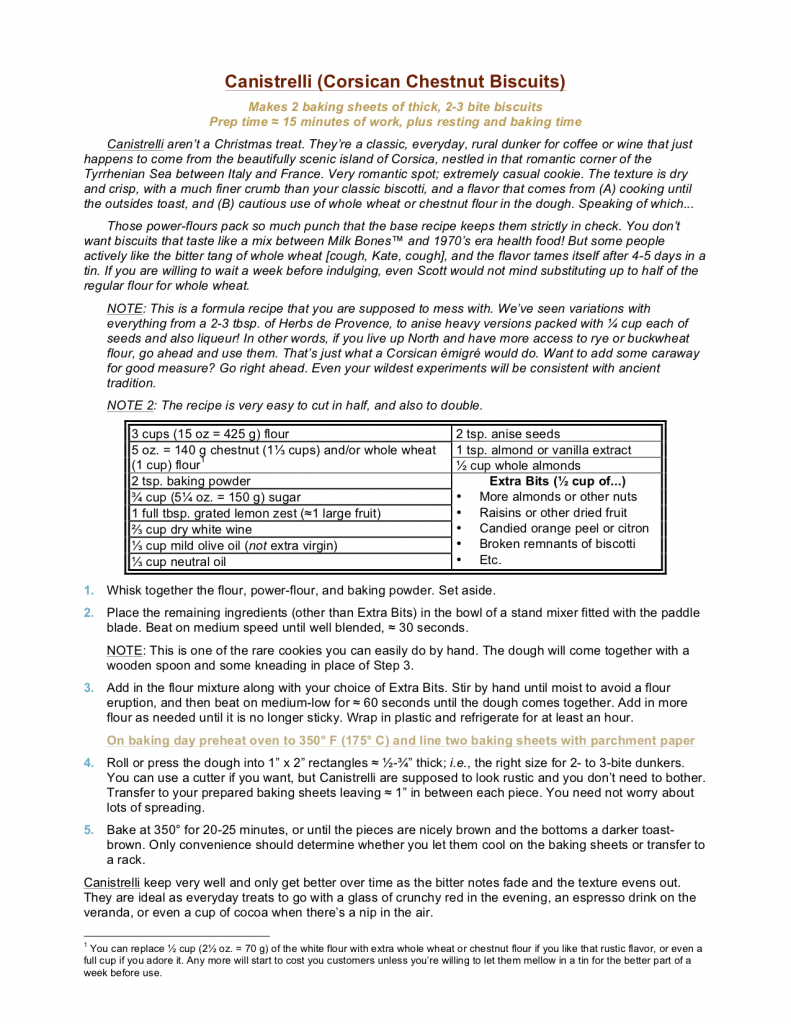
This year’s first experiment involved a Corsican specialty called Canistrelli, a famous wine-or-coffee dunker with several odd ingredients like olive oil and some white wine in the dough. The mix also had a hit of what we call “poverty flours;” those highly flavored, lower gluten flours that got replaced by standard white flour once technology made it cheap enough. Whole wheat (the precursor of white) is standard around the word, but this broader category includes anything that was a cheap substitute in pre-industrial times. In some parts of the world it was buckwheat. In Scandinavia it would have been rye. In central Europe, acorn flour. The Mediterranean nations used a lot of chestnut flour. Etc.

So… Canistrelli are ancient, regional, well loved, and unique? And they feature earthy chestnut and whole wheat flours? What could be more perfect target for Heritage Cookies Volume II?

As always, skip to the bottom if you only want the recipe. The rest of this post is devoted to the stumbles made and lessons learned along the way.

I quickly set to work and put together an initial test recipe emphasizing the rustic notes. The main elements had Kate all but jumping around with excitement. Whole wheat that she’d picked up the other day; chestnut flour we saw on sale in the Strip District; olive oil, white wine, lemon zest, and brown sugar. Several online recipes also included anise seeds and either whole or slivered almonds, but we decided that would create too much overlap with other cookies, and might make it harder to focus on this rural core. I opted to keep them out for the initial test, and to instead rely on the flours for flavor. Those touches could wait for the later versions. Maybe some raisins or chocolate chips to add a few sweet pops, but that would be it.

I showed the test recipe to Kate for her input, which only made her more excited. “This one! You definitely need to do this one for the first experiment.” No butter? Great. Limited sugar? Fantastic! And ooh, it’s jam packed with heart healthy grains that measure high on the virtue spectrum. With all that in their favor, what could these be but…

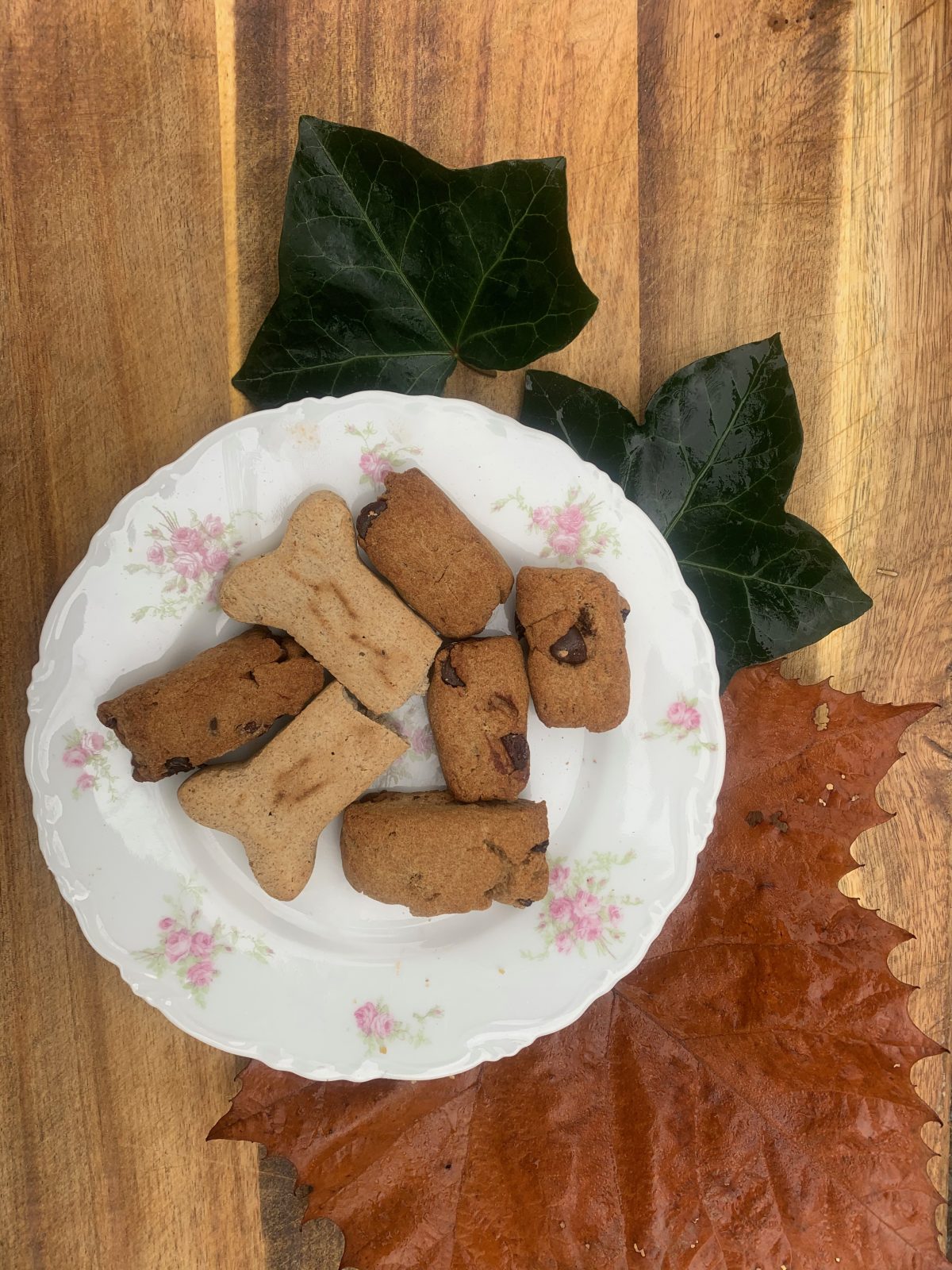
Dog biscuits. Hand to heart, that’s what they taste like. Dog biscuits with sweet little pops.

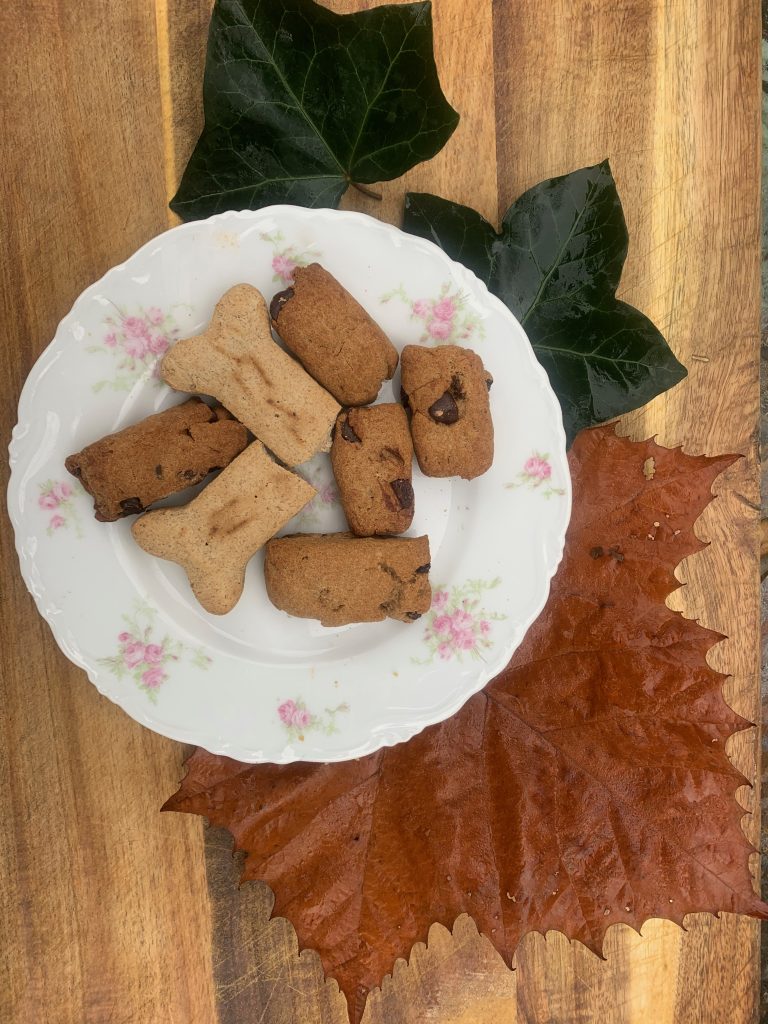
One from Corsica and the other from Alpo! One must admit that the Corsican one improved over time.

Admit it: you know that flavor. Every child in America has sneaked a biscuit or two. What is that makes Fluffy, Spanky, and Rex sit there drooling each night? They had to be good, right? The dog isn’t a fool. And then you learned. Dog biscuits are plain, crunchy, vaguely bitter, and just not worth the effort to finish. Sort of like whole wheat bread from the 1970’s.

Our teenager wondering, “What is it that labrador sees in these things?”

Plain? Check. Crunchy? Check (about as expected TBH). Vaguely bitter? Definitely.

Healthy? Well, that sort of depends on how much credit you give to those slim, thin diet gurus who stay that way by filling their plates with pseudo-food that isn’t worth eating in the first place. Maybe that’s how these should be marketed! Whole grain desserts perfectly suited to follow a dressing-on-the-side, chicory-sprouts-and-tofu salad.

Sorry folks. Virtue points go only so far. Even for Kate. And you know the worst part? Even our lab got stiffed on this one, because I did add those raisins and chocolate chips, and both are bad for dogs!

Epic fail. Post it on Facebook as a funny story and a lesson about just how badly an experiment can go wrong.

Still, we knew there had to be a version of this recipe that works. It’s just too popular to be this actively bad. Besides, the texture came out just as we’d hoped. So, duly chastened and just a bit traumatized set back to work with the reminder that poverty flours lost out to white for very good reasons. They’re only romantic in myth, age-dimmed memories, and very limited amounts. Hints are intriguing. More than that is… not.

Version two changed the recipe by trying a 4:1 ratio of white to “other” flour, with the olive oil cut 3:1 by a flavorless vegetable oil. That was much better. Yes, they were a bit plain and somewhat boring, and it became clear that chocolate chips were just a bad idea. But it was getting close.

So version 3 would be… Wait a sec! Something strange just happened! Kate found the old tin of Version 1 dog biscuits, and came running over in excitement. “These are way better than they used to be!” And they were. Even I, traumatized and doubting as I was, had to admit that the worst of the bitter, acrid flavors had gassed out over the past three days. They still weren’t something I’d serve to company, but Kate was actually willing to eat them. [Her stance on health based brownie points being a lot more generous than mine]. Marital harmony was restored and, more to the point, it became clear that something was going on at a level I hadn’t considered.

I suspended the baking and went back to search through the Internet for a bit more background. The first effort had been based off four different versions, with a slant toward the poverty flours. We don’t have access to someone from Corsica to tell us about the norms, so research would have to substitute.

Some 14 recipes later, I emerged with a clearer view of what was going on.

1. The further you get from Corsica, the lower the amount of poverty flour. Two English versions were all the way down to zero! That made sense in a way. Corsica has never been what you’d call wealthy. Beautiful, yes. But not wealthy. So a higher percentage of poverty flours made sense, especially when reinforced by the way people get used to the taste of whole wheat flour. The more you eat, the more you can get away with.

Kate really, really wanted to come out of this with a cookie that would feature a distinct poverty flour tang. It just had to contain that tang enough to be friendly for rookies who hadn’t become accustomed to those notes. We’d start by simply cutting the amount of tangy product, with notes that bakers should increase it as tolerance and taste permit.

2. The amount of variation in added flavors said something too. My research showed some absolutely huge variations. This recipe reeked of anise. That one included no anise, but had a full two tablespoons of aromatic herbs. This other centered on smoked paprika. That fourth one piled in whole nuts, with walnut oil and almond extract. On and on.

You’d think all that variation would make it even harder to nail down the pattern, but the third observation tied it all together:

3. Canistrelli inevitably get described in romantic terms that basically amount to, “That treat we enjoyed while sitting on the veranda of our hotel, watching the scenery with a glass of wine/espresso as we talked…”

Step back and you’ll see the pattern. Hotel = chefy variations, restrained only by a strong tradition that defined the texture and the purpose. But at the same time, those variations were all very intense in their own way. Whole wheat and chestnut flavors dominated the dog biscuit version. Anise, herbs, smoke-and-spice, nuts, and what-have-you clearly did the same to the new ones. Got it! Anything goes, so long as it’s dialed up to a “10”. That was enough to finalize the target.

  • Canistrelli are supposed to be right on the dividing line between savory and sweet, with much less sugar than the things you’d see on a wedding table or holiday tray.
  • They must be very crunchy, on the dry side, and are intended to be a dunker.
  • They usually have a bitter element, but it’s always balanced against the baker’s choice of flavor.
  • That flavor can be anything, so long as it’s strong enough to fight through the dryness, and clear enough to complement whatever drink you’re serving on that veranda.
  • And some of that flavor really ought to come from oil, wine, and/or liqueur in the dough.

Day 6. I went back to the drawing board, properly armed, to the music occasional snarfing noises as Kate dug into the no-longer-dog-biscuits beside her morning coffee, and sometimes her evening glass of wine. [Objection from the peanut gallery: “Kate does not ‘snarf’!”] [Of course not dear. Poetic license. What words would you use to describe the sound?] [“Just zip it, okay?”]

Let’s try this again. Day 6. Kate has decided she likes the original version, and keeps saying, “Don’t change it too much…” Listening attentively with nary a twitch of brow nor roll of eye, I manfully forge again. Don’t worry my love, I’ve got this!

And this time… it works. These aren’t my personal favorites. I’m not going to hide that fact. But they have become one of Kate’s, and she has put her flag in the ground to defend her plan of keeping a regular supply on hand. So the bottom line is this: The recipe below will produce something the natives of Corsica would call a Canistrelli every time, even if those who don’t know the story would be hard pressed to understand how they all fit together. If you have a taste for whole-grain tang, you’re likely to fall into Camp Kate and find this to be one of our greatest triumphs.

If you lack that taste, you’ll be off in Camp Scott, shaking your head in a confused state evenly spaced between wonder, delight, horror, and some culinary word to invoke my inevitable wince. But I’m man enough to admit that my taste isn’t “right;” it’s just mine. Your mileage may vary.

Enjoy!